Everest Base Camp Trek Return by Helicopter
Imagine standing at the base of the world’s highest mountain, feeling a deep sense of pride after days of trekking through the heart of the Himalayas. Now imagine returning not […]
Highlights
- Skip the long, strenuous hike back to Lukla and enjoy a thrilling flight over the very peaks you conquered on foot.
- Witness an unforgettable sunrise over Mt. Everest and surrounding peaks from the most famous viewpoint in the region.
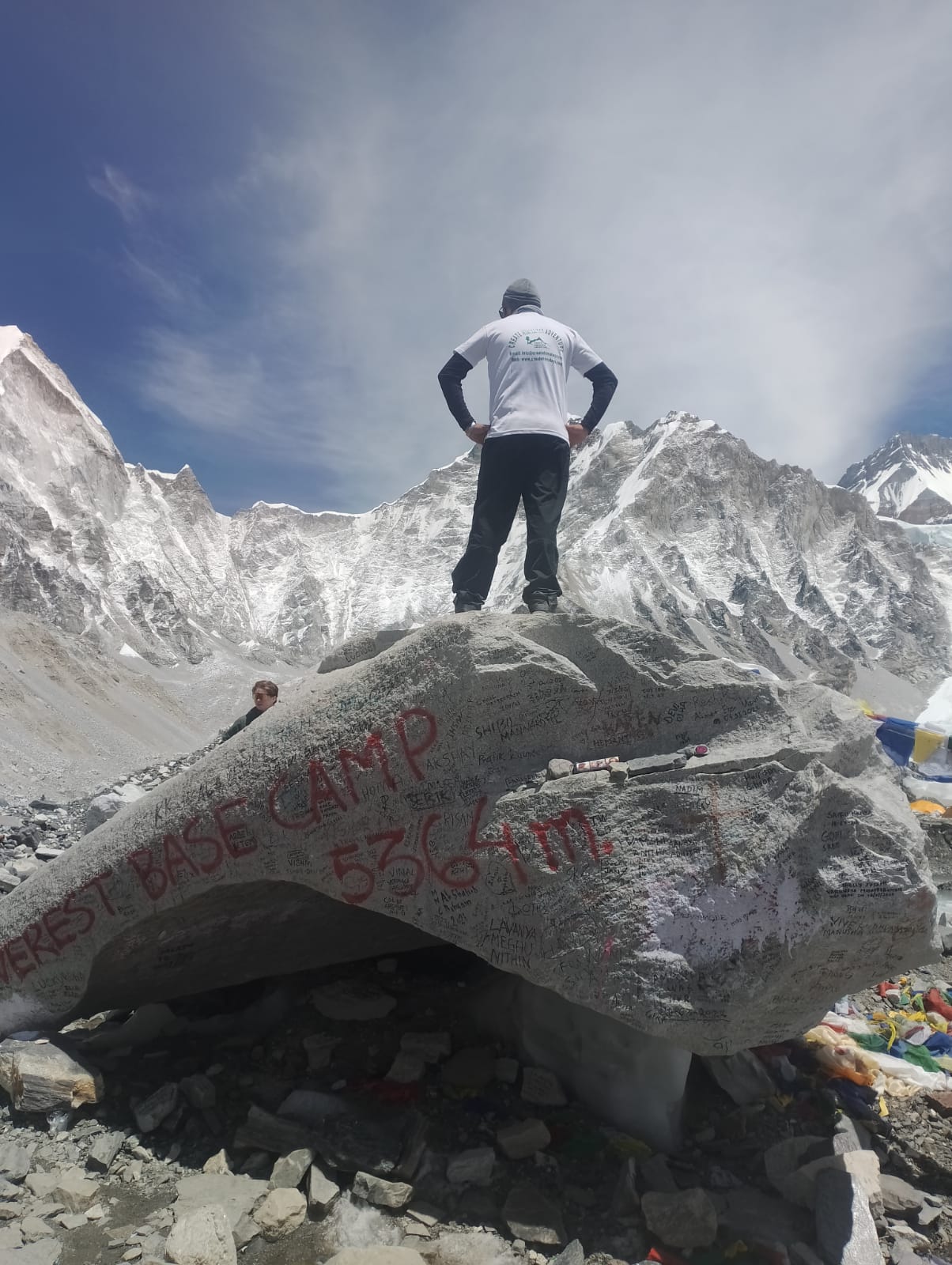
- Stand at the foot of the world's highest mountain at 5,364 meters, surrounded by ice, rock, and history.
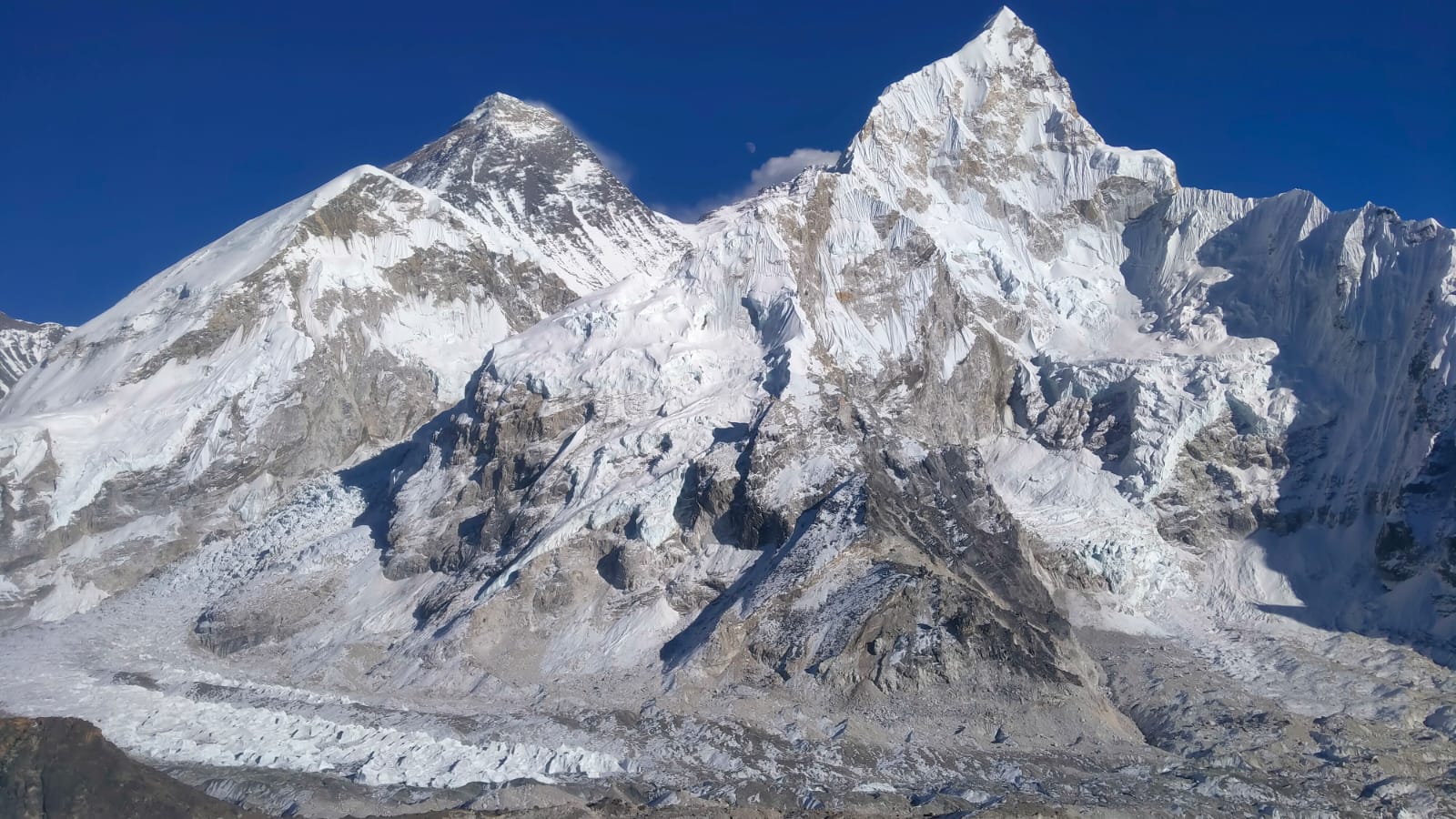
- Fly above glaciers and valleys, with bird's-eye views of Pumori, Lhotse, Nuptse, Lobuche, and Everest.
- Experience the spiritual and cultural heart of the Khumbu on the way to base camp.
- Trek alongside the world's deepest glacier, a breathtaking and humbling natural wonder.
- A perfectly curated itinerary that balances trekking days with acclimatization and cultural experiences.
- Flexible travel with direct flights from Kathmandu or via Ramechhap/Manthali depending on the season.
- Immerse yourself in Sherpa traditions, from monastery visits to sharing locally brewed drinks with new friends.
- Designed for those who want to optimize time and energy while still experiencing the full magic of the Everest region.
Overview
Imagine standing at the base of the world’s highest mountain, feeling a deep sense of pride after days of trekking through the heart of the Himalayas. Now imagine returning not by foot, but by helicopter—soaring above the trails you conquered and enjoying a breathtaking aerial view of the mighty peaks. This is the beauty of the Everest Base Camp Trek with Helicopter Return: the perfect blend of adventure and comfort.
Your journey begins as you leave Kathmandu behind. In quieter seasons, you’ll take a scenic 35-minute flight directly to Lukla. During peak months (March to May and September to November), you’ll drive to Ramechhap (5-6 hours drive) before catching a short 20-minute flight to Lukla.
From Lukla, the trail follows the rushing Dudh Koshi River, passing through charming Sherpa villages and lush forests. Soon, you enter the protected area of Sagarmatha National Park, a UNESCO World Heritage Site known for its dramatic landscapes and rich culture.
The first major stop is Namche Bazaar, the vibrant heart of the Khumbu region. This lively Sherpa town is not only a trading hub but also an important acclimatization point, allowing your body to adjust to the altitude.
After a rest day in Namche, the trail continues to Tengboche, home to the region’s most famous monastery. Surrounded by prayer flags and mountain views, you’ll witness stunning panoramas of Ama Dablam, Lhotse, and Mount Everest.
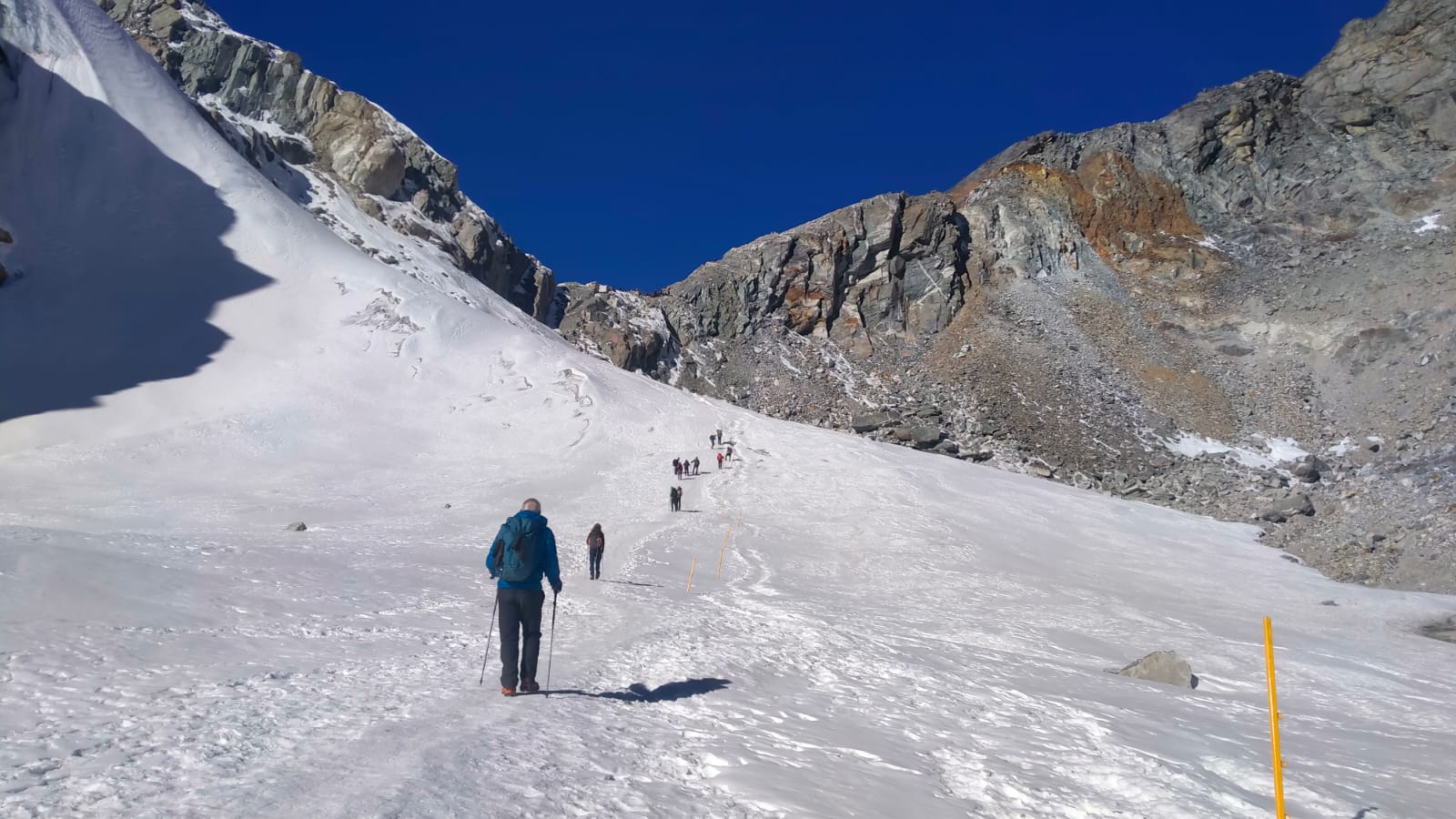
As you trek higher to Dingboche and Lobuche, the scenery becomes more rugged and rocky terrain. Towering peaks such as Makalu, Cho Oyu, and Nuptse rise above you, creating a powerful Himalayan backdrop at every step.
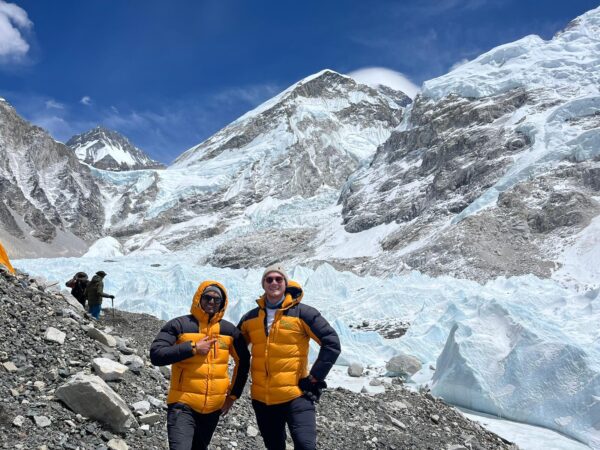
Finally, the highlight of your journey arrives. From Gorak Shep, you hike alongside the impressive Khumbu Glacier until you reach Everest Base Camp at 5,364 meters. Standing among ice, rock, and mountaineering history, you’ll feel an overwhelming sense of achievement. Fly above the Himalayas on a hassle-free helicopter return to Lukla, leaving the long descent behind.
Trip Itinerary
Kathmandu to Lukla (Flight) via Manthali/Ramechap and Trek to Phakding.
Flights to Lukla operate differently depending on the season. During peak trekking seasons, most Lukla flights are operated from Manthali Airport, while during non-peak seasons, flights operate directly from Kathmandu. Manthali to Lukla Flights (March, April, May, September, October, and November): During these peak months, flights to Lukla depart from Manthali Airport, which is approximately a 5–6 hour drive from Kathmandu. To catch the flight, we leave Kathmandu between 1:00 AM and 3:00 AM by shared jeep and travel to Manthali Airport. From Manthali, a scenic 20-minute flight takes you to Lukla. Kathmandu to Lukla Flights (January, February, June, July, August, and December): During the non-peak seasons, flights operate directly from the domestic terminal of Tribhuvan International Airport in Kathmandu. These flights usually depart early in the morning, typically between 6:00 AM and 7:00 AM. After a scenic flight to Lukla, we arrive at Lukla Airport. Our porter-guide will be there to welcome you and assist with trek preparations. Before starting the walk, we take a short snack break in Lukla and then begin our trek toward Phakding. En route, we witness breathtaking mountain scenery, traditional Sherpa villages, prayer wheels, and fluttering prayer flags along the banks of the Dudh Koshi River. Note: Flight schedules and updates are subject to change. For the most up-to-date information regarding Lukla flights, please consult one of our representatives.
Phakding to Namche Bazaar
After breakfast, we begin our trek along the serene Dudh Koshi River, crossing several suspension bridges as we head toward Namche Bazaar. The trail passes through small settlements, including Toktok, Benkar, Chomua, and Monjo. After Monjo, we enter Sagarmatha National Park for permit verification and continue to Jorsalle (2,740 m / 8,989 ft), a peaceful riverside stop and an ideal place for lunch, marking the halfway point to Namche. Following lunch, we cross two more suspension bridges and gradually ascend to the iconic Hillary Suspension Bridge. A steep climb then leads to Top Danda, where we enjoy the first breathtaking view of Mount Everest. From here, Namche Bazaar is about an hour away. The trail is lined with mani stones, prayer wheels, chortens, and colorful prayer flags, reflecting the spiritual heritage of the Khumbu region, with scenic views of Kusum Kanguru, Thamserku, Nuptse, Taboche, and Mount Everest. After 5–6 hours of trekking, we arrive at the vibrant Sherpa town of Namche Bazaar—an ideal place for rest, acclimatization, and cultural immersion.
Acclimatization Day in Namche Bazaar
Proper acclimatization is essential to prevent altitude sickness while trekking at higher elevations. To adapt safely, we spend an acclimatization day in Namche Bazaar (3,440 m / 11,286 ft), the vibrant trading hub of the Everest region known for its modern amenities and warm Sherpa hospitality. After breakfast, we take a short acclimatization hike to Hotel Everest View (3,880 m / 12,730 ft), one of the highest hotels in the world. This scenic viewpoint offers breathtaking panoramic views of Mount Everest, Lhotse, Nuptse, Ama Dablam, Thamserku, Khumbila, and surrounding Himalayan peaks. The afternoon is free to explore Namche Bazaar, where you can visit the Everest Museum, browse local shops, enjoy cafés, or immerse yourself in the rich culture and lifestyle of the Sherpa community.
Namche to Tengboche
After breakfast, we continue our trek toward Tengboche. The trail ascends out of Namche Bazaar before leveling into a gradual climb through lush forests and past several stupas, including one built in memory of Tenzing Norgay Sherpa. We pass through settlements such as Kenjoma, Sanasa, and Leushyasa, enjoying scenic mountain views before stopping for lunch at Phunke Tenga after 2–3 hours of trekking. From here, we cross a suspension bridge at the confluence of the Dudh Koshi River and Imja Khola and complete permit verification at the Sagarmatha National Park army post. A steady 2–3 hour uphill climb then leads us to Tengboche (3,860 m), one of the finest viewpoints along the Everest Base Camp trek. Home to the revered Tengboche Monastery, the area offers panoramic views of Mount Everest, Lhotse, Nuptse, Ama Dablam, and Thamserku. Arriving by mid-afternoon, we have time to visit the monastery and attend the evening Buddhist chanting ceremony, a peaceful and culturally enriching experience reflecting the deep spiritual traditions of the Khumbu region.
Tengboche to Dingboche
From Tengboche, we enjoy breathtaking Himalayan views before descending through alpine forests to Debuche and crossing the Imja River via a suspension bridge. The trail then reveals magnificent, ever-changing vistas of Mount Ama Dablam (6,812 m), often referred to as the Queen of the Himalayas. Passing through Sherpa villages such as Pangboche and Somare, we stop for lunch before continuing through Orsho and Kalapani. A gentle final ascent brings us to Dingboche, our overnight stop and key acclimatization point on the Everest Base Camp trek.
Acclimatization Day in Dingboche
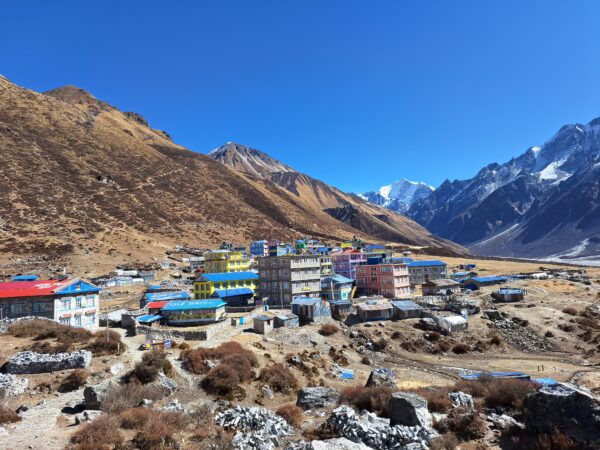
Dingboche (4,410m) is a crucial acclimatization stop on the Everest Base Camp Trek, enabling trekkers to adjust to altitude and minimize the risk of altitude sickness. This peaceful Sherpa village offers a chilly alpine climate, cozy teahouses, small shops, and stunning Himalayan scenery—ideal for rest and recovery. Today, we take an acclimatization hike to Nangkartshang Peak (5,083m), one of the most popular viewpoints on the EBC trail. The gradual ascent rewards us with breathtaking 360-degree views of Everest, Lhotse, Makalu, Ama Dablam, Nuptse, and other surrounding peaks. After breakfast, we begin the short hike, returning to Dingboche by afternoon to relax and recharge. Carry water, snacks, sun protection, and a camera to capture the spectacular mountain vistas.
Dingboche to Lobuche
After breakfast, we pack our gear and set out as the first golden rays of sunrise glow behind Mount Ama Dablam. The trail gradually climbs toward Thukla, a place where we will have our lunch, passing a small gompa and open yak pastures along the way. As we continue, the route reveals striking views of Cholatse, Taboche, Dzongla Lake, and the rugged moraine of the Khumbu Glacier. After lunch, the ascent leads to the Thukla Pass Memorial, a moving site dedicated to mountaineers who lost their lives in the Himalayas, marked by stone tributes and prayer flags. The trek then continues with sweeping views of Pumori, Lingtren, Khumbutse, and Nuptse before a final climb brings us to Lobuche (4,910m). Surrounded by towering peaks, Lobuche offers a peaceful high-altitude setting, warm Sherpa hospitality, and a stunning sunset over Nuptse as evening temperatures quickly cool.
Lobuche to Gorakshep and Everest Base Camp and back to Gorakshep
Today is the highlight of the Everest Base Camp Trek—the day you stand at the foot of the world’s highest mountain. Leaving Lobuche early after breakfast, we follow a steady trail past the Pyramid, a high-altitude research station set against dramatic Himalayan scenery. The route winds across glacial terrain, offering constant views of Pumori, Nuptse, Lingtren, and surrounding peaks, before reaching Gorak Shep for rest and lunch. From here, we continue toward Everest Base Camp, walking alongside the Khumbu Glacier and catching striking glimpses of the Khumbu Icefall and Mount Everest itself. Reaching base camp at 5,364m is one of the most powerful and unforgettable moments, a true sense of achievement in the heart of the Himalayas. After spending time soaking in the atmosphere and views, we return to Gorak Shep to rest.
Gorakshep - Morning hike to Kalapathar - Back to Gorakshep - Fly back to Lukla on a shared Helicopter flight.
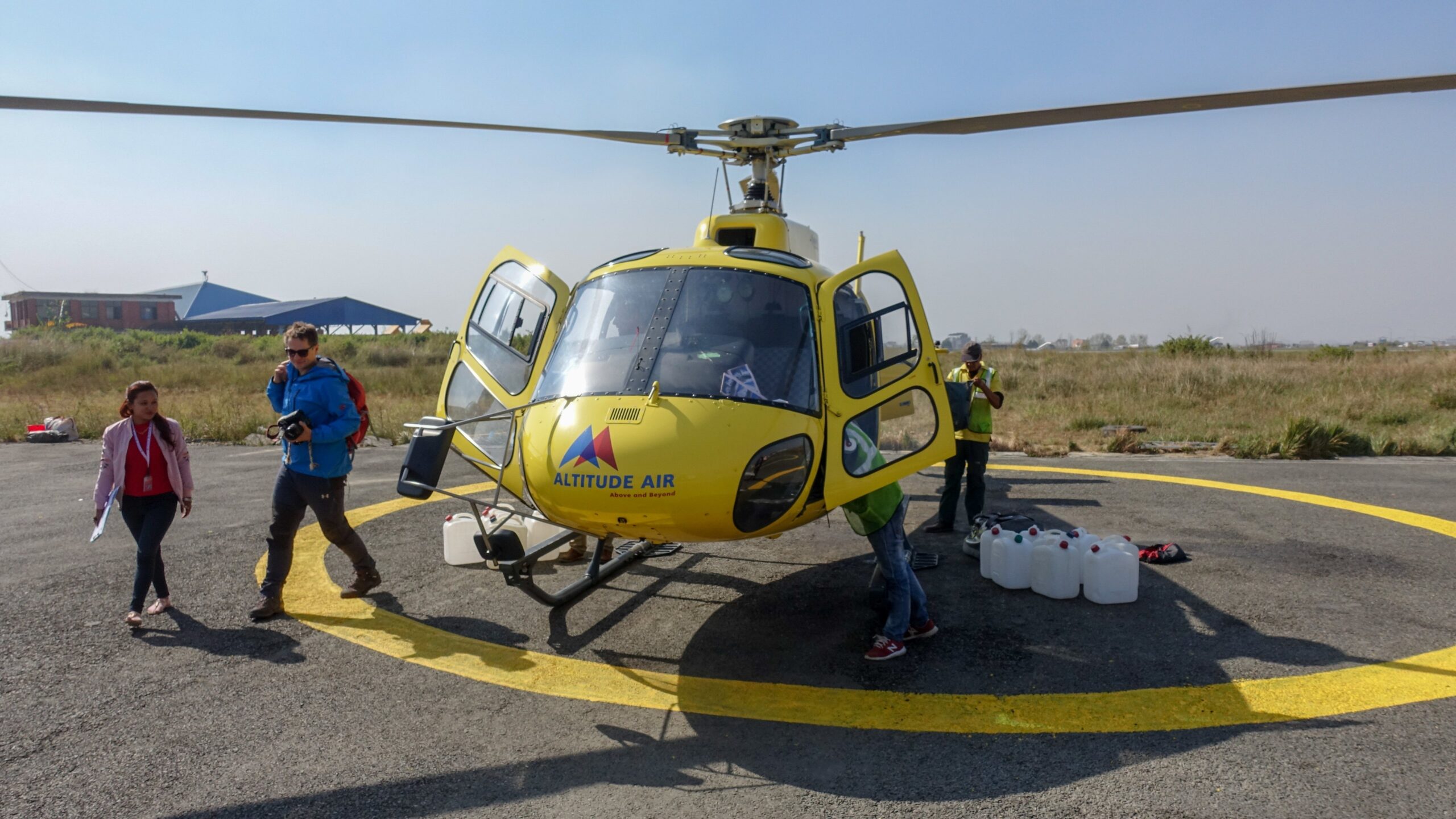
Today’s the highlight—hiking to Kala Patthar, the highest point of your Everest Base Camp journey. We start early under a starry sky, watching the sunrise paint Everest, Lhotse, Nuptse, and Pumori in gold and pink. From the top, the views are unforgettable. After photos and a warm breakfast at Gorak Shep, it’s time for a helicopter ride back to Lukla. Helicopter Details: Shared flight (private option available on request) Altitude limit: above 4,500 m, only 3 passengers per shuttle Shuttle system: groups are flown in two trips via Pheriche Flight duration: 15–20 minutes with stunning aerial views Arrive in Lukla by afternoon to rest and prepare for
Lukla to Kathmandu via Manthali/Ramechap Airport and drive back to Kathmandu.
During peak trekking seasons (March, April, May, September, October, and November), flights from Lukla are often diverted to Manthali Airport instead of Kathmandu due to heavy traffic. The flight duration is approximately 20 minutes, followed by a 5–6 hour drive to Kathmandu by shared jeep. Please note that travel time may vary depending on road conditions, weather, and traffic. Early departures are common, and delays can occur, so flexibility in travel plans is recommended. During the monsoon and winter months (January, February, June, July, August, and December), flights from Lukla usually operate directly to Kathmandu. The flight takes around 35 minutes, followed by a 30-minute drive to your hotel if you are staying in the city. Flight routes can change due to weather or air traffic conditions, so it’s best to check the current flight status before booking and allow some flexibility in your travel plans. After a leisurely breakfast, you will prepare for your journey back to Kathmandu (or via Manthali, if required). Upon arrival, a private transfer will take you to your hotel, where you can relax and rejuvenate in comfort after your remarkable Himalayan adventure with Create Himalaya.
What's included
What's not included
No hidden fees • Best price guarantee