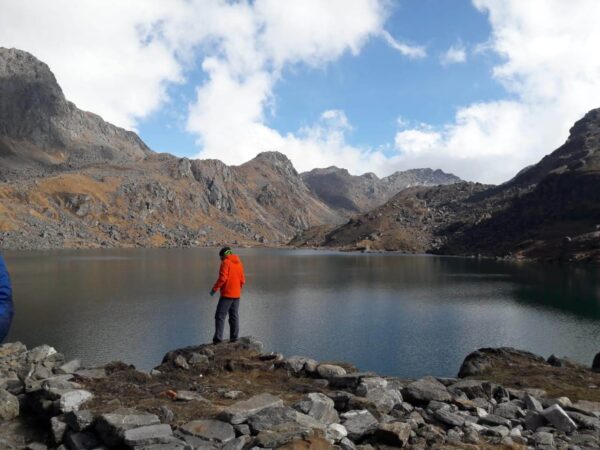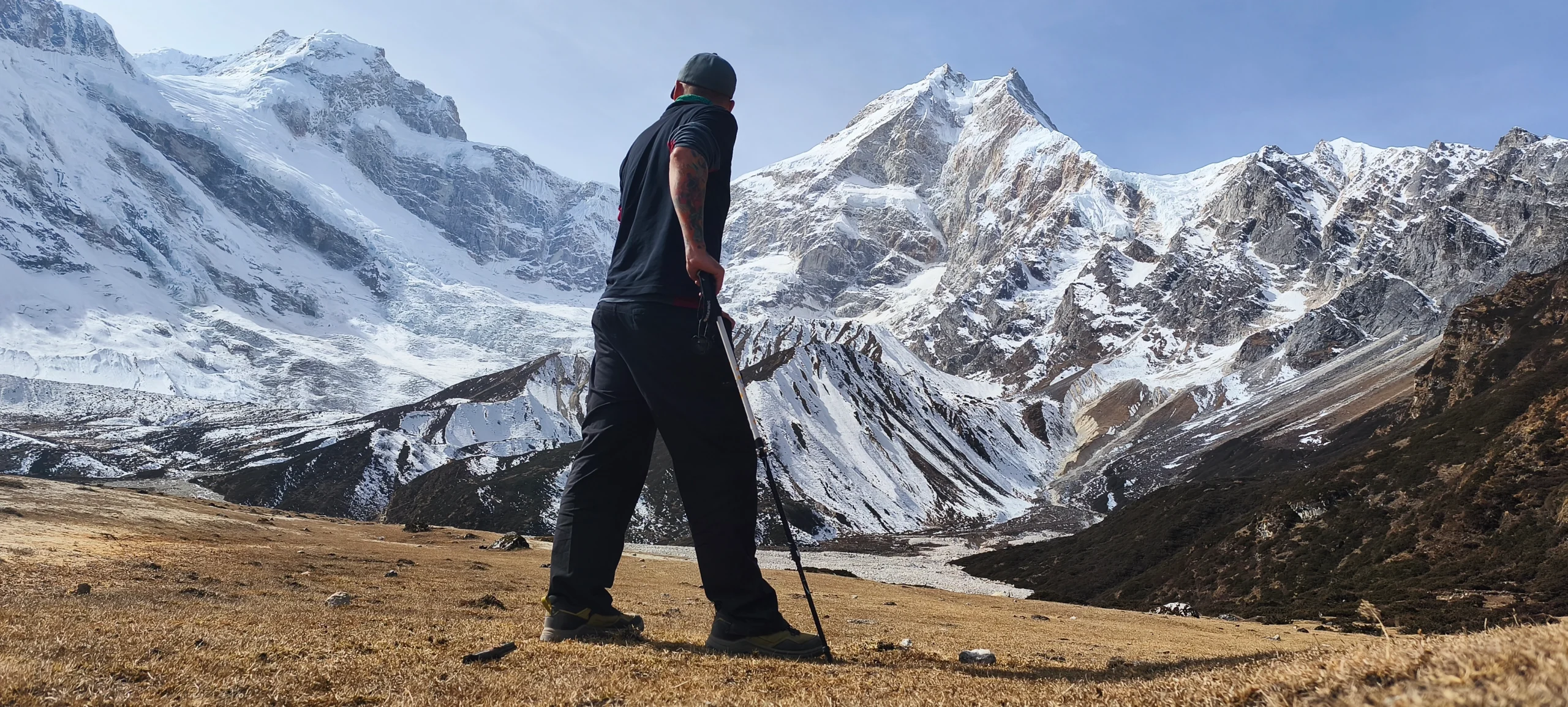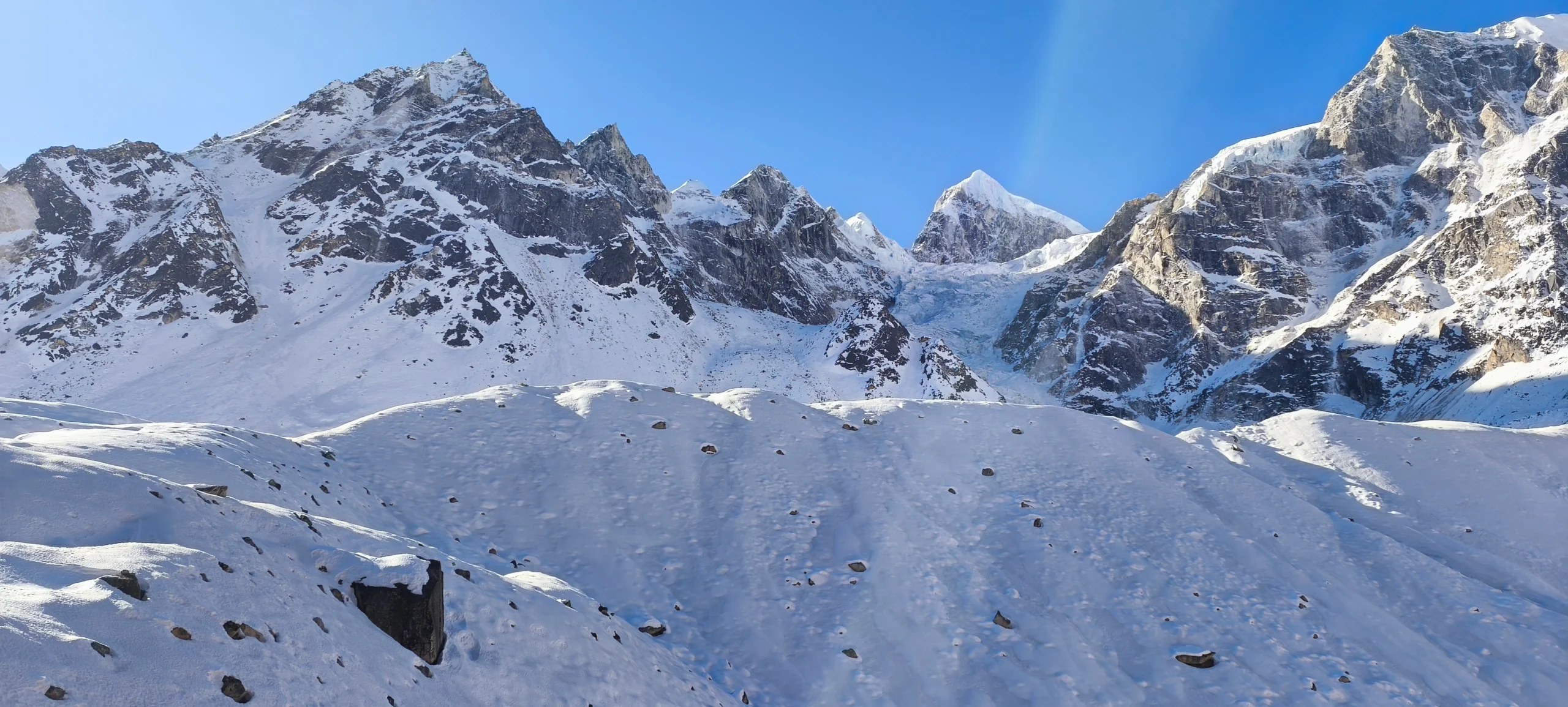
Manaslu Circuit Trek – 12 Days
The Manaslu Circuit Trek is a remarkable 12 days journey into one of Nepal’s most unspoiled regions. Located in the Gorkha district, this restricted trek offers stunning views of Mount […]
Highlights
- 12-day trek through the remote and unspoiled Manaslu region of Nepal
- Spectacular views of Mount Manaslu (8,163m), the world’s eighth-highest peak
- Restricted trail with fewer crowds, offering a peaceful trekking experience
- Scenic drive from Kathmandu to Machha Khola to start the adventure
- Trek follows the Budi Gandaki River through traditional villages like Jagat, Deng, and Samagaon.
- Strong Tibetan Buddhist cultural influence with monasteries, prayer flags, and chortens.
- Optional side trip to Manaslu Base Camp.
- Challenging crossing of Larkya La Pass (5,215m) with panoramic mountain views.
- Views of Kang Guru, Himlung Himal, and Annapurna II from the high pass.
- Diverse landscapes ranging from alpine terrain to rhododendron forests.
- Encounters with Gurung and Tibetan communities along the route.
- Simple teahouse accommodations that enhance the authentic trekking experience.
Overview
The Manaslu Circuit Trek is a remarkable 12 days journey into one of Nepal’s most unspoiled regions. Located in the Gorkha district, this restricted trek offers stunning views of Mount Manaslu, the world’s eighth-highest mountain, along with other towering Himalayan peaks.
Because access is limited, the trail is quiet and peaceful, making it ideal for trekkers who want to enjoy nature and culture without crowds. The trek combines dramatic landscapes with close encounters with local communities, supporting responsible and sustainable tourism.
The adventure begins with a scenic drive from Kathmandu to Machha Khola. From there, the trail follows the Budi Gandaki River, passing traditional villages such as Jagat, Deng, and Samagaon. Tibetan Buddhist culture is seen throughout the route in prayer flags, monasteries, and chortens, with an optional side trip to Manaslu Base Camp.
The highest and most challenging point of the trek is crossing Larkya La Pass at 5,106 meters. From the top, you are rewarded with incredible views of Kang Guru, Himlung Himal, and Annapurna II. The descent brings changing scenery, from dry alpine landscapes to green rhododendron forests, along with beautiful glacial lakes and warm Gurung and Tibetan villages.
Although the teahouses are basic, the untouched scenery and deep cultural experience make the trek truly special. The Manaslu Circuit is more than just a hike, it is a journey into the heart of the Himalayas.
Major Attractions of Manaslu Circuit Trek
The Manaslu Circuit Trek is one of the most spectacular off-the-beaten-path trekking routes in Nepal, offering a perfect combination of Himalayan scenery, ancient culture, remote villages, and natural beauty. This adventure takes trekkers around the world’s eighth-highest mountain, Mount Manaslu (8,163m), through the Budhi Gandaki Valley, Tibetan-influenced settlements, beautiful lakes, monasteries, and the challenging Larke La Pass (5,106m). The trek is famous for its peaceful trails, authentic mountain lifestyle, and breathtaking views of the Himalayas.
Lho Gaun – First Viewpoint of Mount Manaslu
Lho Gaun is one of the most beautiful villages on the Manaslu Circuit Trek route and is often considered the first major viewpoint for Mount Manaslu. Located at around 3,180 meters, this traditional Tibetan-influenced village offers stunning panoramic views of Mount Manaslu, Manaslu North, Himal Chuli, and surrounding peaks. The famous Ribum Monastery and the peaceful mountain atmosphere make Lho a memorable stop for acclimatization and photography.
Pungen Gompa – Hidden Monastery with Manaslu Views
Pungen Gompa is a peaceful Buddhist monastery located near Samagaun at approximately 4,050 meters beneath the impressive south face of Mount Manaslu. The hike to Pungen Gompa is one of the best side trips during the Manaslu Circuit Trek, passing through alpine meadows and glacial landscapes. From here, trekkers enjoy close-up views of Manaslu Glacier, Manaslu Peak, and surrounding Himalayan ranges while experiencing the spiritual beauty of the remote Himalayas.
Samagaun – Traditional Himalayan Village
Samagaun is the largest and most important village in the upper Manaslu region, located at an altitude of about 3,530 meters. Surrounded by towering mountains, this Tibetan-style village is a major acclimatization point during the trek. Trekkers can explore ancient monasteries, traditional stone houses, and experience the unique culture of the local people. Samagaun also serves as a gateway to Manaslu Base Camp and Birendra Lake.
Birendra Lake – Beautiful Glacial Lake of Manaslu
Birendra Lake is a stunning turquoise glacial lake located near Samagaun at approximately 3,691 meters. Formed from the melting glaciers of Mount Manaslu, the lake offers a peaceful and breathtaking landscape surrounded by snow-covered peaks. The short hike to Birendra Lake is a popular acclimatization activity and provides excellent views of the Manaslu Glacier and Himalayan scenery.
Manaslu Base Camp – Close View of the Eighth Highest Mountain
The Manaslu Base Camp Trek is an exciting side adventure from Samagaun that takes trekkers closer to the massive Mount Manaslu. Located at around 4,800 meters, the base camp offers incredible views of the Manaslu Glacier, icefalls, and the surrounding Himalayan wilderness. This challenging but rewarding hike is perfect for trekkers who want a closer experience of the world’s eighth-highest mountain.
Tibet Border – Remote Himalayan Landscape
The Tibet border area near Samdo is one of the most unique attractions of the Manaslu Circuit Trek. Samdo village, located near the ancient Nepal–Tibet trading route, reflects strong Tibetan culture and traditions. The trail toward the border offers views of rugged mountains, high-altitude valleys, and landscapes that feel completely untouched. This region highlights the historical connection between Nepal and Tibet through trade and culture.
Larke La Pass – Highest Point of Manaslu Circuit Trek
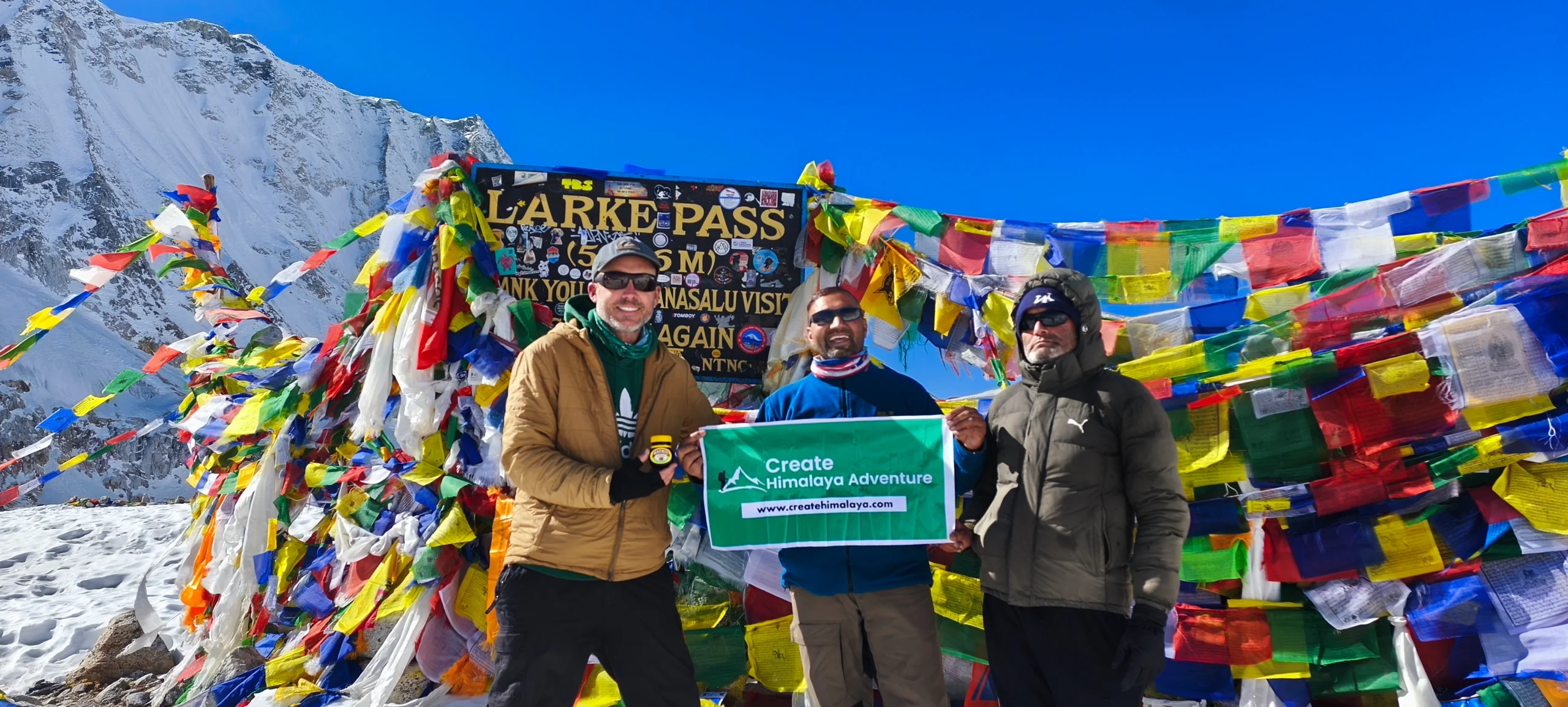
Larke La Pass is the ultimate highlight of the Manaslu Circuit Trek, standing at an altitude of 5,106 meters (16,752 feet). Crossing this dramatic Himalayan pass is both challenging and rewarding, with trails through snow, glaciers, and rocky mountain terrain. From the top, trekkers are rewarded with breathtaking views of Mount Manaslu, Himlung Himal, Cheo Himal, Kang Guru, Annapurna II, and other Himalayan peaks. The crossing of Larke La Pass creates one of the most unforgettable experiences in Nepal trekking.
Manaslu Circuit Trek Route
The Manaslu Circuit Trek route is a spectacular Himalayan journey that circles around Mount Manaslu (8,163m), the eighth-highest mountain in the world. The trek begins from Machha Khola and follows the beautiful Budhi Gandaki Valley, passing through remote villages, ancient monasteries, green forests, and high mountain landscapes. The trail gradually gains altitude, allowing trekkers to experience diverse scenery and the unique Tibetan-influenced culture of the Manaslu region.
Manaslu Circuit Trek Itinerary Route:
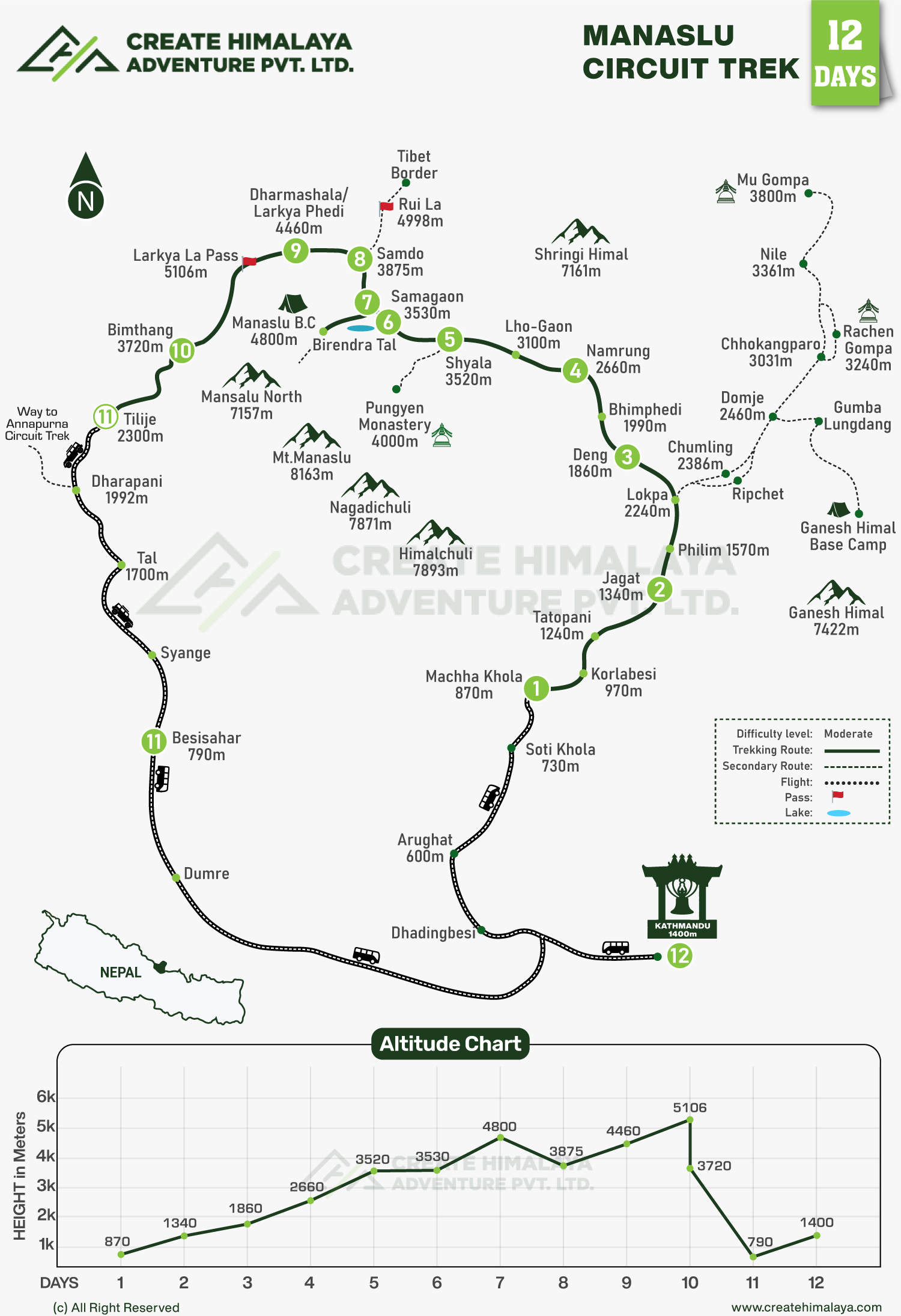
Kathmandu → Machha Khola → Jagat → Deng → Namrung → Lho → Shyala → Samagaun → Samdo → Dharamsala (Larke Phedi) → Larke La Pass (5,106m) → Bimthang → Tilije → Dharapani → Besisahar
From Machha Khola, the trail passes through beautiful villages like Jagat and Deng before reaching Namrung and Lho, where trekkers get their first impressive views of Mount Manaslu. The route continues to Shyala and Samagaun, the cultural heart of the region, offering opportunities to explore Pungen Gompa, Birendra Lake, and Manaslu Base Camp.
After Samagaun, the trek enters a higher alpine landscape toward Samdo and Dharamsala, the last stop before crossing the challenging Larke La Pass (5,106m). The journey continues downhill through Bimthang, Tilije, and Dharapani, finally ending at Besisahar, from where trekkers drive back to Kathmandu or continue toward other destinations.
This route is famous for its combination of Himalayan adventure, remote villages, ancient Buddhist culture, and breathtaking mountain views, making it one of the best trekking experiences in Nepal.
Manaslu Circuit Trek Difficulty
The Manaslu Circuit Trek is considered a moderate to challenging trek in Nepal due to its high altitude, long walking days, and the crossing of the famous Larke La Pass (5,106m). The trek involves gradual ascents, steep sections, rocky trails, and changing landscapes from tropical forests to high Himalayan terrain.
The most challenging part of the trek is the climb to Dharamsala (Larke Phedi) and crossing Larke La Pass, where trekkers may face cold temperatures, snow, strong winds, and thin air. Proper acclimatization, physical fitness, and a steady walking pace are important for completing the trek safely.
Although no technical climbing skills are required, trekkers should be prepared to walk around 6–8 hours per day on some sections. With good preparation and previous hiking experience, the Manaslu Circuit Trek is achievable for adventure-loving trekkers who want to explore a remote and less crowded Himalayan trail.
For a detailed guide on the difficulty of trekking to Manaslu Trek.
Why Choose Manaslu Circuit Trek?
The Manaslu Circuit Trek is one of Nepal’s best off-the-beaten-path trekking adventures, offering a perfect blend of natural beauty, cultural experiences, and Himalayan adventure. Unlike crowded trekking routes, Manaslu provides a peaceful journey through remote mountain villages, ancient monasteries, and untouched landscapes around the majestic Mount Manaslu (8,163m). The trek takes you through the diverse landscapes of the Budhi Gandaki Valley, from green forests and rivers to high alpine terrain and glaciers.
One of the main reasons to choose the Manaslu Circuit Trek is its incredible mountain scenery. Throughout the journey, trekkers enjoy breathtaking views of Mount Manaslu, Himal Chuli, Ganesh Himal, Ngadi Chuli, Himlung Himal, Cheo Himal, and Annapurna ranges. The challenging crossing of Larke La Pass (5,106m) adds a thrilling Himalayan experience and is considered one of the most rewarding moments of the trek.
The trek is also famous for its rich Tibetan-influenced culture and traditional villages. Places like Lho, Samagaun, Samdo, and Dharamsala offer a chance to experience ancient Buddhist traditions, prayer flags, monasteries, and the unique lifestyle of mountain communities. The combination of natural wonders, authentic culture, fewer crowds, and adventure makes the Manaslu Circuit Trek a truly unforgettable Himalayan journey.
Trip Itinerary
Drive from Kathmandu to Machha Khola
We begin our adventure with an early departure from Kathmandu. After breakfast, we board a private vehicle for the journey to Machha Khola. The first of trip follows a paved highway to Dhading Besi, taking approximately 3–4 hours.
From there, the route transitions to a rugged, winding dirt road for the remaining 5–7 hours, tracing the Budi Gandaki River valley. While the total drive spans roughly 8–10 hours, our experienced driver and comfortable private vehicle ensure a safe and manageable journey through Nepal's varied landscapes. We’ll arrive in Machha Khola by evening, ready to begin our trek.
Trek from Machha Khola to Jagat
Today's trek truly begins with following the lively Budi Gandaki River through lush forests where troops of monkeys and langurs are common. The path then leads into traditional Gurung villages like Lower Khorlabeshi, where shepherds often wear their distinctive, smoke-browned woolen capes called bokkhu.
A welcome stop is Tatopani ("hot water"), where natural hot springs offer a chance to soothe tired muscles. Refreshed, you'll cross a suspension bridge into Doban, passing through areas like Landslip and Yaruphant. The route cleverly uses a wooden river crossing to avoid a long, steep climb.
Finally, a long cantilever bridge at Yaru leads to Jagat, a tidy, flagstone-paved Gurung village. Here, officials will check your Manaslu restricted area permit, marking your official entry into this controlled region.
Trek from Jagat to Deng
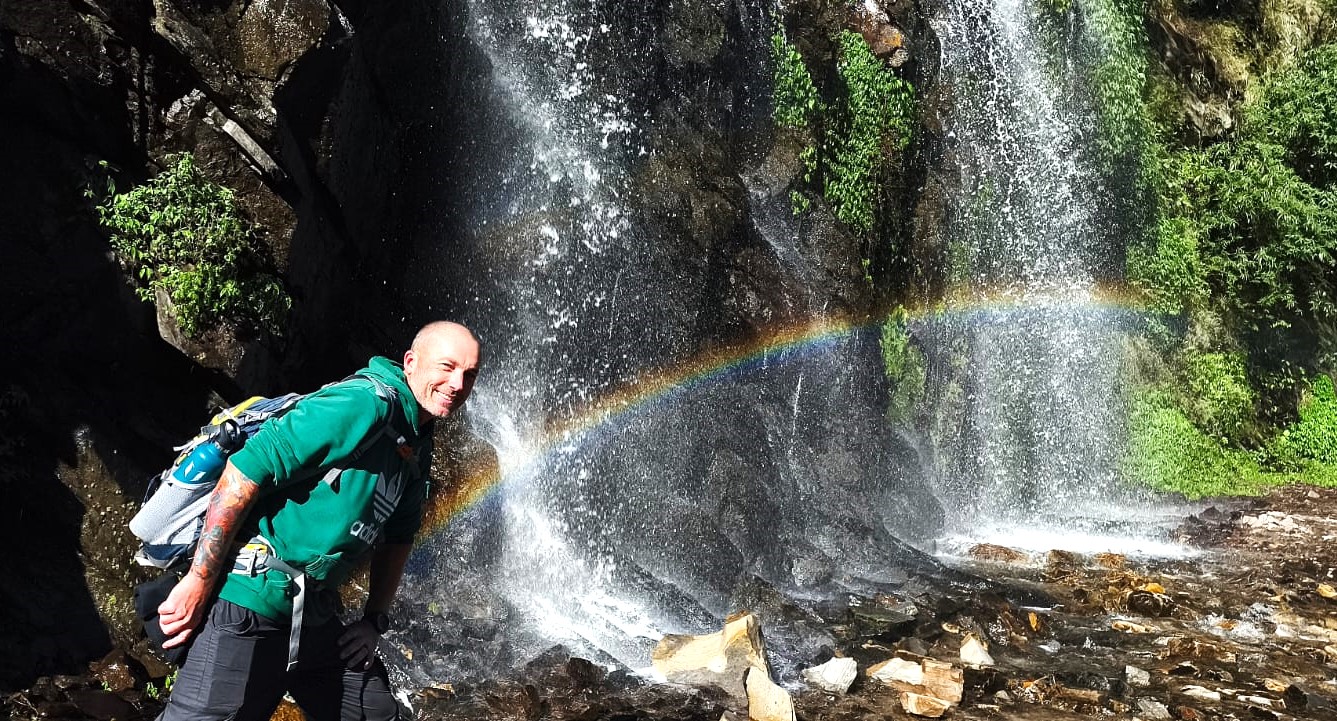
Today we descend to the Dudh Pokhari Khola, crossing a suspension bridge with views of a powerful waterfall just beyond Jagat. A short fifteen-minute walk take us to Salleri, a village with terraced fields of rice and millet and greate view of the majestic peak of Shringi Himal (7,187m).
The day’s journey continues passing through waterfalls and over another bridge, ascending a jeep trail to Ghatte Khola. A 45-minute climb leads to Philim, home to an MCAP checkpoint. Here, we may pause to observe local life before continuing toward Chisapani for lunch.
The afternoon takes us through gorgeous rhododendron and dense bamboo forests near Eleklibhatti, as the Gandaki Valley narrows into steep, soaring walls. At a junction just before Nyak, the path splits toward the Tsum Valley and our route to Larkya La Pass. From Nyak, we follow the Deng River upstream, climbing through Pewa to reach the traditional stone village of Deng for our overnight stay.
trek from Deng to Namrung
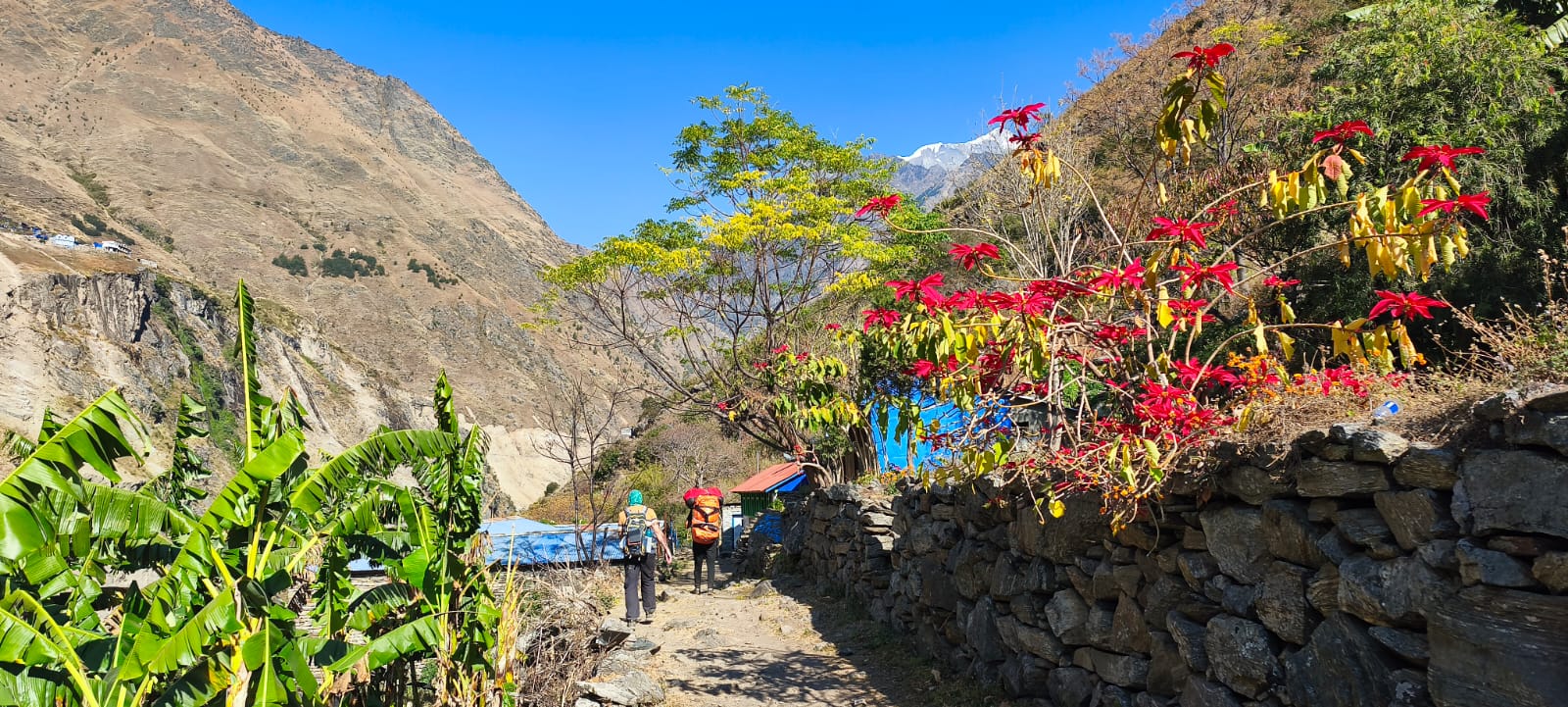
We start our trek by walking through a peaceful bamboo forest on the way to Deng. The trail then crosses a suspension bridge and climbs through the villages of Rana and Bihi Phedi, where white-faced monkeys are sometimes seen near the settlements.
We carefully pass a landslide area before continuing uphill toward Namrung. The final part of the walk follows the river with a gentle zigzag climb, leading us to the stone-built village of Namrung at 2,660 meters.
Namrung has comfortable teahouses and small restaurants. There is also a modern lodge with Wi-Fi and good coffee, making it a relaxing place to rest for the night.
Trek fromNamrung to Syala
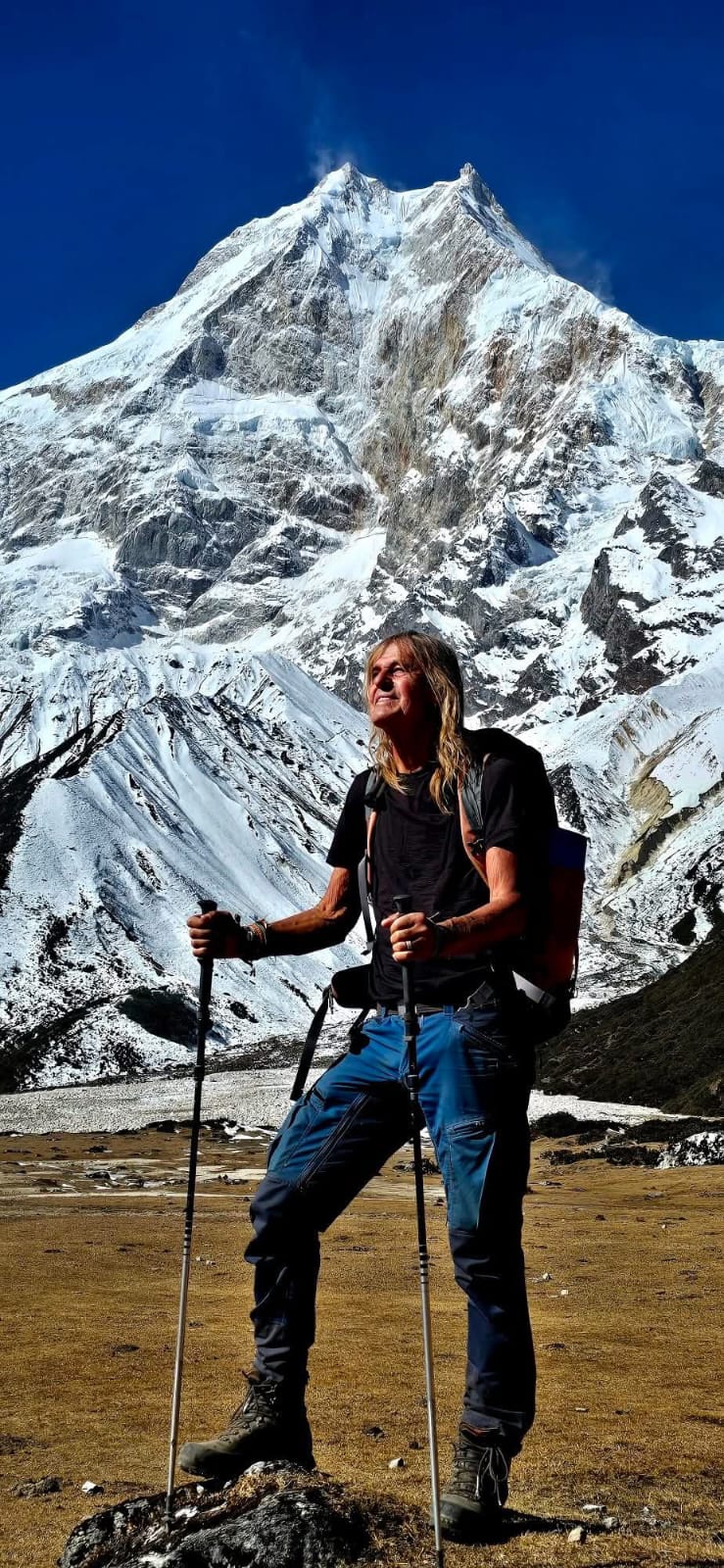
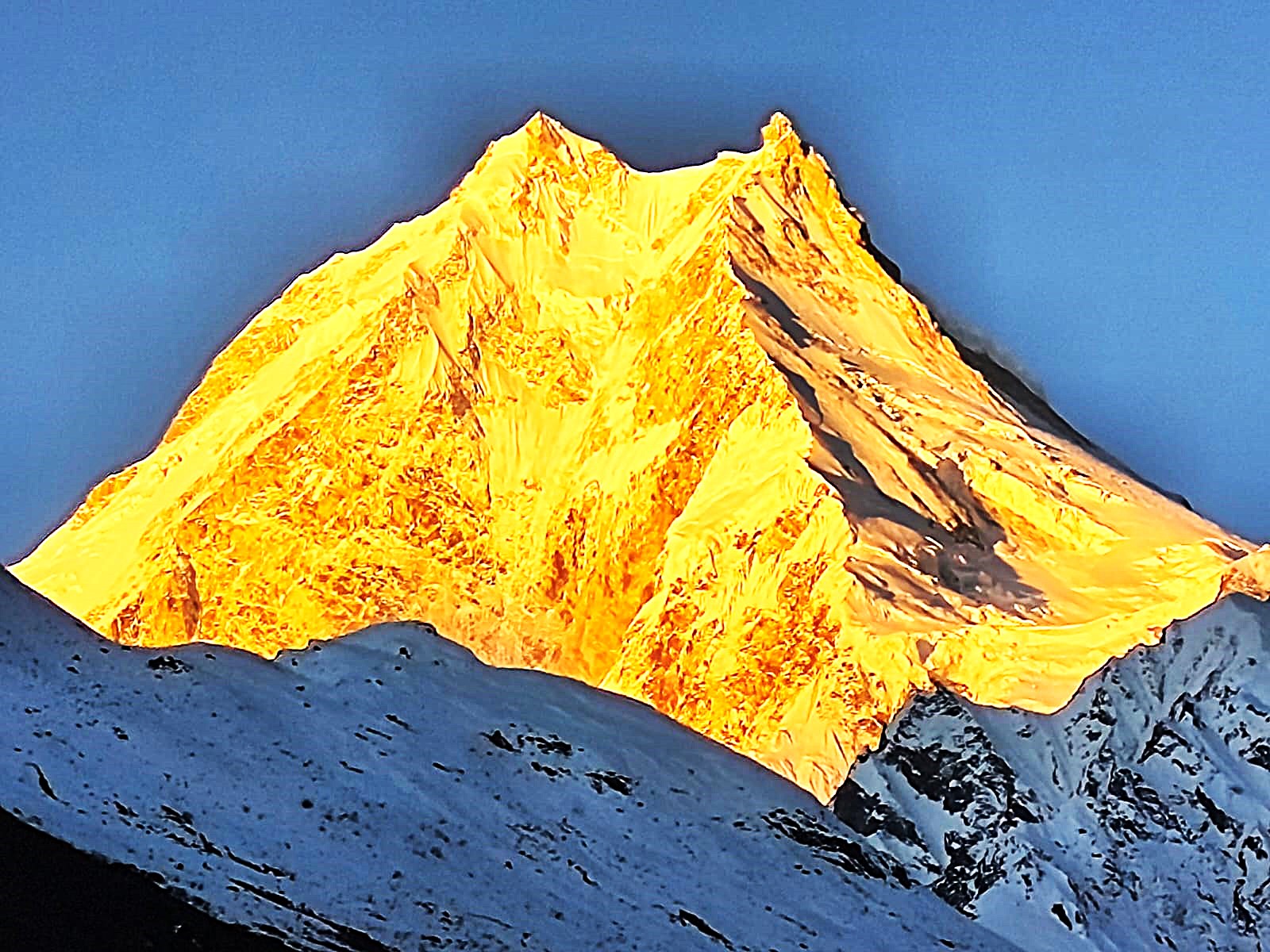
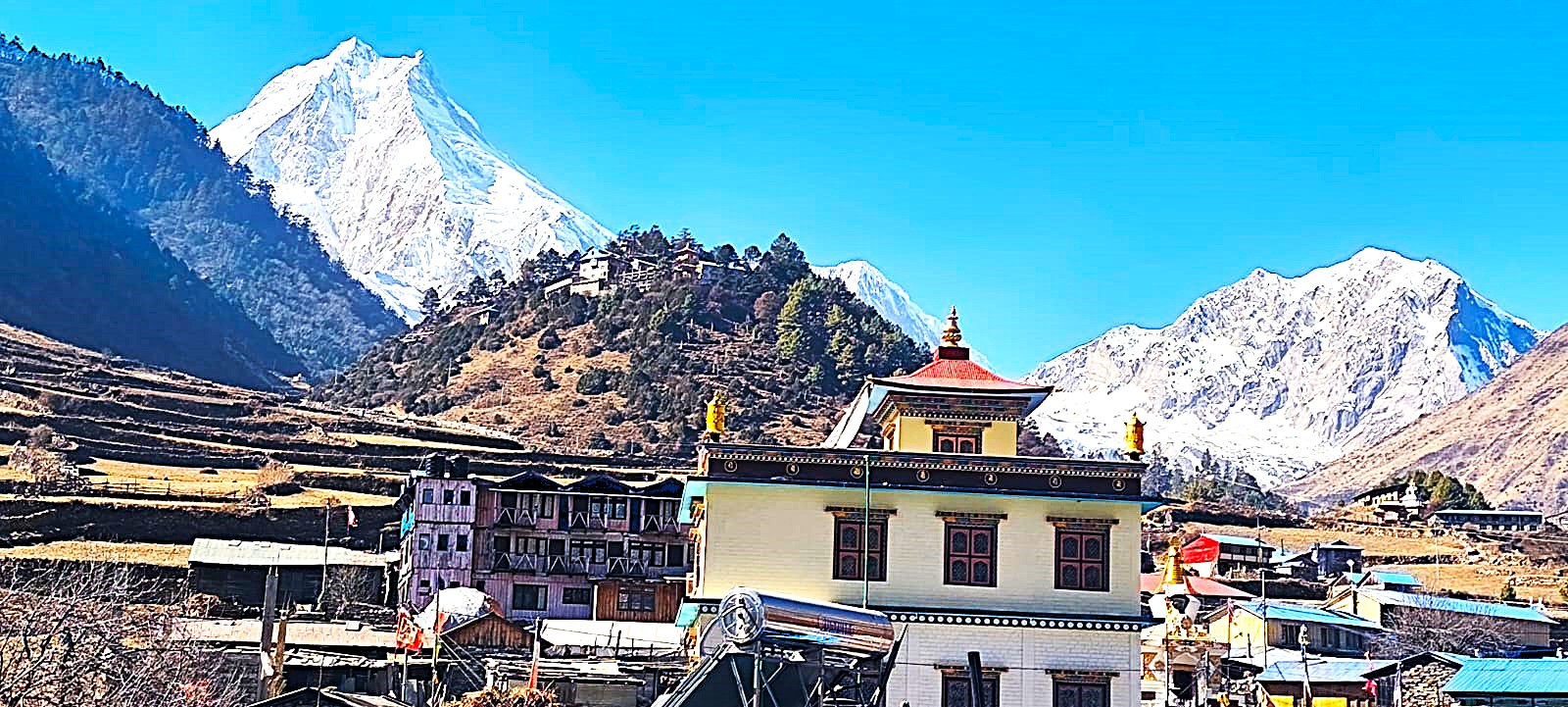
The walk from Namrung to Shyala offers stunning mountain views. As you approach Lho and Shyala, Mt. Manaslu (8,163m), the world’s eighth-highest peak, comes clearly into view and dominates the landscape.
Other impressive peaks such as Himal Chuli, Ngadi Chuli, and, on clear days, the distant Ganesh Himal range surround the trail, creating a beautiful Himalayan panorama and making this section one of the most memorable parts of the trek.
Trek Syala to Samagaun
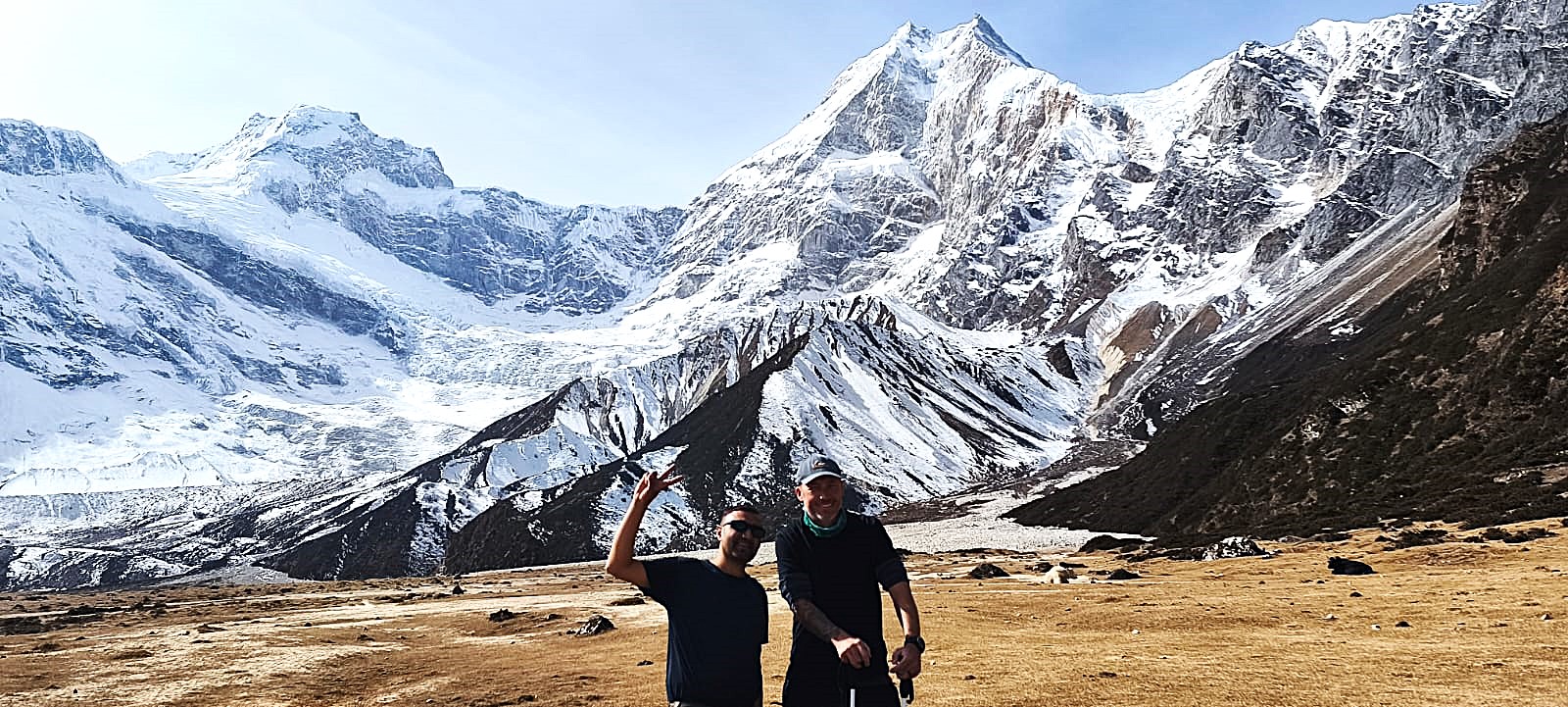
From Syala, the trail gradually ascends toward the sacred Pungyen Gompa (4050m), passing yak pastures, open alpine meadows, and glacial moraine landscapes. The monastery sits beneath the massive south face of Mount Manaslu, offering one of the most dramatic mountain backdrops in the entire trek. After exploring the gompa, the trail descends gently toward Samagaun, following wide valley paths with breathtaking views of glaciers, icefalls, and surrounding peaks. The final approach into Samagaun is peaceful and scenic, making it one of the most memorable trekking days of the journey.
Rest day in Samagaun
Today is a rest day in Samagaon, allowing your body to adjust to the altitude. We'll use this time to explore the village and connect with the local Nubri community, observing their daily life and traditional crafts like yak herding and wool spinning.
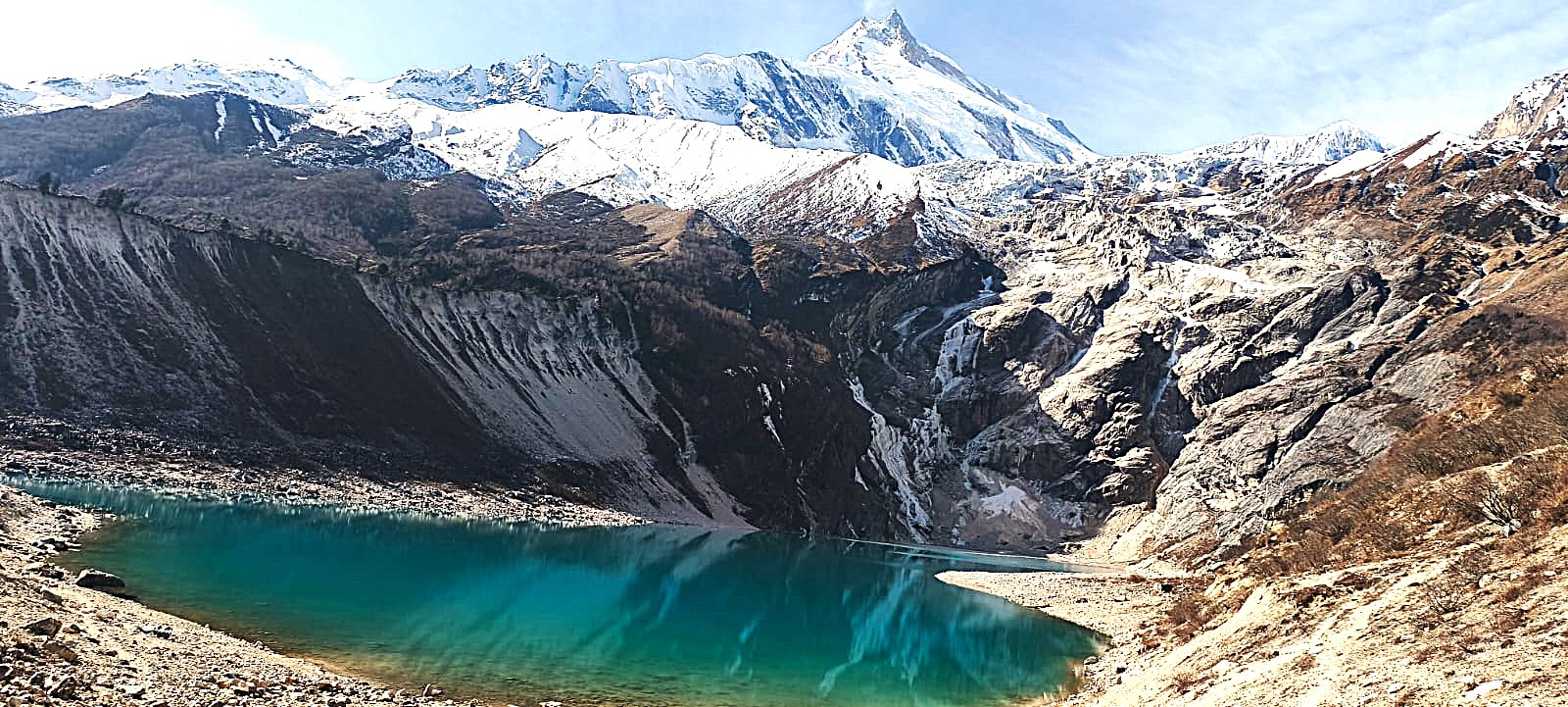
Depending on your energy and interest, you can choose between scenic excursions. The first is a visit to the nearby glacial Birendra Tal, a round trip of 1–1.5 hours with serene mountain reflections. Alternatively, for a more adventurous option, you can trek to Manaslu Base Camp (4800m)—a longer 7–8 hour journey that brings you closer to the face of the mighty mountain itself.
Whichever you choose, today offers a chance to recharge while deepening your connection to the culture and landscapes of the Manaslu region.
Trek from Samagaun to Samdo
After our rest day in Samagaon, we begin a gentle hike toward Samdo. The trail is straightforward, gradually leading us into a stark, almost desert-like landscape with sparse vegetation and wide, dry stretches.
We'll cross to the opposite side of the Budi Gandaki River, climbing a terraced slope before tackling a final 30-minute steep ascent. At the top lies Samdo (3,875m), a village known for its distinct high-altitude architecture and sweeping mountain views.
Trek from Samdo to Dharmasala
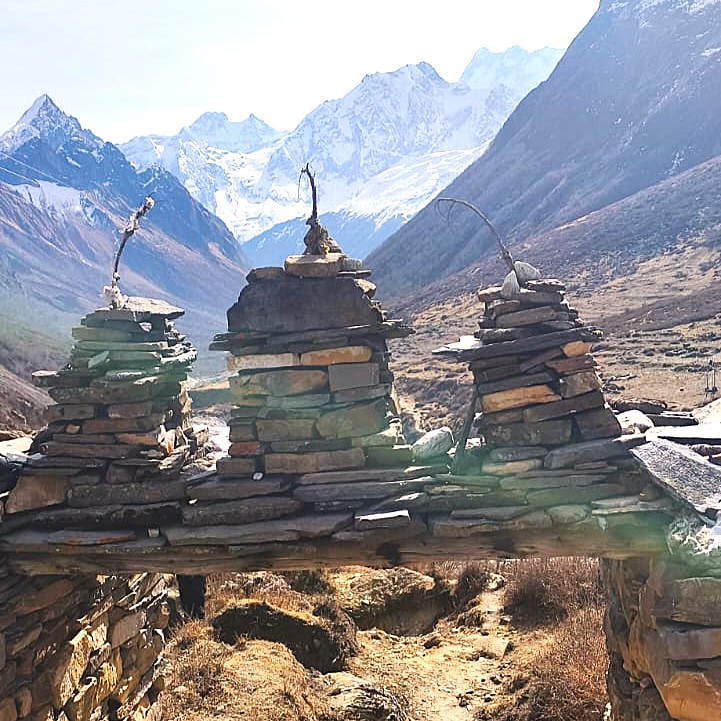
Although the distance from Samdo to Dharmasala is relatively short, the high altitude makes this 3-hour trek physically demanding. The trail gradually climbs across open, rocky terrain, and the thin air requires a slow, steady pace with regular rest stops to aid acclimatization.
As you gain elevation, wide views of the surrounding Himalayan peaks unfold, adding to the sense of remoteness. Dharmasala (also known as Larkya Phedi) is a basic seasonal settlement with simple teahouses and limited facilities. It serves as the final resting point before the early-morning crossing of the challenging Larkya La Pass.
Larkya Pass (Dharmasala to Bhimtang)
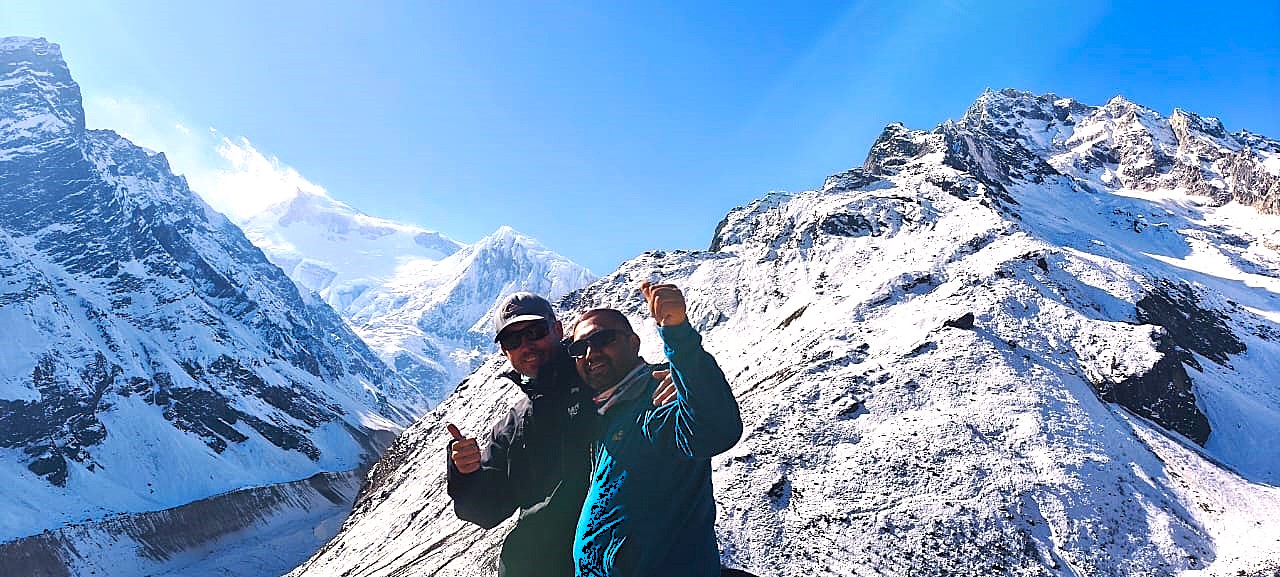
Today is the most important day of the trek as we cross Larkya La Pass (5,106m), the highest point of the journey. We start very early, around 3 a.m., to reach the pass before strong winds and changing weather.
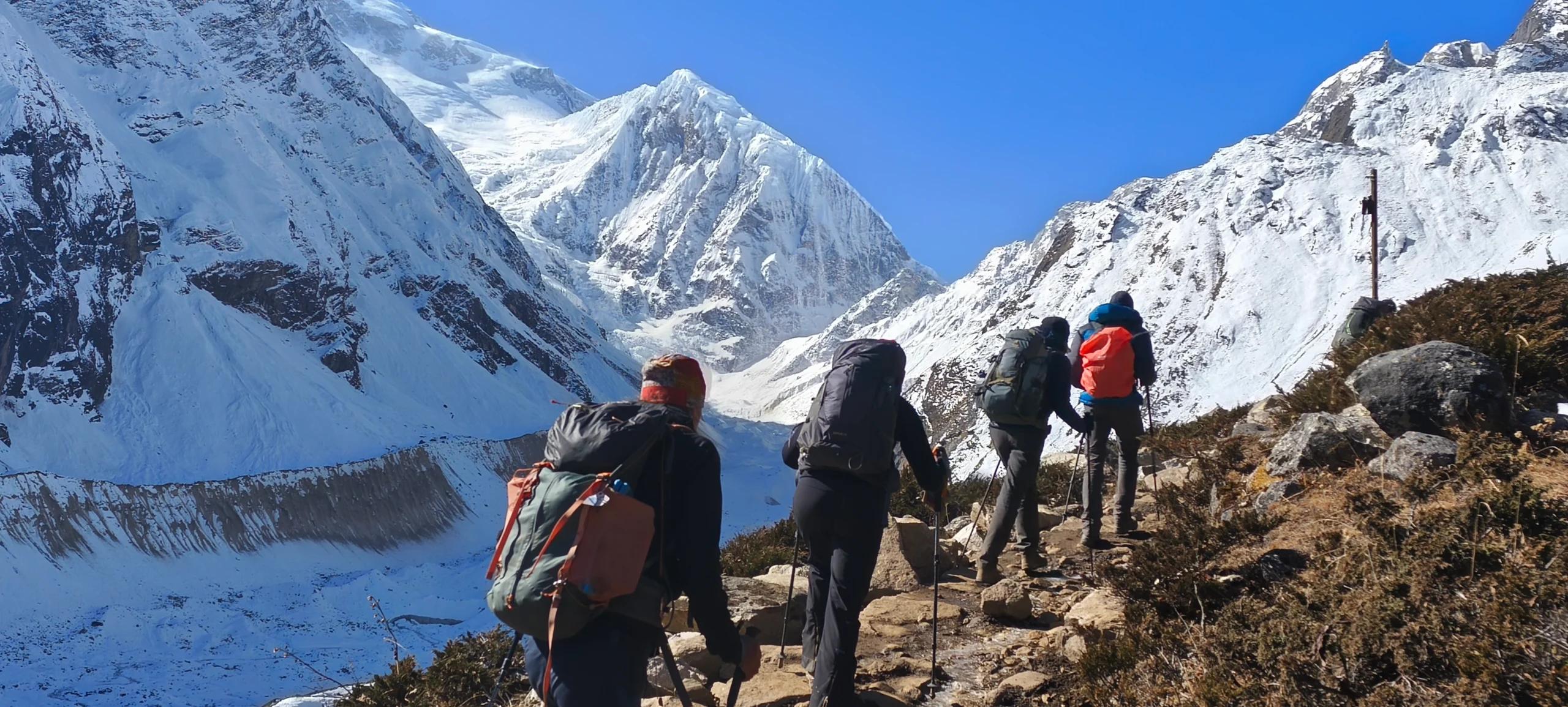
The climb is tough due to the high altitude and possible snow or ice, so we walk slowly and take regular breaks. At the top, we are rewarded with stunning panoramic views of Himlung Himal, Kang Guru, and Annapurna II.
After enjoying the views, we begin a long descent of about three hours toward Bimthang. Along the way, we pass glaciers, the beautiful Pongkar Tal lake, and dramatic mountain scenery. We spend the night in Bimthang, resting after an unforgettable day.
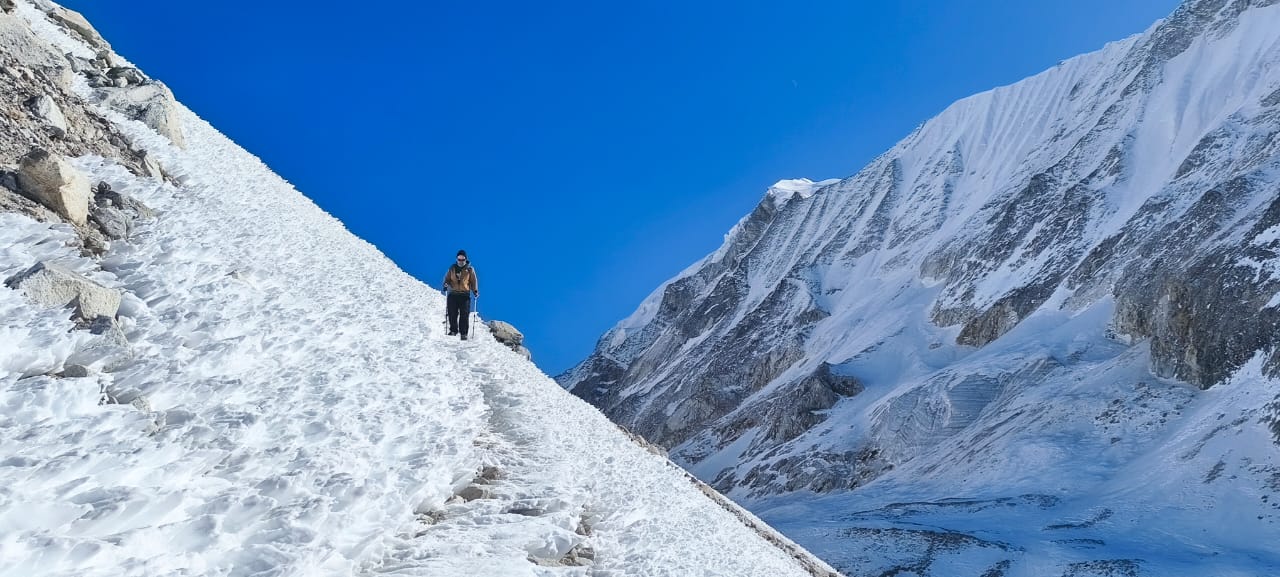
Trek from Bimtang to Tilje Village (2300 m) and drive to Besisahar (790 m)
Today we hike from Bhimtang back to Tilje, following the same route. The walk begins across open pastureland before descending into the Budhi Khola valley. Continuing onward, we cross the river and pass through beautiful rhododendron forests. After a couple of hours of trekking, we reach the village of Tije, known for its apple orchards and local wine. After we arrived at Tilje we will take a 3.5 hours local jeep ride towards Besishahar.
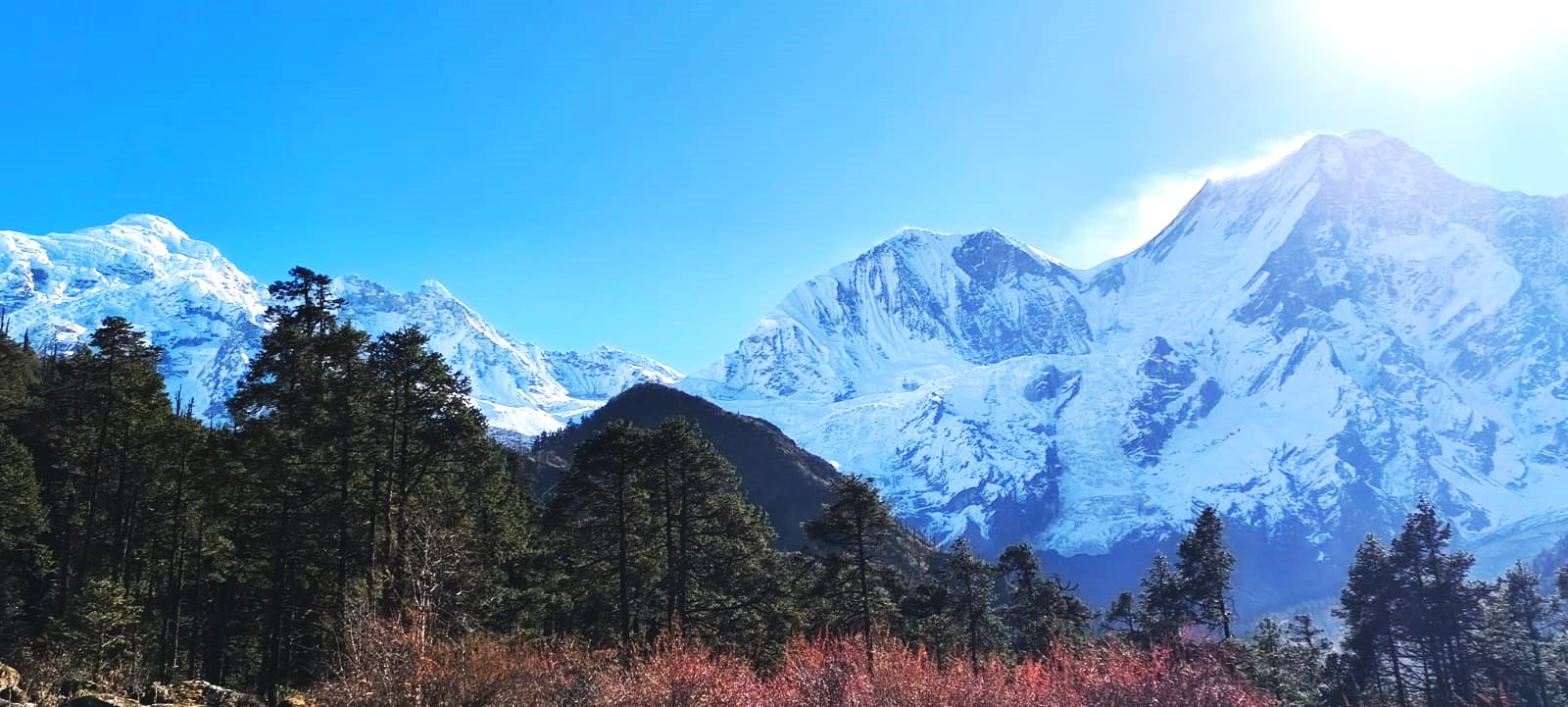
Drive from Besisahar to Kathmandu
After concluding your trek in Dharapani, your return journey to Kathmandu begins with a private jeep transfer from Besisahar. From Besisahar, you’ll continue by road through Nepal’s picturesque mid-hills, a 6–7 hour drive (175 Km) that gradually returns you from the serene mountains to the vibrant capital.
Note: From Besisahar, there is an option to drive directly to Pokhara. The journey covers approximately 80 km and usually takes 4–5 hours, depending on road and traffic conditions. This scenic drive follows sections of the Marsyangdi and Seti rivers and offers views of hills, rivers, and rural villages, making it a convenient and pleasant way to continue your journey after the trek.
Not Satisfied with This Itinerary?
Every traveler is different. Customize this trip with the help of our local travel specialists and create an itinerary that perfectly matches your interests, schedule, and budget.
What's included
- Airport Transfers: International Airport pick-up and drop-off service.
- Trekking Permits: The required paperwork and trekking permit are required for Restricted Area Permit(RAP), Manaslu conservation Area Permit (MCAP), Annapurna Conservation Area Permit (ACAP), and Local municipality Permit.
- Transportations: All ground Transportation from Kathmandu-Machha Khola/Dharapani-Kathmandu as per group size.
- Trekking Equipment: We provide sleeping bags, down Jackets, and Duffle bag if needed.
- Souvenirs: Create Himalaya Adventure T-Shirt as a souvenir.
- Meals: Three meals a day (breakfast, lunch, dinner) during the trek.
- Accommodation: Twin-bed sharing with a shared toilet during the trek.
- Guide Expenses: All costs for an English-speaking, government-licensed guide.
- Guide Insurance: Insurance coverage for guides.
- Trekking Map: Manaslu and Annapurna Region Trip Map for the group.
- First Aid Kit: Medical kit available during the trip.
- Taxes and Fees: Tourist service charge, VAT, government tax, and official expenses.
What's not included
- International Expenses: International airfare, visa, and travel insurance.
- Kathmandu Meals: Breakfast, Lunch and Dinner at Kathmandu.
- Accommodation in Kathmandu: Accommodation in Kathmandu or on the trek for any reason (Early arrival or delay, early arrival from trek due to any reason).
- Porter Service: Porter to carry your luggage during the trek (if you would like to take a porter, it will cost you USD 30 for each day trip, which you could add from our add-on option).
- Gratuities: Tips for Guide and Porter (expected from trekkers involved in the Trek.
Map
Best Time for Manaslu Circuit Trek
The best time for the Manaslu Circuit Trek is during the spring (March to May) and autumn (September to November) seasons when the weather is stable, skies are clear, and mountain views are at their best. These seasons offer comfortable trekking conditions, making it easier to explore the remote trails, high passes, and beautiful villages of the Manaslu region.
Spring Season (March to May)
Spring is one of the best times for the Manaslu Circuit Trek as the trails become colorful with blooming rhododendron flowers and fresh greenery. The weather is generally warm at lower elevations and pleasant at higher altitudes. Trekkers can enjoy excellent views of Mount Manaslu, Himal Chuli, Ganesh Himal, and other Himalayan peaks with fewer chances of heavy snowfall around Larke La Pass.
Autumn Season (September to November)
Autumn is considered the most popular trekking season in Nepal. After the monsoon, the skies become clear, the mountain views are spectacular, and the trails are dry and comfortable. This is the ideal season for crossing Larke La Pass (5,106m) and enjoying the breathtaking landscapes, traditional villages, and Tibetan-influenced culture of the Manaslu region.
Winter Season (December to February)
Winter trekking in the Manaslu region is possible for experienced trekkers, but it is more challenging due to freezing temperatures and heavy snowfall, especially around Dharamsala and Larke La Pass. The trails are quieter, and the snowy landscapes are beautiful, but proper preparation and winter equipment are necessary.
Monsoon Season (June to August)
The monsoon season is generally less recommended for the Manaslu Circuit Trek because of heavy rainfall, slippery trails, landslides, and limited mountain visibility. However, some lower sections remain accessible, and trekkers looking for a quiet experience may still attempt the trek with proper planning.
Manaslu Circuit Trek Permits
The Manaslu Circuit Trek requires special permits because it is a restricted trekking area of Nepal. Trekkers need a Manaslu Restricted Area Permit (RAP), Manaslu Conservation Area Permit (MCAP), Annapurna Conservation Area Permit (ACAP), and Local Municipality Permits to complete the full circuit. These permits help protect the natural environment, preserve local culture, and manage trekking activities in this remote Himalayan region.
Manaslu Circuit Trek Cost
The cost of the Manaslu Circuit Trek depends on the trekking duration, services, group size, and level of comfort you choose. On average, a complete Manaslu Circuit Trek package costs around USD 1,200 to USD 2,500 per person. This usually includes permits, guide, porter, accommodation, meals, transportation, and other necessary trekking arrangements.
The main expenses include Manaslu Restricted Area Permit, MCAP, ACAP, transportation from Kathmandu, teahouse accommodation, food, guide and porter fees. The cost may increase for private treks, luxury services, or longer itineraries with side trips such as Manaslu Base Camp, Birendra Lake, or Pungen Gompa.
A budget trek can be more affordable by joining a group, while a private trek offers more flexibility and personalized service. Proper planning helps make the Manaslu Circuit Trek a safe, comfortable, and unforgettable Himalayan adventure.
Food and Accommodation During Manaslu Circuit Trek
During the Manaslu Circuit Trek, trekkers stay in local teahouses and mountain lodges run by local families. Accommodation is generally simple but comfortable, with basic rooms, twin beds, blankets, and shared bathrooms in most places. Higher areas such as Samdo and Dharamsala have more basic facilities due to the remote location and high altitude.
Food on the Manaslu Circuit Trek is prepared fresh at teahouses and includes a variety of local and international dishes. The most popular meal is Nepali dal bhat (rice, lentils, vegetables, and curry), which provides good energy for long trekking days. Other options include noodles, soups, pasta, fried rice, potatoes, eggs, pancakes, and seasonal vegetables.
As the trail moves into higher regions, food choices become more limited, but teahouses continue to provide warm and nutritious meals to support trekkers during the journey. A combination of comfortable teahouse stays and local mountain cuisine makes the Manaslu Circuit Trek a unique cultural and adventure experience.
Travel Insurance for Manaslu Circuit Trek
Travel insurance is an important requirement for the Manaslu Circuit Trek because the route reaches high altitudes and includes challenging sections like Larke La Pass (5,106m). A good trekking insurance policy should cover high-altitude trekking, emergency helicopter evacuation, medical treatment, accidents, and trip-related issues.
Since the Manaslu region is remote, rescue services can be expensive and difficult to arrange during emergencies. Having proper travel insurance provides peace of mind and ensures trekkers are protected against unexpected situations such as altitude sickness, injuries, weather delays, or evacuation needs. Always check that your insurance covers trekking above 5,000 meters before starting the journey.
Manaslu Circuit Trek Equipment
Packing the right equipment is important for a safe and comfortable Manaslu Circuit Trek. Since the trek reaches high altitudes and crosses Larke La Pass (5,106m), trekkers should be prepared for changing weather conditions.
Equipment List
- Trekking backpack (30–50L)
- Comfortable hiking boots
- Thermal base layers
- Down jacket
- Waterproof jacket and pants
- Trekking pants and shirts
- Warm hat and gloves
- Trekking socks
- Sleeping bag
- Trekking poles
- Sunglasses with UV protection
- Sunscreen and lip balm
- Headlamp with extra batteries
- Water bottle or hydration bladder
- Water purification tablets/filter
- Personal first aid kit
- Personal medications
- Energy bars and snacks
- Toiletries and quick-dry towel
Packing light while carrying these essentials will help ensure a comfortable and enjoyable trekking experience in the Manaslu region.
Trip Note – Manaslu Circuit Trek
The Manaslu Circuit Trek is a remarkable Himalayan adventure with breathtaking mountain views, authentic local culture, and remote trails. At Create Himalaya Adventure, we provide professional trekking services throughout Nepal with experienced guides, well-planned itineraries, and personalized support to make your journey safe and memorable.
Our Manaslu trekking guides have excellent knowledge of every section of the trail, from Machha Khola to Larke La Pass and Besisahar. Many of our guides are from the Manaslu region itself, so they have deep connections with the local communities and a complete understanding of the route, weather conditions, culture, and hidden attractions. Their local experience allows trekkers to enjoy a more authentic and comfortable trekking experience.
With Create Himalaya Adventure, you can explore the beauty of Mount Manaslu, Samagaun, Pungen Gompa, Birendra Lake, Manaslu Base Camp, and Larke Pass with a trusted local team dedicated to providing quality service and unforgettable Himalayan memories.
Manaslu Circuit Trek – Alternative Treks
- Tsum Valley Trek – 11 Days: Sacred hidden valley with rich Tibetan culture and peaceful landscapes.
- Manaslu Tsum Valley Trek –19 Days: Combined adventure of both Manaslu Circuit and Tsum Valley, offering remote trails, high passes, and deep cultural immersion.
FAQs
1. Does your Manaslu Circuit itinerary follow safe altitude gain guidelines?
Yes, absolutely. Guest safety and comfort are our top priorities, and our Manaslu Circuit itinerary is carefully designed to follow internationally recommended altitude-acclimatization guidelines.
We plan the trek around the well-proven principle of “climb high, sleep low” and strictly manage daily altitude gains. Once above 3,000 meters, overnight altitude increases are generally limited to around 300–500 meters, allowing your body adequate time to adjust and significantly reducing the risk of altitude-related issues.
Our day-by-day itinerary clearly lists all overnight elevations so you can review the progression in advance. A key example is the scheduled acclimatization night in Samdo, which helps prepare the body before heading higher. Similarly, after crossing the Larkya La Pass (5,160m), we descend to Bimthang for the night rather than sleeping at high altitude, supporting safe recovery after the most demanding day.
In addition, our experienced guides closely monitor guests throughout the trek, encourage a steady pace, and adapt walking speeds and rest stops as needed. This thoughtful approach ensures a safer, more comfortable, and more enjoyable trekking experience for everyone.
2. What is your emergency plan if someone gets altitude sickness?
Safety is our top priority. If any signs of Acute Mountain Sickness (AMS) appear, our guides act immediately, with descent to a lower altitude as the first response. We have identified safe descent points along the route for quick action.
In rare severe cases such as HAPE or HACE,guide will take you to the near by medical center for initial stabilization while coordinating helicopter evacuation. All guides are trained in wilderness first aid and carry satellite communication devices to ensure fast and effective emergency response.
3. Is the Manaslu Circuit trek safe for first-time high-altitude trekkers?
A: Yes, the Manaslu Circuit can be a safe and rewarding experience for fit first-time high-altitude trekkers when the itinerary is well paced and proper altitude-gain guidelines are followed. That said, it is a more remote and physically demanding trek compared to popular routes like Everest Base Camp or Annapurna Base Camp.
For this reason, a carefully designed itinerary, gradual ascent, and adequate acclimatization are essential. With experienced guides, a steady walking pace, and close attention to how your body adjusts to altitude, most trekkers are able to complete the journey safely and enjoyably.
4. How basic are the teahouses on the Manaslu Circuit?
Accommodation on the Manaslu Circuit is more basic compared to the Everest and Annapurna regions, reflecting the area’s remote and less-developed nature. Rooms are simple and comfortable, heating is often limited, and shared toilets are common in many teahouses.
At higher elevations, facilities such as hot showers, Wi-Fi, and reliable electricity may be limited or unavailable. However, these simpler lodges offer a warm welcome, home-cooked meals, and an authentic mountain experience that many trekkers find to be a rewarding part of the journey.
5. How cold does it get on the Manaslu Circuit?
Nighttime temperatures on the Manaslu Circuit can drop below −10°C, particularly around Samdo, Dharmasala, and Bimthang. Even during peak trekking seasons, proper cold-weather clothing and layered gear are essential to stay warm and comfortable.
With the right preparation and equipment, these colder conditions are very manageable and are part of what makes the high-mountain experience so unique and rewarding.
6. What mountains can I see during the Manaslu Circuit Trek?
During the Manaslu Circuit Trek, trekkers can enjoy panoramic views of some of the most impressive Himalayan peaks in Nepal. The major highlights include Mount Manaslu (8,163m), Himalchuli, Ngadi Chuli, Ganesh Himal range, Shringi Himal, and several other surrounding snow-covered peaks that dominate the skyline throughout the journey.
7. Where can I see Mount Manaslu clearly?
The clearest views of Mount Manaslu are from Lho Village, Shyala Village, Samagaun, and Birendra Lake area. For the most dramatic scenery, Pungen Gompa offers a wide panoramic view, while Manaslu Base Camp provides a close-up view of the mountain and glaciers.
8. What is the highest elevation of the Manaslu Circuit Trek?
The highest point of the Manaslu Circuit Trek is Larke La Pass, which stands at an elevation of 5,106 meters (16,752 feet). This is the most challenging and rewarding section of the entire trek.
9. What passes are included in the Manaslu Circuit Trek?
The trek mainly includes one major high pass, which is Larke La Pass (5,106m). This pass is the most demanding part of the journey and offers incredible Himalayan views once crossed.
10. What permits are required for the Manaslu Circuit Trek?
To complete the Manaslu Circuit Trek, trekkers need several permits including the Manaslu Restricted Area Permit (RAP) and the Manaslu Conservation Area Permit (MCAP), Local municipality permits, and the Annapurna region, then the ACAP permit is also required.
11. Do I need ACAP for the Manaslu Circuit Trek?
An Annapurna Conservation Area Permit (ACAP) is required only if you exit the trek via Dharapani into the Annapurna region. However, before that, all trekkers must already have the Manaslu restricted area permits to enter the region.
12. Can I trek the Manaslu Circuit alone?
Solo trekking is not allowed in the Manaslu region. Trekkers must be accompanied by a licensed guide and organized through a registered trekking agency. In most cases, a minimum of two trekkers is also required for permit approval.
13. Is a guide mandatory for the Manaslu Circuit Trek?
Yes, hiring a licensed guide is mandatory for the Manaslu Circuit Trek due to its restricted area status and government regulations designed to ensure safety and proper monitoring of trekkers.
14. What type of accommodation is available on the Manaslu Circuit Trek?
Accommodation along the Manaslu Circuit Trek consists mainly of basic teahouses and family-run lodges. Rooms are usually twin-sharing with simple beds, blankets, and shared toilet facilities. Luxury hotels are not available in this remote region.
15. Is a hot shower available during the trek?
Hot shower facilities are available in lower villages along the route, but they usually come at an extra cost. As you move higher into the mountains, especially around Samdo and Dharmasala, hot showers become rare or unavailable due to limited resources.
16. Is Wi-Fi available on the Manaslu Circuit Trek?
Wi-Fi is available in some villages along the trail, but it is very limited, slow, and often unreliable. Higher altitude areas generally have little to no internet connectivity.
17. Can I charge my phone or electronics during the trek?
Yes, charging facilities are available in most teahouses, but they are usually charged per device. As you go higher, electricity becomes limited and may depend on solar power or small generators.
18. What transportation is used for the Manaslu Circuit Trek?
The journey typically begins with a drive from Kathmandu to Soti Khola or Machha Khola by bus or jeep. At the end of the trek, transportation is available from Dharapani or Besisahar back to Kathmandu. There are no road connections inside the main trekking trail.
19. Are there hospitals or medical facilities on the trek?
There are no proper hospitals along the Manaslu Circuit Trek route. Only small health posts are available in a few villages, so serious medical conditions usually require emergency evacuation to Kathmandu.
20. What happens if I get sick during the trek?
If you experience minor illness, your guide can assist with basic treatment or local health posts. However, in serious cases such as altitude sickness or injury, emergency helicopter evacuation may be required, which is why travel insurance is essential.
21. How far do I walk each day on the trek?
On average, trekkers walk around 8 to 23 kilometers per day, depending on the terrain and altitude. Daily trekking time usually ranges from 5 to 9 hours.
22. Can I buy bottled mineral water on the trail?
Yes, bottled mineral water is available in lower villages, but it becomes more expensive at higher altitudes due to transportation difficulties. Many trekkers prefer boiled or filtered water instead.
23. Is drinking water safe during the trek?
Drinking water should always be treated before consumption. Trekkers are advised to use boiled, filtered, or purification tablet-treated water to avoid health issues.
24. How difficult is the Manaslu Circuit Trek?
The Manaslu Circuit Trek is considered moderate to challenging. The difficulty comes from long walking days, high altitude, and crossing Larke La Pass. Good physical fitness is strongly recommended.
25. Can I trek to Manaslu Base Camp?
Yes, you can trek to Manaslu Base Camp, but it is usually done as a side trip from Samagaun during the Manaslu Circuit Trek. The hike is non-technical but steep and takes a full day.
26. How high is Manaslu Base Camp?
Manaslu Base Camp is located at approximately 4,800 meters (15,750 feet) above sea level. It is commonly visited as a side hike from Samagaun during the Manaslu Circuit Trek for close views of Mount Manaslu.
27. What are the trail conditions like?
The trail consists of diverse terrain including river valleys, forest paths, stone staircases, suspension bridges, and rocky alpine sections near the high pass. Some parts can be steep and physically demanding.
28. Is the Manaslu Circuit Trek crowded?
No, the Manaslu Circuit Trek is less crowded compared to Everest and Annapurna regions. Due to its restricted status, the number of trekkers is naturally controlled.
29. Can I extend my trekking days?
Yes, trekking days can be extended if needed, but this must be arranged in advance through your trekking agency as permits and logistics need to be updated accordingly.
30. What is the group size for the trek?
There is no strict maximum group size, but most trekking groups consist of 2 to 10 people. Larger groups are possible but require proper logistical planning.
31. What is the best season for the Manaslu Circuit Trek?
The best seasons are spring (March to May) and autumn (September to November), when the weather is stable and mountain views are clearest.
32. Is travel insurance required?
Yes, travel insurance is mandatory and must cover high-altitude trekking along with emergency helicopter evacuation up to at least 6,000 meters.
33. Is altitude sickness a risk on this trek?
Yes, altitude sickness can occur, especially above 3,500 meters. Proper acclimatization, hydration, and a slow ascent are essential for safety.
34. Can I combine Manaslu Circuit Trek with Tsum Valley?
Yes, combining the Manaslu Circuit Trek with the Tsum Valley Trek is a popular option for trekkers seeking a longer and more culturally rich Himalayan adventure.
35. What permits are required for the Manaslu Circuit Trek?
The Manaslu Circuit Trek requires a Manaslu Restricted Area Permit (RAP), a Manaslu Conservation Area Permit (MCAP), and a local municipality entry fee. If the route continues into the Annapurna region, an ACAP permit is also needed. A licensed guide through a registered trekking agency is mandatory.
36. Is the Manaslu region safe for trekking?
Yes, the Manaslu region is safe for trekking when traveling with a licensed guide, following regulations, and having proper travel insurance.
37. Which trekking agency is recommended for Manaslu Circuit Trek?
Many trekkers choose Create Himalaya Adventure for its experienced guides, safe trekking organization, permit assistance, and professional services throughout the Manaslu and Tsum Valley regions.
Travelers' Reviews
Bettina
Denmark
Verified PurchaseManaslu Circuit
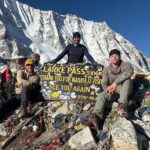
We had the pleasure of trekking the Manaslu Circuit with Ram, and it truly made our experience unforgettable. Ram is professional, knowledgeable, and attentive. He took care of every detail – from permits and logistics to making sure we were well-fed, comfortable, and safe every step of the way. He also did an excellent job of managing the itinerary according to the weather. In addition, Ram is both funny and incredible kind, and we enjoyed when he shared his knowledge of the region and its history.
If you’re planning to do the Manaslu Circuit, or any other trek in Nepal for that matter, we can’t recommend Ram highly enough. His passion for the mountains and genuine care for his clients turn a great trek into an adventure of a lifetime.
Tristan H
Australia
Verified Purchase10/10 Experience with Ram
I did the 13 day Manaslu trek with Ram and was extremely impressed with the quality of the service. Ram is patient, caring and respectful at all times. He was a true professional and made the experience 10/10. I highly recommend Ram and his company for future visitors to Nepal.
TJ
England
Verified PurchaseBook Ram today! 🤘 Don’t waste time on others!
Ram and his team were fantastic! I decided on the Manaslu Circuit trek after having done the ACT a few years ago. I wish I knew of Ram then as I would 100% have booked with him!
From the beginning, his whole team were professional, responded quickly and made me feel very confident in their skills and experience. I was contacted by so many different ‘companies’ or individual guides offering their services, but I chose Ram because he was the most honest, transparent and warm person id spoken to about the trip. He’s also from the same region, which massively helps.
Ram and his team were attentive and informative throughout the whole trek. They listened when I had questions and were more than happy to tweak the itinerary along the way. We shared food and laughed until our heads hurt every day.
I really cannot fault the service at all.
And I along with more than 90% of Rams’ customers, will be a repeat client due to his brilliant service.
We’re already planning the next trip!
No hidden fees • Best price guarantee