
How to prevent Altitude Sickness in the mountain
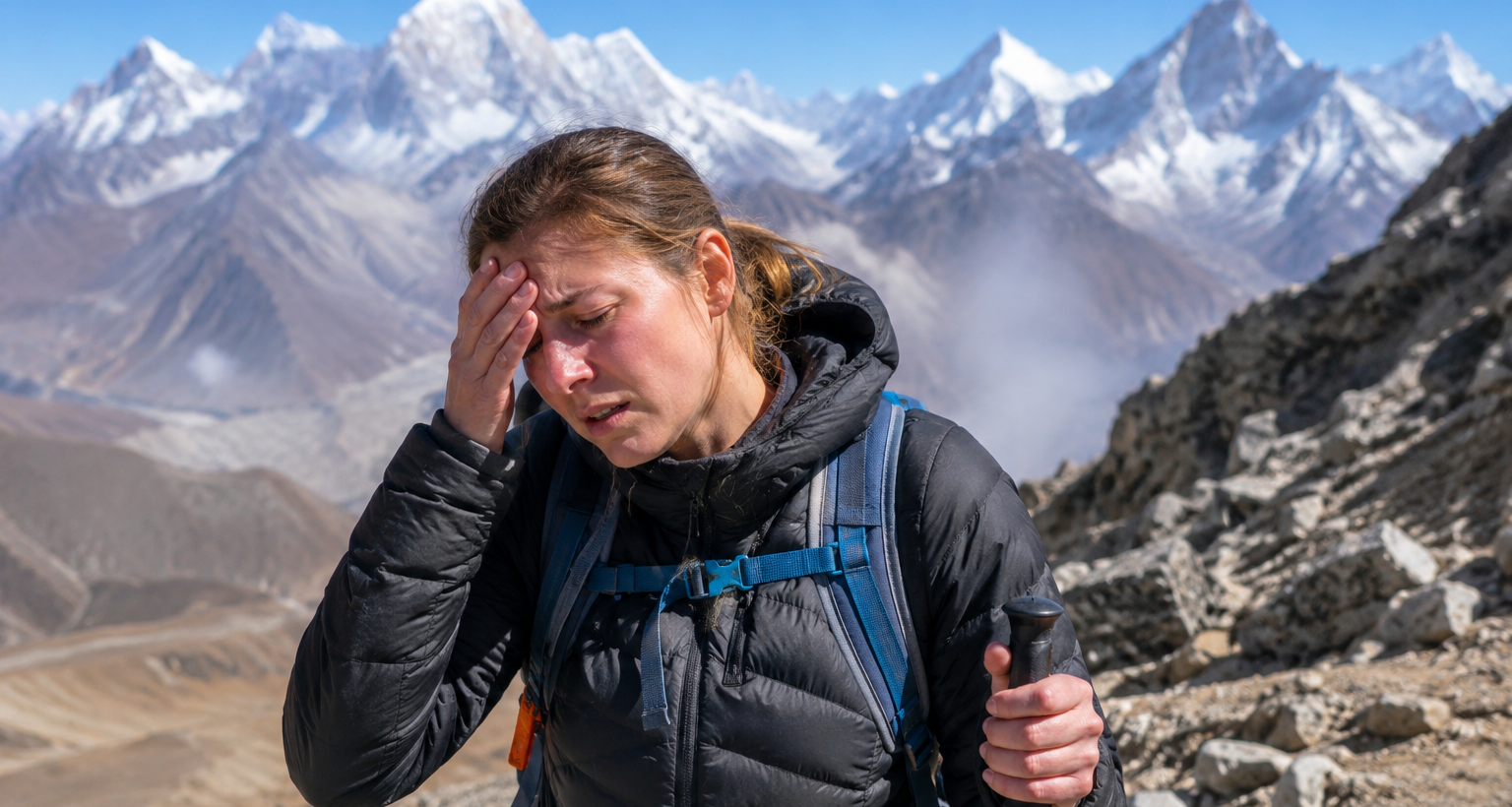
What is Altitude Sickness?
Altitude sickness, also known as Acute Mountain Sickness (AMS), is a health condition that occurs when you travel to high elevations too quickly, usually above 2,500 meters. At higher altitudes, the air becomes thinner and contains less oxygen, making it harder for your body to adjust. As a result, trekkers may experience symptoms such as headache, dizziness, nausea, fatigue, loss of appetite, and difficulty sleeping.
In trekking regions of Nepal like Everest, Annapurna, Manaslu, and Langtang, altitude sickness is a common concern because many routes cross high passes and reach elevations above 3,500–5,000 meters. If ignored, AMS can become serious and lead to dangerous conditions such as HAPE (fluid in the lungs) or HACE (swelling of the brain), which require immediate descent and medical attention.
The best way to prevent altitude sickness is to ascend slowly, stay well hydrated, take proper rest days for acclimatization, and avoid alcohol or smoking during the trek. Listening to your body is very important—if symptoms worsen, the safest solution is to descend to a lower altitude. With proper preparation and awareness, most trekkers can safely enjoy high-altitude trekking in Nepal.
Symptoms of Altitude Sickness
Altitude sickness, or Acute Mountain Sickness (AMS), happens when your body struggles to adjust to lower oxygen levels at high elevations, usually above 2,500 meters. It can affect trekkers of all fitness levels, especially when gaining altitude too quickly during Himalayan treks.
Early symptoms often feel like a mild mountain “hangover” and may include headache, loss of appetite, nausea, dizziness, unusual tiredness, and disturbed sleep. Some trekkers also notice shortness of breath during normal walking and a general feeling of weakness or discomfort that doesn’t improve with rest.
If ignored, symptoms can become more serious and dangerous. Warning signs include continuous vomiting, severe headache that doesn’t go away, confusion, difficulty walking straight, tightness in the chest, and extreme breathlessness even while resting. At this stage, conditions like HAPE or HACE may develop, which require immediate descent to lower altitude and urgent care. Recognizing these signs early and responding quickly is the safest way to enjoy high-altitude trekking in Nepal.
Causes of Altitude Sickness
Altitude sickness (Acute Mountain Sickness – AMS) occurs when the body cannot adapt quickly enough to the reduced oxygen levels found at high elevations, usually above 2,500 meters. As trekkers ascend into higher mountain regions like Everest, Annapurna, or Langtang, the air becomes thinner, and each breath delivers less oxygen to the body, forcing it to work harder than normal.
The main cause is rapid ascent without proper acclimatization, meaning the body is not given enough time to adjust to changing altitude. Climbing too quickly, skipping rest days, or gaining large elevation in a short time increases the risk significantly. Other contributing factors include dehydration, overexertion, poor physical condition, lack of sleep, and sometimes alcohol consumption, which can further reduce the body’s ability to adapt.
Individual response also plays a role—some people are naturally more sensitive to altitude changes than others, regardless of fitness level. That is why proper trekking practices such as slow ascent, hydration, and acclimatization days are essential to prevent altitude sickness during Himalayan adventures.
Risk Factors of Altitude Sickness
Altitude sickness (Acute Mountain Sickness – AMS) can affect anyone traveling to high elevations, but certain conditions increase the likelihood of developing it. One of the biggest risk factors is rapid ascent, especially when trekkers gain altitude too quickly without giving the body enough time to adjust. Sleeping at higher elevations too soon also significantly increases the risk.
Another important factor is lack of acclimatization days during the trek. Trekkers who skip rest days or follow a fast-paced itinerary are more likely to experience symptoms. Previous history of altitude sickness is also a strong risk indicator, as people who have experienced AMS before are more prone to it again in future treks.
Physical condition plays a role as well. Poor hydration, exhaustion, overexertion, and lack of proper nutrition can make the body more vulnerable. Alcohol consumption, smoking, and sleeping pills can also reduce oxygen efficiency and increase risk. In some cases, even very fit individuals may develop altitude sickness, showing that fitness alone does not guarantee protection.
Understanding these risk factors helps trekkers prepare better, plan gradual ascents, and follow safe acclimatization practices while trekking in the Himalayas.
How is Altitude Sickness Diagnosed?
Altitude sickness (Acute Mountain Sickness – AMS) is mainly diagnosed based on symptoms and travel history, rather than complex medical tests. If a trekker develops symptoms such as headache, nausea, dizziness, fatigue, or shortness of breath after ascending to high altitude (usually above 2,500 meters), and these symptoms worsen with further ascent, it is a strong indication of AMS.
During diagnosis, medical professionals or trekking guides assess how quickly symptoms appeared after gaining altitude, as timing is a key factor. They may also check oxygen saturation levels using a pulse oximeter, which measures how well oxygen is reaching the body. Lower-than-normal oxygen levels at altitude, combined with typical symptoms, support the diagnosis.
In more serious cases, doctors look for signs of complications such as HAPE (fluid in the lungs) or HACE (brain swelling), which may include confusion, severe breathlessness, loss of coordination, or chest tightness. Since altitude sickness can progress quickly, early recognition and immediate response—such as rest or descent—are the most important parts of “diagnosis” and treatment in trekking environments.
How is Altitude Sickness Treated and Is There a Cure?
Altitude sickness (Acute Mountain Sickness – AMS) is treated mainly by stopping further ascent and allowing the body to recover at the same altitude or descending to a lower elevation. The most effective treatment is immediate descent, especially if symptoms are getting worse. Even descending 300–1,000 meters can significantly improve recovery.
For mild cases, rest, hydration, and avoiding physical exertion are usually enough. Trekkers are advised to drink plenty of fluids, eat light but energy-rich meals, and avoid alcohol or sleeping pills, which can worsen symptoms. Medications such as acetazolamide (Diamox) may be used to help the body adjust faster to low oxygen levels, while pain relievers like ibuprofen can help manage headaches.
In more severe cases, especially when conditions like HAPE or HACE develop, urgent descent is critical along with emergency oxygen therapy and medical evacuation if needed. Portable hyperbaric chambers are sometimes used in remote trekking areas as temporary treatment until evacuation is possible.
There is no single “permanent cure” for altitude sickness, but it is highly preventable and treatable. Once a person descends to a lower altitude and recovers fully, symptoms disappear. With proper acclimatization, gradual ascent, and awareness, most trekkers can safely avoid serious complications and enjoy high-altitude trekking in Nepal.
Prevention for Altitude Sickness
Altitude sickness (Acute Mountain Sickness – AMS) can usually be prevented with proper planning and a slow, steady approach to high-altitude trekking. The most important rule is to ascend gradually, allowing your body enough time to adapt to lower oxygen levels. Avoid gaining too much elevation in a single day, and always include acclimatization days in your trekking itinerary, especially above 3,000 meters.
Staying well hydrated is another key prevention method. Drinking plenty of water throughout the day helps your body adjust better to altitude changes. Eating light, energy-rich meals and avoiding alcohol, smoking, and sleeping pills also reduce the risk of AMS, as these can affect breathing and oxygen absorption during sleep.
It is also important to listen to your body. If symptoms like headache, nausea, or dizziness appear, do not ignore them—rest or descend if needed. Trekking at a comfortable pace, maintaining good fitness before the trip, and following a well-planned itinerary with professional guidance greatly reduce the chances of altitude sickness and ensure a safer Himalayan adventure.
Altitude Sickness During Trekking in Nepal
Altitude sickness is one of the most important health concerns during trekking in Nepal, especially in high Himalayan routes such as the Everest Base Camp Trek, Annapurna Circuit Trek, Manaslu Circuit Trek, and Langtang Valley Trek. These trekking routes often involve long ascents, remote trails, and overnight stays above 3,000–5,000 meters, where oxygen levels are significantly lower.
During trekking, altitude sickness usually develops when trekkers ascend too quickly without proper acclimatization. That is why most trekking itineraries in Nepal are designed with gradual elevation gain and built-in rest days, such as acclimatization stops in places like Namche Bazaar or Manang. These rest days allow the body to adjust slowly to reduced oxygen levels and greatly reduce the risk of AMS.
Trekkers should always maintain a slow and steady pace, often described as “climb high, sleep low,” which means gaining altitude during the day but sleeping at a slightly lower elevation when possible. This technique is widely used in Nepal trekking routes to help the body adapt safely.
In remote trekking regions, access to medical facilities is limited, so prevention becomes even more important. Hiring experiencedtrekking guides, following a well-planned itinerary, and using proper gear can significantly improve safety. Most importantly, trekkers should never ignore early symptoms during trekking—resting or descending immediately can prevent serious complications.
With the right preparation and awareness, trekking in Nepal can be a safe and unforgettable experience, even in high-altitude regions.
Explore the popular trekking options listed below.
How Soon After Treatment Will You Feel Better?
The recovery time from altitude sickness (Acute Mountain Sickness – AMS) depends on how early it is treated and how severe the symptoms are. In most mild cases, trekkers begin to feel better within 12 to 24 hours after resting at the same altitude, staying hydrated, and avoiding further ascent. Simple measures like rest and mild medication often bring noticeable improvement quite quickly.
If a trekker descends to a lower altitude, symptoms usually improve much faster—often within a few hours to a day—as the body receives more oxygen and starts to recover. Medications such as acetazolamide can also help speed up the adaptation process, but they work best alongside rest and proper descent when needed.
In more serious cases, recovery may take longer and require medical treatment, oxygen support, or evacuation. Once safely at a lower altitude, most people recover fully within 1 to 3 days. However, continuing to rest and avoid rapid re-ascent is important to prevent symptoms from returning.
FAQs
At what height can altitude sickness start?
Altitude sickness can begin at elevations above 2,500 meters, but some people may feel mild symptoms even at lower heights depending on how quickly they ascend.
Who is most likely to get altitude sickness?
Anyone can be affected, regardless of fitness level. However, rapid climbers, dehydrated trekkers, and those with a history of AMS are at higher risk.
What can I expect if I have altitude sickness?
If you develop altitude sickness, you may feel symptoms like headache, dizziness, nausea, tiredness, loss of appetite, and poor sleep. In most cases, it feels like a strong “flu-like” condition combined with fatigue. If ignored, symptoms can worsen, so early rest and proper response are important.
How long does altitude sickness last?
Mild altitude sickness usually improves within 12 to 24 hours after rest or no further ascent. If you descend to a lower altitude, recovery is often faster, sometimes within a few hours. In moderate cases, it may take 1 to 3 days for full recovery.
How do I take care of myself?
The best self-care includes resting, staying hydrated, eating light meals, and avoiding further ascent until symptoms improve. Walking slowly, breathing deeply, and listening to your body are very important. If symptoms worsen, the safest option is to descend immediately.
What can’t I eat or drink during altitude sickness?
Avoid alcohol, smoking, and sleeping pills, as they can reduce oxygen flow and worsen symptoms. It is also better to avoid heavy, oily, or hard-to-digest foods. Instead, focus on light, warm, and energy-rich meals such as soups, porridge, and carbohydrates to support recovery.
Can you trek if you have mild symptoms?
Mild symptoms may allow you to continue trekking, but only if they improve with rest. If symptoms worsen, you must stop ascending immediately.
Does physical fitness prevent altitude sickness?
No. Even very fit athletes can get AMS because it is related to oxygen levels, not physical strength or stamina.
Can children or older trekkers be affected more?
Yes, both children and older adults can be more sensitive to altitude changes and require extra caution and slower ascent.
Is it safe to sleep at high altitude during symptoms?
Sleeping at a higher altitude while symptomatic is not safe. Rest at the same level or descend if symptoms do not improve.
Can altitude sickness return after recovery?
Yes. If you ascend again too quickly after recovery, symptoms can return, especially without proper acclimatization.
Do breathing exercises help at high altitude?
Yes, controlled breathing techniques can help improve oxygen intake, but they are not a replacement for proper acclimatization.
What is the safest way to avoid severe complications?
The safest method is slow ascent, proper hydration, rest days, and immediate descent if symptoms worsen.
Ramchandra Lamichhane
Trekking Expert
No hidden fees • Local experts • Best price guarantee