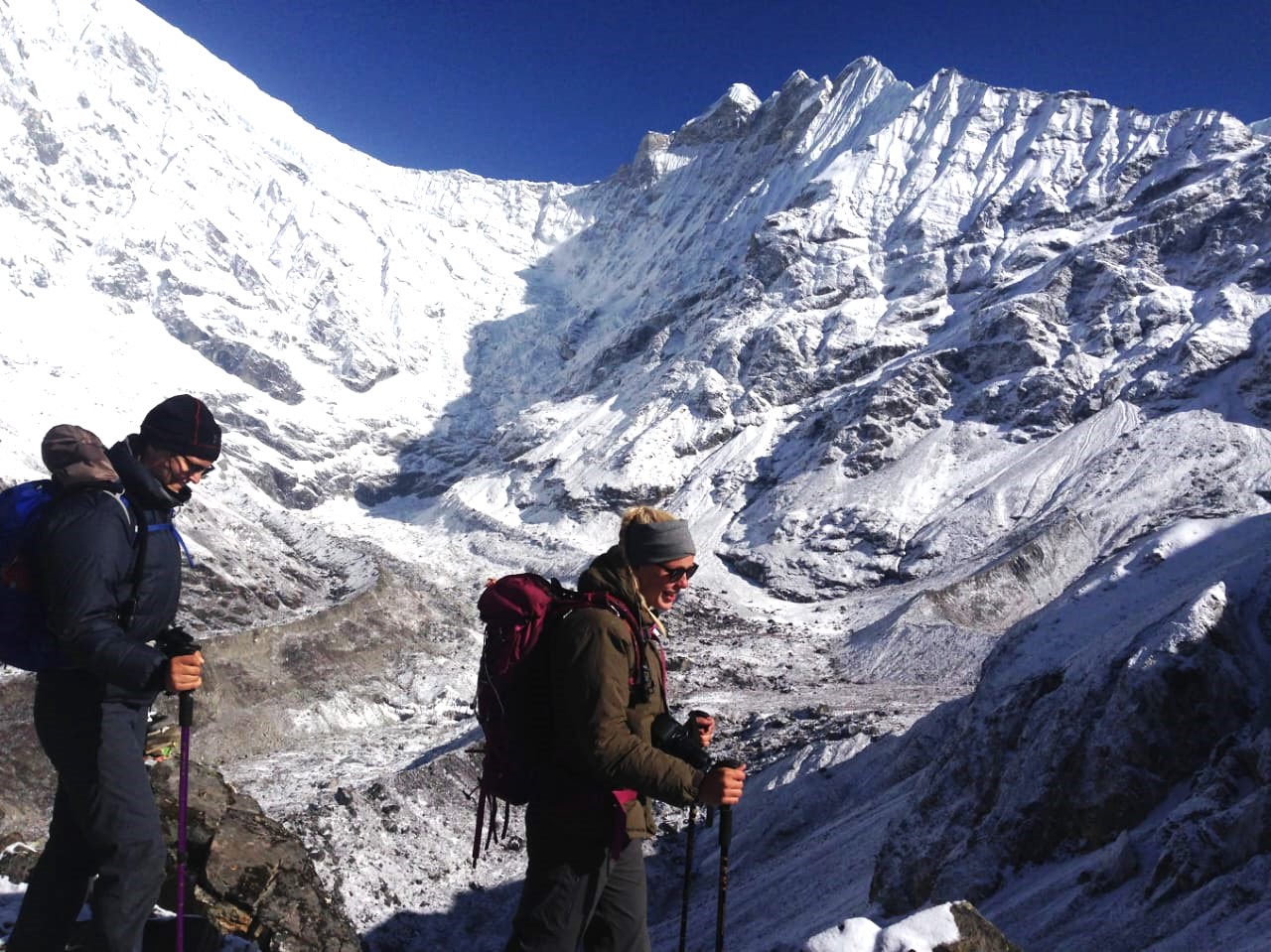
Langtang Valley Trek With Tamang Heritage Trail – 12 Days
The journey begins with a scenic 7–8 hour drive from Kathmandu to Syabrubesi, following the rushing Trisuli River with views of Manaslu, Ganesh, and Langtang peaks. From Syabrubesi, the trek […]
Highlights
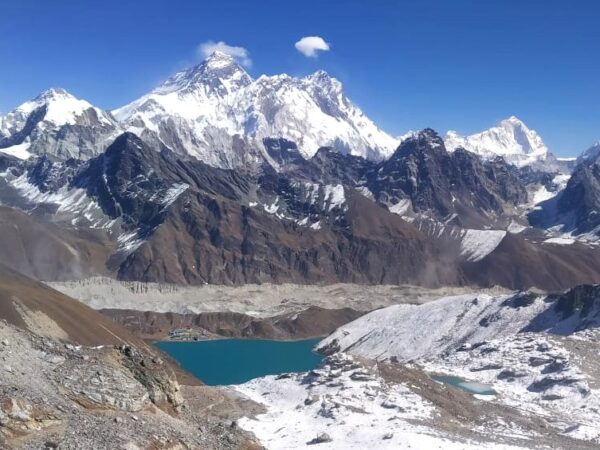
- Tsergo Ri (4,984m)- A challenging summit climb offering panoramic views of over 20 snow-capped peaks and frozen alpine lakes.
- Kyanjin Gompa (3,870m)- A peaceful village beneath the towering Langtang Lirung, perfect for high-altitude acclimatization.
- Nagthali Danda- A high ridge with sweeping views of Langtang Lirung, Shishapangma, Ganesh Himal, and Tibetan peaks.
- Briddim Homestay- A unique opportunity to sleep and eat with a local Tamang family in a Tibetan-style village.
- Parbati Kund- A sacred pond in Gatlang surrounded by ancient monasteries and deep spiritual tradition.
- Rasuwaghadi Fort An ancient fort located near the Nepal-Tibet border along the old trade route.
- Traditional Tamang villages with Tibetan-influenced architecture and painted windows.
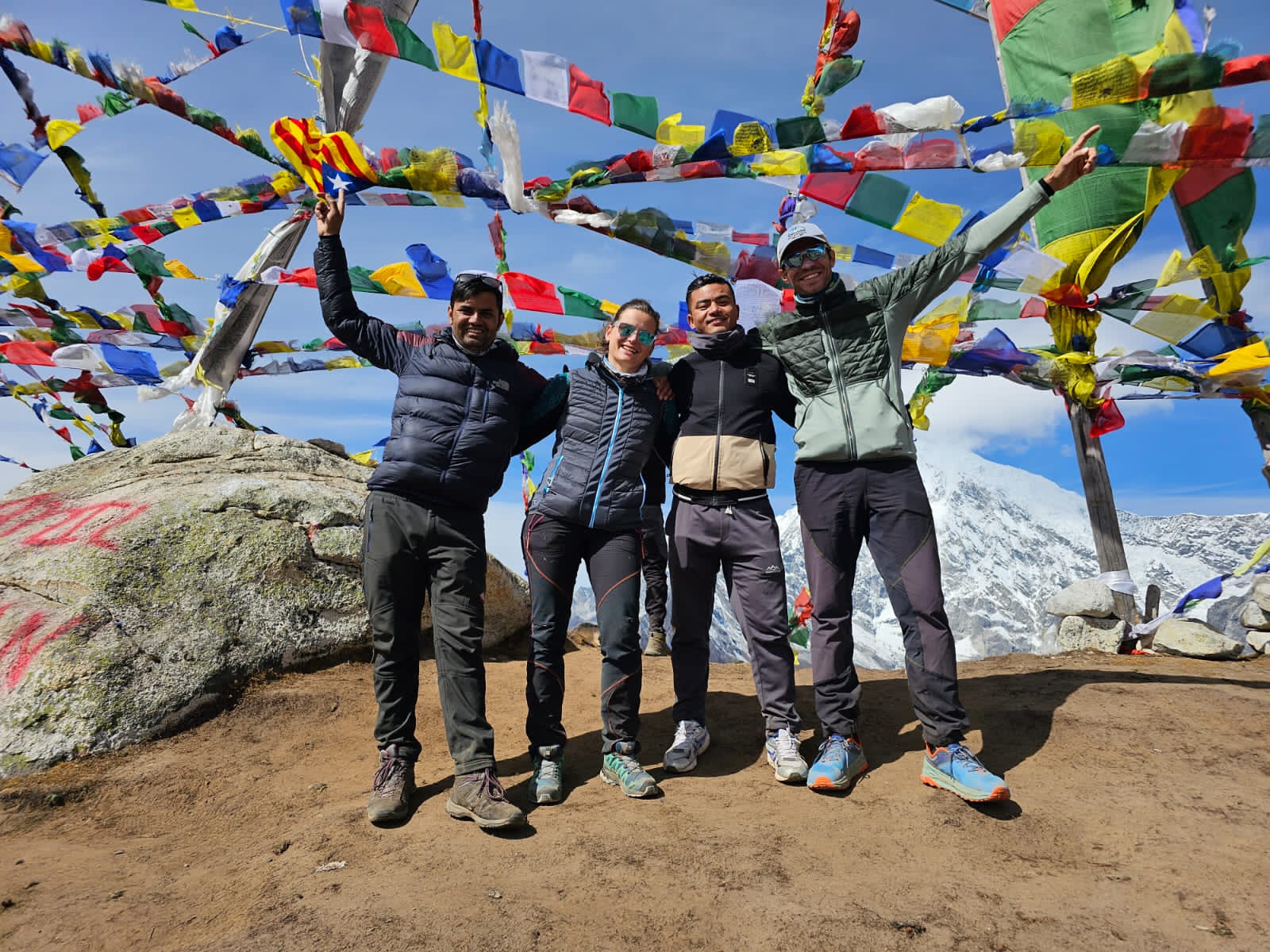
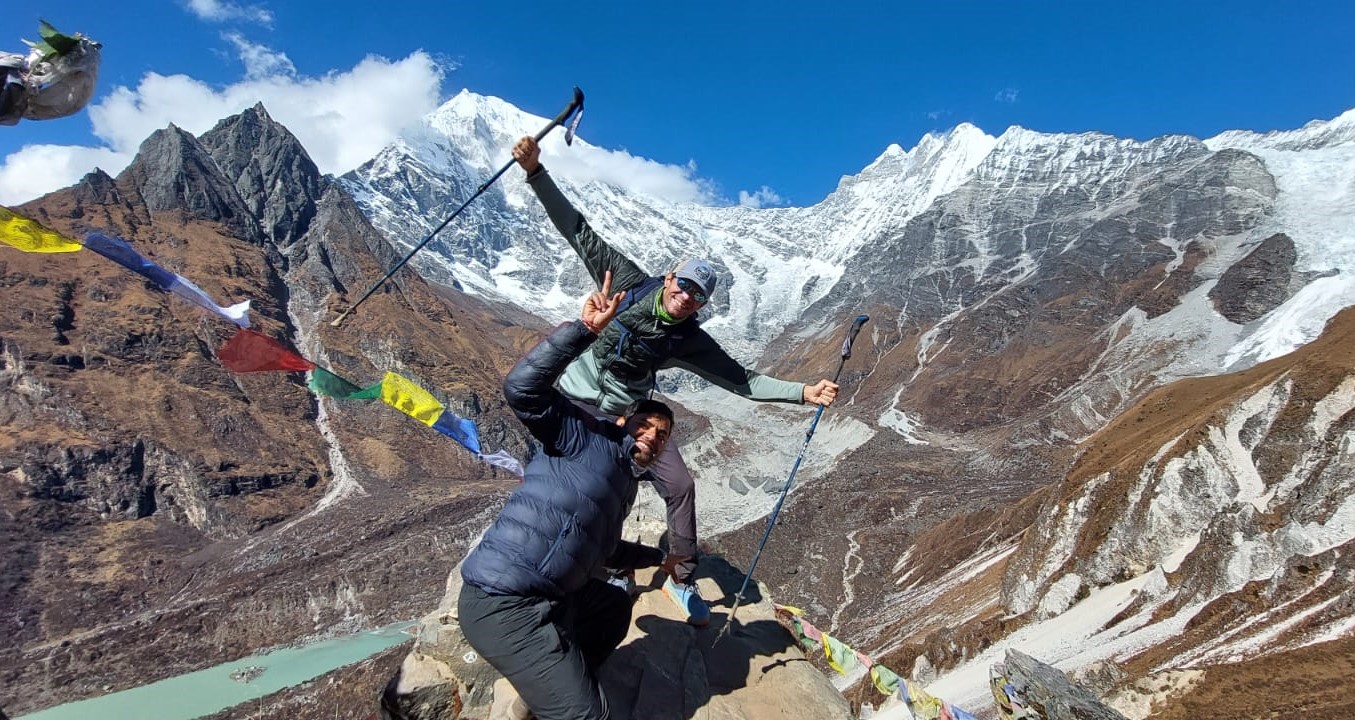
- Ancient monasteries, prayer flags, and chortens along every trail.
- Authentic local hospitality and warm interactions with mountain communities.
- The old trade route once used by merchants traveling to Tibet.
- Lush forests of bamboo, rhododendron, pine, and birch trees and fast-flowing rivers, waterfalls, and the Bhote Koshi valley.
- Terraced fields and fertile jungles with rare wildlife including the red panda and views of Langtang Lirung (7,227m), Ganesh Himal (7,422m), and Shishapangma (8,013m).
- Moderate daily walks of 3 to 7 hours suitable for beginners and families.
- Lower altitudes compared to Everest or Annapurna, reducing altitude sickness risks.
- Scenic drive from Kathmandu with mountain views along the Trisuli River.
- Comfortable teahouses and a unique local homestay experience.
- A peaceful alternative to crowded trekking routes in Nepal.
Overview
The journey begins with a scenic 7–8 hour drive from Kathmandu to Syabrubesi, following the rushing Trisuli River with views of Manaslu, Ganesh, and Langtang peaks. From Syabrubesi, the trek winds through dense forests, terraced fields, and mountain ridges to traditional villages like Gatlang, Tatopani, Thuman, and Briddim. Highlights include the sacred Parbati Kund, the ridge-top Nagthali Danda with panoramic Himalayan views, the ancient fort of Rasuwaghadi near the Tibet border, and a unique homestay experience in Briddim where you sleep and eat with a local family. The trail then continues through bamboo and birch forests to Lama Hotel, before ascending into the upper Langtang Valley.
The trek reaches its scenic climax with a climb to Kyanjin Gompa (3,870m) and the challenging but rewarding summit of Tsergo Ri (4,984m), offering unforgettable views of over 20 snow-capped peaks and frozen alpine lakes. The return journey retraces the descent through Langtang Village, Ghodatabela, and Bamboo, with a final drive back to Kathmandu. With comfortable teahouses, moderate daily walks (3–7 hours), and deep cultural immersion, this Trek offers a complete Himalayan experience, combining nature, culture, and adventure in one of Nepal’s most welcoming regions.
Trek Permits
The Langtang Valley Trek with Tamang Heritage Trail requires a Langtang National Park Entry Permit and a Langtang Rural Municipality Permit. These permits help protect the region’s natural environment, wildlife, and cultural heritage while supporting local communities. Create Himalaya Adventure arranges all required permits before the trek, allowing you to focus entirely on enjoying the journey.
Trek Cost
The cost of the trek generally ranges from USD 700 to USD 1,400 per person, depending on the itinerary, group size, accommodation standard, transportation, and trekking services. Most packages include permits, transportation, accommodation, meals during the trek, professional guide services, and porter support. This trek offers excellent value by combining Himalayan scenery with authentic cultural experiences.
Food and Accommodations
The trek offers comfortable teahouse accommodation throughout the route. Lodges are simple, clean, and operated by local families, providing an authentic mountain experience. Meals typically include Dal Bhat, noodles, soups, rice dishes, potatoes, pasta, eggs, pancakes, Tibetan bread, tea, coffee, and seasonal vegetables. The Tamang Heritage Trail also offers opportunities to enjoy traditional local cuisine and warm cultural hospitality.
Difficulty Level
This trek is considered moderate in difficulty and suitable for trekkers with a reasonable level of fitness. Daily walks typically last 5 to 7 hours through forest trails, traditional villages, terraced hillsides, and alpine landscapes. The highest point is usually Kyanjin Ri or Tserko Ri, offering spectacular mountain views. Although no technical climbing is required, the increasing altitude and continuous walking demand good physical preparation.
Travel Insurance
Travel insurance is highly recommended for this trek. Your policy should cover high-altitude trekking, medical emergencies, trip delays, and helicopter evacuation if required. Comprehensive insurance provides peace of mind while trekking in remote Himalayan terrain.
Trip Itinerary
Drive from Kathmandu to Syabrubesi
The journey to Langtang is an adventure in itself. From Kathmandu, you'll travel by road alongside the rushing Trisuli River, often sharing the view with whitewater rafters before the landscape begins to rise. Around Trisuli Bazaar, the horizon transforms as the peaks of Manaslu, Ganesh, and Langtang itself come into full view.
The final hours wind uphill on a bumpy road to the village of Syabrubesi. Here, at the trailhead, you’ll rest for the night, with the mountains waiting just outside your door. Travel time varies, but our guide will manage the logistics, ensuring you arrive ready to begin your trek.
Trek from Syabrubesi to Gatlang
Today we begin our trek with a steady uphill climb. The trail is steep in places, but every step brings new rewards. In about three hours, we reach Ronga Bhanjyang, where stunning viewpoints offer breathtaking panoramas of Ganesh Himal, the Gosaikunda range, and the deep Goljang Valley below.
From here, the path descends gently into the valley, arriving in about an hour. We stop here for a lunch and a short rest, enjoying the peaceful surroundings. After refreshed, we continue for another three hours, walking through beautiful mountain landscapes until we arrive at Gatlang. A charming and traditional Tamang village. This is our home for the night. If time and energy allow, we can visit the sacred Parbati Kund and explore an ancient monastery, immersing ourselves in the rich culture and spirituality of this Himalayan community.
Trek from Gatlang to Tatopani
Today's trail offers sweeping views of the Langtang mountain range and Ganesh Himal. The path descends through a forest to the village of Chilime, where you cross the dam of the Chilime Hydropower Project on the Trisuli River. After crossing, the trail climbs to the settlement of Gonggang. Both Chilime and Gonggang are rich in Tamang culture, with traditional houses and stone-paved paths.You continue walking until you reach Tatopani, which means "hot water." This village once had natural hot springs, a popular resting spot for trekkers. The springs dried up during the 2015 earthquake and never returned. Today, Tatopani remains a quiet village stop, though the hot water is only a memory.
Trek From Tatopani to Thuman
After breakfast, the trail enters a forest of dense jungle. Climbing and descend through the trees, slowly gaining elevation. Two hours of walking take us to Brimdang.From Brimdang, the path continues upward for another two hours to Nagthali Danda, a high ridge with sweeping mountain views. We stop here for lunch. From this vantage point, you see Langtang Lirung (7,227m), Shishapangma (8,013m) in Tibet, Ganesh Himal (7,422m) , and other snow-covered peaks across the horizon.Small monasteries sit on the ridge, offering a quiet place to rest and reflect.After lunch, the trail descends to Thuman, a Tamang village built in Tibetan style, with stone houses, painted windows, and a strong sense of tradition. This is our stop for the night.
Trek From Thuman to Briddim
Today's destination sits on the opposite side of the Bhote Koshi River. The trail begins on flat ground, then slowly descends toward Timure, following an old trade route once used by merchants traveling to Tibet. We stop here for lunch. From Timure, the ancient fort of Rasuwaghadi lies just three hours away at the Nepal-Tibet border. But our path turns another way. After lunch, the trail climbs steeply to Briddim, a Tamang village shaped by Tibetan culture. Here, we do not stay in a teahouse. We stay in a local home, sleeping and eating with a family, for a truly traditional Himalayan experience.
Trek From Briddim to Lama Hotel
From Briddim, you walk toward Lama Hotel. The trek takes about six hours. The trail crosses the Bhote Koshi valley, passing through fertile jungles thick with bamboo and birch trees. You walk beside terraced fields and small rural settlements. Keep your eyes on the forest—you may spot a red panda among the trees. The path ascends gently to Rimche (2,400m) through an area known as Bamboo Village, located on the banks of the Langtang River. You continue walking alongside the river until you reach Lama Hotel, a cluster of teahouses nestled in the forest. This is where you stay for the night.
Trek From Lama hotel to Langtang Village
A gentle three-hour walk through a quiet forest leads to Ghora Tabela, once known as a resting place for horses. From here, the trail climbs gradually deeper into the valley.
Soon, we reach Langtang Village, a strong and welcoming community that has risen again after the 2015 earthquake. Today, it is home to a school, health post, and peaceful monasteries, set beneath the towering peaks of Langtang Lirung and Dorje Lakpa.
Trek from Langtang Village to Kyanjin Gompa
We make a gentle climb toward Kyanjin Gompa, a short but important walk to help our bodies adjust to the altitude. Along the way, we pass through Mundu, where the trail leads past rocks carved with old Tibetan writings and tall chortens.
When we arrive at Kyanjin, the village sits quietly below the mighty Langtang Lirung. Surrounded by high mountains, it is a peaceful place and an ideal base for short walks to nearby ridges and viewpoints.
Kyanjin Gompa to Tserko Ri to Kyanjin Gompa
Today, we aim for the panoramic summit of Tsergo Ri (5,000m / 16,404 ft), a challenging but rewarding climb. The thin air makes the ascent tough, yet with steady steps, we gradually rise above the Langtang Valley.
From the top, the views are truly unforgettable. You’ll see a wide panorama of more than 20 snow-covered peaks, the deep valley far below, and shimmering frozen alpine lakes. It’s a proud and memorable moment.
After enjoying the views and taking photos, we carefully descend back to Kyanjin Gompa. A warm dinner and a second night here help you rest, recover, and continue acclimatizing at high altitude.
Trek from Kyanjin Gompa to Lama Hotel
We leave the high peaks of Kyanjin behind and begin our descent into the greener Langtang Valley. Walking downhill gives a new view of the valley, now familiar after the climb up.
The trail passes alpine meadows, glacial streams, and then descends into pine and rhododendron forests. We walk through Langtang Village and Ghodatabela, good places to rest or have lunch.
Although easier on breathing, the long downhill can be hard on the knees, so trekking poles are recommended. By late afternoon, we reach Lama Hotel, surrounded by forest and the calming sound of the Langtang River.
Trek from Lama Hotel to Syabrubesi
We hike our last descent today along the Langtang Khola, passing through lush forest and villages to Syabrubesi. After a restful lunch in Bamboo, we complete our trek in Syabrubesi, where a comfortable night awaits before the journey back to Kathmandu.
Syabrubesi to Kathmandu ( Drive )
We depart from the tranquil foothills of Syabrubesi and set out on the winding, scenic drive back to Kathmandu, bringing your Langtang adventure full circle. The road weaves through the hills of Rasuwa and Nuwakot, offering a living tapestry of terraced fields, flowing rivers, and small roadside towns nestled along the Trishuli River.
While rugged in places, the route offers one last chance to take in Nepal’s varied beauty, from misty slopes to vibrant bazaar towns. Gradually, the energy of the Kathmandu Valley returns, signaling our transition back to city life.
We’ll make several comfortable stops along the way for refreshments, lunch, and rest, ensuring a relaxed and memorable return.
Not Satisfied with This Itinerary?
Every traveler is different. Customize this trip with the help of our local travel specialists and create an itinerary that perfectly matches your interests, schedule, and budget.
What's included
- Airport Transfers: International Airport pick-up and drop-off service.
- Trekking Permits: The required paperwork and trekking permit are required for Langtang National Park Permit.
- Transportations: Private Jeep, cars, Public Bus, as per Group Size
- Trekking Equipment: We provide sleeping bags, down Jackets, and Duffle bag if needed.
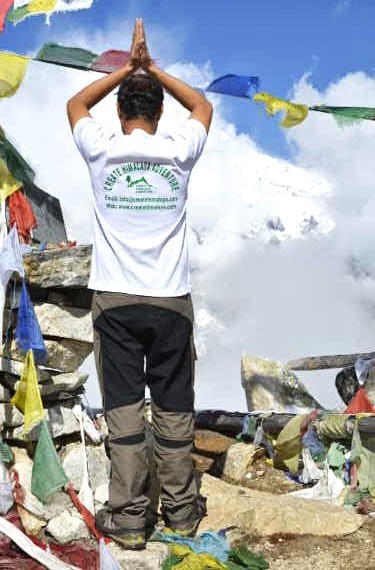
- Souvenirs: Create Himalaya Adventure T-Shirt as a souvenir.
- Meals: Three meals a day (breakfast, lunch, dinner) during the trek.
- Accommodation: Twin-bed sharing with a shared toilet during the trek.
- Guide Expenses: All costs for an English-speaking, government-licensed guide.
- Guide Insurance: Insurance coverage for guides.
- Trekking Map: Langtang Region Trip Map for the group.
- First Aid Kit: Medical kit available during the trip.
- Taxes and Fees: Tourist service charge, VAT, government tax, and official expenses.
What's not included
- International Expenses: International airfare, visa, and travel insurance.
- Kathmandu Meals: Breakfast, Lunch and Dinner at Kathmandu.
- Accommodation in Kathmandu: Accommodation in Kathmandu or on the trek for any reason (Early arrival or delay, early arrival from trek due to any reason).
- Porter Service: Porter to carry your luggage during the trek (if you would like to take a porter, it will cost you USD 30 for each day trip, which you could add from our add-on option).
- Gratuities: Tips for Guide and Porter (expected from trekkers involved in the Trek.
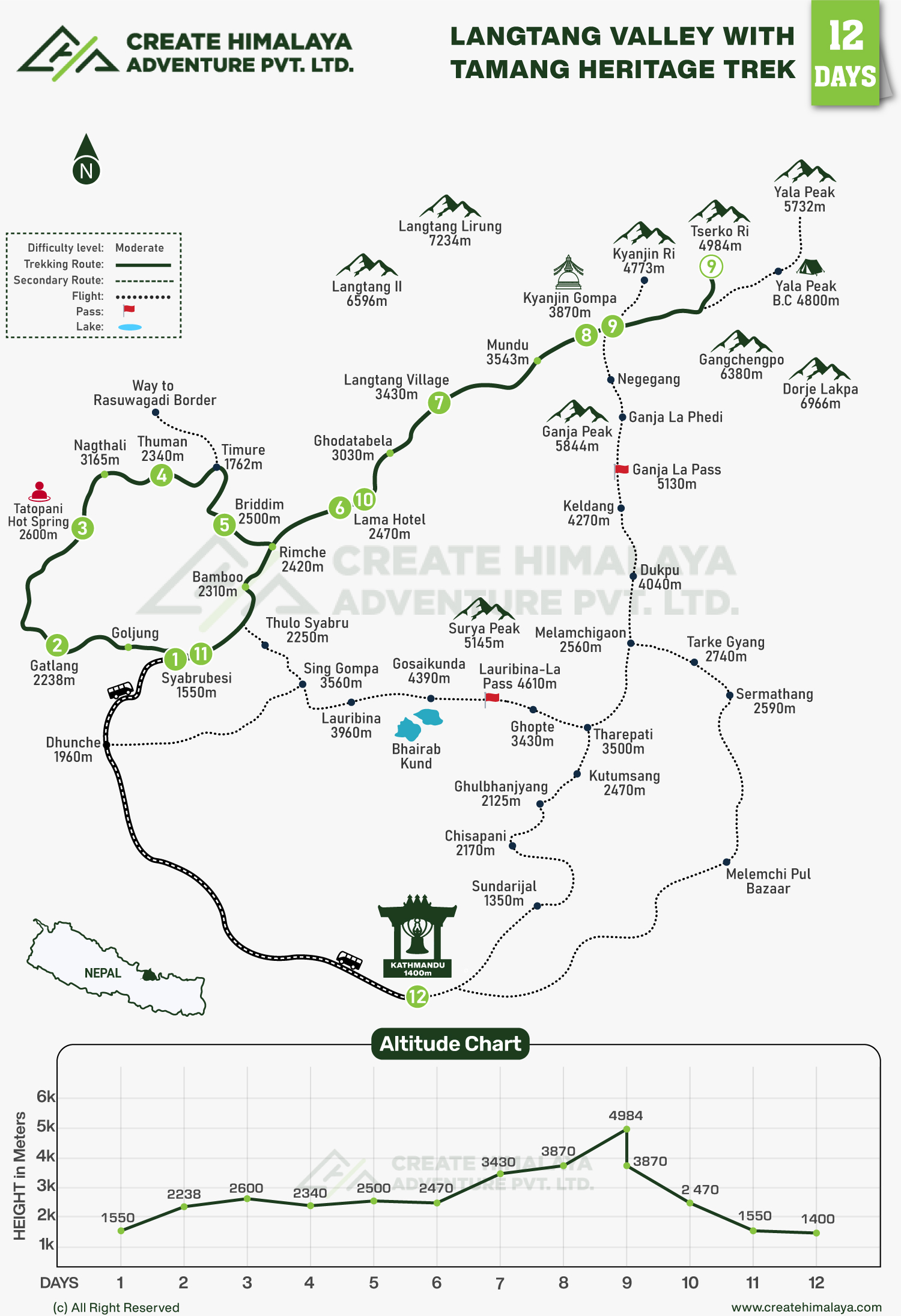
Map
Best Time for Langtang Valley Trek with Tamang Heritage Trail
Spring (March to May) and autumn (September to November) are the most favorable seasons for this trek. During these months, trekkers enjoy stable weather, clear mountain views, pleasant temperatures, and colorful landscapes. Spring features blooming rhododendron forests, while autumn offers crystal-clear skies and excellent visibility.
Winter (December to February) is also possible and can be a rewarding time to visit. Snow-covered mountains, peaceful trails, and fewer trekkers create a unique Himalayan experience. While temperatures are colder, especially at higher elevations, proper winter clothing and preparation make the trek both safe and enjoyable.
Equipment for Langtang Valley Trek with Tamang Heritage Trail
Essential equipment includes sturdy trekking boots, comfortable trekking clothes, thermal layers, a down jacket, waterproof jacket and trousers, warm gloves, hat, sunglasses, trekking poles, sleeping bag, water bottle, sunscreen, headlamp, and a personal first-aid kit. Winter trekkers should pack extra thermal clothing, insulated gloves, warm socks, and additional cold-weather gear.
Trip Note
The Langtang Valley Trek via Tamang Heritage Trail is a unique Himalayan adventure that combines breathtaking mountain scenery, rich cultural experiences, and authentic village life in the Langtang region of Nepal. This scenic route takes trekkers through traditional Tamang settlements, beautiful rhododendron forests, terraced farmlands, and peaceful mountain valleys with stunning views of Langtang Lirung, Ganesh Himal, Dorje Lakpa, and other Himalayan peaks. The trail offers a wonderful opportunity to explore ancient Buddhist monasteries, traditional stone houses, local customs, and the warm hospitality of the Tamang community while discovering a less crowded trekking route.
This combined trek provides a perfect balance of natural beauty and cultural exploration, including relaxing natural hot springs, panoramic viewpoints, and unique Himalayan landscapes. With moderate walking distances, gradual altitude gain, and well-established teahouse facilities, the Langtang Valley Trek via Tamang Heritage Trail is suitable for trekkers seeking an authentic, peaceful, and rewarding adventure close to Kathmandu.
Create Himalaya Adventure is a trusted and reliable trekking company in Nepal, offering safe, well-organized, and memorable trekking experiences. With experienced local guides, personalized service, and a strong focus on safety and customer satisfaction, we ensure every trekker enjoys a comfortable and meaningful journey through the Himalayas. We are committed to responsible tourism, supporting local communities, and providing authentic trekking adventures that create lifelong memories.
FAQs
1. What is the Langtang Valley Trek with Tamang Heritage Trail?
It is a cultural and scenic trekking route that combines the beautiful Langtang Valley with the traditional Tamang Heritage Trail in northern Nepal.
2. Where is the Tamang Heritage Trail located?
The Tamang Heritage Trail lies in Nepal's Langtang region, close to the Tibetan border, northwest of Kathmandu.
3. How long is the Langtang Valley Trek with Tamang Heritage Trail?
Most itineraries take between 12 and 16 days, depending on the route and acclimatization schedule.
4. What is the highest point of the trek?
The highest point is usually Tserko Ri (4,984m) or Kyanjin Ri (4,773m), depending on the itinerary.
5. How difficult is the trek?
The trek is considered moderate and suitable for trekkers with a reasonable level of fitness.
6. Is this trek suitable for beginners?
Yes, beginners with good physical preparation can successfully complete the trek.
7. What permits are required?
Trekkers need a Langtang National Park Entry Permit and a Langtang Rural Municipality Permit.
8. How much does the trek cost?
The average cost ranges from USD 700 to USD 1,400 depending on services, group size, and itinerary.
9. What is the best season for this trek?
Spring (March–May) and autumn (September–November) are the most popular trekking seasons.
10. Can I do this trek in winter?
Yes, winter trekking is possible and offers peaceful trails, snowy landscapes, and excellent mountain views.
11. Does the trek require technical climbing skills?
No, the trek does not involve technical climbing or mountaineering.
12. What makes the Tamang Heritage Trail unique?
The trail offers authentic Tamang culture, traditional villages, ancient monasteries, and warm local hospitality.
13. What mountains can I see during the trek?
Trekkers enjoy views of Langtang Lirung, Dorje Lakpa, Ganesh Himal, Gangchempo, Yala Peak, and other Himalayan peaks.
14. What is Kyanjin Gompa?
Kyanjin Gompa is a historic Buddhist monastery and the main highlight of the Langtang Valley Trek.
15. Is altitude sickness a concern?
Yes, altitude sickness can occur above 3,000 meters, making proper acclimatization important.
16. How many hours do I walk each day?
Most trekking days involve 5 to 7 hours of walking.
17. What type of accommodation is available?
Trekkers stay in local teahouses and mountain lodges throughout the route.
18. What food is available during the trek?
Meals include Dal Bhat, noodles, soups, pasta, rice dishes, potatoes, eggs, pancakes, and Tibetan bread.
19. Is vegetarian food available?
Yes, vegetarian meals are widely available in teahouses along the trail.
20. Do I need travel insurance?
Yes, insurance covering high-altitude trekking and emergency evacuation is highly recommended.
21. Is a guide necessary for the trek?
Hiring a licensed guide is highly recommended for safety, navigation, and cultural insights.
22. Are porters available?
Yes, porters can be hired to carry your trekking gear and make the journey more comfortable.
23. Is there mobile network coverage on the trail?
Mobile coverage is available in many villages but may be limited at higher elevations.
24. Is Wi-Fi available during the trek?
Many teahouses offer Wi-Fi for an additional fee, although speeds can be slow.
25. What cultural experiences can I expect?
Trekkers can visit traditional Tamang villages, Buddhist monasteries, prayer wheels, chortens, and local homes.
26. Are there natural hot springs on the Tamang Heritage Trail?
Yes, Tatopani is famous for its natural hot springs, where trekkers can relax after a day of hiking.
27. What should I pack for the trek?
Essential items include trekking boots, warm clothing, a down jacket, sleeping bag, rain gear, sunglasses, and trekking poles.
28. Is drinking water available along the route?
Yes, drinking water is available in villages, though purification tablets or a water filter are recommended.
29. What is the major highlight of this trek?
The combination of stunning Himalayan scenery, authentic Tamang culture, Kyanjin Gompa, Tserko Ri, and natural hot springs makes this trek unique.
30. Why choose the Langtang Valley Trek with Tamang Heritage Trail?
This trek perfectly combines mountain landscapes, rich cultural experiences, traditional villages, Buddhist heritage, and less-crowded trails, making it one of Nepal's most rewarding trekking adventures.
No hidden fees • Best price guarantee
Related Packages
Annapurna Circuit with Tilicho Lake Trek – 13 Days
Everest Base Camp Trek with Ama Dablam Base Camp – 16 Days
Mardi Himal Trek – 9 Days