Mardi Himal Trek – 9 Days
The Mardi Himal Trek is the intelligent choice for the modern traveler, it delivers exceptional Himalayan grandeur, a feeling of authentic exploration, and a manageable timeline. The trail is quieter […]
Highlights
- The trek offers incredibly close views of the dramatic south faces of Machhapuchhre (Fishtail) and Annapurna South.
- From Mardi Himal Base Camp at 4,500 meters, the glaciers feel almost within reach, creating a deep sense of connection with the Himalayas.
- The trail is far less crowded than the Everest and Annapurna Base Camp routes, allowing for a peaceful trekking experience.
- The route passes through rhododendron forests, narrow high ridges, and remote alpine pastures.
- The trek usually takes only 5 to 7 days from Pokhara, making it ideal for travelers with limited time or those new to high-altitude trekking.
- It offers a satisfying balance between accessibility and challenge, especially during the ascent to High Camp and the base camp.
- In just a few days, the landscape changes from subtropical forests to mossy oak woods and finally to rugged alpine terrain.
Overview
The Mardi Himal Trek is the intelligent choice for the modern traveler, it delivers exceptional Himalayan grandeur, a feeling of authentic exploration, and a manageable timeline. The trail is quieter and less crowded, making the experience more peaceful and authentic. Its growing popularity online shows that travelers are looking for unique and meaningful journeys, and Mardi Himal stands out as one of the best choices in Nepal.
The Mardi Himal Trek offers an unmatched close-up experience of the Himalayas, bringing trekkers astonishingly near the dramatic south faces of Machhapuchhre (Fishtail) and Annapurna South. From Mardi Himal Base Camp at 4,500 meters, the glaciers feel almost within reach, creating a sense of immersion rarely found on other routes. Compared to the busy Everest and Annapurna Base Camp trails, this trek remains quieter, allowing walkers to enjoy peaceful rhododendron forests, high ridges, and remote alpine pastures with a true off-the-beaten-path feel.
Typically completed in just 5–7 days from Pokhara, it strikes an ideal balance between accessibility and challenge, making it suitable for both first-time high-altitude trekkers and those short on time, while still offering a rewarding ascent to High Camp and the base camp. Adding to its appeal, the trail showcases dramatic ecological diversity, transitioning quickly from subtropical forests to moss-covered rhododendron and oak woods, and finally into rugged alpine terrain within just a few days.
Major Attractions of Mardi Himal Trek
The Mardi Himal Trek is famous for its spectacular ridge-top viewpoints and close-up Himalayan scenery. Each stop along the route offers a unique perspective of the Annapurna range, Machhapuchhre (Fishtail), and surrounding peaks, making the journey visually rewarding from start to finish.
Australian Camp (via Kande route)
Australian Camp is one of the first scenic viewpoints on the trek if you start from Kande. It offers an easy introduction to Himalayan landscapes with wide views of Annapurna South, Machhapuchhre, and lush green hills. The sunrise and sunset views from here are especially beautiful.
Dhampus (via Phedi route)
Dhampus is a traditional Gurung village and an alternative starting viewpoint when trekking from Phedi. It provides stunning early mountain views along with cultural insights into local mountain life. The scenery here combines terraced fields, villages, and distant Himalayan peaks.
Badal Danda
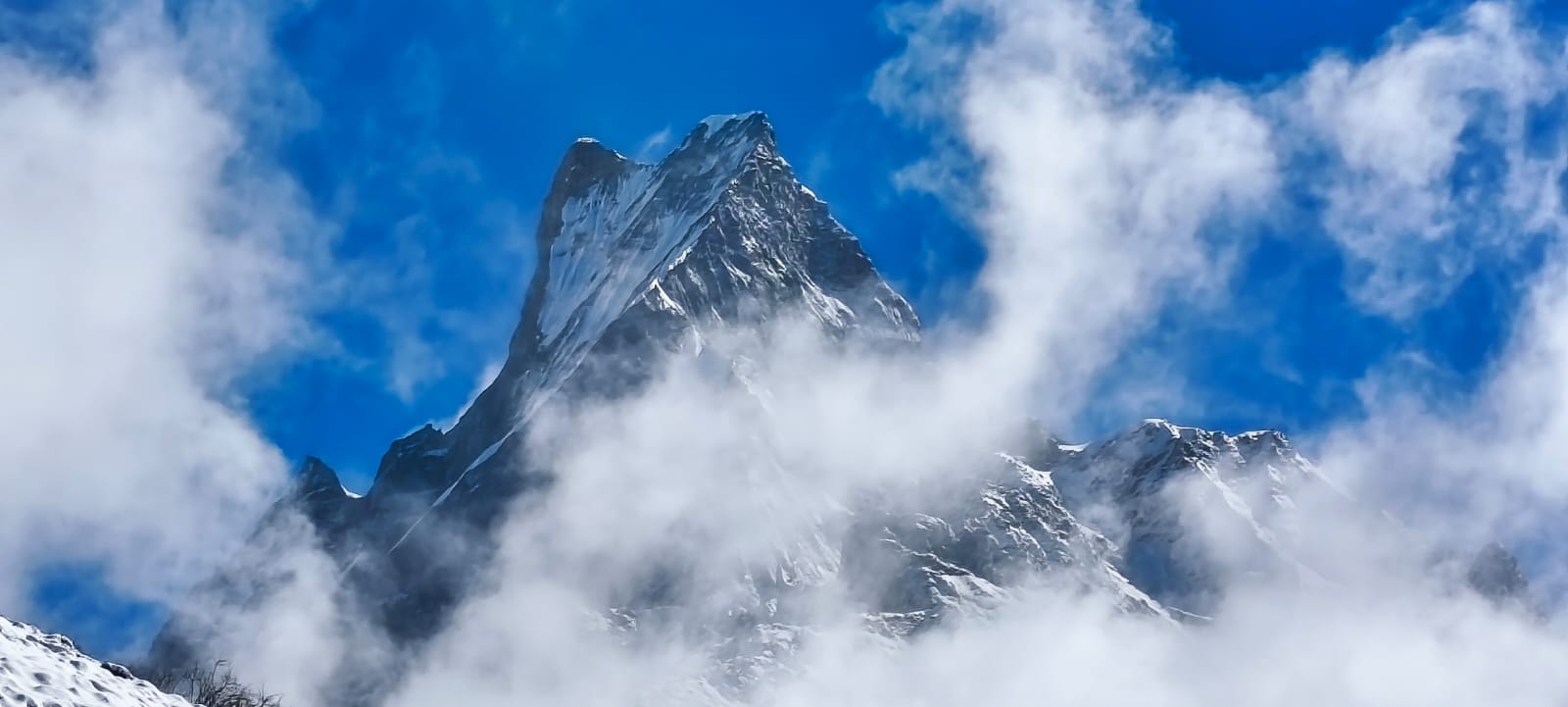
Badal Danda, meaning “Cloud Hill,” is one of the most dramatic viewpoints on the Mardi Himal route. Situated above the treeline, it offers panoramic views of the Annapurna range and Machhapuchhre, often surrounded by clouds that create a magical floating effect.
Mardi Himal View Point (Upper View Point)
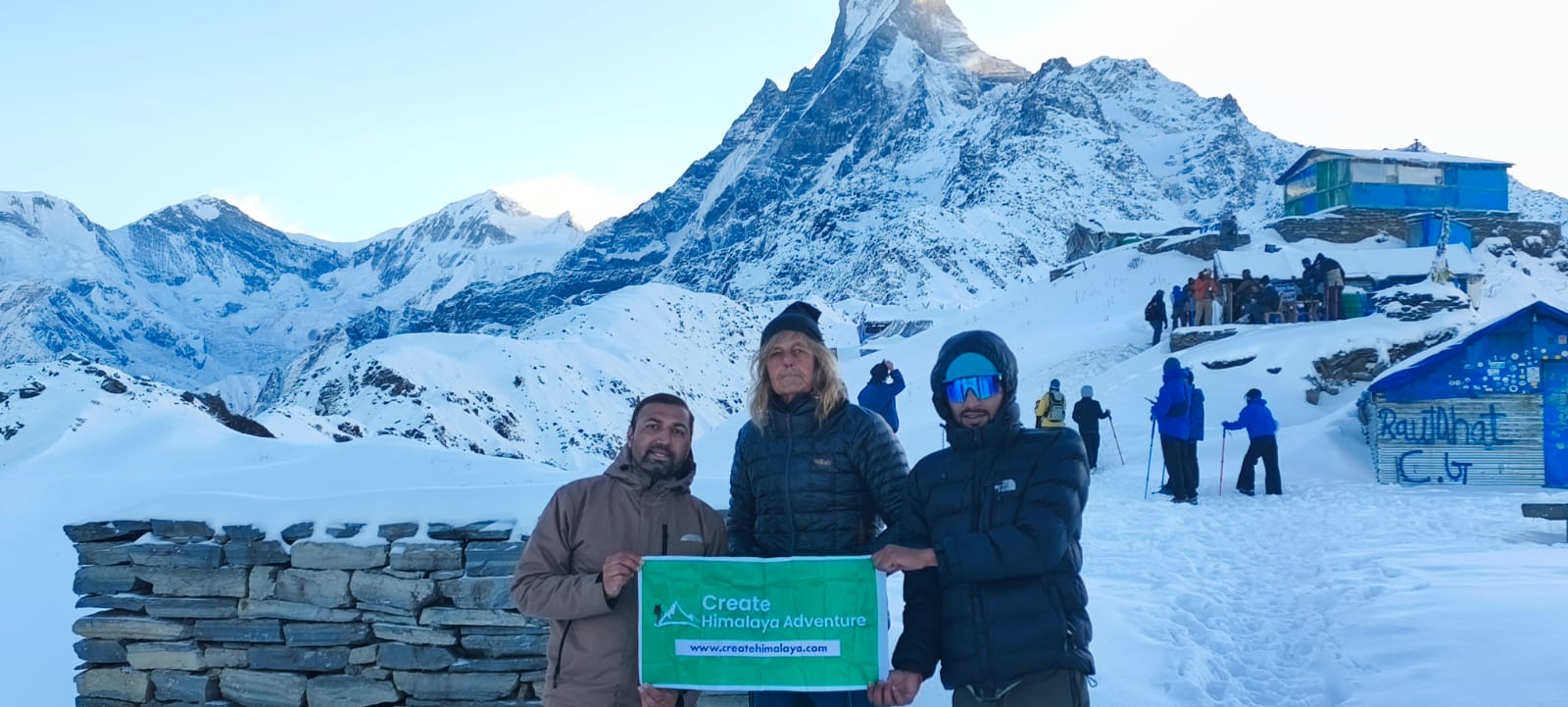
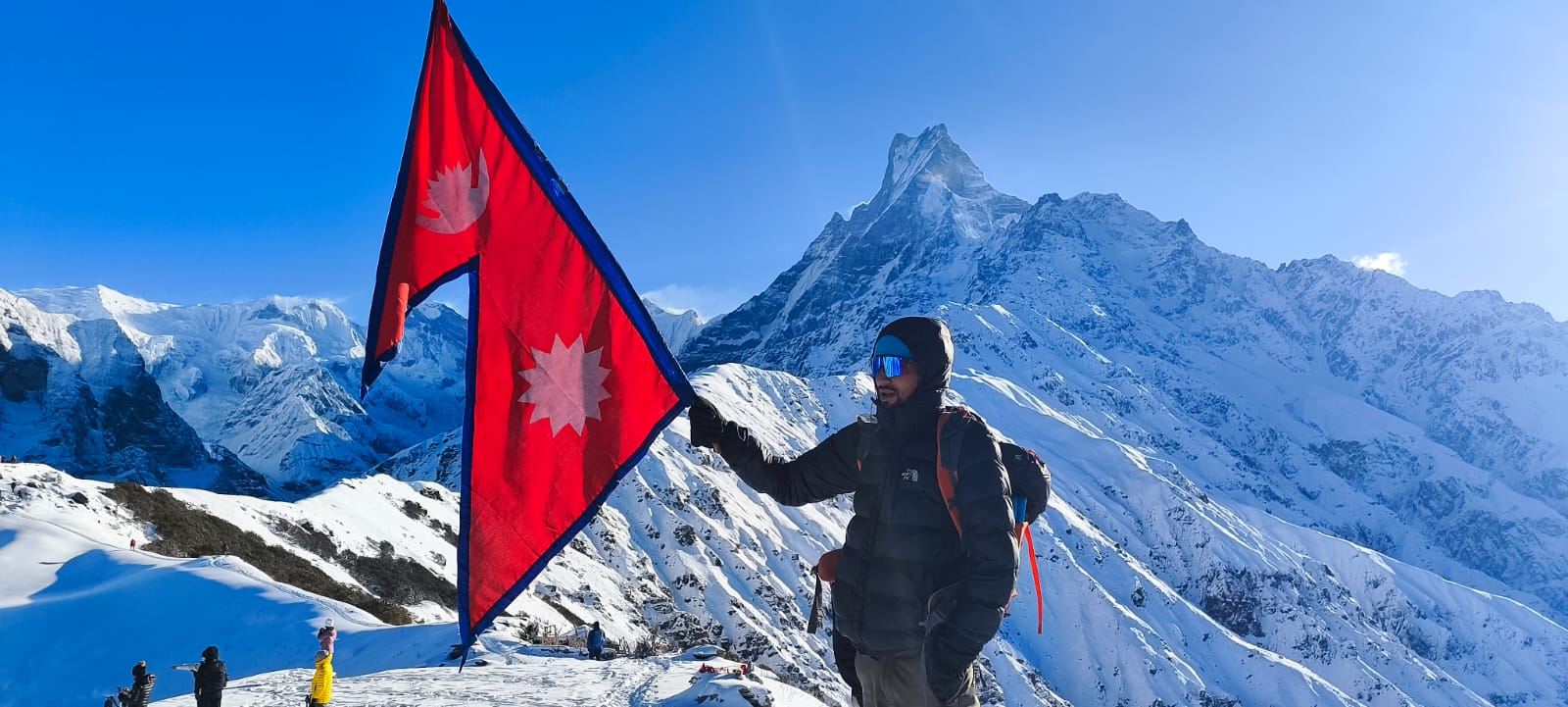
This is one of the closest viewpoints to Machhapuchhre (Fishtail Mountain). From here, trekkers experience an incredible close-up view of the iconic peak along with Annapurna South and Hiunchuli. It is a popular sunrise destination due to its golden morning light and clear visibility.
Mardi Himal Base Camp (4,500 m)
Mardi Himal Base Camp is the highest and most rewarding viewpoint of the trek. It offers a 360-degree panoramic view of the Annapurna Himalayan range, including dramatic glacier landscapes and towering snow peaks. This is the ultimate highlight of the trek and a dream destination for photographers and nature lovers.
Mardi Himal trek Difficulty
The Mardi Himal Trek is considered a moderate trekking adventure that offers an excellent introduction to high-altitude trekking in Nepal. Although the route does not involve technical climbing or specialized mountaineering skills, trekkers should be prepared for steep uphillsections, rugged mountain trails, and significant elevation gain. The trek gradually ascends through lush rhododendron forests and scenic ridgelines before reaching Mardi Himal Base Camp at 4,500 meters, where thinner air can make walking more demanding. Daily trekking typically ranges from 4 to 7 hours, with some longer days requiring sustained effort on ascending and descending terrain. The exposed ridge trail above High Camp can also present challenges due to strong winds and changing weather conditions. With proper preparation, a steady pace, and a good level of fitness, the Mardi Himal Trek is achievable for beginners and experienced hikers alike, making it one of the most rewarding short treks in the Annapurna region.
Mardi Himal Trek Route
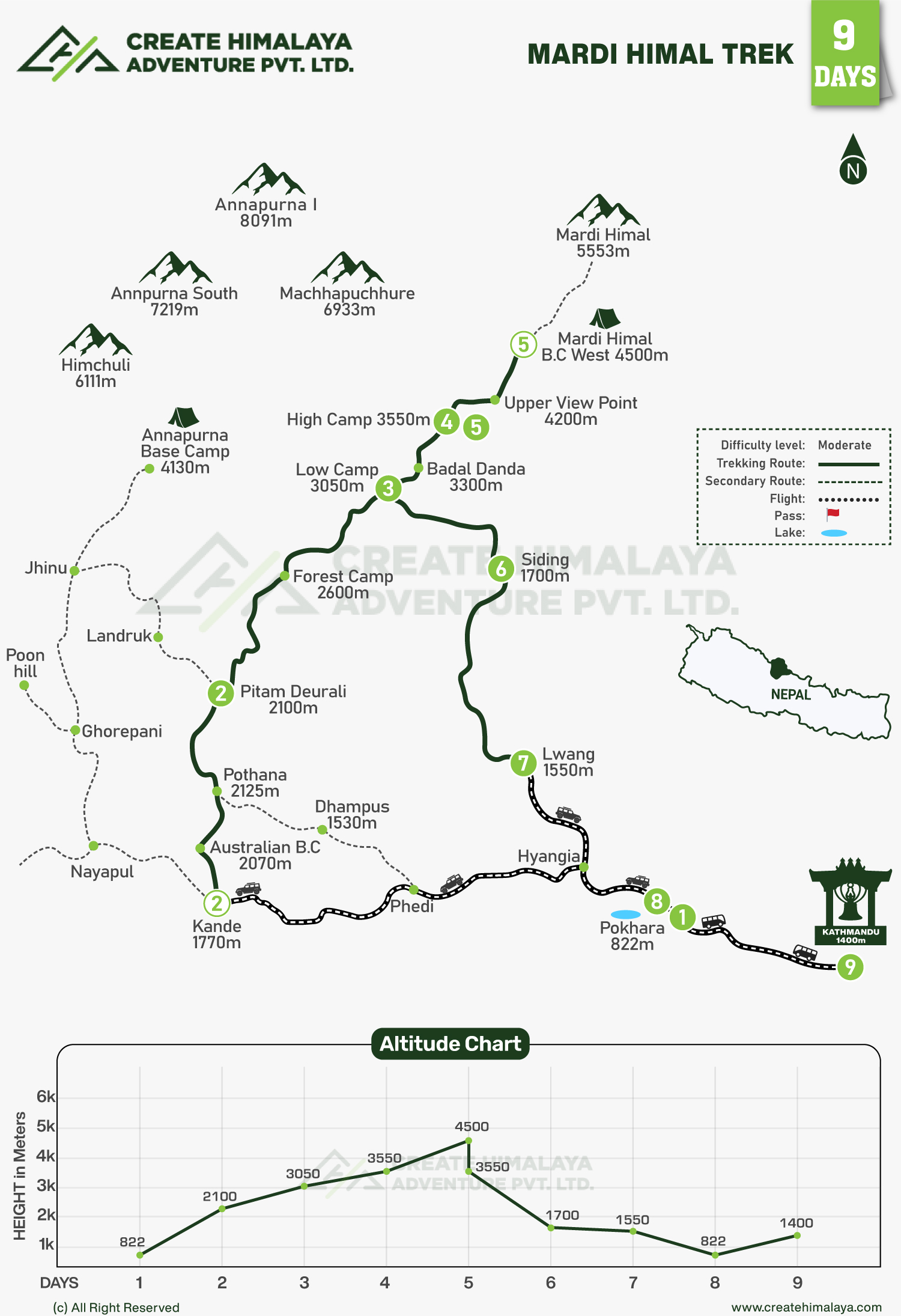
The Mardi Himal Trek route follows a scenic trail in Nepal’s Annapurna region, beginning from Pokhara and gradually ascending through beautiful forests, traditional mountain settlements, and high alpine landscapes. Most itineraries start with a short drive to Kande or Phedi, followed by trekking through Australian Camp, Pitam Deurali, and Forest Camp. The trail then continues to Low Camp, Badal Danda, and High Camp, where trekkers are rewarded with increasingly spectacular views of Machhapuchhre (Fishtail), Annapurna South, Hiunchuli, and Mardi Himal. From High Camp, an early morning hike leads to Mardi Himal Base Camp (4,500 m), the highest point of the trek and one of the finest viewpoints in the Annapurna region. After enjoying the panoramic mountain scenery, the route descends via Siding Village before returning to Pokhara. The Mardi Himal Trek route is well known for its peaceful atmosphere, diverse landscapes, and stunning ridge-top views, making it one of the best short trekking routes in Nepal.
Typical Route: Pokhara → Kande/Phedi → Australian Camp → Pitam Deurali → Forest Camp → Low Camp → Badal Danda → High Camp → Mardi Himal Base Camp → Siding Village → Pokhara.
Why Mardi Himal Trek
The Mardi Himal Trek is one of the most rewarding short treks in Nepal, offering spectacular Himalayan scenery, peaceful trails, and an authentic mountain experience away from the crowds. Located in the Annapurna region, this hidden gem takes trekkers through dense rhododendron forests, traditional villages, alpine meadows, and scenic ridges with breathtaking views of Machhapuchhre (Fishtail), Annapurna South, Hiunchuli, and Mardi Himal. Unlike many of Nepal’s busier trekking routes, Mardi Himal provides a quieter and more intimate connection with nature while still offering comfortable teahouse accommodation along the way. The trek is ideal for travelers with limited time, as it can be completed in less than a week without sacrificing stunning mountain landscapes. Whether you are a first-time trekker or an experienced hiker, the Mardi Himal Trek combines natural beauty, cultural encounters, and unforgettable panoramic views, making it one of the best trekking experiences in the Annapurna region.
Trip Itinerary
Kathmandu to Pokhara (Drive)
Early morning boarding on a tourist bus from Kathmandu to Pokhara. Tourist buses are more comfortable than standard public transport in Nepal, making them a good choice for families with young children. As the road climbs out of the Kathmandu Valley, it winds down alongside the Rapti River, where you may see rafters tackling the lively whitewater. The journey includes scenic rest stops, with lunch at one along the way. Near Mugling, the road flattens, and you arrive in Pokhara by mid-afternoon.
Pokhara drive to Kande and trek to Pittam Deurali
After breakfast, a brief drive brings us to Kande, the trailhead for today’s hike. The path begins with a steady ascent to Australian Camp, a charming settlement offering some of the trek’s first sweeping views of the Annapurna range. Following a refreshing break, we continue for roughly two hours to Pittam Deurali. Our route passes through picturesque villages, offering a glimpse into daily life within these majestic hills. We’ll trek under the rhododendron forests, a blaze of crimson in spring, with the iconic, fishtail-shaped peak of Mt. Machhapuchhre presiding over the skyline, being a great companion on our journey.
Trek from Pitam Deurali to Low Camp
Today's trails enters the quiet, green sanctuary of the Mardi Himal foothills. A sustained climb carries you through dense, mossy forests of rhododendron and oak. Along the way, brief openings in the canopy frame teasing glimpses of Machapuchare (Fishtail) rising in the distance.
As you ascend, the path grows quieter and peaceful, embrace in a tranquil of the hiking path. After three to four hours, the forest opens up at Low Camp (2,900 m). The air feels cooler, and you get your first clear views of Annapurna South and the impressive south face of Machhapuchhre (Fishtail) above the trees. Low Camp has simple, cozy lodges and is a good place to rest and adjust to the altitude before continuing into the higher alpine area.
Trek from Low Camp to High Camp
Today we start the steady climb to High Camp, gaining about 700 meters in altitude.Your guide sets a steady pace with regular breaks as the air grows thinner.
The trail moves through thinning rhododendron forest, where you may see Himalayan marmots, tahr, and birds such as the colorful Danphe. From Badal Danda (Cloud Hill), clear views open up to Annapurna South, Mardi Himal, Hiunchuli, and Machhapuchhre (Fishtail).
Leaving the last trees behind, the path enters open alpine terrain and leads to High Camp, a scenic spot among the peaks for rest and acclimatization.
Hike to mardi himal view point and MBC Back to High Camp.
Before sunrise, we set out on a short hike to the Upper Viewpoint (4,200 m), also known as Mardi Himal Base Camp (4,500 m). The cool morning air and gradual climb reward us with stunning views of the Annapurna Sanctuary, where Annapurna South, Hiunchuli, and Machhapuchhre (Fishtail) rise clearly in front of us. This is the most memorable part of the trek and a perfect place to appreciate the wilderness of the Himalayas. After enjoying the scenery, we walk back to High Camp for a filling breakfast and lunch. The rest of the day is free for rest or a gentle walk around the alpine surroundings, followed by another quiet night among the mountains.
Trek from High Camp to Sidding.
After our ascent, the trek now turns toward descent. We leave High Camp, heading steeply down passes through Badal Danda to Low Camp. Here, we branch off the main trail onto a quieter path that winds through dense rhododendron forest down to the Mardi River.
This route feels more remote, passing through remote settlements and terraced farmland. After crossing several rustic bridges, we arrive at the tranquil village of Siding (1700 m) in the lower valley, where we spend the night surrounded by countryside calm.
Sidding to Lwang Village.
Continuing our descent, we depart Siding for the traditional Gurung village of Lwang. The trail passes through small hamlets like Kalimati and Keshbang, featuring a mix of gentle climbs and level paths. We pause in Ghalel, a scenic stop with local teahouses, before reaching Lwang. This historic settlement is known for its organic tea gardens and authentic homestays.
In the evening, experience local culture through traditional folk songs and dances. We spend the night here, immersed in Gurung hospitality.
Lwang Village to Pokhara.
Today concludes our Mardi Himal journey as we return to Pokhara. The morning begins with a one-hour descent to Khora Muk, offering a final panorama of tea gardens and a last view of the Annapurna range, Machhapuchhre (Fishtail), and Lamjung Himal.
From here, we drive approximately two hours to Pokhara, where the remainder of the day is yours to relax. We spend the night in the city, bringing our mountain adventure to a close.
Pokhara to Kathmandu (Drive) (Option available for flight )
Your journey now heads back to Kathmandu, either by road or by flight. As Pokhara fades behind you, take a moment to gaze at Machhapuchhre, the majestic Fishtail standing silently in the distance. Leaving the mountains is not goodbye; their calm and beauty stay with you.
On the way, you can enjoy the changing landscapes, from lush valleys and terraced fields to winding rivers and charming villages. If traveling by road, there’s time to see the everyday life of local people, their farms, and markets, offering a last glimpse of rural Nepal. By flight, the aerial view of the Himalayas is unforgettable, with snow-capped peaks stretching as far as the eye can see.
Carry these memories, the stillness of the mountains, the vibrant life of the villages, and the beauty of the landscapes in your heart, letting them guide and inspire you long after the trek ends.
Not Satisfied with This Itinerary?
Every traveler is different. Customize this trip with the help of our local travel specialists and create an itinerary that perfectly matches your interests, schedule, and budget.
What's included
- Airport Transfers: International Airport pick-up and drop-off service.
- Transportations: All Ground Transportation from Kathmandu - Pokhara - Kathmandu / and for the Trek area.
- Trekking Permits: The required paperwork and trekking permit are required for Annapurna Conservation Area Permit (ACAP).
- Trekking Equipment: We provide sleeping bags, down Jackets, and Duffle bag if needed.
- Souvenirs: Create Himalaya Adventure T-Shirt as a souvenir.
- Meals: Three meals a day (breakfast, lunch, dinner) during the trek.
- Accommodation: Twin-bed sharing with a shared toilet during the trek.
- Guide Expenses: All costs for an English-speaking, government-licensed guide.
- Guide Insurance: Insurance coverage for guides.
- Trekking Map: Annapurna Region Trip Map for the group.
- First Aid Kit: Medical kit available during the trip.
- Taxes and Fees: Tourist service charge, VAT, government tax, and official expenses.
What's not included
- International Expenses: International airfare, visa, and travel insurance.
- Kathmandu Meals: Breakfast, Lunch and Dinner at Kathmandu.
- Accommodation in Kathmandu: Accommodation in Kathmandu or on the trek for any reason (Early arrival or delay, early arrival from trek due to any reason).
- Porter Service: Porter to carry your luggage during the trek (if you would like to take a porter, it will cost you USD 30 for each day trip, which you could add from our add-on option).
- Gratuities: Tips for Guide and Porter (expected from trekkers involved in the Trek
Map
Best Time for the Mardi Himal Trek
The best time to trek to Mardi Himal is during the spring (March to May) and autumn (September to November) seasons, when weather conditions are most favorable and mountain views are at their finest. These months offer clear skies, comfortable temperatures, and excellent visibility of the Annapurna range, including Machhapuchhre (Fishtail), Annapurna South, Hiunchuli, and Mardi Himal.
Spring is especially popular for its colorful rhododendron forests, which bloom across the hillsides and add vibrant beauty to the trail. Temperatures are generally mild, making trekking comfortable at both lower and higher elevations. Autumn, on the other hand, is known for stable weather, crisp mountain air, and some of the clearest panoramic views of the Himalayas, making it the peak trekking season in Nepal.
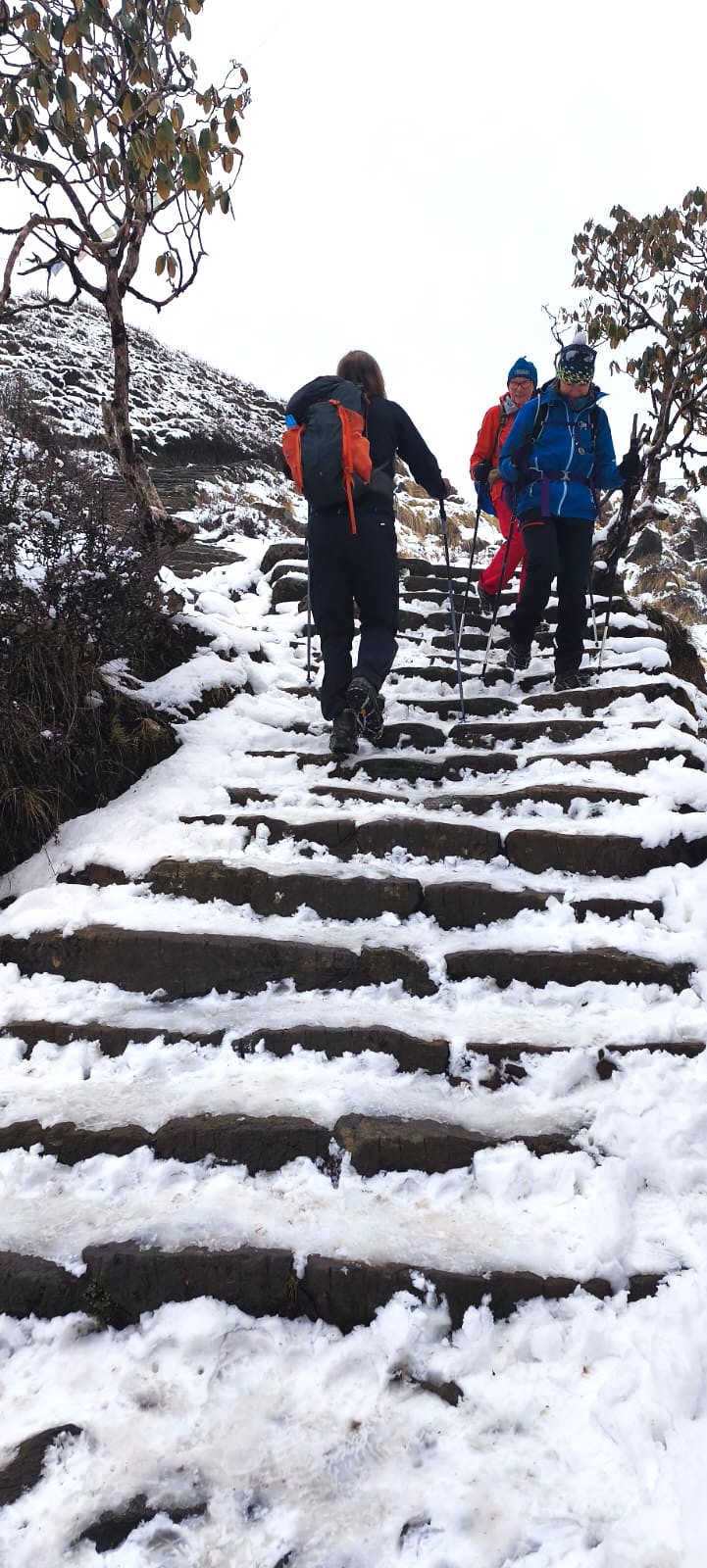
The Mardi Himal Trek can also be completed during winter (December to February), when the trails are quieter and the mountain scenery is spectacular. However, colder temperatures, snow-covered sections, and occasional trail closures near High Camp may make trekking more challenging. The monsoon season (June to August) brings frequent rainfall, muddy trails, leeches, and limited mountain views, making it the least popular time for the trek.
For the best overall trekking experience, most travelers choose spring or autumn, when the combination of pleasant weather, clear views, and ideal trail conditions creates the perfect setting for exploring the beautiful Mardi Himal region.
Best Seasons at a Glance
Spring (March–May): Blooming rhododendrons, mild temperatures, excellent mountain views.
Autumn (September–November): Clear skies, stable weather, best visibility, peak trekking season.
Winter (December–February): Quiet trails and snowy landscapes, but colder conditions.
Monsoon (June–August): Frequent rain, cloudy views, and slippery trails.
Mardi Himal Trek Cost and Permits
The Mardi Himal Trek is one of the most budget-friendly trekking experiences in Nepal, making it a popular choice for travelers who want to enjoy breathtaking Himalayan scenery without spending a fortune. The overall cost of the trek depends on factors such as the length of the itinerary, mode of transportation, accommodation preferences, and whether you trek independently or with a guide. Budget travelers can keep expenses low by staying in local teahouses and using shared transportation, while guided trekking packages typically include permits, accommodation, meals, transportation, and professional support staff for a more comfortable experience. When planning your budget, it is important to consider permit fees, food, lodging, transportation, guide or porter services, and personal expenses.
To enter the Mardi Himal trekking route, trekkers must obtain an Annapurna Conservation Area Permit (ACAP), as the trail passes through the protected Annapurna Conservation Area. The ACAP fee for foreign nationals is generally NPR 3,000, while SAARC citizens benefit from discounted rates. This permit can be obtained from the Nepal Tourism Board offices in Kathmandu or Pokhara, or arranged through a registered trekking agency before the trek begins.
Having the required permit ensures hassle-free access through trekking checkpoints while contributing to conservation projects, environmental protection, and sustainable tourism initiatives within the Annapurna region. With affordable permit fees and reasonable trekking expenses, the Mardi Himal Trek continues to be one of the best-value trekking adventures in Nepal for both beginners and experienced hikers.
Travel Insurance for the Mardi Himal Trek
Travel insurance is highly recommended for anyone planning the Mardi Himal Trek. Although the trek is considered moderate and follows well-established trails, it reaches elevations of up to 4,500 meters at Mardi Himal Base Camp, where altitude-related illnesses, weather disruptions, and unexpected emergencies can occur. Having comprehensive travel insurance provides peace of mind and financial protection throughout your trekking adventure.
Your insurance policy should specifically cover high-altitude trekking activities in Nepal, including emergency medical treatment, hospitalization, and helicopter evacuation. Helicopter rescue is often the fastest and safest option in the event of severe altitude sickness, injury, or other medical emergencies in remote mountain areas. Trekkers should carefully verify that their policy covers trekking at elevations above 4,500 meters and includes emergency evacuation costs.
In addition to medical coverage, a good travel insurance policy may also provide protection against trip cancellations, flight delays, lost baggage, theft of personal belongings, and other unforeseen travel disruptions. Before starting the trek, travelers should carry a copy of their insurance policy, emergency contact information, and claim details.
Create Himalaya Adventure strongly advises all trekkers to obtain suitable travel insurance before arriving in Nepal. Proper insurance coverage helps ensure a safer and more worry-free trekking experience, allowing you to fully enjoy the spectacular scenery and adventure of the Mardi Himal Trek.
Trek Equipment for the Mardi Himal Trek
Packing the right equipment is essential for a safe and comfortable Mardi Himal Trek. Although the trek is considered moderate and does not require technical climbing gear, weather conditions can change quickly, especially at higher elevations near High Camp and Mardi Himal Base Camp. Trekkers should be prepared for warm daytime temperatures, cool evenings, strong winds, and possible rain or snow depending on the season.
Clothing
- Moisture-wicking base layers
- Lightweight trekking shirts
- Warm fleece or insulated jacket
- Waterproof and windproof outer jacket
- Comfortable trekking pants
- Thermal top and bottom layers for cold nights
- Warm hat or beanie
- Sun hat or cap
- Gloves
- Extra socks and underwear
Footwear
- Sturdy, well-broken-in trekking boots
- Lightweight camp shoes or sandals
- Gaiters (optional during winter or snowy conditions)
Trekking Gear
- Daypack (25–35 liters)
- Duffel bag (if using a porter)
- Trekking poles
- Sleeping bag rated for cold temperatures
- Rain cover for backpack
- Water bottles or hydration bladder
- Headlamp with spare batteries
- Sunglasses with UV protection
Personal Items
- Sunscreen and lip balm
- Personal toiletries
- Quick-dry towel
- Hand sanitizer
- Wet wipes or tissue paper
- Basic first-aid kit
- Personal medications
Electronics
- Mobile phone
- Camera
- Power bank
- Charging cables and adapters
Important Documents
- Passport copy
- Travel insurance details
- Annapurna Conservation Area Permit (ACAP)
- Passport-sized photographs (if required)
The Mardi Himal Trek does not require any specialized mountaineering equipment, making it suitable for both beginners and experienced trekkers. By packing light while carrying essential clothing and gear, you can enjoy a more comfortable trekking experience and fully appreciate the spectacular mountain views, forests, and ridge trails of the Annapurna region.
Trip Note – Mardi Himal Trek
The Mardi Himal Trek is a scenic short trek in Nepal’s Annapurna region, offering stunning mountain views, peaceful trails, and authentic Himalayan culture. Organized by Create Himalaya Adventure, the trek passes through rhododendron forests, traditional villages, and beautiful ridge lines before reaching Mardi Himal Base Camp (4,500 m). Along the journey, trekkers enjoy spectacular views of Machhapuchhre, Annapurna South, Hiunchuli, and Mardi Himal, making it an ideal adventure for both beginners and experienced hikers.
Create Himalaya Adventure prioritizes safety, comfort, and personalized service throughout the journey. Our experienced guides monitor the pace of the trek, provide valuable local insights, and ensure proper acclimatization as you ascend. Whether you are seeking stunning Himalayan panoramas, cultural encounters, or a memorable trekking holiday in Nepal, the Mardi Himal Trek offers an unforgettable adventure in the heart of the Annapurna region.
Join Create Himalaya Adventure for an incredible Mardi Himal Trek and discover one of Nepal's most scenic and rewarding trekking destinations.
FAQs
1. Where does the Mardi Himal Trek start and end?
The Mardi Himal Trek usually starts with a drive from Pokhara to Kande or Phedi and follows the trail through Forest Camp, Low Camp, and High Camp to Mardi Himal Base Camp. The trek typically ends at Siding Village, from where a drive returns trekkers to Pokhara.
2. How difficult is the Mardi Himal Trek?
The Mardi Himal Trek is considered a moderate trek. While no technical climbing is required, trekkers should be prepared for steep ascents, descents, and high-altitude hiking. A reasonable level of fitness is recommended.
3. What is the highest point of the Mardi Himal Trek?
The highest point of the trek is Mardi Himal Base Camp at 4,500 meters (14,764 feet), which offers spectacular panoramic views of the Annapurna region.
4. What mountains can be seen during the Mardi Himal Trek?
The trek offers breathtaking views of Machhapuchhre (Fishtail), Annapurna South, Hiunchuli, Mardi Himal, Annapurna I, Gangapurna, and several surrounding Himalayan peaks.
5. What kind of accommodation is available on the trek?
Accommodation is provided in local teahouses and mountain lodges. Rooms are generally simple but comfortable, with twin-sharing beds and basic facilities available throughout the route.
6. What food is available during the Mardi Himal Trek?
Teahouses serve a variety of meals, including Dal Bhat, noodles, fried rice, pasta, soups, potatoes, pancakes, eggs, porridge, tea, coffee, and other local and international dishes.
7. Is drinking water available on the trail?
Yes, drinking water is available at teahouses along the route. Trekkers are encouraged to use water purification tablets, filters, or refill stations to reduce plastic waste.
8. Are hot showers available during the trek?
Hot showers are available at most teahouses for an additional charge. Availability may vary depending on the location and season.
9. Can I charge my phone and electronic devices?
Yes, mobile phones, cameras, and other electronic devices can be charged at most teahouses. Charging services usually require a small additional fee, especially at higher elevations.
10. Is there internet access on the Mardi Himal Trek?
Internet and Wi-Fi services are available at many teahouses along the route. However, connections may be slow, unreliable, or unavailable at higher elevations and during poor weather conditions.
11. Is there mobile network coverage on the trek?
Mobile network coverage is available in many parts of the trek through local providers. Signal strength varies depending on location, with stronger coverage at lower elevations and villages.
12. What is the best time to do the Mardi Himal Trek?
The best seasons are spring (March to May) and autumn (September to November), when weather conditions are stable and mountain views are at their clearest.
13. Can beginners do the Mardi Himal Trek?
Yes. The Mardi Himal Trek is one of the best Himalayan treks for beginners. With proper preparation and a steady pace, first-time trekkers can successfully complete the trek.
14. What wildlife can be seen on the Mardi Himal Trek?
The forests and hillsides of the Annapurna region are home to Himalayan thar, barking deer, langur monkeys, martens, and numerous bird species. Wildlife sightings depend on season and trail conditions.
15. What flora can be found along the trail?
The trek passes through beautiful rhododendron forests, oak woodlands, bamboo groves, and alpine vegetation. Spring is especially colorful when rhododendron flowers are in full bloom.
16. Is the Mardi Himal Trek crowded?
Compared to other popular treks in the Annapurna region, the Mardi Himal Trek is relatively quiet and less crowded, offering a more peaceful trekking experience.
17. Do I need permits for the Mardi Himal Trek?
Yes. Trekkers need an Annapurna Conservation Area Permit (ACAP) to enter the trekking region.
18. How many days does the Mardi Himal Trek take?
Most itineraries take between 7 and 10 days, depending on the route, pace, and side trips included.
19. Is altitude sickness a concern on the Mardi Himal Trek?
Although the trek is shorter than many high-altitude treks, altitude sickness can still occur above 3,000 meters. Proper acclimatization, hydration, and a gradual pace help reduce the risk.
20. Why choose the Mardi Himal Trek?
The Mardi Himal Trek offers spectacular Himalayan views, diverse landscapes, rich natural beauty, authentic local culture, comfortable teahouse accommodation, and a peaceful trekking experience within a short timeframe, making it one of the best short treks in Nepal.
Travelers' Reviews
Leif Sonderup H
Verified PurchaseTrekking
Mardi Himal trek 2017.
Everybody who is capable to do a trek in the Himalayes should do it. It is an amazing experience – especially with the guide Ram Lamichhane, owner and creator of the trekking company Create Himalaye adventure. I can recomend the Mardi Himal trek where the highest point is 4.500 meter at base camp. Before reaching base camp we walked up through the “jungle” of huge rhodedendron trees. In total 7 days trek. Every morning we woke up in a nice teahouse and had a breathtaking view to the mountains. Two of them were Annapurna and Fishtail with snow on the top.
Further more we had 3 days home stay at Rams family in the village Namjung. Also This I can highly recommend. We saw how they still do farming in an for us very old fashioned way.
This was a short description of my first trip to Nepal and certainly not the last. Also next time I will use Create Himalaye Adventure for arranging my trek with Ram Lamichhane as guide.
Incredible Mardi Himal Trek – Highly Recommended!”
I recently completed the beautiful Mardi Himal Trek with Create Himalaya Adventure, and it was truly an unforgettable experience from start to finish.
From the very beginning, the team was highly professional, friendly, and well-organized. Everything was perfectly managed — from transportation and accommodation to meals and daily planning — allowing me to fully enjoy the journey without any stress.
The trekking route itself was breathtaking. Walking through lush forests, rhododendron blooms, and gradually reaching the high alpine ridges with stunning views of Machhapuchhre and the Annapurna range was simply magical. Each day offered something unique and memorable.
A special thanks to our guide, who was incredibly knowledgeable, supportive, and attentive throughout the trek. He ensured our safety, shared interesting local insights, and kept us motivated even during challenging sections.
The hospitality during the trek was excellent. The lodges were comfortable, the food was delicious, and the overall experience felt authentic and well cared for.
I highly recommend Create Himalaya Adventure to anyone planning a trek in Nepal. Their dedication, experience, and genuine care for clients make them stand out as one of the best trekking companies.
Thank you for an amazing adventure — I look forward to trekking with you again!
Sally B
Verified PurchaseMardi Himal
We have been to Nepal 3 times now and this was our first time trekking. We decided on the Mardi Himal trek and our guide for the trek, Ramji really made us absolutely love our first trek in Nepal! He was so exceptionally professional, helpful and an easy going guy.
Everything about our whole experience doing the Mardi Himal trek was great. Ramji our guide had the perfect balance of giving us our personal space as well as spending time sharing his vast knowledge about the local area, culture, nearby mountains and treks during our 5 day trek. He was great in getting us the best accommodation, food, good photos, taking us to extra little view points off the treck for amazing photos. He had a very good relationship with all tea house owners along the way. No matter how packed or empty Ramji was always able to get us a good room to stay at the tea houses. Ramji knew people very well along the way and has been a guide for over 10 years on most treks in Nepal and is very experienced. I could write a whole book on how helpful our experience was but I just want to say thanks Ramji for an amazing experience 👍🏽will be back one day!
No hidden fees • Best price guarantee