
Honey Hunting in Nepal: The Ultimate Guide
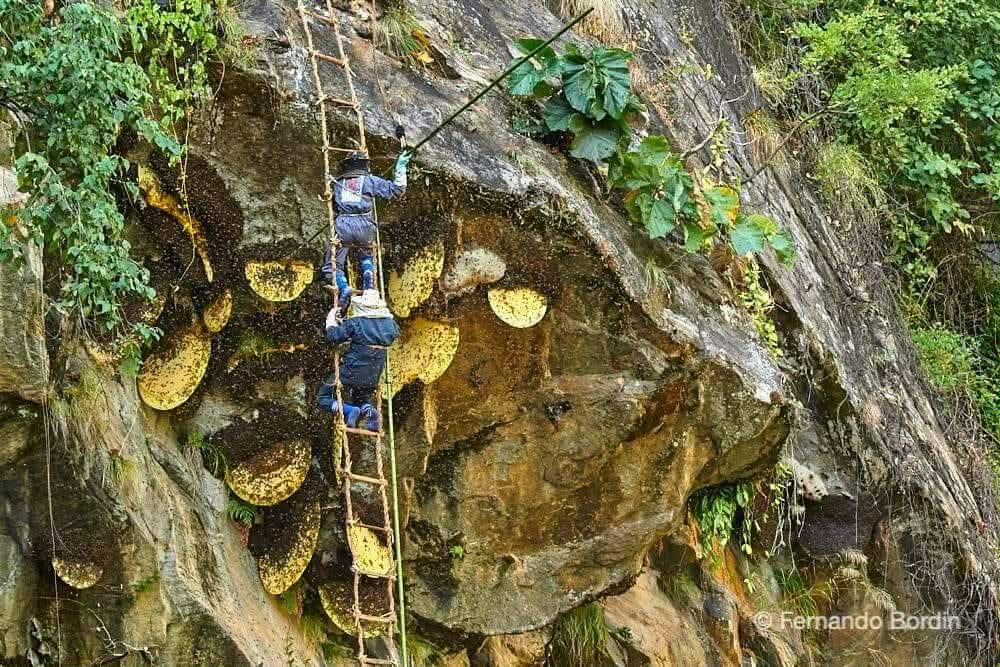
Hidden deep within the rugged cliffs of the Himalayas lies one of Nepal’s most extraordinary traditions—honey hunting. Unlike ordinary beekeeping, honey hunting in Nepal is an ancient cultural practice where experienced hunters climb towering vertical cliffs using handmade bamboo ladders and natural rope systems to harvest wild honey from the world’s largest honeybee, Apis laboriosa. This breathtaking activity has been practiced for centuries by indigenous communities, particularly the Gurung people, who pass their knowledge from one generation to the next.
Every year, travelers from around the world visit Nepal not only for trekking and mountaineering but also to witness this remarkable cultural event. Watching skilled hunters suspended hundreds of meters above the ground while surrounded by thousands of giant Himalayan honeybees is an unforgettable experience. It combines adventure, culture, tradition, biodiversity, and local lifestyles into one incredible journey.
One of the biggest attractions of honey hunting is the opportunity to see the famous Mad Honey, a rare and highly valued natural product known for its medicinal properties and mild psychoactive effects. Produced from the nectar of rhododendron flowers growing in the high Himalayan forests, Mad Honey has attracted worldwide attention from researchers, adventure travelers, and wellness enthusiasts alike.
If you are looking for a truly authentic cultural adventure in Nepal, a honey hunting expedition offers an experience unlike any other. Whether you are a photographer, documentary filmmaker, trekker, nature lover, or cultural explorer, witnessing Nepal’s ancient honey hunters in action is a once-in-a-lifetime adventure.
What is Honey Hunting?
Honey hunting is the traditional practice of collecting wild honey directly from naturally built beehives located on steep cliffs, dense forests, and remote Himalayan rock faces. Unlike commercial beekeeping, the bees are not domesticated. Instead, experienced local hunters carefully harvest honey while preserving the colonies for future generations.
The practice dates back hundreds of years and remains an important cultural tradition among several ethnic communities in Nepal. Honey hunting requires exceptional climbing skills, teamwork, patience, courage, and a deep understanding of bee behavior.
Hunters often spend several days trekking through forests before reaching the massive cliffs where giant honeybee colonies build their nests.
Why Nepal is Famous for Honey Hunting?
Nepal is internationally recognized as one of the world’s premier destinations for traditional honey hunting, offering an extraordinary combination of adventure, culture, and natural heritage. Unlike commercial beekeeping, honey hunting in Nepal is an ancient practice that has been preserved for centuries by indigenous communities living in the Himalayan foothills. Every year, travelers, photographers, filmmakers, and researchers visit Nepal to witness this remarkable tradition, where skilled hunters climb towering cliffs using handmade bamboo ladders and natural rope systems to harvest wild honey from the world’s largest honeybee, Apis laboriosa.
Several unique factors make Nepal a global hotspot for honey hunting:
- Home to the world’s largest honeybee (Apis laboriosa), which builds massive hives on steep Himalayan cliffs.
- Producer of the rare Himalayan Mad Honey, known for its unique properties and traditional medicinal uses.
- Centuries-old Gurung and other indigenous honey hunting traditions that continue to be passed down through generations.
- Spectacular Himalayan cliff landscapes, creating one of the most dramatic honey harvesting environments in the world.
- Rich biodiversity, with dense forests, blooming rhododendrons, and diverse wildlife that support healthy bee populations.
- Remote mountain villages, where visitors can experience authentic local culture, hospitality, and traditional lifestyles.
- Traditional bamboo ladder and rope climbing techniques, still used by experienced honey hunters today.
- An unforgettable cultural and adventure experience, combining trekking, nature, history, and local traditions into a single journey.
Unlike many countries where traditional honey hunting has disappeared or become highly commercialized, Nepal continues to preserve this remarkable heritage as a living cultural practice. The combination of breathtaking Himalayan scenery, ancient indigenous knowledge, and the rare opportunity to witness fearless honey hunters harvesting wild cliff honey makes Nepal one of Asia’s most unique and fascinating adventure destinations. Whether you are a nature lover, cultural explorer, or adventure traveler, honey hunting in Nepal offers an authentic experience that cannot be found anywhere else in the world.
You can expand this section by adding historical context while avoiding claiming an exact origin date, since there is no definitive evidence for when honey hunting began in Nepal.
The History of Honey Hunting in Nepal
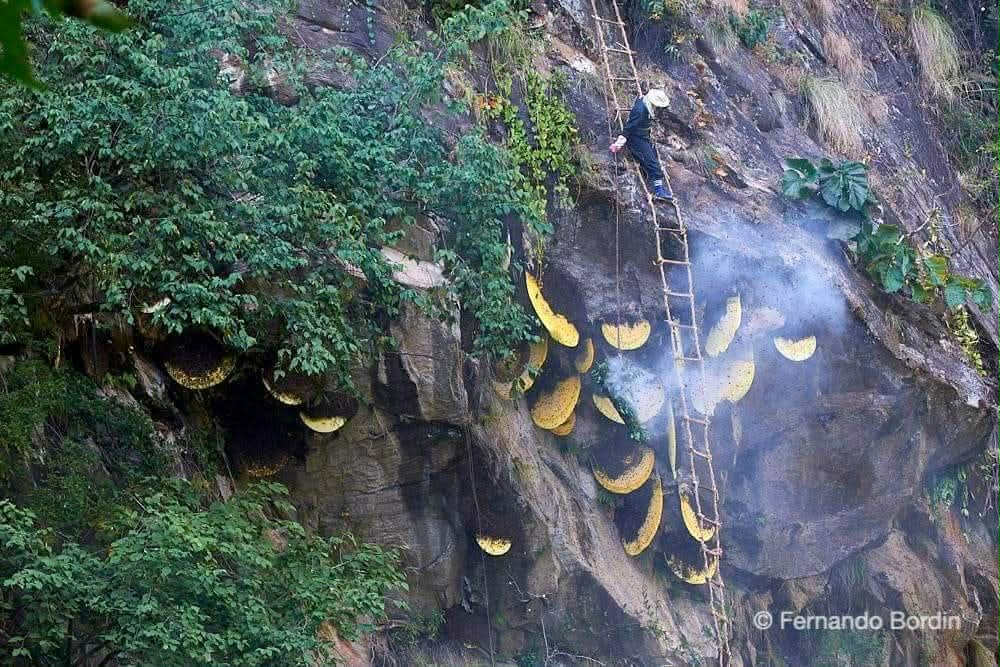
Honey hunting in Nepal is believed to date back thousands of years, making it one of the oldest traditional food-gathering practices still practiced today. Long before the development of modern beekeeping or climbing equipment, indigenous communities in Nepal’s middle hills and Himalayan regions harvested wild honey from towering cliffs using handmade bamboo ladders, natural fiber ropes, and simple wooden tools. Wild honey was valued not only as a nutritious food but also as a traditional medicine and an important offering in religious and cultural ceremonies.
Among Nepal’s many ethnic groups, the Gurung community of central Nepal is best known for preserving this remarkable tradition. Experienced honey hunters pass their knowledge from one generation to the next, teaching younger members how to identify active bee colonies, understand the seasonal behavior of the giant Himalayan honeybee (Apis laboriosa), prepare traditional climbing equipment, and harvest honey sustainably without destroying the colonies. Their skills, courage, and deep respect for nature have helped keep this unique cultural heritage alive for centuries.
Although honey hunting has been part of Nepalese life for generations, it began attracting international attention in the late 20th century, particularly during the 1980s and 1990s. As Nepal became a popular destination for trekking and adventure tourism, explorers, photographers, and researchers discovered the dramatic cliff-hanging honey harvests of the Gurung villages. The tradition gained worldwide recognition after documentaries produced by organizations such as the National Geographic Society and the BBC showcased the fearless honey hunters scaling vertical cliffs to collect wild honey. These films introduced millions of viewers to Nepal’s extraordinary honey hunting culture and sparked growing interest among travelers from around the world.
Today, honey hunting is recognized as one of Nepal’s most unique cultural and adventure experiences. Many remote villages continue to celebrate the harvest as a community event that strengthens social bonds, preserves indigenous knowledge, and promotes sustainable tourism. Visitors now travel to Nepal not only to witness the thrilling honey harvest but also to learn about the traditions, customs, and deep connection between local communities and the Himalayan environment.
What is Mad Honey?
Mad Honey is one of the rarest natural honey varieties in the world. It is produced when Himalayan giant honeybees collect nectar from rhododendron flowers containing naturally occurring compounds called grayanotoxins.
Unlike ordinary honey, Mad Honey has unique medicinal and psychoactive properties. For centuries, local Himalayan communities have used small amounts as traditional medicine for various health conditions.
Mad Honey is reddish in color, has a slightly bitter taste, and is harvested only during specific flowering seasons. Because of its rarity and unique characteristics, Mad Honey has become one of Nepal’s most valuable natural products.
Why Himalayan Mad Honey is So Special?
Himalayan Mad Honey is far more than an ordinary natural sweetener—it is one of the rarest and most fascinating honey varieties in the world. Produced in the remote Himalayan regions of Nepal, this unique honey has been treasured for centuries for its rarity, traditional medicinal uses, and remarkable harvesting process. Its uniqueness comes from a rare combination of high-altitude Himalayan ecology, giant wild honeybees, rhododendron forests, and centuries-old honey hunting traditions that cannot be found anywhere else.
Unlike commercially produced honey, authentic Himalayan Mad Honey is available only in limited quantities, making it a highly sought-after product among travelers, researchers, and natural wellness enthusiasts worldwide.
Rare and Seasonal Production
One of the main reasons Mad Honey is so special is its limited and seasonal production. It is produced only when the giant Himalayan honeybee (Apis laboriosa) collects nectar from specific species of wild rhododendron flowers that naturally contain compounds known as grayanotoxins. These flowers bloom primarily during the spring season (April and May) in Nepal’s middle hills and lower Himalayan regions.
The production of authentic Mad Honey depends on a unique combination of altitude, climate, flowering rhododendrons, and bee migration patterns. Because these natural conditions exist only in a few mountainous regions of Nepal and neighboring Himalayan areas, only a small amount of genuine Mad Honey is harvested each year, making it exceptionally rare and valuable.
Produced by the World’s Largest Honeybee
Mad Honey is collected by Apis laboriosa, the world’s largest honeybee species. These remarkable bees can grow up to 3 centimeters in length and live at elevations between 2,500 and 4,000 meters (8,200–13,100 feet).
Unlike common honeybees that build hives in trees or man-made boxes, Apis laboriosa constructs enormous single-comb nests beneath steep Himalayan cliffs, often hundreds of meters above the ground. Their ability to survive harsh mountain conditions and their highly defensive nature make them one of the most extraordinary bee species on Earth.
Harvested Through Ancient Cliff-Hunting Traditions
Another reason Mad Honey is so unique is the traditional way it is harvested. In many Gurung villages of central Nepal, honey hunting is still carried out using techniques that have remained largely unchanged for generations.
Experienced honey hunters descend towering cliffs on handmade bamboo ladders secured with natural fiber ropes, while assistants below create smoke from burning leaves and branches to gently calm the bees. Using long bamboo poles, the hunters carefully cut sections of the honeycomb and lower them to the ground in woven baskets.
This remarkable process demands exceptional courage, teamwork, climbing skills, and an intimate understanding of bee behavior. Every drop of authentic Mad Honey is therefore the result of centuries of indigenous knowledge, hard work, and respect for nature rather than modern industrial production.
Unique Natural Composition
What truly distinguishes Mad Honey from ordinary honey is its natural chemical composition. The nectar collected from certain rhododendron species contains grayanotoxins, naturally occurring compounds that remain in the honey after production.
Because of these compounds, Mad Honey has a distinctive taste that differs from regular honey. It is often described as slightly bitter, earthy, floral, and less sweet than commercially produced honey. Its unique composition has also earned it names such as “Mad Honey,” “Hallucinogenic Honey,” or “Psychoactive Honey,” although the effects vary greatly depending on the amount consumed and the individual.
Traditional Medicinal Importance
For hundreds of years, local Himalayan communities have valued Mad Honey as a traditional natural remedy. In small quantities, it has been used in traditional medicine to support overall health and well-being.
Local communities traditionally believe Mad Honey may help support:
- Blood circulation
- Healthy digestion
- General wellness
- Energy and recovery from fatigue
- High-altitude tiredness
- Immune system support
- Relief from sore throat and seasonal colds
While these traditional uses are deeply rooted in local culture, it is important to understand that scientific evidence supporting many of these health claims remains limited. Mad Honey should not be considered a replacement for professional medical care or prescribed medication.
Important Safety Considerations
Although Mad Honey is a natural product, it should always be consumed responsibly. Because it contains grayanotoxins, consuming excessive amounts can lead to Mad Honey poisoning.
Possible symptoms include:
- Dizziness
- Nausea and vomiting
- Low blood pressure
- Slow or irregular heartbeat
- Excessive sweating
- Blurred vision
- Weakness
Temporary confusion
In severe cases, immediate medical attention may be required. Pregnant women, children, individuals with heart conditions, and people taking medications that affect blood pressure or heart rhythm should avoid consuming Mad Honey unless advised by a qualified healthcare professional. Visitors should purchase authentic Mad Honey only from trusted local producers and consume it in very small quantities.
High Market Value
Due to its rarity, difficult harvesting process, and growing international demand, authentic Himalayan Mad Honey is considerably more expensive than ordinary honey. Every harvest requires skilled hunters to risk climbing vertical cliffs in remote mountain regions, making production both labor-intensive and seasonal.
Its premium value is driven by:
- Limited annual production
- Dangerous and time-consuming harvesting methods
- Ancient cultural significance
- Increasing global demand
- Interest from researchers, filmmakers, and adventure travelers
- Authentic origin from Nepal’s Himalayan regions
For these reasons, genuine Himalayan Mad Honey is regarded as a luxury natural product rather than an everyday sweetener.
More Than Just Honey
Perhaps the greatest reason Mad Honey is so special is the story behind it. It represents far more than a unique food—it symbolizes the deep connection between the Himalayan people and their natural environment. From fearless honey hunters scaling towering cliffs to the giant wild bees nesting on dramatic rock faces and the vibrant rhododendron forests that make its production possible, every jar of Mad Honey reflects centuries of tradition, resilience, and harmony with nature.
For travelers visiting Nepal, tasting authentic Mad Honey and witnessing the ancient honey hunting tradition is more than a culinary experience; it is a rare opportunity to explore one of the world’s oldest living cultural practices. Combining adventure, indigenous knowledge, breathtaking Himalayan landscapes, and sustainable community traditions, Himalayan Mad Honey remains one of Nepal’s most extraordinary natural treasures and one of the most memorable experiences for visitors seeking an authentic Himalayan adventure.
Which Bee Produces Mad Honey?
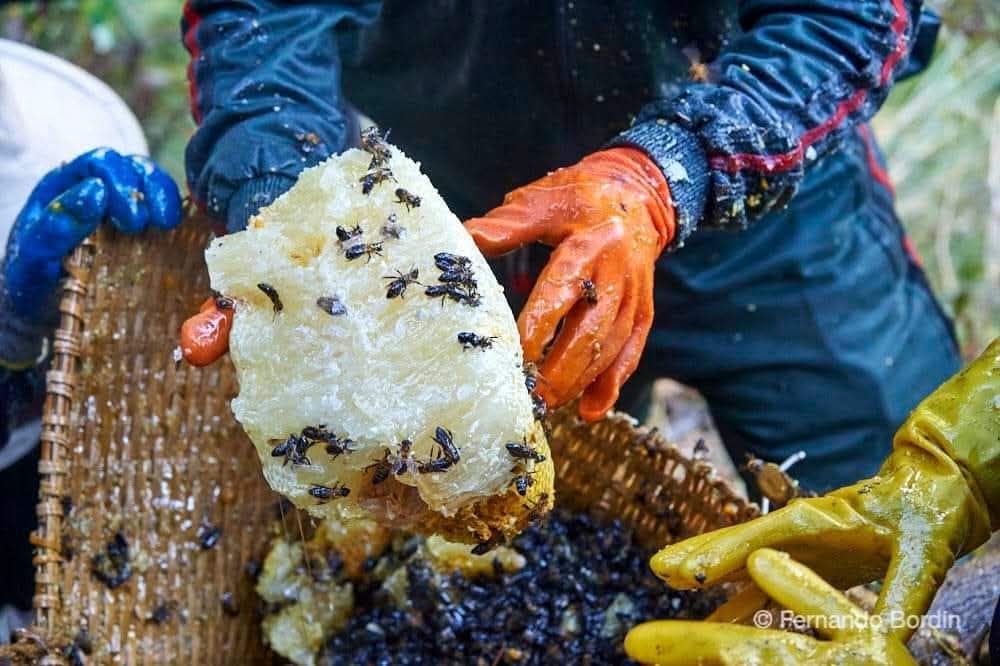
The Giant Himalayan Honeybee (Apis laboriosa) is the only bee species responsible for producing the famous Himalayan Mad Honey. Recognized as the largest honeybee in the world, Apis laboriosa is uniquely adapted to the harsh conditions of the Himalayan mountains. These remarkable bees inhabit elevations ranging from 2,500 to 4,000 meters (8,200–13,100 feet), where they thrive in cool temperatures and rugged landscapes that few other bee species can tolerate.
Unlike common honeybees, which build multiple hives in tree hollows or man-made boxes, Apis laboriosa constructs enormous single-comb nests beneath steep overhanging cliffs. These cliff faces protect the colonies from heavy rain, strong winds, predators, and direct sunlight while providing a safe environment for thousands of bees to live together. Some of these honeycombs can measure more than 1.5 meters (5 feet) wide, making them among the largest natural bee nests in the world.
One of the most fascinating characteristics of the Giant Himalayan Honeybee is its seasonal migration. Depending on the flowering season, the bees move between different elevations in search of nectar-rich plants. During spring, they collect nectar from blooming rhododendron flowers, some of which contain naturally occurring grayanotoxins. These compounds are responsible for giving Himalayan Mad Honey its unique properties and distinctive reputation.
Characteristics of Apis laboriosa
- World’s largest honeybee species, measuring up to 3 centimeters (1.2 inches) in length.
- Found only in the Himalayan region, including Nepal, Bhutan, northern India, and parts of southwestern China.
- Lives at elevations between 2,500 and 4,000 meters, where few other bee species can survive.
- Builds massive cliff-side hives beneath overhanging rock faces, often hundreds of meters above the ground.
- Highly defensive, protecting its colonies aggressively against predators and intruders.
- Excellent adaptation to cold, high-altitude climates, with strong flight capabilities and seasonal migration patterns.
- Produces both regular wild honey and the famous seasonal Mad Honey, depending on the flowers available during different times of the year.
The extraordinary behavior of Apis laboriosa is one of the main reasons Nepal’s honey hunting tradition is so unique. Harvesting honey from these giant wild bees requires exceptional skill, courage, and generations of indigenous knowledge. Their remarkable adaptation to the Himalayan environment, combined with their role in producing the world’s rarest honey, makes the Giant Himalayan Honeybee one of Nepal’s most fascinating and ecologically important species.
Honey Hunting Difficulty Level
Honey hunting in Nepal is considered a moderate to challenging cultural adventure, depending on the location and trekking route.
Difficulty Rating
- Adventure Level:
- Visitors usually do not participate in harvesting but trek to observation points where they can safely witness the event.
Challenges may include:
- Multi-day trekking
- Steep mountain trails
- Remote villages
- Basic accommodations
- Variable weather
- Long walking hours
- High altitudes in some regions
Professional honey hunters themselves face an extreme level of difficulty, climbing vertical cliffs with traditional rope ladders while surrounded by thousands of bees.
Can Tourists Participate?
Most visitors observe rather than actively harvest honey. This approach protects both travelers and local communities while ensuring safety.
During a honey hunting tour, visitors can:
- Watch honey hunters harvest wild honey
- Learn traditional techniques
- Photograph the event
- Visit Gurung villages
- Taste locally harvested honey (where available and appropriate)
- Explore Himalayan forests
- Experience local hospitality and culture
- Why Honey Hunting is One of Nepal’s Best Cultural Adventures
- Honey hunting offers far more than adventure.
- It combines:
- Ancient traditions
- Indigenous knowledge
- Wildlife
- Biodiversity
- Mountain trekking
- Cultural immersion
- Local cuisine
- Village life
- Stunning Himalayan scenery
- Responsible tourism
Few travel experiences allow visitors to witness a living tradition that has remained largely unchanged for generations.
Who Performs Honey Hunting in Nepal?
Honey hunting in Nepal is a centuries-old tradition practiced by several indigenous communities who have lived in harmony with the Himalayan environment for generations. These communities possess extensive knowledge of the forests, seasonal flowering cycles, and the behavior of the giant Himalayan honeybee (Apis laboriosa). Their honey hunting techniques have been carefully passed down from elders to younger generations, preserving one of Nepal’s most remarkable cultural traditions.
The main communities that continue this practice include:
- Gurung
- Magar
- Chepang (primarily in the lower hills and mid-hill regions)
- Rai (in selected areas of eastern Nepal)
Among these groups, the Gurung community is the most internationally recognized for its spectacular cliff honey hunting tradition. Found mainly in the districts of Lamjung, Kaski, Gorkha, and surrounding areas, the Gurung people have practiced honey hunting for hundreds of years. Their expertise in constructing handmade bamboo ladders, using natural fiber ropes, managing smoke to calm the bees, and harvesting honey from towering cliffs has earned them worldwide admiration.
Honey hunting is much more than a means of collecting honey—it is a deeply rooted cultural tradition that brings entire communities together. Before each harvest, many villages perform traditional rituals and prayers, seeking blessings from local deities for a safe and successful expedition. The honey hunting event often becomes a community celebration, with villagers helping prepare equipment, supporting the hunters, and sharing the harvested honey among families.
Experienced honey hunters, often respected elders within the community, play a crucial role in teaching younger generations. They pass on valuable skills such as identifying active bee colonies, understanding seasonal bee movements, selecting safe climbing routes, and harvesting honey sustainably without destroying the hives. This transfer of indigenous knowledge helps ensure that both the honeybee populations and the ancient tradition continue to thrive.
Today, these indigenous communities are also important partners in community-based tourism, welcoming visitors from around the world to witness this extraordinary cultural practice. By participating in responsible honey hunting tours, travelers not only experience one of Nepal’s most unique adventures but also contribute to preserving local traditions, supporting rural livelihoods, and promoting the conservation of the Himalayan ecosystem.
Wildlife Found During Honey Hunting Trips
A honey hunting expedition is not only a cultural adventure but also an opportunity to explore Nepal’s rich Himalayan biodiversity. Most honey hunting destinations are located in remote mountain forests, where travelers pass through pristine landscapes filled with diverse wildlife, colorful birds, rare plants, and breathtaking natural scenery. The forests surrounding these cliff-side bee colonies provide an ideal habitat for many Himalayan species, making the journey as rewarding as the honey hunting experience itself.
During the trek, visitors may encounter a variety of wildlife and plant species, including:
- Himalayan Monal – Nepal’s colorful national bird, famous for its iridescent plumage.
- Musk Deer – A shy and endangered Himalayan mammal found in high-altitude forests.
- Himalayan Langur Monkeys – Often seen moving through the forest canopy in groups.
- Barking Deer – A small deer species commonly spotted in dense woodlands.
- Various pheasants and mountain birds, including Kalij pheasants, laughingthrushes, eagles, and Himalayan griffon vultures.
- Rhododendron forests, which burst into vibrant red, pink, and white blossoms during spring.
- Wild orchids and alpine flowers, adding color to the forest landscape.
- Medicinal herbs and aromatic plants, many of which are traditionally used by local communities.
- Butterflies and native insects, especially during the warmer months.
Crystal-clear streams, waterfalls, and terraced farmlands, enhancing the scenic beauty of the trekking route.
Spring (April to May) is considered the most spectacular season for honey hunting. During this time, Nepal’s hillsides are covered with blooming rhododendron forests, creating breathtaking scenery while providing nectar for the giant Himalayan honeybee (Apis laboriosa). The pleasant weather, lush greenery, and increased bird activity make this season ideal for nature lovers, photographers, and wildlife enthusiasts.
Beyond witnessing the thrilling honey harvest, travelers have the chance to immerse themselves in one of Nepal’s most pristine natural environments. The combination of ancient forests, diverse wildlife, and dramatic Himalayan landscapes makes a honey hunting tour a truly unforgettable experience for anyone interested in nature, conservation, and adventure.
Best Place for Honey Hunting in Nepal
Nepal is home to several remote Himalayan regions where the ancient tradition of honey hunting continues to thrive. These destinations are not only famous for producing authentic Himalayan wild honey but also offer breathtaking mountain scenery, rich biodiversity, and opportunities to experience the traditional lifestyle of local communities. Each region has its own unique landscape, culture, and honey-hunting practices, making every expedition a memorable adventure.
1. Bhujung, Lamjung – Nepal’s Most Famous Honey Hunting Destination
Bhujung is widely regarded as the best place to witness traditional honey hunting in Nepal. Located in the Lamjung District, this picturesque Gurung village is surrounded by dense forests, steep cliffs, and spectacular Himalayan landscapes. The local Gurung community has practiced honey hunting for centuries, preserving their ancestral skills and traditions.
Visitors can enjoy:
- Authentic Gurung culture and hospitality
- Traditional cliff honey hunting demonstrations
- Beautiful trekking trails
- Stunning mountain panoramas
- Rhododendron forests
- Local homestay experiences
Bhujung is one of the top destinations for photographers, filmmakers, and adventure travelers seeking an authentic honey-hunting experience.
2. Ghalegaun, Lamjung
Ghalegaun is another renowned Gurung village famous for community-based tourism and traditional honey hunting. Easily accessible compared to some remote villages, it offers visitors a chance to experience both cultural immersion and nature.
Highlights include:
- Traditional Gurung villages
- Community homestays
- Himalayan sunrise views
- Local museums
- Cultural performances
- Seasonal honey-hunting expeditions
3. Ghandruk, Kaski
Although Ghandruk is best known as a gateway to the Annapurna trekking region, nearby forests and cliffs are home to traditional honey hunters. Visitors combining trekking with cultural experiences can witness seasonal honey harvesting in nearby villages.
4. Sankhuwasabha
Eastern Nepal also preserves traditional honey hunting among indigenous communities. The region’s pristine forests and rugged cliffs provide excellent habitat for the Himalayan giant honeybee.
5. Solukhumbu Region
Some villages surrounding the Everest region continue traditional honey harvesting, although opportunities are less frequent than in central Nepal.
6. Rolpa and Rukum
Western Nepal contains numerous remote cliff systems where local communities continue harvesting wild honey using traditional techniques.
Best Season for Honey Hunting in Nepal
Timing is one of the most important factors when planning a honey hunting expedition. Honey hunting is not conducted throughout the year. Instead, it follows the natural flowering cycle of Himalayan plants and the honey production of giant honeybees.
There are two primary honey hunting seasons in Nepal.
Spring Honey Hunting (April – May)
Spring is considered the best season for witnessing honey hunting. During this period, rhododendron forests across the Himalayas bloom in vibrant shades of red, pink, and white. The giant Himalayan honeybees collect nectar from these flowers, producing the famous Mad Honey.
Advantages of spring:
- Pleasant temperatures
- Clear mountain views
- Rhododendron blossoms
- Production of Mad Honey
- Excellent trekking conditions
- Best photography opportunities
- Spring attracts the highest number of visitors because of the beautiful weather and vibrant landscapes.
Autumn Honey Hunting (October – November)
Autumn is another excellent season for honey hunting. After the monsoon, the skies become crystal clear, offering spectacular Himalayan views.
Advantages include:
- Stable weather
- Comfortable temperatures
- Dry trekking trails
- Excellent visibility
- Rich cultural festivals
- Harvest of regular wild honey
- Although Mad Honey is primarily associated with spring, autumn harvests are also culturally significant.
Seasons to Avoid
Monsoon (June–September)
Heavy rainfall makes trekking trails slippery and increases the risk of landslides. Honey hunting activities are generally suspended.
Winter (December–February)
Cold temperatures reduce bee activity, and snow may block access to higher villages.
Equipment Used for Honey Hunting
One of the most fascinating aspects of Nepalese honey hunting is that many communities continue using traditional tools that have changed very little over generations.
Bamboo Ladders
Long bamboo ladders, often extending more than 100 meters, are handmade by local villagers. These ladders are suspended from the top of cliffs and allow hunters to descend toward the beehives.
Natural Rope
Strong ropes made from bamboo fibers or other natural materials secure the ladders and provide additional safety.
Long Bamboo Poles
Hunters use long poles to cut sections of the honeycomb while maintaining a safe distance from aggressive bees.
Honey Basket
Large woven baskets collect the harvested honeycomb before being lowered to the ground.
Smoking Torch
Bundles of dried leaves, grass, and wood create smoke that calms the bees and allows hunters to approach the hive.
Traditional Clothing
Although some hunters now wear protective veils, many still rely on traditional clothing that covers most of the body.
Modern Safety Equipment
Some communities have introduced:
- Safety harnesses
- Helmets
- Climbing ropes
- Protective gloves
- Communication devices
These additions improve safety while preserving traditional harvesting techniques.
Step-by-Step Honey Hunting Process
Witnessing the complete honey hunting process is an unforgettable cultural experience. Every expedition follows a carefully organized sequence that has been passed down through generations.
Step 1: Community Preparation
Several days before the harvest, experienced hunters identify active bee colonies and prepare climbing equipment.
The entire village often participates in:
- Making bamboo ladders
- Preparing ropes
- Collecting firewood
- Organizing food supplies
- Planning the expedition
Step 2: Trek to the Cliff
Hunters and visitors hike through forests and mountain trails before reaching the towering cliffs where giant bees have built their nests.
Step 3: Traditional Ceremony
Before climbing, many communities perform religious rituals seeking blessings from local deities and asking for protection during the dangerous harvest.
Step 4: Lighting the Smoke
A fire is lit below the hive, creating thick smoke that rises toward the bees.
The smoke:
- Reduces bee aggression
- Improves visibility
- Allows hunters to approach safely
Step 5: Climbing the Cliff
The lead hunter carefully descends the bamboo ladder while suspended hundreds of meters above the ground.
This is considered the most dangerous stage of the expedition.
Step 6: Harvesting the Honeycomb
Using a long bamboo pole, the hunter cuts sections of honeycomb and lowers them to assistants waiting below.
Care is taken not to destroy the entire hive, allowing the bee colony to recover and continue producing honey.
Step 7: Collecting the Honey
Once safely on the ground, villagers separate:
- Honey
- Beeswax
- Larvae
- Pollen
Some honey is consumed locally, while the remainder is sold.
Safety Measures During Honey Hunting
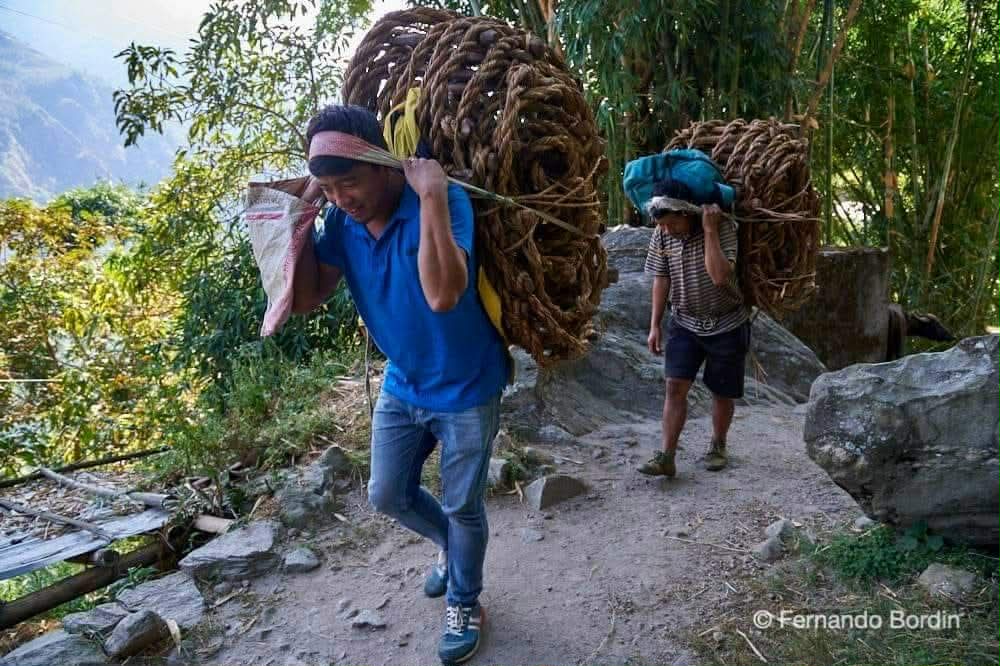
Honey hunting is widely regarded as one of the most dangerous traditional occupations in the world. Harvesting honey from giant wild bee colonies suspended on steep Himalayan cliffs requires exceptional courage, experience, and careful preparation. Hunters often descend hundreds of meters on handmade bamboo ladders while surrounded by thousands of highly defensive giant Himalayan honeybees (Apis laboriosa). Despite these challenges, serious accidents are relatively uncommon because experienced honey hunters follow strict safety practices that have been refined and passed down through generations.
Before every expedition, the hunting team carefully evaluates weather conditions, as strong winds, rain, or slippery cliffs can make climbing extremely hazardous. Honey hunting is only carried out during favorable weather, when visibility is clear and the bamboo ladders and ropes can be used safely. Every ladder, rope, knot, and support system is thoroughly inspected before the climb begins to ensure it can withstand the hunter’s weight and movement throughout the harvest.
An experienced lead hunter, often the most respected member of the community, oversees the entire operation. His knowledge of cliff climbing, bee behavior, and honey harvesting techniques is essential for a successful and safe expedition. Teamwork also plays a vital role. While one hunter descends the cliff, several assistants remain at the top and bottom of the cliff to secure the ropes, maintain communication, manage equipment, and collect the harvested honey. Continuous coordination between team members helps minimize risks during every stage of the process.
Smoke management is another important safety measure. Before the hunter approaches the hive, assistants create smoke by burning dried leaves, grass, and small branches beneath the cliff. The smoke gently calms the bees and reduces their aggressive behavior, allowing the hunter to work more safely. However, experienced hunters carefully control the amount of smoke used, ensuring that it is sufficient to disperse the bees without harming the colony or damaging the surrounding environment.
Equally important is the practice of sustainable harvesting. Rather than removing the entire hive, skilled honey hunters carefully cut only the mature sections of the honeycomb, leaving enough brood and comb intact for the bee colony to recover and continue producing honey in future seasons. This traditional conservation practice has helped protect both the giant Himalayan honeybee and the centuries-old honey hunting tradition.
Although modern equipment such as climbing harnesses, helmets, gloves, and communication devices is sometimes used in certain communities to improve safety, many experienced hunters still rely primarily on their traditional skills, local knowledge, and teamwork. Their ability to safely navigate vertical cliffs using simple handmade equipment is a testament to generations of experience and cultural heritage.
For visitors, safety is the highest priority. Tourists are not expected to participate in the actual honey harvesting and should never attempt to climb the cliffs or approach the bee colonies. Instead, they observe the event from designated safe viewing areas selected by local guides. Following the instructions of experienced guides, maintaining a respectful distance, wearing appropriate outdoor clothing, and avoiding sudden movements near the harvesting site help ensure a safe and enjoyable experience. By respecting local safety guidelines and traditional practices, visitors can witness one of Nepal’s most extraordinary cultural traditions while supporting the preservation of both the community and its natural environment.
How Expensive is a Honey Hunting Trip to Nepal?
The cost of a Honey Hunting Tour in Nepal varies depending on several factors, including the destination, duration of the trip, group size, level of accommodation, mode of transportation, and whether the itinerary includes trekking or additional sightseeing. Since honey hunting takes place in remote Himalayan villages, prices also depend on local logistics and community participation. Private tours generally cost more than joining a small group, while customized itineraries that include destinations such as Pokhara, Kathmandu Valley, or the Annapurna region may increase the overall price.
On average, a 1–2 day cultural honey hunting excursion to an accessible village costs between USD 150 and USD 300 per person. A more comprehensive 3–5 day Honey Hunting Tour usually ranges from USD 400 to USD 800 per person, while a 6–8 day trekking and honey hunting adventure generally costs USD 700 to USD 1,200 per person. Luxury or tailor-made expeditions with private transportation, boutique accommodations, or extended trekking itineraries may range from USD 1,300 to USD 2,000 or more per person.
Most tour packages offered by licensed trekking companies include airport transfers, private or shared ground transportation, accommodation, meals during the trek, an experienced English-speaking guide, porter services when necessary, honey hunting observation, local permits, community entrance fees, and basic first-aid support. However, international airfare, Nepal visa fees, travel insurance, personal expenses, alcoholic beverages, laundry services, and tips for guides and porters are generally not included in the package price.
Although a honey hunting tour may cost more than a standard sightseeing trip, it offers a truly authentic cultural experience that combines adventure, traditional Himalayan lifestyles, breathtaking mountain scenery, and the rare opportunity to witness one of the world’s oldest surviving honey harvesting traditions.
Detailed 5-Day Honey Hunting Itinerary
Day 1: Drive from Kathmandu to Lamjung and Trek to a Traditional Gurung Village
Your honey hunting adventure begins with an early morning drive from Kathmandu toward the beautiful hills of Lamjung District, a journey of approximately 6 to 8 hours through picturesque river valleys, terraced farmlands, and traditional villages. Along the way, you will enjoy spectacular views of lush green hills and glimpses of the Himalayan ranges.
After reaching the trailhead, a short hike takes you to a traditional Gurung village, where you will be warmly welcomed by the local community. Following lunch, you can stroll around the village, visit local homes, observe traditional stone houses, and learn about the history and cultural importance of honey hunting. In the evening, enjoy a delicious home-cooked dinner and spend the night in a community homestay or local guesthouse while experiencing authentic Gurung hospitality.
Driving Duration: 6–8 hours
Hiking Duration: 2–3 hours
Accommodation: Homestay or local lodge
Day 2: Village Exploration and Honey Hunting Preparation
After a traditional Nepali breakfast, spend the day exploring the surrounding village and learning about the lifestyle of the Gurung people. Visit local farms, interact with village elders, and discover how the community has preserved the ancient tradition of honey hunting for generations.
You may also have the opportunity to observe experienced honey hunters preparing bamboo ladders, ropes, baskets, and smoking materials that will be used during the harvest. Your guide will explain the behavior of the giant Himalayan honeybee (Apis laboriosa), the significance of Mad Honey, and the safety measures followed during the expedition.
In the afternoon, enjoy a leisurely walk through nearby forests and terraced fields while admiring the surrounding Himalayan scenery. Depending on the season, the evening may include traditional Gurung cultural performances featuring local music and dance.
Walking Duration: 3–4 hours
Accommodation: Homestay or local lodge
Day 3: Honey Hunting Experience – Witness the Ancient Cliff Harvest
Today is the highlight of your journey. Wake up early in the morning and enjoy breakfast before hiking to the towering cliffs where the giant Himalayan honeybees build their enormous hives. The walk to the honey hunting site usually takes 2 to 4 hours, passing through forests rich in rhododendrons, orchids, and diverse birdlife.
Upon arrival, you will witness one of Nepal’s most extraordinary cultural traditions. Experienced honey hunters carefully prepare the climbing equipment before descending vertical cliffs using handmade bamboo ladders and natural rope systems. Assistants below create smoke to calm the bees while the lead hunter skillfully cuts the honeycombs and lowers them to the ground.
From a designated safe viewing area, you can observe every stage of the harvesting process, capture unforgettable photographs, and learn about the cultural and ecological significance of honey hunting. If available, you may even have the opportunity to taste freshly harvested wild honey. After the successful harvest, the local community often celebrates by sharing stories, traditional food, and the harvested honey before returning to the village.
- Hiking Duration: 4–6 hours (round trip)
- Honey Hunting Observation:*3–5 hours
- Accommodation:*Homestay or local lodge
Day 4: Nature Walk and Return to Kathmandu
After breakfast, enjoy a relaxed nature walk through nearby forests while learning about the region’s rich biodiversity, medicinal herbs, and native wildlife. Your guide will introduce various plant species traditionally used by local communities and explain the ecological importance of conserving the Himalayan forests and giant honeybee habitat.
Following the walk, begin your return journey to Kathmandu. Along the way, enjoy scenic views of rivers, hills, and traditional villages before arriving in the capital in the evening. You can spend the remainder of the day exploring the vibrant streets of Thamel or relaxing at your hotel.
- Walking Duration:1–2 hours
- Driving Duration:6–8 hours
- Accommodation: Hotel in Kathmandu
Day 5: Final Departure or Continue Your Nepal Adventure
After breakfast, your guide will transfer you to Tribhuvan International Airport according to your flight schedule. If you wish to extend your stay, this is an excellent opportunity to continue exploring Nepal with additional adventures such as the Annapurna Base Camp Trek, Everest Base Camp Trek, Chitwan National Park Safari, Pokhara sightseeing, rafting, or a cultural tour of the Kathmandu Valley.
Your unforgettable Honey Hunting in Nepal experience concludes with lifelong memories of one of the world’s most unique cultural traditions.
Accommodation During the Honey Hunting Tour
Accommodation during a honey hunting tour is generally simple, comfortable, and focused on providing an authentic cultural experience rather than luxury facilities. Since most honey hunting destinations are located in remote Himalayan villages, visitors typically stay in traditional homestays, community lodges, local guesthouses, or tea houses, depending on the itinerary.
Although the facilities are basic, they are clean, welcoming, and managed by local families who are known for their warm hospitality. Rooms are usually twin-sharing with comfortable beds, blankets, and shared bathroom facilities. Staying with local families provides an excellent opportunity to experience traditional village life, learn about Gurung culture, and enjoy genuine interactions with the community. Evenings are often spent around a warm dining room, sharing stories with your hosts while enjoying spectacular mountain views and authentic Nepali hospitality.
Food During Honey Hunting Tours
Food is an important part of the honey hunting experience, as most meals are freshly prepared by local families using organic ingredients grown in nearby farms and gardens. The cuisine is simple, nutritious, and perfectly suited for travelers exploring the Himalayan countryside.
The staple meal throughout the journey is Dal Bhat, Nepal’s traditional dish consisting of steamed rice served with lentil soup, seasonal vegetables, curry, pickles, and occasionally chicken or local meat. Travelers may also enjoy traditional Himalayan dishes such as Dhido, a wholesome meal made from millet or buckwheat flour, Gundruk soup, Tibetan bread, homemade noodles, fresh vegetables, seasonal fruits, locally produced honey, homemade pickles, and a variety of herbal or organic teas.
Meals are prepared with care using fresh local ingredients, offering visitors an authentic taste of rural Nepal. During the honey harvesting season, guests may even have the opportunity to sample freshly collected wild honey directly from the day’s harvest. Sharing meals with local families not only provides delicious home-cooked food but also creates meaningful cultural exchanges that make the journey even more memorable.
Permits Required for a Honey Hunting Tour
Depending on the destination and trekking route, several permits may be required for a honey hunting expedition in Nepal. If your itinerary passes through the Annapurna region, you will generally need an Annapurna Conservation Area Permit (ACAP), which supports conservation efforts and sustainable tourism within the protected area. Some trekking routes may also require a Trekkers’ Information Management System (TIMS) Card, subject to current trekking regulations and government policies.
In addition to national permits, some villages and rural municipalities may charge small community entrance or conservation fees that directly support local development projects, trail maintenance, and cultural preservation initiatives.
If you book your trip through a licensed local trekking company such as Create Himalaya Adventure, all necessary permits and documentation are usually arranged in advance, allowing you to focus entirely on enjoying your journey without worrying about administrative procedures. Your guide will also ensure that all entry requirements are completed before reaching the honey hunting destination.
How to Prepare for a Honey Hunting Tour
To make the most of your adventure:
- Maintain a reasonable level of fitness for walking on uneven trails.
- Wear sturdy hiking boots with good grip.
- Pack layered clothing, as mountain weather can change quickly.
- Bring a rain jacket, sun hat, sunglasses, sunscreen, and a reusable water bottle.
- Carry a camera with extra batteries and memory cards for photography.
- Keep a small personal first-aid kit and any necessary medications.
- Purchase comprehensive travel insurance that covers trekking and emergency evacuation.
- Respect local customs and always follow the guidance of your guide and community members during the honey-hunting experience.
Wildlife and Biodiversity During a Honey Hunting Tour
A honey hunting expedition in Nepal is much more than witnessing an ancient harvesting tradition. It is also an opportunity to explore one of the world’s richest biodiversity hotspots. Most honey hunting destinations lie within lush Himalayan forests that support a wide variety of wildlife, birds, flowering plants, and medicinal herbs.
As you trek through these remote mountain landscapes, you’ll experience untouched forests, crystal-clear streams, terraced farmlands, and spectacular Himalayan scenery. Every season brings a different natural beauty, making the journey just as rewarding as the honey hunting itself.
The Giant Himalayan Honeybee (Apis laboriosa)
The star of every honey hunting expedition is the Himalayan giant honeybee (Apis laboriosa), the largest honeybee species on Earth.
These remarkable insects are specially adapted to Nepal’s high-altitude environment and can survive in elevations between 2,500 and 4,000 meters. Unlike domesticated bees, they build enormous single-comb hives beneath steep overhanging cliffs, sometimes hundreds of meters above the valley floor.
Characteristics of Apis laboriosa include:
- World’s largest honeybee
- Body length of approximately 3 cm
- Highly defensive behavior
- Excellent cold-weather adaptation
- Seasonal migration between elevations
- Producer of the famous Himalayan Mad Honey
- Their unique nesting habits make them one of the most fascinating bee species in the world.
Flora Found Along the Honey Hunting Trails
One of the most rewarding aspects of a honey hunting expedition in Nepal is the opportunity to explore the country’s extraordinary floral diversity. The trails leading to the honey hunting cliffs pass through some of the most pristine forests in the Himalayas, where a rich variety of trees, flowering plants, shrubs, and medicinal herbs create a thriving ecosystem for the giant Himalayan honeybee (Apis laboriosa). These diverse habitats not only support healthy bee populations but also play a vital role in maintaining the ecological balance of Nepal’s mountain landscapes.
As travelers ascend through the hills, the scenery changes dramatically with elevation. Lower slopes are covered with lush subtropical forests, while higher elevations feature temperate woodlands, alpine meadows, and rugged cliff-side vegetation. The changing landscapes provide a fascinating botanical journey, making the trek just as memorable as the honey hunting experience itself.
Among the most iconic plants found along the trails are the magnificent rhododendron forests. Nepal is home to more than 30 species of rhododendrons, including the national flower, Rhododendron arboreum locally known as Lali Gurans. During the spring season (March to May), entire hillsides burst into brilliant shades of crimson red, soft pink, white, and purple, transforming the Himalayan landscape into a spectacular natural garden. These vibrant blossoms are more than just beautiful—they are the primary nectar source for the giant Himalayan honeybee during the Mad Honey season. The nectar from certain rhododendron species naturally contains grayanotoxins, the compounds responsible for the distinctive properties of Himalayan Mad Honey.
Beyond rhododendrons, the forests are rich with Himalayan oak, blue pine, hemlock, fir, juniper, maple, and dense bamboo groves, creating ideal habitats for wildlife and pollinators. In the spring and summer months, the forest floor is decorated with colorful wild orchids, primulas, lilies, and numerous alpine wildflowers that attract butterflies, bees, and birds. The rocky cliffs and shaded valleys are often covered with mosses, lichens, and ferns, adding another layer of biodiversity to these ancient forests.
The region is also renowned for its abundance of medicinal and aromatic plants, many of which have been used in traditional Himalayan medicine for generations. Herbs such as Chiraito, Jatamansi (Spikenard), Kutki, Timur (Sichuan Pepper), and Lokta grow naturally in these forests and continue to play an important role in local healthcare, cuisine, and livelihoods. Local communities possess extensive knowledge of these valuable plants, harvesting them sustainably while preserving the fragile mountain ecosystem.
The diverse vegetation along the honey hunting trails also provides essential food and shelter for a wide range of wildlife, including birds, butterflies, mammals, and countless beneficial insects. The healthy forests protect watersheds, prevent soil erosion, and support the delicate ecological relationships that make traditional honey hunting possible. Without these thriving forests and seasonal flowering plants, the giant Himalayan honeybee would be unable to produce the rare wild honey that has made Nepal famous around the world.
Walking through these forests is therefore much more than a trek to a honey hunting site—it is an immersive journey through one of the Himalayas’ richest natural environments. The fresh mountain air, fragrant wildflowers, ancient trees, and breathtaking landscapes create an unforgettable experience for nature lovers, photographers, botanists, and adventure travelers alike. Together, the region’s exceptional flora, dramatic scenery, and centuries-old honey hunting tradition showcase the remarkable harmony between Nepal’s people and the natural world.
Wildlife You May Encounter During a Honey Hunting Tour in Nepal
A Honey Hunting Tour in Nepal is not only an extraordinary cultural experience but also a rewarding journey through some of the country’s most diverse natural habitats. The remote forests, steep valleys, and rugged Himalayan landscapes where honey hunting takes place are home to an impressive variety of wildlife. As you trek through these untouched mountain regions, you’ll have the opportunity to observe colorful birds, fascinating mammals, butterflies, reptiles, and countless other species that thrive in Nepal’s rich ecosystems.
Most honey hunting destinations are located in the middle hills and lower Himalayan regions, where dense forests of rhododendron, oak, pine, bamboo, and alpine shrubs create ideal habitats for wildlife. Because these areas remain relatively undisturbed by urban development, they support a healthy population of native animals and birds, making every trekking day an exciting opportunity for wildlife observation and nature photography.
Himalayan Monal – Nepal’s National Bird
One of the most sought-after wildlife sightings during a honey hunting trek is the Himalayan Monal, Nepal’s spectacular national bird. Famous for its dazzling metallic feathers that shimmer in shades of blue, green, copper, and purple, the Himalayan Monal is considered one of the most beautiful pheasants in the world. It is commonly found in rhododendron and oak forests between 2,400 and 4,500 meters and is often spotted early in the morning searching for roots, insects, and seeds. Birdwatchers from around the world visit Nepal hoping to photograph this iconic Himalayan species.
Kalij Pheasant and Other Forest Birds
The forests surrounding honey hunting villages are also home to the Kalij Pheasant, another striking bird known for its glossy black plumage and elegant white tail feathers. Along the trails, visitors may hear the calls of laughingthrushes, barbets, woodpeckers, minivets, sunbirds, flycatchers, and many other colorful forest birds. During spring, the forests become especially lively with birds feeding on insects and flowering plants, creating a paradise for bird enthusiasts.
Himalayan Griffon Vulture and Birds of Prey
High above the cliffs, you may witness the impressive flight of the Himalayan Griffon Vulture, one of the largest soaring birds in the world. These magnificent scavengers glide effortlessly on mountain air currents while searching for food across the Himalayan valleys. Other birds of prey frequently observed include eagles, kestrels, buzzards, and falcons, adding excitement for wildlife photographers and nature lovers.
Himalayan Langur and Rhesus Monkey
The forests are inhabited by playful troops of Himalayan Langurs, easily recognized by their long tails, black faces, and soft gray fur. These highly social primates are often seen moving gracefully through the forest canopy or resting on rocky outcrops overlooking the valleys. In lower elevations, visitors may also encounter Rhesus Monkeys, one of Nepal’s most adaptable monkey species, commonly found near villages and forest edges.
Barking Deer and Other Mountain Mammals
If you’re fortunate, you may catch a glimpse of the shy Barking Deer, also known as the Indian Muntjac. Named for its distinctive dog-like alarm call, this small deer prefers dense forests where it feeds on leaves, fruits, and tender shoots. Because they are naturally cautious, sightings are usually brief but memorable.
Another elusive resident of these forests is the Yellow-throated Marten, an agile and colorful carnivore recognized by its bright golden-yellow throat and energetic behavior. Although less commonly seen, this intelligent predator is known for climbing trees with remarkable speed in search of birds, insects, and small mammals.
Rare Himalayan Wildlife
The remote forests where honey hunting takes place also provide habitat for several larger mammals, although encounters are uncommon due to their secretive nature. These include the Himalayan Black Bear, which occasionally forages for berries, insects, and honey in the forests, and the Common Leopard, an elusive predator that typically avoids human activity. In higher elevations and protected conservation areas, wildlife such as Himalayan Tahr, Serow, Goral, and even the endangered **Red Panda** may inhabit nearby forests, although sightings during standard honey hunting tours are extremely rare.
Butterflies, Bees, and Pollinating Insects
The honey hunting trails are alive with colorful butterflies and beneficial insects, particularly during spring and early summer. Species such as the Common Peacock, Blue Mormon, Red Lacewing, and numerous swallowtail butterflies can often be seen fluttering among wildflowers and rhododendron blossoms. These insects, together with native bees and other pollinators, play a crucial role in maintaining the health of Nepal’s mountain ecosystems.
Of course, the most remarkable insect you will encounter is the Giant Himalayan Honeybee (Apis laboriosa), the world’s largest honeybee species. Watching thousands of these extraordinary bees build enormous cliff-side hives and observing their interaction with flowering forests offers a fascinating insight into one of nature’s most unique ecological relationships.
Reptiles and Amphibians
Although reptiles are less frequently encountered, the warm forest trails and rocky hillsides support several harmless species of mountain lizards, geckos, and small snakes. During the monsoon season, frogs and other amphibians become more active around streams, waterfalls, and moist forest floors, contributing to the area’s rich biodiversity.
A Paradise for Birdwatchers and Nature Photographers
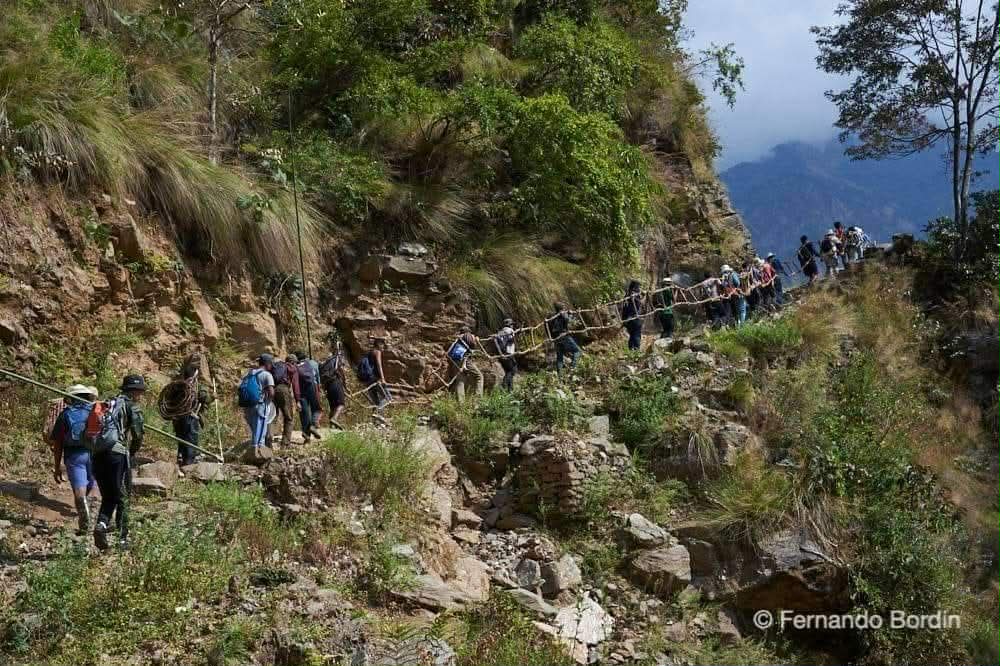
With more than 900 bird species recorded in Nepal, many honey hunting destinations are excellent locations for birdwatching and wildlife photography. The combination of dense forests, dramatic cliff landscapes, flowering rhododendrons, and abundant birdlife creates exceptional opportunities for capturing stunning photographs. Early mornings are particularly rewarding, as birds are most active and the soft mountain light enhances the beauty of the surrounding landscapes.
Nature photographers will also appreciate the breathtaking scenery of towering Himalayan peaks, lush valleys, cascading waterfalls, and traditional Gurung villages, making every step of the journey visually unforgettable.
Respecting Wildlife and Supporting Conservation
While exploring Nepal’s honey hunting regions, visitors are encouraged to practice responsible wildlife tourism. Maintaining a respectful distance from animals, avoiding loud noises, staying on designated trails, and following the guidance of local guides help protect the region’s fragile ecosystems. These forests are not only home to remarkable wildlife but also provide the flowering plants and healthy habitats essential for the survival of the Giant Himalayan Honeybee (Apis laboriosa), whose presence makes the ancient honey hunting tradition possible.
A Honey Hunting Tour in Nepal is therefore much more than witnessing a thrilling cultural practice—it is an opportunity to experience the incredible biodiversity of the Himalayas. From vibrant rhododendron forests and rare mountain birds to elusive mammals and the world’s largest honeybee, every trek offers a deeper appreciation of Nepal’s natural heritage. Whether you are a wildlife enthusiast, birdwatcher, photographer, or adventure traveler, the rich biodiversity found along the honey hunting trails will undoubtedly become one of the most memorable highlights of your journey.
Cultural Experience Beyond Honey Hunting
A Honey Hunting Tour in Nepal offers far more than the opportunity to witness an ancient cliff-harvesting tradition. It is also an immersive cultural journey that introduces travelers to the authentic lifestyle of Nepal’s indigenous mountain communities. Beyond the excitement of watching experienced honey hunters descend towering cliffs, visitors gain a rare insight into centuries-old customs, local traditions, and the everyday life of the people who have called the Himalayas home for generations.
Most honey hunting expeditions take place in remote Gurung villages nestled among terraced hills, dense forests, and panoramic mountain landscapes. These villages have preserved their unique identity despite the rapid pace of modernization elsewhere. Staying overnight in a traditional homestay or community lodge allows travelers to experience genuine Himalayan hospitality while forming meaningful connections with local families.
During your visit, you will have the opportunity to explore the rich cultural heritage of the region through a variety of authentic experiences. Local elders often share fascinating stories about the history of honey hunting, explaining how the tradition has been passed down through generations and why it remains an important part of community life. Many villages continue to observe ancient rituals and ceremonies before each honey harvest, offering prayers and blessings for the safety of the hunters and a successful expedition.
Visitors can also discover the traditional agricultural lifestyle that has sustained Himalayan communities for centuries. Walking through beautifully terraced fields, you will see farmers cultivating crops such as rice, millet, maize, wheat, and seasonal vegetables using time-honored farming techniques. Depending on the season, you may have the chance to participate in simple farming activities or learn how local communities produce organic food using sustainable methods.
Another memorable aspect of the journey is experiencing traditional Gurung craftsmanship. Skilled artisans create handmade bamboo baskets, woven mats, wooden tools, and traditional clothing using natural materials sourced from the surrounding forests. These handcrafted items reflect generations of knowledge and remain an important part of daily life in the villages.
Evenings often become the cultural highlight of the trip. Many communities warmly welcome guests with traditional **Gurung folk dances and music, performed in colorful cultural attire accompanied by traditional instruments. These lively performances celebrate local festivals, historical events, and community spirit, providing visitors with an unforgettable glimpse into Nepal’s rich cultural heritage.
Food also plays an essential role in the cultural experience. Meals are lovingly prepared by local families using fresh, organic ingredients harvested from nearby farms. Guests can enjoy authentic Himalayan dishes such as Dal Bhat, Dhido, Gundruk, homemade pickles, Tibetan bread, seasonal vegetables, and locally produced honey. Sharing meals around a family dining table creates meaningful conversations and offers valuable insights into village life, traditions, and local customs.
The architecture of these mountain villages is equally fascinating. Traditional Gurung homes are built from locally sourced stone, wood, and slate, designed to withstand the Himalayan climate while blending harmoniously with the surrounding landscape. Narrow stone pathways, colorful prayer flags, ancient water mills, and beautifully maintained courtyards add to the timeless charm of these settlements.
Religion and spirituality are deeply woven into everyday life. Depending on the village, visitors may encounter a harmonious blend of Buddhist and Hindu traditions, reflected in ancient monasteries, village temples, prayer wheels, sacred shrines, and seasonal festivals. These spiritual practices emphasize respect for nature, community harmony, and gratitude for the resources provided by the mountains, values that are also reflected in the traditional approach to honey hunting.
Many honey hunting destinations now embrace community-based tourism, allowing local families to directly benefit from visitors while preserving their cultural heritage. By staying in locally owned accommodations, hiring local guides, purchasing handmade crafts, and participating in village activities, travelers contribute to rural livelihoods and support the conservation of Nepal’s unique traditions. This sustainable approach helps younger generations appreciate the value of their cultural identity while creating economic opportunities within their communities.
Perhaps the most unforgettable part of the journey is the warmth and generosity of the local people. Visitors are welcomed not simply as tourists but as honored guests, often invited to share meals, join family gatherings, and participate in everyday village life. These genuine human connections leave a lasting impression and transform the honey hunting tour into much more than an adventure—it becomes a meaningful cultural exchange that offers a deeper understanding of Nepal’s people, traditions, and Himalayan way of life.
For many travelers, the cultural experiences beyond honey hunting become the true highlight of the journey. The combination of breathtaking mountain scenery, authentic village life, rich traditions, and heartfelt hospitality creates an experience that is both inspiring and unforgettable, making a Honey Hunting Tour in Nepal one of the country’s most rewarding cultural adventures.
Responsible Honey Hunting Tourism
As the global popularity of Himalayan Mad Honey and Nepal’s traditional honey hunting culture continues to grow, the importance of responsible and sustainable tourism has never been greater. Every year, increasing numbers of travelers, photographers, documentary filmmakers, and researchers visit Nepal to witness this extraordinary cultural tradition. While tourism creates valuable income for remote mountain communities, it also brings the responsibility of protecting the fragile Himalayan environment and preserving a centuries-old way of life.
Honey hunting is much more than an adventure activity—it is an important part of the cultural identity of indigenous communities such as the Gurung people. For generations, these communities have lived in harmony with nature, harvesting wild honey while respecting the giant Himalayan honeybee (Apis laboriosa) and its habitat. Sustainable tourism helps ensure that this delicate relationship between people and nature remains intact for future generations.
One of the most important principles of responsible honey hunting tourism is respecting local culture and traditions. Visitors should remember that honey hunting is not a staged performance created for tourists but a traditional livelihood and community event with deep cultural and spiritual significance. Taking time to learn about local customs, participating respectfully in village activities, and following the guidance of experienced local guides helps create meaningful cultural exchanges while honoring the traditions of the community.
Protecting the Giant Himalayan Honeybee is equally important. These remarkable bees play a vital role in pollinating Himalayan forests and maintaining biodiversity. Visitors should never approach or disturb active bee colonies, throw objects toward the cliffs, or make loud noises that could stress the bees or interfere with the honey hunters. Observing the harvest quietly from designated viewing areas allows the hunters to work safely while minimizing disturbance to the bees and their natural habitat.
For safety reasons, travelers should never attempt to climb the honey hunting cliffs or participate directly in the harvesting process. The vertical cliffs, handmade bamboo ladders, and highly defensive bee colonies require years of experience and specialized traditional knowledge. Watching from a safe distance under the supervision of local guides provides the best opportunity to enjoy the experience without putting yourself or others at risk.
Responsible travelers should also follow the principles of Leave No Trace. All waste, including plastic bottles, food wrappers, and other rubbish, should be carried out and disposed of properly. Avoiding single-use plastics, bringing a reusable water bottle, and respecting local waste management practices help protect the pristine forests and mountain landscapes where honey hunting takes place. Staying on established trails also reduces soil erosion and protects sensitive vegetation and wildlife habitats.
Supporting the local economy is another essential aspect of sustainable tourism. Choosing a locally owned trekking company, staying in community homestays, hiring local guides and porters, and purchasing handmade crafts or authentic honey directly from trusted village cooperatives ensures that tourism benefits the people who preserve this remarkable tradition. These purchases provide valuable income for rural families while encouraging younger generations to continue practicing and protecting their cultural heritage.
When purchasing Himalayan Mad Honey, visitors should buy only from reputable local producers or licensed tour operators who follow sustainable harvesting methods. Ethical honey hunters carefully harvest only the mature sections of the honeycomb, leaving enough brood and comb for the bee colony to recover naturally. Supporting these responsible practices helps conserve the Giant Himalayan Honeybee and prevents overharvesting driven by commercial demand.
Photography is another important consideration during a honey hunting tour. Nepal’s mountain villages offer countless opportunities to capture stunning images of landscapes, traditional lifestyles, and cultural ceremonies. However, visitors should always ask permission before photographing local people, especially during religious rituals or private family activities. Respecting personal privacy and cultural values helps build trust and creates more meaningful interactions with the community.
Many honey hunting destinations are located near environmentally sensitive forests that are home to diverse wildlife, medicinal plants, and rare bird species. Visitors are encouraged to observe wildlife quietly, avoid feeding animals, and refrain from collecting flowers, plants, or natural souvenirs from the forest. Every small action contributes to protecting the ecological balance that supports both the local communities and the giant honeybee populations.
By choosing responsible tourism, travelers become active partners in preserving one of Nepal’s most extraordinary cultural traditions. Every respectful visit helps support rural livelihoods, encourages sustainable honey harvesting, protects the Himalayan environment, and strengthens community-based conservation efforts. More importantly, it ensures that future generations of honey hunters can continue passing their knowledge and traditions to their children while allowing visitors from around the world to experience this remarkable living heritage.
Ultimately, a Honey Hunting Tour in Nepal is about more than witnessing a spectacular adventure—it is about appreciating the harmony between people, culture, and nature. Traveling responsibly allows visitors to leave a positive impact on the communities they visit while helping safeguard one of the Himalayas’ most unique cultural treasures for many years to come.
Conservation of the Giant Himalayan Honeybee
The Giant Himalayan Honeybee Apis laboriosa is one of Nepal’s most remarkable and ecologically important species. As the world’s largest honeybee, it plays a crucial role in maintaining the health of Himalayan forests by pollinating thousands of wild flowering plants, trees, shrubs, and medicinal herbs. This natural pollination supports forest regeneration, preserves biodiversity, and contributes to the survival of countless plant and animal species. Without these giant bees, the delicate balance of Nepal’s mountain ecosystems would be significantly affected.
Beyond its ecological importance, Apis laboriosa is deeply connected to Nepal’s cultural heritage. For centuries, indigenous communities such as the Gurung people have depended on these bees for traditional honey hunting, a practice that represents generations of knowledge, courage, and respect for nature. The survival of the giant honeybee is therefore closely linked not only to the environment but also to the preservation of one of Nepal’s most extraordinary cultural traditions.
However, in recent decades, the Giant Himalayan Honeybee has faced increasing threats from both natural and human activities. Rapid environmental changes, expanding infrastructure, unsustainable harvesting practices, and growing international demand for Himalayan Mad Honey have placed additional pressure on wild bee populations. Conservationists, researchers, local communities, and tourism organizations now recognize the urgent need to protect these unique pollinators and their fragile habitats.
Protecting the Giant Himalayan Honeybee requires a combination of scientific research, community participation, sustainable tourism, responsible honey harvesting, and long-term conservation policies. By safeguarding both the bees and the forests they depend upon, Nepal can preserve its rich biodiversity while ensuring that future generations continue to benefit from healthy ecosystems and the ancient tradition of honey hunting.
Major Threats to the Giant Himalayan Honeybee
Climate Change
Climate change is one of the greatest challenges facing the Giant Himalayan Honeybee. Rising temperatures, unpredictable rainfall, and changing weather patterns affect the flowering seasons of rhododendrons and other nectar-producing plants. When flowers bloom earlier or later than usual, the bees may struggle to find sufficient food during their seasonal migrations. Extreme weather events such as heavy rainfall, droughts, and strong winds can also damage cliff-side hives and reduce colony survival.
Habitat Loss
The expansion of roads, hydropower projects, agricultural land, and human settlements has led to the gradual destruction of many natural forests in Nepal. Deforestation reduces the number of flowering plants available for bees while disturbing traditional nesting sites on remote cliffs. As forest habitats continue to shrink and become fragmented, it becomes increasingly difficult for wild bee colonies to survive and reproduce.
Unsustainable Honey Harvesting
Traditional honey hunting has long been practiced with great respect for nature, with experienced hunters harvesting only part of the honeycomb and leaving enough brood for the colony to recover. However, increasing commercial demand has encouraged unsustainable harvesting in some areas. Removing entire honeycombs, destroying nests, or harvesting too frequently weakens bee colonies and reduces their ability to reproduce, threatening the long-term survival of local populations.
Illegal Honey Trade
The growing international demand for Himalayan Mad Honey has created opportunities for illegal and unethical harvesting practices. Some individuals harvest honey without following traditional conservation methods or sell counterfeit products labeled as authentic Mad Honey. Illegal collection not only damages bee colonies but also deprives local communities of income and undermines responsible honey hunting traditions that have been preserved for generations.
Decline of Traditional Knowledge
Another emerging challenge is the gradual decline of traditional honey hunting knowledge. As younger generations move to cities or seek employment outside their villages, fewer people are learning the specialized skills required for sustainable honey harvesting. Without proper knowledge transfer, both the cultural tradition and the careful conservation practices associated with honey hunting may gradually disappear.
Community-Based Conservation Efforts
Across Nepal, local communities are playing a leading role in protecting the Giant Himalayan Honeybee and its habitat. Many villages now promote sustainable honey harvesting, where experienced hunters collect only mature sections of the honeycomb while leaving enough honey, wax, larvae, and brood for the colony to recover naturally. This traditional practice allows bee populations to remain healthy and continue producing honey in future seasons.
Community forestry programs have also helped restore and protect native forests by planting rhododendrons, oak, pine, and other flowering species that provide essential nectar sources for bees. Educational programs organized by conservation organizations and local governments encourage villagers, students, and visitors to understand the ecological importance of wild pollinators and the need for responsible forest management.
Sustainable tourism is another valuable conservation tool. By participating in ethical Honey Hunting Tours, travelers directly support local communities that prioritize environmental protection and cultural preservation. Tourism income encourages villagers to conserve forests, protect bee habitats, and continue practicing traditional honey hunting methods rather than adopting destructive commercial harvesting techniques.
How Visitors Can Help Protect the Giant Himalayan Honeybee
Every traveler can contribute to the conservation of Nepal’s remarkable giant honeybee by making responsible choices during their visit.
Visitors are encouraged to:
- Respect local customs, traditions, and the cultural significance of honey hunting.
- Observe honey hunting only from designated safe viewing areas.
- Never disturb active bee colonies or attempt to climb the cliffs.
- Purchase authentic Mad Honey only from trusted local communities or licensed operators that practice sustainable harvesting.
- Support community-based tourism by staying in local homestays and hiring local guides.
- Avoid littering and help keep forests and trekking trails clean.
- Stay on designated trails to minimize disturbance to wildlife and sensitive vegetation.
- Learn about the ecological importance of pollinators and share awareness with others.
- Choose tour operators that promote responsible tourism and environmental conservation.
- Respect wildlife and avoid collecting plants, flowers, or natural resources from the forest.
Protecting the Giant Himalayan Honeybee is about much more than preserving a single species—it is about safeguarding Nepal’s forests, supporting indigenous communities, maintaining biodiversity, and ensuring that the extraordinary tradition of honey hunting continues to inspire future generations. Through sustainable conservation efforts, responsible tourism, and community participation, Nepal can continue to protect one of the world’s most fascinating pollinators while preserving an ancient cultural heritage that is truly unique to the Himalayas.
Health Benefits of Himalayan Mad Honey
Himalayan Mad Honey has been valued for centuries by indigenous communities living in the Himalayan regions of Nepal, where it has been used as a traditional natural remedy for a variety of minor health concerns. Unlike commercially produced honey, Mad Honey is made from the nectar of certain wild rhododendron flowers and contains naturally occurring compounds called grayanotoxins, which give it its distinctive properties. In traditional Himalayan medicine, small amounts of Mad Honey have been consumed to promote general well-being, increase energy, and support the body’s natural healing processes.
For generations, local communities have believed that Mad Honey may help improve digestion, relieve seasonal illnesses, reduce fatigue after long journeys through the mountains, and support overall vitality. It has also been traditionally offered during cultural and religious ceremonies and shared among families as a valuable natural product. Because it is harvested only in limited quantities from remote Himalayan cliffs, Mad Honey has long been regarded as both a prized food and a traditional wellness product.
In recent years, Mad Honey has attracted growing international interest from researchers, health enthusiasts, and travelers curious about its unique composition. Some preliminary scientific studies have explored the biological effects of grayanotoxins and other naturally occurring compounds found in Mad Honey. However, current scientific evidence remains limited, and many of the traditional health claims have not yet been confirmed through large-scale clinical research. For this reason, Mad Honey should be appreciated primarily as a traditional cultural product rather than a scientifically proven medicine.
When consumed responsibly and in very small amounts, local communities believe Mad Honey may provide several traditional health benefits, including:
- Supporting healthy digestion and helping relieve minor digestive discomfort.
- Providing a natural source of energy, especially after physical activity or long mountain treks.
- Reducing fatigue and promoting overall vitality in traditional Himalayan medicine.
- Relieving sore throats and soothing minor seasonal coughs.
- Supporting healthy blood circulation, according to traditional beliefs.
- Traditionally used in some Himalayan communities to help manage high blood pressure, although this has not been conclusively proven by modern medical research.
- Helping relieve mild cold and flu symptoms through its natural antibacterial and soothing properties.
- Promoting general wellness and relaxation when consumed in moderation.
- Providing natural antioxidants, enzymes, vitamins, and minerals commonly found in wild honey, which may help protect the body from oxidative stress.
- Supporting the immune system through its naturally occurring nutrients and antibacterial properties.
Although these traditional uses have been passed down through generations, it is important to remember that Mad Honey is not a substitute for professional medical care or prescribed medication. Because it contains grayanotoxins, excessive consumption can cause dizziness, nausea, vomiting, low blood pressure, slow heart rate, blurred vision, and other potentially serious symptoms. Pregnant women, children, individuals with heart conditions, and people taking medications that affect blood pressure or heart rhythm should avoid consuming Mad Honey unless advised by a qualified healthcare professional.
Ultimately, Himalayan Mad Honey is best appreciated as a rare natural product that reflects Nepal’s rich biodiversity, indigenous knowledge, and centuries-old honey hunting tradition. When consumed carefully and responsibly, it offers visitors not only a unique culinary experience but also a fascinating connection to the cultural heritage of the Himalayan people.
Important Safety Precautions About Himalayan Mad Honey
Although Himalayan Mad Honey is a completely natural product, it should be consumed with great care and responsibility. Unlike ordinary honey, Mad Honey contains naturally occurring compounds called grayanotoxins, which are present in the nectar of certain rhododendron flowers found in the Himalayan region. While these compounds are responsible for the honey’s unique characteristics, consuming excessive amounts can cause adverse health effects. The concentration of grayanotoxins varies from one batch of honey to another depending on the season, altitude, and the species of rhododendron from which the bees collected nectar. As a result, it is impossible to determine the exact strength of every jar of Mad Honey.
For centuries, indigenous communities in Nepal have traditionally consumed Mad Honey in very small quantities, understanding its potency through generations of experience. Visitors unfamiliar with its effects should exercise extra caution and avoid consuming large amounts. Even a small serving may affect different individuals in different ways depending on body weight, age, overall health, and sensitivity to grayanotoxins.
Consuming too much Mad Honey can lead to grayanotoxin poisoning, commonly referred to as Mad Honey poisoning. Most cases are mild and temporary, but larger quantities may result in more serious medical complications that require professional treatment.
Possible Symptoms of Mad Honey Poisoning
If excessive amounts are consumed, the following symptoms may occur:
- Dizziness or lightheadedness
- Nausea
- Vomiting
- Excessive sweating
- Low blood pressure (hypotension)
- Slow heartbeat (bradycardia)
- Irregular heartbeat
- Blurred vision
- Weakness and fatigue
- Temporary confusion or disorientation
- Tingling sensation in the body
- Difficulty maintaining balance
Most symptoms usually appear within 30 minutes to a few hours after consumption and often resolve with appropriate medical care. However, severe poisoning can occasionally require hospitalization for monitoring and supportive treatment.
Who Should Avoid Mad Honey?
Certain individuals are at a higher risk of experiencing adverse reactions and should avoid consuming Mad Honey unless specifically advised by a qualified healthcare professional. These include:
- Pregnant women
- Breastfeeding mothers
- Children
- Older adults with underlying health conditions
- Individuals with heart disease or heart rhythm disorders
- People with low blood pressure
- Individuals taking medications that affect blood pressure or heart rhythm
- Anyone with known allergies to bee products or honey
Tips for Safe Consumption
If you choose to taste Himalayan Mad Honey during your visit to Nepal, following a few simple precautions can help ensure a safe experience:
- Consume only a very small amount, especially if trying it for the first time.
- Never eat large quantities in a single serving.
- Wait several hours before consuming more to observe how your body responds.
- Purchase authentic Mad Honey only from trusted local producers, community cooperatives, or licensed tour operators.
- Avoid combining Mad Honey with alcohol or recreational substances, as the combined effects have not been well studied.
- Keep Mad Honey out of reach of children.
If you experience severe dizziness, chest discomfort, difficulty breathing, fainting, or persistent vomiting after consumption, seek immediate medical attention.
A Traditional Product, Not a Medical Treatment
Although Mad Honey has been used in traditional Himalayan medicine for centuries and continues to hold cultural significance, it should not be considered a medically approved treatment for any disease or health condition. Scientific research into its potential health effects is still limited, and many traditional claims have not yet been confirmed by high-quality clinical studies. Visitors should therefore enjoy Mad Honey as a unique cultural and culinary experience rather than as a substitute for professional medical advice or prescribed medication.
When consumed responsibly and in moderation, authentic Himalayan Mad Honey offers a fascinating glimpse into Nepal’s ancient honey hunting tradition and the remarkable biodiversity of the Himalayas. Respecting its potency, purchasing it from ethical local sources, and following basic safety guidelines will help ensure that your experience with this rare natural product is both enjoyable and safe.
Photography Tips for Honey Hunting in Nepal
A **Honey Hunting Tour in Nepal** offers one of the most extraordinary photography experiences in the Himalayas. From fearless honey hunters descending towering cliffs on handmade bamboo ladders to the giant Himalayan honeybees (*Apis laboriosa*), dramatic mountain landscapes, colorful rhododendron forests, and authentic Gurung villages, every stage of the journey presents incredible opportunities for both amateur and professional photographers. Whether you are a travel photographer, wildlife enthusiast, content creator, or documentary filmmaker, honey hunting provides a unique chance to capture one of the world’s oldest living traditions in its natural setting.
Unlike many cultural performances organized specifically for tourists, honey hunting is a genuine community event. The action unfolds naturally, often in challenging terrain and changing weather conditions. Good preparation, patience, and respect for local customs will help you create memorable photographs while ensuring that your presence does not interfere with the honey hunting process.
Bring the Right Photography Equipment
Choosing the right camera equipment can make a significant difference, especially since honey hunting takes place on towering cliffs where photographers usually observe from a safe distance.
Recommended equipment includes:
- DSLR or mirrorless camera with fast autofocus and good low-light performance.
- Telephoto lens (70–200 mm, 100–400 mm, or longer) to capture detailed images of honey hunters working high on the cliffs without disturbing the activity.
- Wide-angle lens (16–35 mm or similar) for photographing dramatic Himalayan landscapes, Gurung villages, and environmental portraits.
- Extra batteries, as electricity may be limited in remote villages and cold mountain temperatures can reduce battery life.
- Additional memory cards to ensure you never run out of storage during the expedition.
- Lightweight tripod or monopod for landscape photography, low-light scenes, and documentary filming.
- Waterproof camera bag or rain cover to protect your equipment from dust, rain, and changing mountain weather.
- Lens cleaning cloth and protective filters to keep your camera free from smoke, pollen, and dust generated during the honey harvest.
Best Time for Photography
The timing of your photographs is just as important as your equipment. Most honey hunting expeditions begin early in the morning when weather conditions are generally more stable and the mountain light is at its best.
Early morning photography offers several advantages:
- Soft golden light that creates natural colors and gentle shadows.
- Clearer mountain views before afternoon clouds develop.
- Cooler temperatures and more comfortable hiking conditions.
- Active honey hunters preparing equipment and beginning the harvest.
- Better visibility of the giant honeybee colonies on the cliffs.
- Increased opportunities to photograph wildlife and birds along the trail.
Spring (April and May) is widely regarded as the best season for photography. During this time, rhododendron forests bloom in vibrant shades of red, pink, white, and purple, creating spectacular foregrounds against the snow-capped Himalayan peaks. The combination of flowering forests, traditional villages, and honey hunting activities produces some of Nepal’s most iconic travel photographs.
Capture More Than the Honey Hunt
While the dramatic cliff harvest is undoubtedly the highlight of the journey, some of the most meaningful photographs are captured before and after the main event. Try to tell the complete story of honey hunting by documenting every stage of the experience.
Consider photographing:
- Honey hunters preparing bamboo ladders and climbing equipment.
- Traditional prayers or rituals performed before the harvest.
- Close-up details of handmade tools and woven baskets.
- Giant cliff-side honeycombs and bee colonies from a safe distance.
- Gurung villages and traditional stone houses.
- Local farmers working in terraced fields.
- Mountain landscapes during sunrise and sunset.
- Rhododendron forests, waterfalls, and forest trails.
- Wildlife, birds, butterflies, and native plants encountered during the trek.
- Community celebrations and the sharing of freshly harvested honey after the expedition.
These photographs help create a complete visual story that reflects not only the adventure but also the culture, environment, and people behind Nepal’s ancient honey hunting tradition.
Respect Local Culture and Traditions
One of the most important aspects of photography during a honey hunting tour is respecting the people and their traditions. Honey hunting is a deeply significant cultural practice, not simply a tourist attraction or staged performance.
Before taking close-up portraits of local residents, honey hunters, or children, always ask for permission through your guide whenever possible. Most communities are welcoming and happy to share their culture, but showing respect helps build trust and creates more genuine interactions.
During the honey harvest, avoid standing in the hunters’ working area, blocking pathways, or distracting the climbers with unnecessary movement or noise. Never ask hunters to repeat actions or pose while they are working on the cliffs, as this could compromise their safety.
Drone Photography
Drone photography can produce spectacular aerial images of Nepal’s cliffs and mountain landscapes. However, drones should only be flown where permitted and never during the actual honey hunting process without prior approval from local authorities, community leaders, and your tour operator. The sound of drones can disturb the giant Himalayan honeybees and distract the honey hunters, potentially creating dangerous situations. Always respect Nepal’s drone regulations and local community guidelines.
Photography Safety Tips
While focusing on getting the perfect shot, never forget that your safety comes first.
Keep these simple safety tips in mind:
- Stay within the designated viewing area identified by your guide.
- Never climb cliffs or approach active bee colonies.
- Wear sturdy hiking boots with good grip.
- Keep your camera securely attached with a neck or shoulder strap.
- Protect your equipment from smoke, dust, rain, and sudden weather changes.
- Carry only the gear you can comfortably manage during the trek.
- Listen carefully to your guide’s instructions throughout the expedition.
Create Lasting Memories Responsibly
The best photographs are not only visually stunning but also tell authentic stories with respect and sensitivity. By photographing responsibly, supporting local communities, and preserving the natural environment, you help ensure that Nepal’s extraordinary honey hunting tradition can continue to inspire photographers and travelers for generations to come.
Whether you are documenting the fearless descent of experienced honey hunters, the breathtaking Himalayan landscapes, or the warm smiles of Gurung villagers, a Honey Hunting Tour in Nepal offers endless opportunities to capture images that reflect the unique harmony between culture, adventure, and nature. With patience, preparation, and respect, you will return home with a collection of photographs that tell the remarkable story of one of the world’s most extraordinary cultural experiences.
Who Should Join a Honey Hunting Tour in Nepal?
A Honey Hunting Tour in Nepal is an unforgettable experience that appeals to a wide variety of travelers. Unlike technical mountaineering or extreme adventure sports, honey hunting tours are designed for visitors who want to experience Nepal’s rich culture, breathtaking landscapes, and ancient traditions without participating in the dangerous cliff harvesting itself. Travelers observe the honey hunting process from carefully selected and safe viewing areas while local guides and experienced honey hunters conduct the harvest.
Whether you are visiting Nepal for the first time or returning to explore its lesser-known cultural treasures, a honey hunting expedition offers a rare opportunity to witness one of the world’s oldest surviving traditions while immersing yourself in the authentic lifestyle of Himalayan communities.
This unique journey is particularly suitable for:
Cultural Travelers
If you enjoy learning about indigenous cultures, traditional lifestyles, and local customs, a honey hunting tour provides an authentic cultural experience unlike any other. Spending time in traditional Gurung villages allows you to discover centuries-old traditions, participate in local ceremonies, enjoy cultural performances, and interact with families who have preserved the art of honey hunting for generations.
Nature Lovers
The journey passes through beautiful Himalayan forests filled with rhododendrons, oak trees, bamboo groves, waterfalls, and spectacular mountain scenery. Travelers who appreciate nature will enjoy peaceful walks through pristine landscapes while exploring one of Nepal’s richest ecological regions.
Adventure Seekers
Although visitors do not climb the cliffs themselves, witnessing experienced honey hunters descend towering rock faces using handmade bamboo ladders is an exhilarating adventure. Watching this remarkable display of courage and skill creates an unforgettable experience for anyone seeking unique travel adventures.
Wildlife Enthusiasts and Birdwatchers
The forests surrounding honey hunting areas are home to diverse Himalayan wildlife, including the Himalayan Monal, Kalij Pheasant, Himalayan Langur, Barking Deer, colorful butterflies, and numerous mountain birds. Wildlife enthusiasts and birdwatchers will find these remote regions especially rewarding throughout the journey.
Photographers and Documentary Filmmakers
Honey hunting is one of Nepal’s most photogenic cultural experiences. The combination of dramatic cliff landscapes, giant Himalayan honeybees Apis laboriosa, fearless honey hunters, traditional villages, and spectacular Himalayan scenery offers endless opportunities for travel photography, wildlife photography, and documentary filmmaking.
Trekkers and Outdoor Enthusiasts
Many honey hunting tours include short treks through remote villages and forest trails. Travelers who enjoy hiking but prefer moderate walking rather than high-altitude expeditions will appreciate the combination of scenic trekking, cultural exploration, and nature observation.
Students, Researchers, and Anthropology Enthusiasts
Honey hunting offers valuable insights into indigenous knowledge, traditional ecological practices, and sustainable resource management. Students, researchers, anthropologists, ethnographers, and conservationists interested in Himalayan cultures or human-environment relationships often find these expeditions highly educational.
Eco-Tourists and Responsible Travelers
Those who value sustainable tourism and community-based travel will appreciate how honey hunting tours directly support rural livelihoods and encourage environmental conservation. Choosing ethical tour operators helps preserve traditional knowledge while protecting the Giant Himalayan Honeybee and its fragile mountain habitat.
Families and Small Groups
Many honey hunting tours are suitable for families with older children, couples, and small groups looking for an educational and meaningful travel experience. Since the activities mainly involve village walks, cultural exploration, and observing the harvest from a safe distance, the tour is accessible to most travelers with a reasonable level of fitness.
Is Previous Experience Required?
One of the greatest advantages of a Honey Hunting Tour is that no technical climbing, mountaineering, or honey harvesting experience is required. Visitors are not expected to climb the cliffs or assist with the harvest. Instead, experienced local honey hunters carry out the harvesting while guests observe from carefully selected viewing points under the guidance of professional local guides.
A moderate level of physical fitness is generally sufficient, as most itineraries involve several hours of walking on mountain trails and village paths. Comfortable hiking shoes, appropriate outdoor clothing, and a spirit of adventure are all you need to fully enjoy the experience.
Whether your passion is culture, wildlife, photography, trekking, or simply discovering extraordinary places beyond the typical tourist routes, a Honey Hunting Tour in Nepal offers a once-in-a-lifetime opportunity to experience the perfect blend of Himalayan adventure, indigenous culture, breathtaking landscapes, and sustainable travel. It is an enriching journey that leaves visitors with not only incredible memories but also a deeper appreciation for the remarkable relationship between Nepal’s people, nature, and centuries-old traditions.
Why Choose Create Himalaya Adventure for a Honey Hunting Tour?
Choosing a knowledgeable local operator can make a significant difference in the quality of your experience. At Create Himalaya Adventure, we are committed to providing authentic, responsible, and unforgettable journeys that connect travelers with Nepal’s unique cultural heritage.
Experienced Local Team
Our experienced guides have extensive knowledge of Nepal’s mountains, remote villages, and traditional honey hunting practices. They work closely with local communities to ensure every tour is informative, safe, and culturally respectful.
Authentic Community Experiences
Rather than offering commercialized sightseeing, we focus on genuine interactions with local families, allowing you to experience traditional lifestyles, local cuisine, and centuries-old customs.
Responsible Tourism
We support sustainable tourism by working directly with local communities, promoting ethical honey harvesting practices, and encouraging conservation of the Himalayan giant honeybee and its habitat.
Customized Itineraries
Whether you are an individual traveler, photographer, filmmaker, researcher, or private group, we can tailor a honey hunting itinerary to match your interests, schedule, and fitness level.
Safety First
Your safety is our top priority. We provide experienced guides, reliable logistics, and well-planned itineraries so you can enjoy the experience with confidence.
More Than Honey Hunting
You can combine your honey hunting adventure with some of Nepal’s most popular travel experiences, including the Annapurna region, cultural village tours, wildlife safaris, rafting, and sightseeing in Kathmandu and Pokhara.
With Create Himalaya Adventure, you’ll experience Nepal in an authentic, meaningful, and responsible way while creating memories that last a lifetime.
Final Thoughts
Honey hunting in Nepal is one of the world’s most extraordinary cultural adventures. It is a rare opportunity to witness a centuries-old tradition that continues to thrive in the remote Himalayan villages of Nepal.
From watching fearless honey hunters descend towering cliffs to tasting authentic Himalayan Mad Honey, every moment of the journey offers a deeper appreciation of Nepal’s rich culture, biodiversity, and natural beauty.
Whether you are an adventure traveler, photographer, nature enthusiast, or cultural explorer, a honey hunting expedition promises an unforgettable experience that goes far beyond ordinary sightseeing.
By choosing responsible tourism and supporting local communities, you also help preserve this remarkable tradition for future generations.
If you are looking for an off-the-beaten-path adventure that combines breathtaking landscapes, fascinating traditions, and genuine cultural encounters, Honey Hunting in Nepal deserves a place on your travel bucket list.
Frequently Asked Questions (FAQs)
1. What is honey hunting in Nepal?
Honey hunting is the traditional practice of harvesting wild honey from giant honeybee colonies built on steep Himalayan cliffs using handmade bamboo ladders and centuries-old techniques.
2. What is Mad Honey?
Mad Honey is a rare type of wild honey produced when Himalayan bees collect nectar from certain rhododendron species containing naturally occurring grayanotoxins.
3. Why is Nepal famous for honey hunting?
Nepal is home to the world’s largest honeybee (Apis laboriosa) and has preserved ancient honey hunting traditions practiced by indigenous communities for generations.
4. Is honey hunting dangerous?
Yes. For the hunters, it is a high-risk activity involving vertical cliffs and defensive bees. Visitors observe from safe locations under the guidance of experienced local guides.
5. Can tourists participate in honey hunting?
Tourists generally observe the process rather than actively harvesting honey, helping ensure safety and respect for local traditions.
6. Which community performs honey hunting?
The Gurung community is the most well-known for preserving this ancient tradition, though other indigenous groups also practice honey hunting in different regions.
7. Which is the best place for honey hunting in Nepal?
Bhujung and Ghalegaun in Lamjung District are among the most popular destinations, with several other regions also offering seasonal honey hunting experiences.
8. When is the best season for honey hunting?
The main seasons are April–May and October–November, with spring being the best time to witness the production of Mad Honey.
9. How difficult is a honey hunting tour?
Most tours involve moderate trekking on mountain trails. Technical climbing is not required for visitors.
10. How long does a honey hunting trip last?
Depending on the destination, tours typically range from 3 to 7 days, with longer itineraries available when combined with trekking or cultural experiences.
11. What is the price of a honey hunting tour?
Costs vary based on itinerary, group size, and services, but many multi-day tours range from USD 400 to USD 1,200 per person.
12. Is travel insurance recommended?
Yes. Comprehensive travel insurance covering trekking and emergency evacuation is strongly recommended.
13. What should I pack?
Bring hiking boots, layered clothing, rain gear, sunscreen, sunglasses, a reusable water bottle, personal medications, and a camera.
14. Can I buy authentic Mad Honey?
Yes. Purchase only from reputable local communities or licensed operators to ensure authenticity and support ethical harvesting.
15. Is Mad Honey legal?
Its legal status depends on the regulations of the destination country. Travelers should check local import rules before purchasing or transporting it across borders.
16. Are there any health risks associated with Mad Honey?
Yes. Consuming too much can cause dizziness, nausea, vomiting, low blood pressure, and slow heart rate. It should be consumed only in very small amounts and with caution.
17. Is honey hunting suitable for families?
Yes, if family members are comfortable with moderate walking and understand that viewing takes place from safe observation points.
18. Can I combine honey hunting with trekking?
Absolutely. Many visitors combine a honey hunting tour with trekking in the Annapurna region or visits to Pokhara and Kathmandu.
19. Do I need previous trekking experience?
No. A reasonable level of fitness is generally sufficient for most honey hunting itineraries.
20. Why book with Create Himalaya Adventure?
Create Himalaya Adventure offers experienced local guides, authentic community-based experiences, flexible itineraries, responsible tourism practices, and personalized service to help you discover one of Nepal’s most remarkable cultural traditions safely and meaningfully.

Ramchandra Lamichhane
Trekking Expert
No hidden fees • Local experts • Best price guarantee