Annapurna Base Camp (ABC) & Mardi Himal Trek
This journey is perfect for trekkers who want more than just one classic route. It is designed for those with decent fitness and a sense of adventure, who wish to […]
Highlights
- Two treks in one combines the classic Annapurna Base Camp route with the quieter, less-traveled Mardi Himal trek
- Ideal for those with decent fitness who want variety, challenge, and rewarding mountain scenery.
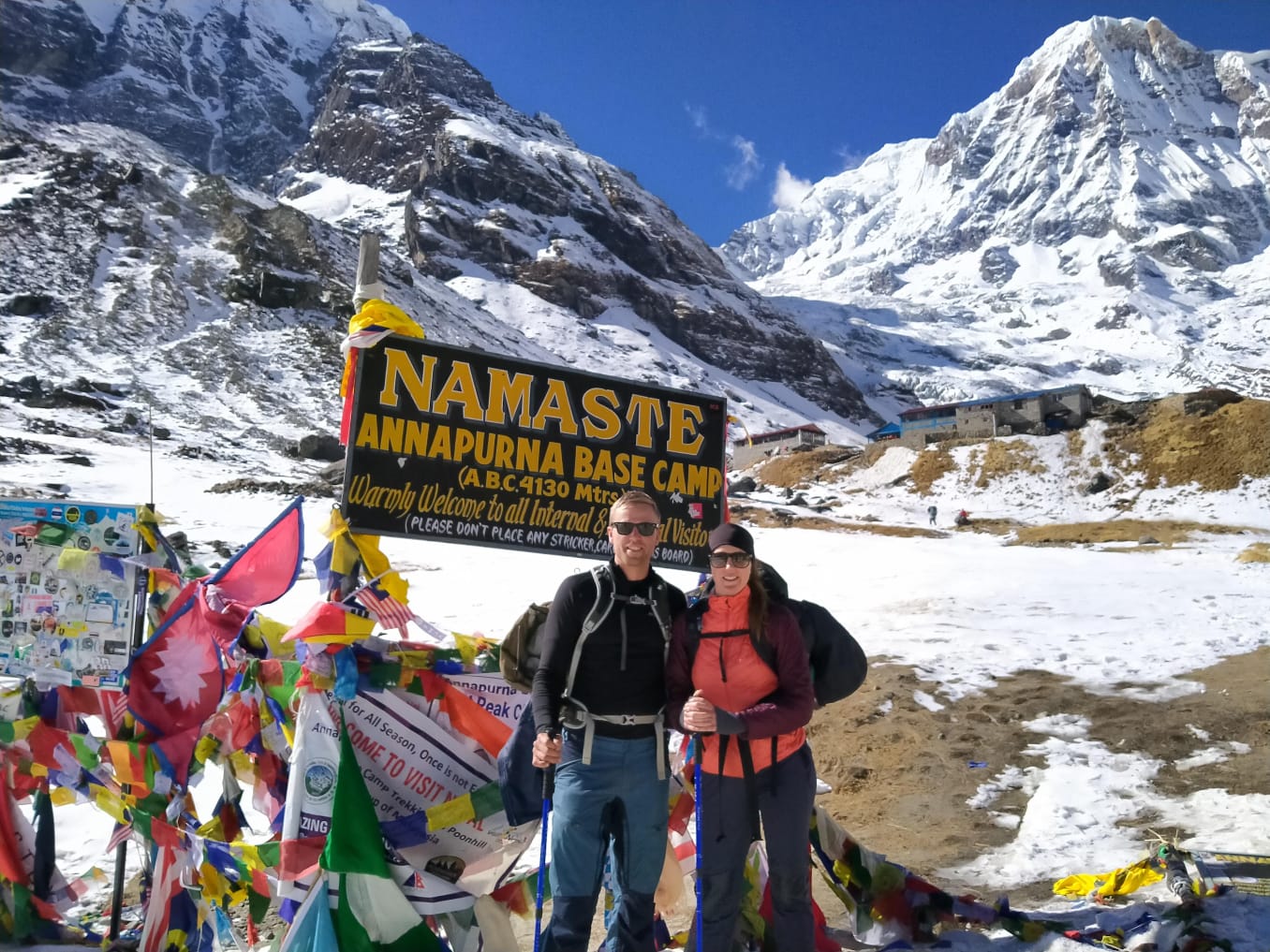
- Stand in the middle of a natural full circle of snowy giants, "Annapurna Base Camp"(4,130m)
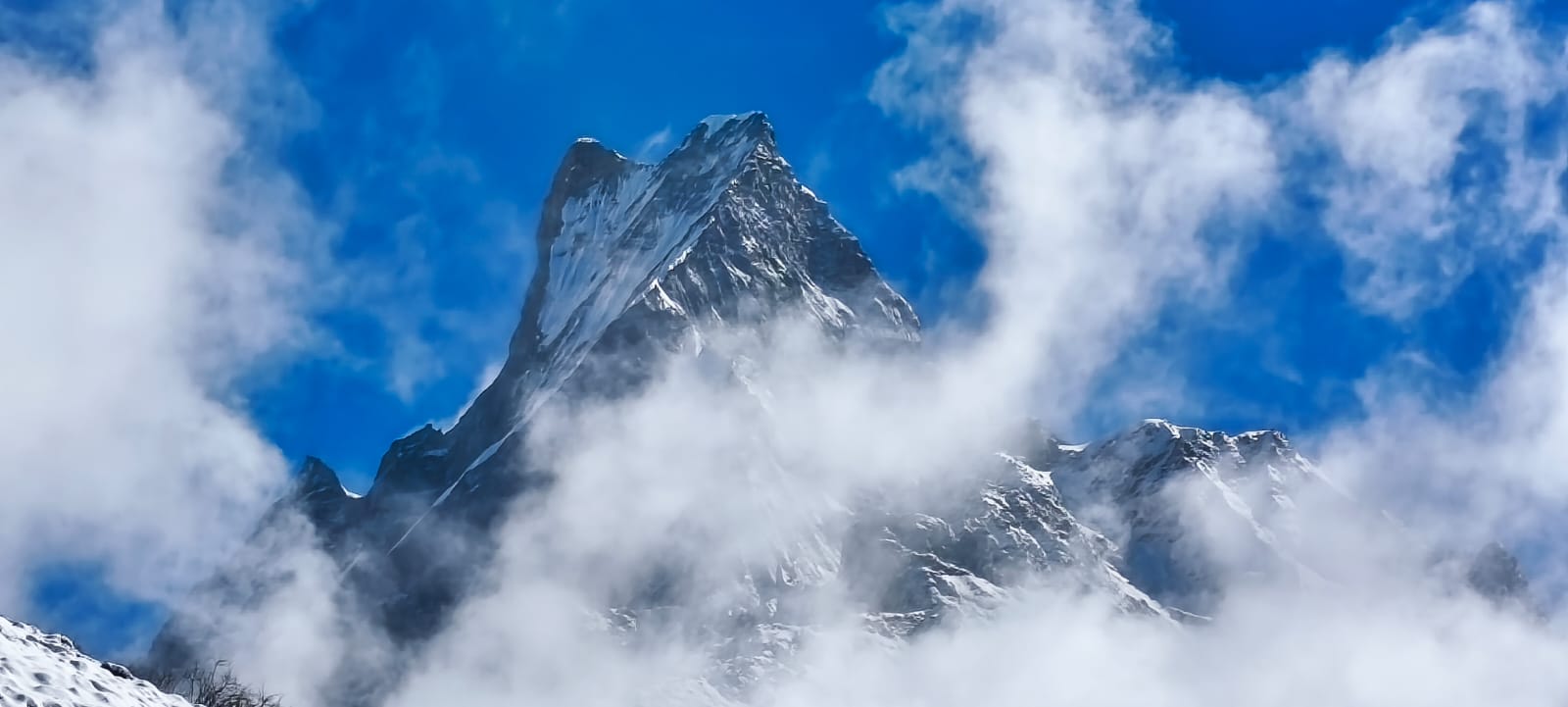
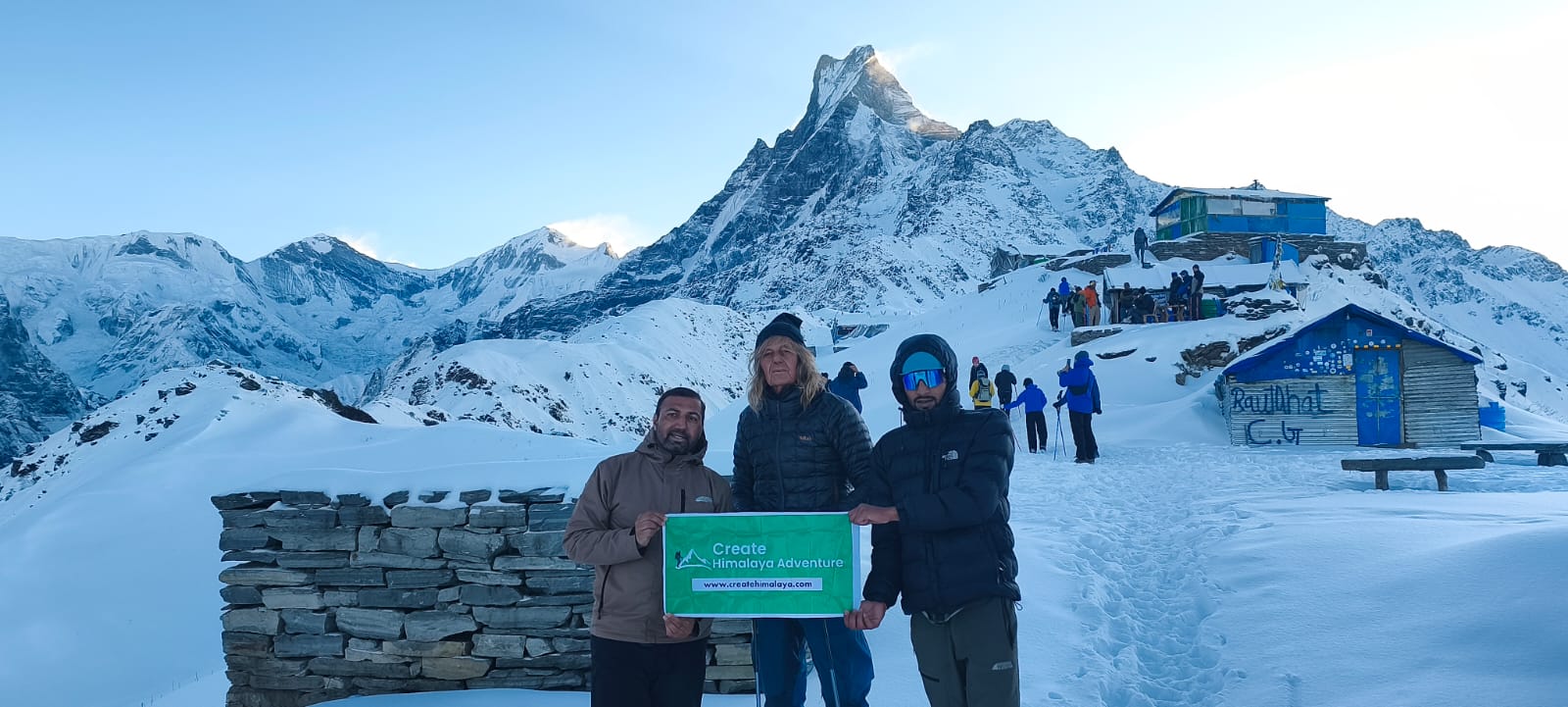
- Machapuchare Base Camp, a closer and face-to-face view of the iconic Fishtail Mountain.
- Experience the warmth and stone architecture of Chhomrong and Landruk.
- 2,500 Stone Steps: Descend a long staircase to the Chhomrong Khola river and cross a suspension bridge
- Walk through Rhododendron & Bamboo forests alive with birdsong and chances to spot langurs
- Experience natural warm waters (Hot Springs) at Jhinu Danda on the way of descent
- Mardi Himal High Camp (3,585m) : Climb nearly 1,500 meters from Landruk through oak and rhododendron forests
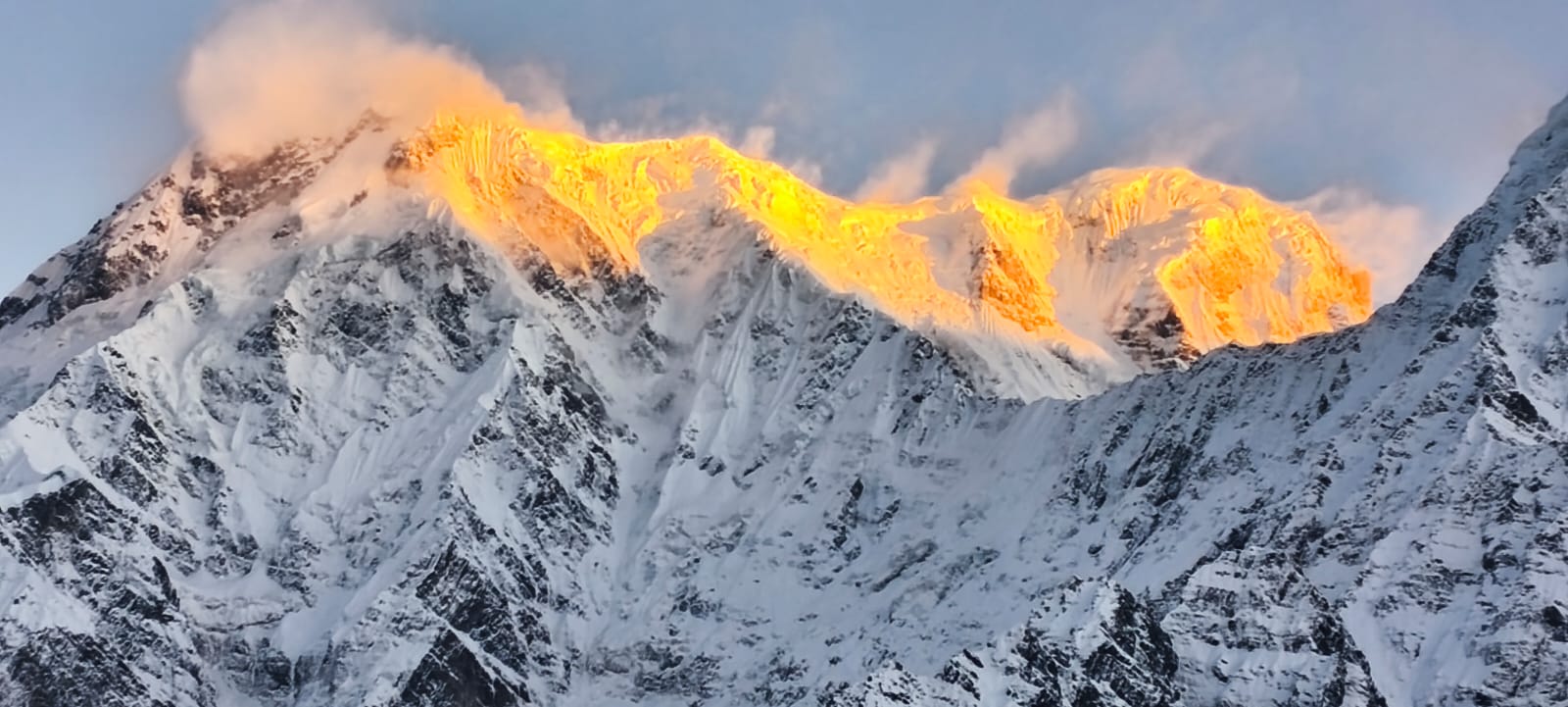
- Badal Danda Sunrise: A pre-dawn hike to Cloud Hill for stunning views of Annapurna Sanctuary, Hiunchuli, and Machhapuchhre
- Remote Descent to Siding : Follow a quieter, less-crowded path through rustic bridges, terraced farmland, and peaceful villages
- Scenic Drive or Flight: Travel between Kathmandu and Pokhara by tourist bus or a quick 25-minute mountain flight
- Flexible Ending Return to Kathmandu by road or flight, carrying lasting memories of the Himalayas.
Overview
This journey is perfect for trekkers who want more than just one classic route. It is designed for those with decent fitness and a sense of adventure, who wish to stand at the foot of Annapurna’s highest sanctuary and then climb the lesser-known ridges of Mardi Himal—all in a single, well-paced itinerary. Whether you are a returning trekker looking for something fresh or a first-timer ready to push a little further, this trek offers variety, challenge, and deeply rewarding mountain scenery. The adventure begins in Kathmandu, followed by a scenic drive or quick flight to Pokhara. From there, a jeep takes you into the hills, and the trek starts with a steep climb to the Gurung village of Chhomrong, a descent of roughly 2,500 stone steps to the Chhomrong Khola river, and a suspension bridge crossing before reaching Sinuwa. The trail then winds through rhododendron and bamboo forests alive with birdsong, past small stops such as Bamboo, Dovan, and Himalaya, with opportunities to spot langurs along the way. As the landscape turns rugged and alpine, you pass through Deurali and Machapuchare Base Camp, where the iconic Fishtail Mountain stands before you, before finally arriving at Annapurna Base Camp (4,130m). A natural amphitheater surrounded by a full circle of snowy giants. After soaking in the views, the descent leads you back through Bamboo and down to Landruk, a beautiful Gurung village with traditional stone houses and comfortable teahouses, where a short side trip offers a soak in the natural hot springs at Jhinu Danda.
From Landruk, the trek takes an unexpected turn upward, climbing nearly 1,500 meters through dense forests of rhododendron and oak to reach Low Camp, then steadily on to High Camp (3,585m), where the air grows thin, and the trees disappear. A pre-dawn hike to Badal Danda (Cloud Hill) or the upper viewpoint near Mardi Himal Base Camp rewards you with stunning sunrise views of Annapurna South, Hiunchuli, Machhapuchhre, and the entire Annapurna Sanctuary. After this memorable morning, the trail descends steeply past Low Camp and Nangge Danda, following a quieter, more remote path through rhododendron forests, rustic bridges, and terraced farmland to the peaceful village of Siding. The journey ends with a drive back to Pokhara and then to Kathmandu, either by road or flight, carrying with you the stillness of the high sanctuary, the thrill of a less-traveled ridge, and the warm hospitality of the hill villages, memories that stay long after the trek is over.
Major Attractions
The Annapurna Base Camp (ABC) & Mardi Himal Combined Trek is packed with diverse natural and cultural attractions, making it one of the most rewarding trekking adventures in Nepal. From relaxing natural hot springs and traditional mountain villages to high-altitude viewpoints and spectacular Himalayan panoramas, the trek showcases the very best of the Annapurna region. Along the route, trekkers experience breathtaking landscapes, rich local culture, and unforgettable views of Annapurna, Machapuchare (Fishtail), Hiunchuli, and other majestic peaks.
Jhinu Danda (Natural Hot Springs)
Jhinu Danda is a popular stop on the trek, best known for its natural hot springs located along the banks of the Modi Khola River. The warm mineral-rich pools provide a perfect opportunity to relax and rejuvenate while surrounded by beautiful forest and river scenery.
Chhomrong Village
Chhomrong is the largest and most picturesque Gurung village on the route to Annapurna Base Camp. Perched on a hillside, the village offers stunning views of Annapurna South, Hiunchuli, and Machapuchare, while also providing insight into the traditional lifestyle and culture of the local mountain communities.
Machapuchare Base Camp (MBC) – 3,700 m
Machapuchare Base Camp is a spectacular alpine destination situated within the Annapurna Sanctuary. Surrounded by towering cliffs and snow-covered peaks, it offers incredible close-up views of the sacred Machapuchare (Fishtail) and serves as an important stop before reaching Annapurna Base Camp.
Annapurna Base Camp (ABC) – 4,130 m
Annapurna Base Camp is the main highlight of the trek and one of Nepal’s most iconic trekking destinations. Located in the heart of the Annapurna Sanctuary, it provides breathtaking 360-degree views of Annapurna I, Annapurna South, Hiunchuli, Machapuchare, Gangapurna, and several other Himalayan giants.
Badal Danda – 3,210 m
Badal Danda, meaning “Hill of Clouds,” is one of the most scenic locations on the Mardi Himal trail. This beautiful ridge offers panoramic mountain views and unforgettable sunrises and sunsets, often above a blanket of clouds stretching across the valleys below.
Mardi Himal View Point – 4,200 m
Mardi Himal View Point is among the finest viewpoints in the Annapurna region. From here, trekkers enjoy spectacular close-up views of Machapuchare, Annapurna South, Hiunchuli, and Mardi Himal, creating one of the most dramatic mountain panoramas of the entire trek.
Mardi Himal Base Camp – 4,500 m
Mardi Himal Base Camp is the highest point of the combined trek and a true Himalayan gem. Located beneath the rugged slopes of Mardi Himal and Machapuchare, it offers an incredible sense of wilderness, pristine alpine scenery, and some of the closest mountain views available on any trek in the Annapurna region.
Annapurna Base Camp (ABC) & Mardi Himal Trek Difficulty
The Annapurna Base Camp (ABC) and Mardi Himal Combined Trek is considered a moderate to moderately challenging trek, making it ideal for trekkers with a reasonable level of fitness and a sense of adventure. The journey combines two of Nepal’s most scenic trekking routes, featuring daily walks of 5–7 hours through diverse landscapes, including lush rhododendron forests, traditional Gurung and Magar villages, alpine meadows, and high mountain terrain. While the trails are generally well-marked and do not require technical climbing skills, trekkers must be prepared for continuous ascents and descents, particularly on the route to Mardi Himal View Point and Annapurna Base Camp. The highest elevation reached is Mardi Himal Base camp (4,500 m), where thinner air can make hiking more demanding. Proper acclimatization, a steady pace, and basic trekking experience are helpful for completing this rewarding Himalayan adventure. In return, trekkers enjoy breathtaking views of Machapuchare (Fishtail), Annapurna South, Hiunchuli, and the magnificent Annapurna massif throughout the trek.
Trek Route – Annapurna Base Camp (ABC) & Mardi Himal Trek
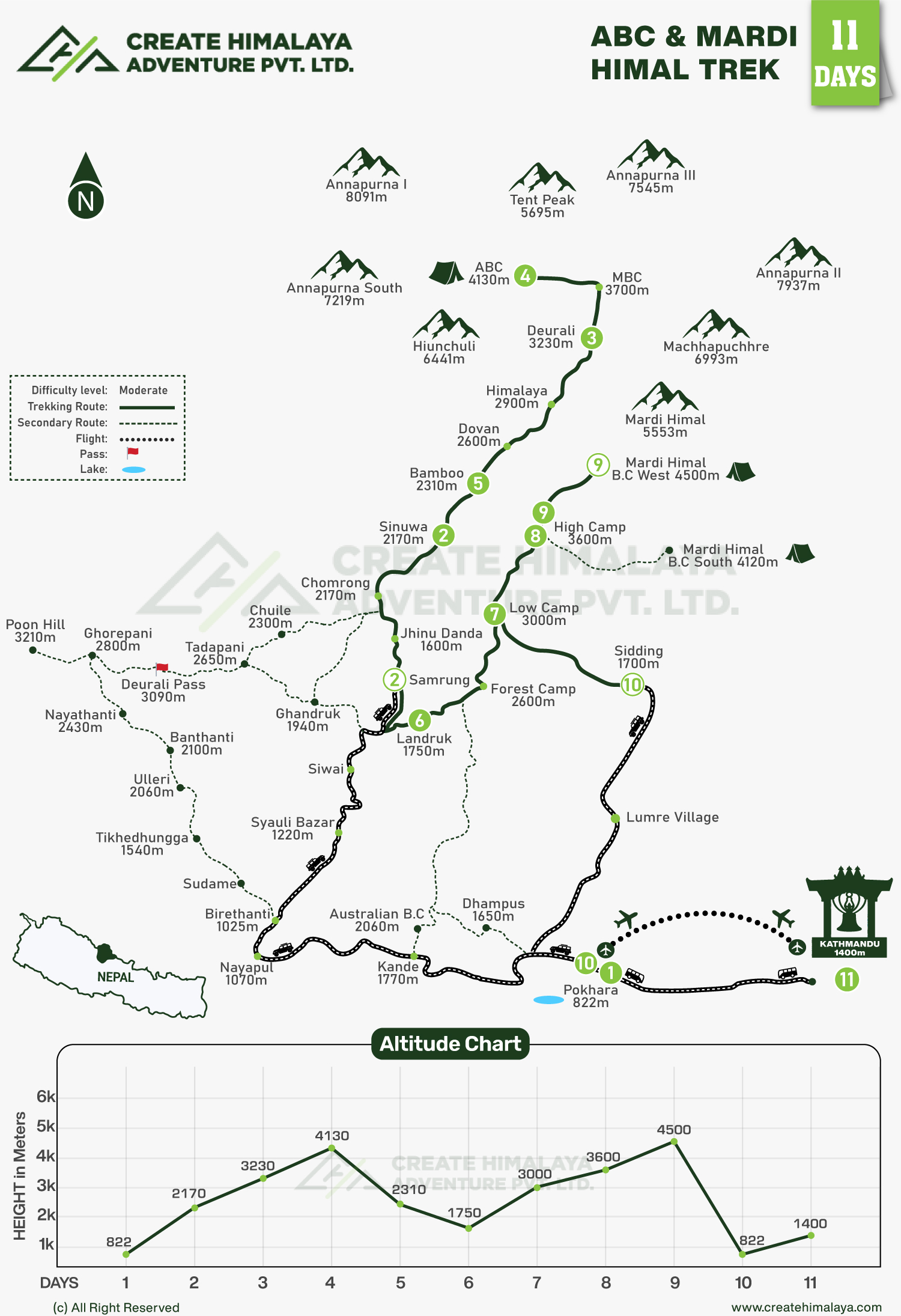
This combined Annapurna Base Camp and Mardi Himal Trek route offers an incredible journey through the heart of the Annapurna region, featuring diverse landscapes, traditional Gurung villages, dense rhododendron forests, and spectacular Himalayan scenery. Trekkers first ascend to Annapurna Base Camp via the famous Annapurna Sanctuary trail before crossing toward the scenic Mardi Himal ridge. Along the way, hikers enjoy breathtaking views of Annapurna I, Annapurna South, Hiunchuli, Machapuchare (Fishtail), and Mardi Himal. The trek ends at the peaceful village of Sidding, providing a quieter and less-crowded conclusion to one of Nepal’s most rewarding trekking adventures.
Typical Trek Route: Jhinu Danda → Chhomrong → Sinuwa → Bamboo → Deurali → Machapuchare Base Camp (MBC) → Annapurna Base Camp (4,130 m) → Bamboo → Chhomrong → Forest Camp → Low Camp → High Camp → Mardi Himal Base Camp (4,500 m) → View Point → High Camp → Low Camp → Sidding
Trek Permits for Annapurna Base Camp (ABC) & Mardi Himal Trek
The Annapurna Base Camp (ABC) & Mardi Himal Combined Trek requires the Annapurna Conservation Area Permit (ACAP), which is mandatory for all trekkers entering the Annapurna region. This permit helps support environmental conservation, trail maintenance, and sustainable tourism initiatives within Nepal’s largest protected trekking area. Since both Annapurna Base Camp and Mardi Himal are located inside the Annapurna Conservation Area, a single ACAP permit covers the entire trekking route. Trekkers should keep their permit accessible, as it may be checked at various checkpoints along the trail. Obtaining the required permit before starting your trek ensures a smooth and hassle-free journey while allowing you to explore the stunning landscapes, diverse ecosystems, and breathtaking mountain views of the Annapurna region legally and responsibly.
Trek Cost for Annapurna Base Camp (ABC) & Mardi Himal Trek
The cost of the Annapurna Base Camp (ABC) & Mardi Himal Combined Trek varies depending on the itinerary length, group size, level of service, and trekking season. A typical guided trek package generally includes transportation, accommodation, meals during the trek, permits, and the services of experienced guides and porters. Independent trekkers can complete the journey on a lower budget, while those seeking additional comfort may choose private trips with upgraded services. Extra expenses such as hot showers, Wi-Fi, charging facilities, snacks, drinks, travel insurance, and personal equipment rentals should also be considered. Despite covering two of the most popular trekking routes in Nepal, this combined Himalayan adventure offers excellent value for money, providing unforgettable mountain scenery, diverse landscapes, authentic cultural experiences, and access to both Annapurna Base Camp and Mardi Himal in a single trekking holiday.
Meals on the Annapurna Base Camp (ABC) & Mardi Himal Trek
Meals on the Annapurna Base Camp (ABC) & Mardi Himal Combined Trek are served at traditional mountain teahouses along the route, offering a variety of freshly prepared dishes to keep trekkers energized throughout the journey. The most common meal is Dal Bhat, Nepal’s traditional combination of rice, lentil soup, vegetables, and pickles, known for being nutritious and filling. Trekkers can also enjoy options such as fried rice, noodles, pasta, soups, momos (dumplings), potatoes, pancakes, eggs, porridge, and seasonal vegetables. Breakfast typically includes items like Tibetan bread, toast, muesli, porridge, and hot drinks. As the trek gains elevation, menu choices become more limited due to transportation challenges, but hearty and satisfying meals remain available. The combination of local flavors, warm hospitality, and nourishing food enhances the overall trekking experience in the spectacular Annapurna region.
Accommodation on the Annapurna Base Camp (ABC) & Mardi Himal Trek
Accommodation on the Annapurna Base Camp (ABC) & Mardi Himal Combined Trek is provided in traditional Himalayan teahouses, offering a comfortable and authentic mountain trekking experience. Most teahouses feature simple twin-sharing rooms with beds, mattresses, pillows, and blankets, while bathrooms may be either private or shared depending on the location. Lower-elevation villages generally offer more facilities and greater comfort, whereas accommodations become more basic as you approach Annapurna Base Camp and Mardi Himal Base Camp. Cozy dining halls with wood or yak-dung stoves provide a warm gathering place for trekkers during the evenings. While luxury lodges are not available on most sections of the route, the friendly hospitality, spectacular mountain surroundings, and welcoming atmosphere make the teahouse experience a memorable part of this unforgettable Annapurna trekking adventure.
Trip Itinerary
Kathmandu to Pokhara (Drive/Fly)
Early morning boarding on a tourist bus from Kathmandu to Pokhara. Tourist buses are more comfortable than standard public transport in Nepal, making them a good choice for families with young children. As the road climbs out of the Kathmandu Valley, it winds down alongside the Rapti River, where you may see rafters tackling the lively whitewater. The journey includes scenic rest stops, with lunch at one along the way. Near Mugling, the road flattens, and you arrive in Pokhara by mid-afternoon. For those short on time or seeking a quicker journey, a 25-minute flight from Kathmandu to Pokhara is an excellent option. Daily flights operate from Kathmandu's domestic airport, offering stunning aerial views of the Himalayan range, including Annapurna and Manaslu, on clear days.
Drive to Jhinu Danda and Trek to Sinuwa
The day begins with a drive from Pokhara, following the winding Modi Khola valley. Along the way, we pass through the small towns of Nayapul and Birethanti, watching rivers and hillsides roll by. The drive finally ends at a jeep station just below Jhinu Danda.
From there, our feet take over. A short trek brings us from Jhinu Danda to Chhomrong, only about an hour and a half to two hours, but the trail immediately climbs steeply. It is a tough start, yet the reward is the beautiful Gurung village of Chhomrong, perched high on the hillside.
After catching our breath, we continue from Chhomrong to Sinuwa. This stretch takes two to three hours. First, we descend a long staircase of roughly 2,500 stone steps, which brings us down to the Chhomrong Khola river. We cross a swaying suspension bridge, and then comes the hard part, a steep climb back up, step by step, until we finally reach the village of Sinuwa. Tired but satisfied, we settle in for the night, surrounded by the quiet mountains.
Sinwa to Deurali
Today, the trail continues through cool, shaded forests of rhododendron and bamboo, filled with birdsong and flowing streams. As the forest becomes more humid and jungle-like, we pass Upper Sinuwa and then gently descend to Bamboo. Surrounded by tall bamboo groves, this quiet settlement is our stop for lunch. The trail climbs steadily deeper into the sanctuary, leaving behind the Bamboo. The forest slowly thins, and the sound of the Modi Khola River replaces the quiet of the bamboo groves. Along the way, small stops like Dovan and Himalaya offer a place to rest and have tea.
As we ascend, the landscape becomes more rugged. The path follows rocky ridges, with waterfalls cascading down cliffs. Fewer trees, the air turns cooler, and the mountains begin to feel closer. If you’re lucky, you may encounter wildlife langurs in the remaining forest along the trail.
By the time we reach Deurali, the scenery feels truly alpine. Surrounded by towering peaks and crisp mountain air, this peaceful spot marks the gateway to the high mountains. We rest here for the night, preparing for the journey deeper into the heart of the Himalayas the next day.
Deurali to Annapurna Base Camp
Today is the climax of the trek. You leave Deurali and climb into the high sanctuary, where the air is thin, and the peaks feel close. The path winds through a stark, rocky gorge before opening at Machapuchare Base Camp (3,700 m). Here, the iconic Fishtail Mountain stands before you.
The final stretch leads across a sweeping alpine valley. As you walk, a full circle of snowy giants rises on all sides. You arrive at Annapurna Base Camp, surrounded by the highest walls in the world. You have reached the heart of the mountains.
Trek from Annapurna Base Camp to Bamboo
Leaving the silent giants behind, you begin the long walk down. The thin, cold air of the base camp gives way with every step. You retrace the path through the vast valley, past Machapuchare Base Camp, and back into the green embrace of the forest. The world grows warmer, thicker, and alive with the sound of water and birds.
It is a long day of descent, a steady test for your knees, but the changing scenery is its own reward. By afternoon, you slip back into the cool, quiet bamboo groves, arriving once more at the village named Bamboo. Here, in the deep green stillness, you can finally rest tonight.
Trek from Bamboo to Landruk
The walk from Bamboo down to Landruk is a long downhill journey, taking about five to seven hours as you descend from 2,310 meters to just 1,565 meters on the return leg of the Annapurna Base Camp trek. The day begins with a short but steep climb back up to the village of Sinuwa, followed by a long descent down stone staircases to the riverside village of Jhinu Danda, where a 20-minute side trip leads you to wonderful natural hot springs. After crossing a suspension bridge over the Modi Khola river, a final steep path brings you into Landruk, a beautiful Gurung village offering panoramic valley views, traditional stone architecture, and comfortable teahouses with modern amenities. Trekking poles are highly recommended for the steep, uneven steps, and if you wish to end your trek here, jeep services are available from Landruk to take you directly to Pokhara.
Trek from Landruk to Low Camp
The walk from Landruk, sitting at about 1,565 meters, up to Low Camp at roughly 3,000 to 3,050 meters covers around 6 to 8 kilometers and takes about four to six hours of steady climbing. This is no gentle stroll, you will be gaining nearly 1,500 meters in elevation, mostly on steep trails that wind through beautiful forests of rhododendron and oak, often passing through spots known as Forest Camp or Rest Camp along the way. The route is a wonderful way to connect from the Annapurna Base Circuit onto the Mardi Himal Trek, letting you bypass the more common starting point at Kande or Pothana. During the trek consider that walking times and distances are only rough estimatesyour own pace and the weather on the day will be the true guides.
Trek from Low Camp to High Camp
Today we start the steady climb to High Camp, gaining about 700 meters in altitude.Your guide sets a steady pace with regular breaks as the air grows thinner.
The trail moves through thinning rhododendron forest, where you may see Himalayan marmots, tahr, and birds such as the colorful Danphe. From Badal Danda (Cloud Hill), clear views open up to Annapurna South, Mardi Himal, Hiunchuli, and Machhapuchhre (Fishtail).
Leaving the last trees behind, the path enters open alpine terrain and leads to High Camp, a scenic spot among the peaks for rest and acclimatization.
Hike to Mardi Himal View Point
Before sunrise, we set out on a short hike to the Upper Viewpoint (4,200 m), also known as Mardi Himal Base Camp (4,500 m). The cool morning air and gradual climb reward us with stunning views of the Annapurna Sanctuary, where Annapurna, Hiunchuli, and Machhapuchhre (Fishtail) rise clearly in front of us. This is the most memorable part of the trek and a perfect place to appreciate the wilderness of the Himalayas. After enjoying the scenery, we walk back to High Camp for a filling breakfast and lunch. The rest of the day is free for rest or a gentle walk around the alpine surroundings, followed by another quiet night among the mountains.
Trek from High Camp to Sidding Drive to Pokhara.
After our ascent, the trek now turns toward descent. We leave High Camp, heading steeply down past Nangge Danda to Low Camp. Here, we branch off the main trail onto a quieter path that winds through dense rhododendron forest down to the Mardi River.
This route feels more remote, passing through remote settlements and terraced farmland. After crossing several rustic bridges, we arrive at the tranquil village of Siding in the lower valley, where we spend the night surrounded by countryside calm.
Pokhara to Kathmandu (Drive) (Option available for flight )
Your journey now heads back to Kathmandu, either by road or by flight. As Pokhara fades behind you, take a moment to gaze at Machhapuchhre, the majestic Fishtail standing silently in the distance. Leaving the mountains is not goodbye; their calm and beauty stay with you.
On the way, you can enjoy the changing landscapes, from lush valleys and terraced fields to winding rivers and charming villages. If traveling by road, there’s time to see the everyday life of local people, their farms, and markets, offering a last glimpse of rural Nepal. By flight, the aerial view of the Himalayas is unforgettable, with snow-capped peaks stretching as far as the eye can see.
Carry these memories, the stillness of the mountains, the vibrant life of the villages, and the beauty of the landscapes in your heart, letting them guide and inspire you long after the trek ends.
Not Satisfied with This Itinerary?
Every traveler is different. Customize this trip with the help of our local travel specialists and create an itinerary that perfectly matches your interests, schedule, and budget.
What's included
- Trekking Permits: The required paperwork and trekking permit are required for Annapurna Conservation Area Permit (ACAP).
- Trekking Equipment: We provide sleeping bags, down Jackets, and Duffle bag if needed.
- Transportations: Comfortable Tourist bus from Kathmandu-Pokhara-Kathmandu, car jeep for Trek drop and pick up.
- Meals: Three meals a day (breakfast, lunch, dinner) during the trek.
- Accommodation: Twin-bed sharing with a shared toilet during the trek.
- Guide Expenses: All costs for an English-speaking, government-licensed guide.
- Guide Insurance: Insurance coverage for guides.
- Trekking Map: Annapurna Region Trip Map for the group.
- First Aid Kit: Medical kit available during the trip.
- Taxes and Fees: Tourist service charge, VAT, government tax, and official expenses.
- Souvenirs: Create Himalaya Adventure T-Shirt as a souvenir.
What's not included
- Airport Transfers: International Airport pick-up and drop-off service.
- International Expenses: International airfare, visa, and travel insurance.
- Kathmandu Meals: Breakfast, Lunch and Dinner at Kathmandu.
- Accommodation in Kathmandu: Accommodation in Kathmandu or on the trek for any reason (Early arrival or delay, early arrival from trek due to any reason).
- Porter Service: Porter to carry your luggage during the trek (if you would like to take a porter, it will cost you USD 30 for each day trip, which you could add from our add-on option).
- Gratuities: Tips for Guide and Porter (expected from trekkers involved in the Trek.
Map
Best Time for the Annapurna Base Camp (ABC) & Mardi Himal Combined Trek
The best time for the Annapurna Base Camp (ABC) & Mardi Himal Combined Trek is during the spring (March to May) and autumn (September to November) seasons. These months offer stable weather, clear mountain views, comfortable trekking temperatures, and the safest trail conditions. Spring brings colorful rhododendron blooms and vibrant landscapes, while autumn is known for crystal-clear skies and exceptional Himalayan panoramas. The trek can also be completed in winter and monsoon, although each season presents its own challenges and rewards.
Spring (March to May)
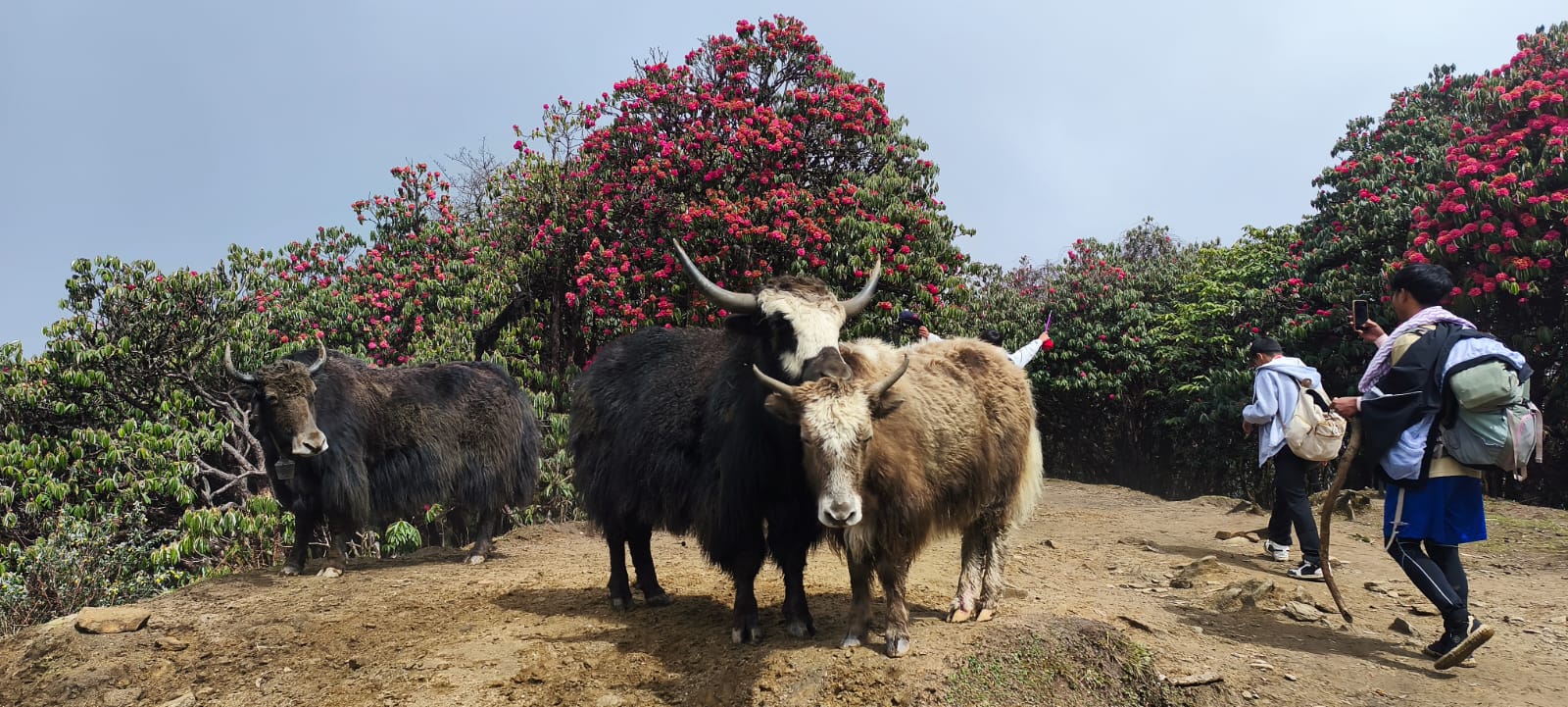
Spring is one of the most popular seasons for the ABC and Mardi Himal Combined Trek. The forests come alive with blooming rhododendrons, magnolias, and other wildflowers, creating colorful trails throughout the Annapurna region. Temperatures are generally mild, and mountain views are excellent, making this an ideal time for photography, nature lovers, and first-time trekkers.
Summer / Monsoon (June to August)
The summer months coincide with Nepal’s monsoon season, bringing frequent rainfall, cloudy conditions, and slippery trails. While mountain views can be limited, the hills and forests become exceptionally green and lush. Trekkers who prefer quieter trails and don't mind occasional rain may still enjoy the journey, especially in the lower sections of the trek.
Autumn (September to November)
Autumn is widely regarded as the finest trekking season in Nepal. Following the monsoon rains, the air becomes fresh and dust-free, providing outstanding visibility of the Annapurna range. Stable weather, comfortable temperatures, and breathtaking sunrise and sunset views make autumn the peak season for both Annapurna Base Camp and Mardi Himal trekking adventures.
Winter (December to February)
Winter offers peaceful trails, crisp mountain air, and stunning snow-covered landscapes. The weather is generally clear, providing beautiful views of Annapurna, Machapuchare, and surrounding peaks. However, temperatures can drop well below freezing at higher elevations, particularly around Annapurna Base Camp and Mardi Himal Base Camp. Trekkers should be prepared with proper winter clothing and equipment for cold conditions.
Travel Insurance for the Annapurna Base Camp (ABC) & Mardi Himal Combined Trek
Travel insurance is highly recommended for the Annapurna Base Camp (ABC) & Mardi Himal Combined Trek due to the remote mountain environment and high elevations reached during the journey. A comprehensive trekking insurance policy should cover emergency medical treatment, high-altitude sickness, helicopter evacuation, trip cancellation, trip interruption, and loss or delay of personal baggage. Since the trek reaches elevations of up to 4,500 meters at Mardi Himal Base Camp, it is important to ensure that your policy specifically covers trekking activities at high altitude in Nepal. Although the trek is considered non-technical, weather conditions, altitude-related issues, and unforeseen emergencies can occur. Having reliable travel insurance provides peace of mind and financial protection, allowing trekkers to enjoy the spectacular landscapes, mountain views, and cultural experiences of the Annapurna region with greater confidence and security.
Trekking Equipment for Annapurna Base Camp (ABC) & Mardi Himal Combined Trek
Proper trekking equipment is essential for the Annapurna Base Camp (ABC) & Mardi Himal Combined Trek to ensure safety, comfort, and an enjoyable Himalayan experience. Since the route involves varying weather conditions and high-altitude terrain up to 4,500 meters, trekkers should carry layered clothing, sturdy gear, and personal essentials suitable for both warm and cold environments.
Trekking Equipment List:
- Waterproof trekking boots (well broken-in)
- Warm down jacket (insulated for high altitude)
- Waterproof/windproof jacket and pants
- Thermal base layers (top and bottom)
- Trekking trousers and quick-dry t-shirts
- Warm hat, sun hat, and neck buff
- Trekking gloves (light and heavy pair)
- Sleeping bag (rated for cold temperatures)
- Trekking poles for stability on steep trails
- Backpack (30–50L for personal gear)
- Daypack or duffel bag (if using porter service)
- Sunglasses with UV protection
- Sunscreen and lip balm
- Headlamp with extra batteries
- Reusable water bottle or hydration bladder
- Basic first aid kit and personal medications
- Toiletries and quick-dry towel
- Power bank and charging cable
- Snacks and energy bars for long trekking days
Trip Note
The Annapurna Base Camp (ABC) & Mardi Himal Combined Trek is a truly unforgettable Himalayan journey that combines breathtaking mountain scenery, rich cultural encounters, and diverse trekking landscapes in one adventure. From lush rhododendron forests and traditional Gurung villages to the iconic Annapurna Sanctuary and the dramatic Mardi Himal ridge, this trek offers a perfect balance of challenge and natural beauty. Create Himalaya Adventure is a professional, reliable, and friendly trekking company dedicated to providing safe, well-organized, and memorable trekking experiences in Nepal. With experienced local guides, personalized service, and a strong focus on customer satisfaction, the company ensures that every trekker enjoys a smooth journey through the Himalayas while discovering the best of the Annapurna region with confidence and comfort.
FAQs
1. Where does the trek start and end?
The combined ABC & Mardi Himal Trek usually starts from Jhinu Danda, Ghandruk village or Ulleri and ends at Sidding village, depending on the itinerary.
2. What is the total trekking distance?
The total distance is approximately 110–130 km, depending on route variations and side trips.
3. What is the highest point of the trek?
The highest point is Mardi Himal Base Camp (4,500 m), while Annapurna Base Camp stands at 4,130 m.
4. Which mountains can I see?
You can see Annapurna I, Annapurna South, Hiunchuli, Machapuchare (Fishtail), Gangapurna, and Mardi Himal.
5. What is the culture and ethnic group in this region?
The trail is mainly inhabited by Gurung and Magar communities, known for their warm hospitality, traditional stone houses, and rich Himalayan culture.
6. What festivals do locals celebrate?
Major festivals include Dashain, Tihar, Lhosar, and local Gurung cultural festivals, celebrated with traditional dances and rituals.
7. Are hot showers available?
Yes, hot showers are available in most teahouses, usually with an extra charge, though facilities become more basic at higher elevations.
8. Is there charging and Wi-Fi?
Yes, device charging is available in most lodges (paid service). Wi-Fi is available in lower villages but may be slow or unavailable at higher altitudes.
9. What type of accommodation is available?
Accommodation is in basic teahouses with twin-sharing rooms, offering simple but comfortable lodging throughout the trek.
10. Can beginners do this trek?
Yes, beginners with good fitness can complete this trek, as it is a moderate-level trek with no technical climbing required.
11. What food is available on the trek?
You can expect Dal Bhat, noodles, fried rice, pasta, soups, momos, pancakes, eggs, and tea/coffee.
12. Can I start from Ghorepani Poon Hill or Ghandruk?
Yes, the route is flexible. You can start from Ghorepani Poon Hill or Ghandruk depending on your itinerary and preference.
13. Best sunrise and sunset viewpoints?
Best sunrise views are from Poon Hill, Mardi Himal View Point, and Annapurna Base Camp, while sunset views are stunning from Badal Danda and High Camp.
14. Are there alternative trails from Deurali to MBC in spring?
Yes, there are small local variations and forest shortcuts used in spring, but the main route via Deurali to Machapuchare Base Camp is the most common and safest.
15. Can I trek in winter?
Yes, winter trekking is possible with proper gear, offering clear skies and fewer crowds, but it can be very cold at higher elevations.
16. What happens if I get sick at ABC or on the trail?
If you get sick or suffer from altitude issues, you should descend immediately. In serious cases, evacuation may be required.
17. Does travel insurance cover helicopter rescue?
Yes, if your policy includes high-altitude trekking and emergency evacuation, helicopter rescue is usually covered.
18. Is this trek suitable for solo trekkers?
Yes, but hiring a guide is strongly recommended for safety, navigation, and better cultural experience.
19. Do I need permits?
Yes, you need ACAP (Annapurna Conservation Area Permit) and sometimes TIMS card, depending on regulations.
20. What is the difficulty level of this trek?
It is a moderate to moderately challenging trek, suitable for trekkers with good fitness and basic trekking experience.
No hidden fees • Best price guarantee

Related Packages
Everest Base Camp Trek Return by Helicopter
Langtang Valley Trek With Tamang Heritage Trail – 12 Days
Short Annapurna Base Camp Trek