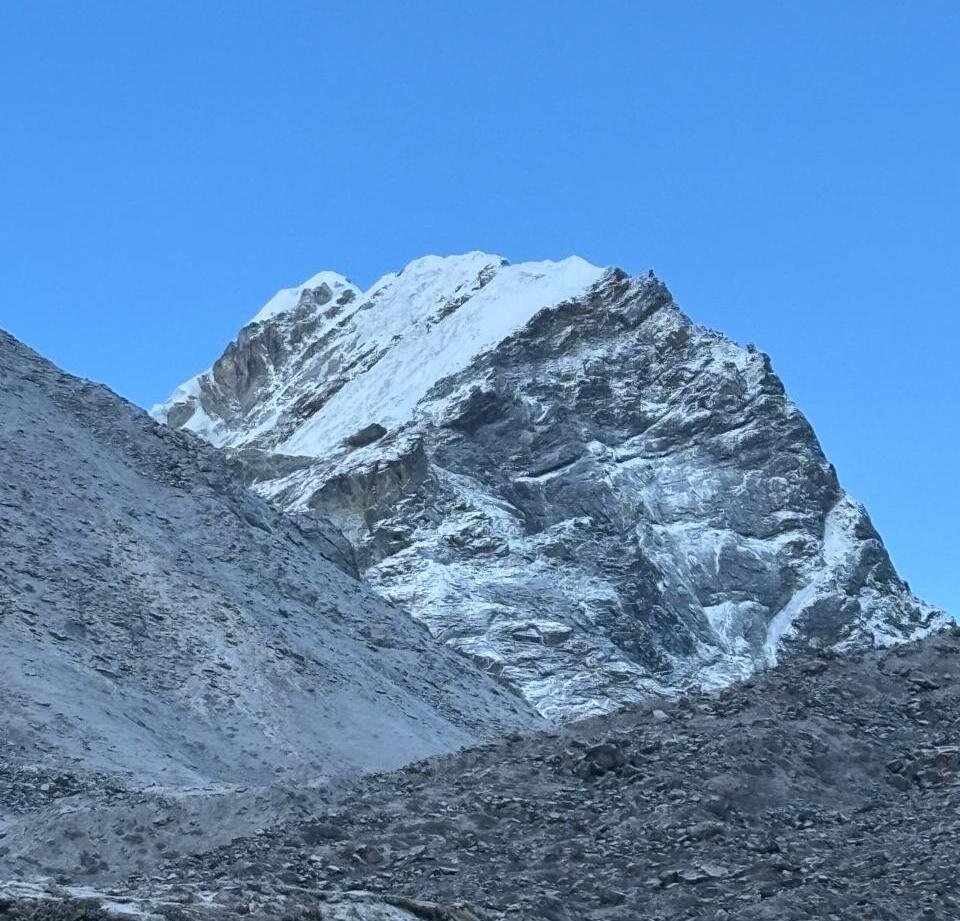
Lobuche East Peak Climbing
This journey begins with a scenic flight to Lukla, either directly from Kathmandu or via Manthali, depending on the season, followed by a gentle trek to Phakding. Over the following […]
Highlights
- Thrilling mountain flight landing at one of the world's most famous airport.
- Stand at the foot of the world's highest mountain "Everest Base Camp "
- Sunrise views of Everest, Lhotse, and Nuptse from Kala Patthar
- Climb a Himalayan peak "Lobuche East Summit"(6,119m) with the help of crampons and ice axes.
- Visit the spiritual heart of the Khumbu and attend Buddhist chanting at Tengboche Monastery.
- Learn about altitude sickness from Himalayan Rescue Association staff at Pheriche Aid-Post.
- Experience the warmth and traditions of Namche Bazaar and mountain villages.
- Walk through colorful Rhododendron forests on the descent
- Pay respects at Chorten Memorials to climbers honored along the trail
Overview
This journey begins with a scenic flight to Lukla, either directly from Kathmandu or via Manthali, depending on the season, followed by a gentle trek to Phakding. Over the following days, we wind our way through the Khumbu Valley, crossing suspension bridges draped with prayer flags, passing through Sherpa villages, and entering Sagarmatha National Park. Special moments along the way include an acclimatization hike to Hotel Everest View in Namche Bazaar, a visit to the revered Tengboche Monastery to witness the evening chanting ceremony, and a stop at the Himalayan Rescue Association’s aid-post in Pheriche for an educational talk on altitude sickness. The trail also takes us past a solemn row of chortens honoring those who have lost their lives in the Everest region, a quiet moment for reflection amid towering peaks.
The highlight of the trek arrives with the climb to Everest Base Camp and the sunrise ascent of Kala Patthar, offering the finest panoramic views of Mount Everest and its neighboring giants. From there, we shift focus to the peak itself, moving from Lobuche Base Camp to High Camp, a short but challenging walk where we set up tents and meticulously prepare climbing gear. Summit day begins at 3:00 am, fixing crampons at the snowline and using ropes and ice axes to navigate the glacier before reaching the top of Lobuche East (6,119m). The descent then retraces the trail through lush rhododendron and juniper forests, with a farewell stop at Tengboche Monastery before the final walk back to Lukla and a flight to Kathmandu. Throughout the journey, patience, proper acclimatization, and the steady guidance of experienced leaders ensure that every step is taken safely and every achievement is truly earned.
Trip Itinerary
Kathmandu to Lukla (Flight) or Manthali/Ramechap and Trek to Phakding.
Flights to Lukla operate differently depending on the season. During peak trekking seasons, most Lukla flights are operated from Manthali Airport, while during non-peak seasons, flights operate directly from Kathmandu.
-Manthali to Lukla Flights (March, April, May, September, October, and November):
During these peak months, flights to Lukla depart from Manthali Airport, which is approximately a 5–6 hour drive from Kathmandu. To catch the flight, we leave Kathmandu between 1:00 AM and 3:00 AM by shared jeep and travel to Manthali Airport. From Manthali, a scenic 20-minute flight takes you to Lukla.
-Kathmandu to Lukla Flights (January, February, June, July, August, and December):During the non-peak seasons, flights operate directly from the domestic terminal of Tribhuvan International Airport in Kathmandu. These flights usually depart early in the morning, typically between 6:00 AM and 7:00 AM.
After a scenic flight to Lukla, we arrive at Lukla Airport. Our porter-guide will be there to welcome you and assist with trek preparations. Before starting the walk, we take a short snack break in Lukla and then begin our trek toward Phakding. En route, we witness breathtaking mountain scenery, traditional Sherpa villages, prayer wheels, and fluttering prayer flags along the banks of the Dudh Koshi River.
Note: Flight schedules and updates are subject to change. For the most up-to-date information regarding Lukla flights, please consult one of our representatives.
Trek from Phakding to Namche Bazaar
After breakfast, we begin our trek along the serene Dudh Koshi River, crossing several suspension bridges as we head toward Namche Bazaar. The trail passes through small settlements, including Toktok, Benkar, Chomua, and Monjo.
After Monjo, we enter Sagarmatha National Park for permit verification and continue to Jorsalle (2,740 m / 8,989 ft), a peaceful riverside stop and an ideal place for lunch, marking the halfway point to Namche. Following lunch, we cross two more suspension bridges and gradually ascend to the iconic Hillary Suspension Bridge. A steep climb then leads to Top Danda, where we enjoy the first breathtaking view of Mount Everest. From here, Namche Bazaar is about an hour away.
The trail is lined with mani stones, prayer wheels, chortens, and colorful prayer flags, reflecting the spiritual heritage of the Khumbu region, with scenic views of Kusum Kanguru, Thamserku, Nuptse, Taboche, and Mount Everest. After 5–6 hours of trekking, we arrive at the vibrant Sherpa town of Namche Bazaar—an ideal place for rest, acclimatization, and cultural immersion.
Acclimatization Day in Namche Bazaar
Proper acclimatization is essential to prevent altitude sickness while trekking at higher elevations. To adapt safely, we spend an acclimatization day in Namche Bazaar (3,440 m / 11,286 ft), the vibrant trading hub of the Everest region known for its modern amenities and warm Sherpa hospitality.
After breakfast, we take a short acclimatization hike to Hotel Everest View (3,880 m / 12,730 ft), one of the highest hotels in the world. This scenic viewpoint offers breathtaking panoramic views of Mount Everest, Lhotse, Nuptse, Ama Dablam, Thamserku, Khumbila, and surrounding Himalayan peaks.
The afternoon is free to explore Namche Bazaar, where you can visit the Everest Museum, browse local shops, enjoy cafés, or immerse yourself in the rich culture and lifestyle of the Sherpa community.
Trek from Namche to Tengboche
After breakfast, we continue our trek toward Tengboche. The trail ascends out of Namche Bazaar before leveling into a gradual climb through lush forests and past several stupas, including one built in memory of Tenzing Norgay Sherpa.
We pass through settlements such as Kenjoma, Sanasa, and Leushyasa, enjoying scenic mountain views before stopping for lunch at Phunke Tenga after 2–3 hours of trekking. From here, we cross a suspension bridge at the confluence of the Dudh Koshi River and Imja Khola and complete permit verification at the Sagarmatha National Park army post.
A steady 2–3 hour uphill climb then leads us to Tengboche (3,860 m), one of the finest viewpoints along the Everest Base Camp trek. Home to the revered Tengboche Monastery, the area offers panoramic views of Mount Everest, Lhotse, Nuptse, Ama Dablam, and Thamserku.
Arriving by mid-afternoon, we have time to visit the monastery and attend the evening Buddhist chanting ceremony, a peaceful and culturally enriching experience reflecting the deep spiritual traditions of the Khumbu region.
Trek from Tengboche to Pheriche
The trail begins its slow descent toward Dingboche, and from there, we follow a ridgeline that offers wide-open views. Far below, the Dudh Khosi River winds its way through the valley, and the path ahead is relatively flat, a welcome break for tired legs.
Before long, we reach a turning point. One branch leads us into the village of Pangboche, a familiar and friendly place. And if fortune smiles upon us, the little bakery will be open. It is the perfect spot to pause for lunch or simply grab something sweet to take on the road. A warm pastry or a slice of cake tastes like a small celebration after days among the mountains.
As we walk, it is also a time to check in with ourselves. The altitude has been our companion for many days now, so we pay attention to how we feel, watching for any high altitude signs. If anything feels off, the most important thing is to communicate with your guide. A little awareness keeps everyone safe, and a shared concern for one another is what makes a journey good for all.
The trek from Tengboche (3,867 m / 12,687 ft) to Dingboche (4,410 m / 14,469 ft) is one of the most scenic days of the Everest Base Camp and Lobuche Peak climbing journey. Covering approximately 11 km (6.8 miles) in 5–6 hours, the trail begins with a gentle descent through fragrant rhododendron, juniper, and pine forests to Debuche, before crossing the Imja Khola via a suspension bridge at Pangboche. From here, the route gradually climbs through traditional Sherpa villages, ancient stone walls, and alpine meadows, offering breathtaking views of Ama Dablam (6,812 m), Lhotse (8,516 m), Nuptse (7,861 m), Island Peak (6,189 m), and the surrounding Himalayan landscape. As you gain altitude, dense forests give way to open valleys and rugged mountain terrain, with the air becoming noticeably thinner. The day's trek involves an elevation gain of approximately 543 meters (1,782 ft), making a steady pace and proper hydration essential for acclimatization. Upon reaching Dingboche, a beautiful village nestled in the wide Imja Valley, trekkers are rewarded with spectacular panoramic mountain views and a peaceful alpine atmosphere, making it an ideal place to rest and prepare for higher elevations ahead.
Acclimatization Day in Pheriche
In the village of Pheriche, there stands a special place, the Himalayan Rescue Association's Pheriche Aid-Post. Its doors are open to anyone who needs help, but its main purpose is to care for trekkers and mountaineers facing the challenges of high altitude. Acute Mountain Sickness and other mountain-related illnesses find a helping hand here. The staff know these mountains well, and they treat not only visitors but also the local villagers, guides, and porters who call this region home. Beyond treatment, the aid-post is also a place of learning. The team offers valuable information about AMS, how to spot it, how to prevent it, and how to respond. If you wish, you can even arrange a talk from the staff, who share their knowledge in a way that is both practical and reassuring. Spending part of your acclimatization day here is time well spent. It fills you with understanding, keeps you safe, and reminds you that in these high places, good people are watching out for you.
Trek from Pheriche to Lobuche
Today's trail asks for a bit of scrambling, boulders to climb over and half-frozen streams to cross in the wide valleys. When the sun hides behind the mountains, the cold bites sharply. You will want to walk faster to warm up, but the altitude has other plans. Be patient. Let the mountains set the pace.
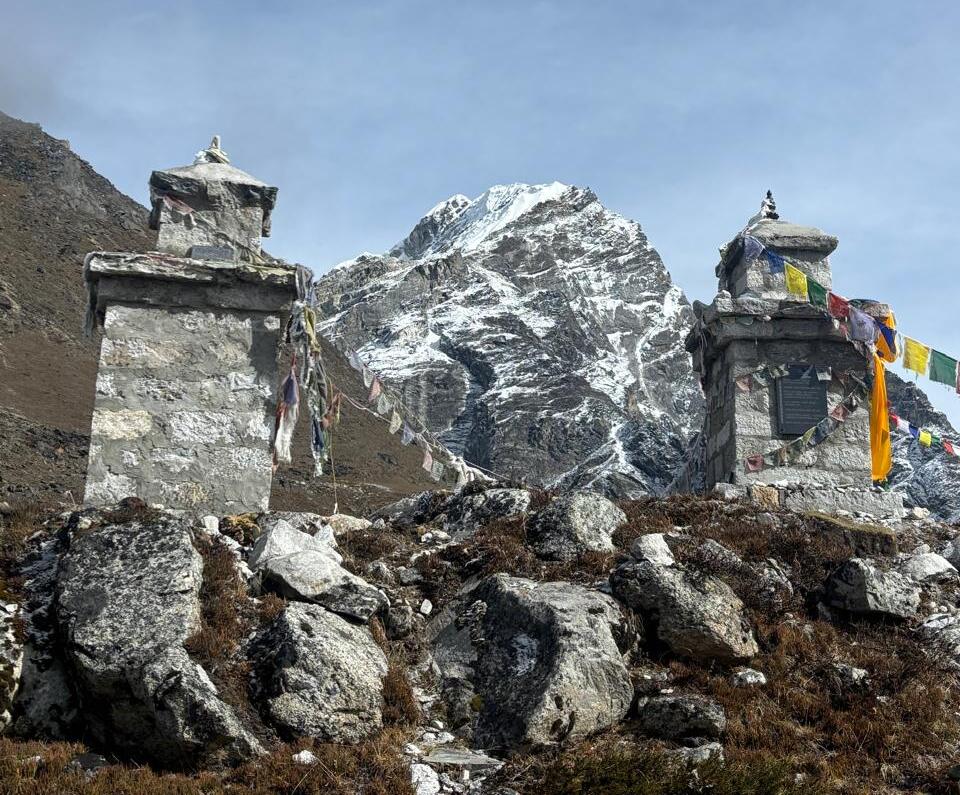
Along the way, you will likely share the trail with yak trains, their bells chiming softly as they pass. Villages offer a welcome pause, stop for a hot cup of tea or a bowl of soup to warm your hands and your spirit. Further on, you will come to a row of chortens. These stone monuments stand in memory of those who have lost their lives in the Everest region, guides, mountaineers, and trekkers alike. Prayer flags flutter in the wind, honoring all who have passed, including Scott Fischer, the American guide whose story lives on in the book and film Into Thin Air. Surrounded by towering peaks, this place feels quiet and deeply moving, a moment to pause, reflect, and remember.
Trek from Lobuche to Gorakshep
Today is the most rewarding day of the Everest Base Camp Trek as you journey to the legendary Everest Base Camp (5,364 m / 17,598 ft). After breakfast, you leave Lobuche and follow a gradual trail alongside the Khumbu Glacier, passing the famous Pyramid Research Station and crossing rocky glacial moraine with breathtaking views of Nuptse, Pumori, Lingtren, and Khumbutse.
After about 3 hours, you reach Gorak Shep (5,164 m / 16,942 ft), the last settlement on the Everest trail, where you stop for lunch and a short rest. Leaving your main backpack at the lodge, you continue on a 2–3 hour hike to Everest Base Camp. The trail follows the edge of the Khumbu Glacier, offering remarkable views of the Khumbu Icefall, one of the most iconic features of Mount Everest.
Standing at Everest Base Camp is an unforgettable achievement and the highlight of the trek. During the spring climbing season, colorful expedition tents fill the glacier, creating a lively atmosphere beneath the world's highest peak. After celebrating, taking photographs, and enjoying the spectacular Himalayan scenery, you retrace your steps to Gorak Shep for a well-earned overnight stay before tomorrow's sunrise hike to Kala Patthar.
Gorakshep to Lobuche (Morning hike to Kalapathar)
Rising at Kala Patthar (5,550 m), this iconic viewpoint offers the highest vantage point of the Everest Base Camp Trek. An early morning hike rewards you with breathtaking close-up views of Mount Everest, Lhotse, Nuptse, and Pumori as the first sunlight illuminates the Himalayan giants. After admiring the spectacular panorama, we descend to Gorak Shep for breakfast and continue downhill, leaving the main trail. We follow a steeper descent to Lobuche, a peaceful settlement offering stunning mountain views, and take some rest once at the teahouse after a long day's trek.
Trek from Lobuche to High Camp
Three hours. That is how long it takes to reach High Camp. But up here, where the air is thin and each breath takes effort, the hours seem to stretch. The walk feels longer, slower—but step by step, we make it.
Once we arrive, the real work begins. Tents go up, fastened against the mountain breeze. Then out comes the climbing gear. Ropes, harnesses, crampons—everything is laid out, checked, and double-checked. Tomorrow's climb asks for preparation, and we give it our full attention.
With camp set and gear ready, we settle in to rest. The summit waits for us in the morning.
High Camp to Lobuche East Summit and down to Lobuche
Your summit day starts very early, usually between 1:00 AM and 2:00 AM. After a light breakfast and a final equipment check, you begin climbing under the stars with headlamps lighting the route ahead. The cold temperatures before sunrise help keep the snow firm, providing safer climbing conditions.
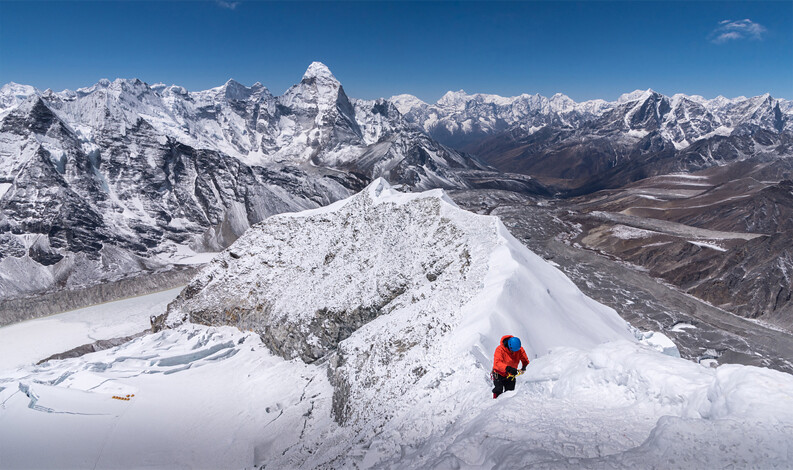
The initial section follows a rocky trail before gradually reaching the glacier. Here, climbers wear crampons, attach themselves to a fixed rope where necessary, and continue across snowfields and icy slopes. Depending on snow conditions, some sections involve ascending fixed ropes using a jumar while descending requires careful use of a figure-eight descender or belay device under the supervision of certified climbing guides.
As dawn breaks over the Himalayas, the surrounding mountains begin glowing with golden sunlight, creating an unforgettable atmosphere. The final ridge becomes steeper, but every step brings you closer to one of Nepal's most rewarding trekking peaks.
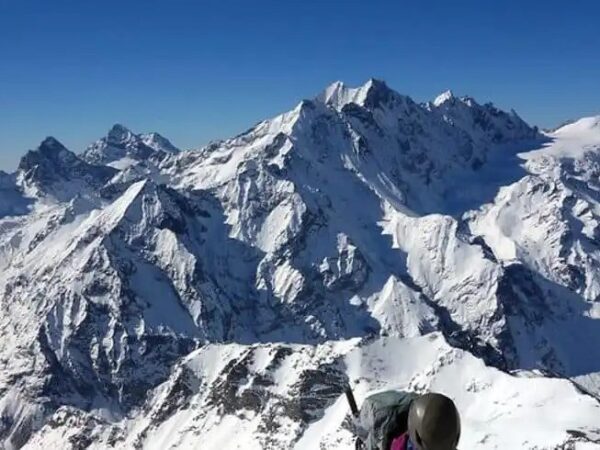
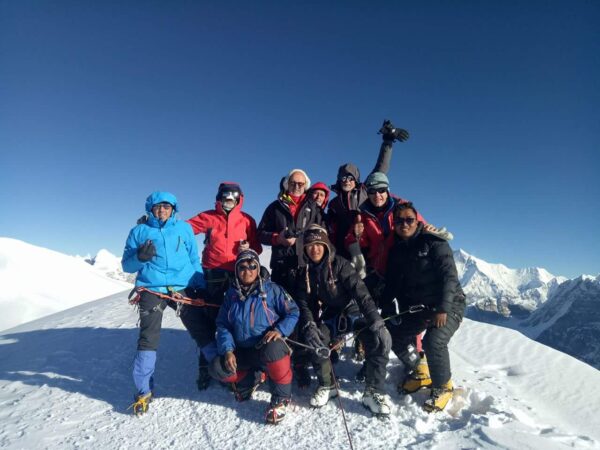
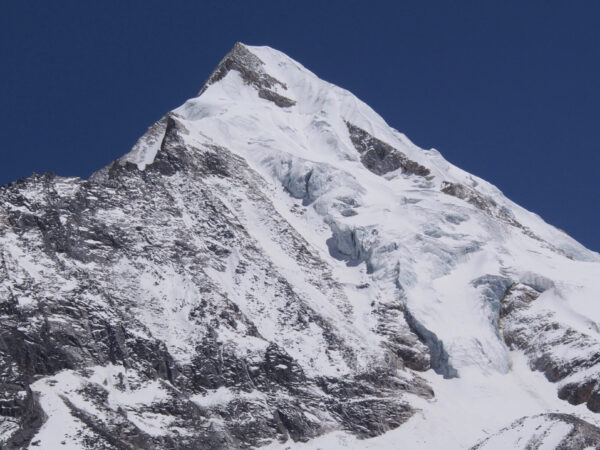
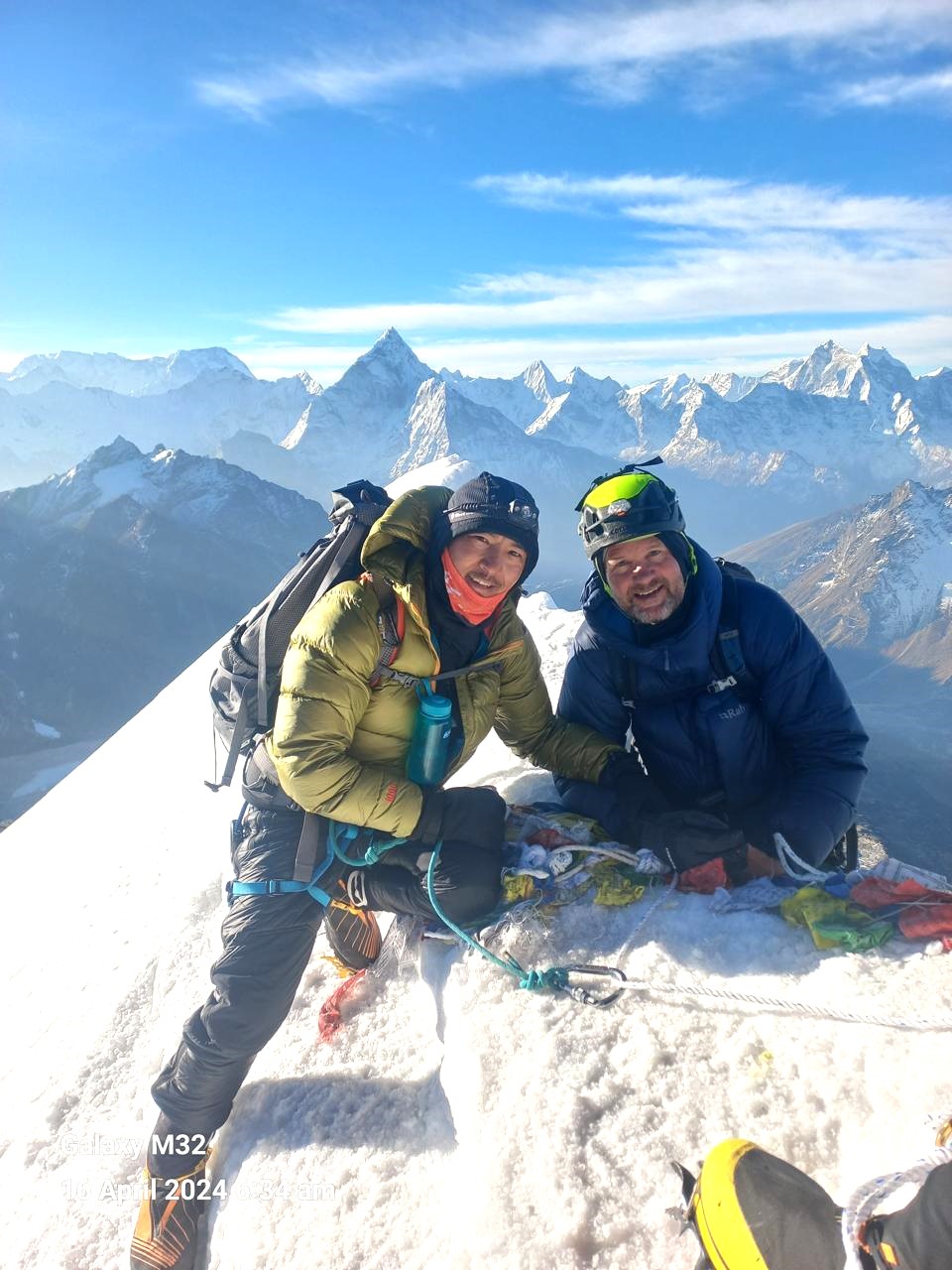
Standing on the 6,119-meter summit of Lobuche East is an achievement that few trekkers experience. The panoramic 360-degree views stretch across the Everest region, offering spectacular scenery of towering Himalayan giants in every direction.
After spending a short time enjoying the summit and taking photographs, climbers descend carefully following the same route back to High Camp. Safety remains the priority, as descending on snow and ice demands concentration even after reaching the top.
Upon arriving at High Camp, there is time to rest, hydrate, and pack your equipment before continuing downhill to Lobuche Village. The descent follows rocky alpine terrain with magnificent mountain views throughout. Reaching the teahouse in Lobuche marks the successful completion of your climbing adventure, where a warm meal and comfortable accommodation provide a well-deserved opportunity to relax after an unforgettable day.
Route Overview
Starting Point: Lobuche High Camp 5,400 m / 17,717 ft
Highest Point: Lobuche East Summit 6,119 m / 20,075 ft
Ending Point: Lobuche Village 4,938 m / 16,200 ft
Elevation Gain: 719 m / 2,359 ft
Elevation Loss: 1,179 m / 3,868 ft
Total Trekking & Climbing Distance: Approximately 10 km
Total Duration: 9–13 hours
Difficulty Level: Challenging to Strenuous
Terrain: Rocky trail, glacier, snow slopes, fixed ropes, alpine ridge, and moraine trail.
Trek from Lobuche Base Camp to Pangboche
The morning starts with a Himalayan breakfast to help you recover from yesterday’s long and tiring climb. Feeling refreshed, we begin our descent at a relaxed pace.
The trail leads us down to Lobuche village, where we stop for lunch. Afterward, we continue walking downhill toward Pheriche village.
The Himalayan peaks remain all around us, now familiar yet still impressive. As we descend, the scenery slowly changes. Patches of green begin to appear, and soon we are walking through juniper and rhododendron forests. When in season, the rhododendrons bloom in bright colors, offering a pleasant contrast to the rocky, high-altitude landscape above.
It’s an easy and enjoyable day, perfect for taking deep breaths, appreciating the views, and watching the mountains gradually give way to greener surroundings.
Trek from Pangboche to Namche
Leaving Pangboche behind, we follow a trail that feels familiar now, retracing our earlier steps down toward the Imja Tse River. A peaceful forest welcomes us, and before long, we arrive at Tengboche.
This is a special stop. Here, we visit the famous Tengboche Monastery, a place of prayer and stillness nestled among the mountains. We settle in for lunch nearby, letting the quiet beauty of the surroundings embrace you.
Refreshed, we continue on our way. The landscape around us begins to change, thick with rhododendrons that bloom in vibrant color during the season, mingled with the fragrant scent of juniper. We cross the Dudh Koshi River and walk alongside its deep gorge, the sound of rushing water keeping us company. Soon, the trail winds into pine forests, where the air smells fresh and wild. This stretch is known for wildlife. Keep your eyes open and your heart hopeful. If luck is on our side, we might just spot the elusive snow leopard hiding in the shadows of the trees.
The trail eventually brings us past an army camp, a familiar landmark that signals we are close. And then, there it is, Namche Bazaar, rising on the hillside like an old friend welcoming us home.
We settle in for the evening, tired but content. Over a good dinner, the conversation flows easily. We find ourselves laughing, sharing stories, and reliving the adventure that has brought us here, mountain by mountain, step by step. It's a night for good food, good company, and the quiet pride of a journey that was accomplished.
Trek from Namche to Lukla
Today is the second-last day of our Everest Base Camp trek as we walk back to Lukla. After breakfast, we follow the familiar trail, crossing the Hillary Suspension Bridge and passing through small villages along the way.
Reaching Lukla feels special; it’s a chance to slow down, enjoy a warm meal, and celebrate the journey. Spend the evening relaxing, sharing stories with fellow trekkers, and soaking in the lively mountain atmosphere before the adventure comes to an end.
Lukla flight to Kathmandu or Manthali/Ramechap Airport and drive back to Kathmandu.
During peak trekking seasons (March, April, May, September, October, and November), flights from Lukla are often diverted to Manthali Airport instead of Kathmandu due to heavy traffic. The flight duration is approximately 20 minutes, followed by a 5–6 hour drive to Kathmandu by shared jeep. Please note that travel time may vary depending on road conditions, weather, and traffic. Early departures are common, and delays can occur, so flexibility in travel plans is recommended.
During the monsoon and winter months (January, February, June, July, August, and December), flights from Lukla usually operate directly to Kathmandu. The flight takes around 35 minutes, followed by a 30-minute drive to your hotel if you are staying in the city. Flight routes can change due to weather or air traffic conditions, so it’s best to check the current flight status before booking and allow some flexibility in your travel plans.
After a leisurely breakfast, you will prepare for your journey back to Kathmandu (or via Manthali, if required). Upon arrival, a private transfer will take you to your hotel, where you can relax and rejuvenate in comfort after your remarkable Himalayan adventure with Create Himalaya.
Not Satisfied with This Itinerary?
Every traveler is different. Customize this trip with the help of our local travel specialists and create an itinerary that perfectly matches your interests, schedule, and budget.
What's included
- Airport pickups as your arrival date and time by private vehicle.
- 3 nights accommodation in Kathmandu (3 stars Hotel).
- All meals (breakfast, lunch, and dinner) during the trek and climb period.
- National Park entry permit and climbing permit.
- Flight ticket to Lukla from Kathmandu/Ramechhap including airport transportation.
- Flight ticket to Kathmandu from Lukla/Ramechhap including transportation.
- One Trekking Guide Lukla to Lukla.
- One Climbing Guide from Lobuche licensed by the Nepal Mountaineering Association (NMA).
- Staff costs include their salary, insurance, equipment, domestic airfare, food, and accommodation.
- Tea house accommodation during the trek.
- Tent accommodation during climbing.
- Group mountaineering (climbing) equipment.
- All government and local taxes.
- Create Himalaya Treks T-shirt, trekking map, and trip achievement certificate.
- Certificate of achievement (If needed).
- Farewell dinner in Nepali restaurant in Thamel before you depart from Nepal.
- Airport transfer as your departure date and time.
What's not included
- Nepal visa fee, international airfare to and from Kathmandu, travel and rescue insurance.
- Excess baggage charges (if you have more than 15 kg of luggage, a cargo charge is around $1.5 per kg).
- Extra night Hotel in Kathmandu (also in the case of early return from the mountain than the scheduled itinerary)
Lunch and Dinner in Kathmandu. - Personal expenses (phone calls, internet, laundry, bar bills, battery recharge, bottle or boiled water, shower, etc.)
- One porter between two trekkers is recommended. If you would like to take a porter it will cost USD 35 per day for one porter.
- Personal climbing equipment and personal climbing guide if requested.
- Tips for guides and porters (expected).
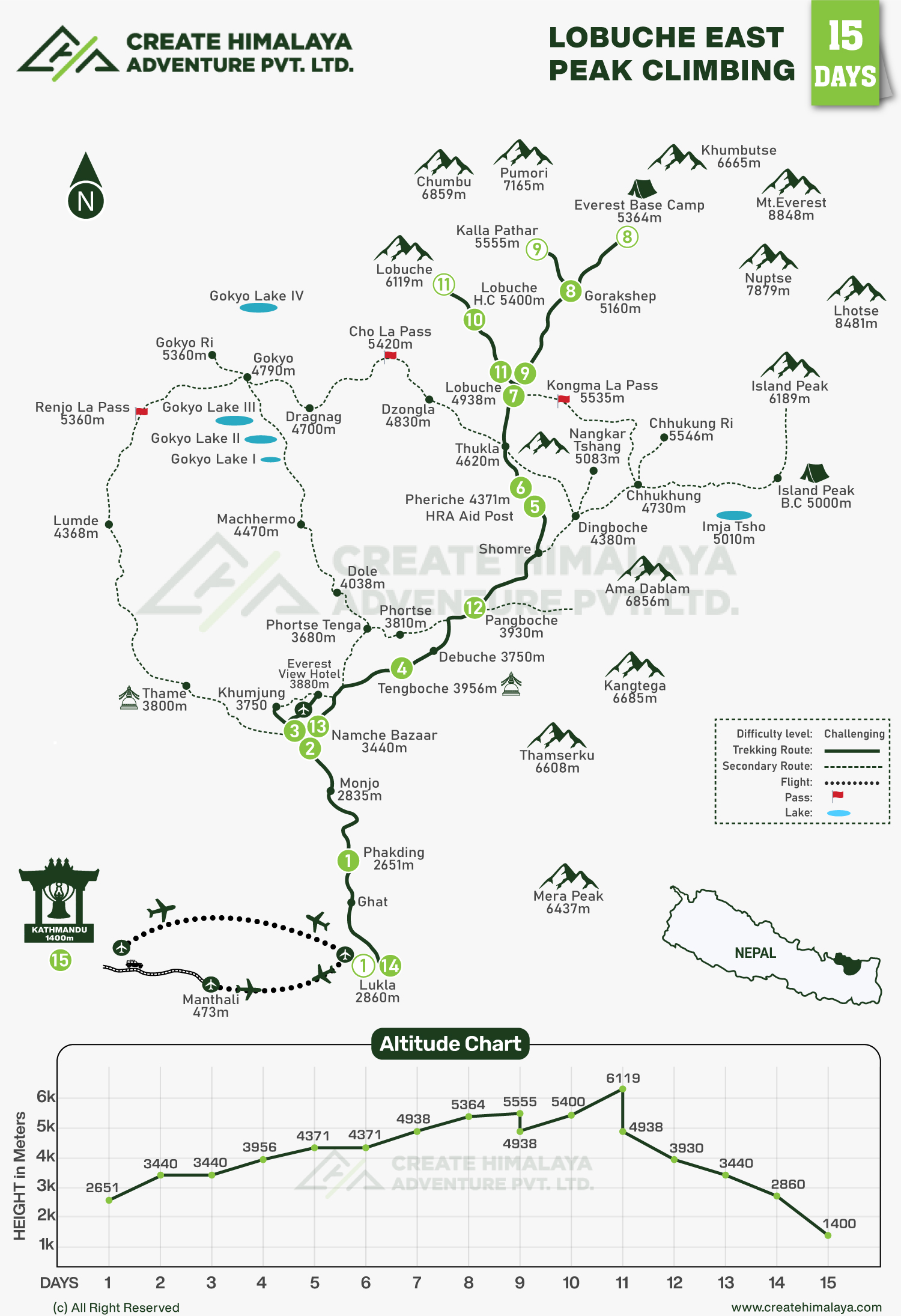
Map
Lobuche Peak Climbing Permit
Lobuche Peak Climbing requires several permits issued by Nepal's mountaineering and local authorities. Climbers must obtain a Lobuche Peak Climbing Permit from the Nepal Mountaineering Association (NMA), along with the Sagarmatha National Park Entry Permit and the Khumbu Pasang Lhamu Rural Municipality Permit. These permits help preserve the fragile Himalayan environment and support tourism management in the Everest region. Most climbers arrange these permits through a registered trekking agency such as Create Himalaya Adventure before the expedition begins.
Lobuche Peak Climbing Cost
The cost of Lobuche Peak Climbing typically ranges from USD 2,500 to USD 4,500 per person, depending on the itinerary, group size, season, and level of service. A standard package generally includes permits, domestic flights, accommodation, meals during the trek, climbing guides, porter services, and essential expedition logistics. Additional expenses may include personal climbing gear, travel insurance, tips, and personal spending along the route.
Lobuche Peak Climbing Difficulty
Lobuche Peak is considered one of the more demanding trekking peaks in Nepal. The climb involves steep snow slopes, rocky terrain, glacier travel, and sections that require the use of fixed ropes. The biggest challenge is the high altitude, as climbers spend several days above 4,000 meters before attempting the 6,119-meter summit. Previous high-altitude trekking experience is beneficial, although strong and well-prepared adventurers can successfully complete the climb with professional guidance.
Travel Insurance for Lobuche Peak Climbing
Travel insurance is highly recommended for Lobuche Peak Climbing. Your policy should cover high-altitude trekking and peak climbing activities, including emergency helicopter evacuation, medical treatment, hospitalization, and trip interruptions. Since rescue operations in the Everest region can be expensive, adequate insurance coverage is essential for safety and peace of mind.
Best Time for Lobuche Peak Climbing
Spring (March to May) and autumn (September to November) are the best seasons for Lobuche Peak Climbing. These months offer stable weather, clear mountain views, comfortable temperatures, and excellent climbing conditions. Spring brings colorful rhododendron blooms, while autumn provides crisp air and outstanding visibility throughout the Everest region.
Food and Accommodation During Lobuche Peak Climbing
Accommodation along the trekking route is provided in traditional teahouses and mountain lodges, offering simple but comfortable rooms and warm hospitality. Near Lobuche High Camp, climbers may stay in tented accommodation depending on the itinerary. Meals typically include Dal Bhat, noodles, pasta, soups, potatoes, eggs, bread, rice dishes, tea, coffee, and other energy-rich foods designed to support high-altitude trekking and climbing.
Equipment for Lobuche Peak Climbing
Proper equipment is crucial for a safe and successful ascent. Essential gear includes mountaineering boots, crampons, ice axe, climbing harness, helmet, ascender, carabiners, trekking poles, warm gloves, thermal clothing, down jacket, sleeping bag, headlamp, sunglasses, and a personal first-aid kit. Most technical climbing equipment can be rented in Kathmandu if needed.
Trip Note for Lobuche Peak Climbing
Lobuche Peak Climbing is a physically demanding Himalayan adventure that combines the world-famous Everest trekking route with an exciting mountaineering challenge. Climbers should be prepared for long trekking days, high-altitude conditions, and rapidly changing mountain weather. Proper acclimatization, physical preparation, and following the guidance of experienced climbing leaders are essential for a safe and successful summit. With spectacular views of Everest, Lhotse, Nuptse, Ama Dablam, and countless Himalayan peaks, Lobuche Peak offers an unforgettable climbing experience in the heart of the Everest region.
FAQs
1. Where is Lobuche Peak located?
Lobuche Peak is located in Nepal's Everest region, close to Everest Base Camp, and rises to 6,119 meters (20,075 feet).
2. How difficult is Lobuche Peak Climbing?
Lobuche Peak is considered one of Nepal's more challenging trekking peaks, requiring good physical fitness and basic mountaineering skills.
3. How high is Lobuche Peak?
Lobuche East Peak stands at 6,119 meters (20,075 feet) above sea level.
4. Is Lobuche Peak harder than Island Peak?
Yes, Lobuche Peak is generally considered more technical and demanding than Island Peak due to its steeper terrain and exposed summit ridge.
5. Do I need previous climbing experience?
Previous trekking peak experience is highly beneficial, although fit climbers with basic mountaineering training can also attempt Lobuche Peak.
6. What is the best season for Lobuche Peak Climbing?
Spring (March to May) and autumn (September to November) offer the best weather, visibility, and climbing conditions.
7. How long does Lobuche Peak Climbing take?
Most Lobuche Peak expeditions take between 15 and 19 days, often combined with the Everest Base Camp Trek.
8. Is Lobuche Peak suitable for beginners?
Lobuche Peak is better suited to adventurous trekkers with previous high-altitude trekking experience rather than complete beginners.
9. What permits are required for Lobuche Peak Climbing?
Climbers need a Lobuche Peak Climbing Permit, Sagarmatha National Park Permit, and Khumbu Pasang Lhamu Rural Municipality Permit.
10. How much does Lobuche Peak Climbing cost?
The average cost ranges from USD 2,500 to USD 4,500 depending on the itinerary, services, and group size.
11. Do I need a guide for Lobuche Peak Climbing?
Yes, a licensed climbing guide is required for Lobuche Peak expeditions.
12. Can I climb Lobuche Peak without Everest Base Camp Trek?
Yes, but most climbers include Everest Base Camp in their itinerary for better acclimatization and a richer Everest experience.
13. What technical equipment is required?
Crampons, ice axe, climbing harness, helmet, ascender, carabiners, fixed-rope equipment, and mountaineering boots are required.
14. Can I rent climbing gear in Nepal?
Yes, technical climbing equipment can be rented in Kathmandu before the expedition.
15. Is travel insurance necessary?
Yes, comprehensive insurance covering peak climbing, high-altitude trekking, and emergency helicopter evacuation is strongly recommended.
16. What accommodation is available during the climb?
Trekkers stay in teahouses along the trail and in tented camps near Lobuche High Camp.
17. What kind of food is available during the expedition?
A variety of meals are available, including Dal Bhat, noodles, soups, rice dishes, pasta, potatoes, eggs, tea, and coffee.
18. What is the highest risk during Lobuche Peak Climbing?
Altitude sickness and rapidly changing mountain weather are the primary challenges.
19. Is altitude sickness common on Lobuche Peak?
Yes, climbers spend several days above 4,000 meters, making proper acclimatization extremely important.
20. Do I need supplemental oxygen for Lobuche Peak?
No, oxygen is generally not required for Lobuche Peak when proper acclimatization is followed.
21. How long is summit day?
Summit day usually takes 8 to 12 hours depending on weather, route conditions, and climber pace.
22. What is the success rate of Lobuche Peak Climbing?
The success rate is generally high during spring and autumn when climbers are well-prepared and properly acclimatized.
23. How cold does it get on Lobuche Peak?
Temperatures during summit night can fall to -15°C to -25°C, especially during colder months.
24. What mountain views can I see from the summit?
The summit offers spectacular views of Everest, Lhotse, Nuptse, Ama Dablam, Pumori, cho-oyu, Makalu, and many surrounding peaks.
25. Can Lobuche Peak be combined with Everest Base Camp Trek?
Yes, this is the most popular itinerary and provides excellent acclimatization before the climb.
26. Is there mobile network and Wi-Fi on the route?
Mobile coverage and Wi-Fi are available in many villages along the Everest trail, though connectivity becomes limited at higher elevations.
27. What happens if bad weather delays the climb?
Guides closely monitor forecasts and may adjust the itinerary or summit schedule to ensure safety.
28. What is the minimum age for Lobuche Peak Climbing?
There is no official age restriction, but participants should be physically fit and capable of high-altitude trekking.
29. What is the difference between Lobuche East and Lobuche West?
Lobuche East is a popular trekking peak open to climbers with a trekking peak permit, while Lobuche West is a more technical expedition peak requiring additional permits and experience.
30. Why choose Lobuche Peak Climbing?
Lobuche Peak is a perfect choice for adventure seekers looking to combine Everest Base Camp trekking with a true Himalayan climbing experience. Its technical ascent, breathtaking mountain scenery, and high summit success rate make it one of Nepal's most sought-after trekking peaks.
No hidden fees • Best price guarantee