
Kathmandu to Lukla Flight
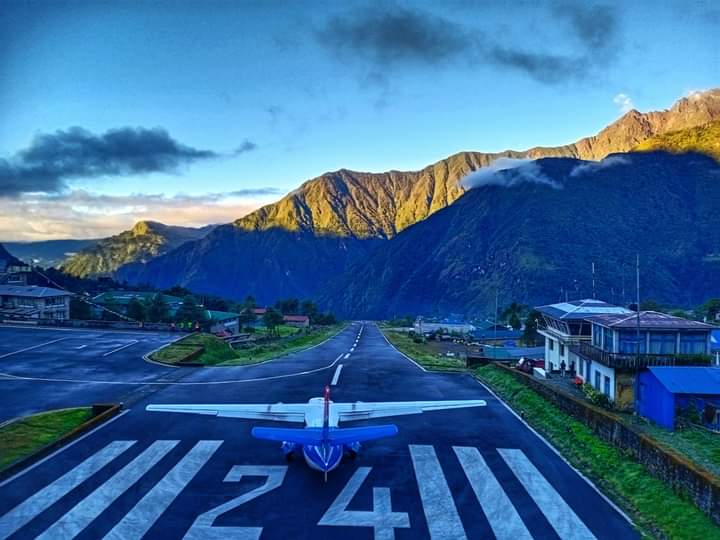
The Kathmandu to Lukla Flight is the most popular and fastest way to reach the gateway of the Everest region in Nepal. This scenic mountain flight connects Kathmandu with Lukla Airport (Tenzing-Hillary Airport) and is the starting point for famous adventures like the Everest Base Camp Trek, Gokyo Valley Trek, Everest Three High Passes Trek, Everest Panorama View Trek, and other Khumbu region journeys. The flight offers a thrilling experience with breathtaking views of snow-covered Himalayan peaks, green hills, deep valleys, and traditional Sherpa villages.
Complete Guide for Everest Trek
This complete Kathmandu to Lukla flight guide provides all the essential information trekkers need before starting their Everest adventure, including flight duration, distance, ticket price, airlines, flight schedule, weather conditions, airport details, and useful travel tips. The flight from Kathmandu to Lukla usually takes around 30–40 minutes, but it is highly dependent on weather conditions due to Lukla’s mountain location. Clear skies during the best trekking seasons make the journey smoother and provide incredible aerial views of the Himalayas.
Many trekkers choose the Kathmandu to Lukla flight because it saves several days of road travel and allows more time to explore the Everest region. However, flights can sometimes be delayed or postponed due to unpredictable mountain weather, so keeping extra buffer days is recommended. Booking tickets early, arriving at the airport on time, and checking weather updates can help ensure a hassle-free experience.
Whether you are a first-time visitor to Nepal or an experienced trekker, understanding the Lukla flight process is an important part of planning a successful Everest trek. With proper preparation, this short Himalayan flight becomes an unforgettable beginning to your journey toward the world’s highest mountain, Mount Everest.
About Lukla Airport (Tenzing-Hillary Airport)
Lukla Airport, officially known as Tenzing-Hillary Airport, is one of the most famous airports in the world and the primary gateway to the Everest region of Nepal. Located in the mountain town of Lukla in Solukhumbu District, the airport sits at an elevation of 2,846 meters (9,337 feet) above sea level. Every year, thousands of trekkers, mountaineers, and adventure travelers pass through Lukla Airport on their way to Everest Base Camp, Gokyo Lakes, Everest Three Passes Trek, and various Mount Everest expeditions.
For anyone planning an Everest Base Camp Trek, the journey usually begins with a scenic flight from Kathmandu or Ramechhap to Lukla. The flight itself is considered one of the most spectacular mountain flights in the world, offering breathtaking views of snow-capped Himalayan peaks, deep valleys, and traditional Sherpa settlements. As the aircraft approaches Lukla, passengers get their first glimpse of the rugged landscapes that make the Everest region one of the most sought-after trekking destinations on Earth.
Lukla Airport gained worldwide recognition because of its unique runway and challenging operating conditions. The airport has a runway length of only 527 meters (1,729 feet), making it one of the shortest commercial runways in the world. The runway is built on a steep incline, allowing aircraft to land uphill and take off downhill. This design helps aircraft slow down during landing and gain speed during takeoff within the limited runway distance.
Due to its mountainous location, weather conditions at Lukla can change rapidly. Fog, clouds, strong winds, and poor visibility often affect flight schedules. As a result, Lukla flight delays and Lukla flight cancellations are common, especially during the monsoon season and periods of unstable weather. Travelers heading to the Everest region are usually advised to keep extra days in their itinerary to accommodate possible flight disruptions.
The airport was renamed Tenzing-Hillary Airport in honor of Sir Edmund Hillary and Tenzing Norgay Sherpa, who became the first climbers to successfully reach the summit of Mount Everest on May 29, 1953. Their historic achievement transformed the Everest region into one of the world’s most iconic adventure destinations, and the airport serves as a tribute to their legacy.
Only pilots with specialized mountain-flying qualifications and extensive experience are permitted to operate flights to Lukla. The combination of high altitude, short runway, mountainous terrain, and unpredictable weather requires exceptional skill and training. Because of these factors, Lukla Airport is frequently ranked among the world’s most challenging and exciting airports.
Beyond its importance to tourism, Lukla Airport plays a crucial role in supporting local communities throughout the Khumbu region. The airport serves as a vital transportation link for delivering food supplies, construction materials, fuel, medical equipment, and other essential goods to remote mountain villages. It also contributes significantly to the local economy by supporting tourism-related businesses, lodges, guides, porters, and Sherpa communities.
Today, Lukla Airport remains the most important access point to the Everest region. Whether travelers are trekking to Everest Base Camp, exploring Gokyo Lakes, climbing Island Peak, or experiencing Sherpa culture in the Khumbu Valley, Lukla serves as the starting point for unforgettable Himalayan adventures.
Quick Facts About Lukla Airport
| Feature | Details |
|---|---|
| Official Name | Tenzing-Hillary Airport |
| Location | Lukla, Solukhumbu District, Nepal |
| IATA Code | LUA |
| ICAO Code | VNLK |
| Elevation | 2,846 m (9,337 ft) |
| Runway Length | 527 m (1,729 ft) |
| Runway Surface | Asphalt |
| Main Function | Gateway to the Everest Region |
| Flight Duration | 25–35 minutes from Kathmandu |
| Airlines | Tara Air, Summit Air, Sita Air, and helicopter services |
| Popular Routes | Everest Base Camp Trek, Gokyo Lakes Trek, Everest Three Passes Trek, and Everest expeditions |
Why Is Lukla Airport Important?
Lukla Airport is important for several reasons:
- It is the main gateway to the Everest Base Camp Trek.
- It provides access to popular trekking routes in the Everest region.
- It serves as the starting point for Mount Everest expeditions.
- It connects remote Himalayan communities with the rest of Nepal.
- It supports tourism, trade, and economic development in the Khumbu region.
- It transports essential supplies, food, medicine, and equipment to mountain villages.
- It offers one of the most scenic and memorable flights in Nepal.
Lukla Airport Weather and Flight Conditions
Weather is one of the most important factors affecting flights to and from Lukla Airport. Clear skies and good visibility are required for safe flight operations. During the spring and autumn trekking seasons, flights generally operate more reliably. However, weather conditions can change quickly in the mountains, causing delays or cancellations.
Travelers planning a Kathmandu to Lukla flight should monitor weather forecasts and remain flexible with their travel plans. Many trekkers include one or two extra days in their itinerary to avoid disruptions caused by poor weather conditions.
Lukla Flight Schedules
The Kathmandu to Lukla flight schedule is mainly designed around the best weather conditions in the Himalayan region. Most flights operate in the morning hours, usually from around 6:00 AM to 10:00 AM, because the weather is generally clearer and more stable early in the day. During peak trekking seasons, airlines operate multiple flights daily to meet the high demand from trekkers heading toward the Everest Base Camp Trek and other Khumbu region adventures. Flight schedules can change depending on weather, air traffic, and airport conditions. During busy seasons like spring and autumn, it is recommended to book your Kathmandu to Lukla flight ticket in advance because seats fill quickly. Trekkers should also keep an extra buffer day in their itinerary as Lukla flights are often affected by unpredictable mountain weather.
Lukla Flight Duration
The Kathmandu to Lukla flight duration is approximately 30 to 40 minutes, making it the quickest way to reach the Everest region. Although the flight is short, it is one of the most exciting mountain flights in Nepal. During the journey, passengers can enjoy spectacular aerial views of Himalayan peaks, rolling hills, rivers, and remote mountain villages. The aircraft flies through narrow valleys before landing at Lukla Airport, one of the world’s most unique airports due to its high-altitude location and short runway. Despite the short distance, the flight provides an unforgettable experience and saves trekkers several days of road travel.
Lukla Flight Ticket Cost
| Flight Route | Estimated Price | Notes |
|---|---|---|
| Kathmandu → Lukla | USD 245–255 per person | Price varies depending on season, airline, and seat availability. |
| Lukla → Kathmandu | USD 245–255 per person | Similar pricing applies for return flights. |
| Round-Trip Ticket | USD 490–510 per person | Often booked together with trekking packages for convenience. |
Airlines Flying to Lukla
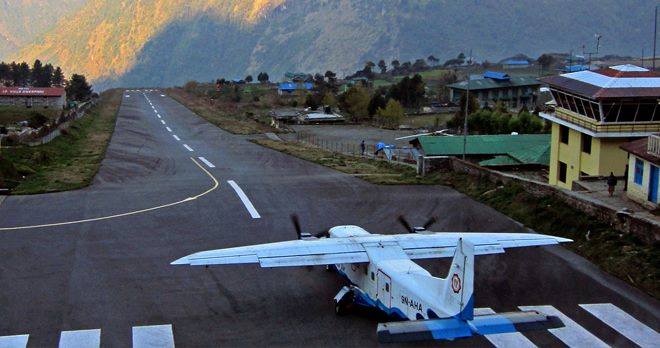
Several domestic airlines operate Kathmandu to Lukla flights, providing regular services for trekkers and local travelers. The main airlines include Tara Air, Summit Air, and Sita Air, which operate small aircraft suitable for mountain terrain. These airlines use aircraft designed for short mountain runways and changing weather conditions. Flights may sometimes be transferred to Ramechhap Airport (Manthali) during peak seasons because of Kathmandu airport traffic congestion. Choosing a reliable airline and booking through an experienced trekking agency can help make your Lukla flight experience easier and more comfortable.
Lukla Flight Weather Conditions
Weather plays a major role in Lukla flight operations because the airport is located in a mountainous area at approximately 2,860 meters altitude. Flights can be delayed or cancelled due to poor visibility, strong winds, heavy rain, fog, or cloudy conditions. The best time for a Kathmandu to Lukla flight is during the spring (March–May) and autumn (September–November) seasons when the skies are usually clearer. During the monsoon season and winter months, flight disruptions are more common. Always check the weather forecast before traveling and keep flexible days in your Everest trek itinerary.
Travel Tips for Kathmandu to Lukla Flight
For a smooth Kathmandu to Lukla flight experience, arrive at the airport early and complete check-in procedures on time. Keep your important documents, trekking permits, valuables, and essential items in your hand luggage because checked baggage may sometimes be delayed. Avoid carrying unnecessary heavy luggage, as small aircraft have limited baggage capacity. If your flight is delayed, stay updated with airline announcements and remain patient, as mountain weather can change quickly. Booking an early morning flight, adding an extra day in Kathmandu or Lukla, and traveling during the best trekking seasons can help make your journey to the Everest region safer and more enjoyable.
Baggage Allowance for Kathmandu to Lukla Flight
The Kathmandu to Lukla flight baggage allowance is limited because the flight operates with small mountain aircraft designed for high-altitude airports. Due to Lukla’s short runway, changing weather conditions, and strict safety requirements, airlines carefully manage the total weight carried on each flight. Normally, passengers are allowed around 15 kg of baggage per person, including approximately 10 kg of checked luggage and 5 kg of hand carry baggage.
For checked baggage, trekkers can usually carry up to 10 kg, which is suitable for essential trekking items such as clothes, a sleeping bag, trekking gear, and personal belongings. A soft duffel bag or trekking bag is highly recommended instead of a hard suitcase because it is easier to store in the limited aircraft space. Any extra luggage that is not needed during the trek can be safely stored in Kathmandu.
The hand carry allowance is generally around 5 kg. Your small backpack should include important items such as your passport, trekking permits, wallet, electronic devices, medicines, camera, and other valuable belongings. Keeping essential items with you is helpful because weather delays or baggage handling issues can sometimes happen on mountain flights.
If your luggage exceeds the permitted weight, you may need to pay an extra baggage charge. The additional cost is usually around USD 2–5 per extra kilogram, but the exact rate depends on the airline, season, and available aircraft capacity. Since Lukla flights have strict weight limitations, extra baggage is accepted only if there is enough space and the flight’s weight balance allows it.
For Everest Base Camp Trek and other Everest region treks, it is best to pack smartly and carry only necessary equipment. Most trekkers leave extra luggage at their hotel or trekking company in Kathmandu and fly to Lukla with a lightweight duffel bag and daypack. Proper packing helps you enjoy a smoother and more comfortable Himalayan flight experience.
Allowed and Not Allowed Items on Kathmandu to Lukla Flight
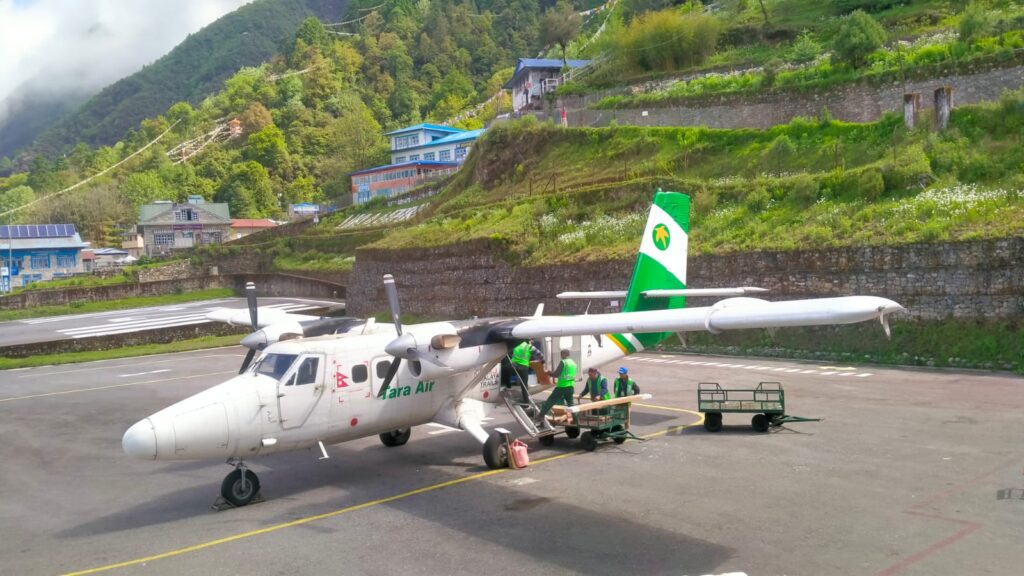
The Kathmandu to Lukla flight operates with small mountain aircraft, so airlines follow strict safety rules regarding baggage and personal items. Since the aircraft has limited space and weight capacity, trekkers should pack carefully and carry only essential items for their Everest Base Camp Trek or other Everest region adventures.
Items Allowed on Kathmandu to Lukla Flight
Trekking Gear:
Most essential trekking equipment is allowed, including trekking clothes, thermal wear, jackets, trekking poles (usually packed inside checked baggage), gloves, hats, sleeping bags, hiking boots, and personal trekking accessories. It is better to pack heavy items in your checked duffel bag.
Personal Items:
Passengers can carry normal travel items such as clothes, toiletries, books, sunglasses, personal documents, wallets, and small electronic devices.
Electronics:
Mobile phones, cameras, power banks, laptops (if needed), watches, and chargers are generally allowed. It is recommended to keep valuable electronics and batteries in your hand carry bag.
Medicines and First Aid Items:
Personal medicines, basic first aid kits, altitude sickness medicines, and prescribed medication are allowed. Keep important medicines in your daypack so they are easily accessible during the flight.
Food and Snacks:
Dry snacks like energy bars, chocolates, nuts, biscuits, and packaged food items are usually allowed. These are useful during trekking days when you need quick energy.
Water Bottles:
Empty reusable water bottles are allowed. You can fill them after reaching Lukla or during the trek. Liquids may have restrictions during security checks.
Items Not Allowed on Kathmandu to Lukla Flight
Weapons and Sharp Objects:
Knives, blades, scissors, trekking knives, tools, and other sharp objects are not allowed in hand carry luggage. If permitted, some trekking tools must be packed properly in checked baggage.
Flammable Items:
Fuel bottles, gasoline, lighter fluid, fireworks, explosives, and other flammable materials are strictly prohibited due to flight safety regulations.
Gas Canisters:
Camping gas cylinders and fuel canisters are generally not allowed on Lukla flights. Trekkers usually buy fuel-related supplies after reaching the trekking area.
Large Batteries and Unsafe Power Items:
Damaged batteries, loose lithium batteries, and unsafe electrical items may be restricted. Spare batteries and power banks should be carried in hand luggage.
Heavy or Oversized Luggage:
Large suitcases and bulky bags are discouraged because small aircraft have limited storage capacity. Excess baggage may not be accepted if the aircraft is fully loaded.
Illegal or Restricted Items:
Any illegal substances, prohibited goods, or dangerous materials are strictly forbidden.
What to Do If Your Kathmandu to Lukla Flight Is Cancelled?
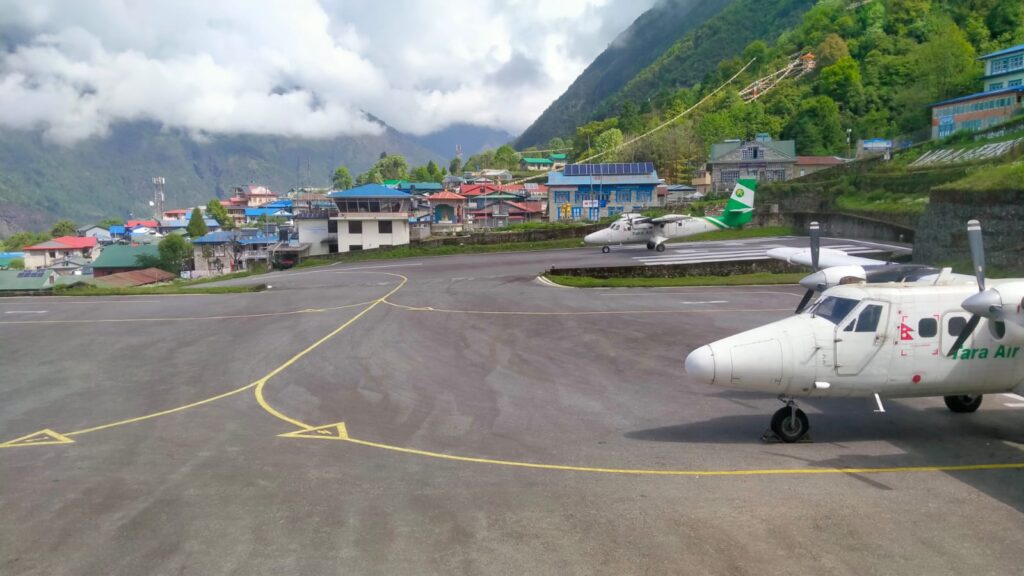
The Kathmandu to Lukla flight can sometimes be cancelled because of unpredictable Himalayan weather, low visibility, strong winds, heavy rain, technical issues, or airport operating conditions. Since Lukla Airport (Tenzing-Hillary Airport) is located in a high mountain area with a short runway, flight operations are more sensitive compared to normal domestic flights. A cancelled flight does not always mean your Everest trek is over; there are several alternative solutions available depending on your schedule, budget, and trekking plan.
1. Reschedule Your Flight (Most Common Option)
If your Kathmandu to Lukla flight is cancelled, the easiest and most common solution is to reschedule your flight for the next available date. Since Lukla flights are highly dependent on weather conditions, airlines usually allow passengers to move their ticket to another flight schedule instead of purchasing a completely new ticket.
When the cancellation happens due to reasons such as bad weather, poor visibility, strong winds, or airport conditions, the airline normally transfers your booking to the next available flight once operations resume. The new flight date and timing depend on weather improvement, aircraft availability, and available seats.
During the busy trekking seasons, especially spring and autumn, many trekkers may be waiting for the same route. Because of high demand, the next available flight can sometimes be full for several days. Therefore, it is important to contact the airline counter, ticket office, or your trekking agency as soon as possible to secure your new flight arrangement.
If you booked your Kathmandu to Lukla flight through a trekking company, they can often help manage the rescheduling process, communicate with the airline, and arrange alternative options if needed. They may also assist with hotel arrangements, transportation, or itinerary adjustments while you wait.
While waiting for your rescheduled flight, it is recommended to keep your trekking gear ready and stay updated with airline announcements. Avoid making rushed decisions during temporary weather problems because Lukla flights often restart once conditions become safe.
2. Wait for Weather Improvement
If your Kathmandu to Lukla flight is cancelled due to bad weather, the most common solution is to wait until the weather conditions become safe for flying. Since Lukla Airport is located in a mountainous area, flights are highly dependent on clear visibility, stable wind conditions, and suitable weather. Even a small change in cloud, fog, or wind can affect flight operations.
In many cases, a flight cancellation does not mean your trek is cancelled. Airlines usually monitor the weather closely and restart operations once conditions improve. Most trekkers simply stay an extra night in Kathmandu and take the next available morning flight to Lukla. Morning flights are preferred because the weather in the Himalayan region is usually more stable earlier in the day.
If your flight is postponed, contact your airline or trekking agency regularly for updates. During peak trekking seasons, many travelers may be waiting for the same flight, so confirming your seat on the next available schedule is important. Having a flexible attitude and staying updated can help reduce stress during unexpected delays.
Waiting for better weather is often the safest option because flying to Lukla requires strict safety standards. Trying to rush the journey during poor conditions can create unnecessary risks. Trekkers should remember that mountain weather can change quickly, and a flight cancelled today may operate normally the following day.
For this reason, it is highly recommended to keep 1–2 extra buffer days in your Everest trekking itinerary. Extra days provide flexibility if your Kathmandu to Lukla flight is delayed, and they help avoid problems with international flights after completing your trek. Proper planning ensures a safer and more enjoyable Everest Base Camp Trek experience.
3. Fly from Ramechhap (Manthali) Airport During Peak Season
During the peak trekking seasons in Nepal, especially spring (March–May) and autumn (September–November), many Kathmandu to Lukla flights are operated from Ramechhap (Manthali) Airport instead of Tribhuvan International Airport in Kathmandu. This change is mainly made to reduce heavy air traffic at Kathmandu Airport and to ensure smoother operations for flights heading toward the Everest region.
If your Lukla flight is moved to Ramechhap Airport, you will need to travel from Kathmandu to Manthali by road. The journey usually takes around 4–6 hours depending on traffic, road conditions, and weather. Most trekkers arrange a shared or private jeep** through their trekking agency, and transportation is usually scheduled during the early morning hours because Lukla flights operate mainly in the morning.
Flying from Ramechhap does not change the flight experience. The Ramechhap to Lukla flight is still a short mountain flight of around 15–20 minutes, offering incredible views of Himalayan landscapes before landing at Lukla Airport (Tenzing-Hillary Airport). Since Manthali is closer to the Everest region, it helps airlines operate more efficiently during busy trekking periods.
Trekkers should confirm their departure airport one day before the flight because schedules can change depending on airline operations, weather, and airport conditions. It is also recommended to keep your luggage prepared the night before and arrange transportation to Ramechhap in advance to avoid missing your flight.
If you are planning an Everest Base Camp Trek, Gokyo Trek, or Everest Three High Passes Trek, traveling via Ramechhap is now a common part of the journey during busy seasons. Although the road trip adds extra travel time, it helps reduce flight congestion and improves the chances of reaching Lukla on schedule.
4. Request a Refund (If You Do Not Want to Continue)
If your Kathmandu to Lukla flight is cancelled and you decide not to continue your trek, you can contact the airline or ticket provider to request a refund or ticket adjustment. This option is suitable for travelers who cannot wait for the next available flight or who need to change their travel plans because of unexpected delays.
The refund process depends on the airline’s cancellation rules, the type of ticket you purchased, and the reason for the flight cancellation. In many cases, when the airline cancels the flight due to bad weather or operational issues, passengers may receive options such as rescheduling the flight, transferring the ticket to another date, or requesting a refund. However, the final decision depends on the airline’s policy.
To apply for a refund, you usually need to provide your flight ticket details, passport information, and booking confirmation. If you booked your Lukla flight through a trekking agency, they can often help communicate with the airline and handle the cancellation procedure on your behalf.
It is important to understand that refunds may not always be immediate. The processing time can vary depending on the airline and payment method. Some airlines may deduct certain service fees or charges according to their terms and conditions, while others may provide a full refund for cancelled flights.
5. Take a Helicopter Flight to Lukla (Alternative Option)
If your Kathmandu to Lukla flight is cancelled or delayed and you have a fixed trekking schedule, taking a Kathmandu to Lukla helicopter flight is one of the fastest alternative options. Helicopters provide more flexibility compared to regular mountain flights and can sometimes operate when small fixed-wing aircraft cannot. This option is especially useful for trekkers who have limited vacation time and do not want to lose trekking days waiting for the weather to improve.
A Kathmandu to Lukla helicopter flight usually takes around 40–60 minutes, depending on weather conditions and air traffic. The helicopter journey is also a memorable Himalayan experience, offering spectacular views of mountain landscapes, deep valleys, glaciers, and Himalayan peaks along the route. Unlike regular Lukla flights, helicopters can adjust their route and altitude more easily, making them suitable for mountain environments.
The cost of a helicopter flight to Lukla is much higher than a regular flight. The price usually depends on the helicopter type, season, fuel cost, and whether you book a shared helicopter ride or a private charter. Shared helicopter flights are more affordable because the cost is divided among several passengers, while private helicopters are more expensive but provide greater flexibility.
However, a helicopter flight is still dependent on weather conditions. Heavy rain, strong winds, thick clouds, and poor visibility can also cause helicopter delays or cancellations. Although helicopters have more flexibility, they cannot fly in unsafe mountain conditions. It is important to confirm availability with the helicopter company or trekking agency before making arrangements.
The helicopter option is most suitable for trekkers doing popular routes such as the Everest Base Camp Trek, Gokyo Trek, or Everest Three High Passes Trek, where missing a few days can affect the entire itinerary. Many travelers choose this option when they have already booked accommodations, guides, permits, and international flight schedules.
Before choosing a helicopter, consider your budget, weather conditions, and trekking plan. For travelers who prioritize time and convenience, a Kathmandu to Lukla helicopter flight can be an excellent backup solution.
6. Change Your Trekking Plan
If your Kathmandu to Lukla flight is delayed or cancelled for several days, changing your trekking plan can be a practical solution, especially for travelers with limited time in Nepal. Since the Everest region depends heavily on Lukla flights and mountain weather, long delays may affect your planned itinerary. In such situations, you can adjust your trek duration, choose an alternative route, or modify your starting point based on available time and conditions.
If you lose one or two days due to flight cancellation, you may consider shortening your Everest Base Camp Trek itinerary. Instead of following the standard longer route, trekkers can choose a faster itinerary by reducing rest days or using helicopter services for certain sections. However, proper acclimatization is still important because the Everest region reaches high altitudes.
Another option is choosing a different trekking route that does not require a Lukla flight. Popular alternatives include the Annapurna Base Camp Trek, Annapurna Circuit Trek, Langtang Valley Trek, or Manaslu Circuit Trek, where you can reach the trailhead by road from Kathmandu. These treks offer beautiful Himalayan scenery, local culture, and mountain experiences without depending on Lukla flight schedules.
You can also modify your Everest trek by taking a Kathmandu to Surke or Salleri jeep route instead of flying to Lukla. This allows you to continue toward the Everest region by road, although it adds extra travel time. Many trekkers choose this option when flights are unavailable during busy trekking seasons or bad weather periods.
A reliable trekking agency can help reorganize your itinerary, arrange transportation, adjust accommodation bookings, and suggest the best alternative according to your remaining days. Being flexible is important when trekking in Nepal because mountain weather can change quickly.
7. Kathmandu to Surke by Jeep (If Lukla Flight Is Cancelled)
If your Kathmandu to Lukla flight is cancelled due to bad weather or other reasons, another alternative is traveling by jeep from Kathmandu to Surke. Surke is a village located near Lukla and is also used as an alternative starting point for many trekkers heading toward the Everest region. This option allows you to avoid flight uncertainty and continue your trek by road.
The Kathmandu to Surke jeep journey usually takes around 12–15 hours, depending on road conditions, traffic, and weather. The route passes through beautiful countryside landscapes, rivers, hills, and mountain settlements. Because the roads in eastern Nepal are mostly winding mountain roads, the journey can be long and tiring compared to the flight.
A private jeep from Kathmandu to Surke is usually the preferred option for trekkers who want more comfort and flexibility. The cost depends on the season, vehicle type, and number of passengers. Sharing a jeep with other trekkers can reduce the cost, while a private jeep provides more convenience and allows you to stop along the way.
After reaching Surke, you can begin trekking toward Phakding, Namche Bazaar, and Everest Base Camp without taking the Lukla flight. This route adds extra trekking time but gives you a chance to experience the local villages and landscapes of the lower Solukhumbu region.
However, before choosing the jeep option, consider that the road can be rough, especially during the rainy season. Landslides, traffic delays, and road maintenance can affect travel time. It is recommended to keep a flexible schedule and arrange transportation through a reliable trekking agency.
For trekkers with limited time, the Lukla flight remains the fastest option, but the Kathmandu to Surke jeep route is a useful backup when flights are cancelled or unavailable.
Tips: Never plan your international departure immediately after returning from an Everest trek. A buffer day after your Lukla return flight is strongly recommended because weather delays can happen in both directions.
Kathmandu to Lukla Flight FAQ
1. What is the Kathmandu to Lukla Flight and why is it important for the Everest Base Camp Trek?
The Kathmandu to Lukla flight is the primary air route used by trekkers heading to the Everest region. Since Lukla is the gateway to Everest Base Camp, this short mountain flight saves several days of travel and allows trekkers to begin their journey directly in the heart of the Himalayas.
2. How long does the Kathmandu to Lukla flight take?
The flight usually takes between 30 and 40 minutes, offering breathtaking views of snow-capped Himalayan peaks, deep valleys, and traditional mountain villages along the way.
3. What is the average Kathmandu to Lukla Flight Cost?
The Kathmandu to Lukla flight cost varies depending on the season, airline, and booking date. Prices are generally higher during the peak trekking seasons of spring and autumn. Booking early is recommended to secure seats and better fares.
4. Why are Lukla Flight Weather Delays so common?
Lukla Airport is located in a high-altitude mountain environment where weather can change rapidly. Low visibility, clouds, strong winds, and rain often cause Lukla flight weather delays or cancellations, especially during the monsoon and winter seasons.
5. What should I do in case of a Lukla Flight Cancellation?
If you experience a Lukla flight cancellation, you can reschedule your flight, wait for the next available departure, or choose a helicopter transfer. It is also wise to keep 1–2 buffer days in your itinerary to account for possible delays.
6. What makes Lukla Airport unique?
According to any Lukla Airport Guide, the airport is famous for its short uphill runway and dramatic mountain surroundings. Despite being considered one of the world’s most challenging airports, flights are operated by experienced pilots trained specifically for Himalayan conditions.
7. Is Tenzing Hillary Airport Information important for trekkers?
Yes. Understanding Tenzing Hillary Airport Information helps trekkers prepare for possible weather-related delays, baggage restrictions, and flight schedules. The airport is the main entry point to the Everest region.
8. Which airlines operate Kathmandu to Lukla flights?
Major domestic airlines operating this route include Tara Air, Summit Air, and Sita Air. Flight schedules may change depending on weather and seasonal demand.
9. Can I choose a Kathmandu to Lukla Helicopter Option instead of a flight?
Yes. The Kathmandu to Lukla helicopter option is available year-round and is often used when flights are cancelled. Helicopters offer greater flexibility but are significantly more expensive than regular flights.
10. What baggage allowance is allowed on Kathmandu to Lukla flights?
Most airlines permit around 15 kg of total baggage, including checked luggage and hand luggage. Additional baggage may be subject to extra charges and aircraft weight restrictions.
11. What is the best season to fly from Kathmandu to Lukla?
Spring (March–May) and autumn (September–November) are considered the best seasons because they offer clear skies, stable weather, and the lowest chance of flight disruptions.
12. How does Everest Trek Transportation begin from Lukla?
For most trekkers, Everest trek transportation starts with a flight to Lukla. From there, all travel is on foot through Sherpa villages, suspension bridges, and mountain trails leading toward Everest Base Camp and other destinations.
13. Can I book my Kathmandu to Lukla flight online?
Yes. Flights can be booked online through airlines, trekking agencies, and travel companies. During peak trekking seasons, advance booking is highly recommended.
14. Are Kathmandu to Lukla flights safe?
Yes. Although mountain flying requires special expertise, Nepal’s Lukla flights are operated by trained pilots following strict aviation safety standards. Flights only operate when weather conditions are suitable.
15. Why should I read a Lukla Flight Guide before my Everest trek?
A comprehensive Lukla Flight Guide helps travelers understand flight procedures, baggage rules, weather delays, airport facilities, helicopter alternatives, and essential travel tips. Proper preparation can make your Everest adventure smoother and more enjoyable.
16. Can I start the Everest Base Camp Trek directly from Lukla?
Yes. Most trekkers begin the Everest Base Camp Trek immediately after arriving in Lukla. The trail starts from Lukla and passes through Phakding, Namche Bazaar, Tengboche, Dingboche, Lobuche, and Gorakshep before reaching Everest Base Camp.
17. Can I go to Gokyo Lakes from Lukla?
Absolutely. Lukla is also the gateway to the beautiful Gokyo Lakes Trek. After reaching Namche Bazaar, trekkers can follow a separate trail through Dole, Machhermo, and Gokyo Valley to reach the stunning turquoise lakes and Gokyo Ri viewpoint.
18. Where can I see Mount Everest during the trek from Lukla?
The first clear views of Mount Everest are usually seen near Namche Bazaar and Hotel Everest View. Some of the best viewpoints include Namche Bazaar, Hotel Everest View, Tengboche, Kala Patthar, Gokyo Ri, and Renjo La Pass.
19. Can I book an Everest Base Camp Trek from Lukla?
Yes. If you arrive in Lukla without a trekking package, you can still hire guides, porters, and arrange accommodation locally. However, booking your Everest Base Camp Trek in advance is generally easier and provides better logistical support.
20. How many days does it take to reach Everest Base Camp from Lukla?
Most trekkers take 8 to 10 days to reach Everest Base Camp from Lukla, allowing sufficient time for acclimatization. The complete round-trip trek typically takes 12 to 14 days.
21. Can I do the Everest Base Camp Trek without a guide from Lukla?
Current trekking regulations may require trekkers to be accompanied by a licensed guide in many regions of Nepal. It is advisable to check the latest regulations and hire a professional guide for safety and local expertise.
22. What is the highest point reached after flying to Lukla?
For Everest Base Camp trekkers, the highest viewpoint is usually Kala Patthar (5,545m), which offers the best panoramic views of Mount Everest. Everest Base Camp itself sits at approximately 5,364 meters.
23. Can I combine Everest Base Camp and Gokyo Lakes after flying to Lukla?
Yes. Many trekkers choose the Everest Base Camp with Gokyo Lakes Trek, combining both destinations through the challenging Cho La Pass. This route offers some of the most spectacular scenery in the Everest region.
24. What is the first major town after Lukla?
Namche Bazaar is the first major settlement and trading hub after Lukla. It is the main acclimatization stop for trekkers and offers hotels, restaurants, bakeries, gear shops, banks, and mountain views.
25. Are there accommodations available immediately after landing in Lukla?
Yes. Lukla has numerous teahouses, lodges, cafes, and hotels. Many trekkers spend their first night in Phakding, but accommodation is also available in Lukla if needed.
26. Can I visit Hotel Everest View after arriving in Lukla?
Yes. Hotel Everest View is one of the most popular acclimatization hikes from Namche Bazaar. It provides one of the earliest and most accessible views of Mount Everest during the trek.
27. Can I do the Everest Three Passes Trek from Lukla?
Yes. The Everest Three Passes Trek begins from Lukla and includes crossing Kongma La, Cho La, and Renjo La passes. It is considered one of the most challenging and rewarding treks in the Everest region.
28. Is Lukla only for Everest Base Camp trekkers?
No. Besides Everest Base Camp, Lukla serves as the starting point for several popular routes including Gokyo Lakes Trek, Everest Panorama Trek, Three Passes Trek, Ama Dablam Base Camp Trek, and various climbing expeditions.
29. Can I hire a porter in Lukla?
Yes. Porters and trekking guides can be hired in Lukla, Namche Bazaar, and through trekking agencies. Hiring a porter can make the trek more comfortable and enjoyable, especially at higher altitudes.
30. What permits do I need after flying to Lukla?
Most trekkers need the Khumbu Pasang Lhamu Rural Municipality Permit and the Sagarmatha National Park Entry Permit. These permits can be obtained before or during the trek depending on your itinerary.
Ramchandra Lamichhane
Trekking Expert
No hidden fees • Local experts • Best price guarantee