
Gokyo Ri: Trek Route, Elevation, Difficulty and Cost
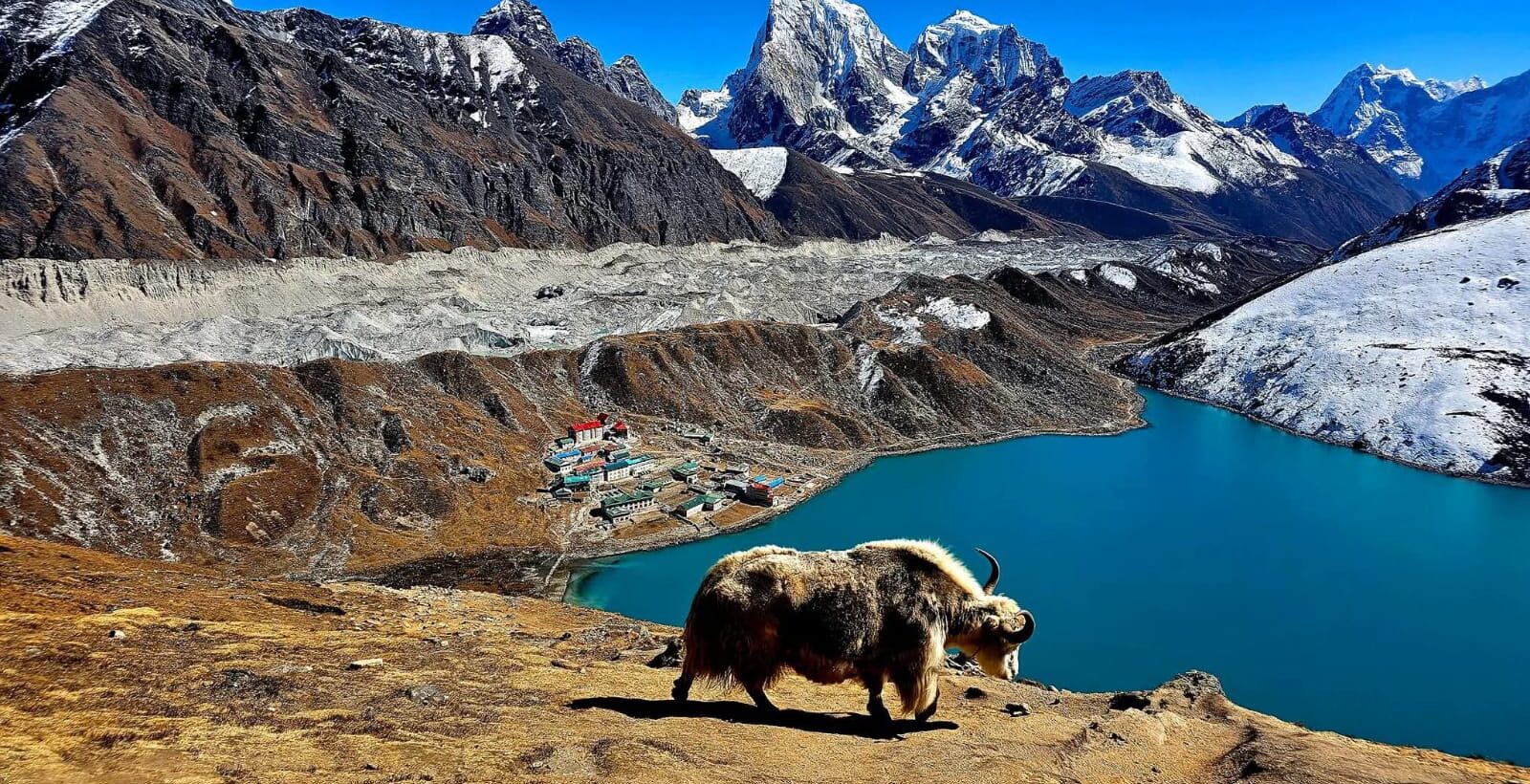
Gokyo Ri is one of the finest mountain viewpoints in the Everest region of Nepal. Rising above the beautiful Gokyo Valley, this high ridge offers an extraordinary panorama of some of the world’s highest mountains, including Mount Everest, Cho Oyu, Lhotse and Makalu. The viewpoint also overlooks the famous turquoise Gokyo Lakes and the surrounding glaciers, making the climb one of the most rewarding short adventures in the Khumbu.
Unlike the classic Everest Base Camp trek, the Gokyo Ri trek follows a quieter trail through the Dudh Koshi Valley before reaching the turquoise lakes of Gokyo. The final climb to Gokyo Ri is challenging because of the altitude, but it does not require technical mountaineering skills.
For trekkers who want spectacular Himalayan scenery without necessarily reaching Everest Base Camp, Gokyo Ri is an excellent choice. It can also be combined with Everest Base Camp through Cho La or with Renjo La to create a longer Everest Three High Passes adventure.
Where Is Gokyo Ri Located?
Gokyo Ri is located in the Gokyo Valley of the Khumbu region in northeastern Nepal, inside Sagarmatha National Park. The valley lies west of the main Everest Base Camp trail and is surrounded by dramatic Himalayan peaks, glaciers and high-altitude lakes. Nepal Tourism Board describes Gokyo as an alternative route in the Everest region, with the valley famous for its glacial lakes and spectacular mountain scenery.
The nearest major mountain settlement is Gokyo Village, situated beside the third Gokyo Lake. From the village, Gokyo Ri rises above the valley and can be climbed as a sunrise viewpoint.
The journey normally begins with a flight from Kathmandu to Lukla, followed by several days of trekking through Phakding, Namche Bazaar, Dole and Machherma before reaching Gokyo.
The area is not only famous for mountains. The Gokyo Valley is also culturally important to local Sherpa communities, while the lakes have religious significance for both Hindu and Buddhist pilgrims.
Gokyo Ri Height and Elevation
The official elevation of Gokyo Ri is 5,357 meters (17,575 feet) above sea level. Some trekking maps and travel materials may show slightly different figures, but 5,357 meters is the elevation published by the Nepal Tourism Board.
This altitude makes Gokyo Ri a genuine high-altitude trekking destination. The summit itself is not technically difficult, but the thin air makes the climb physically demanding.
Gokyo Village is already located at a high altitude, so spending an appropriate amount of time acclimatizing before climbing the viewpoint is important. A slow pace, proper hydration, sufficient sleep and careful attention to altitude symptoms can make a major difference.
The final climb usually takes around 2 to 3 hours, depending on fitness, weather, trail conditions and acclimatization.
Why Gokyo Ri Is a Popular Everest Region Viewpoint
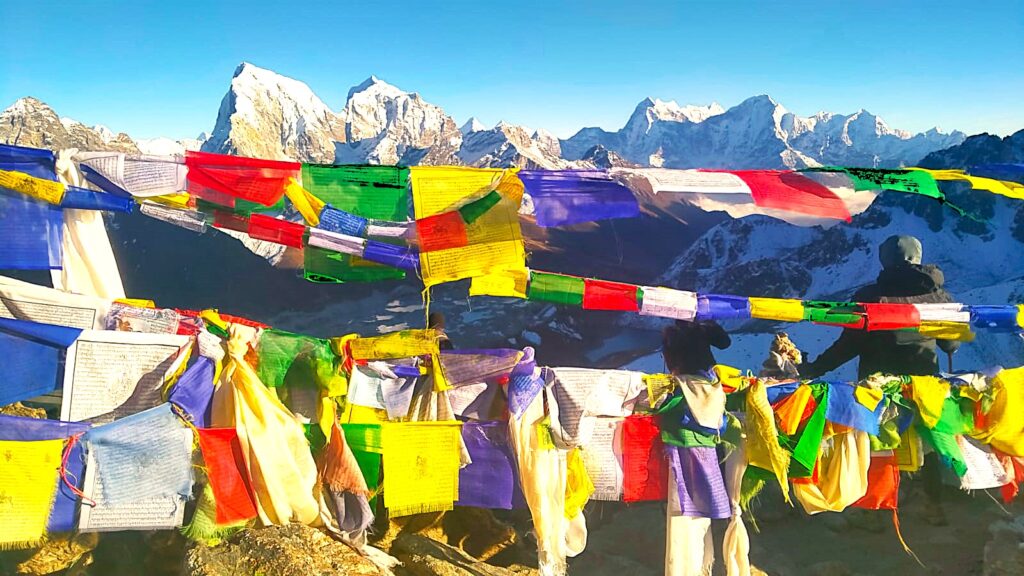
Gokyo Ri is popular because it combines several Himalayan attractions in one viewpoint.
From the summit, trekkers can see an impressive collection of peaks and landscapes. The panorama includes Cho Oyu to the north, Everest, Lhotse and Makalu, together with numerous surrounding peaks and glaciers. Nepal Tourism Board specifically highlights the broad mountain panorama available from Gokyo Ri.
Another major attraction is the view of the Gokyo Lakes below. The contrast between turquoise glacial water, rocky mountains, white snow and the high Himalayan sky creates one of the most memorable scenes in the Everest region.
Gokyo Ri is also attractive because the summit experience is relatively compact. Instead of requiring a technical climbing expedition, it is a strenuous trekking ascent that can be completed as part of a normal Gokyo Valley itinerary.
For photographers, sunrise is particularly special. Early morning light gradually reaches the surrounding peaks while the valley remains in shadow, creating dramatic contrasts across the Himalayan landscape.
Gokyo Ri Trek Route and Itinerary
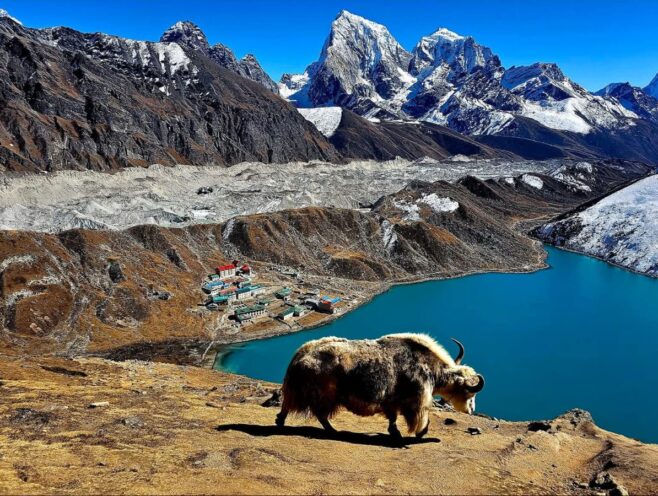
The standard Gokyo Ri trek follows the Everest-region trail from Lukla before turning toward the Gokyo Valley.
A typical itinerary can be arranged as follows:
Day 1: Kathmandu to Lukla and trek to Phakding
After the flight to Lukla, the trek begins along the Dudh Koshi River toward Phakding.
Day 2: Phakding to Namche Bazaar
The trail passes through pine and rhododendron forests, crosses suspension bridges and enters Sagarmatha National Park before climbing toward Namche Bazaar.
Day 3: Acclimatization in Namche Bazaar
This is an important rest and acclimatization day. Short hikes around Namche help the body adjust to increasing elevation.
Day 4: Namche Bazaar to Dole
The trail gradually leaves the main Everest Base Camp route and follows the Gokyo Valley direction. Mountain views become increasingly impressive.
Day 5: Dole to Machherma
The trail climbs through alpine terrain toward Machherma. The landscape becomes more open and rugged as the elevation increases.
Day 6: Machherma to Gokyo
This is one of the most scenic days. The route passes through the upper Dudh Koshi Valley and approaches the Ngozumpa Glacier before reaching the Gokyo Lakes and Gokyo Village. Nepal Tourism Board notes that the route reaches Gokyo via the terminal moraine of the Ngozumpa Glacier, described as Nepal’s largest glacier.
Day 7: Gokyo Ri sunrise climb and exploration
An early morning climb leads to Gokyo Ri. After returning to Gokyo, trekkers can explore the lakes and surrounding valley.
Day 8 onward: Return to Lukla
The return normally follows the same general valley route, although alternative routes through Phortse or other villages can be arranged.
A standard Gokyo Ri trip from Lukla generally takes around 10–12 days, depending on the itinerary and flight schedule. Trekkers who want a slower pace or additional acclimatization can make the trip longer.
The trek can also be extended by crossing Cho La to reach the Everest Base Camp side, or by crossing Renjo La toward Thame.
How Long Does It Take to Climb Gokyo Ri?
The climb from Gokyo Village to Gokyo Ri generally takes about 2–3 hours.
Most trekkers start very early, often before sunrise, to reach the viewpoint while the mountain peaks are illuminated by the first morning light.
The trail is steep in sections and consists largely of rocky terrain. At this elevation, even a moderate slope can feel demanding because there is considerably less oxygen than at sea level.
The descent usually takes around 1–2 hours, depending on trail conditions and individual pace.
The goal should not be to reach the top as quickly as possible. Maintaining a steady rhythm with short breaks is usually more comfortable and safer.
Gokyo Ri Trek Difficulty
The Gokyo Ri trek is generally considered moderate to challenging because of its length, steep sections and high altitude.
The most demanding part is the summit climb itself. There is no technical climbing involved under normal conditions, but the altitude makes the ascent significantly harder than an equivalent climb at lower elevation.
You should be prepared for:
- Long walking days
- Steep uphill sections
- Rocky and uneven trails
- Cold mornings at high altitude
- Thin air above 4,000 meters
- Possible snow or ice depending on season
- Rapid changes in mountain weather
- Limited facilities in remote sections
Good cardiovascular fitness is helpful, but previous mountaineering experience is not essential.
The most important preparation is often walking consistently and allowing enough time for acclimatization rather than simply training for speed.
What Can You See from Gokyo Ri?
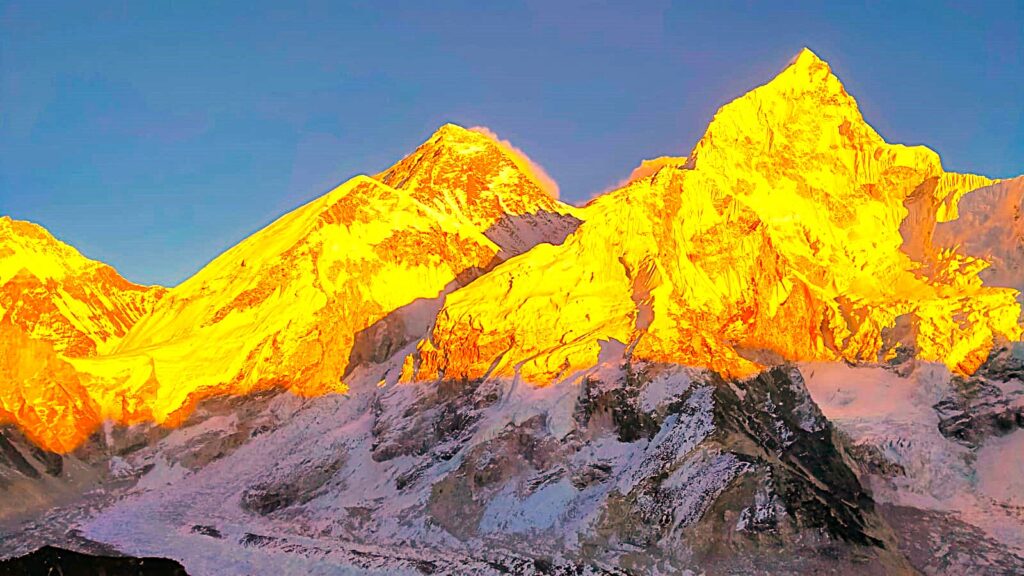
The mountain scenery is the main reason people climb Gokyo Ri.
On a clear day, the viewpoint provides views toward several major Himalayan peaks, including:
- Mount Everest
- Cho Oyu
- Lhotse
- Makalu
- Nuptse
- Cholatse
- Taboche
- Ama Dablam
- Numerous other peaks of the Khumbu Himalaya
Below the viewpoint are the spectacular Gokyo Lakes and the surrounding glacial landscape.
The view toward Cho Oyu is especially impressive, while the wider panorama stretches across several major Himalayan summits. Nepal Tourism Board describes the Gokyo Ri panorama as extending from Cho Oyu and Everest toward Lhotse and Makalu.
The Ngozumpa Glacier is another major feature of the landscape. Its immense glacial terrain gives the upper Gokyo Valley a distinctly wild and remote character.
Gokyo Ri Sunrise and the Best Time to Hike
Sunrise is generally the best time to climb Gokyo Ri.
Starting early allows trekkers to reach the viewpoint before or around sunrise. The exact departure time depends on the season and sunrise time, but it is common to begin around 4:00–5:00 AM.
The climb is cold and dark at first, so a headlamp, warm clothing and suitable footwear are important.
At sunrise, the first rays of light strike the surrounding peaks, gradually changing the color of the mountains from dark silhouettes to golden and bright snow-covered summits.
The early morning also tends to provide better visibility before clouds develop later in the day. However, mountain weather is unpredictable, so a clear sunrise can never be guaranteed.
If weather prevents a sunrise climb, Gokyo Ri can still be climbed later in the morning when conditions are safe.
Best Season for Gokyo Ri Trek
The best seasons for Gokyo Ri are generally spring and autumn.
Spring, from March to May, brings relatively stable trekking conditions, warmer days and blooming rhododendrons at lower elevations.
Autumn, particularly October and November, is widely considered one of the best periods for Himalayan trekking. The air is often clear after the monsoon, making mountain visibility excellent.
Winter, from December to February, can also offer beautiful clear skies, but temperatures are much lower and snow or ice can make the upper trail more difficult.
The monsoon months from June to September are less popular because rain, clouds and slippery trails can affect the lower sections, while flight schedules can also be affected by weather.
Nepal Tourism Board lists October-November and March-May among the principal seasons for the Everest region.
Altitude, Acclimatization and Safety
Altitude is the biggest consideration on a Gokyo Ri trek.
Because the route climbs above 5,000 meters, trekkers should never treat the trip as an ordinary hike. Proper acclimatization is essential.
A good itinerary includes an acclimatization day around Namche Bazaar and avoids gaining elevation too rapidly.
Common symptoms of mild altitude sickness can include:
- Headache
- Reduced appetite
- Tiredness
- Dizziness
- Difficulty sleeping
- Shortness of breath during exertion
More serious symptoms require immediate attention. If symptoms become severe or worsen despite rest, descending to a lower elevation is the safest response.
Drink enough water, walk slowly and avoid unnecessary alcohol. Your guide should monitor the group and help make decisions if someone becomes unwell.
Travel insurance covering high-altitude trekking and emergency evacuation is strongly recommended.
Weather should also be considered carefully. A qualified local guide can recognize changing trail and weather conditions and adjust the itinerary when necessary.
Food and Accommodation on the Gokyo Ri Trek
Accommodation on the Gokyo Ri route is primarily provided by teahouses and mountain lodges.
Rooms are generally simple, clean and practical. Twin-sharing rooms are common, while bathrooms may be shared, especially in higher settlements.
As altitude increases, accommodation becomes more basic and facilities can be limited.
Meals generally include familiar trekking dishes such as:
- Dal bhat
- Noodles
- Pasta
- Rice
- Soup
- Potatoes
- Eggs
- Bread
- Tibetan-style dishes
- Tea and hot drinks
Dal bhat remains a particularly practical trekking meal because it provides carbohydrates and protein and is widely available.
At higher elevations, food and supplies become more expensive because everything has to be transported along difficult mountain trails.
Electricity and charging facilities are available in many teahouses, although availability can vary. Internet and mobile connectivity can also be inconsistent, so trekkers should not expect continuous high-speed service throughout the trek.
Gokyo Ri vs Kala Patthar: Which Has Better Mountain Views?
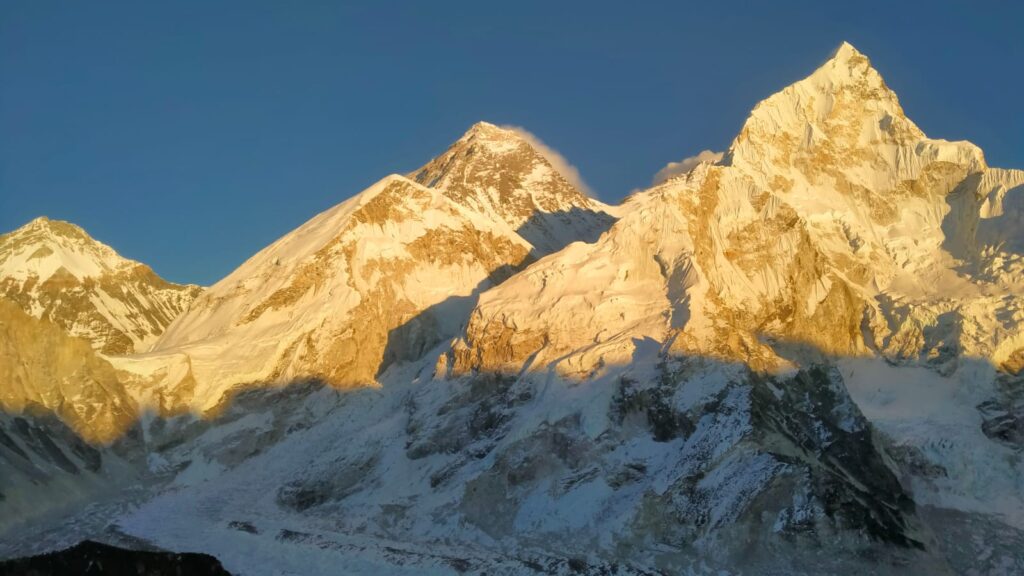
Gokyo Ri and Kala Patthar are two of the most famous viewpoints in the Everest region, but they offer different experiences.
Gokyo Ri is particularly attractive for its combination of mountains, glaciers and turquoise lakes. The panorama includes Cho Oyu, Everest, Lhotse and Makalu, while the Gokyo Lakes lie directly below.
Kala Patthar is famous for its close and dramatic view of Mount Everest, together with Pumori, Nuptse and the surrounding peaks.
If your priority is a broad Himalayan panorama with Gokyo Lakes and Cho Oyu, Gokyo Ri is an outstanding choice.
If your main goal is a close classic view of Mount Everest, Kala Patthar has a major advantage.
There is no universal winner. For trekkers with enough time and fitness, doing both is one of the best ways to experience the Everest region.
Gokyo Ri Trek Permits and Cost
The Gokyo Ri trek takes place inside Sagarmatha National Park, so trekkers need the required park entry authorization. The Nepal Tourism Board currently lists the Sagarmatha National Park entry fee for foreign visitors at NPR 3,000 per person, with separate rates for SAARC nationals and Nepali citizens.
The route also falls within Khumbu Pasang Lhamu Rural Municipality, where the applicable local entry fee is required.
Permit and fee requirements can change, so it is sensible to confirm the current regulations before departure. A trekking agency can arrange the required formalities on your behalf.
The total Gokyo Ri trek cost depends on:
- Number of trekking days
- Lukla flight cost
- Accommodation category
- Food
- Guide and porter services
- Permits and local fees
- Insurance
- Personal expenses
- Hot showers and charging
- Wi-Fi and other optional services
A guided package is usually easier because transportation, permits, accommodation arrangements and staff logistics can be organized together.
What to Pack for Gokyo Ri
Packing properly is especially important because the summit is above 5,000 meters.
Essential items include:
- Waterproof trekking boots
- Warm down jacket
- Fleece or insulating layers
- Waterproof jacket and trousers
- Thermal base layers
- Warm hat and gloves
- Sunglasses with good UV protection
- Sunscreen and lip balm
- Headlamp with spare batteries
- Trekking poles
- Water bottles or hydration system
- Water purification tablets or filter
- Personal medicines
- Basic first-aid supplies
- Sleeping bag suitable for cold temperatures
- Power bank
- Camera or phone
- Small daypack
- Passport and required documents
Avoid carrying unnecessary weight. A professional porter can carry the main luggage while you walk with a lighter daypack.
Gokyo Ri Trek with Create Himalaya Adventure
Create Himalaya Adventure provides organized trekking services in the Everest region with experienced local guides and porters who understand the terrain, altitude and local communities.
For a Gokyo Ri trek, an experienced guide can make a major difference. The guide helps with navigation, pacing, acclimatization, teahouse arrangements and communication with local communities. More importantly, an experienced high-altitude guide can recognize signs of altitude-related problems and recommend appropriate action when conditions require it.
Create Himalaya Adventure can also arrange experienced porters to carry the main luggage, allowing trekkers to concentrate on walking and enjoying the scenery.
The company can customize the Gokyo Ri itinerary according to your available time, fitness level and trekking interests. The trek can be designed as a dedicated Gokyo Valley journey or combined with Everest Base Camp, Cho La or Renjo La for a longer Himalayan adventure.
A well-organized trip should include appropriate permits, accommodation, meals, transportation arrangements, an experienced trekking team and support throughout the journey.
For first-time trekkers in the Everest region, local experience is particularly valuable. The trail may look straightforward on a map, but altitude, weather, flight delays and changing mountain conditions can influence the actual journey.
Frequently Asked Questions About Gokyo Ri
1. Is Gokyo Ri suitable for first-time trekkers?
Yes, Gokyo Ri can be completed by first-time high-altitude trekkers who have reasonable fitness and follow a properly paced itinerary. Previous trekking experience is helpful but not essential. The main challenge is altitude rather than technical climbing.
2. Do you need climbing experience to reach Gokyo Ri?
No. Gokyo Ri is a trekking viewpoint rather than a technical mountain climb. The ascent involves steep and rocky sections, but normally does not require ropes, crampons, or specialized mountaineering skills.
3. What is the starting point of the Gokyo Ri trek?
Most trekkers begin the journey in Lukla after flying from Kathmandu. From Lukla, the trail passes through Phakding and Namche Bazaar before continuing toward the Gokyo Valley.
4. How early should I start the Gokyo Ri hike?
For sunrise, trekkers generally leave Gokyo Village very early, often around 4:00–5:00 AM depending on the season and expected sunrise time. Your guide can choose the departure time according to weather, trail conditions, and your walking pace.
5. Can children or older travelers trek to Gokyo Ri?
Age alone does not determine whether someone can complete the trek. Fitness, previous experience, acclimatization and general health are more important. Families and older trekkers should use a slower itinerary and seek appropriate professional advice before undertaking a high-altitude trek.
6. Is there snow on the Gokyo Ri trail?
Snow conditions vary according to the season and weather. Winter and periods following snowfall can leave snow or ice on higher sections, while spring and autumn often provide more favorable trail conditions. Conditions can change quickly at high altitude.
7. Can I see Mount Everest clearly from Gokyo Ri?
Yes. Mount Everest is visible from Gokyo Ri on clear days, along with several other major Himalayan peaks. However, cloud cover and changing mountain weather can sometimes obscure the mountains.
8. Are Gokyo Lakes visible from the summit?
Yes. The Gokyo Lakes are one of the most distinctive features visible from Gokyo Ri. The high viewpoint provides an impressive perspective over the turquoise glacial lakes and the surrounding valley.
9. Is mobile phone network available during the Gokyo Ri trek?
Mobile connectivity is available in parts of the route, but coverage is not continuous. Signal strength can vary considerably between villages and higher sections. It is better to inform family or friends that communication may occasionally be unavailable.
10. Can I charge my phone and camera batteries on the trek?
Charging is available at many teahouses, particularly in villages, but electricity can be limited or may involve an additional charge. Carrying a power bank is strongly recommended, especially if you plan to take many photographs.
11. Is Wi-Fi available on the Gokyo Ri route?
Wi-Fi is available at some teahouses and lodges, but the connection can be slow or unreliable at higher elevations. Trekkers should consider internet access a convenience rather than something guaranteed throughout the journey.
12. How much water should I drink while trekking to Gokyo Ri?
There is no single amount suitable for everyone, but regular hydration is important at high altitude. Drink throughout the day rather than waiting until you become thirsty. Your guide can also advise you based on weather, exertion and altitude.
13. What happens if the weather is bad on the morning of the Gokyo Ri climb?
If strong wind, heavy snow, poor visibility, or other unsafe conditions occur, your guide may recommend postponing the climb. Safety should take priority over reaching the viewpoint at a particular time. A later attempt may provide better conditions.
14. Can Gokyo Ri be combined with Everest Base Camp?
Yes. Gokyo Ri can be combined with Everest Base Camp through the Cho La Pass, creating a longer and more challenging journey. Another option is to combine Gokyo Valley with Renjo La and other high passes for an extended Everest-region adventure.
15. Is a guide and porter necessary for the Gokyo Ri trek?
While the exact requirements can depend on current regulations, having an experienced local guide and porter is highly beneficial. A guide assists with navigation, acclimatization, accommodation and unexpected situations, while a porter carries the main luggage so trekkers can walk more comfortably.
Ramchandra Lamichhane
Trekking Expert
No hidden fees • Local experts • Best price guarantee