
Everest Three High Passes Trek – 16 Days
When it comes to trekking from beginner-friendly trails to expert-level expeditions. Nepal’s mighty mountains and dramatic landscapes offer unforgettable experiences for everyone, from short scenic walks to strenuous journeys across […]
Highlights
- The ultimate Everest Circuit covering the longest and most challenging high-altitude trek in the Everest region, ideal for experienced trekkers.
- 16-Day Epic Journey that combines the classic Everest Base Camp (5,364 m) trail with the stunning Gokyo Valley.
- Includes three high passes challenge i:e Cross Kongma La (5,535 m), Cho La (5,420 m), and Renjo La (5,360 m).
- Spectacular Mountain Views – Each pass offers dramatic perspectives of Everest and surrounding giants.
- Iconic Landmarks throughout the trek and visit Everest Base Camp, Kala Patthar(5,550 m), Gokyo Ri (5,420 m), and the turquoise Gokyo Lakes.
- Physically Demanding Trek around 5–7 hours of daily hiking on steep, rocky, and icy terrain
- Strong Fitness Required – Excellent conditioning and proper acclimatization are essential
- Specialized Gear Needed – Microspikes for icy crossings and a high-quality cold-rated sleeping bag are mandatory
- Best Seasons Only – Recommended in spring (March–May) and autumn (September–November) for safety and views
- Life-Changing Experience – Deep Sherpa culture immersion, rare Himalayan nature, and the pride of completing a world-class alpine adventure
Overview
When it comes to trekking from beginner-friendly trails to expert-level expeditions. Nepal’s mighty mountains and dramatic landscapes offer unforgettable experiences for everyone, from short scenic walks to strenuous journeys across rugged terrain.
Trekking at high altitude requires careful preparation, but a well-planned trip with reliable information will help you enjoy the adventure smoothly and safely. For many, a journey to the Everest region feels incomplete without experiencing the Everest Three Passes Trek, the longest and most challenging route in the Khumbu region.
This trek involves five to seven hours of hiking per day across rocky, often steep terrain, so a good level of fitness and proper acclimatization are essential. In return, you’ll be rewarded with breathtaking mountain scenery, rich Sherpa culture, unique Himalayan flora and fauna, and natural beauty that will leave you in awe.
The Everest Three Passes Trek is the ultimate high-altitude challenge in the Khumbu, designed for experienced and well-prepared trekkers. This strenuous 16 day circuit crosses three major passes—Kongma La (5,535m), Cho La (5,420m), and Renjo La (5,360m) linking Everest Base Camp with the breathtaking Gokyo Valley. Success requires excellent fitness, careful acclimatization, and essential gear including microspikes for icy pass crossings and a heavy-duty sleeping bag. With proper planning during the spring (March–May) or autumn (September–November) seasons, trekkers are rewarded with iconic views from Kala Patthar and Gokyo Ri, immersion in Sherpa culture, and the profound satisfaction of completing one of the world’s most epic alpine himalaya.
Major Attractions of the Everest Three High Passes Trek
The Everest Three High Passes Trek in Nepal is one of the most adventurous high-altitude trekking routes in the Himalayas. It connects the Khumbu Valley, Gokyo Valley, and Everest Base Camp region through three legendary passes Kongma La, Cho La, and Renjo La. Along the journey, trekkers experience some of the best Everest viewpoints, Himalayan panoramas, glaciers, and turquoise lakes in the world.
Namche Bazaar Viewpoints 3,500m (Everest Glimpse Point)
Namche Bazaar viewpoints are the first major Everest panorama stop on the trek. From the ridge above Namche, trekkers get their first clear glimpse of Mount Everest, Lhotse, and Ama Dablam. This area is also an important acclimatization stop and offers stunning sunrise views over the Khumbu Valley.
Everest View Hotel 3,880m (Syangboche)
The Everest View Hotel in Syangboche is one of the earliest high viewpoints where trekkers can enjoy luxury-style Himalayan scenery. From here, you can see a wide panorama of Everest, Ama Dablam, Thamserku, and surrounding peaks, making it one of the best photography spots near Namche Bazaar.
Tengboche Monastery (3,956m)
The Tengboche Monastery ridge viewpoint is famous for its spiritual atmosphere and dramatic mountain backdrop. The monastery is surrounded by towering peaks like Ama Dablam, Everest, and Lhotse, offering one of the most iconic Himalayan landscapes in the Everest region trek.
Nagarjuna Hill (5,050m) (Acclimatization Viewpoint)
Nagarjuna Hill near Dingboche is a challenging acclimatization hike that rewards trekkers with panoramic views of Makalu, Lhotse, Ama Dablam, and Island Peak. It is one of the best short hikes for altitude adjustment before crossing high passes like Kongma La.
Chhukung Ri (5,546m)
Chhukung Ri is one of the best high-altitude viewpoints in the Everest region. From the summit, trekkers enjoy close-up views of the Lhotse South Face, Ama Dablam, Island Peak, and surrounding glaciers, making it a perfect preparation hike for Kongma La Pass.
Kongma La Pass (5,535m)
The Kongma La Pass is the highest and most remote of the three passes. It offers a wild Himalayan landscape with views of Nuptse, Lhotse, Makalu, and icy glacier valleys. This pass is physically demanding but rewards trekkers with untouched alpine scenery.
Everest Base Camp (EBC 5,364m)
Everest Base Camp is the world-famous base camp of Mount Everest expeditions. It offers a dramatic view of the Khumbu Icefall and Everest climbing route, giving trekkers a chance to stand at the foot of the world’s highest mountain.
Kala Patthar (5,545m)
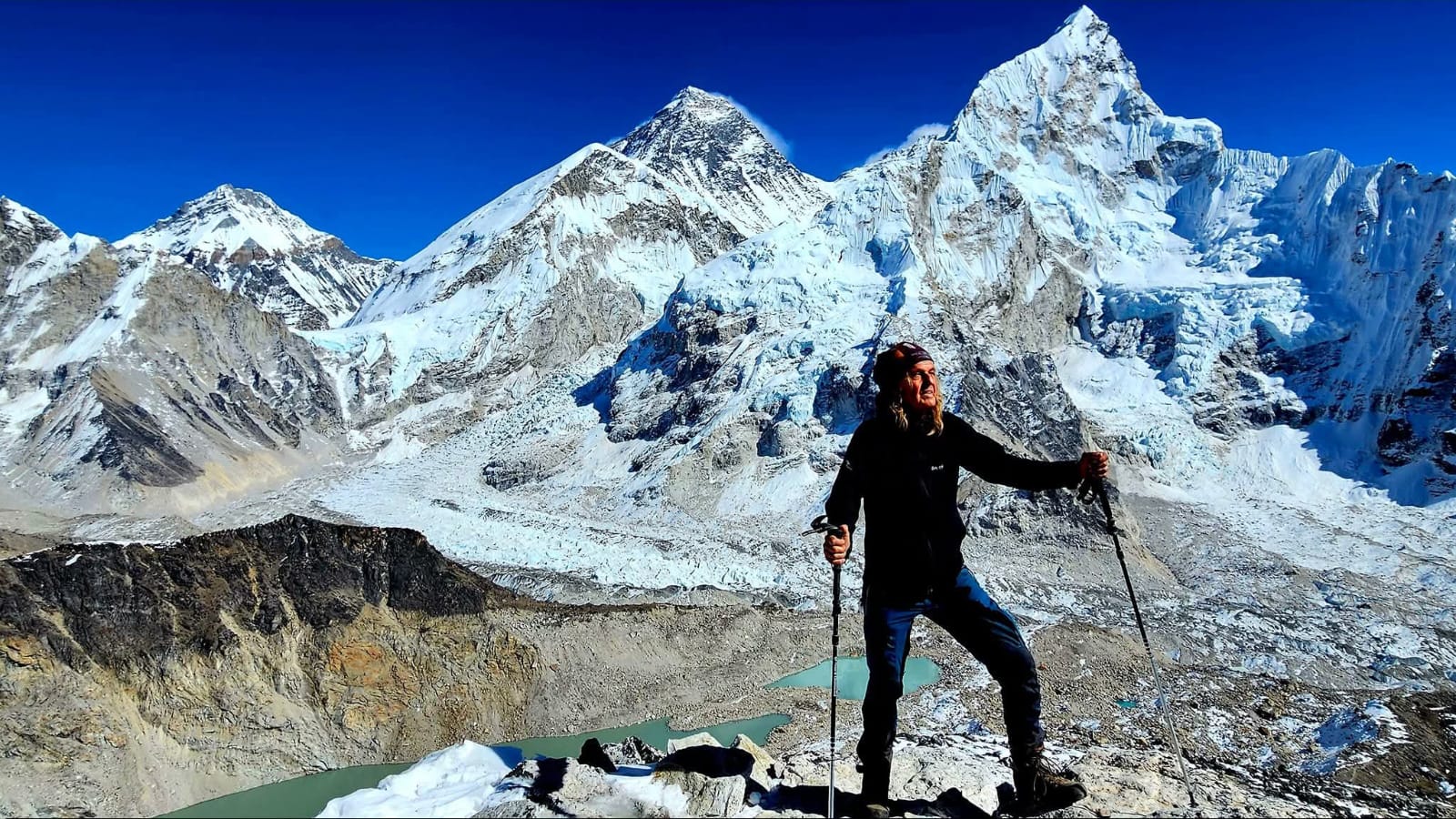
Kala Patthar is the most famous Everest viewpoint. It provides the closest and clearest view of Mount Everest’s summit, along with panoramic views of Nuptse, Pumori, and surrounding peaks, especially during sunrise and sunset.
Dzongla Viewpoint (5,100m)
The Dzongla viewpoint (below Cho La Pass) offers a peaceful Himalayan valley view with dramatic scenery of Cholatse, Ama Dablam, and surrounding snowy peaks. It is a quiet and scenic stop before crossing the icy Cho La Pass.
Cho La Pass (5,420m)
The Cho La Pass connects the Everest Base Camp route with the Gokyo Valley. This glacier pass offers dramatic views of ice walls, frozen lakes, and surrounding Himalayan peaks, making it one of the most adventurous crossings in the trek.
Gokyo Lakes (5,000m)
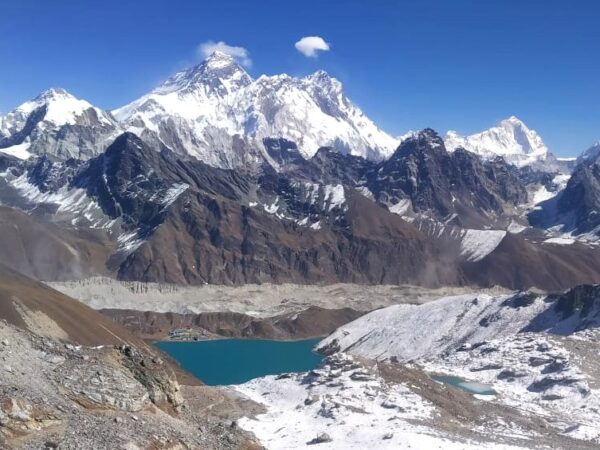
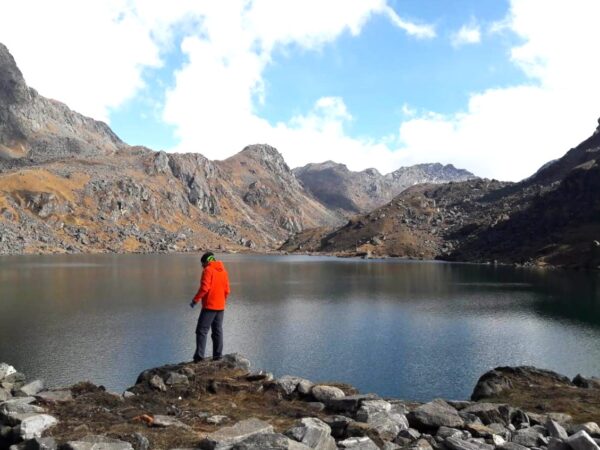
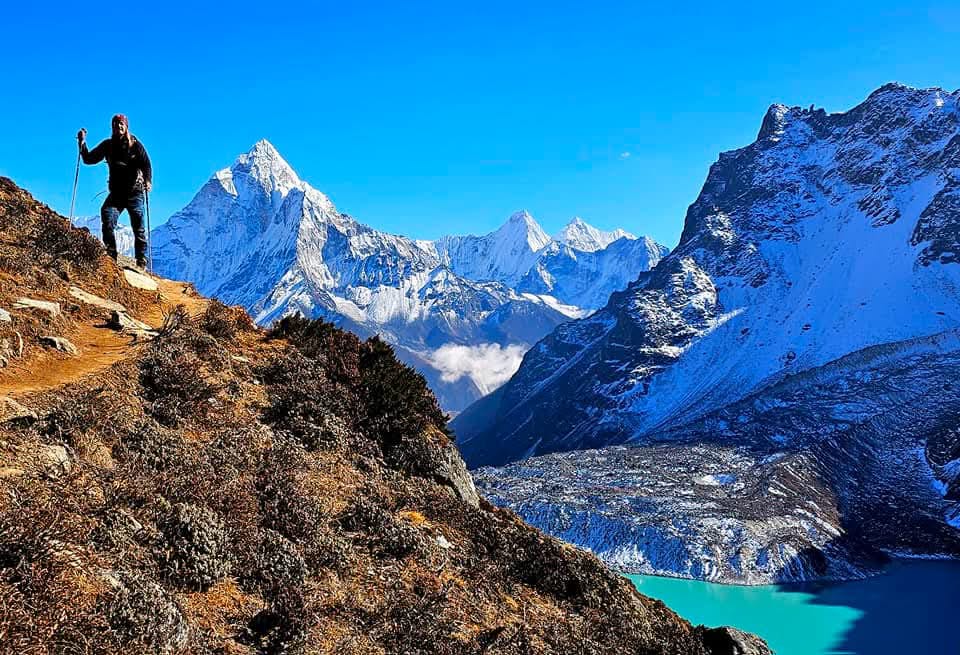
The Gokyo Lakes are a series of stunning turquoise glacial lakes located in the Gokyo Valley. Surrounded by snow-covered peaks, they are considered some of the most beautiful high-altitude lakes in Nepal and the Himalayas, attracting trekkers and photographers worldwide.
Gokyo Ri (5,357m)
Gokyo Ri is one of the best panoramic viewpoints in the Everest region. From the summit, trekkers can see Everest, Lhotse, Makalu, and Cho Oyu together, offering one of the most complete Himalayan mountain views in Nepal.
Fifth Lake (Gokyo Fifth Lake 5100m)
The Fifth Lake viewpoint is a less crowded extension of the Gokyo Lakes area. It offers a peaceful environment with crystal-clear reflections of Everest and Cho Oyu, making it a hidden gem for photographers and nature lovers.
Renjo La Pass (5,360m)
The Renjo La Pass is considered one of the most beautiful passes in the Everest Three High Passes Trek. From the top, trekkers enjoy a breathtaking panorama of Everest, Cho Oyu, Gokyo Lakes, and the entire Khumbu Himalayan range.
Thame Valley (3,800m)
The Thame Valley descent viewpoint offers a cultural and scenic ending to the trek. Known for its traditional Sherpa villages and monasteries, Thame provides peaceful Himalayan landscapes with views of surrounding peaks and glaciers.
Conclusion
The Everest Three High Passes Trek viewpoints offer a perfect combination of Everest Base Camp scenery, high mountain passes, glacial lakes, and Sherpa culture. From Namche Bazaar to Renjo La Pass, every viewpoint delivers a unique Himalayan experience, making it one of the best trekking routes in Nepal for adventure and photography.
Trip Route
The Everest Three High Passes Trek is a challenging and adventurous circular trekking route in the Everest (Khumbu) region of Nepal that connects Everest Base Camp, Gokyo Valley, and three major high Himalayan passes. The journey typically starts with a flight from Kathmandu to Lukla, followed by trekking through Phakding to Namche Bazaar, the main trading hub and acclimatization stop of the region. From Namche, the trail continues toward Tengboche, Dingboche, and Chhukung, gradually gaining altitude as trekkers enter the high alpine zone.
The first major challenge is crossing Kongma La Pass (5,535 m) from Chhukung to Lobuche, which is the most remote and physically demanding of the three passes. From Lobuche, trekkers usually make an excursion to Everest Base Camp (5,364 m) and hike to Kala Patthar, one of the best viewpoints of Mount Everest. After this, the route moves toward Dzongla and crosses the second pass, Cho La Pass (5,420 m), a steep and often icy crossing that leads into the beautiful Gokyo Valley, famous for its turquoise lakes and the viewpoint of Gokyo Ri.
The final high pass, Renjo La (5,360 m), offers one of the most scenic panoramas of the entire trek as it connects Gokyo Valley back toward Thame and Namche Bazaar. From there, the trail retraces the descent through Namche and Phakding before returning to Lukla for the flight back to Kathmandu. Overall, the Everest Three High Passes Trek is considered one of the most rewarding and demanding trekking routes in Nepal, offering dramatic landscapes, high-altitude adventure, glaciers, and close-up views of some of the world’s highest peaks.
Difficulty
The Everest Three High Passes Trek is considered one of the most challenging trekking routes in Nepal, suitable only for well-prepared and experienced trekkers. The difficulty mainly comes from crossing three high Himalayan passes—Kongma La (5,535 m), Cho La (5,420 m), and Renjo La (5,360 m)—where trekkers face steep ascents, rocky trails, glacier crossings, snow, and unpredictable weather conditions. The long trekking days, usually 6–8 hours of walking on rugged terrain, combined with high altitude above 5,000 meters, make acclimatization and physical fitness extremely important. Although technical climbing skills are not required, strong endurance, mental determination, and proper preparation are essential to complete the trek safely. Overall, it is graded as a strenuous or very challenging trek, recommended for those with prior high-altitude trekking experience in the Himalayas.
Why choose Everest three high passes Trek
Choose the Everest Three High Passes Trek with Create Himalaya Adventure for an unforgettable Himalayan journey filled with adventure, safety, and authentic local experiences. This challenging trek crosses Kongma La, Cho La, and Renjo La passes while showcasing stunning views of Mount Everest, Ama Dablam, and other legendary Himalayan peaks. Create Himalaya Adventure provides experienced guides, personalized service, proper acclimatization plans, and carefully designed itineraries for a safe and enjoyable trekking experience. Trekkers can explore traditional Sherpa villages, ancient monasteries, glacial lakes, and remote valleys while enjoying professional support throughout one of the best high-altitude trekking adventures in Nepal.
Trip Itinerary
Kathmandu or Manthali/Ramechap to Lukla (Flight) and Trek to Phakding
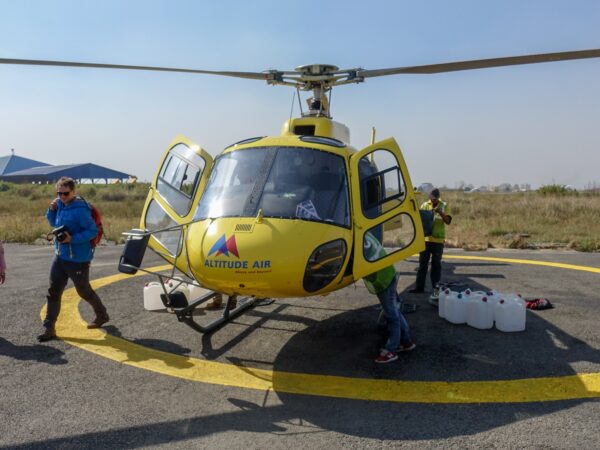
Flights to Lukla operate differently depending on the season. During peak trekking seasons, most Lukla flights are operated from Manthali Airport, while during non-peak seasons, flights operate directly from Kathmandu.
Manthali to Lukla Flights (March, April, May, September, October, and November):
During these peak months, flights to Lukla depart from Manthali Airport, which is approximately a 5–6 hour drive from Kathmandu. To catch the flight, we leave Kathmandu between 1:00 AM and 3:00 AM by shared jeep and travel to Manthali Airport. From Manthali, a scenic 20-minute flight takes you to Lukla.
Kathmandu to Lukla Flights (January, February, June, July, August, and December):
During the non-peak seasons, flights operate directly from the domestic terminal of Tribhuvan International Airport in Kathmandu. These flights usually depart early in the morning, typically between 6:00 AM and 7:00 AM.
After a scenic flight to Lukla, we arrive at Lukla Airport. Our porter-guide will be there to welcome you and assist with trek preparations. Before starting the walk, we take a short snack break in Lukla and then begin our trek toward Phakding. En route, we witness breathtaking mountain scenery, traditional Sherpa villages, prayer wheels, and fluttering prayer flags along the banks of the Dudh Koshi River.
Note: Flight schedules and updates are subject to change. For the most up-to-date information regarding Lukla flights, please consult one of our representatives.
Trek from Phakding to Namche Bazaar
After breakfast, we begin our trek along the serene Dudh Koshi River, crossing several suspension bridges as we head toward Namche Bazaar. The trail passes through small settlements, including Toktok, Benkar, Chomua, and Monjo.
After Monjo, we enter Sagarmatha National Park for permit verification and continue to Jorsalle (2,740 m / 8,989 ft), a peaceful riverside stop and an ideal place for lunch, marking the halfway point to Namche. Following lunch, we cross two more suspension bridges and gradually ascend to the iconic Hillary Suspension Bridge. A steep climb then leads to Top Danda, where we enjoy the first breathtaking view of Mount Everest. From here, Namche Bazaar is about an hour away.
The trail is lined with mani stones, prayer wheels, chortens, and colorful prayer flags, reflecting the spiritual heritage of the Khumbu region, with scenic views of Kusum Kanguru, Thamserku, Nuptse, Taboche, and Mount Everest. After 5–6 hours of trekking, we arrive at the vibrant Sherpa town of Namche Bazaar—an ideal place for rest, acclimatization, and cultural immersion.
Acclimatization Day in Namche Bazaar
Proper acclimatization is essential to prevent altitude sickness while trekking at higher elevations. To adapt safely, we spend an acclimatization day in Namche Bazaar (3,440 m / 11,286 ft), the vibrant trading hub of the Everest region known for its modern amenities and warm Sherpa hospitality.
After breakfast, we take a short acclimatization hike to Hotel Everest View (3,880 m / 12,730 ft), one of the highest hotels in the world. This scenic viewpoint offers breathtaking panoramic views of Mount Everest, Lhotse, Nuptse, Ama Dablam, Thamserku, Khumbila, and surrounding Himalayan peaks.
The afternoon is free to explore Namche Bazaar, where you can visit the Everest Museum, browse local shops, enjoy cafés, or immerse yourself in the rich culture and lifestyle of the Sherpa community.
Trek from Namche to Tengboche
After breakfast, we continue our trek toward Tengboche. The trail ascends out of Namche Bazaar before leveling into a gradual climb through lush forests and past several stupas, including one built in memory of Tenzing Norgay Sherpa.
We pass through settlements such as Kenjoma, Sanasa, and Leushyasa, enjoying scenic mountain views before stopping for lunch at Phunke Tenga after 2–3 hours of trekking. From here, we cross a suspension bridge at the confluence of the Dudh Koshi River and Imja Khola and complete permit verification at the Sagarmatha National Park army post.
A steady 2–3 hour uphill climb then leads us to Tengboche (3,860 m), one of the finest viewpoints along the Everest Base Camp trek. Home to the revered Tengboche Monastery, the area offers panoramic views of Mount Everest, Lhotse, Nuptse, Ama Dablam, and Thamserku.
Arriving by mid-afternoon, we have time to visit the monastery and attend the evening Buddhist chanting ceremony, a peaceful and culturally enriching experience reflecting the deep spiritual traditions of the Khumbu region.
Trek from Tengboche to Dingboche
From Tengboche, we enjoy breathtaking Himalayan views before descending through alpine forests to Debuche and crossing the Imja River via a suspension bridge. The trail then reveals magnificent, ever-changing vistas of Mount Ama Dablam (6,812 m), often referred to as the Queen of the Himalayas. Passing through Sherpa villages such as Pangboche and Somare, we stop for lunch before continuing through Orsho and Kalapani. A gentle final ascent brings us to Dingboche, our overnight stop and key acclimatization point on the Everest Base Camp trek.
Acclimatization Day in Dingboche
Dingboche (4,410m) is a crucial acclimatization stop on the Everest Base Camp Trek, enabling trekkers to adjust to altitude and minimize the risk of altitude sickness. This peaceful Sherpa village offers a chilly alpine climate, cozy teahouses, small shops, and stunning Himalayan scenery—ideal for rest and recovery. Today, we take an acclimatization hike to Nangkartshang Peak (5,083m), one of the most popular viewpoints on the EBC trail. The gradual ascent rewards us with breathtaking 360-degree views of Everest, Lhotse, Makalu, Ama Dablam, Nuptse, and other surrounding peaks. After breakfast, we begin the short hike, returning to Dingboche by afternoon to relax and recharge. Carry water, snacks, sun protection, and a camera to capture the spectacular mountain vistas.
Trek from Dingboche to Chhukung and Hike to Chhukung Ri
Today’s journey unfolds as a series of gentle climbs and descents, leading us deeper into the Imja Valley. After breakfast in Dingboche, we set out at a relaxed pace, with our destination, Chhukung, serving as both our lunch stop and home for the night. The trail pass through past traditional stone-walled farms and follows the aside of the Imja Khola River. We’ll pass through Bibre, a seasonal settlement for yak herders, offering a glimpse into high-altitude pastoral life.
This shorter trekking day, lasting 4-5 hours, is intentionally paced for acclimatization, allowing you to absorb the solitude of the mountains, beautiful landscape. Arriving in Chhukung by early afternoon, we’ll enjoy a hearty lunch and explore around the chhukung village and we start our short hike towards Chhukung Ri, a moderate trekking with the rocky ridge of the mountain, takes around 2/4 hours ascend and 2 hours descend. Offer great views of southern wall of Lhotse (8,516m), Ama Dablam (6,812), and Imja Lake. Later at the end of the day settle in and surrounded by the towering walls of the valley.
Trek from Chhukung to Lobuche via Khongma la pass
Today is a defining and demanding day on our Three Passes journey, blending physical challenge with deep reflection. The trail begins with a steep climb out of the valley, ascending past Dugla to Chukpo Lari, a solemn ridge adorned with memorials to Everest climbers. This memorable locations offers a moment of reflection in the middle of a stunning panorama of peaks along the Nepal-Tibet border.
The core of our day is the traverse of Kongma La Pass (5,535 meters / 18,159 feet), the first and highest of the three passes. This high-altitude crossing is demanding, a test made possible by our careful acclimatization. As we navigate the rocky terrain, you will observe the surrounding giants, Lobuche, Mera, and the immense south face of Nuptse.
Reaching the summit that was decorated by prayer flags, reflecting a monumental achievement, rewarded with vast and wild himalayan views that few ever witness. While long and strenuous, this day becomes a memorable adventure, bringing together the rich mountain heritage and the joy of completing the journey.
Trek from Lobuche to Gorakshep and hike to Everest Base Camp and back to Gorakshep.
Today marks the ultimate milestone of your Everest adventure as you journey to the legendary Everest Base Camp. The trek covers approximately 15 km (9.3 miles) over 7–8 hours, reaching a maximum elevation of 5,364 m (17,598 ft) before descending to Gorakshep (5,164 m / 16,942 ft) for the night. Every step across the rugged glacial landscape brings you closer to the foot of the world's highest mountain, making this one of the most memorable days of the entire expedition.
After breakfast in Lobuche, begin a gradual ascent through the rugged alpine landscape toward Gorakshep, the final outpost before Everest Base Camp. Following a short rest, continue along the edge of the Khumbu Glacier, where towering peaks, dramatic ice formations, and the ever-changing glacial terrain create one of the most spectacular sections of the trek.
Arriving at Everest Base Camp is an unforgettable achievement. Standing beneath the world's highest mountain, you'll witness the immense Khumbu Icefall and, during the spring climbing season, the colorful tents of international mountaineering expeditions. Surrounded by the grandeur of the Himalayas, this iconic destination offers a truly rewarding sense of accomplishment. After enjoying the incredible scenery and capturing memorable photographs, retrace your steps to Gorakshep, where a warm meal and a well-deserved rest await before tomorrow's ascent to Kala Patthar.
Morning hike to Kalapathar and Trek down to Dzongla.
Rising at Kala Patthar (5,550 m), this iconic viewpoint offers the highest vantage point of the Everest Base Camp Trek. An early morning hike rewards you with breathtaking close-up views of Mount Everest, Lhotse, Nuptse, and Pumori as the first sunlight light up the Himalayan giants. After soaking in the spectacular panorama, we descend to Gorak Shep for breakfast and head our journey towards dzongla.
Trek from Dzongla to Thangnak Via Cho La Pass
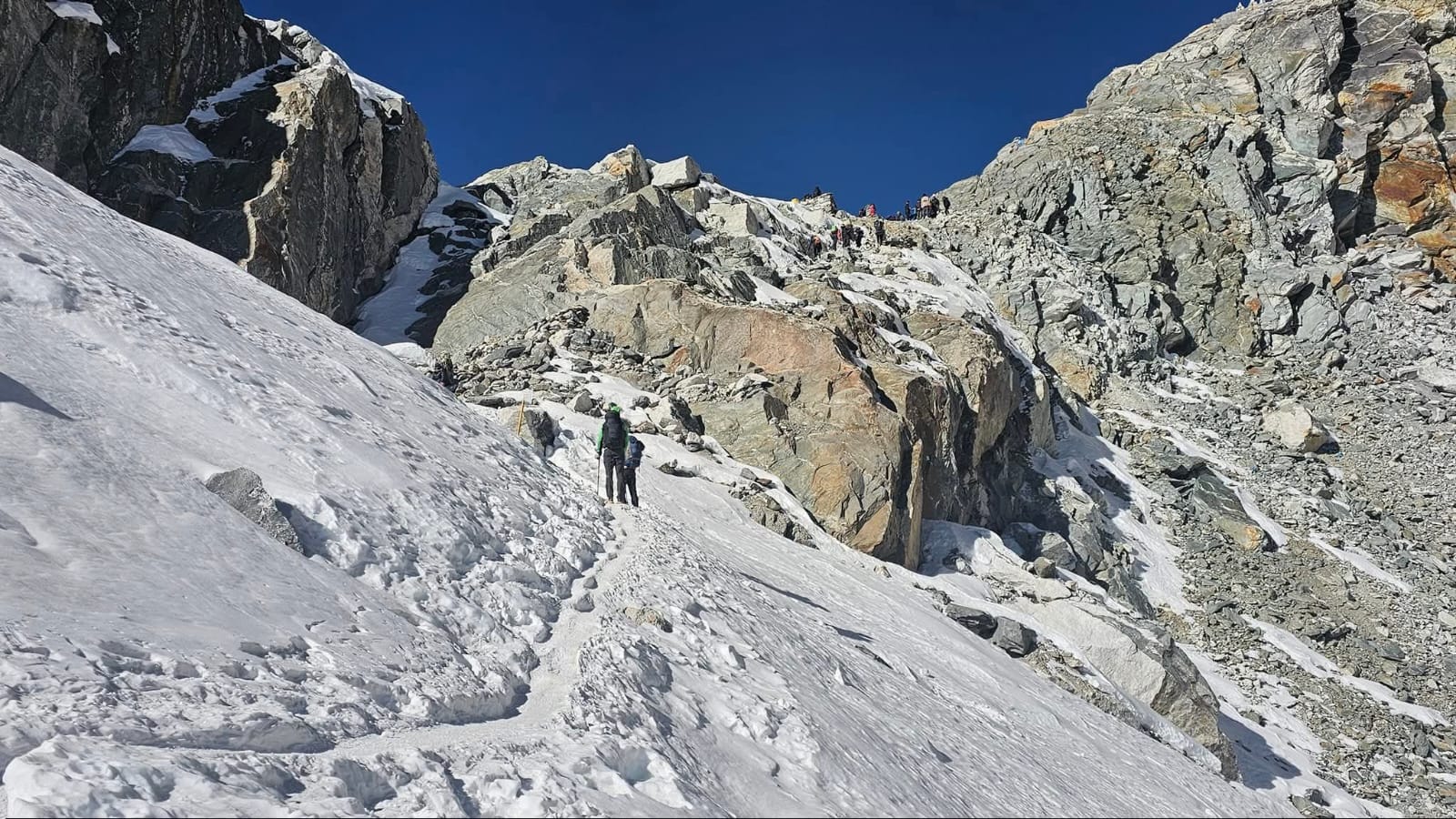
We start the day before sunrise for one of the most memorable experiences of the trek, crossing the Cho La Pass (5,420m). The walk begins gently, with stunning early-morning views of Ama Dablam and surrounding glaciers. As we climb higher, the trail becomes steeper and more challenging, requiring slow and careful steps over rocky terrain.
Near the glacier, proper preparation is essential. This is where crampons rented in Kathmandu help us cross the icy section safely and confidently. Along the way, a beautiful turquoise glacial lake shines below, adding to the magic of the moment.
With a final effort, we reach the top of the pass, marked by fluttering prayer flags and dramatic views of snow, ice, and rugged peaks. Take time to rest, enjoy the views, and celebrate this achievement. We then descend to the village of Thagnak where we will end our trek for the day.
Trek from Thangnak to Gokyo and hike to Gokyo Ri
Today, we leave Thangnak and walk alongside the massive Nagjumpa Glacier. The path climbs gently for a few hours before we arrive at the beautiful Gokyo village, where we’ll stop for lunch beside its famous turquoise lake.But the real adventure comes in the afternoon. We’ll climb Gokyo Ri (5,357m), a steady 2.5 to 3-hour hike to one of the best viewpoints in the Everest region.
From the top, you’ll see an incredible panorama: snowy peaks like Everest and Cho Oyu above you, and the shimmering Gokyo Lakes and glaciers spread out below. If the weather is clear, the sunset from here is absolutely unforgettable. We’ll then descend back to Gokyo to spend the night, tired but rewarded by one of the most stunning views of the entire trek.
Trek from Gokyo lakes to Marulung via Renjo La Pass
Today we cross the final high pass of the Everest Three high Passes trek. After a hearty breakfast, we begin our steady climb toward Renjo La Pass (5,360 m). The ascent is rewarded with a breathtaking panoramic view of Everest, Lhotse, and the turquoise Gokyo Lakes below, framed by endless glaciers, beautiful landscapes.
After embracing the moment, we begin our descent on rocky trails down into the Bhote Koshi Valley, reaching the small settlement of Marulung by late afternoon. We’ll rest here for the night in a cozy lodge, reflecting on the achievement of completing all three legendary passes.
Trek from Marlung to Namche Bazaar
After completing three pass at Marulung, we start descending toward Namche Bazaar, enjoying familiar trails from a new perspective. The lower altitude makes breathing easier and walking more comfortable. Along the way, we pass the villages of Pangboche and Tengboche, famous for their monasteries and stunning mountain views. The trail winds through forests, crosses suspension bridges, and offers glimpses of the surrounding peaks. Arriving in Namche Bazaar, the bustling heart of the Khumbu region, we are welcomed by lively markets, cozy cafés, and warm lodges. This is a perfect place to rest, recharge, and celebrate the trek while experiencing Sherpa culture and meeting fellow trekkers.
Trek from Namche to Lukla
Today is the second-last day of our Everest Base Camp trek as we walk back to Lukla. After breakfast, we follow the familiar trail, crossing the Hillary Suspension Bridge and passing through small villages along the way. Reaching Lukla feels special, it’s a chance to slow down, enjoy a warm meal, and celebrate the journey. Spend the evening relaxing, sharing stories with fellow trekkers, and soaking in the lively mountain atmosphere before the adventure comes to an end.
Lukla to Kathmandu or Manthali/Ramechap Airport and drive back to Kathmandu.
During peak trekking seasons (March, April, May, September, October, and November), flights from Lukla are often diverted to Manthali Airport instead of Kathmandu due to heavy traffic. The flight duration is approximately 20 minutes, followed by a 5–6 hour drive to Kathmandu by shared jeep. Please note that travel time may vary depending on road conditions, weather, and traffic. Early departures are common, and delays can occur, so flexibility in travel plans is recommended.
During the monsoon and winter months (January, February, June, July, August, and December), flights from Lukla usually operate directly to Kathmandu. The flight takes around 35 minutes, followed by a 30-minute drive to your hotel if you are staying in the city. Flight routes can change due to weather or air traffic conditions, so it’s best to check the current flight status before booking and allow some flexibility in your travel plans.
After a leisurely breakfast, you will prepare for your journey back to Kathmandu (or via Manthali, if required). Upon arrival, a private transfer will take you to your hotel, where you can relax and rejuvenate in comfort after your remarkable Himalayan adventure with Create Himalaya.
Not Satisfied with This Itinerary?
Every traveler is different. Customize this trip with the help of our local travel specialists and create an itinerary that perfectly matches your interests, schedule, and budget.
What's included
- Airport Transfers: International Airport pick-up and drop-off service.
- Trekking Permits: The required paperwork and trekking permit are required for Sagarmatha National Park.
- Domestic Airfare: Ktm - Lukla - Ktm, Ramechhap - Lukla - Ramechhap Airfare.
- Transportations: Ktm - Ramechhap - Ktm Transportations.
- Local Permits: Local Government permits of khumbu Pasang Lhamu Rural Municipality.
- Trekking Equipment: We provide sleeping bags, down Jackets, and Duffle bag if needed.
- Souvenirs: Create Himalaya Adventure T-Shirt as a souvenir.
- Meals: Three meals a day (breakfast, lunch, dinner) during the trek.
- Accommodation: Twin-bed sharing with a shared toilet during the trek.
- Guide Expenses: All costs for an English-speaking, government-licensed guide.
- Guide Insurance: Insurance coverage for guides.
- Trekking Map: Everest Region Trip Map for the group.
- First Aid Kit: Medical kit available during the trip.
- Taxes and Fees: Tourist service charge, VAT, government tax, and official expenses.
What's not included
- International Expenses: International airfare, visa, and travel insurance.
- Kathmandu Meals: Breakfast, Lunch and Dinner at Kathmandu.
- Accommodation in Kathmandu: Accommodation in Kathmandu or on the trek for any reason (Early arrival or delay, early arrival from trek due to any reason).
- Porter Service: Porter to carry your luggage during the trek (if you would like to take a porter, it will cost you USD 30 for each day trip, which you could add from our add-on option).
- Gratuities: Tips for Guide and Porter (expected from trekkers involved in Everest Base Camp Trek without Lukla Flight).
Map
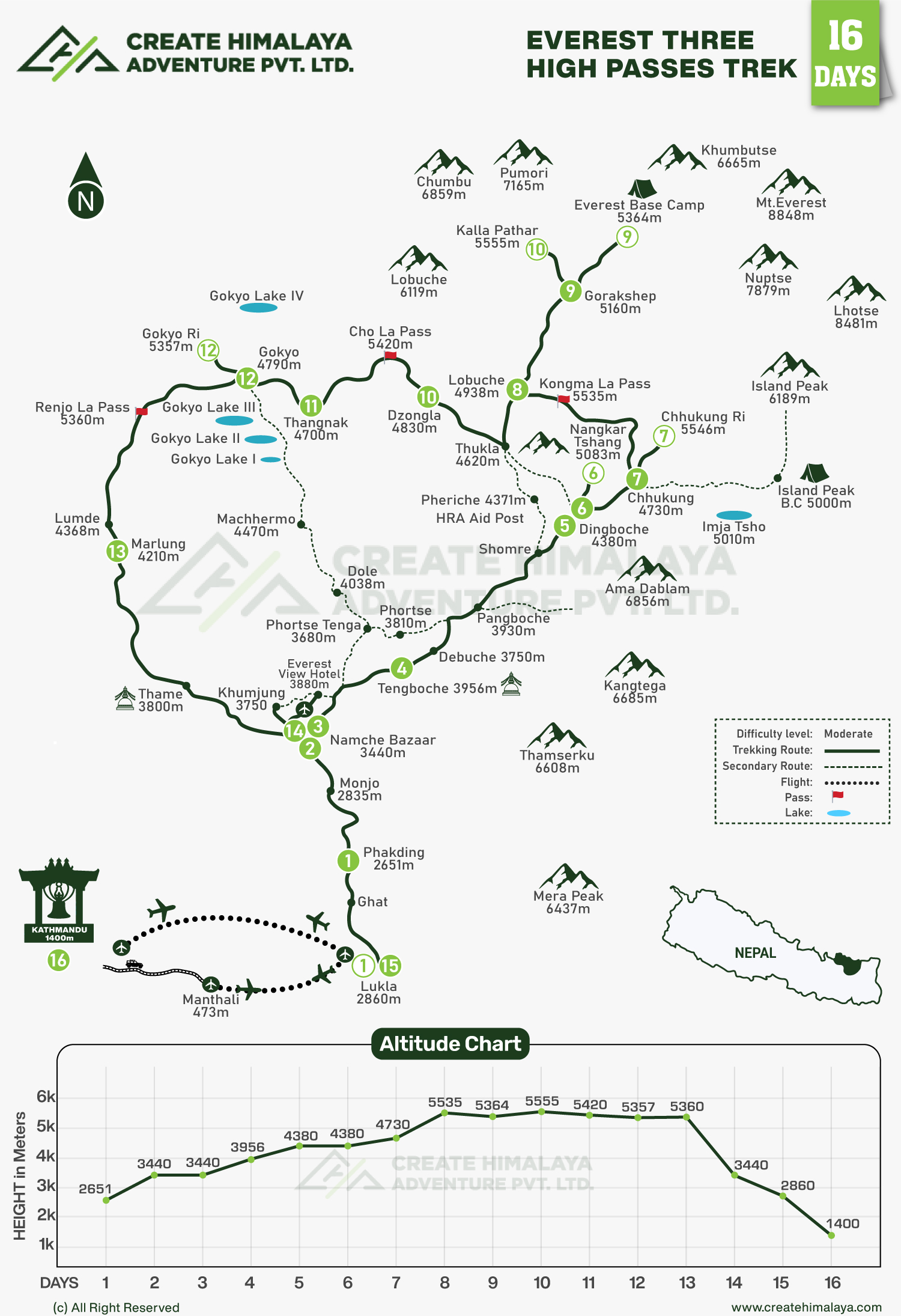
Best Time for Everest Three High Passes Trek
The best time for the Everest Three High Passes Trek is during the spring (March–May) and autumn (September–November) seasons when the weather is stable, skies are clear, and high passes like Kongma La, Cho La, and Renjo La are safest to cross. These two seasons offer the best mountain visibility, comfortable trekking conditions, and a reliable window for completing the full circuit of the Everest region.
Spring Season (March to May)
Spring is one of the most beautiful and popular seasons for the Everest Three High Passes Trek. During this time, the weather becomes warmer, the skies are mostly clear, and the trails come alive with blooming rhododendrons and green hills. Trekkers can enjoy excellent views of Mount Everest, Lhotse, Ama Dablam, and Cho Oyu, along with comfortable daytime trekking conditions. However, this is also a busy season, so popular areas like Namche Bazaar, Everest Base Camp, and Gokyo Valley may feel slightly crowded.
Autumn Season (September to November)
Autumn is widely considered the best overall season for the Everest Three High Passes Trek. After the monsoon, the air becomes clean and crystal clear, offering the sharpest Himalayan views. The weather is stable, temperatures are moderate, and trails are dry, making high passes much safer to cross. This season provides the best visibility of Everest, Gokyo Lakes, and surrounding peaks, making it ideal for photography and long-distance mountain views.
Winter Season (December to February)
Winter in the Everest region is extremely cold, especially above 4,000 meters, and heavy snowfall can make high passes like Cho La and Kongma La difficult or even closed. Although the skies are often very clear with stunning mountain views, trekking conditions can be harsh and challenging. This season is best suited only for experienced trekkers with proper cold-weather gear and flexible plans, as some routes may become blocked due to snow.
Monsoon Season (June to August)
Monsoon is generally the least recommended time for the Everest Three High Passes Trek due to heavy rainfall, slippery trails, poor visibility, and frequent Lukla flight delays. Lower regions are affected by landslides and leeches, making trekking more difficult. However, areas like Gokyo Valley and Thame Valley lie in a partial rain shadow, so they receive less rainfall and remain relatively accessible. Still, overall conditions are not ideal for crossing high passes safely.
Final Recommendation
For the Everest Three High Passes Trek, the best seasons are:
- Spring (March–May) – Beautiful landscapes & stable weather
- Autumn (September–November) – Best visibility & safest conditions
These two seasons offer the perfect balance of clear mountain views, safe pass crossings, and enjoyable trekking weather in the Everest region of Nepal.
Trek Permit
For the Everest Three High Passes Trek, trekkers need two main permits because the entire route lies within the Everest (Khumbu) region of Nepal. The first is the Sagarmatha National Park Entry Permit, which is required to enter the UNESCO-listed national park that covers Everest Base Camp, Gokyo Valley, and all three high passes. It can be obtained in Kathmandu at the Nepal Tourism Board office or at the Monjo entrance checkpoint along the trail. The second is the Khumbu Pasang Lhamu Rural Municipality Permit, issued by the local government to support regional development, and it is available in Lukla or at Monjo.
Together, these two permits are mandatory for completing the Everest Three High Passes Trek, and no additional permits are required for crossing Kongma La, Cho La, or Renjo La passes.
Food and Accomodations
The Everest Three High Passes Trek offers a mix of simple yet comfortable food and accommodation in teahouses along the route, which are run by local Sherpa families. In lower villages like Lukla, Phakding, and Namche Bazaar, trekkers can find more variety in meals, cozy rooms, and better facilities, including hot showers, bakeries, and Wi-Fi services. As the trek ascends higher into places like Dingboche, Lobuche, Gokyo, and the high pass regions, accommodation becomes more basic with twin-sharing rooms, shared bathrooms, and limited heating, as facilities are harder to maintain at extreme altitude.
Food along the trail is mostly fresh, locally prepared, and designed to provide energy for long trekking days. The most common meal is Dal Bhat (rice, lentil soup, and vegetables), along with noodles, pasta, potatoes, soups, and Tibetan bread. In higher regions, the menu becomes more limited due to transportation challenges, but meals remain filling and high in carbohydrates. Overall, while luxury is not available on this trek, the teahouse system provides warm hospitality, nutritious food, and essential comfort needed to complete this demanding high-altitude adventure.
Travel insurance
For the Everest Three High Passes Trek, travel insurance is essential because it is a high-altitude, remote, and physically demanding journey that includes crossing passes above 5,300 meters and trekking in areas with limited medical facilities. A suitable insurance policy should specifically cover high-altitude trekking (above 5,500 m), as well as emergency helicopter evacuation, which is often the only way to reach medical help in case of serious altitude sickness, injury, or accidents. It should also include coverage for trip cancellation, delays, medical treatment, and loss of baggage or trekking equipment.
Since the trek passes through remote regions of the Khumbu, where road access is not available, helicopter evacuation coverage is particularly important and can be very costly without insurance. Trekkers are strongly advised to carefully check policy limits and ensure Nepal trekking at extreme altitude is included before arriving. Having proper insurance provides safety, peace of mind, and financial protection throughout the Everest Three High Passes adventure.
Equipment for Everest Three High Passes Trek
The Everest Three High Passes Trek is a high-altitude and physically demanding Himalayan adventure that crosses three major passes above 5,300 meters. Because of the extreme weather, glacier crossings, and long trekking days, having the right equipment is essential for safety, comfort, and successful completion of the journey. Proper layered clothing, sturdy footwear, and essential cold-weather gear will help trekkers handle changing conditions in the Everest region.
Essential Equipment List
- Warm down jacket (high-quality, cold-rated)
- Thermal base layers (top & bottom)
- Fleece jacket or insulating mid-layer
- Waterproof and windproof jacket
- Waterproof trekking pants
- Trekking pants (quick-dry recommended)
- Warm gloves + inner liner gloves
- Warm wool hat / beanie
- UV-protection sunglasses (very important for snow glare)
- Buff / neck gaiter for wind and dust protection
- Sturdy trekking boots (well broken-in)
- Trekking poles for stability on steep and icy trails
- Comfortable trekking backpack (30–50L daypack)
- Large duffel bag (for porters, if used)
- Sleeping bag rated for extreme cold (-15°C to -25°C)
- Headlamp with extra batteries
- Reusable water bottles or hydration bladder
- Water purification tablets or filter
- Personal toiletries (toothbrush, wipes, etc.)
- Basic first aid kit (bandages, blister care, painkillers)
- Essential personal medications (including altitude sickness meds like Diamox if advised by a doctor)
- Sunscreen (SPF 50+ recommended)
- Lip balm with UV protection
Wi-Fi and Connectivity
Wi-Fi and mobile connectivity are available along parts of the Everest Three High Passes Trek, but the quality becomes less reliable as you travel deeper into the high mountains. In larger villages such as Namche Bazaar, internet access is generally easier to find, and many lodges and cafés provide Wi-Fi for trekkers. As the route moves toward remote areas around Renjo La, Cho La, and Kongma La, connectivity becomes increasingly limited because of the rugged terrain, high altitude, and lack of permanent communication infrastructure. Some teahouses in higher settlements may offer paid Wi-Fi through local systems, but speeds can be slow and service may stop completely during bad weather or technical problems.
Mobile network coverage also varies considerably along the route. A local Nepal SIM card can be useful around lower sections of the trek, particularly where cellular towers provide coverage, but you should not expect a continuous signal throughout the Three High Passes circuit. In isolated valleys and near the passes, your phone may show no network at all. Internet service can also depend on electricity, so charging your phone, camera, or other devices should be planned carefully. Many lodges charge an additional fee for charging electronic devices, especially at higher elevations.
For trekkers who need dependable communication, carrying a power bank or portable solar charger is recommended. If you need to remain reachable for work, emergencies, or family communication, discuss satellite communication options with your trekking company before departure. It is also wise to download offline maps, important documents, accommodation information, and entertainment before leaving Kathmandu. Rather than expecting constant internet access, consider the limited connectivity part of the experience: the Everest Three High Passes Trek takes you through some of the most remote landscapes in the Khumbu, where disconnecting from everyday digital life can become one of the most memorable parts of the journey.
Preparation and Fitness
Preparing for the Everest Three High Passes Trek requires more than simply being able to walk long distances. The route crosses Kongma La (5,535 m), Cho La (5,420 m), and Renjo La (5,360 m), with steep ascents, rocky sections, uneven trails, glacier terrain, and long trekking days. A good level of cardiovascular fitness, leg strength, balance, and endurance will make the journey much more manageable. Ideally, begin your preparation at least 8–12 weeks before departure, gradually increasing the duration and intensity of your training rather than trying to build fitness at the last minute.
Long-distance walking and uphill training should form the foundation of your preparation. Try to include regular hikes on hills or stairs, gradually working toward several hours of continuous walking while carrying a daypack of around 5–8 kg. Combine hiking with activities such as brisk walking, cycling, jogging, stair climbing, or swimming to improve cardiovascular endurance. Strength exercises for the thighs, calves, glutes, and core are also valuable because repeated steep climbs and descents place considerable stress on the legs. Squats, lunges, step-ups, calf raises, and core exercises can be included two or three times a week.
Altitude preparation is equally important because physical fitness does not prevent altitude sickness. The trek reaches well above 5,000 meters, where the amount of available oxygen is significantly lower than at sea level. A properly designed itinerary should allow enough time for gradual acclimatization and rest, particularly before crossing each high pass. Walk at a steady pace, avoid rushing, drink sufficient fluids, eat regular nutritious meals, and pay attention to symptoms such as headache, nausea, dizziness, unusual weakness, or shortness of breath. If symptoms become serious or worsen, inform your guide immediately and follow their advice about stopping or descending.
Mental preparation also matters. Weather can change quickly in the high mountains, and some days may involve long hours on difficult terrain. You should be prepared for cold temperatures, basic teahouse facilities, limited connectivity, and changes to the itinerary caused by mountain conditions. Practicing with your trekking boots, backpack, poles, layered clothing, and other equipment before arriving in Nepal will help you avoid discomfort on the trail. With consistent physical training, sensible acclimatization, suitable equipment, and a positive mindset, you can approach the Everest Three High Passes Trek with greater confidence and enjoy the demanding journey through the Khumbu Himalayas.
Flights and Transportation
The Everest Three High Passes Trek usually begins with a flight from Kathmandu to Lukla, the main air gateway to the Khumbu region. The short mountain flight offers spectacular views of the Himalayan foothills and brings trekkers directly to Lukla, where the walking adventure begins. During busy trekking seasons, flight operations may be scheduled through Ramechhap/Manthali Airport instead of Kathmandu, depending on aviation arrangements and airport congestion. Flight times can change because of weather, visibility, and operational conditions, so it is wise to keep some flexibility in your itinerary. If a flight is delayed or cancelled, options may include waiting for the next available flight, rescheduling, or arranging a helicopter when conditions and availability permit.
Once you reach Lukla, the Three High Passes circuit is completed primarily on foot, with no regular road transportation through the high mountain section. The route passes through villages such as Phakding, Namche Bazaar, Thame, Gokyo, Lobuche, and other remote settlements before eventually returning toward Lukla. Local vehicles may be used for certain road-connected sections before or after the trek, depending on the chosen itinerary, while porters carry the main trekking baggage along the trail. Because the high passes involve rugged paths, steep climbs, rocky terrain, and glacial sections, transportation planning is an important part of the trek. Create Himalaya Adventure can coordinate airport transfers, domestic flights, ground transportation, and trekking logistics to make the journey from Kathmandu to the Khumbu and back as smooth as possible.
Guide and Porter
Hiring an experienced guide and porter is highly recommended for the Everest Three High Passes Trek because the route involves three demanding high passes—Kongma La, Cho La, and Renjo La—along with remote trails, changing weather, and high-altitude terrain. A licensed local guide helps with navigation, acclimatization, accommodation, permits, weather decisions, and emergency situations, while a porter carries your main luggage so you can trek comfortably with a lighter daypack. An experienced guide is particularly valuable when crossing the passes, where trail conditions can change because of snow and ice. With Create Himalaya Adventure, trekkers can travel with experienced local guides and reliable porters who understand the Khumbu terrain and provide practical support throughout the journey.
Everest Three High Passes vs Everest Panorama Trek
Similarities: The Everest Three High Passes Trek and the Everest Panorama Trek both take place in Nepal’s spectacular Khumbu region and offer memorable views of some of the world’s highest mountains. Both routes pass through traditional Sherpa settlements, Buddhist monasteries, prayer-flag-lined trails, suspension bridges, and the protected landscapes of Sagarmatha National Park. Trekkers can experience Sherpa culture and mountain scenery while enjoying views of famous peaks such as Mount Everest, Lhotse, Ama Dablam, Thamserku, and Kongde. Both journeys normally begin around Lukla and include time in Namche Bazaar, one of the most important mountain towns in the Everest region.
Facts: The two treks are designed for very different travel experiences. The Everest Panorama Trek is a shorter and more relaxed journey that focuses on Himalayan scenery, Sherpa culture, and viewpoints around the lower Khumbu rather than crossing major mountain passes. The Everest Three High Passes Trek is a much longer and more adventurous circuit that crosses Kongma La, Cho La, and Renjo La, each rising above 5,000 meters. While Panorama is suitable for travelers looking for a relatively comfortable introduction to the Everest region, the Three High Passes route provides a deeper wilderness experience with more demanding terrain and greater altitude exposure.
Difficulty: The biggest difference is physical and technical demand. The Everest Panorama Trek is generally considered moderate, with shorter walking days, lower maximum elevations, and fewer difficult sections, making it suitable for many first-time Himalayan trekkers with reasonable fitness. In contrast, the Everest Three High Passes Trek is a strenuous high-altitude adventure requiring excellent endurance, proper acclimatization, and confidence on steep, rocky, snowy, and potentially icy trails. Crossing three passes above 5,000 meters can involve long days and challenging weather, so preparation is essential. In simple terms, choose the Panorama Trek for a shorter scenic Himalayan experience, while the Three High Passes Trek is better for trekkers seeking a demanding, high-altitude adventure across the heart of the Khumbu.
Trip Note
The Everest Three High Passes Trek is one of Nepal's most demanding and rewarding trekking adventures, taking you through the heart of the Khumbu region and across the high mountain passes of Kongma La, Cho La, and Renjo La. This trek reaches elevations above 5,500 meters and requires good physical fitness, previous trekking experience, and proper acclimatization. Trekkers should be prepared for long walking days on steep, rugged terrain, often in cold and changing weather conditions. Create Himalaya Adventure recommends this trek for experienced hikers who are looking for a challenging high-altitude journey with spectacular Himalayan scenery.
Altitude is the biggest challenge on this trek. Gradual ascent, adequate hydration, and sufficient rest are essential to reduce the risk of altitude sickness. It is important to listen to your guide, follow the planned acclimatization schedule, and inform your trekking team immediately if you experience symptoms such as headaches, dizziness, nausea, or shortness of breath. The experienced guides of Create Himalaya Adventure are trained to monitor trekkers' health and ensure a safe and enjoyable trekking experience.
Accommodation is available in local teahouses throughout the route, offering basic but comfortable lodging and freshly prepared meals. Facilities become more limited at higher elevations, and services such as hot showers, Wi-Fi, and charging electronic devices may incur additional costs. Weather in the Himalayas can change rapidly, so trekkers should be prepared for cold temperatures, strong winds, and occasional snowfall, especially around the high passes.
Comprehensive travel insurance covering high-altitude trekking and emergency helicopter evacuation is strongly recommended. Proper trekking gear, including warm clothing, sturdy hiking boots, trekking poles, and a quality sleeping bag, is essential for a safe and enjoyable journey. With careful preparation and a positive attitude, the Everest Three High Passes Trek offers an unforgettable experience featuring spectacular mountain scenery, remote valleys, pristine lakes, Sherpa culture, and breathtaking views of the world's highest peaks. Create Himalaya Adventure is committed to providing professional guidance, personalized service, and a memorable Himalayan adventure throughout your trek.
FAQs
1. How long does the Everest Three High Passes Trek usually take?
The complete Everest Three High Passes Trek generally takes around 16 to 20 days, depending on the chosen itinerary, acclimatization schedule, weather, and pace of the group. A well-planned route normally includes rest days in Namche and Dingboche, allowing the body to adjust gradually to increasing altitude. The itinerary can also be extended with additional days if you prefer a slower pace or want more time for photography and exploration.
2. How far do you walk each day on the Three High Passes Trek?
Daily walking distances vary according to the terrain and altitude. Most trekking days involve approximately 6 to 8 hours of walking, while the pass-crossing days can be longer and more demanding. Some sections, such as Kongma La, Cho La, and Renjo La, require considerable effort because of steep climbs and descents. Your guide will normally maintain a manageable pace with regular breaks.
3. Where does the Everest Three High Passes Trek begin?
The trek usually begins at Lukla, which is reached by a short domestic flight from Kathmandu or, during certain busy trekking seasons, from Manthali Airport. From Lukla, the trail follows the Dudh Koshi Valley toward Phakding and Namche Bazaar. This gradual beginning provides time to adjust before entering the higher parts of the Khumbu.
4. Is the Three High Passes Trek a circular route?
Yes. One of the most attractive features of this trek is its circuit-style route. Rather than simply following the Everest Base Camp trail in both directions, the journey links several valleys and remote settlements. The route normally moves through the Everest Base Camp area, crosses into the Gokyo Valley, and returns through the Renjo La and Thame Valley before reaching Namche and Lukla.
5. Which direction is better for crossing the three passes?
Many itineraries cross Kongma La first, Cho La second, and Renjo La last. This direction allows trekkers to gradually progress through the Khumbu and Everest Base Camp areas before entering the Gokyo Valley. However, the best direction can depend on weather, trail conditions, acclimatization, and the guide's assessment. Experienced local guides can adjust the route when conditions require it.
6. What makes Kongma La different from Cho La and Renjo La?
Each pass has its own character. Kongma La is known for its remote and rugged surroundings, while Cho La is particularly memorable for its glacial and icy terrain. Renjo La is famous for its spectacular views across the Gokyo Valley and surrounding Himalayan peaks. Crossing all three gives trekkers three distinctly different high-mountain experiences.
7. Is it possible to skip one of the high passes?
Yes, depending on the situation. If heavy snowfall, poor weather, illness, or unsafe trail conditions make a pass unsuitable, your guide may recommend an alternative route. However, skipping a pass means you will no longer complete the full Three High Passes circuit. Safety should always take priority over completing every planned section.
8. What is the hardest day of the entire trek?
The most demanding days are generally those involving a high-pass crossing, particularly Kongma La and Cho La. These days combine substantial elevation gain, long walking hours, steep sections, and potentially snow or ice. The difficulty also depends on individual fitness, acclimatization, weather, and trail conditions, so one person's hardest day may be different from another's.
9. Can I charge my phone and camera batteries during the trek?
Charging facilities are available in many teahouses, especially in larger settlements such as Namche Bazaar and Dingboche. At higher and more remote villages, electricity can be limited or charging may cost extra. Carrying a power bank or portable solar charger is therefore a practical choice. Keeping spare batteries protected from extreme cold can also help preserve their performance.
10. Will I have access to hot showers during the trek?
Hot showers are available in several teahouses along the lower and middle sections of the route, although they normally come with an additional charge. Facilities become less reliable as you approach the higher passes and remote settlements. Many trekkers choose warm wet wipes instead of showering at extreme altitude, particularly when temperatures are very low.
11. Can I use an ATM during the Three High Passes Trek?
Namche Bazaar has banking and ATM facilities, but you should not depend on finding reliable cash services once you travel farther into the mountains. ATMs may occasionally experience technical problems or run out of cash. It is wise to carry enough Nepali rupees from Kathmandu or Namche to cover personal expenses for the remote sections of the trek.
12. Are there emergency evacuation options on this route?
Emergency helicopter evacuation is the primary rapid evacuation option in many remote parts of the Everest region. If a trekker develops serious altitude-related illness or suffers a significant injury, evacuation may be arranged depending on weather and helicopter availability. This is one reason comprehensive travel insurance with high-altitude trekking and helicopter evacuation coverage is strongly recommended.
13. Can I trek with a camera or drone?
You can carry a camera to capture the extraordinary landscapes, and photography opportunities are abundant throughout the route. Drones, however, are subject to Nepal's aviation and conservation regulations and should not be flown without the necessary permissions. Because the trek crosses protected areas and sensitive mountain environments, visitors should follow local rules rather than flying drones freely.
14. What type of shoes are best for this trek?
A pair of well-broken-in, waterproof trekking boots with good ankle support and strong grip is recommended. The trail includes rocky paths, steep sections, loose terrain, and potentially snowy or icy surfaces around the high passes. Comfortable footwear is particularly important because blisters or foot injuries can become serious problems during long trekking days.
15. How cold does it get during the Three High Passes Trek?
Temperatures vary significantly according to altitude and season. Lower villages can feel relatively comfortable during sunny afternoons, while nights above 4,000 meters can become very cold. Around the high passes, trekkers may experience freezing temperatures, strong winds, and snow. A proper layering system and a quality cold-rated sleeping bag are therefore essential.
16. Can I get internet access throughout the route?
Internet access is available in some teahouses and villages, but it should not be considered continuous. Wi-Fi services may be available for a fee, while mobile coverage varies from one location to another. Around remote valleys, glaciers, and high passes, connectivity can disappear completely. The best approach is to enjoy the trek without depending on constant online communication.
17. What kind of wildlife might I see during the trek?
The Everest region supports a variety of Himalayan wildlife, although sightings are never guaranteed. Trekkers may encounter Himalayan birds, mountain goats, Himalayan tahr, musk deer, and, with considerable luck, the elusive snow leopard. The landscape also provides habitat for colorful pheasants and other high-altitude species. Observing wildlife from a respectful distance helps protect the natural environment.
18. Is the Three High Passes Trek suitable for solo travelers?
Solo travelers can undertake the journey, but hiring an experienced guide is highly advisable because the route includes remote sections, complicated terrain, and high mountain passes. Navigation can become difficult in snowfall or poor visibility, particularly around Kongma La and Cho La. Traveling with professional local support adds an important layer of safety and makes logistical arrangements easier.
19. How much cash should I carry for personal expenses?
The exact amount depends on your spending habits and what your trekking package already covers. Extra costs may include charging electronics, Wi-Fi, hot showers, snacks, drinks, bottled water, souvenirs, and tips. Since financial services become scarce in remote areas, it is better to carry sufficient Nepali cash before leaving Namche Bazaar rather than relying on cards or ATMs.
20. Can I customize the Everest Three High Passes Trek itinerary?
Yes, the itinerary can be adapted according to your available time, fitness level, interests, and preferred pace. You can add acclimatization days, adjust overnight stops, include additional viewpoints, or combine the route with other Everest-region experiences. Create Himalaya Adventure can help design a personalized itinerary while keeping altitude gain, trekking difficulty, weather, and practical logistics in consideration.
Travelers' Reviews
Aditya S
India
Verified PurchaseThe best way to explore Himalayas.
This was my first time trekking in Nepal but Create Himalaya Adventure made it a seamless experience. Everything on the trek was taken care of. Ram is one the best guides in Nepal and I would personally recommend him to everyone looking for a great time in the Himalayas.
We did the Three Passes Trek and it was honestly one of the greatest experiences of my life, all thanks to Ram and Create Himalaya Adventure.
Tommy J
Sweden
Verified PurchaseEverest Three High Pass Trek
I had an idea about doing a 22 day long Everest Three Pass trek and asked Ram to help me fix it. That was a really good choise. He helped me in a good and niceway and together we created an unforgettable trek including all highlights. All three passes, Kongma La, Cho La, Renjo La and the best viwepoints, Nangkartshang, Chukkung Ri, Kala Pattar afernoon +sunset, Everest Basecamp, Gokyo Ri afternoon + sunset combined with the rise of the supermoon, Scoundrels view poinp close to fifth lake in Gokyo, Mong, Everest View Hotel. If you want to avoid the crowds trekking straight up and down to Everest Base tis a good choise of trek
No hidden fees • Best price guarantee