
Chhomrong Village: Elevation, Route & Things to Do
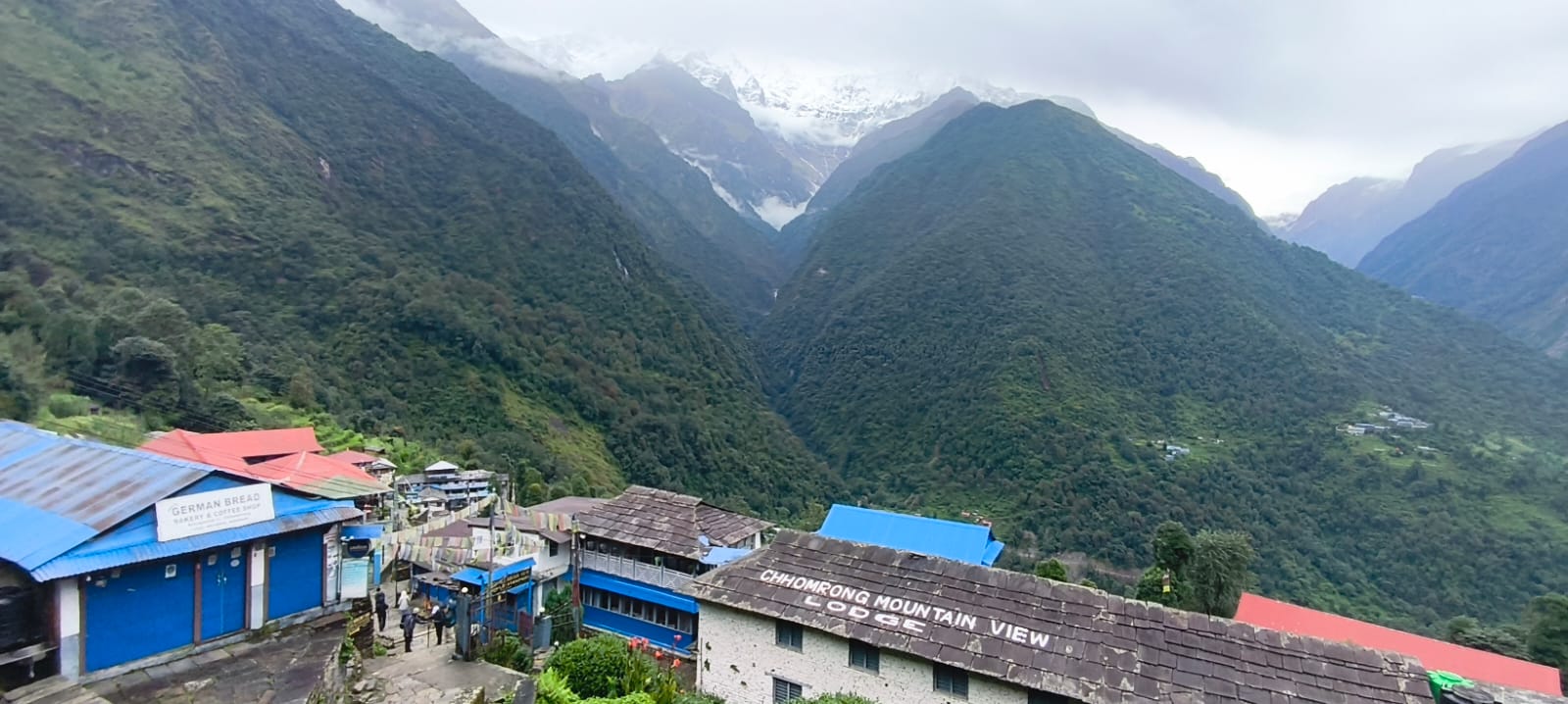
Chhomrong Village is one of the most beautiful settlements in Nepal’s Annapurna region and an important stop on the Annapurna Base Camp (ABC) Trek. Surrounded by green hills, deep valleys, terraced farmland, and spectacular Himalayan peaks, Chhomrong offers a wonderful combination of mountain scenery, Gurung culture, warm hospitality, and traditional village life.
Located in the southern Annapurna region, Chhomrong is more than just an overnight stop for trekkers. The village provides a fascinating glimpse into the lifestyle of the local Gurung community while also serving as an important gateway toward the higher landscapes of the Annapurna Sanctuary.
For trekkers heading toward Annapurna Base Camp, Chhomrong marks a major transition in the journey. From here, the trail continues through Sinuwa, Bamboo, Dovan, Deurali, and Machhapuchhre Base Camp before reaching Annapurna Base Camp.
Whether you are planning the classic ABC Trek, a shorter Annapurna adventure, or simply want to experience Himalayan village life, Chhomrong is a destination worth exploring.
Quick Facts
| Fact | Details |
|---|---|
| Location | Annapurna Region, Nepal |
| Elevation | 2,170 m |
| Permit | ACAP |
| Main Trek | Annapurna Base Camp Trek |
| Community | Gurung |
| Famous For | Mountain views & village culture |
Discovering Chhomrong Village
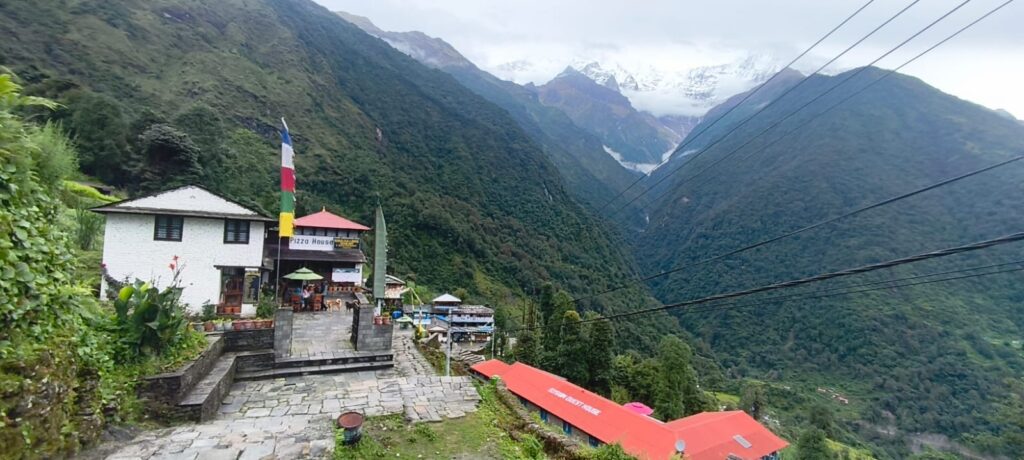
Chhomrong is a traditional Himalayan village situated on a mountainside above the Modi Khola Valley. The village is surrounded by some of the most impressive scenery in the Annapurna region, including views toward Annapurna South, Hiunchuli, Machhapuchhre (Fishtail), and other Himalayan peaks.
The village has developed around trekking tourism, but it has retained much of its traditional character. Stone-paved paths, terraced fields, traditional houses, teahouses, small shops, and prayer flags give Chhomrong a distinctive mountain atmosphere.
One of the first things visitors notice is the dramatic landscape. The settlement sits between forested slopes and high mountains, creating a spectacular contrast between the green lower hills and the snow-covered peaks in the distance.
Chhomrong is also a popular place to experience the hospitality of the Gurung people, one of the major ethnic communities of the Annapurna region. Local families operate teahouses and lodges, welcome trekkers, and continue agricultural traditions alongside tourism.
For many travelers, the charm of Chhomrong comes from this combination of mountains, culture, hospitality, and traditional village life.
Where Is Chhomrong Village Located?
Chhomrong Village is located in the Annapurna region of Gandaki Province, Nepal, within the wider Annapurna trekking area. It lies along the main trail to Annapurna Base Camp and is reached after traveling from Pokhara toward the trailhead and then trekking through the lower foothills.
The village sits above the Modi Khola Valley and occupies an important position between the lower Annapurna foothills and the deeper Annapurna Sanctuary.
Chhomrong is connected with several popular trekking destinations. The main trekking route continues north toward Sinuwa, Bamboo, Dovan, Deurali, Machhapuchhre Base Camp, and Annapurna Base Camp. Another route connects Chhomrong with Jhinu Danda, which is famous for its natural hot springs.
The nearest major tourist city is Pokhara, which is the usual starting point for travelers visiting the Annapurna region.
Because of its location, Chhomrong can be included in several trekking itineraries, including the classic Annapurna Base Camp Trek, shorter Chhomrong and Jhinu Danda walks, and customized Annapurna trekking routes.
Highlights of Chhomrong Village
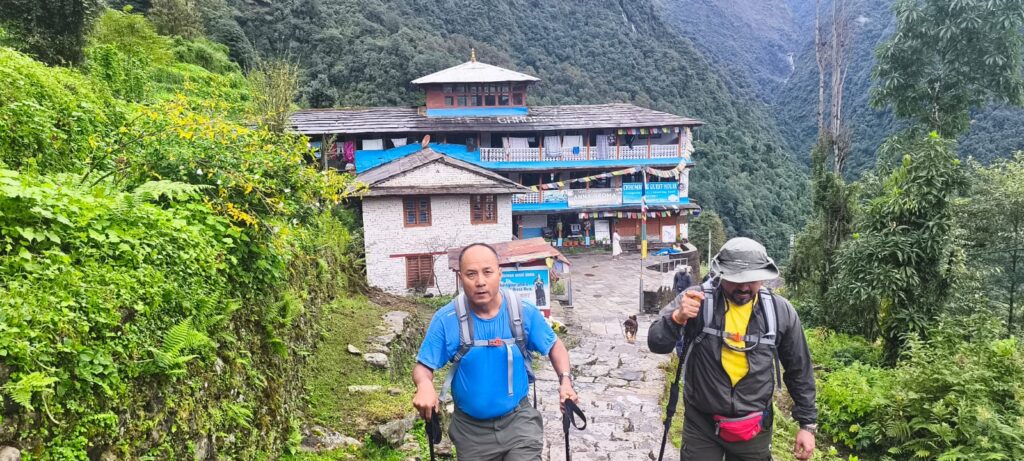
Chhomrong has several attractions that make it one of the most memorable villages on the Annapurna trails.
Spectacular mountain views are among its biggest highlights. On clear days, trekkers can enjoy impressive views of Annapurna South, Hiunchuli, Machhapuchhre, and surrounding peaks.
Traditional Gurung culture is another important attraction. Walking through the village provides an opportunity to observe local homes, farms, community life, and traditional hospitality.
The stone-paved trails and stairways are also part of the Chhomrong experience. The landscape around the village changes quickly, with steep paths connecting different settlements and valleys.
Chhomrong is also close to Jhinu Danda, where trekkers can enjoy natural hot springs. Many ABC itineraries use Jhinu as either an overnight stop or an alternative route before or after visiting Chhomrong.
The village’s location on the ABC trail is itself a major highlight. It is the point where many trekkers begin to feel that they are entering the more remote and dramatic landscapes of the Annapurna Sanctuary.
Chhomrong Elevation and Mountain Scenery
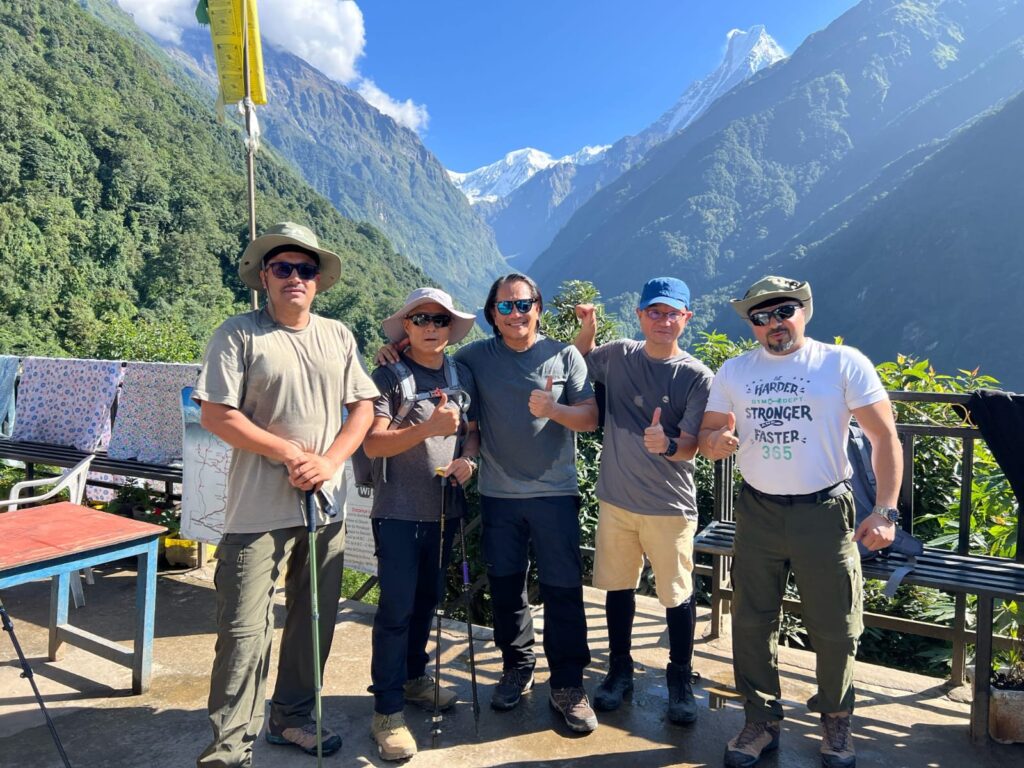
Chhomrong stands at approximately 2,170 meters (7,120 feet) above sea level. Its elevation makes it an important stop for trekkers who are gradually gaining altitude on the way toward Annapurna Base Camp.
The village’s mountainside location provides excellent opportunities to enjoy Himalayan scenery without needing to climb a high peak.
Among the most prominent mountains visible from the area are Annapurna South, Hiunchuli, and Machhapuchhre, while other peaks appear depending on weather and viewpoint.
The scenery changes with the seasons. During spring, the surrounding forests can be decorated with blooming rhododendrons, Nepal’s national flower. The green hills and colorful forests create a beautiful contrast with the snowy mountains.
Autumn generally brings clear mountain views after the monsoon, while winter can provide crisp conditions and snow-covered landscapes at higher elevations.
Morning is often a particularly beautiful time to enjoy the mountains. As sunlight reaches the Himalayan peaks, the scenery changes from soft morning shadows to bright snow-covered summits.
How to Reach Chhomrong Village
The most common way to reach Chhomrong is from Pokhara, the major gateway to the Annapurna region.
Trekkers generally travel by road from Pokhara toward the appropriate trailhead and then continue on foot. Depending on the route and current road conditions, the starting point can vary between trekking itineraries.
One popular approach is through the Jhinu Danda area, while other itineraries reach Chhomrong through lower settlements and trails connected to the Annapurna foothills.
The journey is not simply about reaching the destination. The trail passes through forests, terraced farmland, small villages, suspension bridges, and mountain viewpoints, making the approach to Chhomrong part of the overall Annapurna experience.
Travelers should remember that road access and trail conditions can change, particularly during the monsoon season. A local trekking agency or guide can provide the latest information about the roadhead and current trail conditions before departure.
For international trekkers, Pokhara is generally the most convenient base for beginning a Chhomrong or Annapurna Base Camp adventure.
Why Chhomrong Is the Gateway to Annapurna Base Camp
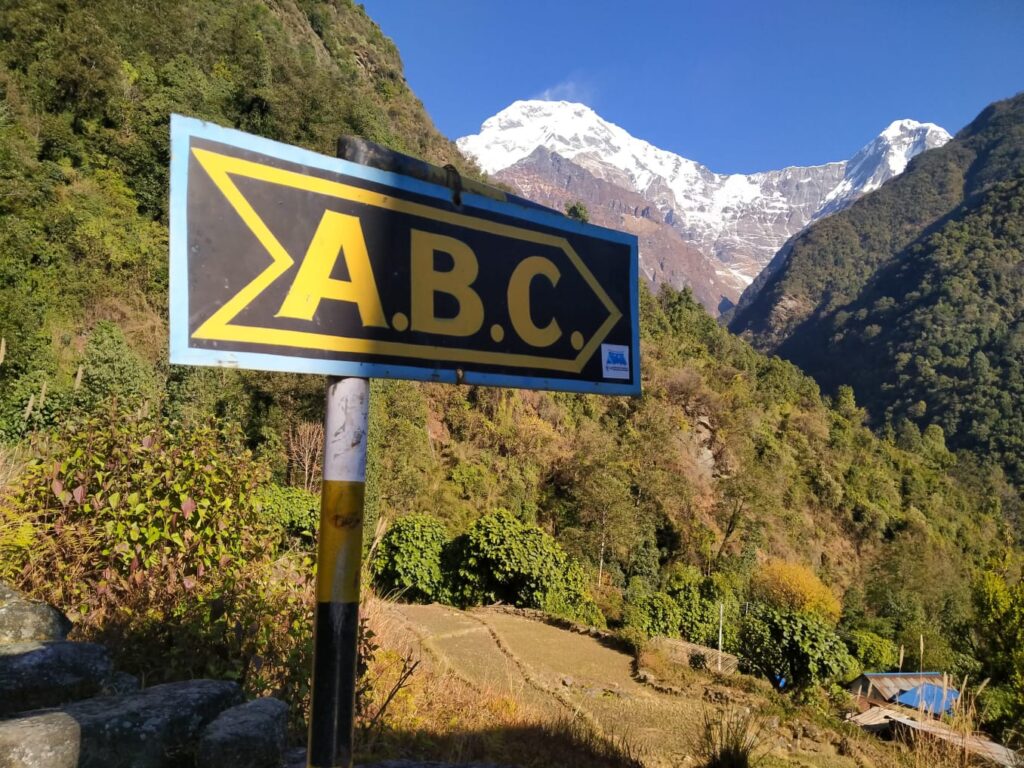
Chhomrong is often described as the gateway to Annapurna Base Camp because of its strategic location on the main trekking route into the Annapurna Sanctuary.
After reaching Chhomrong, the trail continues toward Sinuwa and the Modi Khola Valley before entering increasingly mountainous terrain. Trekkers then pass through Bamboo, Dovan, and Deurali before reaching Machhapuchhre Base Camp and finally Annapurna Base Camp.
The landscape also changes noticeably beyond Chhomrong. Dense forests, narrow valleys, dramatic cliffs, waterfalls, and increasingly high mountain scenery become prominent features of the journey.
For this reason, Chhomrong is an important psychological and geographical point on the ABC Trek. It offers trekkers a comfortable village environment before they continue toward the higher and more remote parts of the route.
Chhomrong is also strategically useful for itinerary planning. Trekkers can spend a night here, continue toward Sinuwa, or combine the village with nearby destinations such as Jhinu Danda.
Its combination of accessibility, accommodation, mountain views, and location on the ABC trail makes Chhomrong one of the best-known villages in the Annapurna region.
Best Time to Visit Chhomrong Village
| Season | Months | Conditions |
|---|---|---|
| Spring | March–May | Mild weather & rhododendron blooms |
| Autumn | September–November | Clear views & stable weather |
| Winter | December–February | Cold but quieter |
| Monsoon | June–August | Rainy, wet & slippery trails |
Gurung Culture and Village Life
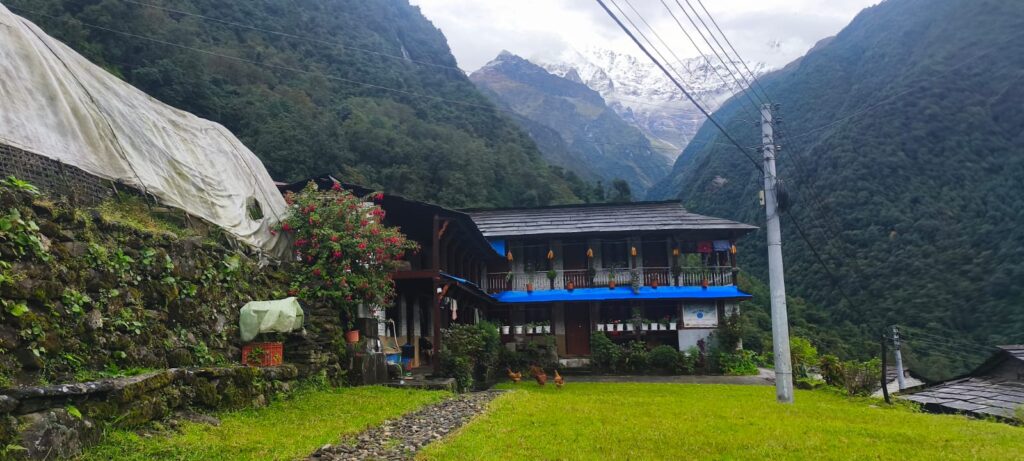
Chhomrong is closely associated with the Gurung community, whose culture is an important part of the Annapurna region’s identity.
Traditional Gurung villages are known for their strong community relationships, hospitality, agricultural traditions, and distinctive cultural heritage. In Chhomrong, visitors can see how traditional village life has adapted to the growing number of trekkers visiting the Annapurna region.
Agriculture remains part of local life, while tourism provides another important source of income. Many local families operate teahouses, lodges, restaurants, shops, or trekking-related services.
Walking through the village gives travelers a chance to see stone paths, terraced fields, traditional and modern houses, small monasteries or shrines, and everyday activities.
Respect for local customs is important. Trekkers should ask permission before photographing people, avoid disturbing private areas, and follow local practices when visiting religious or cultural sites.
One of the most rewarding aspects of staying in Chhomrong is simply spending time with local hosts. A conversation over a cup of tea or a traditional meal can provide a deeper understanding of life in the Himalayan foothills.
Things to Do and See in Chhomrong
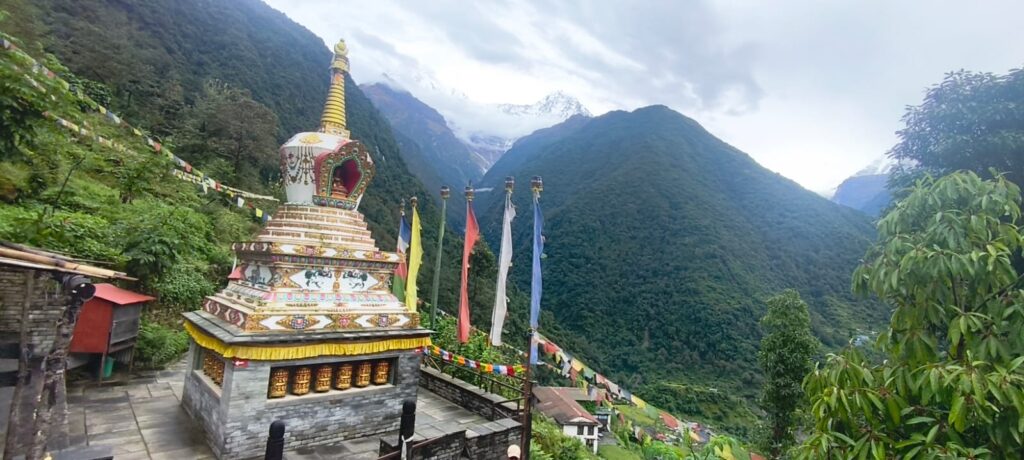
There are several enjoyable things to do in and around Chhomrong.
Enjoy the Himalayan Views: Take time to appreciate the views of Annapurna South, Hiunchuli, Machhapuchhre, and surrounding mountains. Early morning and late afternoon can be particularly atmospheric.
Explore the Village: Walk through the stone-paved paths and explore the traditional settlement. The village is compact enough to explore on foot, and the surrounding terraces and hills provide excellent photography opportunities.
Experience Gurung Hospitality: Stay in a locally operated teahouse and interact respectfully with your hosts. This is one of the simplest ways to experience Himalayan culture beyond the mountain scenery.
Visit Jhinu Danda: Jhinu Danda is a popular side trip from the Chhomrong area. It is particularly known for its natural hot springs, where trekkers can relax after several days of walking.
Continue Toward Annapurna Base Camp: For trekkers following the ABC route, Chhomrong is the starting point for the dramatic journey deeper into the Annapurna Sanctuary.
Take Photographs: From village rooftops, trails, terraces, and surrounding viewpoints, Chhomrong offers numerous opportunities for landscape and cultural photography.
Food and Accommodation in Chhomrong
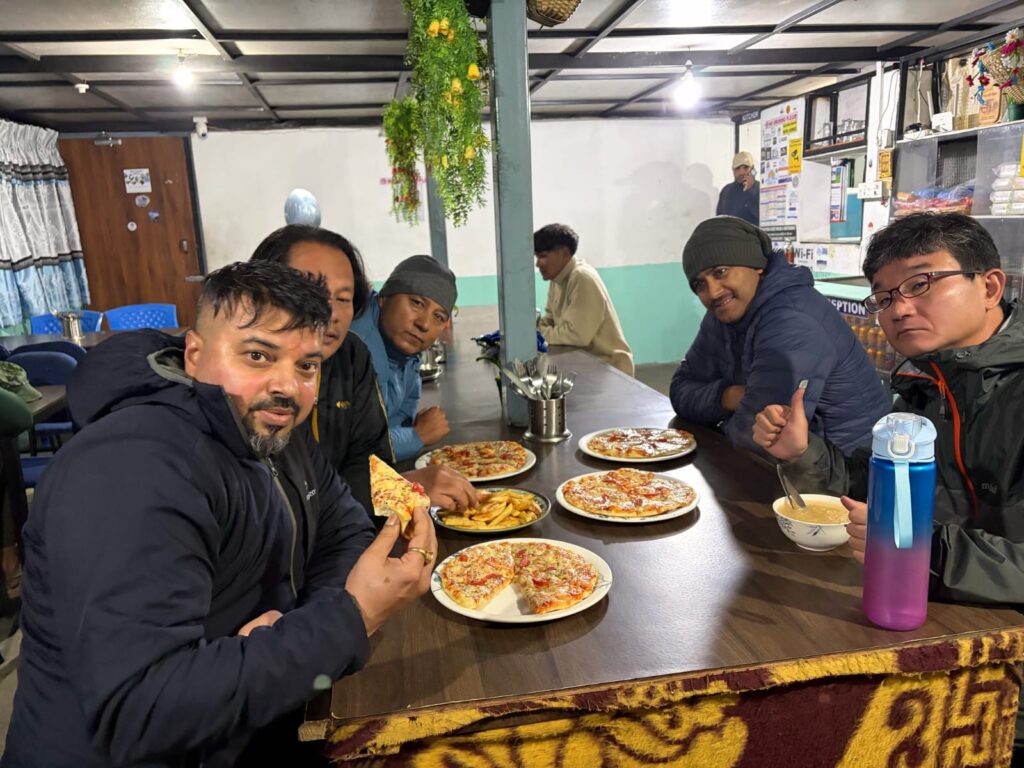
Chhomrong has a well-developed selection of teahouses, guesthouses, and trekking lodges, making it a convenient overnight stop for Annapurna trekkers.
Accommodation ranges from simple traditional rooms to more comfortable trekking lodges. Most rooms are designed for trekkers and commonly provide basic beds, blankets, and shared bathroom facilities. Some establishments may offer attached bathrooms or additional comforts, depending on the property.
Food is another important part of the Chhomrong experience. Teahouses generally serve popular trekking meals such as dal bhat, noodles, fried rice, pasta, soups, momos, potatoes, eggs, bread, and pancakes. Dal bhat remains a favorite among trekkers because it is filling and provides a substantial meal during long trekking days.
Hot tea, coffee, and other beverages are widely available. Trekkers should carry a reusable water bottle and follow safe drinking-water practices.
Wi-Fi and mobile connectivity may be available in the village, although the quality can vary with weather, network coverage, and the individual lodge. Electricity is generally available for charging electronic devices, but charging may involve an additional fee.
Because Chhomrong is a popular stop on the ABC Trek, accommodation can become busy during the main trekking seasons. Travelers visiting during peak periods may benefit from arranging their accommodation through a trekking agency or guide.
Conclusion
Chhomrong Village is one of the most memorable destinations in the Annapurna region. Its combination of spectacular mountain scenery, Gurung culture, traditional village life, comfortable teahouses, and strategic location on the Annapurna Base Camp trail makes it much more than a simple overnight stop.
At around 2,170 meters, Chhomrong offers trekkers an impressive Himalayan experience without requiring a high-altitude climb just to reach the village. From its mountain views and terraced hillsides to its warm local hospitality, every part of the village adds something special to an Annapurna journey.
For travelers heading toward Annapurna Base Camp, Chhomrong represents an important stage of the trek and a natural gateway into the Annapurna Sanctuary. For those with less time, it can also be enjoyed as part of a shorter trekking itinerary around Chhomrong and Jhinu Danda.
If you are planning an Annapurna adventure, taking time to experience Chhomrong Village can add a meaningful cultural and scenic dimension to your journey—not just another destination to pass through.
FAQs About Chhomrong Village
1. How long does it take to walk around Chhomrong Village?
Chhomrong is a relatively compact mountain settlement, so you can explore the main village area on foot within a few hours. Walking slowly through the stone-paved paths, viewpoints, terraces, and nearby trails gives you a better opportunity to experience local life.
2. Is Chhomrong suitable for first-time trekkers?
Yes, Chhomrong can be suitable for first-time trekkers with reasonable fitness. However, the surrounding trails include many stone steps and steep sections. Beginners should maintain a comfortable pace and allow enough time for rest.
3. What are the famous stone steps near Chhomrong?
The Chhomrong area is famous for its long stone stairways connecting the village with the lower parts of the trail. The steps can be physically demanding, particularly when descending and climbing back toward the village, so trekking poles can be helpful.
4. Can I trek to Chhomrong from Ghandruk?
Yes. Ghandruk is one of the popular starting points for trekking to Chhomrong. The trek generally takes around 5–6 hours and covers approximately 9–10 km, depending on the exact route and trail conditions. The trail descends from Ghandruk toward the river before climbing steeply through forests and stone steps to Chhomrong. Along the way, trekkers can enjoy traditional Gurung villages, terraced fields, forested trails, river scenery, and views of the surrounding Himalayan peaks.
5. Is Chhomrong a good place to stop before entering the Annapurna Sanctuary?
Yes. Chhomrong is an important staging point before trekkers continue deeper into the Modi Khola Valley and the Annapurna Sanctuary. Many itineraries use the village as a place to rest before continuing toward higher elevations.
6. Can I see Machhapuchhre from Chhomrong?
Yes. Machhapuchhre (Fishtail Mountain) is one of the prominent Himalayan peaks visible from the Chhomrong area when weather conditions are clear. Annapurna South and Hiunchuli are also major features of the surrounding mountain panorama.
7. What is the Chhomrong to Sinuwa trail like?
The trail between Chhomrong and Sinuwa involves a mixture of steep stone steps, forested sections, and mountain paths. The walk can be physically demanding because of repeated ascents and descents, but it is a well-known section of the ABC route.
8. Can I visit Jhinu Hot Spring from Chhomrong?
Yes. Jhinu Danda and its natural hot springs can be incorporated into a Chhomrong itinerary. The route involves steep walking, but relaxing in the hot springs can be a pleasant experience after trekking.
9. Is there an ATM available in Chhomrong?
Travelers should not depend on an ATM in Chhomrong. It is advisable to withdraw sufficient Nepalese rupees in Pokhara or another major town before beginning the trek, particularly if you are continuing toward Annapurna Base Camp.
10. Is Wi-Fi and phone charging available in Chhomrong?
Yes. Many teahouses and lodges in Chhomrong offer Wi-Fi and charging facilities, although the quality and availability can vary between accommodations. Internet service may be slower or less reliable than in Pokhara, and charging may involve an additional fee. It is recommended to carry a power bank as a backup for your phone, camera, and other electronic devices during the trek.
11. Do I need an ACAP permit to trek to Chhomrong?
Yes. An Annapurna Conservation Area Permit (ACAP) is required to trek to Chhomrong because the village is located inside the Annapurna Conservation Area. The permit applies whether you reach Chhomrong as part of the Annapurna Base Camp Trek, Ghandruk–Chhomrong route, or another trekking route within the conservation area. Trekkers should carry the permit throughout the trip and show it at designated checkpoints when requested.
12. Are hot showers available in Chhomrong?
Many teahouses provide hot showers, usually for an additional charge. The availability and cost of hot water can vary between lodges, so it is useful to confirm the facilities when choosing where to stay.
13. Is Chhomrong suitable for children and older travelers?
It can be, provided they are comfortable with prolonged uphill and downhill walking. The numerous stone steps can be challenging, so families and older travelers should choose a slower itinerary with adequate rest and avoid rushing.
14. Can Chhomrong be visited during the monsoon season?
Chhomrong can be visited during the monsoon, but trekking conditions are generally more challenging. Rain can make stone steps slippery and may affect trails, visibility, and transportation. Travelers should check local weather and trail conditions before starting their trek.
15. Are there coffee shops and bakeries in Chhomrong Village?
Yes. Chhomrong has small coffee shops, bakery cafés, and teahouses where trekkers can enjoy coffee, tea, cakes, pastries, and other light snacks. Availability and opening hours can vary, so trekkers should consider these as local mountain cafés rather than full-service urban coffee shops.

Ramchandra Lamichhane
Trekking Expert
No hidden fees • Local experts • Best price guarantee