
Current Situation of the Massive Flood in Nepal 2026: Deaths, Missing People, Damage, Rescue and Risk of Another Disaster
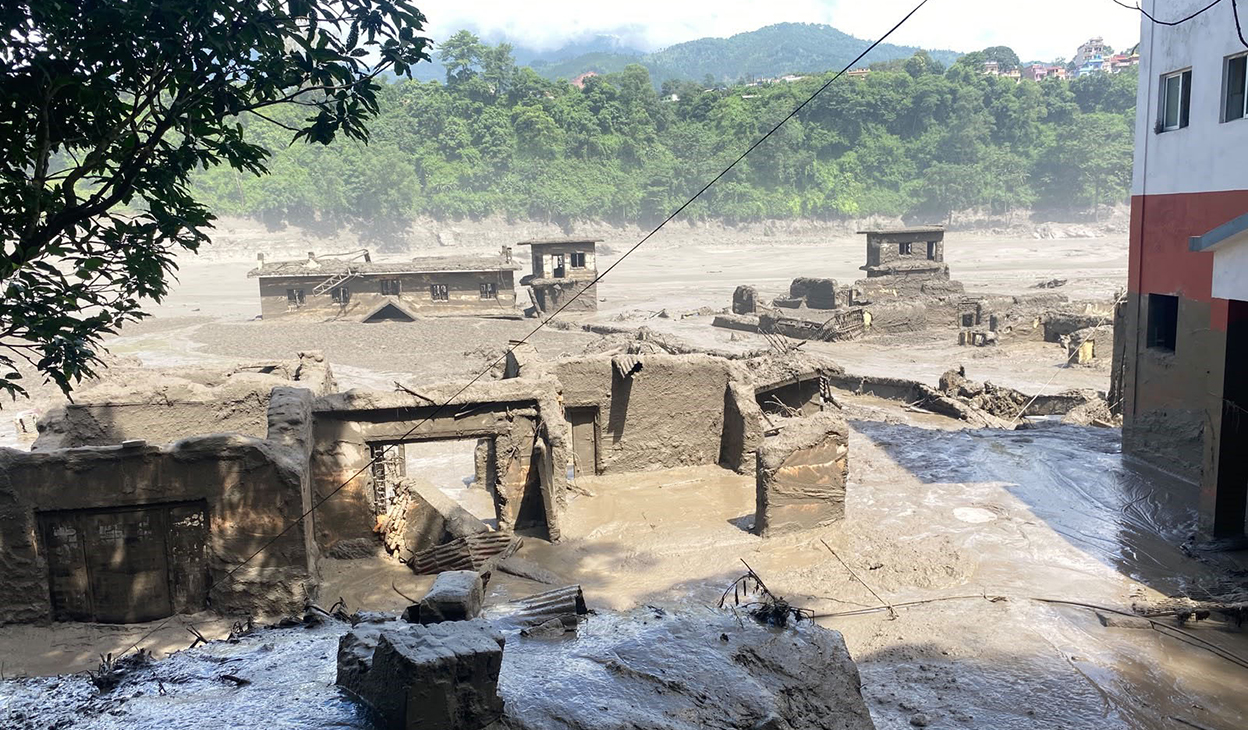
Nepal is facing one of the most devastating natural disasters of 2026 after a catastrophic flash flood swept through the Bhote Koshi River corridor in northern Nepal on August 26, 2026. The disaster began near the Nepal–China border and rapidly moved downstream through the Bhote Koshi and Trishuli river systems, carrying an enormous mixture of water, ice, mud, rocks and debris.
The destruction has been extraordinary. Homes, bridges, roads, vehicles, border facilities, hydropower infrastructure and other public structures have been washed away or buried under thick layers of mud and debris. Hundreds of people have died, while thousands remain unaccounted for. Foreign tourists and pilgrims travelling toward the Mount Kailash region are also among those missing.
The situation remains extremely serious. Search-and-rescue operations are continuing, while authorities are also monitoring the possibility of another flood surge after a temporary barrier lake formed upstream on the Chinese side of the border.
What Is the Current Situation of the Nepal Flood?
As of August 28, 2026, the situation remains fluid and the numbers are changing as rescue teams reach previously inaccessible areas.
Nepal Police reported that 469 people had been confirmed dead, while 2,381 people remained unaccounted for in the latest national update. At least 1,545 people had been rescued, including 644 from Rasuwa, 898 from Nuwakot and three from Dhading.
The figures should be treated with caution because different agencies are counting different groups at different stages of verification. Earlier updates focused on people missing from the immediate disaster zone, while later police figures incorporated broader reports of people who had not yet been located.
The human tragedy is therefore still unfolding. Rescue workers continue searching riverbanks, damaged buildings, hydropower tunnels, roads and downstream areas where floodwaters may have carried victims.
Where Did the Massive Flood Begin?
The disaster began in the high Himalayan region near the Nepal–China border, particularly around the Bhote Koshi/Poiqu river system and the Rasuwa area.
The first major destruction occurred around Rasuwagadhi and Timure in Rasuwa District, close to the international border with Tibet. From there, the powerful surge travelled downstream through the Bhote Koshi and into the wider Trishuli river system.
The Bhote Koshi is a transboundary river whose upper reaches lie in Tibet before entering Nepal. Because of its steep Himalayan valley, a sudden release of water, ice and debris can move downstream with tremendous speed and little warning.
The flood subsequently affected communities and river corridors in districts including Rasuwa, Nuwakot, Dhading, Gorkha and Chitwan, with bodies and debris later found far downstream.
How Did the Nepal Flood Happen?
The disaster was not simply an ordinary monsoon flood.
Preliminary scientific assessments indicate that a major collapse involving glacier ice, rock and unstable mountain terrain triggered the extraordinary flood. The collapse occurred in the high Himalayas and generated a rapidly moving mass of ice, rock, mud and water.
Reports indicate that the geological collapse was strong enough to produce a tremor initially mistaken for an earthquake. Later analysis identified the event as being associated with the collapse itself rather than a conventional earthquake.
The resulting material entered river channels and produced a destructive downstream surge. The steep Himalayan landscape accelerated the movement, allowing enormous quantities of debris to travel rapidly toward settlements and infrastructure.
Scientists are still studying the precise sequence of events. Climate change is also an important part of the wider discussion because warming temperatures can contribute to glacier instability, permafrost degradation and changes in high-altitude mountain environments. However, scientists have cautioned that a direct climate-change attribution for this individual event requires further investigation.
How Big and Powerful Was the Flood?
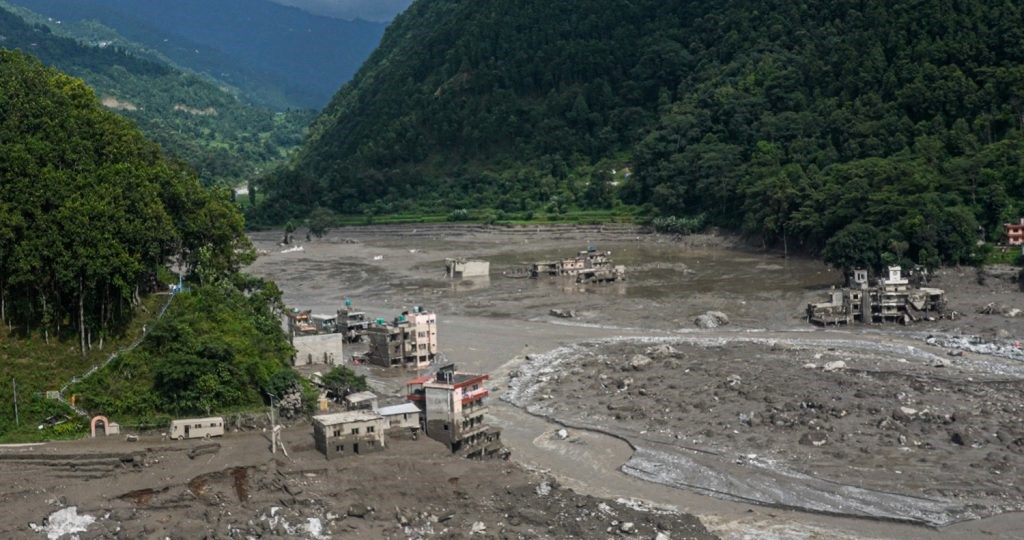
The scale of the flood was exceptional.
The surge was powerful enough to destroy major structures along the river corridor and transport debris for a very long distance downstream. In the Trishuli River system, water levels reportedly rose dramatically within a very short period, illustrating how rapidly the disaster developed.
The flood did not behave like slowly rising seasonal water. It acted more like a rapidly moving wall of water and debris. Rocks, vehicles, trees, construction materials and parts of buildings were swept downstream.
The disaster also created a major secondary hazard: a temporary lake formed behind debris near the Nepal–China border. By August 28, reports indicated that the lake had grown to more than 2.5 million cubic metres and had begun overflowing, raising fears of another surge into the Bhote Koshi system.
How Many People Have Been Rescued and How Many Are Still Missing?
The rescue operation has already saved many lives, but thousands of people are still unaccounted for.
According to the latest Nepal Police figures reported on August 28, 1,545 people had been rescued, while 2,381 people remained missing or unaccounted for.
The missing population includes local residents, workers, travellers and foreign visitors. Some people may still be alive but unable to communicate because telecommunications, roads and electricity have been disrupted. Others may have moved to safer locations without being registered with authorities.
For this reason, the missing-person figure should not automatically be interpreted as the number of confirmed deaths.
How Many Foreign Nationals Are Missing?
The flood has become an international tragedy because many foreign travellers were in the affected region.
The latest Nepal Police update reported 644 foreign nationals among those still missing. The largest groups include:
- 178 Indians
- 65 Americans
- 53 Ukrainians
- 51 Malaysians
- 35 Australians
- 33 British citizens
- 25 Canadians
Other missing nationals include people from Singapore, Germany, Russia, South Africa, Latvia, Japan, New Zealand, France, Belgium, Spain and several other countries.
An earlier Ministry of Foreign Affairs update listed 596 foreign nationals from 33 countries as still missing on August 27. That list included 167 Indians, 66 Americans, 53 Ukrainians, 51 Malaysians, 35 Australians and 33 British nationals. The numbers subsequently changed as authorities continued verification and received new reports.
Many of the foreign travellers were associated with pilgrimage and tourism journeys toward the Kailash Mansarovar region, making the disaster especially concerning for families in South Asia and around the world.
How Many Dead Bodies Have Been Found?
The number of recovered bodies has risen rapidly as search teams move downstream.
The latest widely reported Nepal figure on August 28 put the death toll at approximately 469 confirmed deaths. Earlier on August 27, Nepal’s Foreign Ministry had reported 359 bodies recovered, showing how quickly the recovery operation was progressing.
Bodies have been recovered not only in Rasuwa but also much farther downstream, including areas of Nuwakot, Dhading and Chitwan. Nepal Police has also established procedures for documenting unidentified bodies because many victims were carried considerable distances by the floodwaters.
The number of recovered bodies is expected to change as rescue and recovery operations continue.
What Happened to Houses and Buildings?
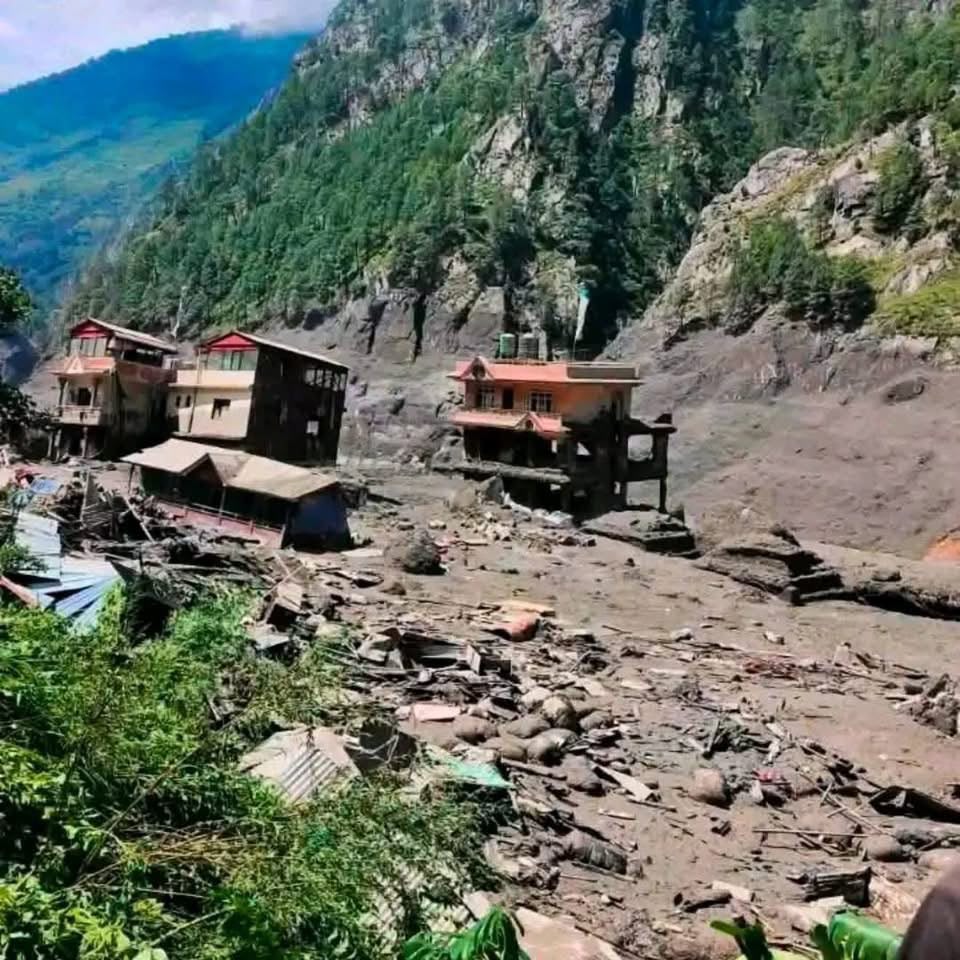
The flood caused widespread structural destruction.
Entire buildings were swept away in some locations, while others were partially buried by mud, rocks and debris. Homes close to riverbanks were particularly vulnerable because the flood arrived with enormous force and little time for evacuation.
The Rasuwagadhi border area suffered severe destruction. Border facilities, customs infrastructure, vehicles and commercial buildings were affected, disrupting one of Nepal’s important trade connections with China.
In downstream settlements, houses and businesses were inundated with mud. In some places, the river changed its course or widened significantly after the disaster.
The destruction has left many families without homes and created an urgent need for temporary shelter, food, drinking water, medical care and sanitation.
How Much Infrastructure Has Been Damaged?
The infrastructure damage is extensive and still being assessed.
Initial government and media assessments reported damage to dozens of bridges and around 40 kilometres of roads.
The disaster has affected:
- Motorable bridges
- Highways and local roads
- Border and customs facilities
- Hydropower projects
- Electricity infrastructure
- Telecommunications
- Houses and commercial buildings
- Vehicles and transport facilities
- Schools and public buildings
- Water and sanitation systems
Several hydropower facilities were also damaged, creating additional concerns for electricity generation and local infrastructure.
Because many affected areas remain difficult to access, Nepal does not yet have a final nationwide monetary estimate for the total economic loss.
How Much Financial Loss Has Nepal Suffered?
At present, there is no reliable final figure for the total economic loss caused by the 2026 Bhote Koshi disaster.
This is important because early damage estimates often cover only visible infrastructure. The final economic cost will include destroyed homes, roads, bridges, hydropower plants, businesses, agricultural land, vehicles, tourism losses, trade disruption, telecommunications and the long-term cost of rebuilding communities.
The Nepal government is still conducting damage assessments. The Ministry of Foreign Affairs has also acknowledged that the full scale of human and material damage remains under assessment.
Therefore, claims that the disaster has already caused a specific number of billions of rupees should be treated carefully until an official comprehensive assessment is released.
How Is the Nepal Government Raising Funds for Flood Victims?
The Government of Nepal has appealed to citizens, organizations, businesses and institutions to contribute to the country’s disaster-relief mechanisms.
The Ministry of Home Affairs has specifically appealed for financial contributions to the Prime Minister’s Natural Disaster Relief Fund and the Prime Minister’s Relief Fund. An official online contribution channel has also been made available for emergency assistance.
The government has also begun distributing immediate relief funds to affected districts. An initial NPR 25 million was released, with NPR 10 million each allocated to Rasuwa and Nuwakot and NPR 5 million to Dhading.
Local governments, political organizations, businesses and communities are also contributing money, food, clothing, bedding and other emergency supplies.
However, the immediate relief phase is only the beginning. Nepal will eventually need a much larger reconstruction programme for roads, bridges, homes, electricity, telecommunications and damaged economic infrastructure.
How Is Nepal Rescuing Flood Victims?
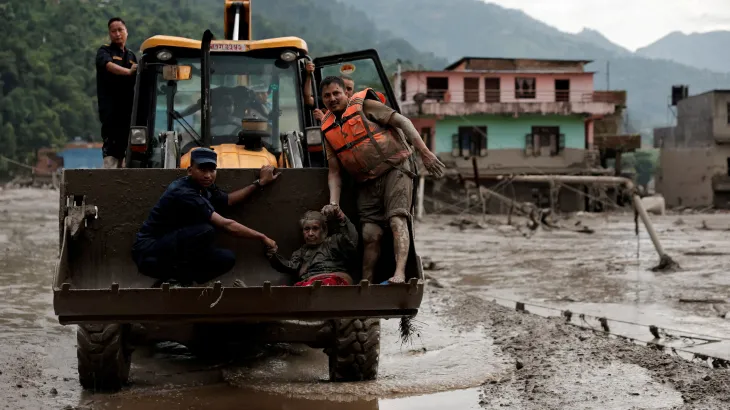
Nepal’s rescue operation involves the Nepali Army, Nepal Police, Armed Police Force, local authorities, medical teams, helicopter operators and volunteers.
Helicopters are being used where roads have been destroyed or blocked. Rescue teams are searching damaged settlements, riverbanks and isolated areas. Medical teams are treating injured survivors, while authorities are transporting vulnerable people to safer locations.
The government has also ordered free medical treatment for people injured in the disaster and instructed security agencies to mobilise available resources for rescue and evacuation.
The operation is extremely difficult because bridges and roads have disappeared, communication networks have been disrupted and unstable slopes continue to threaten rescuers.
What Relief Is Being Provided to Survivors?
Emergency assistance includes food, drinking water, blankets, mattresses, sleeping bags and other essential materials.
According to disaster-response updates, relief supplies have been transported to affected districts, while authorities are establishing temporary arrangements for displaced families.
The priorities are clear: save lives first, provide medical assistance, establish temporary shelter, restore communication and transport links, and then begin long-term reconstruction.
Is There a Chance of Another Flood or Disaster?
Yes. The risk has not completely disappeared.
This is one of the most important concerns on August 28.
A temporary barrier lake formed upstream near the Nepal–China border after the initial disaster. Authorities warned that a sudden breach could send another surge of water into the Bhote Koshi system. Reports on August 28 indicated that the lake had begun overflowing, prompting renewed monitoring and aerial reconnaissance.
This does not mean another disaster of the same scale is certain. However, people living close to the Bhote Koshi, Trishuli and downstream river corridors should remain alert and follow instructions from local authorities.
Additional risks include:
- Further glacier or ice collapse
- Landslides
- Temporary landslide dams
- Sudden river surges
- Heavy monsoon rainfall
- Dam or barrier-lake failure
- Falling rocks and unstable slopes
- Flooding farther downstream
The continuing monsoon season makes careful monitoring especially important.
Why Is Rescue Work So Difficult?
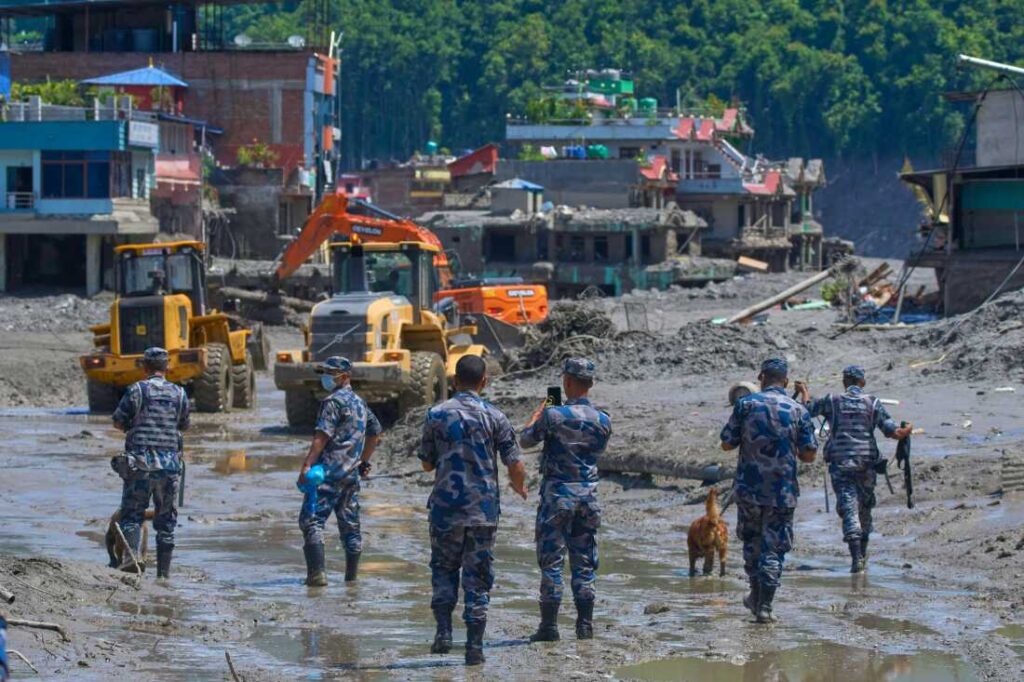
The geography of northern Nepal is one of the biggest obstacles.
The affected region consists of steep mountains, narrow valleys and winding rivers. Once roads and bridges are destroyed, reaching villages becomes extremely difficult.
Mud and boulders can bury vehicles and buildings. Helicopters cannot always land safely. Bad weather can prevent flights. Telecommunications can fail when towers and power systems are damaged.
There is also a serious psychological challenge. Families do not know whether missing relatives are alive, injured, stranded or among the dead.
For rescue teams, every hour matters, but the environment remains dangerous even after the main flood has passed.
What Does This Disaster Mean for Nepal’s Future?
The 2026 Bhote Koshi disaster is a warning about Nepal’s growing exposure to high-altitude natural hazards.
Nepal is located in one of the world’s most geologically active mountain regions. Its steep terrain, rapidly changing glaciers, monsoon rainfall and settlements concentrated along river valleys create a combination of risks.
The disaster also highlights the importance of stronger early-warning systems, cross-border information sharing, glacier monitoring, safer infrastructure and better evacuation planning.
Experts have increasingly emphasized that glacier instability and high-altitude hazards deserve greater attention as the Himalayan environment changes. A warmer climate does not automatically explain every individual flood, but it can influence the conditions under which glaciers, ice and unstable slopes behave.
What Should People Living Near Rivers Do Now?
People living near the Bhote Koshi, Trishuli and other potentially affected rivers should not assume that the danger has ended simply because the first flood has passed.
Residents should:
- Move away from riverbanks when authorities issue warnings.
- Avoid crossing damaged bridges.
- Stay away from unstable slopes and landslide areas.
- Keep emergency documents and medicines ready.
- Follow official warnings rather than social-media rumours.
- Keep phones charged whenever electricity is available.
- Avoid travelling into disaster zones unless necessary.
- Report missing people through official channels.
- Help elderly people, children and people with disabilities reach safe areas.
- Immediately move to higher ground if unusual river sounds, rapidly rising water or sudden debris flows are observed.
- A Disaster That Nepal Will Not Forget
The massive Bhote Koshi flood of August 26, 2026, has become a national tragedy with consequences extending far beyond the immediate flood zone.
Hundreds of lives have been lost. Thousands remain unaccounted for. Foreign tourists and pilgrims are among those missing. Homes and businesses have disappeared, while roads, bridges, hydropower facilities and border infrastructure have suffered major damage.
Yet the disaster is not only a story of destruction. It is also a story of rescue workers searching through dangerous terrain, communities helping displaced families, medical teams treating survivors and ordinary citizens contributing to relief efforts.
The immediate priority remains finding survivors and protecting people from further danger. The next priority will be rebuilding homes, infrastructure and livelihoods.
Nepal now faces a long recovery. The country will need coordinated government action, community support, responsible international assistance and stronger disaster-preparedness systems.
Most importantly, the continuing risk from unstable mountains and temporary water bodies means that the rescue operation is not over, and the danger has not completely passed. The coming days will be critical for both saving lives and preventing a second disaster.
Frequently Asked Questions
1. What caused the unusual severity of the 2026 Nepal flood?
The 2026 Nepal flood was unusually destructive because it involved far more than ordinary monsoon rainfall. A major high-altitude collapse of ice, rock and unstable mountain material released an enormous amount of water and debris into the river system. The steep Himalayan landscape then accelerated the flow downstream, giving communities very little time to react. The combination of water, mud, boulders, trees and other debris greatly increased the destructive power of the flood.
2. Which river system was most severely affected by the disaster?
The Bhote Koshi River system was at the centre of the disaster. The initial flood surge entered the river corridor near the Nepal–China border before moving downstream and affecting connected waterways. Because Himalayan rivers flow through narrow valleys with steep gradients, a sudden increase in water and debris can travel extremely quickly and cause extensive destruction far from the original source.
3. Did the flood affect tourists and international travellers?
Yes. The disaster affected not only local residents but also travellers who were in northern Nepal. A significant number of foreign nationals were reported missing after the flood, including people from India, the United States, Ukraine, Malaysia, Australia, the United Kingdom and other countries. Some were travelling through the region for pilgrimage, tourism or other purposes when the disaster occurred.
4. Why are authorities having difficulty confirming the identities of victims?
Identifying victims is particularly challenging when floodwaters carry people over long distances. Bodies may be recovered far from where individuals were last seen, while identification documents can be lost during the disaster. Damaged roads and communication networks also slow the exchange of information between families, police and local authorities. For unidentified victims, officials may need to use photographs, personal belongings, fingerprints, DNA testing or information supplied by relatives.
5. Could people listed as missing still be alive?
Yes. Being listed as missing does not necessarily mean that a person has died. Some individuals may have reached safer locations without access to a working telephone or internet connection. Others may be stranded in isolated settlements or receiving treatment at facilities where their identities have not yet been confirmed. Rescue teams therefore continue searching for missing people rather than treating every missing-person report as a confirmed fatality.
6. Why did the flood destroy bridges so quickly?
Bridges crossing Himalayan rivers can face enormous pressure during exceptional floods. The 2026 event carried large rocks, trees, vehicles and pieces of damaged structures along with the water. These objects can strike bridge foundations and supports, while rapidly moving water can erode the riverbed around them. Once a key support becomes unstable, a bridge can collapse within a very short period.
7. Has transportation through the affected region returned to normal?
No. Transportation remains heavily disrupted in severely affected areas. Several roads and bridges were damaged or destroyed, making some locations accessible only by alternative routes or air. Reconstruction and temporary access arrangements will take time. Travellers should not assume that a previously available road or route is safe simply because the water level has fallen.
8. Can the disaster affect areas far away from Rasuwa?
Yes. A powerful flood originating in the upper Himalayan valleys can have consequences far downstream. Water and debris move through interconnected river systems, potentially affecting communities located many kilometres from the original source. This is why authorities monitor rivers downstream and continue searching areas where floodwaters may have transported people, vehicles and debris.
9. What is a temporary flood lake, and why is it dangerous?
A temporary flood lake can form when rocks, ice, mud or landslide material blocks a river and creates a natural barrier. Water then accumulates behind the obstruction. If the barrier becomes unstable or is overtopped, a large volume of stored water can suddenly move downstream. Such an event can create another dangerous flood even after the original disaster has ended, which is why temporary lakes in mountainous areas require close monitoring.
10. Is another major flood in the same area guaranteed to happen?
No. A second disaster is possible, but it is not certain. The risk depends on factors such as the stability of temporary barriers, additional landslides, rainfall, upstream water levels and the condition of surrounding mountains. Authorities are monitoring these conditions because even a smaller secondary event could be dangerous in areas where infrastructure has already been weakened.
11. Why can monsoon rain make the situation more dangerous after a flood?
Heavy monsoon rain can saturate soil and destabilize mountain slopes that have already been disturbed. This can trigger landslides, rockfalls and additional debris flows. Rainfall can also raise river levels and increase pressure on temporary natural barriers. Consequently, the danger may continue for days or weeks after the initial flood rather than ending immediately when the first wave of water recedes.
12. What should families do if they cannot contact relatives in the disaster zone?
Families should report missing relatives through official police, government or diplomatic channels and provide as much accurate information as possible, including the person’s full name, nationality, last known location, travel companions and recent photograph. They should avoid relying exclusively on social-media posts because unverified information can create additional distress. Foreign families should also contact their country’s embassy or consular authorities in Nepal.
13. Are international organizations helping Nepal after the flood?
International assistance can play an important role in a disaster of this scale, particularly when affected communities require emergency supplies, technical expertise, medical assistance and reconstruction support. Foreign governments, humanitarian organizations and diplomatic missions may coordinate with Nepalese authorities according to identified needs. The most effective assistance is generally delivered through recognized government and humanitarian channels rather than unverified fundraising campaigns.
14. How long could recovery from the flood take?
Recovery will likely extend well beyond the immediate rescue period. Emergency operations focus on finding survivors, treating injured people and providing shelter and food. Afterward, authorities must restore roads, bridges, electricity, telecommunications, water systems and damaged public facilities. Families who lost homes or businesses may need financial and livelihood support for months or even years, depending on the scale of individual losses.
15. Will the flood affect Nepal’s tourism industry?
The disaster may temporarily affect tourism in the surrounding region, particularly where roads, bridges, accommodation facilities and pilgrimage routes have been damaged. However, the impact will vary considerably between destinations. Most of Nepal remains geographically separate from the affected river corridor and may continue operating normally. Travellers should check the status of their specific destination and transportation route instead of assuming that the entire country has been affected.
16. Is it safe for tourists to travel to Nepal after the 2026 flood?
Safety depends on the destination, route and current local conditions. Travellers heading toward affected Himalayan districts should obtain the latest information from local authorities, tourism agencies and transportation providers before departure. Routes with damaged bridges, unstable slopes or continuing flood warnings should be avoided. Travelling with an experienced local operator can also help visitors receive timely information when conditions change quickly.
17. What lessons can Nepal learn from this disaster?
One major lesson is that disaster preparedness in the Himalayas must account for sudden high-altitude events, not only conventional monsoon flooding. Nepal can strengthen early-warning networks, satellite and ground-based mountain monitoring, river-level sensors, emergency communication systems and evacuation planning. Better coordination across the Nepal–China border could also improve the speed at which communities receive warnings about dangerous upstream events.
18. Could climate change increase Nepal’s exposure to similar disasters?
Climate change may influence several environmental conditions associated with Himalayan hazards, including glacier stability, snow and ice behaviour, permafrost degradation and extreme precipitation. However, it would be scientifically inaccurate to attribute a particular disaster entirely to climate change without a detailed event-specific assessment. The broader concern is that changing mountain conditions may create new combinations of hazards that Nepal needs to monitor more carefully.
19. How can ordinary people help families affected by the flood?
People can help by contributing through verified government relief funds, established humanitarian organizations or trustworthy local initiatives. Practical assistance can include emergency food, drinking water, clothing, bedding, medical supplies and financial support, depending on what authorities identify as necessary. People should verify fundraising appeals before donating because major disasters can also attract fraudulent campaigns and misinformation.
20. What should people remember most about the Nepal flood of 2026?
The most important point is that the disaster is not simply a story about a powerful flood. It demonstrates how quickly multiple Himalayan hazards can combine and become catastrophic. The event has affected lives, homes, transportation, infrastructure, tourism and livelihoods, while the possibility of secondary hazards means continued vigilance is essential. The long-term response should focus not only on rebuilding what was destroyed but also on making Nepal’s mountain communities safer and more resilient.

Ramchandra Lamichhane
Trekking Expert
No hidden fees • Local experts • Best price guarantee