
Poon Hill Trek: Nepal’s Most Beautiful Sunrise Viewpoint
Overview
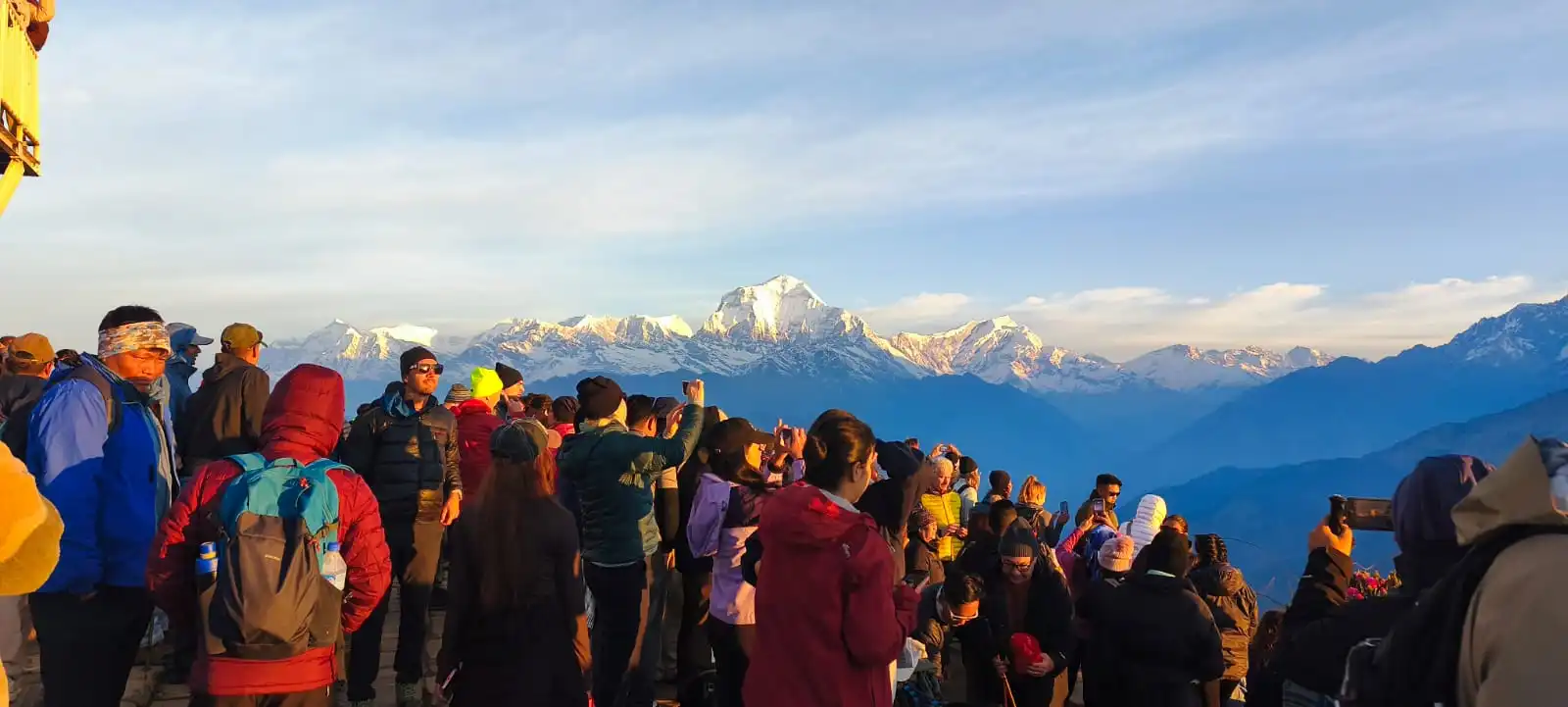
Poon Hill is one of the most rewarding viewpoints in Nepal for travelers who want to experience the Himalayas without committing to a long or extremely demanding expedition. Located in the Annapurna region, Poon Hill is best known for its spectacular sunrise, when the first golden light touches the snow-covered peaks of the Annapurna and Dhaulagiri ranges.
The Poon Hill Trek is a short Himalayan journey through traditional mountain villages, stone stairways, green forests, terraced hillsides, and rhododendron woodland. The trail also provides an opportunity to experience the daily life and hospitality of local Gurung and Magar communities.
One of the biggest attractions of this trek is its accessibility. You do not need weeks of trekking experience to enjoy it. With reasonable fitness, proper preparation, and a comfortable pace, beginners can also complete the journey.
For many trekkers, the early-morning walk to Poon Hill is the moment they remember most. Standing at the viewpoint while the mountains gradually change from dark silhouettes to glowing peaks creates a Himalayan experience that feels much bigger than the short distance walked to reach it.
Where Is Poon Hill Located?
Poon Hill lies in the Annapurna region of north-central Nepal, within the wider Annapurna trekking area. The viewpoint is situated above Ghorepani and offers a panoramic outlook toward some of Nepal’s most impressive Himalayan peaks.
The traditional Poon Hill trekking route commonly begins around Nayapul or, depending on the itinerary and road conditions, from places such as Ulleri or Tikhedhunga. The trail passes through villages including Ghorepani and often Tadapani before descending toward Ghandruk and the road network.
Poon Hill itself sits at approximately 3,210 meters (10,531 feet) above sea level.
Its location is particularly special because the viewpoint faces several major Himalayan ranges at once. Instead of seeing only one mountain, trekkers are rewarded with a broad mountain panorama.
Why Poon Hill Is Famous?
Poon Hill became famous because it provides an unusually accessible Himalayan viewpoint with a magnificent sunrise panorama.
The viewpoint is especially popular for views toward Dhaulagiri, Annapurna South, Machhapuchhre (Fishtail), Hiunchuli, Annapurna II, Annapurna III, Annapurna IV, Lamjung Himal and other surrounding peaks, depending on weather and visibility.
Another reason for its popularity is the combination of mountains and culture. The trek does not simply take you to a viewpoint and back. Along the way, you walk through old villages, cultivated hillsides, forests and traditional settlements.
The route also gives travelers a taste of Himalayan trekking without requiring the long acclimatization schedule associated with higher-altitude journeys.
Poon Hill Altitude and Elevation
Poon Hill stands at around 3,210 meters (10,531 feet).
Although this elevation is considerably lower than destinations such as Everest Base Camp, altitude should still be taken seriously. Some travelers may experience mild symptoms such as headache, tiredness or difficulty sleeping as they gain elevation.
The good news is that most Poon Hill itineraries increase altitude gradually. Ghorepani, one of the principal overnight stops, is located at roughly 2,860 meters, allowing trekkers to adapt before making the early-morning climb to the viewpoint.
A sensible walking pace, sufficient water, nutritious meals and adequate rest are more useful than trying to rush through the route.
What Makes the Poon Hill Sunrise So Special?
The sunrise from Poon Hill is not simply about waking up early and looking at mountains. It is the gradual transformation of the entire Himalayan landscape.
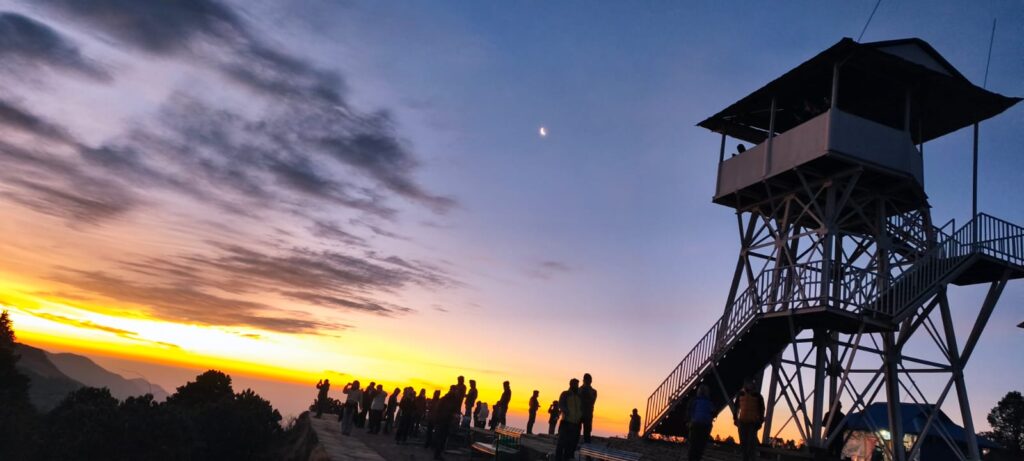
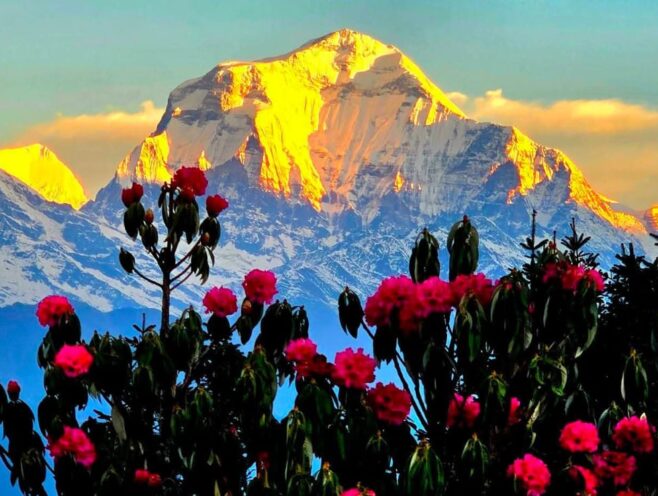
Before sunrise, the mountains appear as dark silhouettes against the changing sky. Then a soft glow begins to appear behind the peaks. As sunlight reaches the higher summits, Dhaulagiri and the Annapurna range can turn shades of gold, orange and pink.
The experience changes from minute to minute.
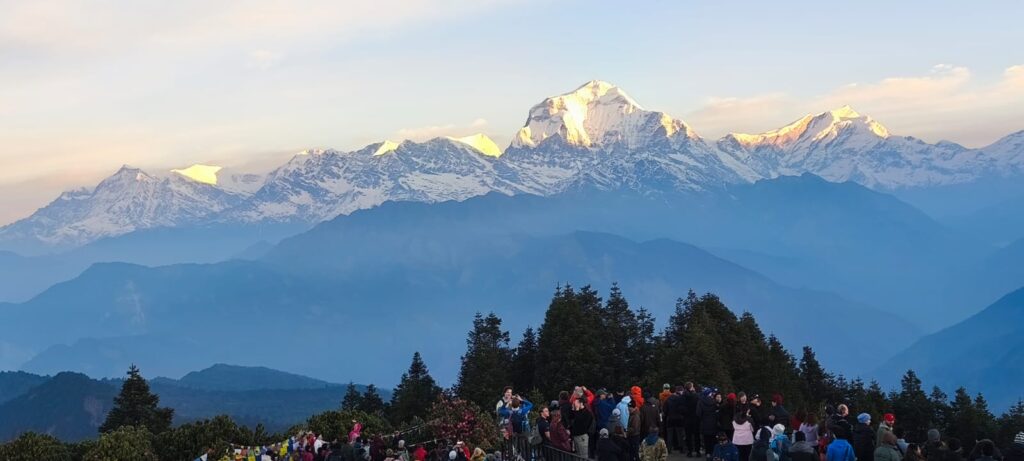
On a clear morning, the panoramic view can stretch across a remarkable section of the Himalayas. The surrounding peaks seem to rise directly from the valleys below, while the lower hills remain covered in shadow.
This is why trekkers often consider Poon Hill sunrise the emotional highlight of the entire journey.
Mountain Views From Poon Hill
Poon Hill provides one of the most impressive mountain panoramas available on a relatively short trek.
Among the notable peaks visible from the viewpoint are:
- Dhaulagiri I
- Tukuche Peak
- Nilgiri
- Annapurna South
- Annapurna I
- Annapurna II
- Annapurna III
- Annapurna IV
- Machhapuchhre
- Hiunchuli
- Lamjung Himal
Visibility depends heavily on weather. During clear autumn and spring mornings, the mountain panorama can be exceptionally sharp.
Machhapuchhre is particularly recognizable because of its distinctive double summit. Dhaulagiri, meanwhile, dominates the western skyline with its massive white face.
The best photographs usually come from combining the mountain panorama with foreground elements such as prayer flags, trees, ridges and fellow trekkers.
Poon Hill Trek Difficulty
The Poon Hill Trek is usually considered easy to moderate, but it should not be mistaken for a completely effortless walk.
The major challenge is the repeated stone steps and uphill sections. The pre-sunrise climb from Ghorepani to Poon Hill can feel particularly demanding because it is undertaken in darkness and cold conditions.
However, there are no technical climbing sections. You do not need ropes, mountaineering equipment or previous high-altitude climbing experience.
With a steady pace and appropriate breaks, most reasonably fit travelers can complete the trek.
How to Get to the Poon Hill Trek Starting Point
Most international travelers first arrive in Kathmandu and then travel to Pokhara.
Pokhara is the main gateway for the Annapurna region. From Pokhara, private vehicles or local transportation can take trekkers toward the starting point.
The exact starting location depends on the selected itinerary. Some routes begin around Nayapul, while shorter versions use road access to places such as Ulleri.
Road conditions can change, especially during the monsoon season, so transportation arrangements should be checked before departure.
Best Time to Visit Poon Hill
The best seasons for the Poon Hill Trek are generally spring and autumn .
Spring: March to May
Spring brings pleasant trekking temperatures and colorful rhododendron forests. March and April are particularly attractive because many hillsides become covered with blooming rhododendrons.
Autumn: September to November
Autumn usually offers stable weather, clear mountain views and comfortable daytime trekking conditions. October and November are especially popular.
Winter: December to February
Winter can be cold, particularly during the early morning. However, clear days can provide excellent mountain visibility. Snow is possible around higher parts of the route.
Monsoon: June to August
Rain can make trails slippery and reduce mountain visibility. Leeches may also be present in wet forest sections. Nevertheless, experienced travelers who do not mind rain can still enjoy the lush landscapes.
Poon Hill Weather and Temperature
Weather around Poon Hill changes according to season and elevation.
Mornings can be cold, especially when leaving Ghorepani before sunrise. Daytime temperatures become more comfortable once the sun rises.
During spring and autumn, daytime trekking conditions are generally pleasant, while nighttime temperatures can fall considerably.
Winter mornings can be freezing, particularly at the viewpoint.
Monsoon brings warmer temperatures but frequent rainfall and cloud cover.
Instead of relying on a single temperature figure, trekkers should prepare for changing conditions throughout the day.
Is Poon Hill Trek Suitable for Beginners?
Yes. Poon Hill is one of the more approachable Himalayan treks for beginners.
Its relatively short duration, established teahouses, accessible trail and moderate elevation make it an attractive first trekking experience.
However, beginners should not underestimate the stone steps. The trail can be physically tiring, particularly on uphill sections.
Walking slowly, taking regular breaks and carrying only essential belongings can make the journey much more enjoyable.
Poon Hill Trek Distance and Walking Hours
The total distance varies according to the chosen route and transportation points.
A typical itinerary involves approximately 5–7 hours of walking on some trekking days , while shorter days may require less.
The distance itself is less important than the terrain. A few kilometers of continuous stone steps can feel harder than a longer walk on a flat trail.
For this reason, trekkers should consider elevation gain, stairs and trail conditions rather than focusing only on the total kilometer count.
Sunrise vs. Sunset at Poon Hill
Poon Hill is overwhelmingly famous for sunrise, and for good reason.
Sunrise offers the opportunity to watch the mountains gradually brighten as the first sunlight reaches their summits. It is also the traditional experience associated with the viewpoint.
Sunset can be beautiful as well, but reaching Poon Hill for sunrise generally provides the more memorable atmosphere.
The pre-dawn darkness, cold mountain air and gradual appearance of the Himalayan peaks create a unique sense of anticipation. If weather permits, sunrise is the experience not to miss.
Villages and Local Culture Along the Trail
The Poon Hill route passes through communities where mountain tourism is closely connected with everyday life.
Ghorepani is a busy trekking settlement with teahouses, shops and lodges. Ghandruk, meanwhile, offers a deeper cultural experience and is well known for its Gurung heritage.
You can see traditional houses, terraced farmland, prayer flags and local community spaces along the route.
A respectful traveler does more than take photographs. Greeting local people, asking before photographing individuals and supporting locally owned teahouses and shops are simple ways to travel responsibly.
Forests, Rhododendrons and Wildlife
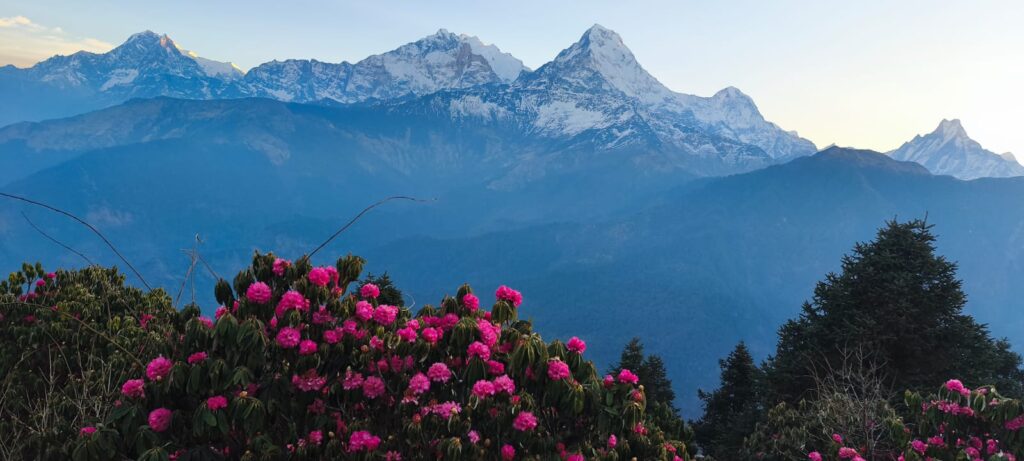
The trail passes through beautiful woodland, including large areas of rhododendron forest. During spring, the forest can become especially colorful when rhododendrons bloom. The combination of red, pink or white flowers, moss-covered trees and mountain air gives the trail a completely different character from the open Himalayan viewpoints.
Birdlife is common in the forests, while the wider Annapurna region is home to numerous Himalayan animals. Trekkers should avoid feeding wildlife and should maintain a respectful distance whenever animals are encountered.
Poon Hill Trek Itinerary: Day-by-Day
A comfortable itinerary can be completed in around 4–5 days, depending on the starting and ending points.
Day 1: Pokhara to Tikhedhunga or Ulleri
The journey begins from Pokhara with a drive toward the trekking area. From the roadhead, the trail gradually enters the hills.
Ulleri is famous for its long stone staircase. The climb can be demanding at first, but the scenery and village atmosphere make the effort worthwhile.
Day 2: Ulleri to Ghorepani
The trail passes through beautiful forests, particularly impressive during the rhododendron blooming season. After several hours of walking, you reach Ghorepani.
Ghorepani is the important overnight stop before the early-morning Poon Hill climb.
Day 3: Ghorepani to Poon Hill, then Tadapani
Before dawn, you begin the uphill walk toward Poon Hill. After enjoying the sunrise and mountain panorama, you return to Ghorepani for breakfast.
The trail then continues toward Tadapani through forests and mountain terrain.
Day 4: Tadapani to Ghandruk
The route descends through woodland toward Ghandruk, one of the most beautiful and culturally significant villages in the Annapurna region.
Ghandruk provides excellent views of the surrounding mountains and offers a closer look at traditional Gurung life.
Day 5: Ghandruk to Pokhara
After breakfast, you descend toward the roadhead and drive back to Pokhara.
The itinerary can be shortened or extended depending on transport availability, walking ability and personal preference.
Food and Accommodation on the Poon Hill Trek
Teahouses and small mountain lodges provide the main accommodation along the route. Rooms are generally simple, clean and practical, with shared facilities in many locations. Some lodges offer rooms with attached bathrooms, but availability varies.
Food is surprisingly varied for a mountain trail. Dal bhat, the traditional combination of rice, lentil soup and vegetables, is one of the most reliable meals.
You can also find noodles, pasta, soups, potatoes, eggs, momos, Tibetan-style bread and other simple dishes. Eating local meals is not only convenient but also supports the communities along the trekking route.
Internet, Wi-Fi, Electricity and Mobile Network Charging Facility on Poon Hill Trek
Communication facilities are available in many villages along the route, although service quality varies.
Some teahouses offer Wi-Fi for an additional charge. The connection can be slow, particularly when many trekkers are online.
Electricity is available in most major settlements, and many lodges provide charging facilities. Charging may involve an additional fee, especially in higher or busier villages.
A power bank is highly recommended. Keeping your phone in airplane mode when you are not using it can also conserve battery.
Mobile network coverage can be inconsistent in forested and mountainous sections, so do not depend entirely on your phone for communication.
Cost and Permits Required for Poon Hill Trek
The cost of the Poon Hill Trek depends on the duration, transportation, accommodation standard, guide and porter services, meals and personal expenses.
Major expenses can include:
- Transportation between Pokhara and the trailhead
- Accommodation
- Meals
- Guide or porter services
- Conservation and local entry fees
- Drinking water
- Charging and Wi-Fi
- Personal expenses
For foreign trekkers, the Annapurna Conservation Area Permit (ACAP) is required for routes inside the conservation area. Permit requirements and applicable fees should be confirmed before departure because regulations can change.
A guided trek generally costs more than traveling independently, but it provides logistical support and local expertise.
What to Pack for the Poon Hill Trek
Because Poon Hill is a short trek, you do not need an enormous backpack.
Essential items include:
- Comfortable trekking shoes
- Warm jacket
- Waterproof jacket
- Comfortable trekking trousers
- Thermal layers
- Warm hat and gloves
- Sunglasses
- Sunscreen
- Water bottle
- Small first-aid kit
- Headlamp
- Power bank
- Personal medications
- Basic toiletries
- Sleeping bag, especially during colder months
Good footwear is particularly important because the route contains many stone steps and uneven surfaces.
Altitude Sickness and Safety Tips
- Although Poon Hill is not an extreme-altitude trek, altitude-related symptoms can occur.
- Common mild symptoms may include headache, tiredness, dizziness or reduced appetite.
To reduce the risk:
- Walk at a comfortable pace.
- Drink enough water.
- Avoid excessive alcohol.
- Get sufficient sleep.
- Do not ignore unusual symptoms.
- Tell your guide immediately if you feel unwell.
- Avoid rushing to gain altitude.
Weather is another important safety factor. Wet stone steps can become slippery, while early-morning darkness makes a headlamp essential.
Poon Hill Trek With Children and Older Travelers
Poon Hill can be suitable for families and older travelers when the itinerary is planned according to individual fitness and health.
The main difficulty is the large number of steps in certain sections. A slower itinerary with shorter walking days can make the trek more comfortable. Families should allow children enough time to rest and should avoid making the trek a race.
Older trekkers should consider their personal fitness and consult a medical professional if they have concerns about traveling at altitude. With proper planning, the trail can become a memorable family Himalayan experience.
Solo Trekking vs. Hiring a Guide and Porter
Independent trekking can offer flexibility, but hiring a local guide can make the journey easier and more meaningful.
A guide knows the trail, understands local customs, helps communicate with teahouses and can respond more effectively when unexpected situations occur.
A porter can also make a major difference by carrying the heavier part of your luggage, allowing you to enjoy the trail with a lighter daypack.
For first-time visitors to Nepal, a guide is especially valuable because the experience becomes more than simply following a trail. You gain insight into the villages, culture, mountains and local way of life.
Why Choose Create Himalaya Adventure for Poon Hill Trek?
Choosing the right trekking company can shape the entire experience, particularly for first-time visitors to Nepal. Create Himalaya Adventure is a Nepal-based local trekking company with more than 19 years of experience organizing trekking and Himalayan travel. Our approach focuses on practical itineraries, experienced local guides, responsible tourism and personal attention rather than simply moving travelers from one destination to another.
For the Poon Hill Trek, we can arrange transportation, permits, accommodation, experienced trekking guides and porter support according to your needs. We also understand that every traveler has a different pace. Some people want a short and comfortable Poon Hill itinerary, while others prefer to combine Poon Hill with Ghandruk, Mardi Himal, Annapurna Base Camp or another Annapurna adventure.
Our goal is to create a journey that feels personal rather than standardized. We believe trekking should benefit the people who live along the trail as well. Using local teahouses, working with local guides and porters, respecting cultural traditions and minimizing unnecessary waste are important parts of responsible Himalayan tourism.
With Create Himalaya Adventure , Poon Hill is not simply a sunrise viewpoint. It is an opportunity to walk through the Annapurna landscape, meet mountain communities and experience the quieter side of Nepal. For travelers looking for a short Himalayan trek with extraordinary mountain scenery, cultural encounters and a genuinely rewarding walking experience, Poon Hill remains one of Nepal’s finest choices .
Frequently Asked Questions
1. Can I See the Himalayas Clearly From Poon Hill All Year Round?
No. Poon Hill can be visited throughout the year, but clear Himalayan views are not guaranteed every day. Autumn and spring generally provide the best chance of seeing sharp mountain panoramas. Winter can also bring very clear mornings, although it is colder. During the monsoon, clouds, rain and mist frequently hide the mountains. Even in the best season, weather can change quickly, so sunrise visibility ultimately depends on the conditions that morning.
2. What Time Do Trekkers Usually Leave Ghorepani for the Viewpoint?
Most trekkers wake up around 4:30–5:00 AM and leave Ghorepani while it is still dark. The walk to the viewpoint usually takes around 45 minutes to 1 hour, depending on your pace and where your accommodation is located. It is better to leave early rather than arrive at the last minute because the viewpoint can become busy before sunrise. Carry a headlamp or flashlight because the trail is dark before dawn.
3. How Crowded Does Poon Hill Get During Sunrise?
Poon Hill can become quite busy during the popular trekking seasons, particularly in October, April and other clear-weather periods. Many trekkers arrive at the viewpoint before sunrise, so you should expect other people around the viewing platform. However, the atmosphere remains enjoyable because everyone is there for the same spectacular Himalayan sunrise. Starting slightly earlier can help you find a good viewing position before the main crowd arrives.
4. Do I Need to Carry My Own Backpack During the Trek?
You only need to carry a small daypack if you hire a porter. Your porter can carry your main trekking bag, while you keep essentials such as water, snacks, a camera, sunscreen, rain gear and warm clothing with you. If you prefer to trek independently, you can carry your own backpack, but keeping your luggage light will make the many uphill and downhill steps considerably easier.
5. Are There ATMs Available Along the Poon Hill Trail?
You should **not depend on ATMs along the trekking route. Financial services are limited once you leave the larger towns. It is safest to withdraw enough Nepalese rupees in Pokhara before starting the trek. Carry some extra cash because you may need money for drinks, charging, hot showers, snacks, Wi-Fi or other personal expenses.
6. Can I Pay by Credit Card or Digital Wallet in the Mountain Villages?
Some established lodges may accept digital payments or cards, but you should not assume that every teahouse has this facility. Internet connectivity and payment systems can be unreliable in the mountains. Cash remains the most dependable payment method along the Poon Hill route. Carry sufficient Nepalese currency so that you are not dependent on electronic payment services.
7. Is Hot Shower Available During the Poon Hill Trek?
Yes, hot showers are available at many teahouses, particularly in larger villages such as Ghorepani and Ghandruk. However, a hot shower is often an additional service rather than something included in the room price. Availability can depend on the lodge, weather and its heating system. During colder periods, hot water may be limited, so it is wise to ask about shower facilities when checking into your accommodation.
8. Are Toilets Easily Available Along the Walking Trail?
Toilets are available at teahouses and villages along the route, but you should not expect public toilets at every section of the trail. During longer walking sections, facilities may be separated by several hours. It is therefore sensible to use the toilet before leaving a village and carry a small pack of tissues and hand sanitizer. Always use designated facilities rather than going near water sources or cultivated land.
9. Can I Buy Snacks, Drinks and Trekking Essentials Along the Route?
Yes. Small shops and teahouses along the Poon Hill trail commonly sell bottled or filtered water, tea, coffee, soft drinks, chocolate, biscuits, instant noodles and other snacks. Basic trekking necessities may also be available in larger settlements. However, the selection becomes more limited compared with Pokhara. If you have a specific snack, medication or personal item you need, purchase it before beginning the trek.
10. Is It Possible to Charge a Phone at the Mountain Lodges?
Yes, most established teahouses have some form of electricity and charging facility. Charging may cost extra, especially when demand is high. Electricity can occasionally be affected by local conditions, so do not assume your device will always be fully charged. Bringing a power bank is a simple way to avoid unnecessary worry. It is especially useful because you may want your phone fully charged for the pre-dawn sunrise walk and photography.
11. Should I Carry Nepalese Rupees for the Poon Hill Trek?
Yes. Carrying Nepalese rupees in cash is strongly recommended. Although some businesses may offer digital payment or card facilities, cash is much more reliable in mountain villages. Withdraw your trekking budget in Pokhara or Kathmandu before departure and keep a little extra for unexpected expenses. Divide your cash between different parts of your luggage rather than keeping everything in one place.
12. Can I Leave Extra Luggage in Pokhara Before Starting the Trek?
Yes. Most travelers do not take all their belongings to the mountains. Hotels in Pokhara commonly provide luggage storage for guests who are returning after the trek. Trekking companies can also help arrange luggage storage when required. Leave unnecessary clothes, large suitcases and items that you will not use on the trail behind, and take only the equipment required for the trek.
13. Is Drinking Tap or Spring Water Safe on the Poon Hill Trail?
Natural water sources are found along the route, but you should not automatically assume that untreated spring or tap water is safe to drink. Water quality can vary from one location to another. Trekkers can use treated water, purification tablets, a suitable filtration system or refill stations where available. Reusing a water bottle and treating refill water is also a more environmentally responsible option than relying entirely on single-use plastic bottles.
14. Are There Any Long Sections Without a Teahouse?
The Poon Hill route is relatively well developed compared with many remote Himalayan treks. Villages and teahouses are available at regular intervals on the popular route. However, there are still forested and quieter stretches where you will not find accommodation, food or shops immediately nearby. This is why it is sensible to carry enough drinking water and a few snacks whenever you begin a walking day.
15. What Should I Do If It Rains During the Morning Sunrise Hike?
If rain begins before or during the sunrise walk, prioritize safety over the view. Wear a waterproof jacket, protect your backpack and use a headlamp so you can clearly see slippery sections. Stone steps and forest trails can become slick after rain. If conditions are particularly poor, returning to the lodge may be the wiser choice. Missing one sunrise is far better than taking an unnecessary risk on a wet mountain trail.
16. Can I Store My Luggage at the Teahouses Overnight?
Yes. Teahouses generally provide space for guests to keep their trekking bags inside their rooms or designated storage areas. Keep valuable belongings such as passports, cash, electronics and important documents with you rather than leaving them unattended. A small combination lock can provide additional peace of mind if you are sharing storage space.
17. Is a Headlamp Really Necessary for the Early-Morning Walk?
Yes, a headlamp is highly recommended.The traditional Poon Hill sunrise experience requires leaving Ghorepani before daylight. The trail and stone steps can be difficult to see in darkness, particularly if the sky is cloudy. A headlamp keeps both hands free for balance and is much more practical than using your phone flashlight. Carry spare batteries or make sure the rechargeable headlamp is fully charged before sleeping.
18. Can I Complete the Poon Hill Trek Without Camping Equipment?
Yes. Camping equipment is not normally required for the standard Poon Hill Trek. The popular route has numerous teahouses and mountain lodges where trekkers can sleep and eat. This makes Poon Hill considerably easier to organize than remote camping treks. You can travel with a relatively light backpack and leave tents, cooking equipment and other expedition-style gear at home.
19. What Happens if I Cannot Reach Poon Hill Before Sunrise?
Do not worry. Missing the exact sunrise does not mean the viewpoint is no longer worthwhile. The mountains can remain beautifully illuminated after sunrise, and visibility may sometimes improve as morning clouds move away. If you are running late, walk at a safe pace rather than rushing up the steps in darkness. The mountain panorama is more important than arriving at a specific minute.
20. Can Poon Hill Be Combined With Another Annapurna Trek?
Yes. Poon Hill is particularly easy to combine with other journeys in the Annapurna region. Popular combinations include Ghandruk, Tadapani, Annapurna Base Camp, Khopra Ridge and Mardi Himal, depending on the available time and desired difficulty.
For example, trekkers can use the Poon Hill route as part of a longer Annapurna adventure rather than returning immediately to Pokhara. This allows you to enjoy the famous sunrise while continuing deeper into the mountains. A customized itinerary is usually the best option if you want to combine Poon Hill with another trek, because the route and number of days can be adjusted according to your fitness, interests and travel schedule.

Ramchandra Lamichhane
Trekking Expert
No hidden fees • Local experts • Best price guarantee