
Pungen Gompa: A Peaceful Side Trip of the Manaslu Circuit Trek
Introduction
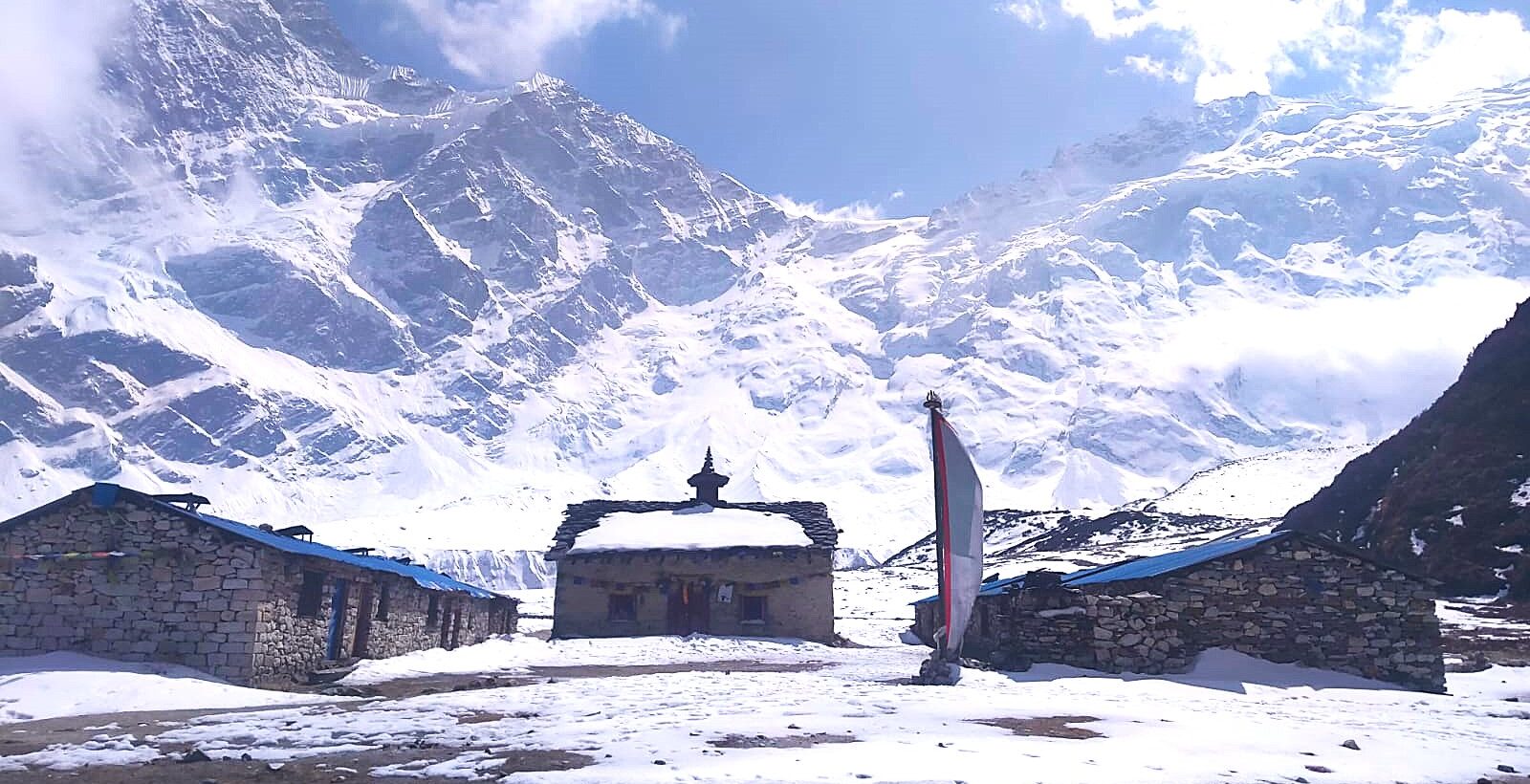
The Pungen Gompa side trip is one of the quieter experiences available during the Manaslu Circuit Trek. While most trekkers are excited about crossing Larkya La, visiting Manaslu Base Camp, or reaching the beautiful village of Samagaun, Pungen Gompa offers something different: a chance to slow down and experience the spiritual character of the high Himalayas.
The monastery stands in a remote mountain setting above Samagaun, surrounded by open alpine landscapes and the dramatic peaks of the Manaslu range. The journey to the gompa is not simply a walk to see an old religious building. It is a short Himalayan adventure involving a steady climb, changing scenery, high-altitude terrain, and an opportunity to understand the Buddhist traditions of the Nubri Valley.
Pungen Gompa is generally visited as a day excursion from Samagaun, allowing trekkers to explore the higher landscape without carrying their main backpacks or spending another night at the monastery. The excursion is also useful during the acclimatization period before continuing toward Samdo and Larkya La. Nepal Tourism Board’s Manaslu itinerary specifically includes Pungen Gompa as one of the possible day-hike options from Samagaun.
For travelers who enjoy combining mountain scenery with local culture, Pungen Gompa can become one of the most memorable stops on the Manaslu journey.
Where Is Pungen Gompa Located?
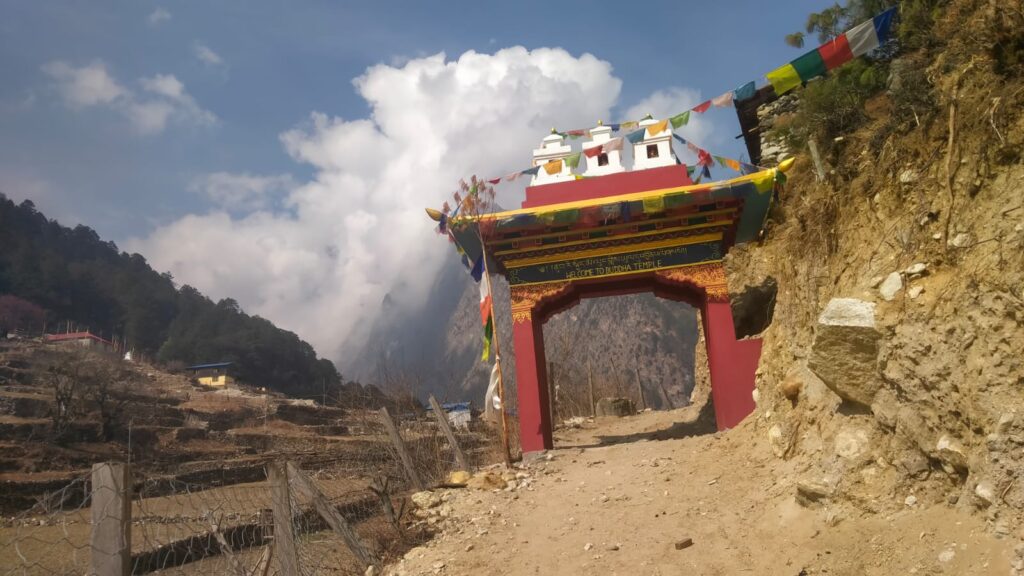
Pungen Gompa is located in the Manaslu region of northern Nepal, above the village of Samagaun in the upper Budhi Gandaki Valley. Samagaun is one of the major settlements on the Manaslu Circuit and an important acclimatization point before trekkers move toward Samdo and the Larkya La area.
The monastery is away from the main trekking trail, which is one reason the surroundings feel considerably quieter than some of the better-known stops on the circuit. The side trail moves away from the village and gradually enters a more open, high-altitude landscape.
Depending on the route followed, descriptions of the approach vary. Some itineraries treat Pungen Gompa as a side trip from Samagaun, while others connect the area with the trail between Shyala and Samagaun. The important point for trekkers is that Samagaun is the principal base for visiting the gompa.
The remote location gives Pungen Gompa its character. There are no roads reaching the monastery, no busy market, and no large tourist infrastructure. Instead, there are mountain paths, grazing areas, prayer flags, rocky slopes and an enormous Himalayan landscape.
Pungen Gompa Height and Elevation
Pungen Gompa is situated at approximately 4,000 meters (13,123 feet) above sea level. Some route descriptions give slightly different figures, so trekkers may encounter small variations on maps and GPS devices. For practical trekking purposes, it is best to consider the monastery a roughly 4,000-meter destination.
This elevation makes the side trip more demanding than an ordinary village walk. Samagaun itself is already around 3,500 meters, meaning the hike involves a significant additional climb before returning to the village.
The elevation is also what makes the excursion useful as part of a well-planned acclimatization schedule. You can walk to a higher point during the day and return to Samagaun for the night rather than sleeping at 4,000 meters.
However, an acclimatization hike should not be treated as a race. Walk slowly, drink enough water, eat properly and listen to your body. Headache, unusual tiredness, dizziness, nausea or difficulty walking normally should not be ignored at high altitude.
The exact walking time varies with the route, weather, trail condition and individual pace. Many itineraries describe the excursion as a half-day to full-day outing, with approximately 5–7 hours of walking for the return journey.
History and Spiritual Significance of Pungen Gompa
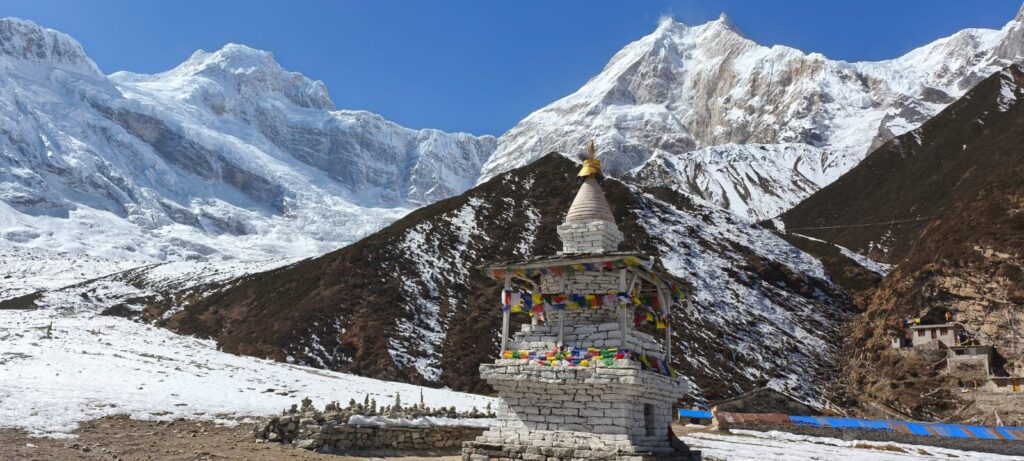
Pungen Gompa is more than a viewpoint surrounded by mountains. It is part of the religious landscape of the Nubri Valley, where Tibetan Buddhist traditions have shaped local culture for generations.
Local traditions associate Pungen with a protective deity connected with the mountains of the region. The spiritual relationship between people, mountains and monasteries is particularly strong in the upper Manaslu area. Religious places such as Pungen Gompa have historically served not only as places of worship but also as important parts of community life.
Historical accounts and local traditions place the origins of the monastery several centuries ago, although exact dates differ among sources. Some accounts date its establishment to around the seventeenth century. Its history has also been connected with the difficult environmental conditions of the high Himalayas and the continuing efforts of local communities to preserve their religious heritage.
The meaning of a Himalayan gompa cannot always be understood simply by looking at its walls or prayer flags. For local communities, it represents faith, protection, tradition and a connection with generations who lived in these remote valleys long before modern trekking became popular.
Visitors should therefore approach Pungen Gompa as a living religious site rather than treating it only as a tourist attraction. If monks are praying or performing a ceremony, remain quiet and follow the instructions of your guide or local people.
Photography may be acceptable in outdoor areas, but visitors should always ask before photographing religious ceremonies, monks or the interior of the monastery.
How to Reach Pungen Gompa
The most practical way to visit Pungen Gompa is to make it a side hike from Samagaun.
After reaching Samagaun on the Manaslu Circuit, trekkers can leave their main luggage at their accommodation and carry only a daypack. The trail gradually leaves the village and climbs toward the higher landscape.
The scenery changes as you gain altitude. Lower sections around the settlement give way to open grazing areas and alpine terrain. The trail becomes increasingly exposed, and the surrounding mountains begin to dominate the landscape.
There is no need to rush. A steady pace is particularly important because the altitude is considerable. Your guide can also select the most suitable route according to weather, trail condition and your physical condition.
The route is not a technical mountaineering climb, but it should not be underestimated. Rocky ground, steep sections, cold wind and sudden weather changes can make the hike demanding. The return journey is generally easier in terms of altitude gain, but tired legs can make the descent uncomfortable.
Because trail descriptions and distances vary, it is better to confirm the day’s route with your local guide rather than relying on a single published distance. Different approaches can produce noticeably different walking figures.
Pungen Gompa on the Manaslu Circuit Trek
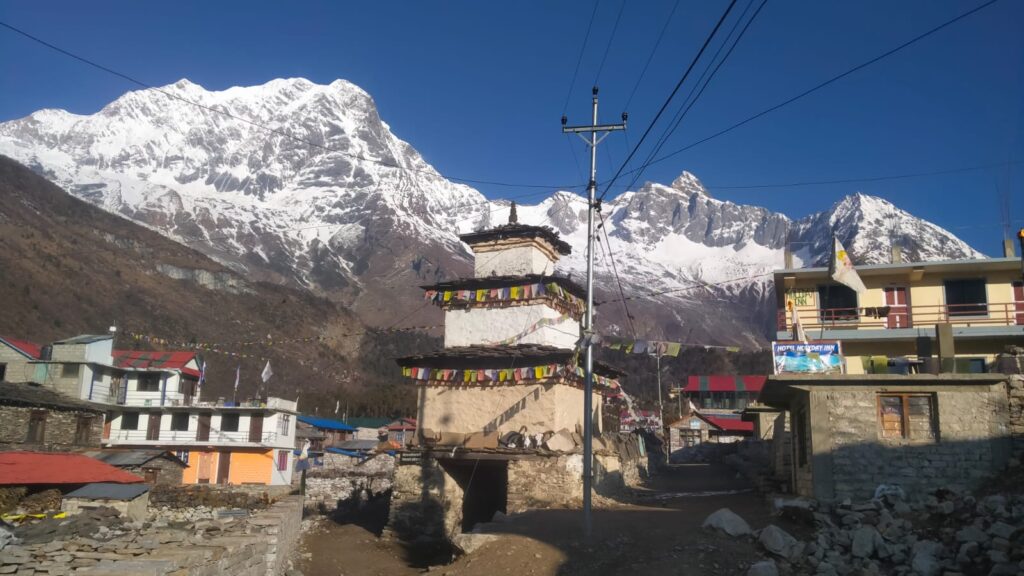
Pungen Gompa fits naturally into the Manaslu Circuit Trek because Samagaun is already an important acclimatization stop.
After several days of walking through the lower Budhi Gandaki Valley, trekkers reach the high mountain environment around Lho, Shyala and Samagaun. The landscape becomes wider, colder and more dramatic. At this point, taking a rest or acclimatization day is valuable before continuing toward Samdo and eventually Larkya La.
Instead of spending the entire acclimatization day inside the teahouse, trekkers can use it to explore Pungen Gompa.
This side trip has another advantage: you return to Samagaun to sleep. That means you can experience a higher elevation during the daytime while keeping your overnight altitude lower.
The Nepal Tourism Board includes a day excursion from Samagaun to either Manaslu Base Camp or Pungyen Gompa within its Manaslu trekking outline.
Pungen Gompa is therefore not an unrelated detour. It can be incorporated into the natural rhythm of the Manaslu Circuit, particularly for travelers who want their acclimatization day to include culture as well as mountain scenery.
What Can You See Around Pungen Gompa?
The biggest attraction around Pungen Gompa is the landscape itself.
The monastery sits in an environment where the scale of the mountains becomes difficult to describe with ordinary words. The Manaslu massif dominates the horizon, while surrounding peaks, glaciers and rocky ridges create a powerful high-Himalayan setting.
On a clear day, the area provides excellent opportunities to appreciate the southern side of Manaslu and the surrounding mountain wilderness. The changing light can make the scenery look completely different in the morning, around midday and later in the afternoon.
The trail itself is also part of the attraction. Depending on the season and route, you may encounter alpine meadows, yak-grazing areas, small chortens, prayer flags and rugged mountain slopes.
The wider Samagaun area offers other interesting places as well. Birendra Lake and the route toward Manaslu Base Camp are among the best-known nearby excursions, although they offer different experiences from Pungen Gompa. Pungen Gompa is particularly appealing to travelers interested in the combination of Himalayan scenery and Buddhist heritage.
For photographers, the location provides opportunities for wide mountain landscapes, monastery architecture, prayer flags and traditional Himalayan scenery. Early or clear-weather conditions generally offer the best visibility.
Best Time to Visit Pungen Gompa
The best seasons for visiting Pungen Gompa are generally spring and autumn, when trekking conditions in the Manaslu region are most favorable.
Spring: March to May
Spring brings gradually warmer days and clearer trekking conditions. The lower and middle sections of the Manaslu route become particularly attractive as vegetation returns and mountain views open up.
March can still be cold at higher elevations, while April and May are generally more comfortable for high-altitude trekking.
Autumn: September to November
Autumn is one of the most popular periods for the Manaslu Circuit. After the monsoon, the air often becomes clearer, producing excellent Himalayan visibility.
October and November are especially attractive for trekkers who want crisp mountain scenery and relatively stable conditions.
Winter
Winter can make the side trip considerably harder. Snow, freezing temperatures and difficult trail conditions may affect access to the monastery. Short daylight hours also require careful planning.
Monsoon
June to August is less suitable for this high-altitude side trip because of rain, cloud, wet trails and possible landslides on lower sections of the Manaslu route. Conditions can also change rapidly in the mountains.
Accommodation, Food and Facilities
There is generally no need to stay overnight at Pungen Gompa. Trekkers normally make the visit as a day trip and return to Samagaun for accommodation.
Samagaun has teahouses and lodges providing basic trekking accommodation and meals. Trekkers can normally find familiar expedition food such as dal bhat, noodles, rice, pasta, soup, potatoes, Tibetan-style dishes and simple breakfast items.
Facilities become increasingly basic as you move farther into the high mountains. Electricity, hot showers, charging and internet access may be available in Samagaun but can be limited or unreliable compared with Kathmandu or Pokhara.
For the Pungen Gompa hike, carry enough drinking water, snacks, sun protection, warm clothing and a small first-aid supply. Weather at around 4,000 meters can change quickly, so even a sunny morning should not be considered a guarantee of comfortable conditions throughout the day.
A licensed local guide is strongly recommended for the excursion. The Manaslu region is a restricted trekking area, and trekking arrangements involve specific permit and guide requirements. Your trekking agency should arrange the necessary permits and confirm the current regulations before departure.
Why Visit Pungen Gompa?
Pungen Gompa is worth visiting because it adds a quieter and more cultural side to the Manaslu Circuit Trek. Located above Samagaun, the monastery combines Buddhist heritage with close views of the surrounding Himalayan landscape.
There are several good reasons to include the side trip:
- A peaceful escape from the main trail: The side route to Pungen Gompa takes you away from the busier trekking path and into a quieter mountain environment.
- A chance to experience Buddhist culture: Pungen Gompa reflects the Buddhist traditions of the Nubri Valley. The monastery, prayer flags and surrounding landscape create a strong sense of the region’s spiritual heritage.
- Close views of Manaslu: From the higher position around the gompa, you can enjoy impressive views of Mount Manaslu and the surrounding peaks.
- A useful acclimatization hike: The hike allows you to gain elevation during the day before returning to Samagaun for the night. This makes it a practical excursion during the acclimatization period.
- A quieter trekking experience: Unlike some major stops on the Manaslu Circuit, Pungen Gompa is not simply a place to pass through. The peaceful surroundings give you more time to enjoy the mountains and monastery.
- A more personal side of the Manaslu trek: The experience is less about ticking off a famous landmark and more about enjoying the quiet landscape, prayer flags, mountain wind and traditional Buddhist surroundings.
Pungen Gompa is one of those places.
If your Manaslu Circuit itinerary includes enough time in Samagaun, adding this side trip can turn an ordinary acclimatization day into a meaningful Himalayan experience. It combines mountain scenery, Buddhist culture, local history and high-altitude adventure without requiring a separate multi-day expedition.
For trekkers who want to experience more than the standard route, Pungen Gompa is a rewarding side trip on the Manaslu Circuit Trek—quiet, remote and deeply connected with the landscape and culture of the Manaslu region.
FAQs About Pungen Gompa
Is Pungen Gompa suitable for first-time trekkers?
Yes, reasonably fit beginners can visit Pungen Gompa, but the hike should not be treated as an easy village walk. The altitude, uphill sections and thin air make it more demanding than lower-altitude trekking. A slow pace and proper acclimatization are important.
How long does the Pungen Gompa side trip take?
The excursion commonly takes around 5 to 7 hours round trip, depending on the route, walking speed, weather and trail conditions. Your guide may adjust the timing according to the group’s fitness and the conditions on the day.
Can Pungen Gompa be visited without carrying a large backpack?
Yes. Most trekkers visit the monastery as a day excursion from Samagaun, so you can leave your main trekking luggage at your lodge and carry only a lightweight daypack with water, snacks, warm clothing and personal essentials.
Is a guide necessary for the Pungen Gompa excursion?
A local guide is highly recommended. The side trail can be less obvious than the main Manaslu Circuit route, and a guide can help with navigation, weather decisions, local customs and altitude-related concerns.
Can I visit Pungen Gompa and Manaslu Base Camp on the same day?
It may be possible for very strong and well-acclimatized trekkers, but combining both excursions makes for a long and demanding day. It is generally better to choose one destination according to your fitness, available time and acclimatization needs.
What should I carry for the Pungen Gompa day hike?
Carry sufficient water, sunglasses, sunscreen, a warm layer, waterproof clothing, snacks, a small first-aid kit and a phone or camera. Trekking poles can also be useful on steep or uneven sections.
Does the monastery remain open to visitors throughout the day?
Access can depend on local circumstances, religious activities and the presence of caretakers or monks. Visitors should not assume that every part of the monastery is freely accessible. Follow local instructions and respect any restricted areas.
Are there any religious ceremonies at Pungen Gompa?
Religious activities can take place according to the Buddhist calendar and local traditions. If a ceremony is happening during your visit, observe quietly and avoid disturbing worshippers or monks.
Can children visit Pungen Gompa during a Manaslu trek?
Older children who are accustomed to hiking may be able to make the excursion, but altitude is the main consideration. Young children and anyone struggling with the elevation should not be pushed to continue simply to reach the monastery.
Is there mobile phone coverage near Pungen Gompa?
Mobile connectivity can be weak, intermittent or unavailable in remote sections around the monastery. Trekkers should not depend on a phone signal for navigation or emergency communication.
Can I charge my phone during the Pungen Gompa hike?
There are no reliable charging facilities at the monastery itself. Fully charge your devices in Samagaun and carry a power bank if you need your phone or camera throughout the day.
Is photography allowed at Pungen Gompa?
Outdoor photography is generally appropriate, but religious buildings and activities should be photographed respectfully. Always ask permission before taking close-up photographs of monks, worshippers or ceremonies.
What happens if the weather changes while hiking to the monastery?
Mountain weather can change quickly, particularly at higher elevations. If clouds, snowfall, strong winds or poor visibility develop, your guide may recommend turning back. Reaching the monastery is never more important than returning safely.
Is there drinking water available along the side trail?
Water sources may be limited and should not be relied upon without proper treatment. It is safer to leave Samagaun carrying enough drinking water for the entire excursion and use purification methods if additional natural water is collected.
Can Pungen Gompa be visited during winter?
Winter visits are possible only when conditions permit, but snow, freezing temperatures and difficult trails can make the excursion considerably harder. Route conditions should be checked locally before attempting a winter visit.
What type of shoes are best for the monastery hike?
Good-quality trekking shoes or boots with firm grip are preferable. The trail can include rocky, uneven and steep sections, so ordinary sneakers are not ideal for a full high-altitude excursion.
Is altitude sickness a concern on the way to Pungen Gompa?
Yes. Because the monastery is around the 4,000-meter level, altitude-related symptoms are possible. Headache, nausea, dizziness, unusual weakness or breathing difficulty should be taken seriously. Rest, descend when necessary and seek medical assistance if symptoms become severe.
Does the Pungen Gompa side trip add another night to the Manaslu itinerary?
Usually, no. The excursion can normally be completed during your stay in Samagaun, with an overnight stay back in the village. This makes it a convenient addition without significantly extending the overall trek.
What is the biggest difference between Pungen Gompa and other monasteries on the Manaslu route?
Its appeal comes largely from its remote high-mountain setting. Rather than being situated within a busy settlement, Pungen Gompa is reached through a quieter alpine landscape, giving the visit a stronger sense of solitude and connection with the surrounding mountains.
Should I include Pungen Gompa in my Manaslu Circuit itinerary?
If you have an acclimatization day in Samagaun and enjoy combining cultural sites with mountain walks, Pungen Gompa is a worthwhile addition. It provides a different experience from simply following the main trail and can make your Manaslu journey more complete.
Ramchandra Lamichhane
Trekking Expert
No hidden fees • Local experts • Best price guarantee