
Teej: A Festival of Faith, Food, Music and Womanhood
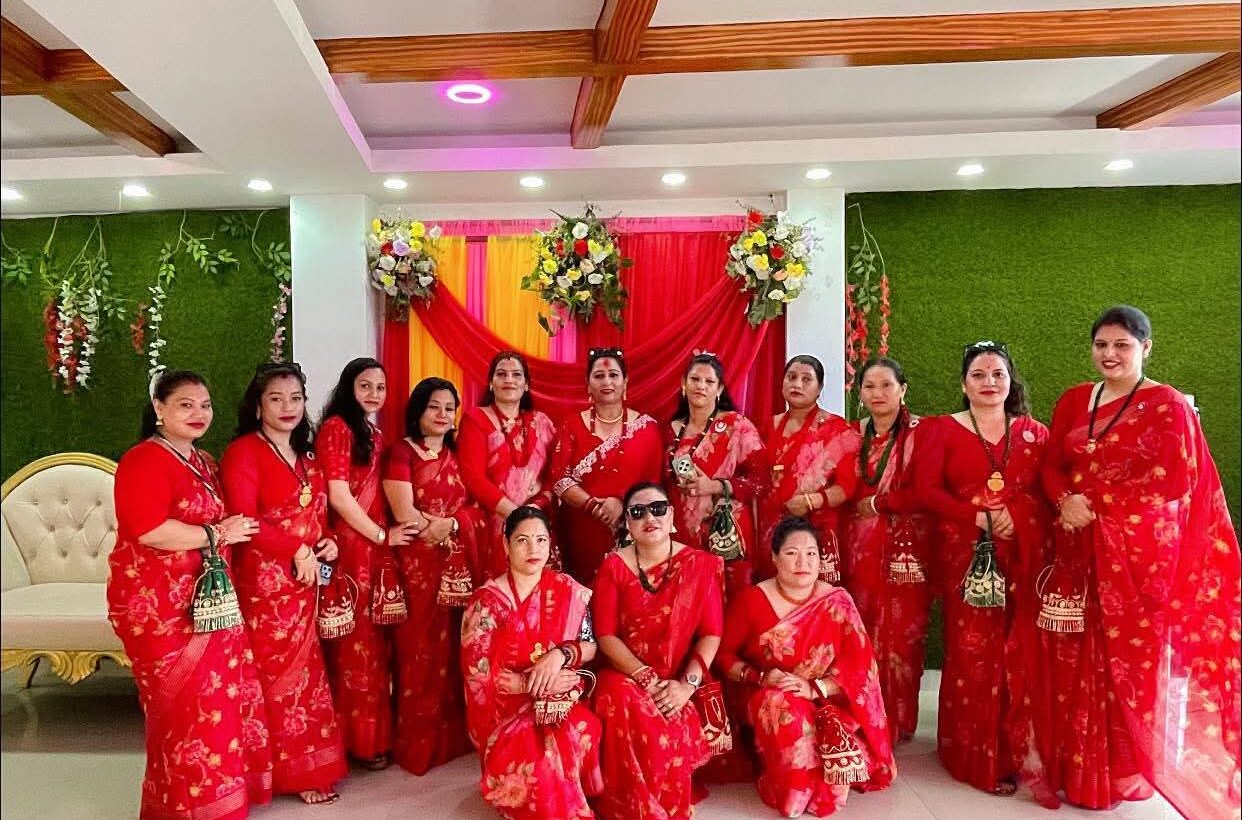
Haritalika Teej is much more than a Hindu fasting festival; it is a vibrant celebration of faith, family, womanhood, love, and cultural identity deeply woven into Nepali life. The festival begins with the joyful tradition of Dar, when women gather with their mothers, sisters, daughters, relatives, and friends to share a special feast late into the night before the main fasting day. Dressed beautifully in red saris and adorned with traditional jewelry, they fill homes, temples, and community spaces with laughter, music, and dance. The following day brings a very different atmosphere as devotees observe fasting, visit Shiva temples, worship Lord Shiva and Goddess Parvati, and offer prayers for family happiness, marital harmony, and prosperity.
For married women, Teej traditionally carries the heartfelt wish for the long life, good health, and well-being of their husbands, while unmarried women may fast with the hope of finding a suitable life partner and enjoying a happy and blessed married life. Yet the meaning of Teej reaches far beyond marriage. Its traditional songs have long provided women with a powerful way to express their joy, loneliness, hopes, struggles, family memories, and everyday experiences. Through singing and dancing together, women transform personal stories into a shared cultural celebration. Today, Teej songs have also evolved with changing Nepali society, giving women a platform to speak about education, independence, relationships, social expectations, and their changing roles in modern life.
From the colorful Dar feast to the solemnity of fasting, from temple prayers to energetic dancing, and from ancient stories of Goddess Parvati and Lord Shiva to the voices of modern Nepali women, Haritalika Teej beautifully connects the past with the present. The festival brings generations together and keeps important traditions alive while allowing culture to evolve naturally with time. For visitors to Nepal, experiencing Teej offers a fascinating glimpse into the country’s living Hindu traditions and community spirit. Ultimately, Teej is not simply a festival marked on the Nepali calendar—it is a celebration of devotion, resilience, sisterhood, cultural heritage, and the vibrant spirit of Nepali women.
When Is Haritalika Teej Celebrated?
Haritalika Teej is celebrated during the Shukla Paksha Tritiya, the third day of the bright fortnight of the Hindu month of Bhadra. Because the festival follows the lunar calendar, its date changes every year according to the Gregorian calendar.
In Nepal, Teej usually falls during August or September.
The main fasting day is known as Haritalika Teej, but the celebration extends beyond a single day. Women begin preparing several days beforehand, buying red clothes, jewelry, cosmetics, and ingredients for traditional food.
The festival atmosphere becomes particularly lively in Kathmandu and other parts of Nepal, where temples and public spaces fill with women singing and dancing.
How Is Teej Celebrated in Nepal?
Teej is celebrated with a beautiful combination of religious rituals and social gatherings.
Women traditionally wear red saris, red bangles, necklaces, tika, and other ornaments. Red is strongly associated with love, marriage, prosperity, energy, and auspiciousness.
Women gather in groups at homes, temples, community spaces, and cultural programs. They sing traditional Teej songs, dance, pray, and share food.
One of the most recognizable scenes of Teej is a large group of women dancing together while singing traditional songs. The songs may express devotion, happiness, family relationships, marriage, motherhood, and even personal hardships.
This makes Teej different from many other festivals. It gives women a voice through music.
How Many Days Does Teej Last?
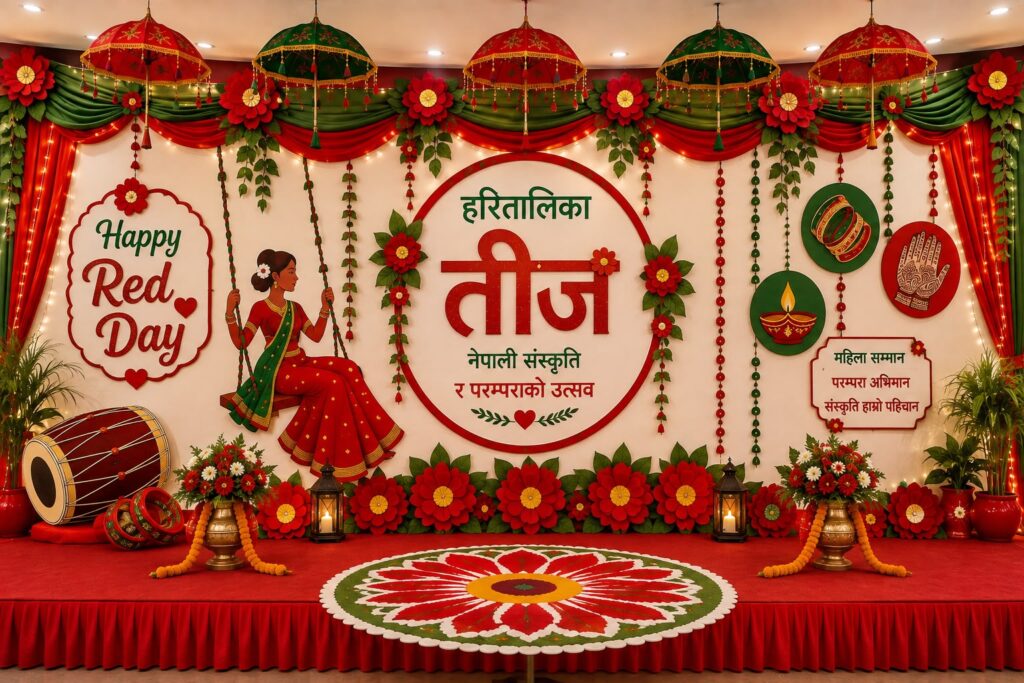
Traditionally, Teej is observed over three main days, although customs can vary between communities and families.
The three-day observance is generally associated with:
- Dar Khane Din – the day of the traditional feast before the fast
- Haritalika Teej – the main fasting and worship day
- Rishi Panchami – the concluding ritual day, particularly associated with purification and worship of the seven sages
Although the religious observance has these traditional stages, modern Teej celebrations can continue for several days through community programs, gatherings, singing, and dancing.
What Religion Celebrates Teej?
Teej is primarily a Hindu festival. It is especially significant among Hindu women in Nepal and India.
The festival is closely connected with the story of Goddess Parvati and Lord Shiva. According to Hindu tradition, Parvati undertook severe devotion and fasting to be united with Lord Shiva.
Haritalika Teej therefore represents devotion, marital commitment, spiritual determination, and the relationship between Parvati and Shiva.
For many devotees, worshipping Shiva and Parvati on Teej is a way of seeking blessings for family happiness, marital harmony, health, and prosperity.
The History and Religious Story Behind Teej
The traditional story of Haritalika Teej is associated with Goddess Parvati’s devotion to Lord Shiva.
According to Hindu mythology, Parvati deeply desired Shiva as her husband. She undertook intense penance and devotion for many years. Her determination eventually led to her union with Shiva.
The name Haritalika is traditionally explained through the story of Parvati being taken away by her companions so that she could continue her devotion without being forced into another marriage. The festival therefore became associated with Parvati’s determination, devotion, and eventual marriage to Shiva.
Over generations, this religious story became woven into the cultural traditions of Teej in Nepal.
Today, women continue to visit Shiva temples, perform puja, light lamps, sing devotional songs, and pray for blessings.
Dar Khane Din: The Feast Before the Fast
One of the most exciting parts of Teej begins before the fasting day.
This is known as Dar Khane Din.
Dar is a special feast traditionally enjoyed by women before the main Teej fast. Family members and friends gather together, prepare delicious food, sing, dance, laugh, and enjoy the evening.
Traditionally, women may eat late into the night, sometimes gathering around a large family meal with relatives and friends.
The purpose is partly practical: women know that the following day will involve fasting, so Dar provides an opportunity to eat and drink before beginning the religious observance.
However, Dar has become much more than a meal. It is a social celebration where women come together and strengthen family and community relationships.
What Food Do People Eat During Teej?
Food is an important part of the Teej experience.
During Dar, families prepare a wide variety of traditional Nepali dishes. Depending on the family and region, the feast may include:
- Dal bhat
- Vegetable curries
- Aloo and other potato dishes
- Pickles and achar
- Roti and sel roti
- Sweets
- Fruits
- Yogurt
- Fried snacks
- Traditional Nepali desserts
- Tea and other beverages
There is no single fixed Dar menu. Food traditions vary considerably between communities, families, and regions.
The important part is the togetherness of eating and celebrating.
After Dar, women prepare themselves for the following day’s fast.
The Teej Fast: A Day of Devotion and Discipline
The main day of Haritalika Teej is traditionally marked by fasting.
Many women observe a nirjala fast, meaning they refrain from both food and water throughout the day. In some traditional practices, devotees may continue without drinking even a single glass of water until the fast is broken according to their family or religious custom.
This is considered an act of devotion, discipline, and spiritual dedication.
Married women traditionally fast and pray for the long life, good health, happiness, and prosperity of their husbands.
Unmarried women may also observe the fast, traditionally praying for a suitable future husband and a happy, prosperous married life.
However, fasting without water can be physically demanding. People with medical conditions, older adults, pregnant women, and anyone who may be harmed by dehydration should prioritize their health and seek appropriate medical advice rather than attempting a strict fast.
Singing and Dancing: When Women Tell Their Stories
Teej is famous for its songs.
Traditional Teej songs are not limited to religious themes. They can tell stories about marriage, family, love, motherhood, separation, work, social expectations, and women’s everyday experiences.
Historically, these songs provided women with an important way to express emotions that they might not otherwise have been able to discuss openly.
A Teej gathering can therefore become both joyful and deeply emotional.
Women may sing about missing their parents after marriage, difficulties in married life, responsibilities at home, or hopes for a better future.
In this sense, Teej songs are more than entertainment.
They are a living form of women’s storytelling.
Modern Teej songs have expanded these themes even further, addressing education, employment, independence, social change, women’s rights, and contemporary life.
Why Is Teej Known as a Women’s Festival?
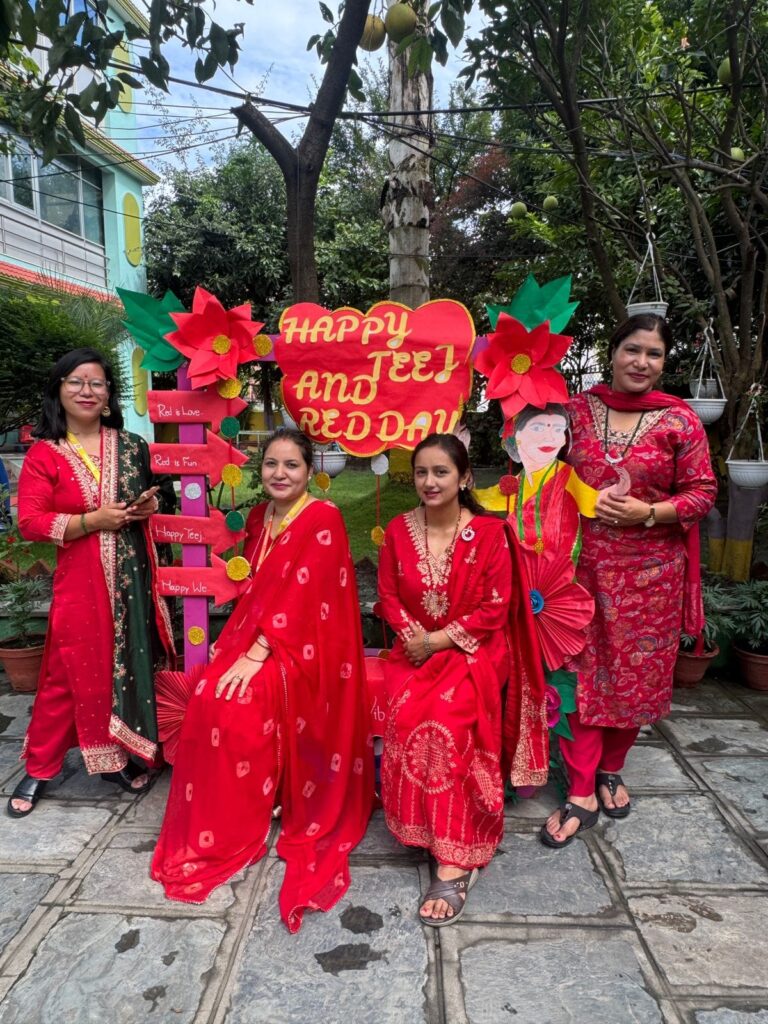
Teej is often described as Nepal’s great women’s festival because women play the central role in its rituals and celebrations.
From Dar to fasting, temple visits, singing, dancing, dressing, and social gatherings, women shape the festival.
For married women, it is traditionally a time to pray for their husbands and families.
For unmarried women, it can represent hopes for their future married life.
At the same time, modern Teej has developed into a broader celebration of women’s friendship, identity, expression, and social connection.
Women from different generations often celebrate together, making Teej an important way of passing traditions from mothers and grandmothers to younger generations.
Visiting Shiva Temples on Teej
On the main day, thousands of women visit temples dedicated to Lord Shiva and Goddess Parvati.
In Kathmandu, Pashupatinath Temple becomes one of the most important centers of Teej celebrations.
Women traditionally line up for worship, offer flowers, fruits, incense, lamps, and other offerings, and pray for blessings.
The temple surroundings become filled with red clothing, devotional music, dancing, and the energetic atmosphere of the festival.
Rishi Panchami: The Day After Teej
Rishi Panchami is observed on the fifth day of the bright fortnight of Bhadra, shortly after Haritalika Teej.
It is traditionally connected with the worship of the Saptarishi—the seven revered sages of Hindu tradition.
Women perform rituals, take ritual baths, worship the sages, and observe various traditional practices associated with purification.
Rishi Panchami has historically been linked with beliefs about ritual purity and the observances expected of women. Today, interpretations vary widely, and many people understand the day primarily as an important religious and cultural tradition rather than following every historical practice literally.
The day also marks an important conclusion to the traditional Teej observance.
Why Does Teej Matter to Nepali Culture?
Teej has survived for generations because it carries several layers of meaning.
It is a religious festival, but also a social gathering.
It is a celebration of marriage, but also a platform for women’s voices.
It is a fasting ritual, but it begins with a joyful feast.
It is rooted in ancient Hindu mythology, yet its songs continue to reflect modern Nepali society.
This combination of spirituality, food, music, family, friendship, and cultural expression makes Teej one of Nepal’s most distinctive festivals.
Frequently Asked Questions
Why do Nepali women wear red clothes during Teej?
Red is traditionally considered an auspicious color associated with love, marriage, prosperity, energy, and happiness. Women commonly wear red saris, kurtas, bangles, and other accessories during Teej, creating the festival’s distinctive colorful appearance.
Can unmarried women celebrate Haritalika Teej?
Yes. Unmarried women actively participate in Teej celebrations. Traditionally, many unmarried women observe the fast and pray for a good future husband and a happy married life. They also take part in singing, dancing, temple visits, and family gatherings.
Do women have to fast without drinking water on Teej?
Some women traditionally observe a nirjala fast, meaning they avoid both food and water throughout the day. However, fasting practices differ between individuals, families, and communities. A strict waterless fast can be physically demanding, so personal health should always be considered.
What happens if someone cannot complete the Teej fast?
There is no need to put health at serious risk to complete a religious fast. People who cannot safely continue may follow a modified practice according to their family’s tradition or religious guidance. The spiritual meaning of Teej is not limited to enduring physical hardship.
What is the significance of Dar Khane Din?
Dar Khane Din is the special feast held before the main Teej fasting day. Women gather with family members and friends, enjoy traditional foods, sing, dance, and celebrate together. It also traditionally provides an opportunity to eat before beginning the fast.
Why do women eat Dar late at night?
Traditionally, women eat Dar late into the night because the following day is the main fasting day. Families and friends gather for a generous meal before the fast begins. Today, late-night Dar celebrations have also become an important social and cultural tradition.
What traditional foods are prepared for Teej in Nepal?
Teej food varies by family and community, but Dar may include dal bhat, vegetables, achar, roti, sel roti, yogurt, fruits, sweets, and different fried or homemade snacks. The menu often reflects local Nepali food traditions rather than one fixed festival recipe.
Which temples are especially popular during Teej in Nepal?
Shiva temples across Nepal become important places of worship during Teej. Pashupatinath Temple in Kathmandu is particularly famous, attracting large numbers of women who come to worship Lord Shiva and Goddess Parvati and participate in festival rituals.
Why are Teej songs important in Nepali culture?
Teej songs have traditionally allowed women to express personal feelings, family experiences, marriage, separation, happiness, hardship, and social issues. They are an important form of oral cultural storytelling and continue to evolve with modern Nepali society.
Are Teej songs only religious songs?
No. Although many Teej songs have religious themes, traditional and modern songs can cover a much wider range of subjects. They may discuss relationships, family life, women’s experiences, social change, migration, work, love, and contemporary issues.
Is Haritalika Teej celebrated only in Nepal?
No. Teej traditions are also found in parts of India, particularly in northern and western regions. However, the style, rituals, songs, food, and cultural importance of Teej can differ significantly from one community and region to another.
What is the connection between Goddess Parvati and Haritalika Teej?
Haritalika Teej is traditionally associated with Goddess Parvati’s devotion and determination to marry Lord Shiva. Her penance and devotion are central to the religious story behind the festival, making Shiva and Parvati the principal divine figures associated with Teej worship.
Can tourists experience Teej celebrations in Nepal?
Yes. Visitors in Nepal during Teej can often see colorful celebrations, traditional clothing, temple activities, cultural programs, singing, and dancing. However, tourists should be respectful around religious ceremonies and should avoid interrupting worshippers or photographing people without permission.
What is Rishi Panchami and how is it connected with Teej?
Rishi Panchami is observed shortly after the main Teej day and is traditionally dedicated to the Saptarishi, or seven revered sages. Women perform various religious and purification rituals as part of the traditional observance, making it an important concluding element of the wider Teej festival period.
Why is Teej considered one of Nepal’s most important women’s festivals?
Teej places women at the heart of its religious and cultural activities. It brings women together to pray, fast, eat, sing, dance, share experiences, and maintain cultural traditions. Its songs and gatherings also provide a unique space for women to express their voices, making Teej an important part of Nepal’s living cultural heritage.

Ramchandra Lamichhane
Trekking Expert
No hidden fees • Local experts • Best price guarantee