
Food and Accommodation during Annapurna Base Camp Trek
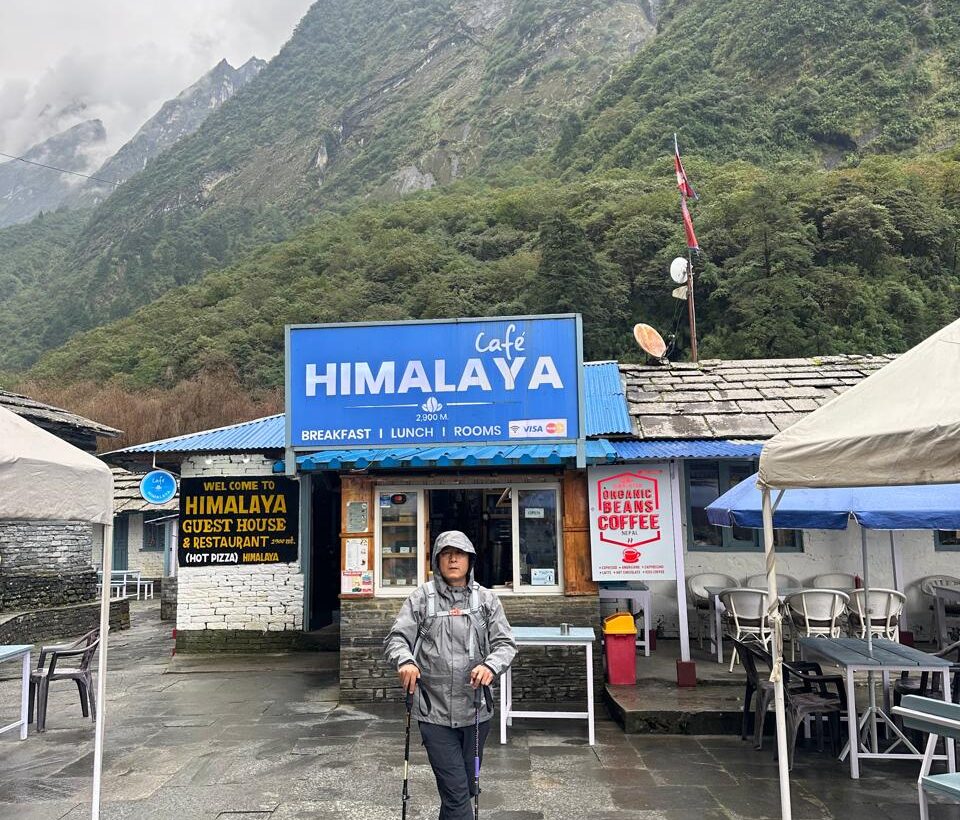
The Annapurna Base Camp Trek is one of Nepal’s most rewarding Himalayan adventures, combining spectacular mountain scenery with traditional villages, lush forests, terraced hillsides, and warm local hospitality. Reaching Annapurna Base Camp at 4,130 meters (13,550 feet) is an unforgettable experience, but the journey is about much more than reaching the destination.
For trekkers, two practical questions often come up before starting the journey: What food is available during the Annapurna Base Camp Trek, and where will I sleep each night?
The good news is that you do not need to worry about carrying food or camping equipment for a standard ABC trek. The route is well established and has numerous teahouses and trekking lodges where trekkers can eat, rest, recharge, and experience local mountain culture.
However, facilities become simpler as you gain altitude. Food choices may become more limited, hot showers can cost extra, and rooms are generally basic. Understanding these conditions before your trek will help you pack properly and enjoy the journey with realistic expectations.
Food on the Annapurna Base Camp Trek
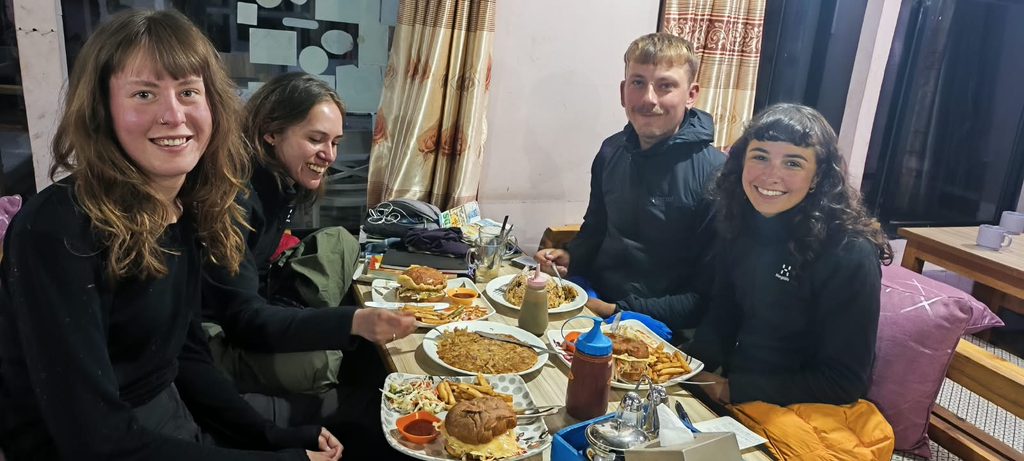
Food is an important part of any trekking experience. During the Annapurna Base Camp Trek, you normally walk for several hours each day, often over steep stone steps and uneven mountain trails. Your body therefore needs regular meals, carbohydrates, protein, and plenty of fluids.
Most teahouses along the route operate restaurants with menus offering a mixture of traditional Nepali, Tibetan, Indian, and Western-style dishes. The selection is usually wider at lower elevations and becomes smaller as you approach Annapurna Base Camp.
Food prices also generally increase with altitude because transporting ingredients to remote mountain settlements is more difficult and expensive.
Dal Bhat: The Classic Trekking Meal
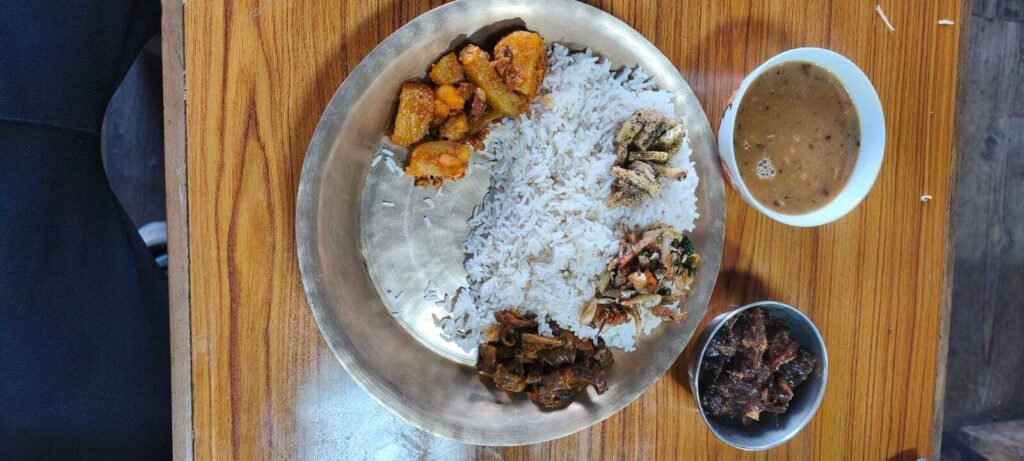
One of the most popular meals on the ABC trail is dal bhat, Nepal’s famous combination of rice, lentil soup, vegetables, and curry.
Dal bhat is particularly suitable for trekkers because it provides plenty of carbohydrates and energy for long walking days. Many teahouses offer additional rice, lentils, and vegetables with the meal, although portions and refill policies can vary.
For many trekkers, dal bhat becomes a favorite lunch or dinner because it is filling, familiar, and made with locally available ingredients.
Other Nepali and Local Foods
Depending on the teahouse and location, you may also find:
- Momo (Nepali dumplings)
- Thukpa
- Sherpa-style stew
- Vegetable curry
- Tibetan bread
- Chapati
- Rice and noodles
- Vegetable soup
- Gundruk
- Porridge
- Fried rice
- Potato dishes
Trying local food is one of the best ways to experience the culture of the Annapurna region.
Breakfast on the ABC Trek
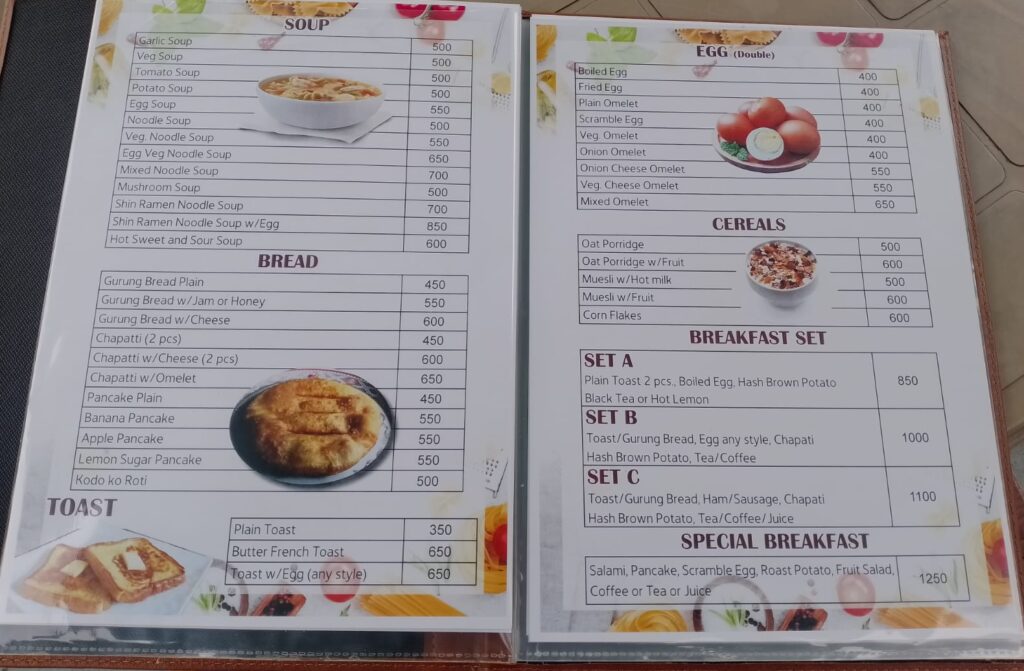
Breakfast is usually served at the teahouse where you spend the night. Common choices include:
- Eggs prepared in different styles
- Tibetan bread
- Pancakes
- Porridge
- Muesli
- Toast with butter, jam, or honey
- Chapati
- Cornflakes
- Hash browns or potatoes
- Tea and coffee
- Hot lemon, ginger tea, or other hot drinks
A warm and filling breakfast can make a significant difference before beginning a long day on the trail.
Lunch Along the Trail
Lunch is normally eaten at a teahouse or restaurant along the route rather than carried for the entire day. Depending on your itinerary, your guide will recommend a suitable place to stop.
Typical lunch options include dal bhat, noodles, pasta, momo, soup, fried rice, sandwiches, potatoes, and vegetable dishes.
As you get closer to ABC, the menu generally becomes more limited. This is normal for a high-altitude trekking route.
Western Food on the Annapurna Trail
Trekkers who prefer international food will usually find several familiar choices. Depending on the location, menus can include:
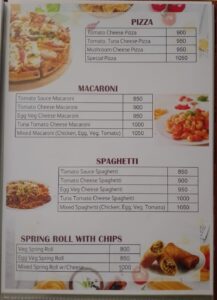
- Pasta
- Pizza
- Spaghetti
- Sandwiches
- Pancakes
- French toast
- Eggs
- Macaroni
- Soup
- Fried rice
- Noodles
The quality and availability of these dishes can vary between teahouses, so it is better to remain flexible rather than expect the same selection you would find in Kathmandu or Pokhara.
Vegetarian and Vegan Food
Vegetarian food is widely available throughout the Annapurna Base Camp Trek. In fact, vegetable-based meals are among the easiest choices on the trail.
Dal bhat, vegetable curry, noodles, fried rice, pasta, soup, potatoes, and momo can often be prepared without meat.
Vegan trekkers should clearly tell the teahouse staff or guide about their dietary requirements because some dishes may contain butter, milk, cheese, or eggs.
If you have a serious food allergy, inform your trekking company before departure so that suitable arrangements can be discussed in advance.
Drinking Water During the ABC Trek
Staying hydrated is essential while trekking toward Annapurna Base Camp.
You can find drinking water at teahouses and villages along the route. Many trekkers choose boiled water or treat natural/tap water using a reliable purification method.
For environmental reasons, carrying a reusable water bottle or hydration bladder is preferable to continually buying disposable plastic bottles.
Water availability can vary depending on the season and location, so your guide can advise you where and when to refill.
Accommodation on the Annapurna Base Camp Trek
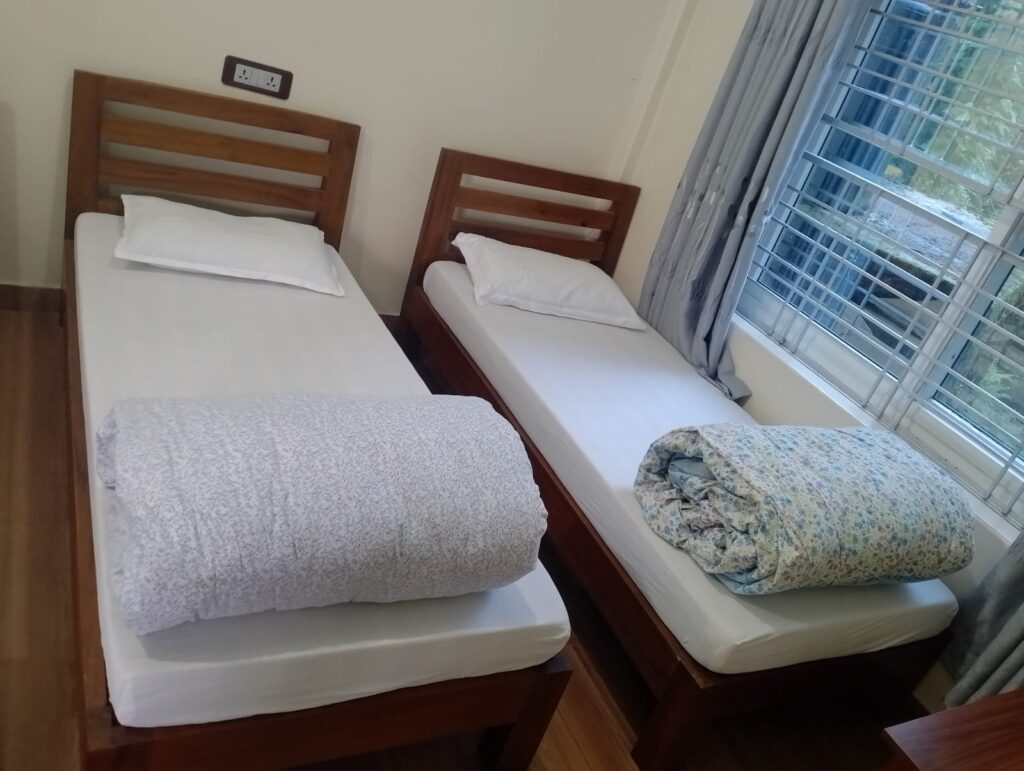
Accommodation on the ABC route is primarily based on teahouses and trekking lodges.
These are simple mountain accommodations designed specifically for trekkers. They are not luxury hotels, but they provide the essentials needed after a long day of walking: a bed, meals, blankets, bathrooms, and a warm communal area.
At lower elevations, some lodges offer more comfortable rooms and private bathrooms. As you climb higher, facilities become increasingly basic.
What Are Teahouses Like?
A typical teahouse has private or twin-sharing bedrooms, a communal dining room, and shared bathroom facilities.
Rooms usually contain:
- Two or more beds
- Mattress
- Pillow
- Blanket
- Basic bedding
Most rooms do not have heating. Instead, the dining room is generally the warmest area of the teahouse, sometimes with a stove or fireplace.
Trekkers commonly spend the evening in the dining room before going to their rooms to sleep.
Bathroom Facilities
Bathroom standards vary according to elevation and individual teahouse.
At lower elevations such as Ghandruk, Chhomrong, and Jhinu Danda, you may find rooms with attached bathrooms in some lodges.
Higher on the trail, shared bathrooms are much more common. Toilets can be either Western-style or squat-style depending on the teahouse.
Hot showers are often available for an additional fee, but availability should not be taken for granted at higher elevations.
Accommodation Near Annapurna Base Camp
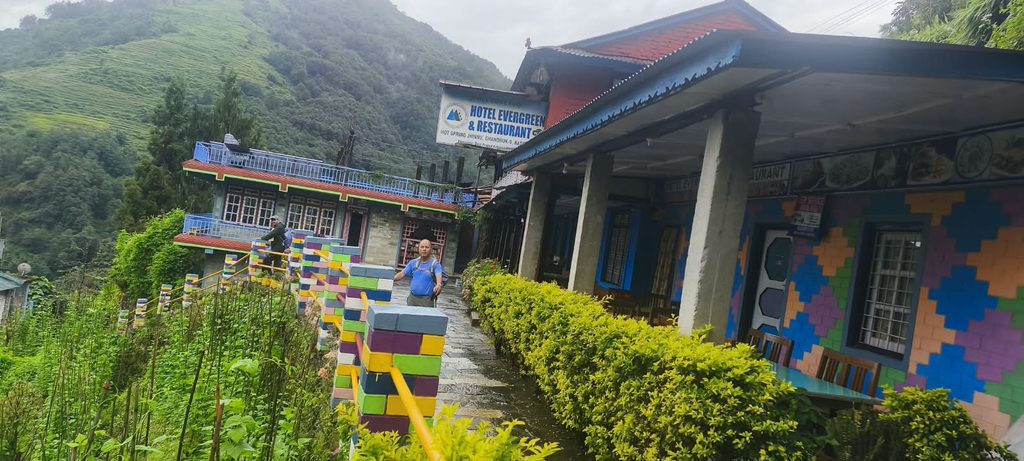
Accommodation becomes more basic as you approach Annapurna Base Camp.
There are only a limited number of teahouses in the upper Annapurna Sanctuary, so rooms can become busy during the popular trekking seasons.
At Annapurna Base Camp, trekkers generally stay in simple teahouses with shared facilities. Rooms can be basic, and during busy periods, sharing a room with another trekker may be necessary.
The trade-off is extraordinary: after reaching ABC, you can wake up surrounded by some of the most dramatic Himalayan peaks in Nepal.
Wi-Fi, Electricity, and Charging
Electricity is available in many teahouses along the ABC route, but the service becomes less reliable as you gain altitude.
Charging electronic devices may involve an additional fee, particularly at higher elevations.
Wi-Fi is available at some teahouses, although its speed and reliability can vary considerably. Trekkers should not expect a strong internet connection throughout the entire route.
If staying connected is important to you, carry a power bank and keep your electronic devices protected from cold temperatures.
Are Blankets Provided?
Yes, teahouses generally provide blankets and basic bedding.
However, a sleeping bag is strongly recommended, especially during the colder months. Temperatures can become very low at night, and having your own sleeping bag provides additional warmth and comfort.
Create Himalaya Adventure can provide a sleeping bag for trekkers when included in the trekking package or when requested in advance.
Food and Accommodation Cost on the ABC Trek
The cost of food and accommodation depends on the season, elevation, itinerary, and your personal choices.
In general, prices increase as you move farther from road-accessible areas. Transportation of food, fuel, and other supplies becomes increasingly difficult in the mountains.
A typical trekker should budget approximately USD 20–30 per day for food and drinks, although actual spending can be lower or higher depending on what you order.
Accommodation is generally inexpensive compared with hotels in Kathmandu or Pokhara, but prices can increase at higher elevations and during peak trekking periods.
If you book the Annapurna Base Camp Trek with Create Himalaya Adventure, your standard trekking package includes accommodation and meals according to the agreed itinerary and inclusions.
Tips for Eating and Staying Comfortably on the ABC Trek
A few simple habits can make your trek considerably easier.
- Eat enough: Do not skip meals because you are tired. Your body needs fuel for long walking days.
- Stay hydrated: Drink water regularly rather than waiting until you become thirsty.
- Try local food: Dal bhat, momo, thukpa, Tibetan bread, and local vegetable dishes are part of the Himalayan experience.
- Carry snacks: Energy bars, nuts, dried fruit, chocolate, and other lightweight snacks are useful during long walking days.
- Carry a sleeping bag: Even when blankets are provided, your own sleeping bag provides additional warmth and comfort.
- Bring a power bank: Charging facilities can become limited or expensive at higher elevations.
- Carry personal hygiene supplies: Pack toilet paper, hand sanitizer, wet wipes, sunscreen, and other personal necessities.
Be flexible: Mountain conditions are different from city life. Menus, electricity, hot water, Wi-Fi, and room availability can change depending on weather, season, and local circumstances.
What Makes Food and Accommodation on the ABC Trek Special?
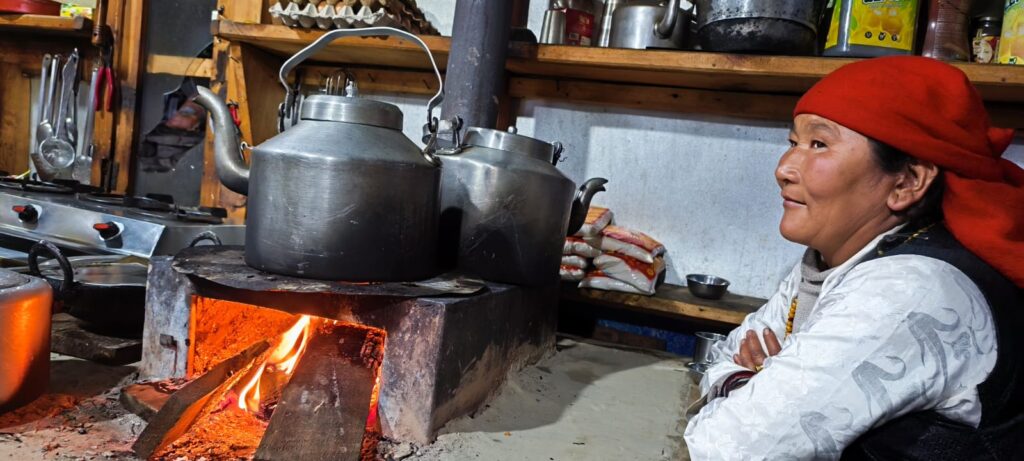
The food and accommodation on the Annapurna Base Camp Trek may not offer the luxury of a city hotel, but they provide something more meaningful: a chance to experience Himalayan hospitality.
You can sit beside a warm stove after several hours of hiking, enjoy a bowl of hot soup, share stories with fellow trekkers, and wake up to spectacular views of the Annapurna range.
The simplicity is part of the adventure.
Whether you are enjoying dal bhat in Chhomrong, drinking ginger tea in the mountains, or spending a cold night at Annapurna Base Camp, these small experiences become some of the most memorable parts of the journey.
Packing Essentials for a Comfortable Trek
Teahouse facilities on the Annapurna Base Camp Trek are basic, so carrying a few personal essentials can make your stay more comfortable.
- Sleeping bag and liner
- Energy bars, chocolates, and snacks
- Water filter or purification tablets
- Headlamp and power bank/solar charger
- Sunscreen and basic toiletries
- Toilet paper and wet wipes
- Personal hygiene products
- Any regular medicines you need
- Pack light, but carry the essentials you will need for comfort and hygiene along the trail.
Final Thoughts
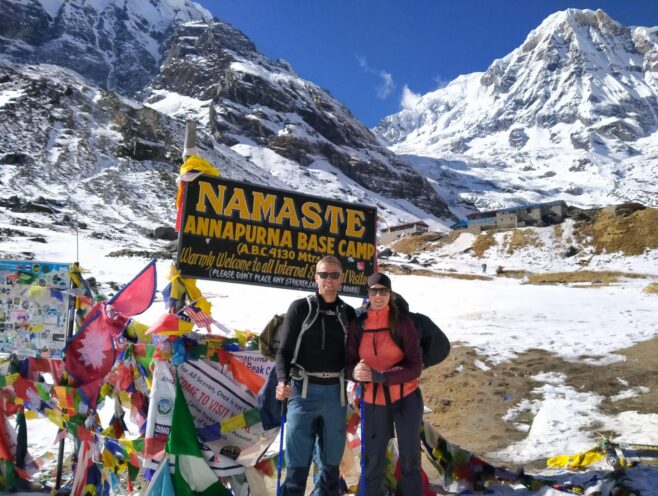
The Annapurna Base Camp Trek offers comfortable and practical food and accommodation throughout most of the route, but trekkers should understand that facilities become more basic as the altitude increases.
Teahouses provide simple rooms, shared bathrooms, communal dining areas, and a variety of local and international meals. Vegetarian food is widely available, while Wi-Fi, electricity, hot showers, and private bathrooms may require additional payment or may be limited at higher elevations.
With the right expectations and preparation, there is no need to worry about where you will eat or sleep.
At Create Himalaya Adventure, we arrange the Annapurna Base Camp Trek with carefully planned accommodation, meals, an experienced licensed guide, necessary permits, and trekking support. Our goal is to make your Himalayan journey safe, comfortable, and memorable while allowing you to experience the local communities and landscapes along the way.
Ready to experience Annapurna Base Camp?
- Contact: Create Himalaya Adventure
- WhatsApp/Viber: +977-9841128881
- Email: info@createhimalaya.com.
FAQs
Can I get food at every overnight stop during the ABC Trek?
Yes. Food is available at almost all established overnight stops on the Annapurna Base Camp route. Teahouses and lodges serve meals to trekkers, so you normally do not need to carry food for the entire trek. However, the number of choices can become smaller at higher elevations.
Is the food on the Annapurna Base Camp Trek safe to eat?
Food served at established teahouses is generally suitable for trekkers, but basic precautions are important. Choose freshly prepared meals, avoid food that has been sitting out for a long time, and maintain good hand hygiene. Your guide can also recommend reliable places to eat along the route.
Can I get enough protein during the Annapurna Base Camp Trek?
Yes. You can obtain protein from foods such as lentils, eggs, beans, chickpeas, vegetables, noodles, rice dishes, and other available meals. Trekkers who require additional protein can also carry lightweight snacks such as nuts, seeds, or protein bars from Kathmandu or Pokhara.
Can I request a special diet at the teahouses?
In most cases, yes. Teahouses can usually prepare simple dietary variations when informed in advance. If you are vegetarian, vegan, gluten-free, or have a food allergy, tell your guide and the teahouse staff before ordering. More complex dietary requirements may require additional preparation.
Should I bring snacks from Kathmandu or Pokhara?
Bringing a few favorite snacks is a good idea, particularly if you have specific dietary preferences. Energy bars, nuts, dried fruit, chocolate, and other lightweight snacks can provide quick energy during long walking days. You can also purchase some trekking snacks in Pokhara before departure.
Can I get fresh fruit and vegetables on the ABC Trek?
Fresh vegetables are commonly available at teahouses, although the variety depends on the location and season. Availability of fresh fruit can become more limited as you gain altitude. Eating vegetables when available is a good way to add variety and nutrients to your trekking diet.
Is it possible to get meals early in the morning?
Yes, teahouses generally prepare breakfast according to the trekking schedule. If you need to leave particularly early, tell the teahouse staff or your guide the previous evening so breakfast can be arranged as early as practical.
Can I book a private room throughout the entire ABC Trek?
A private room may be available at some stops, particularly at lower elevations, but it cannot always be guaranteed throughout the trek. During busy spring and autumn periods, accommodation becomes more limited, especially in the upper Annapurna Sanctuary. Twin-sharing rooms are therefore the normal arrangement for many trekkers.
Can couples get a room together on the Annapurna Base Camp Trek?
Usually, couples can request a twin room, subject to availability. However, during peak trekking periods, rooms can fill quickly, and accommodation providers may need to allocate rooms according to availability. Booking through a trekking agency can make accommodation arrangements easier.
Can I leave my luggage at the teahouse during the day?
If you are staying at the same teahouse for another night, you can normally leave unnecessary belongings securely in your room or with the lodge. For most ABC itineraries, however, porters carry the main trekking luggage while trekkers carry only a small daypack.
Do I need to carry cash for food and accommodation on the trail?
Yes. Carrying enough Nepalese rupees is strongly recommended because card payments and digital payment services may not be available or reliable in remote mountain villages. Your guide can advise you on how much cash to carry before leaving Pokhara.
Can I use my own food or snacks inside a teahouse?
Yes, you can normally carry personal snacks and eat them during the trek. However, it is respectful to order meals and drinks from the teahouse when using its dining facilities. If you have special dietary requirements, carrying a few personal food items is particularly useful.
Is accommodation at ABC available during the winter season?
Yes, accommodation can be available at Annapurna Base Camp during winter, but conditions are more challenging and some lodges may have limited operations depending on weather and snowfall. Winter trekkers should check current trail and accommodation conditions before departure and travel with an experienced guide.
What should I do if I do not like the food available at a teahouse?
There are usually several basic choices, so you can select a meal that suits your preference. If you have strong dietary preferences, inform your guide in advance. Carrying a few personal snacks is also useful when the menu becomes more limited at higher elevations.
Is the Annapurna Base Camp Trek suitable for first-time trekkers?
Yes. The ABC Trek is achievable for many first-time trekkers with reasonable fitness and proper preparation. You do not need previous high-altitude trekking experience, but you should be prepared for several hours of walking each day, steep stone steps, changing weather, and sleeping in simple mountain accommodation.

Ramchandra Lamichhane
Trekking Expert
No hidden fees • Local experts • Best price guarantee