
Manaslu Circuit Trek Permits: Requirements, Costs and How to Get Them
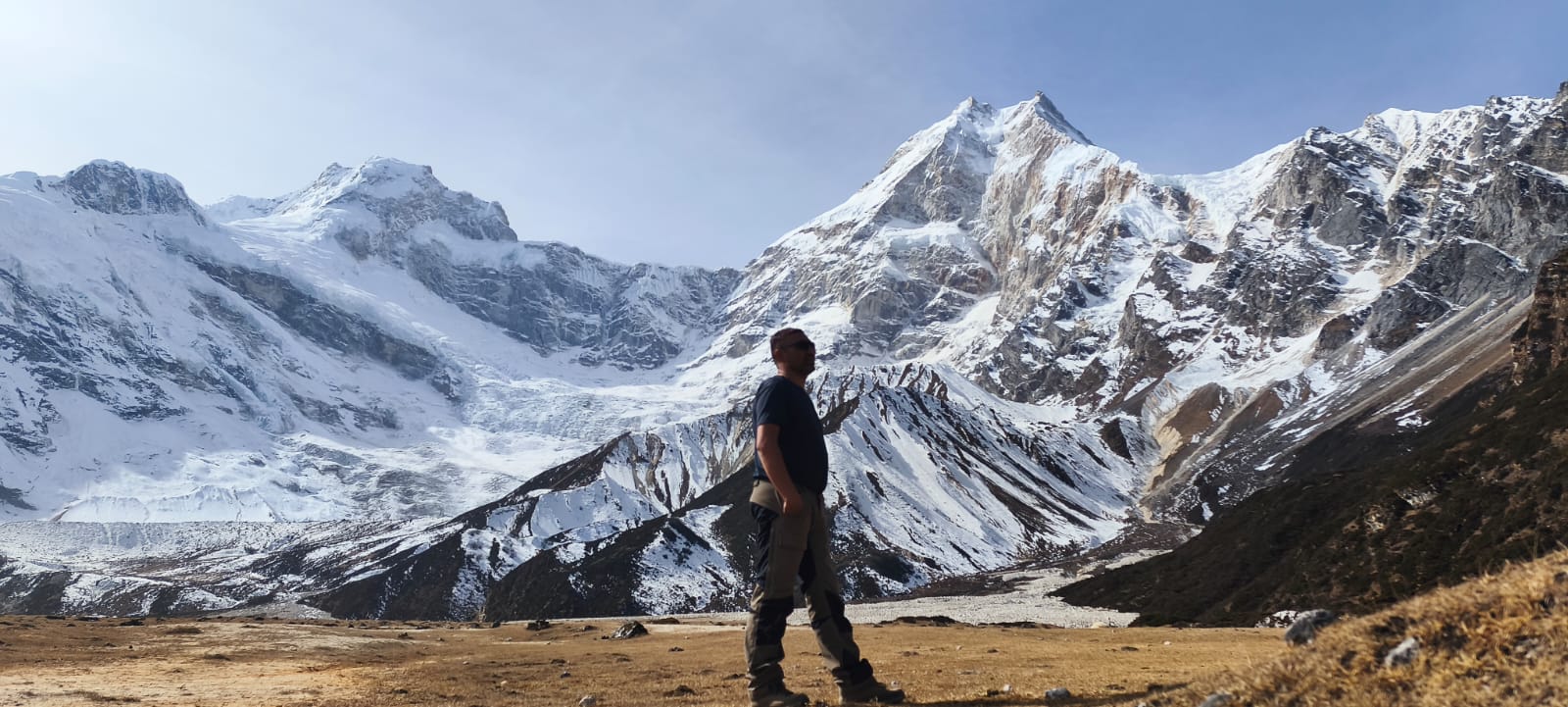
The Manaslu Circuit is an incredible journey through one of Nepal’s most remote and culturally fascinating mountain regions. The trail passes through riverside settlements, dense forests, traditional Himalayan villages, high-altitude landscapes and the impressive Larkya La Pass (5,106 m). However, planning this adventure involves more than choosing your trekking dates and packing your backpack. You also need to understand the special entry regulations that apply to the Manaslu region.
Unlike many other popular trekking destinations in Nepal, the Manaslu Circuit passes through a government-designated restricted area. Foreign trekkers must therefore obtain specific permits before entering the region. These include the Manaslu Restricted Area Permit (RAP), Manaslu Conservation Area Permit (MCAP), and Annapurna Conservation Area Permit (ACAP). A separate local entry charge may also apply in Chumnubri Rural Municipality.
How much do these permits cost? Can you trek Manaslu alone? Where should you apply, and which documents are necessary?
This guide by Create Himalaya Adventure answers these questions and explains the permit arrangements, fees, application procedures and regulations you should understand before beginning your Manaslu adventure.
What Permits Are Required for the Manaslu Circuit Trek?
For the standard Manaslu Circuit, foreign visitors need three principal trekking permits. Each one covers a different administrative or conservation area along the journey. A local municipality charge may also be collected during the trek.
1. Manaslu Restricted Area Permit (RAP)
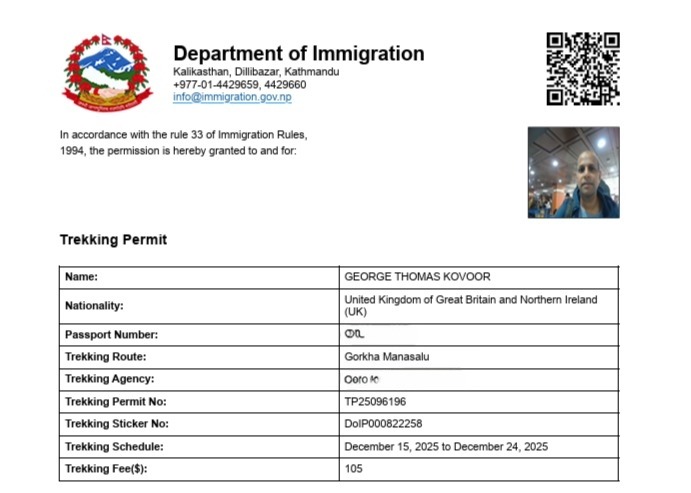
The Restricted Area Permit is essential for travelling through the designated restricted section of the Manaslu region. The restricted area covers parts of Chumnubri Rural Municipality in Gorkha District, including Wards 1, 2, 3 and 4.
This authorization allows foreign visitors to explore the controlled trekking zone, including settlements such as Jagat, Namrung, Lho, Samagaun and Samdo along the standard route.
Unlike ordinary conservation permits, the RAP is processed through Nepal’s Department of Immigration. Individual foreign trekkers cannot apply independently; a registered trekking agency must handle the application and arrange a licensed guide.
2. Manaslu Conservation Area Permit (MCAP)
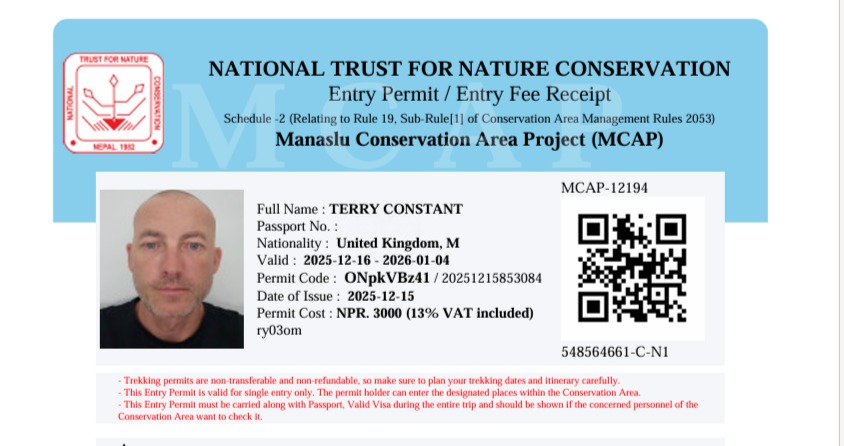
The Manaslu Conservation Area Permit provides access to the protected natural environment surrounding Mount Manaslu. This conservation region contains diverse Himalayan ecosystems, forests, rivers, wildlife habitats and traditional settlements.
The MCAP is necessary for trekkers travelling through the Manaslu Conservation Area. Its revenue contributes towards protecting the natural environment and supporting conservation activities in the region.
3. Annapurna Conservation Area Permit (ACAP)
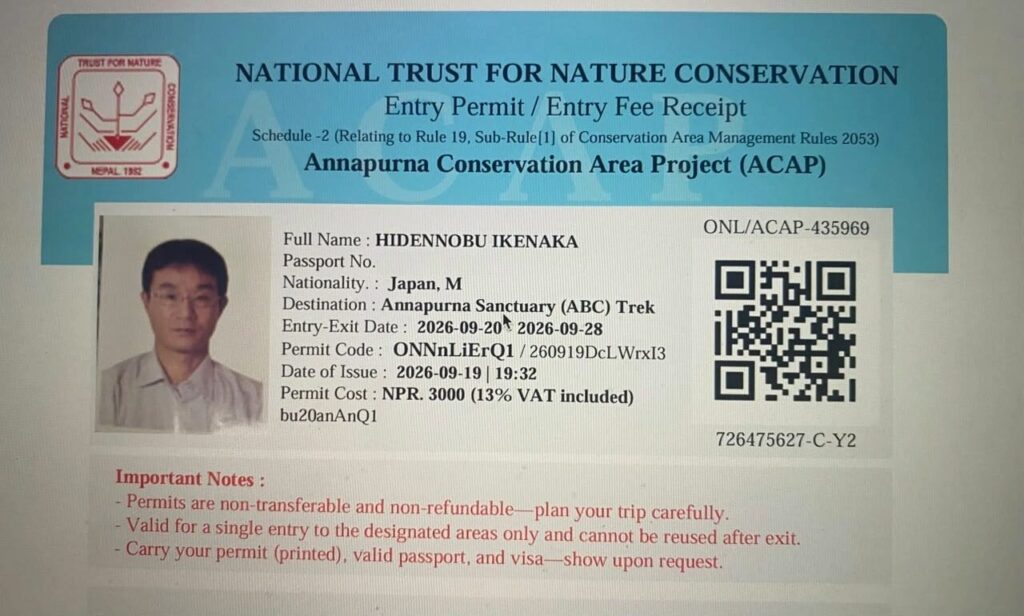
The Annapurna Conservation Area Permit becomes necessary when the Manaslu Circuit continues beyond Larkya La Pass into the Annapurna region.
After crossing the pass, trekkers descend towards Bimthang and continue through the route towards Dharapani. This section enters the Annapurna Conservation Area, making an ACAP permit compulsory even though the majority of the journey takes place in the Manaslu region.
4. Chumnubri Rural Municipality Entry Fee
Apart from the three principal permits, a local entry fee of NPR 1,000 per foreign visitor is generally collected for Chumnubri Rural Municipality.
This is a separate local charge rather than another national trekking permit. It is commonly collected around the Jagat checkpoint. Confirm the current amount with your trekking agency or local authorities before departure, as municipal charges can change.
If you are booking an organized trek, ask whether this fee is already included in your package.
Manaslu Circuit Trek Permit Costs and Fees
The following table shows the estimated permit costs for one foreign trekker spending 10 days inside the restricted area.
| Permit or local fee | Autumn (Sep–Nov) | Dec–Aug |
|---|---|---|
| Manaslu RAP (10 days) | USD 145 | USD 105 |
| MCAP | NPR 3,000 | NPR 3,000 |
| ACAP | NPR 3,000 | NPR 3,000 |
| Chumnubri local fee | NPR 1,000 | NPR 1,000 |
| Total (USD) | USD 145 + NPR 7,000 | USD 105 + NPR 7,000 |
These figures are indicative and exclude any additional agency service charges, transportation or guide expenses. The local municipality fee should also be reconfirmed before travel.
When preparing your budget, remember that the restricted-area charge increases if your itinerary requires additional days. A carefully planned route helps you estimate the permit expenses more accurately.
Manaslu Restricted Area Permit: Rules and Regulations
The Manaslu region has additional entry conditions because of its location, traditional settlements and restricted-area designation. Understanding these rules before booking your trek will help you avoid confusion during the application process.
Why Is Manaslu a Restricted Area?
The northern part of the Manaslu region lies close to the Nepal–Tibet border. Its remote villages retain strong Tibetan Buddhist influences, traditional architecture, religious practices and distinctive ways of life.
The government regulates visitor access to this region to manage tourism, protect local cultural heritage and oversee travel in a sensitive border area.
For trekkers, this means that entering the Manaslu restricted section requires additional authorization beyond ordinary national park or conservation area entry permits.
Minimum Number of Trekkers Required
The minimum group requirement for the Manaslu Restricted Area Permit has changed.
Previously, foreign visitors generally needed to apply in groups of at least two people. However, following the Department of Immigration’s decision dated March 23, 2026, individual trekkers can now obtain the permit without finding another person to join their application.
This change makes the Manaslu Circuit more accessible to independent travellers who prefer a private trekking experience.
However, the revised arrangement does not remove the guide requirement. Applications must still be processed through a registered trekking agency, and a licensed guide must accompany the trekker.
Is a Licensed Trekking Guide Mandatory?
Yes. Foreign visitors trekking in the Manaslu restricted area must be accompanied by a licensed trekking guide arranged through a registered trekking agency.
The guide plays an important role beyond meeting the legal requirements. Remote sections of the trail can involve difficult terrain, changing weather and limited facilities. An experienced local guide can assist with route navigation, altitude awareness, communication with villagers and emergency coordination.
Can Solo Trekkers Obtain a Manaslu Permit?
Yes. A foreign traveller can now apply for a Manaslu Restricted Area Permit as an individual.
You do not have to join a group of two or more trekkers simply to satisfy the former minimum-group rule. However, you still need a registered agency to process your application and a licensed guide for the journey.
This arrangement is particularly useful for people who want a private itinerary, flexible walking pace or a more personalized experience.
How to Obtain Manaslu Circuit Trek Permits
The application process involves two different authorities. The Department of Immigration handles the restricted-area permit, while the National Trust for Nature Conservation (NTNC) manages the conservation area permits.
Most foreign trekkers arrange these documents through their trekking company before travelling to the trailhead.
Where to Apply for Manaslu Restricted Area Permit
The Manaslu Restricted Area Permit is issued under the authority of the Department of Immigration in Kathmandu. Applications are submitted through an authorized trekking agency, primarily using the department’s online Nepali Port system.
Here is how the process generally works:
1. Select a registered trekking company: Choose an authorized Nepal trekking agency that can process restricted-area permits and provide a licensed guide.
2. Finalize your route and dates: Confirm your trekking starting date, expected departure from the restricted area and total number of permit days. The seasonal fee is calculated using this information.
3. Provide your identification documents: Send the agency your passport details, Nepal visa information, photograph and other documents requested for the application.
4. Online application submission: Your agency enters the required personal information, trekking schedule, guide details and agency credentials into the immigration application system.
5. Payment of the permit fee: The applicable restricted-area charge is paid through the prescribed process.
6. Approval and permit collection: After the immigration authority verifies the submitted details, the approved permit is made available through the application system. Your agency will provide the permit copy for the journey.
Because the application involves document verification, it is better not to leave the process until the last minute. Arrange your permit before departing Kathmandu.
Where to Get MCAP and ACAP Permits
The Manaslu and Annapurna conservation area permits can be arranged through NTNC’s online permit platform.
Trekkers can submit their details, select the appropriate conservation area and complete payment online. The permit is then sent electronically after successful processing.
Alternatively, travellers can visit designated permit counters in Kathmandu or Pokhara to obtain assistance with conservation-area permits.
The online platform accepts Visa and Mastercard payments and applies an additional payment gateway charge where applicable. According to the NTNC system, permits obtained directly at checkpoints may be subject to double the standard entry fee.
We recommend arranging both MCAP and ACAP before starting the trek. Having the documents ready makes checkpoint registration easier and reduces unnecessary delays.
Documents Required for Permit Applications
Prepare the following information before asking your trekking agency to arrange the permits:
- Valid passport and passport information page.
- Valid Nepal visa details.
- Recent passport-sized photograph.
- Confirmed trekking dates and route.
- Personal information for each participant.
- Travel insurance details, if requested by the immigration application.
- Licensed guide and trekking agency information.
Additional documents may be requested depending on the current immigration application procedure. Your agency can explain the exact requirements before submitting the application.
Can a Trekking Agency Arrange All the Permits?
Yes. Working with a registered trekking company is the most convenient way to organize the Manaslu Circuit permits.
Your agency can coordinate the restricted-area application, obtain MCAP and ACAP, arrange the local municipality payment and prepare the required documentation. It can also organize your licensed guide, accommodation and other trekking arrangements.
At Create Himalaya Adventure, we assist our guests with the necessary permit arrangements before the journey begins, helping them avoid unnecessary administrative work during their holiday.
Manaslu Trek Permit Checkpoints: Where Are Permits Checked?
During the Manaslu Circuit Trek, trekkers pass through several locations where permit verification and trekking registration may take place. However, not every village has a separate permit checkpoint. The main checks are generally carried out at designated registration points along the route.
Important locations associated with permit checks and registration include:
- Machha Khola: An important settlement near the starting point of the Manaslu Circuit, where trekking registration or initial document checks may take place.
- Jagat: The main restricted-area entry point, where officials check the Manaslu Restricted Area Permit (RAP). The Chumnubri Rural Municipality entry fee is also commonly collected here.
- Philim: A settlement along the route where trekkers may encounter conservation-area or registration checks.
- Namrung: An important village on the upper Manaslu trail. Trekkers should keep their permits accessible in case of document verification.
- Samagaun and Samdo: These upper Manaslu settlements are important locations for trekking registration and permit-related checks, particularly for trekkers continuing towards the Larkya La Pass.
- Dharapani: Located near the end of the standard Manaslu Circuit, this is where trekkers enter the Annapurna region and may encounter ACAP-related permit checks.
Permit inspections are not necessarily conducted at every location listed above. The exact checking points and registration procedures may vary. Your licensed guide can help you understand the requirements and ensure that your permits are available whenever officials request them.
Do You Need a TIMS Card for Manaslu Circuit Trek?
No. A Trekkers’ Information Management System (TIMS) card is not compulsory for the standard Manaslu Circuit Trek.
The main permit requirements are covered by the Restricted Area Permit, Manaslu Conservation Area Permit and Annapurna Conservation Area Permit. Therefore, you do not need to purchase a separate TIMS card for the standard route.
If you extend your journey into another trekking region, check the entry requirements for that additional destination before travelling.
What Happens If You Trek Manaslu Without Proper Permits?
Entering the Manaslu restricted area without the required authorization is against Nepal’s trekking regulations. The permit system is compulsory, and visitors must complete the necessary arrangements before entering the controlled section.
Travelling without valid documents can result in several problems:
- Financial penalties imposed by the concerned authorities.
- Being stopped at checkpoints or prevented from continuing.
- Delays while officials verify your identity and trekking arrangements.
- Problems with official trekking registration.
- Additional difficulties when arranging emergency assistance or rescue coordination.
Authorities can request permit documents at different locations along the route. For this reason, keep your passport and permit copies with you and follow your guide’s instructions throughout the journey.
The best way to avoid these complications is to complete the application process before leaving Kathmandu.
Final Thoughts: Prepare Your Manaslu Trek Permits Before Departure
Getting the right permits is one of the first steps towards enjoying the Manaslu Circuit Trek. Once your paperwork is in order, you can concentrate on the real highlights of the journey: walking through traditional mountain settlements, discovering the cultural heritage of the Nubri region, enjoying views of Mount Manaslu and crossing the spectacular Larkya La Pass.
Before departure, confirm that your Restricted Area Permit, MCAP and ACAP are valid for your itinerary. Also check the applicable Chumnubri Rural Municipality fee and make sure your licensed guide and trekking arrangements are properly organized.
At Create Himalaya Adventure, we help travellers arrange the necessary permits, experienced local guides, porters, transportation and accommodation for their Himalayan journeys. Whether you choose the classic Manaslu Circuit or want to combine it with the culturally rich Tsum Valley, our team can help you plan the adventure with the right local support.
Contact Create Himalaya Adventure to start planning your Manaslu journey and discover the remarkable landscapes and communities of the Nepal Himalayas.
Frequently Asked Questions About Manaslu Circuit Trek Permits
1. How long are Manaslu trekking permits valid?
Manaslu trekking permits are valid for the dates and duration specified during the application. The Restricted Area Permit covers the approved trekking period, while MCAP and ACAP must be valid for entry into their respective conservation areas. If your itinerary changes, contact your trekking agency to check whether an extension or updated permit is necessary.
2. Can I extend my Manaslu Restricted Area Permit during the trek?
If your trek takes longer than originally planned, you should contact your trekking agency immediately. Additional restricted-area permit fees may apply for extra days. Any extension or adjustment must follow the Department of Immigration’s approval process rather than being assumed to happen automatically.
3. Do I need separate permits for the Manaslu Circuit and Tsum Valley?
Yes, the required restricted-area authorization depends on which restricted zones you visit. The Manaslu Circuit and Tsum Valley have different restricted-area permit arrangements. If you combine both routes, your agency must arrange the appropriate restricted-area coverage for each destination, along with the relevant conservation permits.
4. Can I enter the Manaslu region with an Everest or Annapurna trekking permit?
No. Permits issued for Everest or other trekking destinations cannot replace the Manaslu Restricted Area Permit. The Manaslu region has its own entry regulations, and visitors must obtain the specific permits required for their itinerary.
5. Can I use the same Manaslu permits if I return to the region later?
Not automatically. Trekking permits are issued for specific travel dates and destinations. If you plan to return to the Manaslu region on another trip, you will generally need to arrange new permits for the new journey.
6. Do Nepali citizens need the same Manaslu trekking permits as foreign visitors?
No. Foreign nationals, SAARC visitors and Nepali citizens may have different entry and registration requirements. The foreign-visitor Restricted Area Permit fee structure does not automatically apply to Nepali citizens. Check the latest rules with the relevant authorities before travelling.
7. Do Indian trekkers need a Manaslu Restricted Area Permit?
Yes. Indian nationals are foreign visitors for Nepal’s restricted-area trekking regulations and must obtain the required Manaslu Restricted Area Permit. They are also subject to the applicable SAARC conservation-area permit rates.
8. Do I need to carry printed copies of my trekking permits?
Carrying printed copies is strongly recommended, even if your permits are issued digitally. Some checkpoints may request physical documents, and mobile connectivity can be unreliable in remote mountain villages. Keep digital copies on your phone as a backup.
9. Can I change my trekking route after obtaining the Manaslu permits?
You should inform your trekking agency before making significant itinerary changes. A different route may involve additional restricted areas, different permit coverage or changes to the approved trekking dates. Your agency can check whether the existing permits remain valid or need modification.
10. Are Manaslu trekking permits refundable if I cancel my trip?
Permit refund policies depend on the issuing authority and the stage of the application. Once a permit has been issued, the fee may be non-refundable. If you cancel before issuance, the applicable administrative and refund rules should be checked with your trekking agency.
11. Do I need different permits for trekking Manaslu during spring and autumn?
The main permit categories remain the same throughout the year. However, the Restricted Area Permit has different seasonal charges. September to November has a higher fee than December to August. MCAP and ACAP entry fees generally remain the same regardless of the trekking season.
12. Do I need a separate permit to visit Birendra Lake or Manaslu Base Camp?
No additional trekking permit is generally required for these side trips when they are included in your approved Manaslu itinerary and covered by your existing restricted-area and conservation permits. However, your guide should confirm the route and any local access requirements before departure.
13. Does the Manaslu Restricted Area Permit cover the entire Manaslu Circuit?
No. The Restricted Area Permit covers the designated restricted section, not every part of the circuit. The MCAP and ACAP provide the necessary conservation-area access for the other sections of the standard route. All applicable permits must be valid for the complete itinerary.
14. What should I do if I lose my Manaslu trekking permit during the trek?
Contact your trekking guide and agency immediately. They can help retrieve a digital copy or coordinate with the relevant issuing authority or checkpoint officials. This is one reason to keep photographs or scanned copies of all your permits on your phone and in your email.
15. Can I trek to Larkya La Pass without crossing into the Annapurna region?
Yes, it is possible to plan a route that approaches Larkya La Pass and returns towards the Manaslu side instead of descending to Bimthang and Dharapani. However, this is not the standard Manaslu Circuit itinerary. Discuss the route with your guide and agency beforehand to confirm the necessary permit coverage and local conditions.
Ramchandra Lamichhane
Trekking Expert
No hidden fees • Local experts • Best price guarantee