
Mera Peak Climbing: Routes, Cost, Itinerary
Introduction
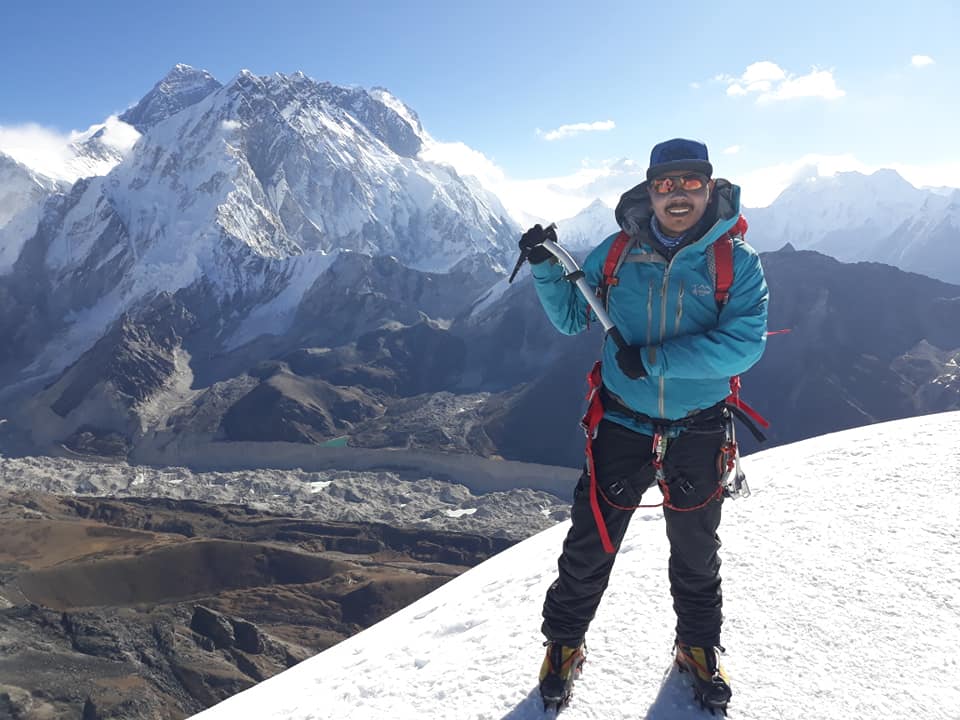
Mera Peak is one of the most rewarding mountaineering adventures in Nepal, offering an opportunity to climb above 6,000 metres and experience the spectacular beauty of the Himalayas. Located in the remote Hinku Valley of the Everest region, Mera Peak stands at approximately 6,476 metres (21,247 feet) and is widely recognised as Nepal’s highest trekking peak.
Unlike many popular trekking routes in the Khumbu region, the Mera Peak climbing trail passes through quieter mountain settlements, dense rhododendron forests, alpine landscapes, glacial valleys and traditional Sherpa villages. The journey combines high-altitude trekking with basic mountaineering, making it an excellent choice for adventurous trekkers who want to experience their first Himalayan summit.
One of the biggest attractions of Mera Peak is its extraordinary summit panorama. On a clear day, climbers can see five of the world’s fourteen 8,000-metre mountains: Mount Everest (8,848.86 m), Lhotse (8,516 m), Makalu (8,485 m), Cho Oyu (8,188 m) and Kanchenjunga (8,586 m). This remarkable mountain panorama makes reaching the summit a memorable experience.
Mera Peak has three recognised summits: Mera North, Mera Central and Mera South. Mera Central is commonly identified as the trekking summit, while Mera North is the highest point. The climbing objective should be confirmed with the expedition operator because the summit reached depends on the route, conditions and climbing arrangements.
With proper acclimatisation, physical preparation and support from experienced climbing guides, Mera Peak is achievable for fit trekkers who are new to mountaineering. However, its altitude, glacier travel, cold temperatures and summit-day demands should never be underestimated.
This guide by Create Himalaya Adventure covers the Mera Peak climbing routes, summit options, itinerary, costs and essential information to help you plan your Himalayan adventure.
Where Is Mera Peak Located?
Mera Peak is situated in the Mahalangur Himalayan range of eastern Nepal, in the remote Hinku Valley of Solukhumbu District. It lies within the Makalu Barun National Park region, close to the Hinku and Hongu valleys and southeast of the main Everest Base Camp trekking route.
The mountain is surrounded by impressive Himalayan landscapes, including glaciers, high mountain passes, alpine meadows and snow-covered peaks. Its relatively remote location offers a quieter trekking experience compared with the busy Everest Base Camp trail.
The usual climbing journey begins with a flight from Kathmandu to Lukla (2,860 m). From Lukla, climbers follow either the Zatrwa La route or the longer Hinku Valley approach before reaching Khare (approximately 5,045 m), the main acclimatisation and climbing preparation point.
The mountain’s three principal summits are:
- Mera North (6,476 m): The highest of the three recognised summits and a more demanding climbing objective.
- Mera Central (approximately 6,461 m): The commonly climbed trekking summit and the main objective of many commercial Mera Peak expeditions.
- Mera South (approximately 6,065 m): The southern summit, which is lower and less commonly included in standard commercial climbing itineraries.
Note: Summit elevations and naming can differ between maps and climbing references. Climbers should confirm the exact summit objective with their expedition operator.
Mera Peak Climbing Highlights
- Summit one of Nepal’s most famous 6,000-metre trekking peaks.
- Experience the spectacular Hinku Valley and its remote Himalayan landscapes.
- Enjoy panoramic views of Everest, Lhotse, Makalu, Cho Oyu and Kanchenjunga.
- Explore traditional Sherpa settlements and mountain villages.
- Cross high mountain terrain and experience glacier trekking.
- Learn essential mountaineering skills, including crampon, ice axe and rope techniques.
- Experience an adventurous climb with professional local climbing guides.
- Enjoy a less crowded alternative to some of the popular Everest-region trekking routes.
Mera Peak Climbing Routes
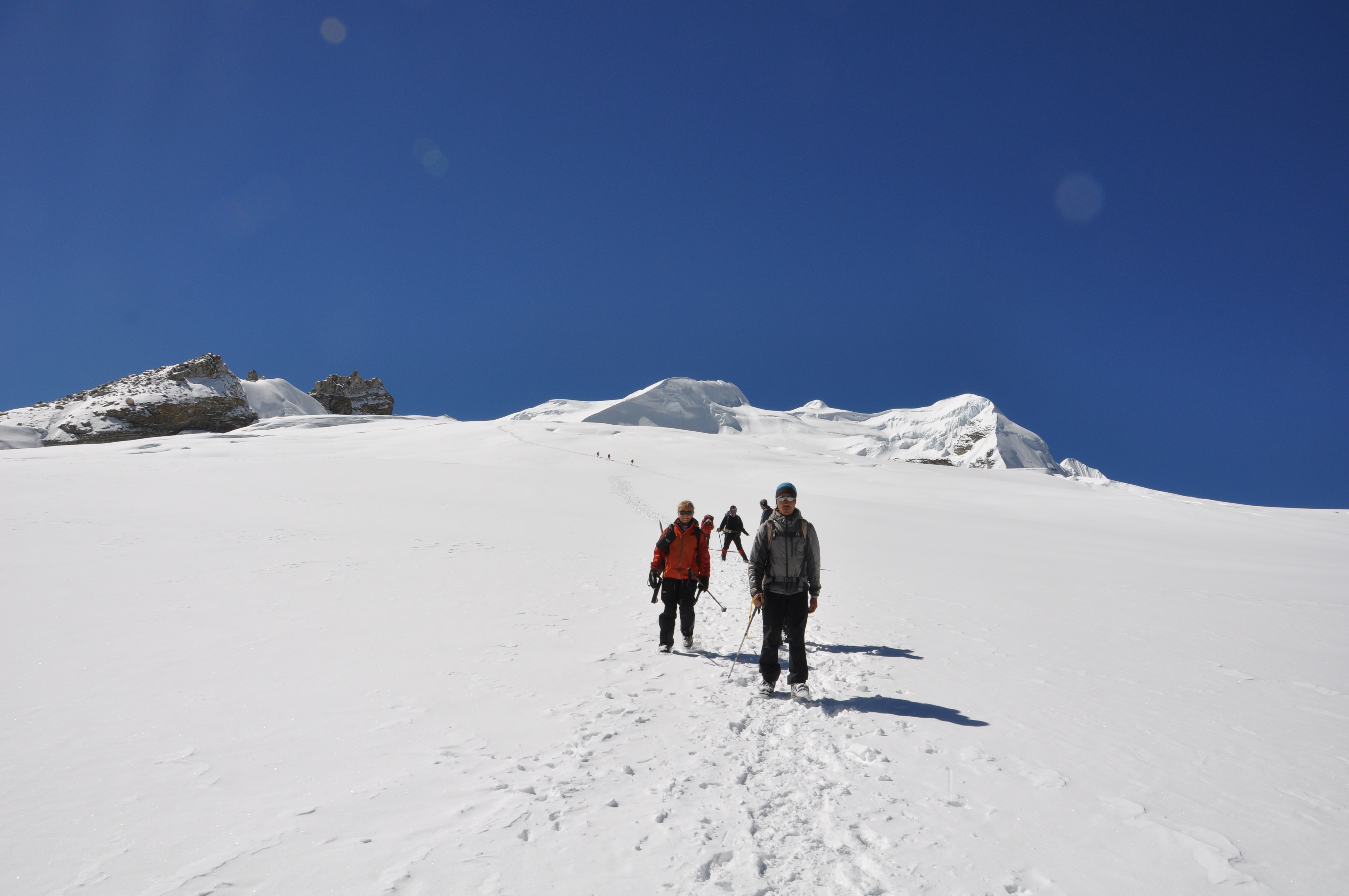
There are several trekking approaches to Mera Peak, but most expeditions begin in Lukla and follow one of two main routes to Khare. The choice depends on your available time, trekking experience, physical fitness and acclimatisation requirements.
Standard Mera Peak Climbing Route via Hinku Valley
The standard Hinku Valley route is a popular choice for climbers who prefer gradual altitude gain and better natural acclimatisation. After flying from Kathmandu to Lukla, the trail heads towards Paiya, Panggom, Ningsow and Chhatra Khola before entering the beautiful Hinku Valley.
The route passes through forests, suspension bridges, traditional settlements and alpine landscapes. As you gain altitude, the vegetation becomes thinner, and the surrounding scenery changes into rocky mountain terrain and glacial valleys.
From Kothe, the trail follows the upper Hinku Valley towards Thaknak and Khare. Khare (5,045 m) is the main climbing preparation point, where climbers spend time acclimatising and practising essential mountaineering techniques.
Main route: Lukla – Paiya – Panggom – Ningsow – Chhatra Khola – Kothe – Thaknak – Khare – Mera High Camp – Summit.
This approach generally requires a longer itinerary of around 17–18 days from Kathmandu, depending on rest days and the return route.
Mera Peak Route via Zatrwa La Pass
The Zatrwa La route is a shorter and more direct approach to Mera Peak. It is suitable for physically fit trekkers who have previous high-altitude trekking experience and can manage longer walking days.
After arriving in Lukla, the trail climbs towards Chutanga before crossing Zatrwa La Pass (approximately 4,600 m). From the pass, climbers enjoy impressive views of the surrounding Himalayan landscape before descending towards Thuli Kharka and continuing to Kothe in the Hinku Valley.
The route then follows the same trail through Thaknak and Khare before reaching Mera High Camp and the summit.
Main route: Lukla – Chutanga – Zatrwa La Pass – Thuli Kharka – Kothe – Thaknak – Khare – Mera High Camp – Summit.
Although this route saves trekking days, crossing a high mountain pass early in the journey can be physically demanding. Proper acclimatisation is essential, and a shorter itinerary should not mean rushing the ascent.
Mera Peak Route via Khare
Khare is the final permanent settlement and the main staging point for the Mera Peak climbing expedition. Both the Zatrwa La and lower Hinku Valley approaches eventually meet here.
From Khare, climbers follow the glacier towards Mera La (approximately 5,415 m) before continuing towards Mera High Camp (approximately 5,780 m). The route involves glacier travel, snow slopes and sections where fixed ropes may be used depending on conditions.
The final summit attempt normally starts very early in the morning. Climbers rope up with their guides, cross the glacier and gradually ascend the snow slopes towards the summit.
After reaching the summit, the team descends to High Camp or continues towards Khare, depending on weather, energy levels and the expedition plan.
Which Mera Peak Climbing Route Is Best?
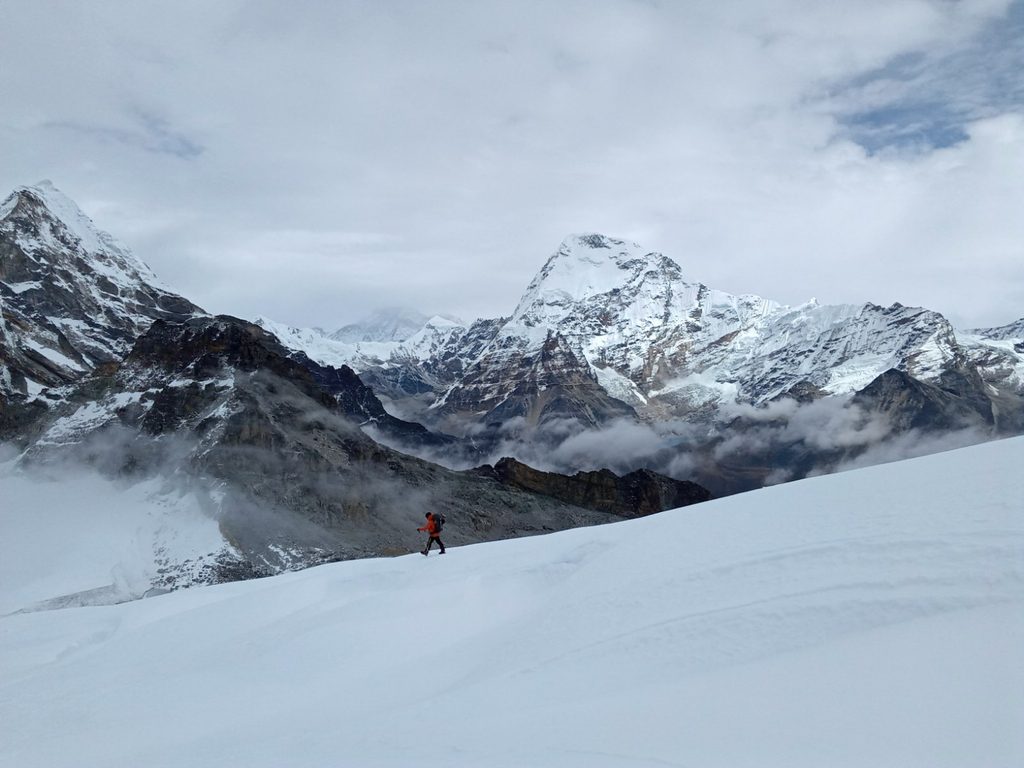
Both routes offer beautiful mountain scenery and access to the same climbing area. However, they differ in trekking duration and altitude gain.
Route Main advantage Recommended for
- Hinku Valley via Paiya Gradual approach Better natural acclimatisation
- Zatrwa La Pass Shorter trekking approach Fit, experienced trekkers
- Khare to summit Main climbing route All summit expeditions
For most climbers, Create Himalaya Adventure recommends the longer Hinku Valley approach because it provides more time for gradual altitude gain and exploration. The Zatrwa La route is another excellent option when the itinerary includes sufficient acclimatisation.
Mera Peak Climbing Itinerary
A typical Mera Peak climbing expedition takes approximately 14–18 days from Kathmandu, depending on the selected approach and acclimatisation schedule.
The following is a sample 14-day itinerary via Zatrwa La Pass. It includes an acclimatisation and training day at Khare and a separate contingency day for summit conditions.
14-Day Mera Peak Climbing Itinerary
Day Route and activities Altitude
- Arrival in Kathmandu 1,400 m
- Fly to Lukla and trek to Chutanga 3,100 m
- Cross Zatrwa La and trek to Thuli Kharka 4,300 m
- Trek to Kothe 3,691 m
- Trek to Thaknak 4,358 m
- Trek to Khare 5,045 m
- Acclimatisation and climbing training at Khare 5,045 m
- Trek to Mera High Camp 5,780 m
- Summit Mera Peak and descend towards Khare 6,461 m
- Contingency day 5,045 m
- Trek from Khare to Kothe 3,691 m
- Trek to Thuli Kharka 4,300 m
- Cross Zatrwa La and trek to Lukla 2,860 m
- Fly from Lukla to Kathmandu 1,400 m
Note: This is a sample itinerary, not a fixed schedule. Weather, flight availability, health and climbing conditions may require additional days. Summit altitude shown is for Mera Central; the highest Mera North summit is approximately 6,476 m.
Day-by-Day Trekking and Climbing Schedule
The journey begins with arrival in Kathmandu, where climbers meet their guide, check equipment and complete the necessary preparations. After flying to Lukla, the trek continues through Chutanga and across Zatrwa La Pass into the Hinku Valley.
The next few days involve descending towards Kothe and gradually ascending through Thaknak to Khare. At Khare, climbers take an acclimatisation day to prepare for the glacier and summit attempt.
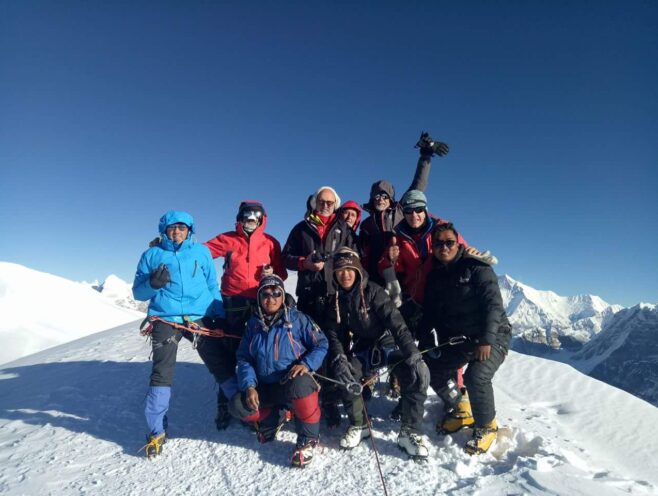
The team then moves to Mera High Camp, where climbers rest before beginning the summit push, usually around midnight or in the early morning hours. Depending on the summit objective and weather, the climb can take approximately 8–12 hours or longer.
After the summit attempt, the expedition descends through Khare and Kothe towards Lukla before returning to Kathmandu.
Acclimatisation and Rest Days
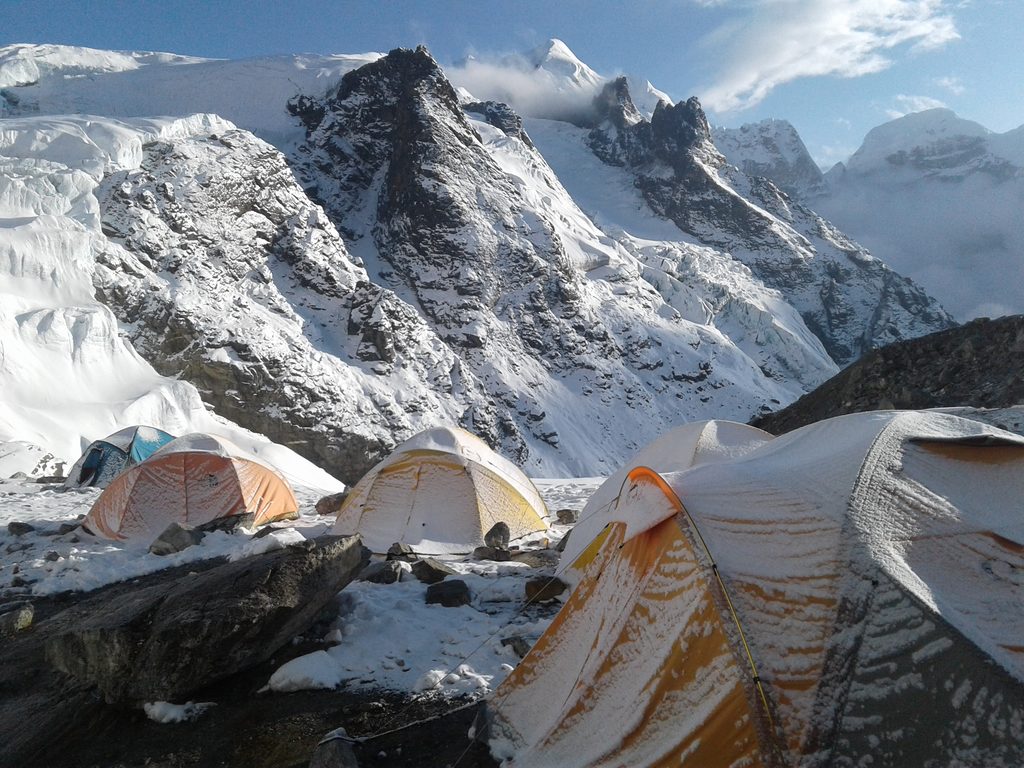
Acclimatisation is one of the most important parts of Mera Peak climbing. The mountain reaches above 6,400 metres, where oxygen availability is significantly lower than at sea level.
Spending an additional day at Khare helps the body adjust to the altitude. Climbers can also practise walking with crampons, using an ice axe, attaching a harness, ascending fixed ropes with a jumar and travelling safely on a glacier.
A contingency day is equally important because high-altitude weather can change quickly. If strong winds, snowfall or poor visibility affect the summit attempt, the climbing team may need to postpone the ascent.
Mera Peak Climbing Cost in 2027/2028
The Mera Peak climbing cost depends on the group size, climbing season, itinerary, accommodation standard, transportation, guide arrangements and services included in the package.
For 2027/2028, a guided Mera Peak climbing package from Kathmandu may generally cost around USD 2,000–3,500 per person for standard group services. Premium private expeditions with additional support and upgraded facilities can cost more.
The final price should always be checked against the services included. A cheaper package may exclude important expenses such as domestic flights, climbing permits, technical equipment, meals or climbing Sherpa support.
How Much Does Mera Peak Climbing Cost?
The approximate cost structure is:
- Service Cost consideration
- Group climbing package Generally more economical
- Private climbing package Higher, depending on services
- Domestic Lukla flights Depends on season and flight arrangements
- Climbing permit Depends on season and current NMA rates
- Guide and climbing Sherpa Depends on experience and team size
- Porter service Depends on weight and duration
- Technical equipment Depends on rental or package arrangements
The number of climbers also influences the cost. A group of four or more people can generally share guide, transport and logistical expenses, reducing the per-person price.
What Is Included in the Mera Peak Climbing Package?
A standard Mera Peak climbing package with Create Himalaya Adventure can include:
- Airport pickup and drop-off in Kathmandu.
- Private ground transportation as required.
- Kathmandu–Lukla–Kathmandu domestic flights.
- Hotel accommodation in Kathmandu as specified.
- Teahouse accommodation during the trek.
- Tented accommodation at high camp when required.
- Three meals daily during the trekking and climbing period.
- Mera Peak climbing permit and required regional entry permits.
- Experienced English-speaking trekking guide.
- Qualified climbing Sherpa or climbing guide.
- Porter service for personal trekking baggage.
- Group climbing equipment, including ropes and other technical safety gear.
- First-aid kit and basic safety arrangements.
- Government taxes and applicable company service charges.
The exact inclusions should be confirmed in the written package quotation before booking.
What Is Not Included in the Package?
Unless specifically mentioned, climbers should budget separately for:
- International flights to and from Nepal.
- Nepal entry visa fees.
- Travel insurance and emergency helicopter evacuation coverage.
- Personal trekking and climbing equipment.
- Personal expenses and additional snacks.
- Drinks, bottled water and extra beverages.
- Hot showers, Wi-Fi and electronic device charging.
- Lunch and dinner in Kathmandu.
- Personal tips for guides, Sherpas and porters.
- Additional hotel nights caused by flight delays or itinerary changes.
- Extra accommodation or services beyond the agreed itinerary.
Additional Expenses During Mera Peak Climbing
Although most essential trekking arrangements can be included in a package, some personal expenses are unavoidable. Hot showers, charging facilities, Wi-Fi and snacks may cost more as you gain altitude.
It is sensible to carry around USD 200–300 in additional spending money, depending on your personal habits and package inclusions. Climbers should also have sufficient funds available for unexpected delays or additional nights in Kathmandu.
Private vs. Group Mera Peak Climbing Cost
Group climbing is usually more affordable because participants share the cost of guides, transportation and other logistical arrangements. It is a good option for solo travellers and climbers who enjoy meeting people from different countries.
A private Mera Peak expedition offers more flexibility. You can choose your departure date, adjust your walking pace, request additional acclimatisation days and receive more individual attention from the climbing team.
For climbers who are new to high-altitude mountaineering, a private trip can be particularly useful when additional preparation or a customised itinerary is needed.
Mera Peak Climbing Cost: What Affects the Price?
Several factors influence the final expedition price:
- Climbing season: Spring and autumn are popular, and flight and accommodation demand can affect costs.
- Group size: Larger groups generally reduce the individual package price.
- Route selection: A longer Hinku Valley itinerary requires additional days of guide, porter, food and accommodation services.
- Climbing support: The number and experience of climbing Sherpas affect expedition expenses.
- Equipment: Personal equipment rental and technical climbing gear arrangements can change the total budget.
- Safety arrangements: Weather contingency days, emergency support and appropriate insurance are important parts of a properly organised expedition.
For an accurate quotation, climbers should compare the complete services rather than choosing a package based only on its advertised price.
Mera Peak Summit Views: Five 8,000-Metre Mountains
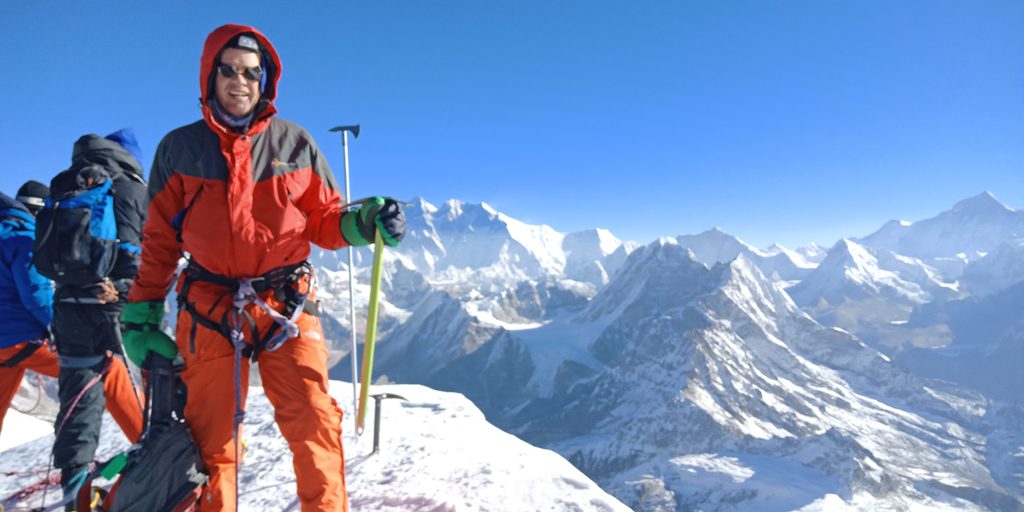
One of the most extraordinary rewards of Mera Peak climbing is the panoramic view from the summit. The mountain offers an exceptional viewpoint across the eastern and central Himalayan ranges.
On a clear day, climbers can see five of the world’s highest mountains:
- Mount Everest (8,848.86 m): The highest mountain on Earth, standing prominently among the Himalayan giants.
- Lhotse (8,516 m): The world’s fourth-highest mountain, located close to Everest and connected by the South Col.
- Makalu (8,485 m): The world’s fifth-highest mountain, famous for its distinctive pyramid-shaped summit.
- Cho Oyu (8,188 m): The world’s sixth-highest mountain, situated along the Nepal–Tibet border.
- Kanchenjunga (8,586 m): The world’s third-highest mountain, visible towards the eastern Himalayan horizon when atmospheric conditions are favourable.
The summit panorama also includes numerous other Himalayan peaks, glaciers and snow-covered mountain ranges. The views are particularly impressive during clear spring and autumn mornings.
It is worth remembering that visibility depends on weather, cloud cover and atmospheric conditions. Seeing all five 8,000-metre peaks is possible, but cannot be guaranteed on every summit day.
Final Thoughts: Climb Mera Peak with Create Himalaya Adventure
Mera Peak climbing is more than a high-altitude trekking adventure. It is an opportunity to explore the remote Hinku Valley, experience Himalayan mountain culture, develop mountaineering skills and stand above 6,400 metres in the heart of Nepal.
Whether you choose the gradual Hinku Valley approach or the shorter Zatrwa La route, proper acclimatisation, experienced climbing support and a realistic itinerary are essential for a safe and rewarding experience.
Create Himalaya Adventure offers professionally organised Mera Peak climbing packages with experienced local guides, climbing Sherpa support, trekking arrangements and customised itineraries. We focus on responsible tourism, personal attention and safety throughout the journey.
If you are planning your first Himalayan 6,000-metre summit or looking for your next mountaineering challenge, Mera Peak is an excellent adventure to consider.
Frequently Asked Questions
1. Is Mera Peak the highest trekking peak in Nepal?
Yes, Mera Peak is generally regarded as the highest trekking peak in Nepal. Located in the Hinku Valley of the Everest region, its highest summit, Mera North, reaches 6,476 metres (21,247 feet). The mountain is an excellent destination for trekkers looking to take their first step into Himalayan mountaineering. Although the standard climbing route does not involve highly technical rock or ice climbing, reaching the summit requires good stamina, proper acclimatization and familiarity with basic climbing equipment.
2. Are the teahouses on Mera Peak similar to those on the Everest Base Camp Trek?
No, accommodation on the Mera Peak route is generally simpler than what you find on the Everest Base Camp trail. Most teahouses in villages such as Paiya, Panggom, Kothe and Thangnak offer basic rooms, shared toilets and a common dining area. Facilities become more limited as you approach Khare. Unlike the busy Everest Base Camp route, the Mera Peak trail has fewer lodges and less developed tourism infrastructure. At Mera High Camp, you will spend the night in an expedition tent rather than a regular mountain lodge.
3. Can I charge my phone and camera during the Mera Peak expedition?
Yes, charging is possible at several teahouses during the trekking portion of the Mera Peak expedition. However, electricity is not equally available at every stop, and some lodges charge extra for using charging facilities. You can usually find charging opportunities in lower settlements and at Khare, depending on the lodge. Once you move towards Mera High Camp, electricity becomes extremely limited or unavailable. We recommend bringing a high-capacity power bank, spare camera batteries and a suitable charging arrangement before leaving Kathmandu.
4. Am I allowed to fly a drone during Mera Peak climbing?
You can bring a drone to Nepal, but carrying one and flying one are two different things. Drone operations are controlled by Nepalese aviation regulations, and additional permission may be necessary depending on the drone’s weight, location and intended use. Mera Peak is situated in the Makalu Barun National Park region, where protected-area rules must also be considered. Before travelling, check the latest requirements with the Civil Aviation Authority of Nepal and the relevant park authorities. Avoid flying your drone over trekking trails, camps or climbing groups without the necessary approvals.
5. Can I hire or rent mountaineering equipment in Khare?
Yes, some climbing equipment may be available for rent in Khare, which is the main preparation point before attempting Mera Peak. Depending on the season and local availability, climbers may be able to arrange crampons, ice axes, climbing harnesses, helmets and other technical gear. However, Khare has limited rental facilities compared with Kathmandu, and the availability of suitable sizes cannot always be guaranteed. For a more comfortable and reliable climbing experience, arrange your essential equipment in Kathmandu through your trekking agency. Always check that rented equipment fits properly and is in good working condition.
6. Which Himalayan mountains can I see from the summit of Mera Peak?
The summit of Mera Peak provides an extraordinary view of the Himalayan mountain range. On a clear day, climbers can enjoy distant views of five of the world’s fourteen 8,000-metre mountains, making the summit experience particularly rewarding.
The major mountains visible from the summit include:
- Mount Everest (8,848.86 m): The highest mountain in the world.
- Mount Kanchenjunga (8,586 m): The third-highest mountain on Earth.
- Mount Lhotse (8,516 m): A massive Himalayan peak close to Everest.
- Mount Makalu (8,485 m): Recognisable by its distinctive pyramid-shaped summit.
- Mount Cho Oyu (8,188 m): The sixth-highest mountain in the world.
You can also enjoy impressive views of Baruntse, Chamlang, Ama Dablam and other snow-covered Himalayan peaks. Visibility depends on the weather, but a clear summit morning offers a spectacular mountain panorama.
7. When is the best time of year to climb Mera Peak?
Spring (March to May) and autumn (September to November) are the two main climbing seasons for Mera Peak. April and October are particularly popular because they generally offer favourable conditions for trekking and high-altitude climbing.
- March: Temperatures are still cold, but conditions gradually improve towards the end of the month.
- April: A popular climbing month with longer daylight hours and generally favourable weather.
- May: Warmer temperatures at lower elevations, although pre-monsoon clouds can sometimes affect visibility.
- September: The weather begins to improve after the monsoon, but occasional rain and cloud are possible.
- October: One of the most favourable months, with generally clear skies and excellent mountain visibility.
- November: Good opportunities for climbing, although temperatures become considerably colder, especially at High Camp.
For a combination of comfortable trekking conditions and favourable summit weather, April and October are excellent months to consider. However, the final climbing window should always depend on actual weather and snow conditions.
8. Can a beginner climb Mera Peak without previous mountaineering experience?
Yes, a beginner can attempt Mera Peak, provided they have good physical preparation and receive proper climbing guidance. You do not necessarily need previous experience on a 6,000-metre mountain, but you should be comfortable with long-distance trekking and walking at high elevations. Before the summit attempt, your climbing guide will teach you how to use crampons, an ice axe, a harness and other essential climbing equipment. Previous high-altitude trekking experience is an advantage because it helps you understand how your body responds to altitude.
9. How long does the Mera Peak summit climb take?
The summit attempt generally takes between 8 and 12 hours, although the actual duration depends on weather, snow conditions, climbing speed and individual fitness. Climbers normally leave High Camp around midnight or during the early morning hours. The early start provides a better opportunity to reach the summit before stronger afternoon winds develop. After enjoying the summit views, you descend carefully along the same climbing route. Your guide will decide whether to return directly to Khare or stay at High Camp based on the group’s condition and weather.
10. What are the chances of getting altitude sickness on Mera Peak?
Altitude sickness is a genuine risk during Mera Peak climbing because the expedition takes you above 6,000 metres. The reduced oxygen availability at higher elevations puts additional pressure on your body, particularly during the approach to Khare, High Camp and the summit.
You may experience headaches, nausea, dizziness, tiredness, loss of appetite or difficulty sleeping. These symptoms should never be ignored. A well-planned itinerary with gradual altitude gain and sufficient acclimatization helps your body adjust to the changing conditions. Drink enough water, maintain a comfortable walking pace and follow your guide’s advice. If symptoms become severe or worsen, stop ascending and descend to a lower altitude with appropriate medical assistance.
11. Do I need a licensed climbing guide for Mera Peak?
Yes, you should arrange Mera Peak climbing through an authorised trekking or mountaineering agency with the required permits and professional climbing support. A qualified climbing guide or experienced climbing Sherpa is important for a safe summit attempt. The guide manages technical climbing arrangements, checks weather conditions, assists with glacier travel and provides instructions on using mountaineering equipment. Their experience is especially valuable when crossing snow-covered sections and dealing with changing mountain conditions. A professional climbing team also helps coordinate emergency support if unexpected difficulties arise.
12. Can I use mobile phones and Wi-Fi along the Mera Peak trekking route?
Mobile connectivity on the Mera Peak trail is inconsistent. You may receive a mobile signal in some lower villages, but coverage becomes increasingly unreliable as you travel deeper into the Hinku Valley. Some teahouses provide paid Wi-Fi, although connection speeds and availability vary. Khare may offer limited communication options, while reliable internet access should not be expected at Mera High Camp. If you need to stay connected, consider arranging a local SIM card in Kathmandu and informing your family that there may be several days without a network connection.
13. Is accommodation at Mera High Camp in a teahouse or tent?
Unlike the lower trekking villages, Mera High Camp does not offer the usual teahouse accommodation. Climbers generally sleep in expedition tents arranged by their climbing team. High Camp is located at approximately 5,780 metres, where the environment is cold, exposed and considerably less comfortable than the lower mountain settlements. Your expedition crew normally organises tents, sleeping arrangements and meals. A warm sleeping bag rated for extreme cold is essential because nighttime temperatures can fall well below freezing.
14. What meals can I expect during the Mera Peak climbing trip?
Food along the Mera Peak route consists mainly of traditional Nepali dishes and simple international meals. Teahouses serve popular options such as dal bhat, vegetable curry, fried rice, noodles, pasta, potatoes, soups, eggs, pancakes and porridge. The menu becomes smaller as you climb towards Khare and High Camp because transporting food to remote mountain locations is difficult. At higher elevations, meals are usually basic but provide the energy needed for trekking and climbing. If you follow a vegetarian, vegan or other special diet, inform your agency before the expedition so suitable arrangements can be made.
15. How should I prepare physically for Mera Peak climbing?
Preparing for Mera Peak requires more than ordinary walking fitness. You should develop cardiovascular endurance, leg strength and the ability to remain active for several consecutive days. Start your training approximately 8–12 weeks before the expedition, depending on your current fitness level.
Useful preparation activities include:
- – Hiking regularly with a backpack on uphill and downhill trails.
- – Running, cycling or swimming to improve cardiovascular endurance.
- – Walking up stairs to strengthen your legs and improve stamina.
- – Performing squats, lunges and core exercises to develop muscle strength.
- – Completing longer hikes to practise walking for several hours without excessive fatigue.
If possible, include some multi-day hikes in your preparation. This helps you understand how your body responds to consecutive days of physical activity. Remember that physical fitness alone does not prevent altitude sickness, so proper acclimatization and a sensible climbing schedule remain essential.
Ramchandra Lamichhane
Trekking Expert
No hidden fees • Local experts • Best price guarantee