
Annapurna Base Camp Trek Distance
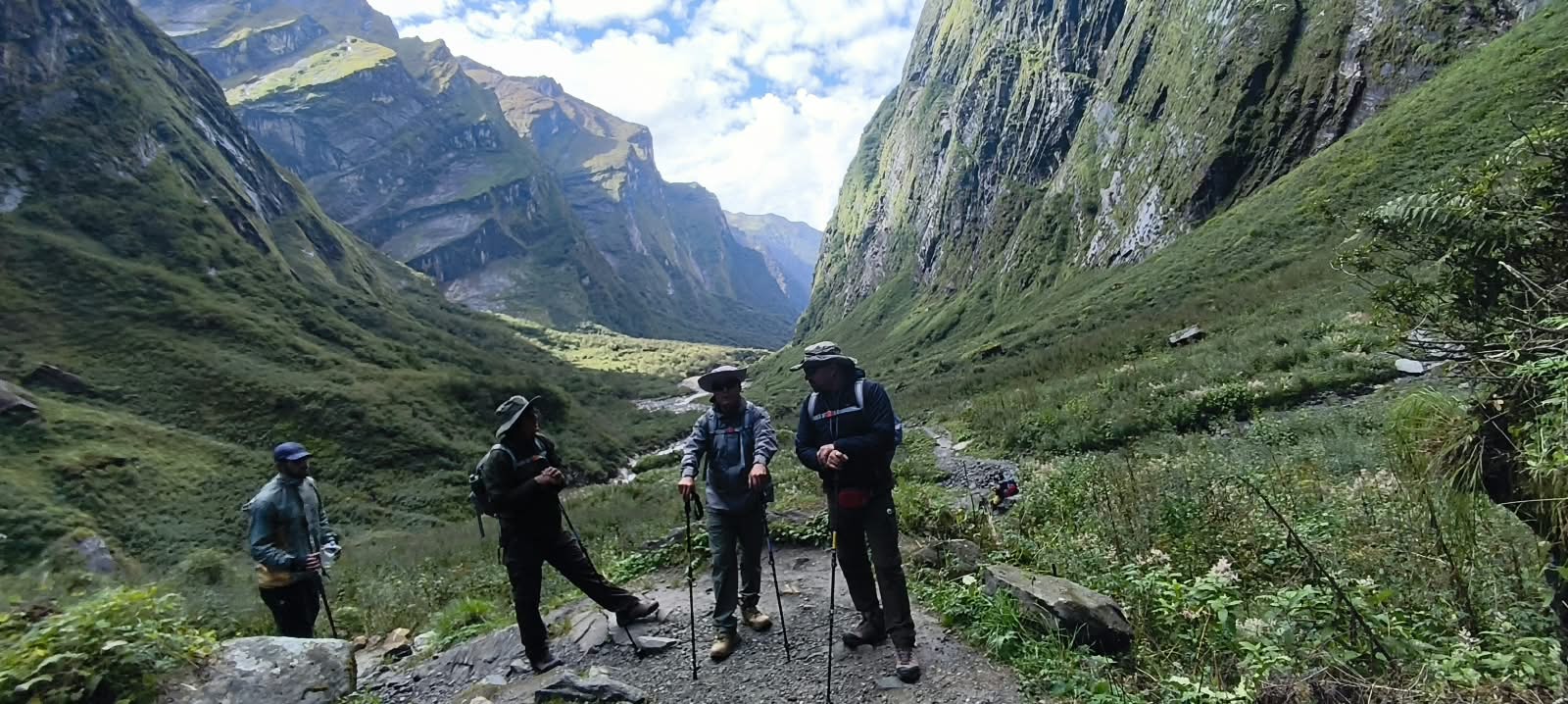
The Annapurna Base Camp (ABC) Trek takes you into the heart of the Annapurna Sanctuary, beneath Mt. Annapurna I (8,091 m), the world’s 10th-highest mountain. Located within the Annapurna Conservation Area, Nepal’s largest conservation area, the trek combines diverse landscapes, mountain scenery, and traditional Himalayan culture. Along the trail, you walk through lush subtropical forests, terraced farmland, alpine landscapes, and traditional Gurung and Magar villages before reaching Annapurna Base Camp at 4,130 m.
Compared with other popular Himalayan routes, such as the Everest Base Camp Trek and the Langtang Valley Trek, the Annapurna Base Camp Trek reaches a lower maximum altitude. Its flexible route options and manageable daily walking distances on many itineraries make it a popular choice for beginners, families, and trekkers with limited time. However, steep stone staircases, repeated ascents and descents, and changing weather still require proper preparation. Understanding the total distance, daily walking hours, and elevation changes will help you plan your journey with confidence. Here is what you need to know about the Annapurna Base Camp Trek distance.
Quick Facts
| Trek Information | Details |
| Total Trekking Distance | Approximately 70–95 km (43–59 miles) round trip |
| Trek Duration | 7–11 days, depending on the itinerary |
| Daily Walking Distance | Around 5–13 km |
| Walking Hours | 5–7 hours per day |
| Maximum Altitude | 4,130 m at Annapurna Base Camp |
| Difficulty Level | Moderate |
| Best Seasons | Spring (March–May) and Autumn (September–November) |
| Major Distance Factors | Starting point, route choice, road access, and Poon Hill detour |
What Is the Total Distance of the Annapurna Base Camp Trek?
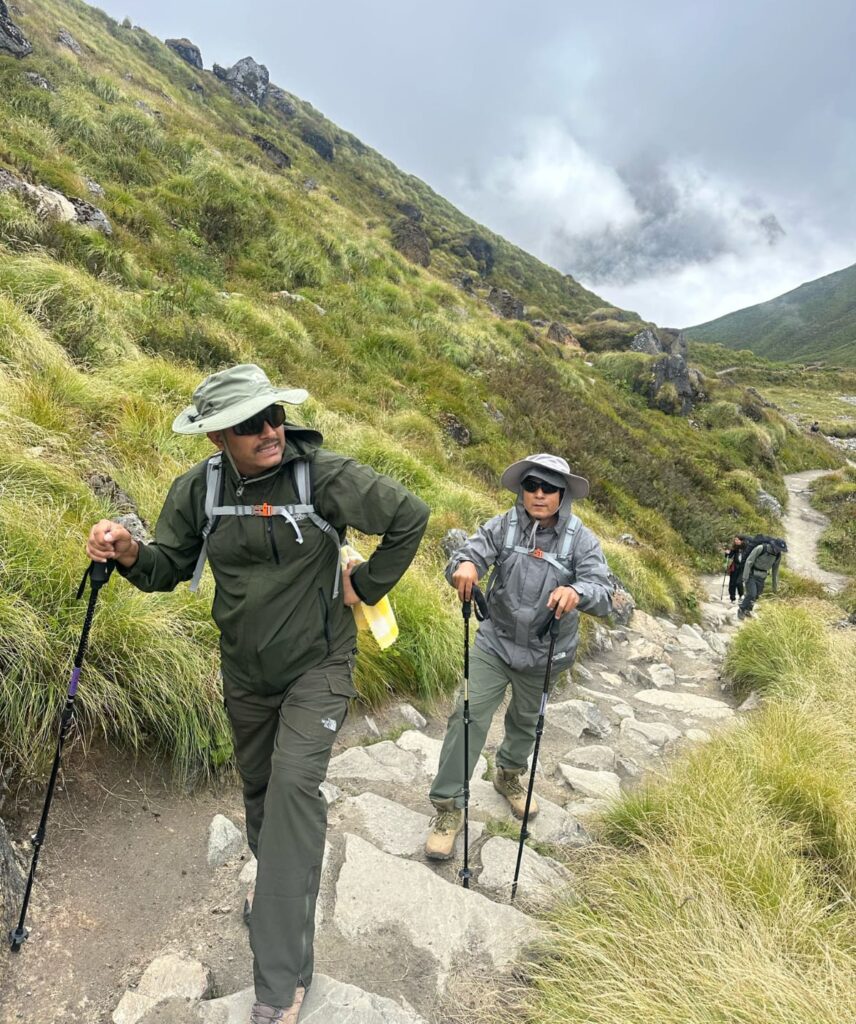
he Annapurna Base Camp Trek typically covers approximately 70–95 kilometers (43–59 miles) round trip, depending on the starting point, route, and itinerary. The classic trail usually begins near Nayapul or another road-accessible starting point from Pokhara and passes through villages such as Ghorepani, Tadapani, and Chhomrong before reaching Annapurna Base Camp at 4,130 meters (13,550 feet).
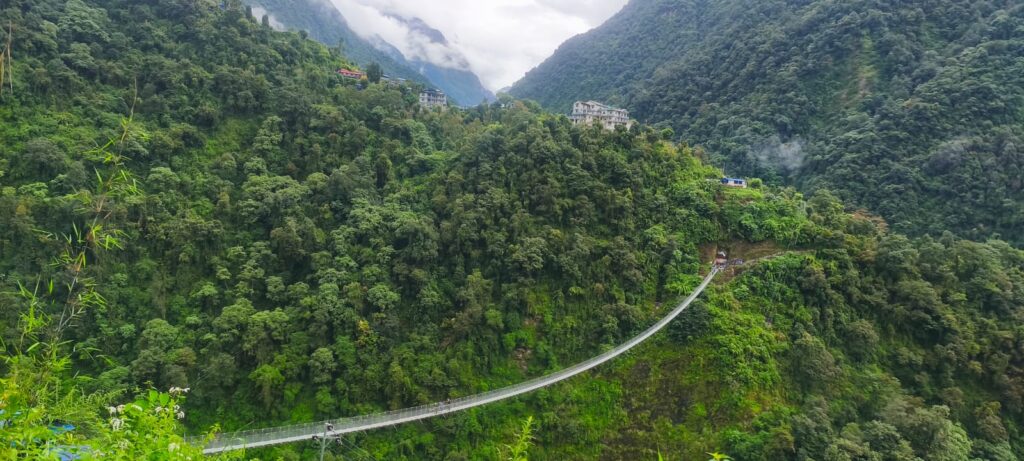
The total distance includes more than walking uphill. You will encounter steep stone staircases, forest trails, suspension bridges, and repeated ascents and descents throughout the journey. Although the trek reaches a moderate altitude compared with some Himalayan routes, the daily walking distance and elevation changes can make certain sections physically demanding.
Your total distance may vary depending on your itinerary. Adding Poon Hill for sunrise views, starting from a different trailhead, or returning through an alternative route can increase or reduce the distance. Shorter itineraries may skip Ghorepani and Poon Hill, while extended routes include additional villages and viewpoints.
Before starting the Annapurna Base Camp Trek, check the planned daily walking distances and elevation changes rather than relying on the total kilometers alone. This will help you choose an itinerary that suits your fitness level, available time, and trekking experience. For more details check our Annapurna Base Camp Trek Difficulty.
How to Prepare for the Annapurna Base Camp Trek Distance
You don’t need to be a marathon runner to complete the Annapurna Base Camp (ABC) Trek. However, you should be physically prepared to walk for several consecutive days on uphill trails, downhill sections, and uneven stone paths.
Start preparing a few weeks before your trek to build the stamina and leg strength needed for long days on the trail. Focus on the following activities:
- Walk longer distances: Practice walking 8–12 km, adjusting the distance to your fitness level.
- Hike with a backpack: Carry a light backpack similar to the one you plan to use during the trek.
- Practice uphill and downhill walking: Strengthen your legs and improve your balance by walking on sloping trails.
- Climb and descend stairs: Regular stair training will help prepare you for the long stone staircases along the route.
- Go on weekend hikes: Whenever possible, hike on natural trails to improve your endurance.
- Practice walking on consecutive days: Walk for two or more days in a row to prepare your body for the daily demands of trekking.
If you live at a relatively low elevation, be aware of how your body may respond as you climb higher toward Annapurna Base Camp. Even physically fit trekkers can experience altitude-related symptoms, including headaches, nausea, and difficulty breathing.
Remember: Physical fitness helps you handle long walking distances, but acclimatization is equally important when trekking at higher elevations. Walk at a comfortable pace, pay attention to how your body feels, and allow enough time for rest and acclimatization.
Annapurna Base Camp Trek: Day-by-Day Route
- Day 1: Welcome to Kathmandu – Arrive in Kathmandu, meet our representative, and transfer to your hotel for trek preparation.
- Day 2: Kathmandu to Pokhara by Drive – Drive from Kathmandu to Pokhara, enjoying views of hills, rivers, and countryside along the way.
- Day 3: Pokhara to Nayapul by Drive, Trek to Ghandruk – Drive to Nayapul and begin trekking through villages, terraced fields, and forested trails to Ghandruk.
- Day 4: Ghandruk to Chhomrong – Trek from Ghandruk to Chhomrong along mountain trails with views of Annapurna and Machhapuchhre.
- Day 5: Chhomrong to Bamboo – Descend through the Modi Khola valley and walk through dense forests toward Bamboo.
- Day 6: Bamboo to Deurali – Continue through bamboo and rhododendron forests, passing Dovan and Himalaya before reaching Deurali.
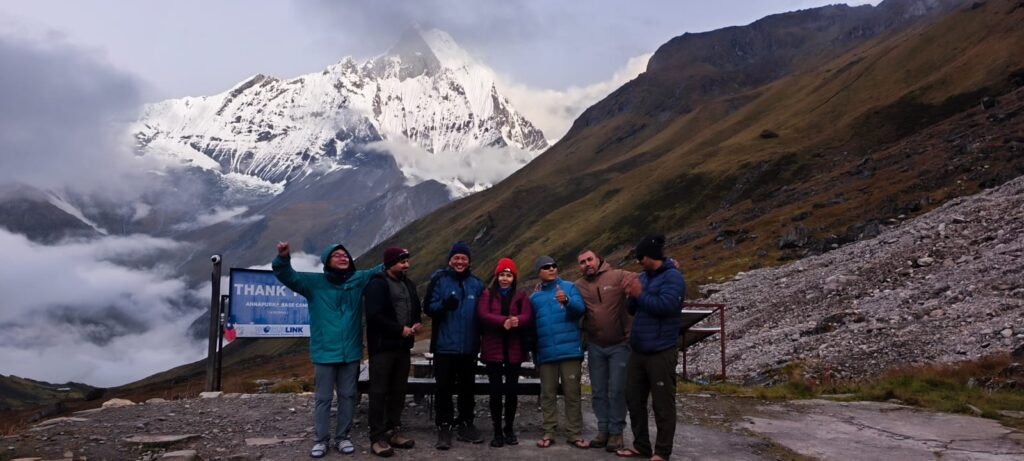
- Day 7: Deurali to Annapurna Base Camp (ABC) – Trek through the Annapurna Sanctuary to Annapurna Base Camp, surrounded by towering Himalayan peaks.
- Day 8: Annapurna Base Camp to Bamboo – Enjoy the mountain scenery at ABC before retracing the trail downhill to Bamboo.
- Day 9: Bamboo to Jhinu Danda, Drive to Pokhara – Trek to Jhinu Danda, where you can relax before driving back to Pokhara.
- Day 10: Pokhara to Kathmandu by Drive – Drive from Pokhara to Kathmandu, with an optional flight available for a quicker return.
- Day 11: Final Departure – Transfer to the airport for your onward journey or departure from Nepal.
How Does Weather Affect Your Annapurna Base Camp Trekking Distance?
Weather plays an important role in how far you can walk each day during the Annapurna Base Camp (ABC) Trek. Rain, snow, trail conditions, and daylight hours can affect your walking speed, daily distance, and overall itinerary. Choosing the right season helps you plan your trek and prepare for possible delays.
Spring (March–May) is one of the best seasons for the ABC Trek. The weather is generally favorable, temperatures become milder, and rhododendron forests bloom along the lower trails. You can usually follow your planned daily distances, although afternoon clouds or occasional rain may slow your progress. Allow extra time for rest stops and changing weather conditions.
Autumn (September–November) generally offers stable weather, clear mountain views, and good trekking conditions. Dry trails often make it easier to maintain a steady pace and complete your planned walking distances. However, this is a busy trekking season, so crowded trails and full teahouses may affect your schedule. Booking accommodation in advance can help you avoid unnecessary delays.
Monsoon (June–August) brings frequent rain, muddy paths, slippery stone steps, and an increased risk of landslides in some areas. Walking may take longer, particularly on steep sections and forest trails. Leeches are also common at lower elevations. Trail closures or damaged paths can require detours or waiting for conditions to improve, so keep your itinerary flexible and avoid rushing to meet daily distance targets.
Winter (December–February) brings colder temperatures, frost, and possible snowfall at higher elevations. Snow and ice can make the trail beyond Deurali difficult or unsafe, depending on recent weather and trail conditions. You may need to reduce your daily walking distance, allow more time for difficult sections, or turn back if continuing is unsafe. Shorter daylight hours also mean starting early and planning each day’s walk carefully. Winter can offer quieter trails and clear mountain views, but suitable clothing and up-to-date local advice are essential.
How should you plan your daily distance? Choose your itinerary based on the season, your fitness level, and the condition of the trail rather than distance alone. During uncertain weather, allow extra time for walking and rest, check conditions with your guide or local teahouse staff, and be prepared to adjust your plans. Your safety should always come before completing a set number of kilometers.
Highlights Along the Annapurna Base Camp Trek
- Poon Hill: Enjoy sunrise views of the Annapurna and Dhaulagiri ranges.
- Ghandruk: Explore a traditional Gurung village with rich local culture and mountain views.
- Chhomrong: Pass through a scenic hillside village with terraced fields and stone staircases.
- Bamboo and Deurali: Walk through forested trails, waterfalls, and rugged landscapes.
- Annapurna Base Camp: Reach 4,130 meters and enjoy panoramic views of the surrounding Himalayan peaks.
- Jhinu Danda Hot Springs: Relax in natural hot springs after your trek.
- Rhododendron Forests: See colorful blooms along the trail during spring.
- Modi Khola River: Follow the river valley through waterfalls and dramatic mountain scenery.
Is the Annapurna Base Camp Trek Distance Difficult?
The Annapurna Base Camp (ABC) Trek is considered moderate and manageable for trekkers with reasonable fitness and proper preparation. However, the distance can feel challenging because of steep stone staircases, repeated ascents and descents, and several consecutive days of walking. The trail around Ulleri and Chhomrong is particularly demanding, with long staircases that require steady effort.
As you climb beyond Deurali toward Machhapuchhre Base Camp and Annapurna Base Camp, the increasing altitude can make walking more tiring. Cold temperatures, changing weather, and uneven trails may also affect your pace. Although the trek does not require advanced mountaineering skills, good stamina and careful pacing are important.
To manage the trekking distance comfortably, prepare with regular walks and uphill hikes before your trip. Walk at a steady pace, take short breaks when needed, and allow enough time to complete each day’s journey without rushing. Choosing an itinerary that matches your fitness level will help make the Annapurna Base Camp Trek more comfortable and enjoyable.
Conclusion
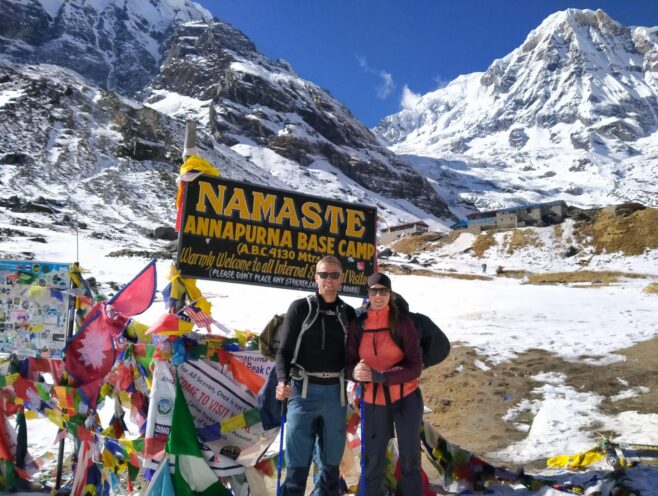
The Annapurna Base Camp Trek distance varies depending on your starting point, route, and whether you include destinations such as Ghorepani and Poon Hill. Most itineraries cover around 70km, while longer routes can reach approximately 95 km. The distance itself is manageable for many trekkers, but steep stone staircases, repeated ascents and descents, changing weather, and increasing altitude can make some days physically demanding.
With regular walking, uphill and downhill training, proper pacing, and a suitable itinerary, trekkers with reasonable fitness can comfortably prepare for the journey. Allowing enough time for rest, staying hydrated, and adjusting your plans to trail and weather conditions are also important. Rather than focusing only on the total kilometers, consider the daily walking distance, elevation gain, terrain, and altitude when planning your ABC Trek.
FAQ’s
1. How many kilometers is the Annapurna Base Camp Trek?
The Annapurna Base Camp (ABC) Trek typically covers approximately 70–95 km round trip. Longer itineraries that include Ghorepani and Poon Hill can cover around 100–115 km.
2. How many days does the Annapurna Base Camp Trek take?
The trek generally takes 7–11 days, depending on the route, starting point, and walking pace. Longer itineraries may include additional destinations and rest days.
3. How many kilometers do you walk each day on the ABC Trek?
Most trekkers walk approximately 5–13 km per day. The actual distance depends on the itinerary, terrain, elevation changes, and overnight stops.
4. Is the Annapurna Base Camp Trek difficult for beginners?
The ABC Trek is considered moderate and is manageable for many beginners with reasonable fitness and proper preparation. Steep staircases, long walking days, and altitude require careful pacing.
5. What is the highest altitude on the Annapurna Base Camp Trek?
The highest point is Annapurna Base Camp at approximately 4,130 meters (13,550 feet) above sea level.
6. How many hours do you walk each day on the ABC Trek?
Trekkers typically walk around 5–7 hours per day, depending on the route, daily distance, terrain, weather, and personal fitness.
7. Which route covers the shortest distance to Annapurna Base Camp?
Routes starting near Jhinu Danda or other accessible trailheads can reduce the walking distance. The exact distance depends on road access and the return route.
8. Does adding Poon Hill increase the trekking distance?
Yes. Adding Ghorepani and Poon Hill usually increases the total distance and adds extra walking days. It also provides sunrise views of the Annapurna and Dhaulagiri ranges.
9. What is the best season for the Annapurna Base Camp Trek?
Spring (March–May) and autumn (September–November) are generally the best seasons because they usually offer favorable trekking conditions and good mountain visibility.
10. How can I prepare for the ABC Trek distance?
Prepare with regular walks, weekend hikes, stair climbing, and uphill and downhill training. Practicing consecutive days of walking can also improve your endurance.
11. Does the Annapurna Base Camp Trek involve steep climbs?
Yes. The trail includes steep stone staircases, particularly around Ulleri and Chhomrong, along with repeated ascents and descents throughout the route.
12. Can altitude sickness affect the ABC Trek?
Yes. Altitude sickness can occur as you ascend toward Annapurna Base Camp. Ascend gradually, allow time for acclimatization, recognize symptoms, and descend if symptoms worsen. Severe symptoms require urgent medical attention.
13. Does weather affect the total trekking distance?
Weather usually affects walking speed and trail conditions rather than the planned distance. Heavy rain, landslides, snow, or trail closures may require route changes or delays.
14. Is the Annapurna Base Camp Trek suitable for families?
The trek can suit active families with older children who are comfortable with long walks and steep trails. The itinerary should match everyone’s fitness level, and children require particular attention to altitude and fatigue.
15. Can I complete the Annapurna Base Camp Trek without a guide?
Trekking regulations and local requirements should be checked before departure. Hiring a licensed guide can help with route planning, accommodation, weather changes, and altitude-related concerns.

Ramchandra Lamichhane
Trekking Expert
No hidden fees • Local experts • Best price guarantee