
Everest Base Camp Trek Map, Route and Elevation
Introduction
The Everest Base Camp Trek is one of the world’s most iconic Himalayan adventures, taking trekkers deep into Nepal’s Khumbu region beneath the world’s highest mountain, Mount Everest. The journey is not simply about reaching a famous destination. It is a gradual passage through Sherpa villages, Buddhist monasteries, suspension bridges, alpine forests, glacial valleys, and increasingly dramatic mountain landscapes.
The standard route begins around Lukla and passes through Phakding, Namche Bazaar, Tengboche, Dingboche, Lobuche, and Gorak Shep before reaching Everest Base Camp. Along the way, altitude rises steadily, making the route, elevation profile, and acclimatization schedule important parts of the journey.
Understanding the Everest Base Camp trek map, route, distance, and elevation before departure helps trekkers know what lies ahead and prepare properly for the changing Himalayan environment.
Everest Base Camp Trek Map: An Overview of the Route
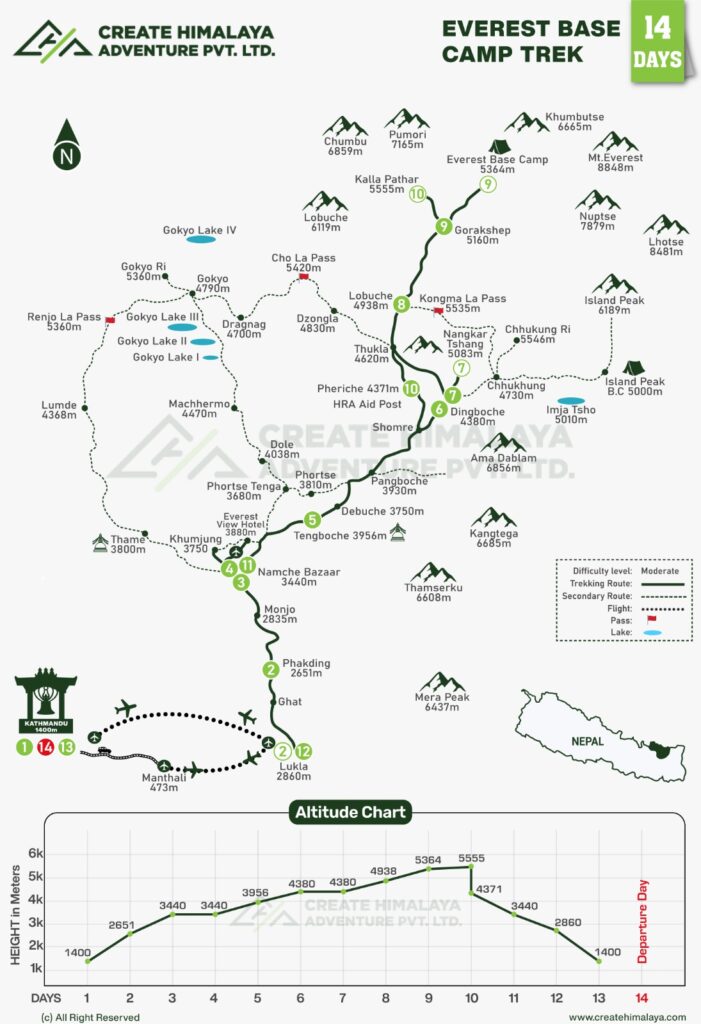
The Everest Base Camp trek map provides a clear picture of how the trail moves from the lower Khumbu valleys toward the high Himalayan landscape.
The classic route generally follows:
Lukla → Phakding → Namche Bazaar → Tengboche → Dingboche → Lobuche → Gorak Shep → Everest Base Camp
The return journey follows a similar route, although some itineraries make small changes to overnight stops.
The trek begins in a relatively green environment around Lukla. The trail gradually climbs through pine and rhododendron forests before reaching Namche Bazaar, the major trading and acclimatization center of the Khumbu region.
Beyond Namche, the landscape changes noticeably. Trees become shorter and less dense, while mountain views become larger. Tengboche introduces trekkers to the spiritual side of the Everest region, while Dingboche marks the transition into a much higher and more rugged environment.
From Lobuche onward, the trail enters the glacial landscape surrounding the Everest massif. Gorak Shep is the final settlement on the standard route before trekkers make the journey toward Everest Base Camp.
A good EBC trek map should therefore be viewed not simply as a line between two points, but as a visual representation of the gradual transition from valleys to high-altitude Himalayan terrain.
Where Does the Everest Base Camp Trek Start and End?
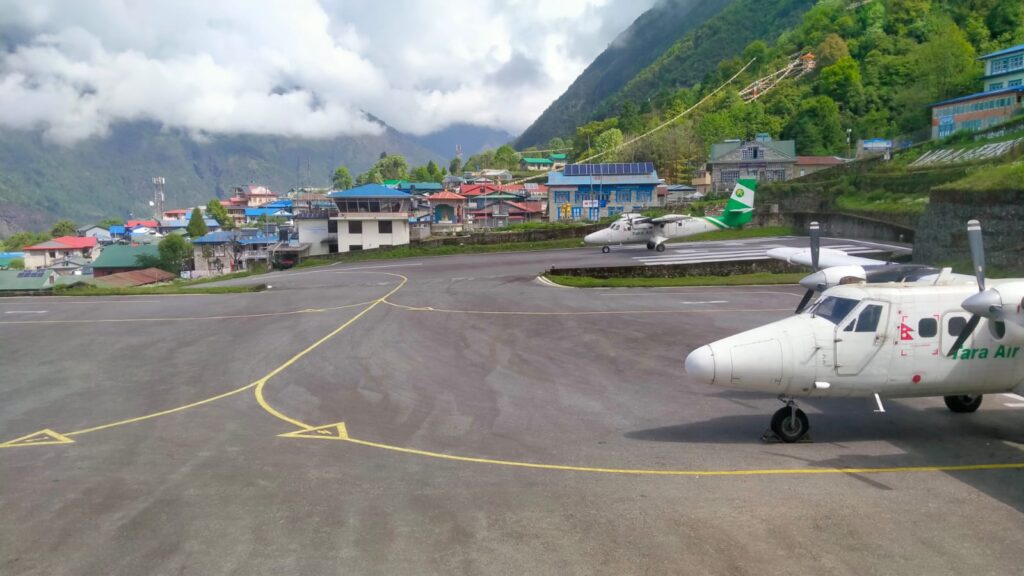
The traditional Everest Base Camp Trek starts at Lukla, a mountain town in the Solukhumbu district of Nepal. Trekkers normally reach Lukla by flight from Kathmandu or, during certain operating periods, through the Ramechhap/Manthali airport arrangement.
From Lukla, the walking adventure begins.
The first section follows the Dudh Koshi Valley toward Phakding and continues north toward Namche Bazaar. From Namche, the route heads toward Tengboche, Dingboche, Lobuche, and Gorak Shep before reaching Everest Base Camp.
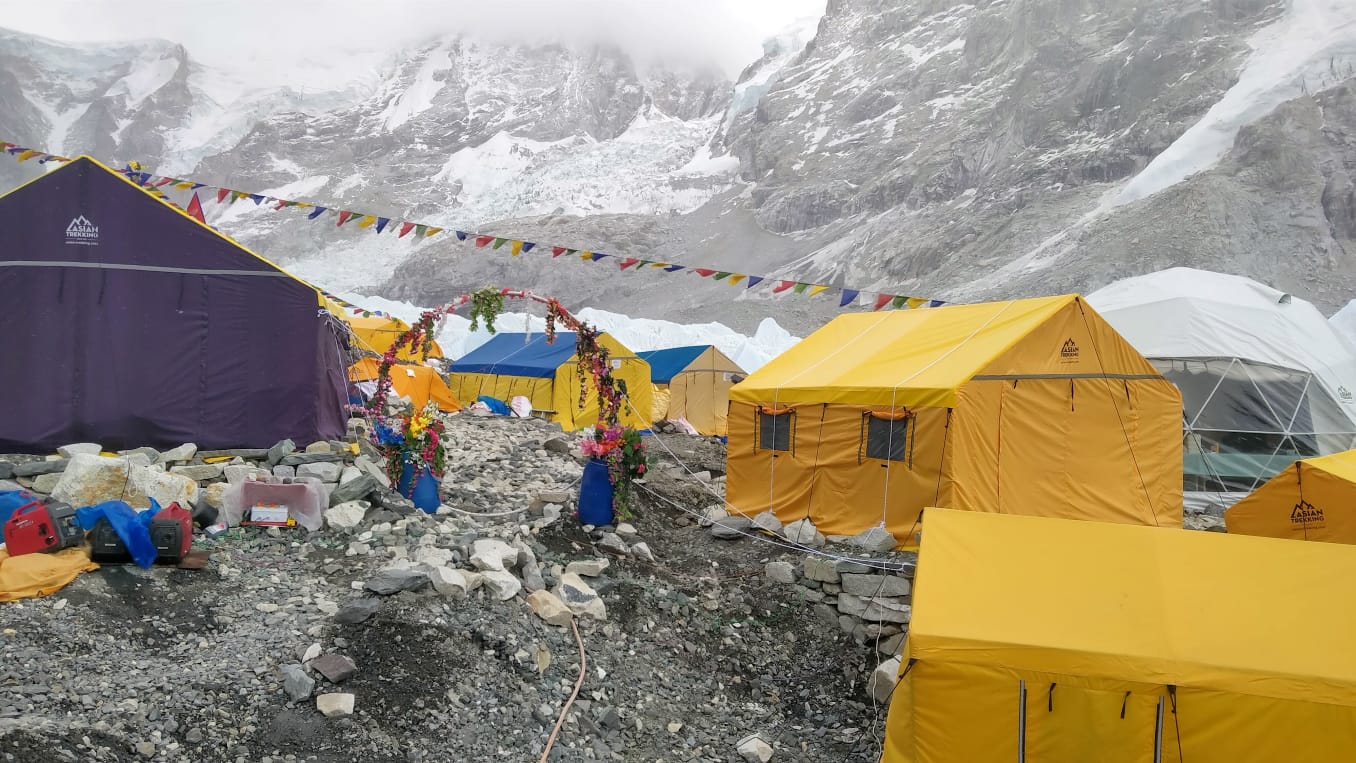
The trekking destination is Everest Base Camp at approximately 5,364 meters, although the exact position can vary slightly depending on seasonal conditions and how the location is measured.
After visiting Base Camp, trekkers normally return to Lukla using the same general trail. Some travelers choose alternative return arrangements, including a helicopter flight from the Everest region, depending on their itinerary and weather conditions.
Therefore, although Everest Base Camp is the main destination, Lukla is generally both the starting and finishing point of the classic trekking route.
Everest Base Camp Trek Route: Lukla to Base Camp
The route from Lukla to Everest Base Camp is a gradual progression through several distinct Himalayan environments.
From Lukla the trail descends toward the Dudh Koshi River before passing through villages such as Phakding. The walking here is comparatively comfortable, with forested surroundings and relatively moderate elevations.
The trail then continues toward Namche Bazaar, where the route becomes more demanding. The climb to Namche is one of the first significant uphill sections of the trek. Namche is also an important acclimatization location.
After Namche, trekkers walk toward Tengboche, famous for its monastery and panoramic mountain setting. The route then descends toward the river before climbing again toward Pangboche and Dingboche.
Dingboche is another important acclimatization stop. From here, the environment becomes noticeably more alpine. Trekkers continue through the Imja Valley toward Lobuche.
The trail from Lobuche to Gorak Shep crosses rugged high-altitude terrain. From Gorak Shep, trekkers continue toward Everest Base Camp beside the Khumbu Glacier.
The Base Camp area is surrounded by an extraordinary Himalayan landscape, including views toward the Khumbu Icefall and several major peaks.
The route is challenging, but the difficulty comes from the combination of distance, elevation, uneven terrain, cold temperatures, and the reduced availability of oxygen at higher elevations.
Everest Base Camp Trek Elevation
Elevation is one of the defining characteristics of the Everest Base Camp trek.
The journey starts around 2,860 meters at Lukla and eventually reaches more than 5,000 meters. This means trekkers gain roughly 2,500 meters of elevation during the journey toward Base Camp, although the actual amount of climbing is greater because the trail repeatedly goes up and down.
The approximate elevation progression is:
- Lukla – 2,860 m
- Phakding – 2,610 m
- Namche Bazaar – 3,440 m
- Tengboche – 3,860 m
- Dingboche – 4,410 m
- Lobuche – 4,910 m
- Gorak Shep – 5,164 m
- Everest Base Camp – approximately 5,364 m
Many trekkers also hike to Kala Patthar, which rises to approximately 5,550 meters and is higher than Everest Base Camp itself.
This elevation profile explains why the EBC trek should not be judged only by its distance. A relatively short walking day at high altitude can feel considerably harder than a longer day at a lower elevation.
Major Villages and Stops Along the EBC Trek Route
Each settlement on the Everest Base Camp route has a different character and purpose.
- Lukla is the traditional gateway to the Everest region. It is where many trekkers organize their final preparations before beginning the trail.
- Phakding is a small riverside settlement surrounded by green hills and forests. It is commonly used as the first overnight stop.
- Namche Bazaar is the largest and most important settlement on the classic route. It serves as a commercial center, acclimatization point, and meeting place for trekkers, guides, and local communities.
- Tengboche is known for its famous Buddhist monastery and spectacular mountain setting. From the surrounding area, trekkers can enjoy views of Everest, Ama Dablam, Lhotse, and other Himalayan peaks.
- Dingboche is one of the most important high-altitude villages on the trek. Many itineraries include an acclimatization day here.
- Lobuche sits in a stark high-altitude landscape close to the Khumbu Glacier. The surrounding terrain signals that trekkers are approaching the final stage of the journey.
- Gorak Shep is the final settlement before Everest Base Camp. From here, trekkers make the demanding walk toward Base Camp and often prepare for an early-morning hike to Kala Patthar.
Everest Base Camp Trek Distance: How Many Kilometers Is It?
The total walking distance of the Everest Base Camp trek varies according to the itinerary, side trips, acclimatization hikes, and transportation arrangements.
A commonly used estimate for the Lukla–Everest Base Camp–Lukla journey is roughly 120–130 kilometers, although different routes and measurement methods can produce different totals.
The distance is not usually the biggest challenge.
Instead, trekkers must consider:
- Increasing altitude
- Long uphill sections
- Rocky and uneven trails
- Stone staircases
- Descents followed by climbs
- Cold temperatures at higher elevations
- Thin air above 3,000 meters
- Several consecutive days of walking
For this reason, it is better to focus on daily walking time and elevation gain rather than trying to complete the trek as quickly as possible.
A sensible itinerary allows enough time for acclimatization and recovery.
Highest Points on the Everest Base Camp Trek
Everest Base Camp is located at approximately 5,364 meters, making it one of the highest trekking destinations in Nepal.
However, Base Camp is not the highest point most trekkers reach during a standard EBC itinerary.
Kala Patthar, at approximately 5,550 meters, is higher. The viewpoint is famous for its close panoramic views of Mount Everest, Nuptse, Pumori, and the surrounding Himalayan peaks.
The Kala Patthar hike is often completed early in the morning from Gorak Shep. The climb is physically demanding because of the elevation, but the mountain panorama makes it one of the most memorable sections of the trek.
Therefore, when looking at an Everest Base Camp trek elevation map, it is useful to distinguish between the elevation of Base Camp and the highest point reached during the overall itinerary.
Where Does the Trail Gain the Most Elevation?
The EBC route contains several significant climbs rather than one continuous ascent.
One of the most noticeable early climbs is the approach to Namche Bazaar. The trail follows the Dudh Koshi Valley before climbing steeply through forest toward the town.
Another important elevation gain occurs after Tengboche as the route climbs toward Dingboche and the higher Imja Valley.
The section from Lobuche to Gorak Shep is challenging because trekkers are already above 4,900 meters. Even a moderate uphill section can feel difficult in the thin mountain air.
The final climb toward Kala Patthar is particularly demanding. The altitude is extreme, and trekkers need to maintain a slow and controlled pace.
The key lesson is that altitude makes every climb feel harder. A trekker who comfortably walks uphill at sea level may find the same gradient significantly more demanding above 4,500 meters.
Everest Base Camp Trek Route Map With Daily Distances
Daily distances depend on the itinerary, but a typical route can be organized approximately as follows:
| Route Section | Approx. Walking Distance |
|---|---|
| Lukla to Phakding | 7–9 km |
| Phakding to Namche | 10–12 km |
| Namche to Tengboche | 9–11 km |
| Tengboche to Dingboche | 10–12 km |
| Dingboche to Lobuche | 10–12 km |
| Lobuche to Gorak Shep | 7–9 km |
| Gorak Shep to Everest Base Camp and back | 6–8 km |
| Gorak Shep to Kala Patthar and return | 5–7 km |
These figures are approximate rather than fixed measurements.
Side trips, acclimatization hikes, changes in accommodation, and route conditions can alter the actual distance. Some itineraries also split longer sections into shorter walking days.
The goal should not be to cover the maximum distance each day. A well-designed EBC itinerary balances walking distance, elevation gain, rest, and acclimatization.
Here is a more natural version with separate paragraphs for Namche Bazaar and Dingboche, while keeping it concise, original, and SEO-friendly:
Acclimatization Stops on the Everest Base Camp Trek Route
Namche Bazaar: The First Major Acclimatization Stop
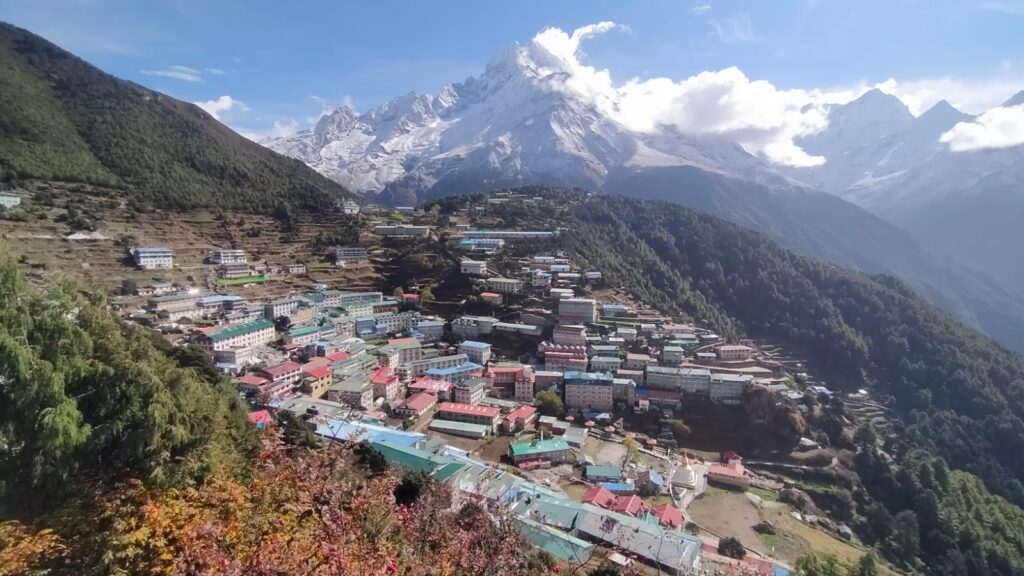
Namche Bazaar, at around 3,440 meters, is the first major acclimatization point on the Everest Base Camp Trek. After gaining considerable altitude from the lower Dudh Koshi Valley, trekkers usually spend an extra night here before heading higher. Rather than remaining idle, the acclimatization day is often used for a gradual hike toward places such as the Everest View Hotel or nearby viewpoints. These short climbs provide an opportunity to experience a higher elevation before returning to Namche to sleep. The colorful mountain town also offers cafés, shops, bakeries, and impressive views of the surrounding peaks, making the rest day both useful and enjoyable.
Dingboche: Preparing for the High Himalayan Trail
At approximately 4,410 meters, Dingboche provides another important opportunity to adapt before entering the highest section of the EBC route. By this stage, the air is noticeably thinner, and even a gentle uphill walk can require more effort. Trekkers commonly use the acclimatization day for a controlled hike toward nearby ridges or viewpoints, then return to Dingboche for another night. This gradual exposure to higher terrain helps the body adjust before continuing toward Lobuche, Gorak Shep, and Everest Base Camp. Spending sufficient time at Dingboche is particularly valuable because the next stages of the trek involve significantly higher elevations and more demanding conditions.
Here is a more distinctive, concise, and SEO-friendly version with natural wording and a stronger focus on what trekkers actually experience:
Everest Base Camp Trek Elevation Gain and Loss
The Everest Base Camp Trek elevation gain and loss is more complicated than simply comparing the altitude of Lukla with Everest Base Camp. The trail constantly moves through a series of climbs, descents, and gradual sections, so trekkers gain and lose elevation throughout the journey.
One good example is the trail around Tengboche, where the route drops toward the river before climbing again through the surrounding hills. Similar ups and downs occur in other sections, adding considerably to the total walking effort even when the overall route is heading toward higher ground.
The return journey brings a different kind of challenge. Descending from the high Khumbu can feel easier as the oxygen level increases, but long downhill sections and uneven stone trails can put extra strain on the knees, ankles, and thighs.
For this reason, preparation for the EBC trek should include both uphill endurance and downhill strength. Regular hiking, stair climbing, and walking on varied terrain can help your legs adapt to the repeated elevation changes you will encounter on the trail.
Understanding the elevation profile before your Everest Base Camp Trek helps you prepare mentally as well as physically. The mountain route is not a continuous climb—it is a series of rises and drops that gradually carry you into the high Himalayas.
How Difficult Is the Everest Base Camp Route?
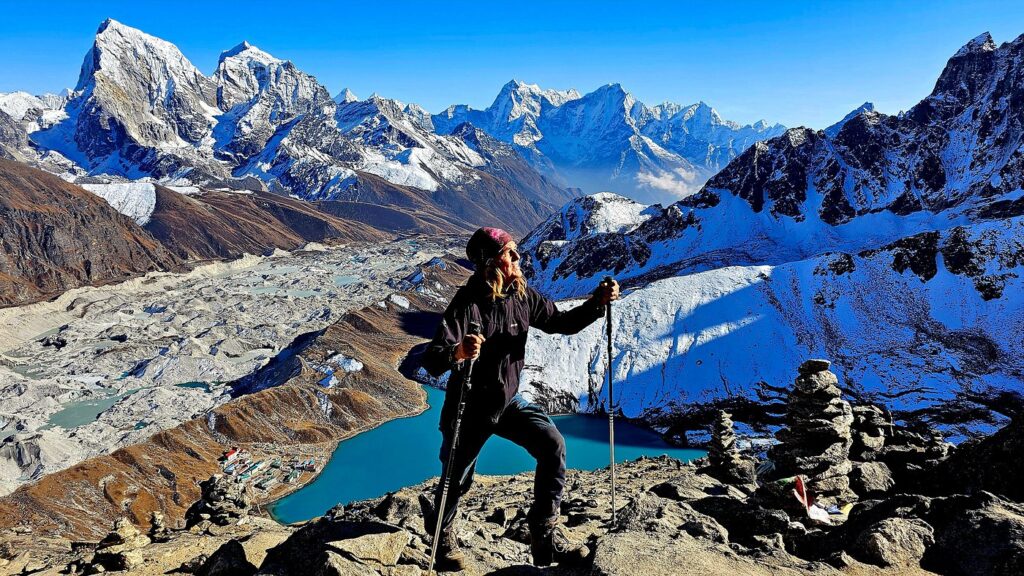
The Everest Base Camp trek is generally considered a challenging high-altitude trek, although it does not require technical mountaineering skills on the standard route.
The main difficulty comes from the combination of altitude and duration.
Trekkers normally walk for several hours each day over uneven mountain trails. The higher sections contain rocky paths, glacial terrain, stone steps, and steep climbs.
Altitude becomes increasingly important after Namche Bazaar and particularly above Dingboche. At these elevations, walking slowly is normal.
Previous trekking experience is helpful but not essential. A reasonably fit person who prepares properly, follows a gradual itinerary, stays hydrated, eats well, and listens to their body can undertake the trek with professional guidance.
Mental preparation is equally important. Weather can change quickly, walking days can feel long, and the landscape becomes increasingly remote as the route climbs.
Read More: How Difficult Is the Everest Base Camp Trek
Alternative Routes and Extensions From the EBC Trail
The classic Everest Base Camp route is only one way to explore the Khumbu region.
Gokyo Lakes Trek Route
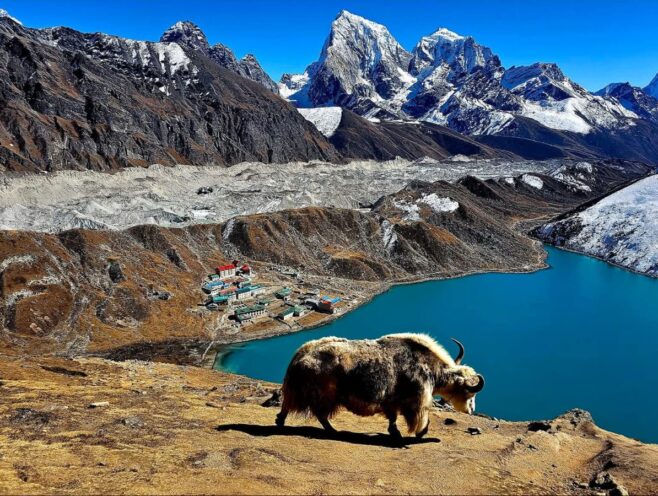
The Gokyo Lakes trek takes trekkers into the beautiful Gokyo Valley, where turquoise glacial lakes sit beneath dramatic Himalayan peaks.
Trekkers can combine Gokyo with Everest Base Camp through routes crossing Cho La Pass. This creates a more varied journey featuring lakes, glaciers, high passes, and different mountain viewpoints.
The Gokyo option is particularly attractive to travelers who want to see more than the standard Base Camp trail.
Everest Three High Passes Trek
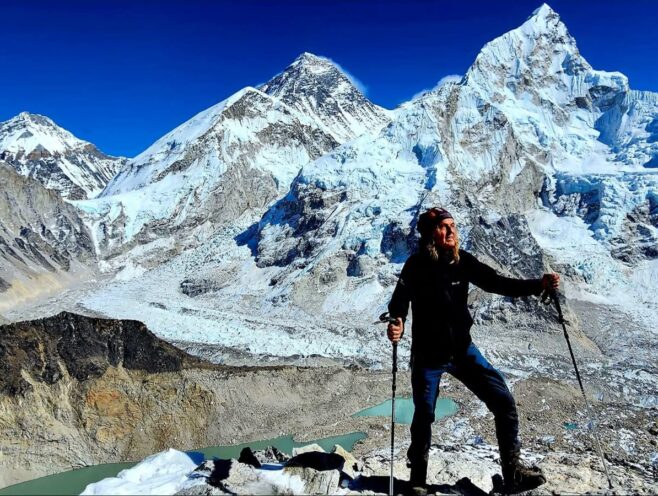
The Everest Three High Passes Trek is a much more demanding alternative. It connects the Everest region through Renjo La, Cho La, and Kongma La.
The route combines the landscapes of the Gokyo Valley and Everest Base Camp with several high mountain passes.
It requires greater endurance, more experience with challenging terrain, and careful acclimatization. However, it offers an exceptionally comprehensive exploration of the Khumbu region.
Trekkers who want a shorter and more straightforward journey may prefer the classic EBC route, while experienced adventurers looking for a more challenging Himalayan experience may choose the Three High Passes itinerary.
How to Prepare for High Altitude on the Everest Base Camp Trek
Preparation for altitude should begin well before arriving in the Everest region.
Physical training should focus on endurance rather than simply building maximum strength. Regular hiking, stair climbing, uphill walking, cycling, and cardiovascular exercise can help prepare the body for several consecutive days on the trail.
However, fitness does not eliminate the risk of altitude-related problems.
The most important preparation is a proper acclimatization schedule. Avoid rushing upward simply because you feel strong during the first few days.
Other useful habits include:
- Walk at a steady and comfortable pace.
- Drink enough fluids throughout the day.
- Eat regular, nutritious meals.
- Get adequate sleep whenever possible.
- Avoid alcohol at high altitude.
- Do not ignore unusual or worsening symptoms.
- Follow the advice of your guide and trekking team.
- Be prepared to descend if serious altitude-related symptoms develop.
Above all, listen to your body. Headache, unusual tiredness, dizziness, nausea, or breathing difficulties should never be treated casually at high altitude.
A professional guide can monitor the group’s condition and help make sensible decisions when the mountain environment becomes challenging.
Why Choose Create Himalaya Adventure for the EBC Trek?
The Everest Base Camp Trek is a high-altitude adventure where good planning matters. Create Himalaya Adventure brings more than 19 years of local experience to help travelers explore the Everest region safely, comfortably, and confidently.
As a local Nepal trekking company, we understand the Everest Base Camp route, elevation changes, mountain weather, local culture, and trail conditions. This practical knowledge helps us create realistic itineraries rather than simply following a standard schedule.
We offer customized Everest Base Camp trek itineraries based on your available time, fitness level, interests, and trekking experience. Extra acclimatization days, alternative routes, and scenic extensions can be arranged when needed.
Our experienced local guides are familiar with the trails from Lukla to Everest Base Camp. They provide guidance throughout the trek while sharing insights into Sherpa culture, Buddhist traditions, mountain landscapes, and life in the Khumbu region.
Safety and acclimatization are always priorities. We plan gradual altitude gains and appropriate rest days so trekkers have time to adjust before reaching the higher elevations of Lobuche, Gorak Shep, and Everest Base Camp.
We also believe in responsible and community-focused tourism. By working with local guides, porters, teahouses, and other community services, we help ensure that tourism contributes directly to the people of the Everest region.
Whether you want the classic Everest Base Camp Trek, a scenic Gokyo Lakes and EBC adventure, or the challenging Everest Three High Passes Trek, Create Himalaya Adventure can tailor the journey to your goals.
With local expertise, personalized planning, and experienced mountain support, we help turn the route on the Everest Base Camp trek map into a memorable Himalayan experience.
Frequently Asked Questions About the Everest Base Camp Trek
1. Do I Need Previous Trekking Experience for Everest Base Camp?
No, previous high-altitude trekking experience is not essential for the Everest Base Camp Trek. Many first-time trekkers complete the journey successfully with proper preparation, a suitable itinerary, and an experienced guide. Regular walking and cardiovascular training before the trek can make the experience much easier.
2. What Is the Best Age to Do the Everest Base Camp Trek?
There is no specific age that guarantees a successful EBC trek. Physical fitness, health, preparation, and the ability to adapt to altitude are more important than age. Children, adults, and older travelers may all complete the trek with an itinerary appropriate to their individual abilities.
3. Can a Beginner Complete the Everest Base Camp Trek?
Yes, a reasonably fit beginner can complete the Everest Base Camp Trek. The trail does not require technical climbing skills, but it involves long walking days and high-altitude conditions. Beginners should prepare properly and choose an itinerary that allows enough time for gradual ascent and rest.
4. What Type of Accommodation Is Available During the EBC Trek?
Teahouses and mountain lodges are the main forms of accommodation along the Everest Base Camp trail. Most provide simple rooms with beds and shared bathroom facilities, while some lodges offer attached bathrooms at lower elevations. Facilities become more basic as you travel toward Base Camp.
5. What Kind of Food Can I Expect on the Everest Base Camp Trail?
Teahouses serve a variety of meals, including traditional Nepali dishes, Tibetan-influenced foods, soups, noodles, rice, pasta, eggs, potatoes, and dal bhat. Dal bhat is especially popular because it provides a filling combination of rice, lentils, vegetables, and curry.
6. Is Electricity Available During the Everest Base Camp Trek?
Electricity is available in most villages along the route, although supply can vary at higher elevations. Teahouses may charge an additional fee for charging electronic devices. Carrying a power bank is a useful backup for phones, cameras, and other small devices.
7. Can I Get Mobile Network and Internet on the EBC Trail?
Mobile coverage and internet access are available in many parts of the Everest region, but the connection becomes less reliable as the trail gains altitude. Some teahouses provide Wi-Fi for an additional fee. Travelers should not expect the same connectivity they have in Kathmandu or other cities.
8. How Much Luggage Can I Take on the Everest Base Camp Trek?
It is best to keep your trekking luggage as light as possible. A porter can carry your main duffel bag, while you carry a smaller daypack containing water, snacks, clothing layers, and personal essentials. The exact baggage allowance can also depend on your Lukla flight arrangements.
9. Do I Need to Carry a Sleeping Bag for Everest Base Camp?
A warm sleeping bag is highly recommended, particularly for nights at higher elevations. Teahouses provide blankets, but temperatures can become very cold during the night. A good four-season or cold-rated sleeping bag adds extra warmth and comfort.
10. What Trekking Gear Is Essential for the EBC Trek?
Essential equipment includes comfortable trekking boots, warm layers, a waterproof jacket, trekking trousers, thermal clothing, gloves, a warm hat, sunglasses, sunscreen, a headlamp, trekking poles, a water bottle, and a suitable backpack. Good-quality gear can make a noticeable difference in cold and changing mountain weather.
11. Can I Charge My Phone and Camera During the EBC Trek?
Yes, charging facilities are available at many teahouses along the route, although availability may be limited and fees can increase at higher elevations. Carrying a power bank or spare batteries is recommended, especially for trekkers who plan to take many photographs.
12. Is Drinking Water Easily Available Along the Everest Base Camp Trail?
Drinking water is available at teahouses, lodges, shops, and designated water sources along the trail. Trekkers should use properly treated or filtered water rather than drinking untreated natural water. Carrying a reusable bottle or hydration system is convenient for daily walking.
13. Should I Hire a Guide and Porter for the Everest Base Camp Trek?
Hiring a guide and porter can make the journey more convenient and enjoyable. A guide provides route knowledge, cultural information, logistical support, and assistance when conditions become difficult. A porter can carry heavier luggage, allowing trekkers to focus more comfortably on walking.
14. What Permits Are Needed for the Everest Base Camp Trek?
Trekkers generally need the required entry permits for the Everest region, including the Sagarmatha National Park Entry Permit and the Khumbu Pasang Lhamu Rural Municipality Permit. Permit requirements and procedures can change, so travelers should confirm the latest requirements before departure.
15. Can I Do the Everest Base Camp Trek Without a Guide?
Travel arrangements and regulations can change, and trekking requirements should be checked before departure. Even where independent trekking is possible, hiring a licensed local guide is highly beneficial for navigation, accommodation arrangements, safety, and understanding local conditions.
16. What Happens If the Lukla Flight Is Cancelled?
Lukla flights can be affected by mountain weather and operational conditions. If a flight is cancelled, travelers may need to wait for the next available flight, reschedule, or consider an alternative such as a helicopter when practical. During busy periods, flights may also operate through Ramechhap/Manthali.
17. Is It Possible to Extend or Shorten an Everest Base Camp Trek?
Yes, the itinerary can often be adjusted according to your available time and trekking goals. Travelers can add acclimatization days, explore nearby destinations, combine sections with Gokyo, or arrange different return options. However, shortening the trek should never compromise safe altitude progression.
18. Can I Take a Helicopter Back From Everest Base Camp?
Yes, a helicopter return can be arranged from the Everest region, subject to weather, availability, regulations, and operational conditions. It can save several days of walking and provides spectacular aerial views of the Khumbu landscape. Helicopter services are generally more expensive than returning on foot.
19. What Should I Do If I Become Sick During the EBC Trek?
Do not ignore symptoms that become severe or continue to worsen. Inform your guide immediately so your condition can be assessed and the itinerary adjusted if necessary. Depending on the situation, rest, medical assistance, or descent to a lower elevation may be required.
20. How Far in Advance Should I Book the Everest Base Camp Trek?
Booking several weeks or months ahead is recommended, particularly during the popular spring and autumn trekking seasons. Early planning gives you more flexibility with flights, accommodation, guides, permits, and preferred travel dates. It also provides enough time to prepare physically and organize suitable trekking equipment.
Ramchandra Lamichhane
Trekking Expert
No hidden fees • Local experts • Best price guarantee