
Langtang Valley: A Himalayan Journey Through Mountains, Culture and Nature
Introduction
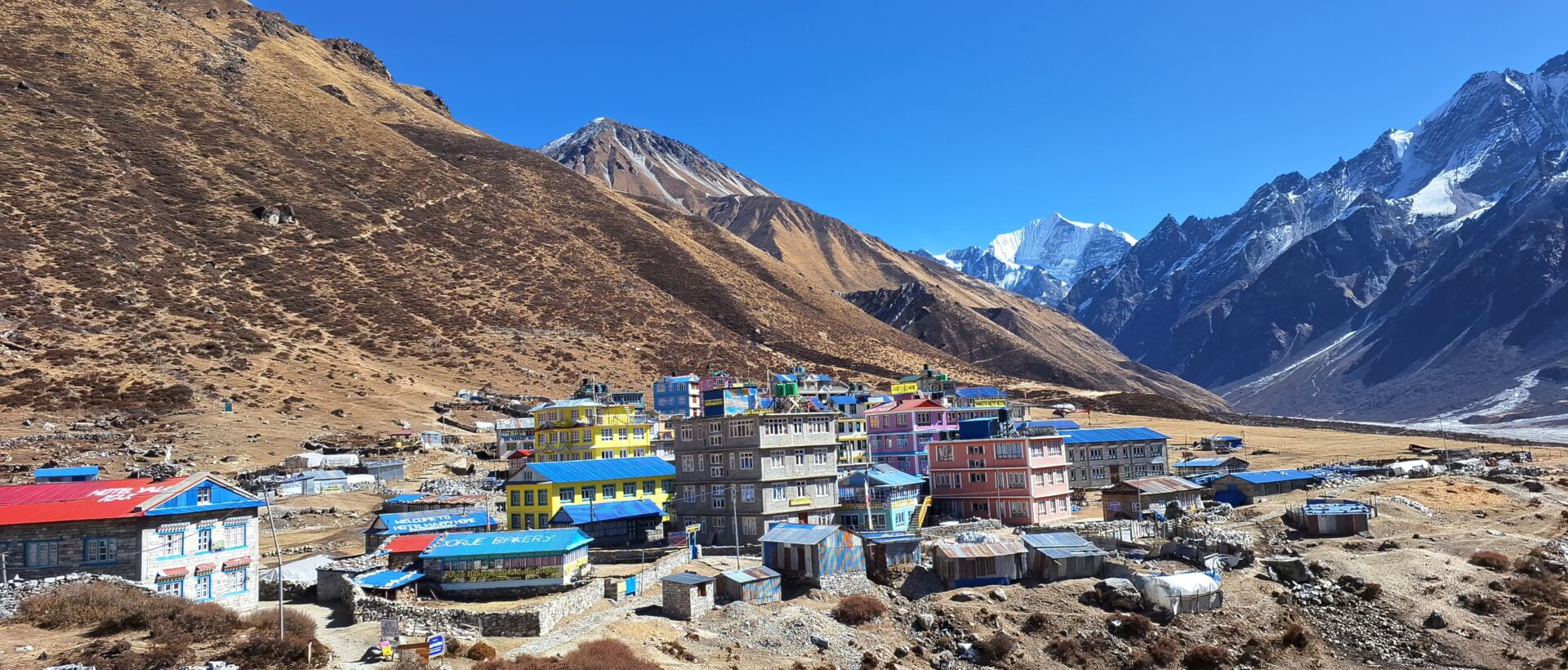
Imagine leaving the busy streets of Kathmandu in the morning and, within a few hours, finding yourself surrounded by quiet forests, rushing mountain rivers, stone houses, prayer flags, and snow-covered peaks. This is the beginning of the Langtang Valley experience.
Langtang Valley is one of Nepal’s well-known Himalayan destinations, located north of Kathmandu near the Nepal–Tibet border. The valley brings together dramatic mountain scenery, traditional villages, Buddhist heritage, rich forests, and the culture of the Tamang communities.
The Langtang Valley Trek is particularly suitable for travelers who want a genuine Himalayan trekking experience without spending several weeks on the trail. Its relatively close location to Kathmandu is another advantage, while the landscape changes significantly as the trail gains altitude.
The journey begins through green hills and forests before gradually entering the high Himalayas. Rhododendron, oak, pine, and bamboo forests eventually give way to rocky slopes, alpine meadows, glaciers, and towering peaks.
The trail’s main destination is Kyanjin Gompa, an upper-valley settlement surrounded by mountains. From here, trekkers can explore the area and hike to popular viewpoints such as Kyanjin Ri and Tserko Ri.
Langtang Valley is more than a trekking route. It is a journey where nature, culture, spirituality, and mountain life come together.
Where Is Langtang Valley Located?
Langtang Valley lies in Rasuwa District of Bagmati Province, Nepal, north of Kathmandu and close to the Nepal–Tibet border. Much of the trekking route falls within Langtang National Park, one of Nepal’s important protected Himalayan areas.
The traditional trekking route begins at Syabrubesi, which can be reached by road from Kathmandu. From there, the trail follows the Langtang Khola through forests, villages, and mountain landscapes before reaching Kyanjin Gompa.
Langtang Valley at a Glance
| Feature | Details |
| Location | Rasuwa District, Bagmati Province, Nepal |
| Region | Langtang Himalayas |
| Protected Area | Langtang National Park |
| Main Trailhead | Syabrubesi |
| Main River | Langtang Khola |
| Major Destination | Kyanjin Gompa |
| Kyanjin Gompa Elevation | Approx. 3,870 m |
| Highest Common Viewpoint | Tserko Ri, approx. 5,000 m |
| Access from Kathmandu | Road |
| Trek Difficulty | Moderate |
One of Langtang’s main advantages is its accessibility. Unlike trekking routes that require a domestic flight to reach the trailhead, Langtang can be approached by road from Kathmandu.
Despite its proximity to the capital, the valley feels far removed from city life. Once the walking journey begins, travelers move through forests, rivers, traditional settlements, and increasingly rugged mountain terrain.
Langtang Valley Elevation and Geography
The elevation of Langtang Valley changes considerably throughout the trek. Syabrubesi sits at approximately 1,550 meters, while Kyanjin Gompa is around 3,870 meters. Trekkers who climb Tserko Ri can reach approximately 5,000 meters.
| Location | Approx. Elevation |
| Syabrubesi | 1,550 m |
| Lama Hotel | 2,380 m |
| Langtang Village | 3,430 m |
| Kyanjin Gompa | 3,870 m |
| Tserko Ri | Approx. 5,000 m |
The change in elevation creates several distinct landscapes. Lower sections are greener and warmer, with dense forests and flowing rivers. As the trail climbs, vegetation becomes thinner and the surroundings increasingly alpine.
The Langtang Khola is one of the defining geographical features of the valley. The river and its smaller streams accompany the trail through much of the journey.
Steep Himalayan slopes, rocky ridges, glaciers, deep valleys, and snow-covered peaks dominate the landscape. Langtang Lirung is one of the most prominent mountains in the region and becomes an impressive presence as trekkers approach Kyanjin.
Because the route climbs above 3,000 meters, altitude should be taken seriously. A gradual pace, adequate rest, hydration, and sensible acclimatization are important for a safer and more comfortable trek.
What Makes Langtang Valley Special?
Langtang Valley stands out because of the variety of experiences found within a relatively short trekking journey.
The landscape changes as you climb:
- Dense forests of rhododendron, oak, pine, and bamboo
- Traditional Tamang villages
- Stone houses and mani walls
- Buddhist shrines, chortens, and prayer wheels
- Mountain rivers and waterfalls
- Alpine meadows and high pastures
- Glaciers and rocky mountain slopes
- Views of Langtang Lirung and surrounding peaks
- High-altitude viewpoints such as Kyanjin Ri and Tserko Ri
The valley also offers a strong cultural experience. Tamang communities have lived in the region for generations, and their traditions remain an important part of village life.
For nature lovers, Langtang National Park adds another dimension to the trek, protecting forests, alpine ecosystems, birds, and Himalayan wildlife.
For travelers with limited time in Nepal, the valley’s proximity to Kathmandu makes it a practical option for experiencing the Himalayas without committing to a very long trekking itinerary.
Langtang Valley Trek Route
Select a trip.
The classic Langtang Valley Trek follows the Langtang Khola from Syabrubesi toward Kyanjin Gompa.
Classic Route
Kathmandu → Syabrubesi → Lama Hotel → Langtang Village → Kyanjin Gompa → Kyanjin Ri/Tserko Ri → Syabrubesi → Kathmandu
The first section passes through forests and follows the river. The trail includes suspension bridges, stone steps, uphill sections, and small settlements with teahouses.
After Lama Hotel, the landscape gradually opens as the trail climbs toward Langtang Village. From there, the route continues toward Kyanjin Gompa.
Once in Kyanjin, trekkers usually spend time exploring the upper valley. Depending on the itinerary and weather, options include:
- Walking around Kyanjin Gompa
- Hiking to Kyanjin Ri
- Hiking to Tserko Ri
- Exploring nearby glaciers and mountain landscapes
- Taking shorter walks around the upper valley
After exploring Kyanjin, the return journey generally follows the same valley back toward Syabrubesi.
A typical Langtang Valley trip takes around 7–10 days from Kathmandu, depending on transportation, acclimatization, itinerary design, and additional viewpoint hikes.
Kyanjin Gompa: Gateway to the High Himalayas
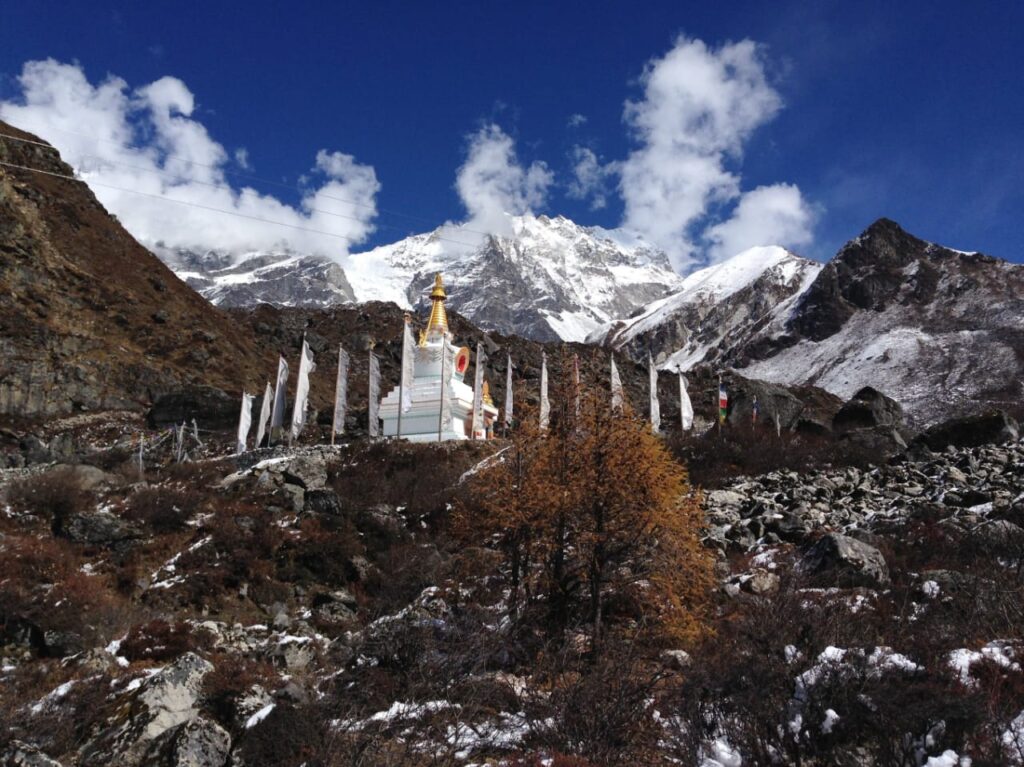
At around 3,870 meters, Kyanjin Gompa is the main destination and exploration base of the Langtang Valley Trek.
The settlement sits in an open mountain landscape surrounded by dramatic peaks. After several days of walking through forests and villages, the arrival at Kyanjin marks a noticeable change in scenery.
The area features stone buildings, prayer flags, mountain views, and a traditional Himalayan atmosphere. The surrounding peaks include Langtang Lirung, Langtang Ri, Dorje Lakpa, and Yala Peak, among others.
Kyanjin is also a base for several day hikes and short explorations.
Things to Do Around Kyanjin Gompa
- Explore the settlement and surrounding trails
- Visit the local gompa
- Hike to Kyanjin Ri
- Hike to Tserko Ri
- Explore nearby glaciers
- Enjoy views of the surrounding peaks
- Take short walks through the upper valley
For many trekkers, reaching Kyanjin Gompa is one of the key moments of the journey.
Kyanjin Ri: A Popular Viewpoint
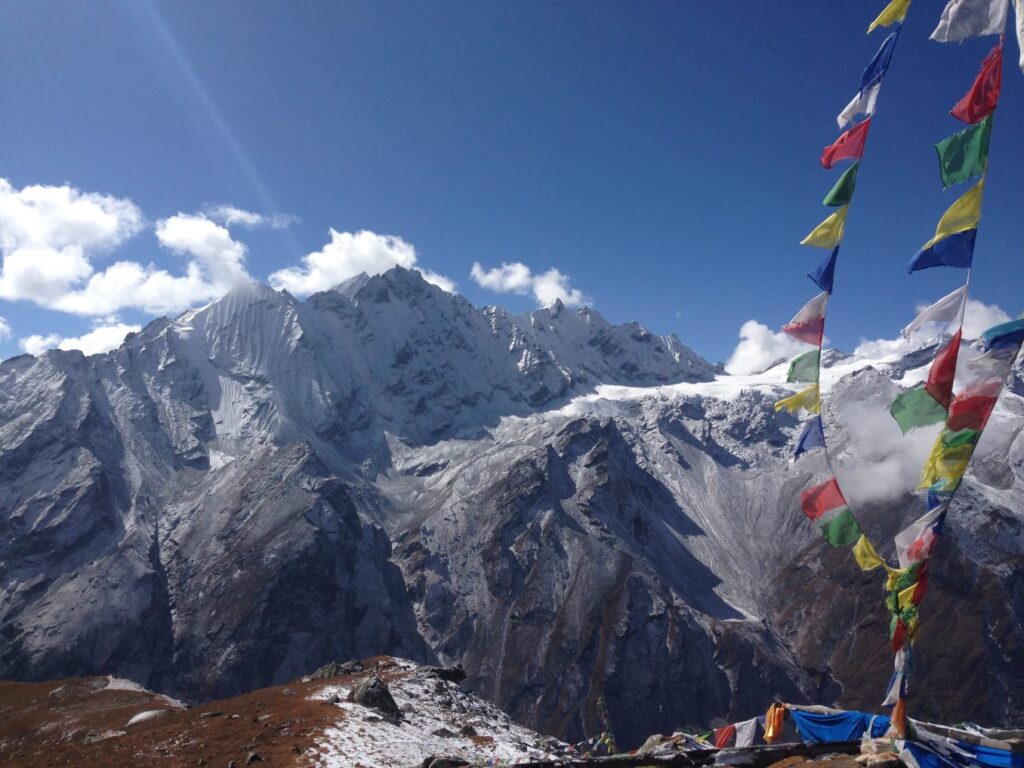
Kyanjin Ri is one of the most popular viewpoints near Kyanjin Gompa. The trail climbs steadily from the settlement toward the ridge, and the altitude makes the ascent more demanding than the distance might suggest.
From the viewpoint, trekkers can see surrounding peaks, glaciers, rocky ridges, and the Langtang Valley below. Langtang Lirung is particularly prominent from this area.
Kyanjin Ri is also a popular sunrise hiking destination. An early start can provide clearer mountain views before clouds develop later in the day.
Kyanjin Ri Highlights
- Starts from Kyanjin Gompa
- High-altitude day hike
- Panoramic mountain views
- Views toward Langtang Lirung
- Popular for sunrise
- Requires good acclimatization
The hike should be approached at a comfortable pace because the altitude can make even a relatively short climb physically demanding.
Tserko Ri: A Higher Himalayan Panorama
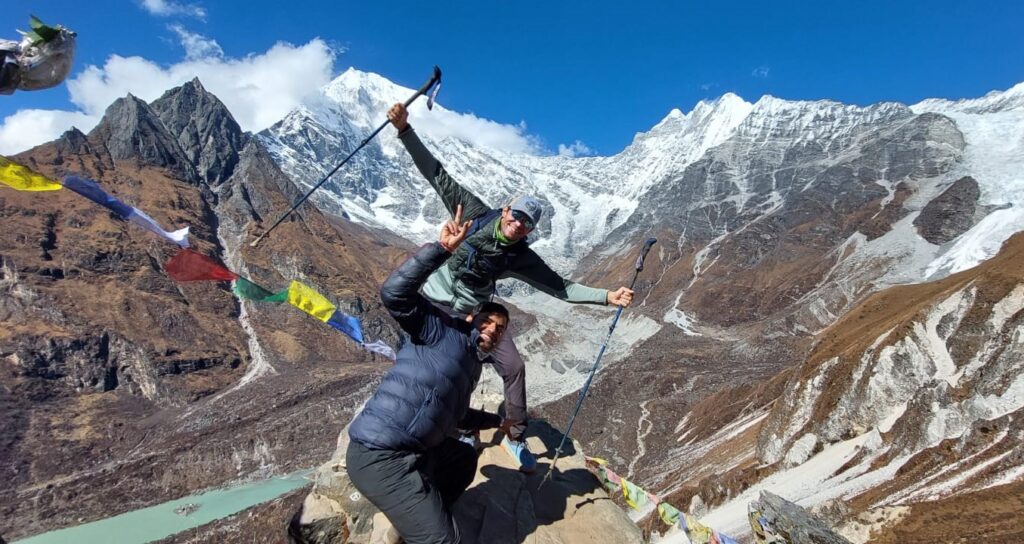
At approximately 5,000 meters, Tserko Ri is one of the highest commonly visited points on the Langtang Valley Trek.
The ascent is longer and more demanding than Kyanjin Ri. As the trail climbs, trees disappear and vegetation becomes increasingly sparse. The surroundings become dominated by rocks, snow, glaciers, and open mountain slopes.
From the top, trekkers can enjoy extensive views across the Langtang Himalayas. On a clear day, the panorama includes snow-covered peaks, glaciers, deep valleys, and rugged mountain terrain.
Tserko Ri Highlights
- Elevation: Approx. 5,000 m
- Starting point: Kyanjin Gompa
- High-altitude day hike
- More demanding than Kyanjin Ri
- Requires proper acclimatization
- Weather conditions can affect the hike
Tserko Ri should not be treated as an ordinary walk. The high elevation means trekkers need appropriate preparation, clothing, hydration, and sufficient time.
Mountain Views and Natural Attractions
The scenery of Langtang Valley changes throughout the journey.
Lower sections pass through thick forests of bamboo, rhododendron, oak, and pine. Waterfalls can be seen along the mountainsides, while the Langtang Khola continues beside the trail.
As the elevation increases, forests gradually thin out. Mountain walls become larger, the valley opens, and snow-covered peaks become increasingly visible.
Major Natural Features
| Natural Attraction | What You Can Experience |
| Langtang Lirung | One of the region’s most prominent peaks |
| Langtang Khola | Mountain river accompanying much of the trail |
| Glaciers | High-altitude glacial landscapes |
| Alpine Meadows | Open high-elevation landscapes |
| Forests | Rhododendron, oak, pine, and bamboo |
| Kyanjin Valley | Open mountain scenery around Kyanjin Gompa |
| Kyanjin Ri | High viewpoint near Kyanjin |
| Tserko Ri | Higher panoramic viewpoint |
The upper valley around Kyanjin is particularly rich in natural scenery. Glaciers, rocky ridges, snowfields, mountain streams, and high pastures create a distinctly Himalayan environment.
Tamang Culture and Life in Langtang Villages
The Langtang trek is also a journey through the culture of Himalayan communities.
The region has a strong Tamang cultural identity, with traditions influenced by Tibetan Buddhism and generations of mountain life.
Villages along the route commonly feature:
- Stone houses
- Prayer flags
- Mani walls
- Chortens
- Prayer wheels
- Buddhist shrines
- Traditional teahouses
Local communities have traditionally depended on agriculture, livestock, trade, and tourism. Trekking now provides an important source of income for many families along the route.
Staying in local teahouses provides an opportunity to experience mountain life more closely. Sharing a meal in a family-run lodge or talking with local residents can add an important cultural dimension to the trek.
Travelers should remember that these villages are people’s homes. Respecting local customs, religious sites, photography preferences, and the surrounding environment helps support responsible tourism.
Langtang National Park, Flora and Wildlife
Much of the Langtang Valley Trek takes place inside Langtang National Park, which protects a variety of Himalayan ecosystems.
The lower elevations contain forests of rhododendron, oak, pine, and bamboo. During spring, rhododendron flowers can add color to the forest.
As the elevation increases, vegetation becomes shorter and more adapted to colder conditions. Eventually, alpine landscapes of grass, shrubs, rocks, snow, and glaciers dominate the upper valley.
The wider Langtang region supports wildlife including:
- Red panda
- Himalayan tahr
- Musk deer
- Himalayan black bear
- Numerous bird species
Wildlife sightings are never guaranteed. However, careful trekkers may notice birds, animal tracks, or smaller wildlife along the trail.
Responsible trekking is important within the protected area. Travelers can help by:
- Carrying rubbish back with them
- Reducing single-use plastic
- Staying on established trails
- Avoiding disturbance to wildlife
- Respecting local conservation rules
Best Time to Visit Langtang Valley
The best trekking periods are generally spring and autumn.
| Season | Months | General Conditions |
| Spring | March–May | Warmer days, blooming rhododendrons, good trekking conditions |
| Summer/Monsoon | June–August | Rain, clouds, wet trails, possible road disruptions |
| Autumn | September–November | Generally clear skies and good mountain visibility |
| Winter | December–February | Cold temperatures and possible snow at higher elevations |
Spring
March to May brings warmer conditions and blooming rhododendrons. Forest sections can be particularly attractive during this period.
Autumn
September to November is another popular trekking season. Skies are often clearer, mountain visibility can be good, and daytime conditions are generally suitable for walking.
Winter
Winter brings colder temperatures and possible snowfall at higher elevations. Snow can make upper trails more difficult.
Monsoon
June to August brings rain, clouds, wet trails, and potentially difficult road conditions. However, trekking remains possible with appropriate preparation and flexible planning.
Mountain weather can change quickly at any time of year, so warm layers, rain protection, and flexible planning are useful.
Langtang Valley Trek Difficulty, Distance and Duration
The Langtang Valley Trek is generally considered moderate. Technical climbing experience is not required for the standard route, but trekkers should have reasonable fitness and be comfortable walking for several hours each day.
The trail includes:
- Forest paths
- Stone steps
- Suspension bridges
- Uphill sections
- Rocky terrain
- Long descents
Altitude is one of the main challenges. Kyanjin Gompa is around 3,870 meters, while Tserko Ri reaches approximately 5,000 meters.
Langtang Trek Key Facts
| Trek Factor | Details |
| Difficulty | Moderate |
| Main Trailhead | Syabrubesi |
| Main Destination | Kyanjin Gompa |
| Kyanjin Elevation | Approx. 3,870 m |
| Tserko Ri Elevation | Approx. 5,000 m |
| Typical Duration | Around 7–10 days from Kathmandu |
| Walking Hours | Generally 5–7 hours per trekking day |
| Technical Climbing | Not required on the standard route |
| Main Challenge | Elevation gain and long walking days |
The total trekking distance varies depending on the exact itinerary and side trips, so there is no single distance that applies to every Langtang itinerary.
A steady pace, proper hydration, sufficient rest, and sensible acclimatization are more important than trying to complete the route as quickly as possible.
Permits, Accommodation, Food and Trek Cost
Permits
Travelers need the required entry permit for Langtang National Park. Trekking regulations and permit requirements can change, so it is important to confirm the latest requirements before departure.
Under current arrangements, TIMS is not generally required for the Langtang Valley Trek, but trekkers should verify the latest rules before traveling.
Accommodation
Accommodation mainly consists of family-run teahouses and small lodges. Facilities are generally basic, particularly at higher elevations.
You can usually expect:
- Simple private or shared rooms
- Beds and blankets
- Shared bathrooms
- Common dining areas
- Basic charging facilities at some lodges
Food
Food along the route is generally simple and filling. Common options include:
- Dal bhat
- Noodles
- Rice
- Soup
- Potatoes
- Eggs
- Bread
- Tea and other hot drinks
Food choices can become more limited as you move higher into the valley.
Trek Cost
The total Langtang Valley Trek cost depends on several factors:
- Transportation
- Accommodation
- Meals
- Permits
- Guide services
- Porter services
- Trek duration
- Personal expenses
- Optional hikes and services
Because prices can change, it is better to confirm current costs when planning the trek.
Langtang Valley Trek Packing List
Packing for Langtang should take changing temperatures and higher elevations into account.
Essential Items
- Comfortable trekking shoes
- Warm base and mid-layers
- Waterproof jacket and trousers
- Warm gloves
- Hat and sun protection
- Sunglasses
- Sunscreen
- Reusable water bottle
- Sleeping bag
- Basic medicines
- Personal toiletries
- Headlamp
- Power bank
- Trekking poles
Travel insurance that covers high-altitude trekking is also an important part of preparation.
How to Get to Langtang Valley from Kathmandu
One of the main advantages of Langtang is that the trailhead can be reached by road.
The journey normally starts in Kathmandu and continues toward Syabrubesi, the traditional starting point of the trek.
The road passes through hills, villages, rivers, and mountain landscapes before reaching the Langtang trekking area. Travel time can vary depending on road conditions, weather, traffic, construction, and seasonal disruptions.
Kathmandu to Langtang Trek Route
Kathmandu → Syabrubesi → Lama Hotel → Langtang Village → Kyanjin Gompa
From Syabrubesi, the walking journey begins. The trail follows the Langtang Khola toward Lama Hotel and then continues through Langtang Village before reaching Kyanjin Gompa.
Travelers can generally choose between public transportation and a private vehicle. A private vehicle can provide greater flexibility and comfort, while public transportation is generally a more economical option.
It is sensible to check current road conditions before departure because travel times can change.
Why Trek Langtang Valley?
Langtang Valley offers a combination of mountain scenery, culture, nature, and accessibility within a relatively short trekking journey.
Main Reasons to Choose Langtang
- Close to Kathmandu compared with many other Himalayan trekking regions
- No domestic flight required to reach the traditional trailhead
- Diverse landscapes from forests to alpine terrain
- Strong Tamang cultural presence
- Buddhist monasteries, chortens, prayer wheels, and mani walls
- Mountain views of Langtang Lirung and surrounding peaks
- Access to Kyanjin Ri and Tserko Ri
- Wildlife and vegetation inside Langtang National Park
- Teahouse accommodation throughout the main route
- Suitable for trekkers looking for a moderate Himalayan adventure
Frequently Asked Questions About Langtang Valley
1. Is Langtang Valley suitable for first-time trekkers?
Yes. Langtang Valley can be a good introduction to Himalayan trekking for people with reasonable fitness and proper preparation. The standard route does not require technical mountaineering skills, although the higher sections become more demanding because of elevation.
2. How many hours do people walk each day in Langtang Valley?
Most trekking days involve around 5–7 hours of walking, depending on the route, walking pace, weather, and rest stops. The duration can be longer on days involving Kyanjin Ri or Tserko Ri.
3. Can families trek to Langtang Valley with children?
Families can trek in Langtang when children are comfortable with several days of walking. Younger children may require shorter walking days, additional breaks, and a slower itinerary. Parents should also monitor how children respond to increasing altitude.
4. Can I arrange a porter after reaching Syabrubesi?
It is better to arrange a porter before starting the trek rather than relying on finding one after arrival. If you are traveling with an organized trekking company, porter arrangements are normally made before the trek.
5. How much cash should I carry for Langtang Valley?
The amount depends on what your trek package already covers and your personal spending. Extra Nepalese rupees are useful for snacks, drinks, charging, hot showers, Wi-Fi, tips, and unexpected expenses. Banking facilities are limited in the remote sections of the valley.
6. Can I refill my water bottle during the trek?
Yes. Water is available at villages, teahouses, and other stops. However, natural water should be treated before drinking. Trekkers can use boiled water or a reliable purification method. A reusable bottle is useful for reducing plastic waste.
7. Is mobile phone service available in Langtang Valley?
Phone connectivity varies along the route. Some villages and sections have usable signals, while other areas may have weak or no reception. Mountains, weather, and network coverage can affect connectivity.
8. Is Wi-Fi available during the Langtang trek?
Wi-Fi is available at some lodges and villages, but the connection is generally less reliable than in Kathmandu. Speed and availability can vary depending on location, electricity, weather, and network conditions.
It is useful to download maps, booking information, emergency contacts, and other important files before leaving Kathmandu.
9. How can I charge my phone during the trek?
Charging facilities are available at some teahouses, although they may cost extra and availability can vary. Carrying a power bank is recommended, especially if you use your phone for photographs, navigation, or communication.
10. Can I take a hot shower during the Langtang Trek?
Hot showers are available at some teahouses, particularly in larger settlements. They usually cost extra. Facilities become more basic at higher elevations, so shower availability should not be assumed every day.
11. Are toilets available throughout the Langtang trek?
Teahouses and settlements generally have toilets, but facilities become simpler at higher elevations. Shared bathrooms are common. Carrying toilet paper, hand sanitizer, and personal hygiene supplies is recommended.
12. What is a typical night in a Langtang teahouse like?
A typical teahouse stay is simple. Rooms generally have beds and blankets, while a common dining area provides a place to eat and relax. At higher elevations, temperatures can drop significantly after sunset, so a suitable sleeping bag is useful.
13. Can I leave extra luggage in Kathmandu?
Yes. Many hotels in Kathmandu provide luggage storage for guests returning after their trek. Leaving unnecessary belongings behind means you can carry a lighter backpack in the mountains.
14. What should I do if I feel unwell at high altitude?
Take symptoms seriously and inform your guide or trekking companion. Headache, nausea, dizziness, unusual weakness, and breathing difficulties can occur at altitude and should not simply be ignored.
Avoid continuing to gain elevation if symptoms are worsening, and seek appropriate medical assistance. Serious or worsening symptoms may require immediate descent and professional medical attention.
15. What makes Langtang Valley different from other Himalayan treks?
Langtang combines mountain scenery with culture, forests, wildlife, Buddhist heritage, and relatively easy access from Kathmandu.
The journey takes you through green forests and Tamang villages before entering a high Himalayan landscape around Kyanjin Gompa. From there, trekkers can explore viewpoints such as Kyanjin Ri and Tserko Ri.
This combination of nature, local culture, spirituality, wildlife, and mountain scenery gives Langtang Valley its own character.
Final Thoughts
Langtang Valley is a Himalayan journey where the scenery changes with every stage of the trail.
The trek begins among green hills and forests, continues through Tamang villages and Buddhist cultural sites, and gradually reaches a high mountain environment of glaciers, rocky slopes, and snow-covered peaks.
Kyanjin Gompa provides the main base for exploring the upper valley, while Kyanjin Ri and Tserko Ri offer opportunities to experience the landscape from higher elevations.
For travelers looking for a Himalayan adventure that combines mountains, culture, wildlife, nature, and a manageable trekking duration, Langtang Valley provides a direct way to experience Nepal’s mountain landscape beyond the more crowded routes of the Everest and Annapurna regions.
Ready to explore Langtang Valley? Contact us to plan your trek.
Ramchandra Lamichhane
Trekking Expert
No hidden fees • Local experts • Best price guarantee