
Annapurna Circuit Trek– Frequently Asked Questions (FAQ)
Introduction to the Annapurna Circuit Trek
The Annapurna Circuit Trek is one of Nepal’s classic long-distance Himalayan adventures, known for its dramatic changes in landscape, culture, climate, and altitude. The route circles the Annapurna massif, passing through subtropical valleys, traditional mountain villages, Buddhist settlements, alpine landscapes, and the spectacular Thorong La Pass at 5,416 meters (17,769 feet).
The trek combines mountain scenery with ancient monasteries, waterfalls, suspension bridges, deep valleys, traditional villages, and high mountain passes. One of the highlights is the changing landscape, from lush green hills and terraced farmland to pine forests, rocky cliffs, alpine meadows, and the dry rain-shadow region around Manang and Mustang.
Today, road access has shortened several sections of the traditional route. Many trekkers use local jeeps or buses on selected road sections while continuing to walk through the most scenic parts of the circuit.
FAQs
How many days does the Annapurna Circuit Trek take?
The Annapurna Circuit Trek generally takes around 10–16 days, depending on the starting point, transportation, acclimatization days, walking pace, and optional side trips.
A shorter itinerary can start from Dharapani or Chame, while a longer itinerary can begin farther down the Marsyangdi Valley. Trekkers can also add Tilicho Lake, Poon Hill, Ghorepani, or Annapurna Base Camp.
For a more comfortable experience, it is better to allow enough time for acclimatization rather than rushing through the circuit.
Where does the Annapurna Circuit Trek start?
The Annapurna Circuit traditionally starts from Besisahar, but many modern itineraries begin farther up the Marsyangdi Valley at Dharapani or Chame.
Improved road access allows trekkers to use a jeep from Besisahar and skip some lower road sections. Starting from Dharapani is particularly popular because it reduces road walking while retaining the major mountain sections of the trek.
Where does the Annapurna Circuit Trek end?
The Annapurna Circuit Trek typically reaches its main endpoint at Muktinath after crossing Thorong La Pass.
From Muktinath, trekkers can take transportation toward Jomsom, Tatopani, or Pokhara. Those who want a longer trekking experience can continue walking through Kagbeni, Marpha, Tukuche, Kalopani, and Tatopani.
How difficult is the Annapurna Circuit Trek?
The Annapurna Circuit Trek is generally considered a moderate to challenging trek.
The biggest challenges are altitude, long walking days, steep ascents and descents, changing weather, and crossing Thorong La Pass at 5,416 meters.
Previous high-altitude trekking experience is helpful but not essential. With proper physical preparation, gradual acclimatization, and a sensible itinerary, reasonably fit trekkers can complete the route.
How many hours do you walk each day on the Annapurna Circuit?
Most trekking days involve approximately 5–8 hours of walking.
Walking time varies according to the route, elevation gain, trail conditions, weather, and individual walking pace.
Some days are relatively short, while the Thorong La crossing is one of the longest and most demanding days of the trek.
How many kilometers do you walk each day?
A typical Annapurna Circuit trekking day involves around 8–15 km of walking.
The exact distance depends on the itinerary and terrain. At higher elevations, even a short distance can take several hours because of steep trails and reduced oxygen levels.
On difficult days, particularly the Thorong La crossing, altitude management should be more important than reaching a specific kilometer target.
What is the highest point of the Annapurna Circuit Trek?
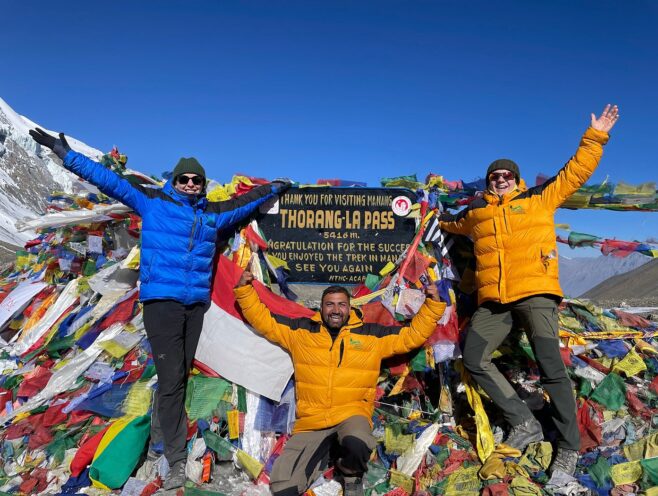
The highest point of the Annapurna Circuit is Thorong La Pass at 5,416 meters (17,769 feet).
Thorong La is the major high-altitude crossing of the circuit. Trekkers normally cross the pass from Thorong Phedi or High Camp before descending toward Muktinath.
How many acclimatization days are needed on the Annapurna Circuit?
Most itineraries include at least one acclimatization day, usually around Manang.
Manang is located at approximately 3,540 meters and provides an excellent opportunity to allow your body to adjust to increasing altitude.
During the acclimatization day, trekkers can make a short hike to a higher elevation before returning to sleep at the same altitude.
What can you do during the acclimatization day in Manang?
You can explore Manang village and take a short hike to nearby viewpoints, Gangapurna Lake, or higher elevations.
An acclimatization day does not mean staying inside the tea house all day. Light activity helps you become familiar with the altitude while enjoying the local landscape and culture.
The important principle is to climb higher during the day but sleep at the same or lower altitude.
What time should you start walking to cross Thorong La Pass?
Most trekkers start around 4:00–5:00 AM for the Thorong La crossing.
An early start provides more daylight and gives trekkers enough time to complete the pass crossing and long descent toward Muktinath.
High-altitude weather can deteriorate later in the day, so starting early is generally safer and more comfortable.
Why do trekkers cross Thorong La so early?
Trekkers start early because high-altitude weather can become more difficult later in the day.
Strong winds, clouds, snowfall, and reduced visibility can develop around the pass. An early start also prevents trekkers from having to rush during one of the most demanding days of the trek.
Is a guide mandatory for the Annapurna Circuit Trek?
The current guide and permit requirements should be verified before your trek because regulations can change.
Regardless of legal requirements, hiring an experienced guide is strongly recommended for the Annapurna Circuit.
A professional guide can assist with navigation, accommodation, transportation, altitude management, emergencies, and communication with local communities.
Can beginners do the Annapurna Circuit Trek?
Yes, the Annapurna Circuit is suitable for reasonably fit first-time Himalayan trekkers.
You do not necessarily need previous high-altitude trekking experience, but you should prepare for several consecutive days of walking.
For beginners, the biggest challenge is usually altitude rather than technical climbing.
What happens if I get altitude sickness on the Annapurna Circuit?
If you develop symptoms of altitude sickness, you should immediately inform your guide and stop ascending until your condition is assessed.
Depending on the severity, you may need to rest, descend to a lower elevation, receive medical treatment, or arrange emergency evacuation.
Never continue ascending simply because your itinerary says you should. Serious altitude sickness can become life-threatening.
What happens if I cannot continue the trek?
If you cannot continue walking, your guide or trekking agency can help arrange transportation or evacuation where available.
Local jeeps and buses can be used on road-accessible sections. In serious emergencies, helicopter evacuation may be required.
Comprehensive travel insurance covering high-altitude trekking, medical treatment, and emergency evacuation is strongly recommended.
Are there landslides on the Annapurna Circuit?
Yes, landslides and road disruptions can occur, particularly during the monsoon season.
Heavy rainfall can cause landslides, rockfall, mud, and road erosion. Mountain road conditions can change quickly, so transportation plans may need to be adjusted.
This is another reason local guides and trekking agencies are valuable.
Can you take a bus or jeep from Muktinath?
Yes, road transportation is available from Muktinath toward several destinations in the Kali Gandaki Valley.
Local transportation conditions vary according to season, weather, road conditions, and availability.
Many trekkers prefer a jeep because it can be more practical on rough mountain roads.
Can you add Tilicho Lake to the Annapurna Circuit?
Yes, Tilicho Lake is one of the most popular side trips from the Annapurna Circuit.
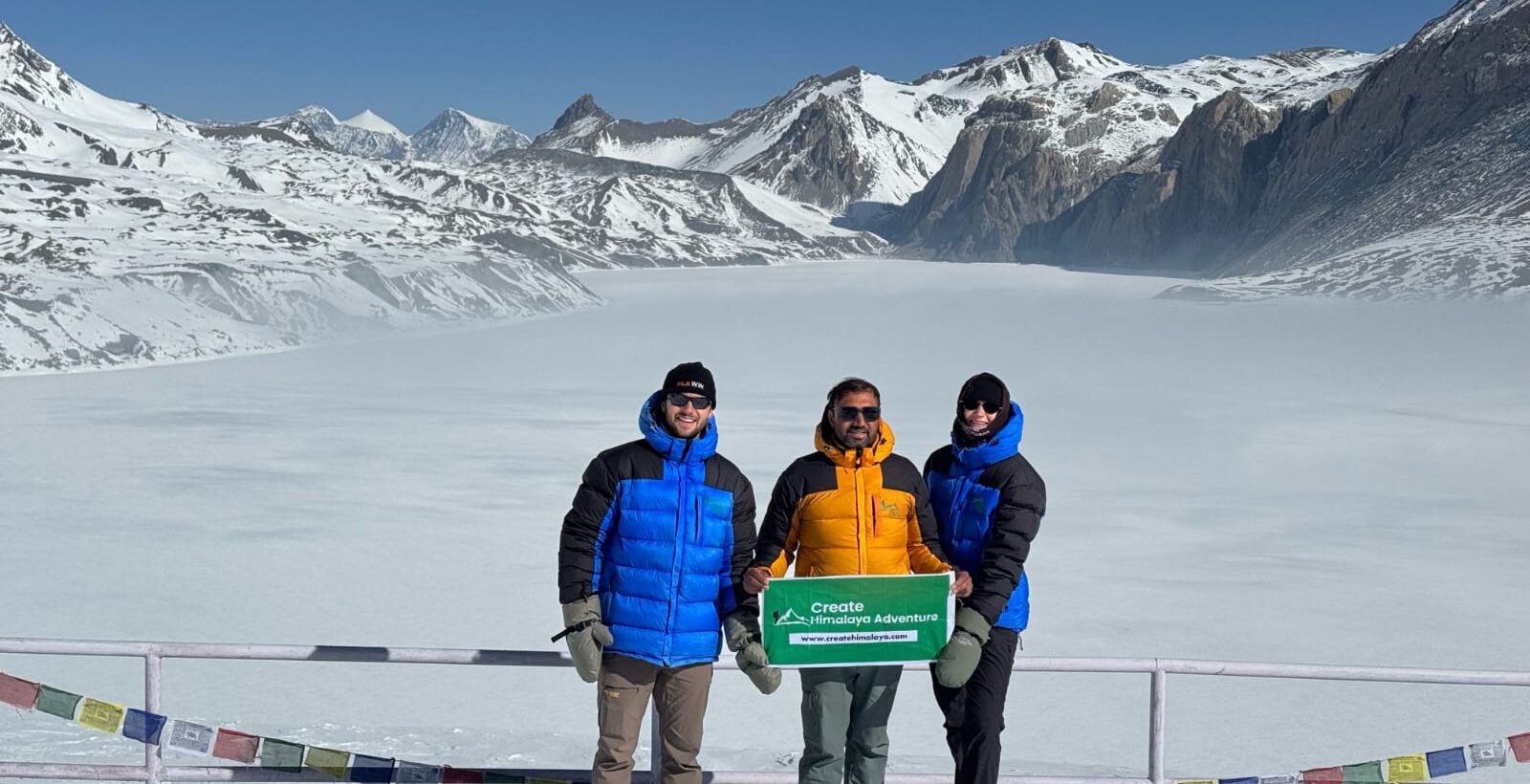
Located at approximately 4,919 meters, Tilicho Lake provides spectacular high-altitude scenery.
Adding Tilicho Lake normally requires additional days and careful acclimatization planning.
Can you combine the Annapurna Circuit with Annapurna Base Camp?
Yes, the Annapurna Circuit can be combined with the Annapurna Base Camp Trek. This combination creates a longer Himalayan adventure and allows trekkers to experience both the high-altitude Thorong La region and the dramatic mountain amphitheater surrounding Annapurna Base Camp.
Can you add Poon Hill to the Annapurna Circuit?
Yes, Poon Hill can be added as an extension to the Annapurna Circuit. Poon Hill is famous for sunrise views of the Annapurna and Dhaulagiri mountain ranges. It can be incorporated after descending toward the lower Kali Gandaki region and adds another scenic Himalayan experience to the itinerary.
What is accommodation like on the Annapurna Circuit?
Tea houses and mountain lodges provide accommodation throughout most of the established Annapurna Circuit. Rooms are generally simple and practical, usually featuring twin beds and basic bedding. Facilities become more basic at higher elevations, so trekkers should carry a warm sleeping bag and appropriate cold-weather clothing.
Is Wi-Fi available on the Annapurna Circuit?
Wi-Fi is available in many tea houses, but the connection is not always reliable. Internet quality generally decreases as you travel toward more remote and higher sections. A local SIM card and mobile data can be useful where network coverage is available.
Can you get a hot shower during the Annapurna Circuit?
Hot showers are available at many tea houses, particularly in lower and larger villages, but they usually cost extra. At higher elevations, hot showers may be limited because heating water requires more fuel or electricity.
What food is available on the Annapurna Circuit?
Tea houses serve a variety of Nepali, Tibetan, and international dishes. Common meals include dal bhat, momo, noodles, fried rice, pasta, soup, potatoes, eggs, pancakes, and Tibetan-style bread. Dal bhat is especially popular among trekkers because it provides a filling combination of rice, lentils, vegetables, and other side dishes.
Is vegetarian food available on the Annapurna Circuit?
Yes, vegetarian food is widely available throughout the Annapurna Circuit. Most tea houses offer vegetarian versions of common trekking meals. If you have allergies, dietary restrictions, or special nutritional requirements, inform your guide and trekking agency before departure.
Do I need a sleeping bag for the Annapurna Circuit?
Yes, carrying a warm sleeping bag is strongly recommended, particularly for the higher sections of the trek. Although tea houses generally provide blankets, nighttime temperatures can become very cold at high elevations. A suitable sleeping bag provides additional warmth and comfort.
Do I need trekking poles?
Trekking poles are not mandatory, but they are highly recommended. They improve balance on rocky and uneven trails and can reduce stress on your knees during long descents. They are particularly useful when descending from Thorong La.
Can I rent trekking equipment in Kathmandu or Pokhara?
Yes, trekking equipment such as sleeping bags, down jackets, trekking poles, and other gear can be rented in Kathmandu or Pokhara. However, personal items such as trekking boots should be selected carefully because proper fit and comfort are extremely important.
Do I need a porter for the Annapurna Circuit?
A porter is optional, but hiring one can make the trek significantly more comfortable. The porter carries your main luggage while you carry only a small daypack containing essential items such as water, snacks, a camera, and personal belongings.
Can older trekkers complete the Annapurna Circuit?
Yes, age alone does not determine whether someone can complete the Annapurna Circuit. Fitness, previous trekking experience, acclimatization, overall health, and walking ability are more important factors. Older trekkers should consider a slower itinerary with sufficient acclimatization and rest.
Can families trek the Annapurna Circuit with children?
Yes, families can trek the Annapurna Circuit with children, provided the itinerary is appropriate for their age and ability.
A slower itinerary, shorter walking days, adequate rest, and careful altitude monitoring are particularly important for children.
A private guide can make the itinerary more flexible for families.
What is the best season for the Annapurna Circuit Trek?
Spring and autumn are generally considered the best seasons for the Annapurna Circuit Trek.
Spring, particularly March to May, offers pleasant trekking conditions and blooming landscapes. Autumn, particularly September to November, generally provides stable weather and excellent mountain visibility.
Winter is colder and can bring snow around Thorong La, while monsoon can cause heavy rainfall and road disruptions.
Can you trek the Annapurna Circuit during monsoon?
Yes, but monsoon trekking requires more careful route and transportation planning.
The Manang and Mustang sections lie partly within the Annapurna rain-shadow region and can receive less rainfall than the southern slopes.
However, lower sections can still experience heavy rain, landslides, mud, and road disruptions.
Can you trek the Annapurna Circuit in winter?
Yes, but winter trekking requires additional preparation and flexibility.
Snowfall can affect Thorong La and other high-altitude sections. Temperatures can also fall significantly below freezing at night.
Trekkers should be prepared for possible delays or itinerary changes if the pass becomes unsafe.
What happens if Thorong La Pass is closed?
If Thorong La is unsafe because of snow or severe weather, you should not attempt the crossing. Your guide and trekking agency can assess the situation and discuss alternatives, such as waiting for better conditions or changing the itinerary. Safety should always take priority over completing the planned route.
Do I need travel insurance for the Annapurna Circuit?
Yes, comprehensive travel insurance is strongly recommended. Your policy should specifically cover high-altitude trekking, emergency medical treatment, and helicopter evacuation. Always check the maximum altitude covered by your insurance policy because some policies exclude trekking above a specific elevation.
How much does the Annapurna Circuit Trek cost?
The cost of the Annapurna Circuit Trek depends on the itinerary, duration, transportation, accommodation, meals, permits, guide, porter, and optional side trips.
A basic trek can be relatively affordable, while a private guided trek with additional transportation and extensions will cost more.
When comparing trekking packages, look at the complete list of inclusions rather than choosing an operator based only on the lowest price.
Can I customize the Annapurna Circuit itinerary?
Yes, a private Annapurna Circuit itinerary can be customized according to your available time, fitness level, and trekking interests. You can add Tilicho Lake, Poon Hill, Ghorepani, Tatopani, or Annapurna Base Camp, or use transportation to shorten selected road sections.
Can I use local buses and jeeps on the Annapurna Circuit?
Yes, buses and jeeps are available on many road-accessible sections of the circuit.
However, local transportation can be unpredictable because departure times, road conditions, weather, and vehicle availability can change. Private or agency-arranged jeeps generally provide greater flexibility.
Is mobile phone coverage available on the Annapurna Circuit?
Mobile coverage is available in many villages, but it is not continuous throughout the entire route. Remote valleys and high-altitude sections may have weak or no signal. It is best to inform family members that communication may occasionally be interrupted during the trek.
Do I need to carry cash?
Yes, carrying enough Nepalese rupees is strongly recommended. Remote mountain villages may have limited ATM facilities, unreliable internet, or limited digital payment options. Carry enough cash for personal expenses such as snacks, drinks, charging, hot showers, tips, and unexpected transportation.
Are there ATMs on the Annapurna Circuit?
Some larger settlements may have ATM or banking facilities, but they should not be relied upon. It is safer to withdraw sufficient cash in Kathmandu or Pokhara before beginning the trek.
What cultures can I experience on the Annapurna Circuit?
The Annapurna Circuit offers a remarkable mix of Himalayan cultures and communities. Depending on the section of the route, trekkers can encounter Gurung, Magar, Thakali, Tibetan-influenced, and other Himalayan communities. Manang and Mustang are particularly known for Buddhist traditions, monasteries, prayer flags, mani walls, and distinctive mountain architecture.
What makes Manang culturally special?
Manang combines dramatic mountain scenery with Tibetan-influenced Himalayan culture. Traditional stone houses, monasteries, prayer wheels, mani walls, local farming practices, and high-altitude settlements provide insight into the region’s unique way of life. The landscape also becomes noticeably drier as you move deeper into the rain-shadow region.
Is it better to walk or take a jeep on road sections?
Walking is better if you want the traditional trekking experience, while taking a jeep is useful if you have limited time. Using transportation on selected road sections allows you to shorten the itinerary while focusing your walking on the more scenic and higher-altitude sections.
How can I choose a reliable Annapurna Circuit trekking agency?
Choose an agency with experienced guides, transparent pricing, proper permits, emergency support, good recent reviews, and proven experience in the Annapurna region.
Before booking, check:
- Experienced and licensed guides
- Clear inclusions and exclusions
- Emergency support
- Proper permits
- Recent traveler reviews
- Transparent cancellation policy
- Flexible itinerary options
- Responsible tourism practices
- Experience with high-altitude trekking
Avoid selecting an agency based only on the cheapest price.
Why should I choose a Nepal-based trekking company?
A reputable Nepal-based trekking company can provide direct access to local guides, transportation providers, tea houses, and regional expertise. This can be especially useful when weather, road conditions, altitude, or trail conditions require last-minute itinerary changes. A local operator also works directly with the people and services involved in running the trek.
Can I trek the Annapurna Circuit privately or with a group?
Yes, both private and group-joining Annapurna Circuit treks are available. A private trek provides greater flexibility with walking pace, rest days, accommodation, and itinerary changes. A group-joining trek is generally more economical and gives you an opportunity to meet other trekkers.
Do I have to follow the same pace as other trekkers?
No, but your guide should manage the group so that everyone can trek safely. People naturally walk at different speeds. At high altitude, maintaining a comfortable and steady pace is more important than trying to keep up with faster trekkers. If you strongly prefer your own pace and schedule, a private trek is usually the better option.
Is the Annapurna Circuit worth doing?
Yes, the Annapurna Circuit is worth doing if you want a diverse Himalayan trekking experience combining mountain scenery, high-altitude landscapes, local culture, villages, and the challenge of crossing Thorong La Pass. One of the route’s biggest strengths is its incredible geographical and cultural diversity. Within one trek, you can experience lush valleys, forests, traditional villages, Buddhist settlements, high mountain passes, and the dry landscapes of Manang and Mustang.
Why should I book the Annapurna Circuit Trek with Create Himalaya Adventure?
Create Himalaya Adventure can arrange private and group Annapurna Circuit Trek itineraries with experienced trekking guides, transportation, accommodation, and customized itineraries. The itinerary can be adapted according to your available time, fitness level, preferred trekking style, and interests. Optional extensions such as Tilicho Lake, Poon Hill, Ghorepani, or Annapurna Base Camp can also be incorporated into the trip.
Ramchandra Lamichhane
Trekking Expert
No hidden fees • Local experts • Best price guarantee