
Island Peak Climbing Difficulty: A Complete Mountaineer’s Guide
Introduction
Located in the beautiful Imja Valley of Nepal’s Khumbu region, Island Peak (6,189 m / 20,305 ft) is a favourite destination for trekkers who want to progress from high-altitude hiking to Himalayan mountaineering. The mountain stands within Sagarmatha National Park, a short distance from Chhukung village and the traditional Everest Base Camp trekking route. From its upper slopes, climbers can enjoy impressive views of some of the world’s most famous mountains, including Everest, Lhotse, Nuptse, Makalu and Ama Dablam.
The name Island Peak comes from its distinctive appearance. When viewed from Dingboche, the mountain seems to rise independently from the surrounding glacial landscape, resembling an island surrounded by a frozen sea. Although its official name was changed to Imja Tse in 1983, the original name remains widely recognised among international climbers. Today, it attracts both experienced mountaineers and physically prepared trekkers looking for their first 6,000-metre Himalayan summit. Its combination of a scenic trekking approach, glacier travel and a technical final ascent makes it an exciting introduction to climbing in the Nepal Himalayas.
History and First Ascent of Island Peak
Island Peak has a special place in Nepal’s mountaineering history because of its connection with the early Everest expeditions. The mountain was named by members of the British Mount Everest expedition in 1952, who noticed its island-like shape while exploring the Khumbu region. In 1953, members of the British expedition climbed a subsidiary summit of Island Peak while preparing for their historic Everest attempt.
The first successful ascent of the main summit took place in 1956. Swiss climber Hans-Rudolf von Gunten and two Sherpa climbers reached the top during a Swiss expedition. The mountain was later given the official Nepali name Imja Tse, but Island Peak continued to be its better-known international name. Over the following decades, it developed into one of Nepal’s most sought-after trekking peaks, particularly among climbers preparing for more demanding Himalayan expeditions.
How Difficult Is Island Peak Climbing?
Island Peak climbing is generally graded Alpine PD+ (Peu Difficile Plus), although some expedition operators use a Grade 2B classification.These ratings indicate that the mountain involves more than ordinary trekking and requires basic technical mountaineering ability. The expedition begins with a demanding approach through the Khumbu Valley, where several days of walking help climbers gradually gain altitude. The challenge becomes more serious beyond Chhukung, as the trail continues over rocky glacial terrain towards Island Peak Base Camp and High Camp. Recent Nepal Mountaineering Association records indicate that the mountain continues to attract thousands of permitted climbers, with approximately 2,406 climbers in 2024 and around 2,078 in 2025. However, permit numbers should not be confused with successful summit attempts. Because a reliable, independently verified annual summit-success percentage is not consistently available, climbers should be cautious about relying on advertised success rates.
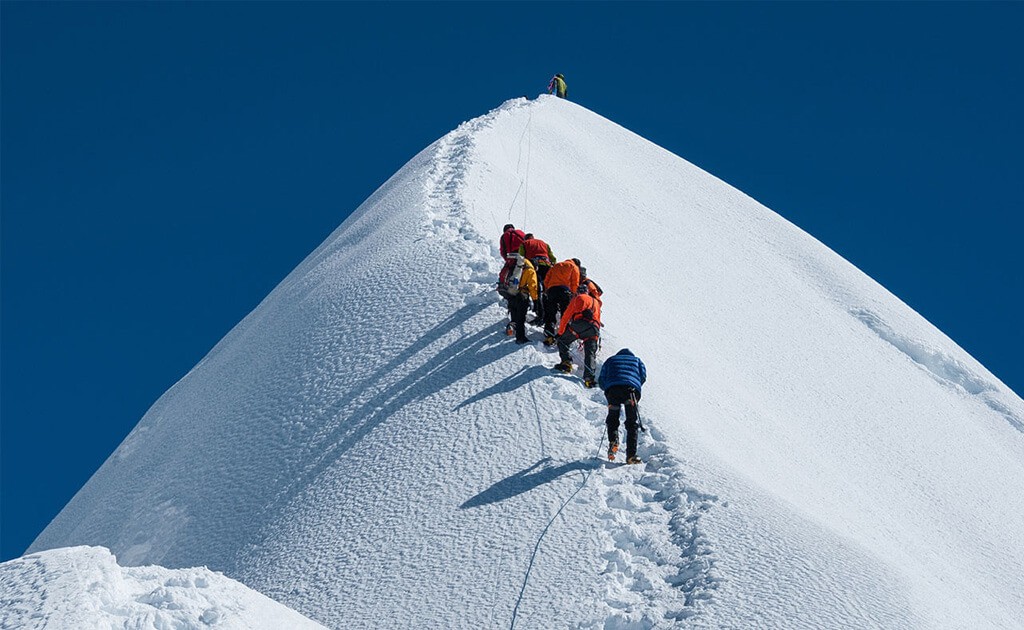
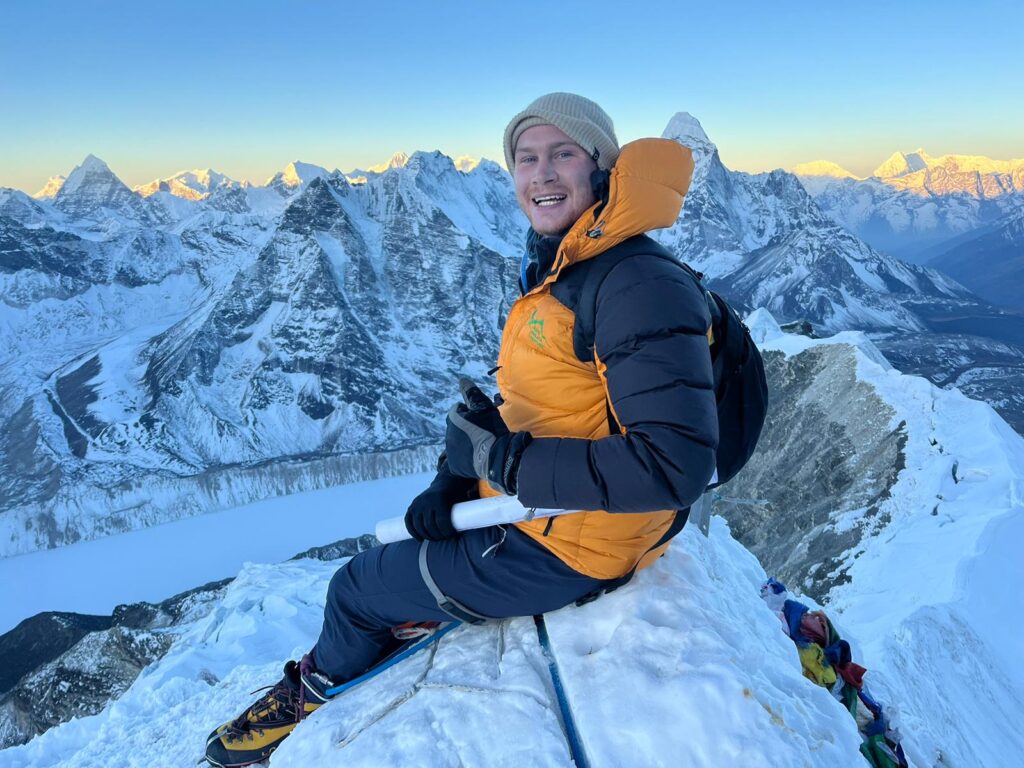
The most technical part of the climb comes during the final approach to the summit. Climbers must cross the Imja Glacier, negotiate crevassed sections and ascend a steep snow and ice headwall before reaching the exposed summit ridge. Depending on the prevailing route and snow conditions, parts of this headwall can reach approximately 45–60 degrees. Fixed ropes are commonly used to assist the ascent, while crampons, an ice axe, a climbing harness and a Jumar ascender are essential pieces of equipment. Some seasons also require the use of ladders to cross glacier crevasses. The final ridge demands concentration, confidence and careful footwork, particularly when strong winds or icy conditions affect the route. Although first-time mountaineers can attempt Island Peak, learning how to use climbing equipment and move safely on fixed ropes before summit day is extremely important.
Physical endurance and altitude are equally important when assessing Island Peak climbing difficulty. At 6,189 metres, the reduced oxygen level makes climbing slower and more exhausting than at lower elevations. Even climbers with excellent fitness may notice that their walking pace decreases, their breathing becomes heavier and recovery takes longer. The summit attempt normally starts around midnight or in the early hours of the morning to take advantage of more favourable snow and weather conditions. Depending on the climber’s pace and mountain conditions, the complete summit-day ascent and descent can take approximately 10–14 hours. Cold temperatures, high winds, fresh snowfall and changing glacier conditions can make the experience more demanding. Proper acclimatization, cardiovascular training, previous trekking experience and practical climbing instruction all help improve preparation. With a suitable itinerary and support from an experienced climbing Sherpa, Island Peak can be an achievable first Himalayan climbing objective for fit and well-prepared trekkers.
What Makes Island Peak Difficult?
Many aspiring climbers underestimate Imja Tse because the Nepal Mountaineering Association (NMA) classifies it as a “trekking peak.” Leading Khumbu expedition operators—including Sherpa Expedition, Satori Adventures, and Seven Summit Treks—all emphasize that Island Peak requires real alpine skills and serious stamina.
Four core factors define the baseline challenge of the climb:
- Extreme Altitude (6,189m): At the summit, atmospheric oxygen drops to roughly 47% of sea-level availability. Without proper acclimatization stops in Namche Bazaar, Dingboche, and Chhukung, even elite athletes face high risks of Acute Mountain Sickness (AMS).
- Grueling Summit Push (10–14 Hours): Leaving Base Camp (5,100m) or High Camp (5,550m) between midnight and 1:00 AM, climbers must ascend more than 1,000 vertical meters over loose moraine, glaciated terrain, and steep ice before descending the same day.
- Crevasse Crossings on the Imja Glacier: After reaching Crampon Point, roped teams navigate shifting glacial ice. Depending on the month, climbers cross deep crevasses measuring 3 to 7 meters wide using fixed aluminum ladders.
- The Summit Headwall & Exposed Ridge: The technical crux of the climb is a 100-to-150-meter snow and ice headwall pitched at 45 to 60 degrees (with short steeper bulges). Climbers ascend using a jumar (ascender) clipped into fixed ropes, finishing along an airy, knife-edge summit ridge.
Island Peak Difficulty Comparison Table by Month
| Month | Season | Overall Difficulty | Summit Temperature | Key Challenges & Conditions |
|---|---|---|---|---|
| January | Deep Winter | Extreme (9.5/10) | -25°C to -30°C | Brutal wind chill, blue ice headwall, and frostbite risk |
| February | Late Winter | Very High (9/10) | -20°C to -28°C | Bitter cold, hard-packed ice, and unstable late-winter snow |
| March | Early Spring | Moderate–High (7/10) | -15°C to -20°C | Cold nights, fresh snow buildup, and moderate winds |
| April | Peak Spring | Moderate (6/10) | -8°C to -15°C | Optimal snow stability, busy fixed lines, and warmer days |
| May | Late Spring | Moderate (6.5/10) | -5°C to -12°C | Milder temperatures, wider crevasses, and late-month clouds |
| June | Early Monsoon | High (8/10) | -2°C to -8°C | Heavy afternoon clouds, wet snow, and avalanche risk |
| July | Peak Monsoon | Extreme (9.5/10) | 0°C to -5°C | Continuous rain/snow, zero visibility, and landslide risk |
| August | Late Monsoon | High–Extreme (9/10) | 0°C to -5°C | Unstable snow bridges, flooded trails, and flight delays |
| September | Early Autumn | Moderate–High (7/10) | -5°C to -12°C | Clearing skies, deep fresh snow, and fewer crowds |
| October | Peak Autumn | Moderate (5.5/10) | -10°C to -18°C | Best visibility, firm snow steps, and high summit success |
| November | Late Autumn | Moderate–High (7/10) | -15°C to -22°C | Crystal-clear skies, dry air, and biting summit winds |
| December | Early Winter | High–Extreme (8.5/10) | -20°C to -25°C | Rapidly dropping temperatures, shorter daylight, and icy slopes |
Month-by-Month Island Peak Climbing Difficulty
January: Extreme Cold and Blue-Ice Conditions
- Difficulty Rating: 9.5/10 (For Experienced Winter Mountaineers Only)
January is the coldest month in the Everest region. While skies are often crystal clear, summit temperatures plummet to -25°C to -30°C, compounded by fierce Himalayan jet stream winds. The snow on the 45-to-60-degree headwall freezes into solid blue ice, requiring intense calf strength, sharp front-pointing crampon technique, and high frostbite vigilance. Teahouses above Dingboche have limited operations, adding logistical difficulty.
February: Harsh Winds and Unpredictable Snow
- Difficulty Rating: 9/10 (Very High)
February remains firmly in the grip of winter. Mornings begin with sub-zero temperatures even at lower elevations, and late-winter storms can dump heavy snow across the Imja Valley. Breaking trail through wind-scoured crust or deep powder significantly increases physical exertion on summit night. Only climbers with prior winter alpine experience and expedition-grade down suits should attempt Island Peak in February.
March: Transition to Spring and Brisk Nights
- Difficulty Rating: 7/10 (Moderate to High)
March marks the start of the spring climbing season. Daylight hours lengthen and lower trails begin to thaw, though nights at Island Peak Base Camp still drop to -15°C or lower. Early March can bring lingering winter snowstorms that temporarily heighten avalanche danger on the headwall. By late March, climbing Sherpas fix fresh ropes for the season, making the technical ascent much more manageable.
April: Ideal Balance of Warmth and Stability
- Difficulty Rating: 6/10 (Moderate – Prime Climbing Window)
April is widely considered one of the two easiest and safest months to climb Island Peak. Daytime trekking temperatures are comfortable, summit winds subside, and the snowpack on the Imja Glacier consolidates into firm, reliable steps. The main difficulty in April is crowd management. Because April is peak Everest season, bottlenecks can form on the fixed ropes and crevasse ladders, requiring patience in the cold while waiting for slower teams.
May: Warmest Temperatures and Widening Crevasses
- Difficulty Rating: 6.5/10 (Moderate)
May offers the mildest summit temperatures of the year, making the midnight departure far less punishing on fingers and toes. However, warmer daytime sun accelerates glacial melt. Crevasses on the Imja Glacier widen, often requiring longer ladder crossings, and afternoon clouds frequently roll in by midday. Climbers must start early and turn around promptly before pre-monsoon afternoon weather arrives.
June: Onset of the Summer Monsoon
- Difficulty Rating: 8/10 (High)
During the first two weeks of June, early climbers can occasionally catch a dry weather window. By mid-June, however, the Bay of Bengal monsoon reaches the Khumbu. Warm, wet air dumps heavy, moisture-laden snow above 5,000 meters, increasing avalanche hazards on the headwall and turning lower moraine trails into slick mud. Lukla flight cancellations also become frequent.
July: Peak Monsoon Hazards and Low Visibility
- Difficulty Rating: 9.5/10 (Extreme – Not Recommended)
July is the most difficult and hazardous month to attempt Island Peak. Heavy rainfall at lower altitudes triggers landslides and washes out trails, while continuous snowfall at High Camp buries fixed ropes and hides crevasses beneath weak snow bridges. Whiteout visibility makes route-finding dangerous even for seasoned guides, resulting in very low summit success rates.
August: Unstable Snowpack and Trailing Rains
- Difficulty Rating: 9/10 (High to Extreme)
August mirrors July with persistent monsoon moisture, high humidity, and thick cloud cover obstructing mountain views. Although rainfall begins tapering off in the final days of August, the glacier remains saturated and unstable. Commercial expeditions generally pause operations until September.
September: Post-Monsoon Clarity and Deep Snow
- Difficulty Rating: 7/10 (Moderate to High)
September transitions Nepal back into prime trekking weather. The first half of the month can still see lingering afternoon showers and deep, soft snow left over from the monsoon, making trail-breaking tiring. By late September, crisp post-monsoon air clears the skies, revealing sweeping panoramas of Lhotse, Makalu, and Ama Dablam, while trails remain noticeably quieter than in October.
October: Peak Autumn Stability and Highest Success Rates
- Difficulty Rating: 5.5/10 (Moderate – Best Overall Month)
October delivers the most predictable weather of the entire year. Post-monsoon snow settles into a firm, supportive surface, skies remain clear from dawn until dusk, and winds are generally light. While summit nights are colder than in May (averaging -10°C to -18°C), dry air and stable footing make October the most accessible month for first-time Himalayan peak climbers.
November: Crisp Skies and Biting Cold
- Difficulty Rating: 7/10 (Moderate to High)
Early November retains October’s famous dry weather and unmatched visibility, with far fewer climbers on the mountain. As the month progresses into late November, winter cold arrives rapidly. Summit wind chills drop below -20°C, and water bottles freeze quickly on the ascent. Climbers who handle cold well love November for its solitude and clear photography conditions.
December: Early Winter Chill and Short Days
- Difficulty Rating: 8.5/10 (High to Extreme)
December brings dry, sunny days in the lower valleys, but conditions above 5,000 meters turn harsh. Shorter daylight hours mean climbers spend more of their summit push in freezing darkness, and hard, wind-polished ice demands confident crampon and ice axe skills.
Plan Your Island Peak Expedition with Create Himalaya Adventure
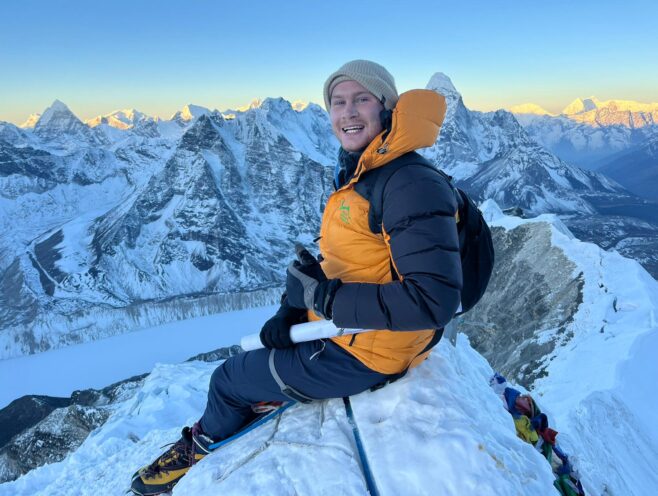
Choosing the right month—and the right acclimatization schedule—makes all the difference between turning back exhausted and standing proudly on the 6,189-meter summit of Imja Tse. At Create Himalaya Adventure, our itineraries build in generous acclimatization days, certified IFMGA/NMA climbing Sherpas, and hands-on pre-summit rope training so you can climb with confidence.
Ready to test yourself in the heart of the Everest region? Contact the Create Himalaya Adventure team today for custom 2026/2027 dates, gear checklists, and tailored Everest Base Camp + Island Peak combo itineraries.
Frequently Asked Questions
Can a beginner climb Island Peak?
Yes, a physically fit beginner can climb Island Peak with an experienced Sherpa guide. No prior technical mountaineering resume is mandatory because operators include a dedicated Base Camp training day. During this session, guides teach you how to walk in crampons, use an ice axe, clip into safety lines, and ascend fixed ropes using a jumar.
Which is harder: Island Peak or Mera Peak?
Island Peak is technically harder, while Mera Peak (6,476m) is higher and physically longer. Mera Peak is mostly a non-technical snow walk, whereas Island Peak requires crossing crevasses on ladders and ascending a steep, exposed fixed-rope headwall.
How should I train for Island Peak?
Begin targeted training 3 to 6 months before your expedition:
- Cardiovascular Endurance: Focus on zone-2 running, cycling, stair climbing, and incline treadmill sessions 4–5 days per week.
- Weighted Pack Hikes: Complete weekly 5-to-7-hour hill hikes carrying an 8–12 kg backpack to prepare your legs for consecutive trekking days and the 12-hour summit push.
- Core & Leg Strength: Incorporate squats, lunges, step-ups, and core stability exercises to maintain balance on uneven moraine and steep snow slopes.
Do I need to go to High Camp, or can I summit directly from Base Camp?
Most climbers summit directly from Base Camp (5,100m), though some itineraries use High Camp (5,550m). Starting from Base Camp avoids sleeping at an uncomfortable, windy, and cold camp with limited water access. However, using High Camp shortens the summit push by about 2 to 3 hours for climbers who prefer a shorter summit morning.
How steep is the Island Peak headwall?
The Island Peak headwall pitches between 45 and 60 degrees over roughly 100 to 150 meters. While it is not a vertical 90-degree rock or ice wall, it is steep enough that you must pull yourself up using an ascender (jumar) clipped into fixed ropes while kicking your front crampon points into the snow.
What special mountaineering gear is required for Island Peak?
Beyond standard cold-weather trekking clothes, you need technical alpine climbing hardware. Essential gear includes B2 or B3 mountaineering boots, 12-point steel crampons, a climbing harness, a helmet, an ice axe, a jumar (ascender), a figure-eight or ATC belay device, and locking carabiners. Most technical hardware can be rented in Kathmandu or Chhukung.
How many days does the Island Peak climbing itinerary take?
A standard Island Peak expedition takes 16 to 19 days round-trip from Kathmandu. This schedule includes flights to Lukla, gradual trekking up the Khumbu Valley for acclimatization, a dedicated rope-training day, a contingency weather day, and the return trek. Combining Everest Base Camp (EBC) with Island Peak typically adds 2 to 3 days.
Is Island Peak dangerous?
Island Peak carries objective alpine hazards, but it is very safe when climbed with certified Sherpa guides. Primary risks include altitude sickness, crevasse falls, rockfall near Crampon Point, and sudden weather shifts. Following guide instructions, staying clipped into safety lines, and respecting turnaround times minimize these risks.
Do I need travel insurance for Island Peak climbing?
Yes, specialized high-altitude mountaineering insurance is mandatory. Standard travel policies do not cover altitudes above 6,000 meters or technical rope climbing. Your policy must explicitly cover mountaineering up to 6,200 meters and include emergency helicopter evacuation from the Khumbu region.
Ramchandra Lamichhane
Trekking Expert
No hidden fees • Local experts • Best price guarantee