
Manaslu Base Camp Trek: The Hidden Himalayan Adventure
Introduction
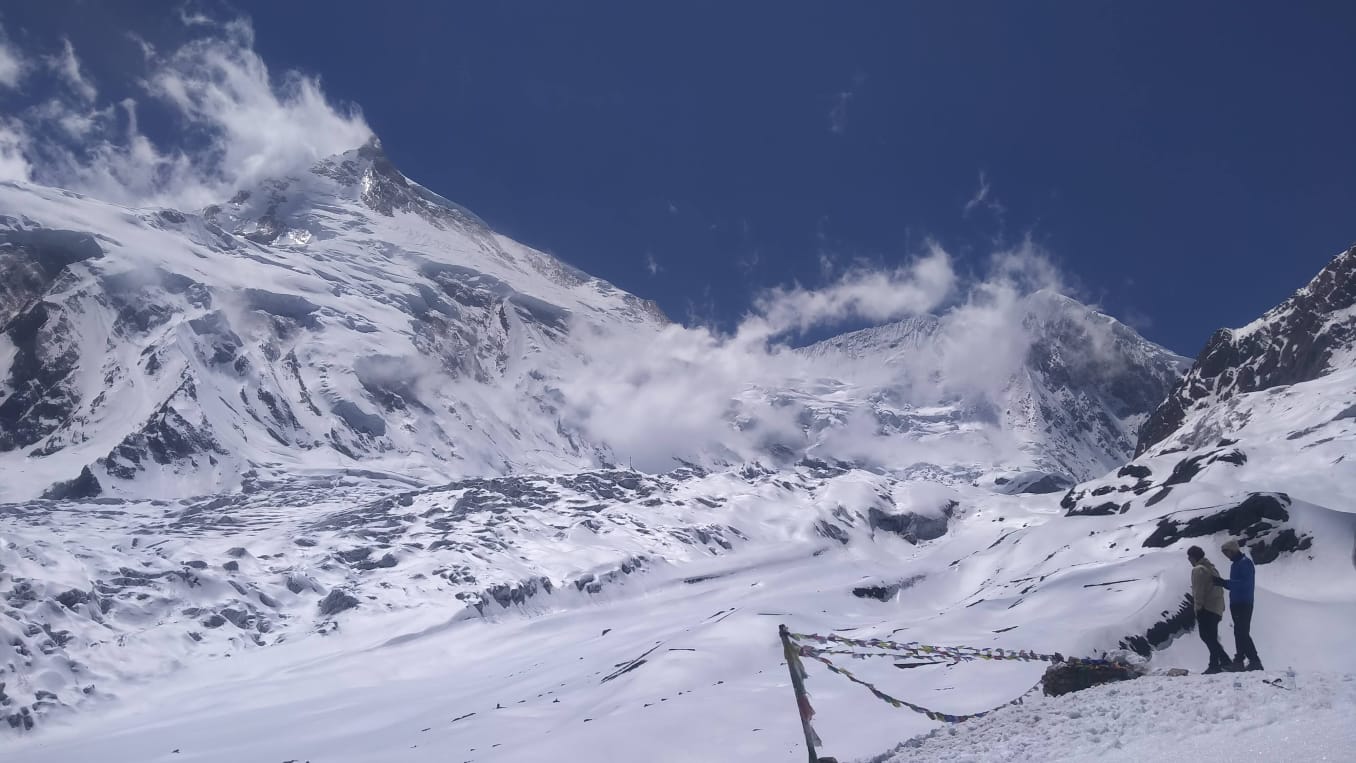
The Manaslu Base Camp Trek is an extraordinary Himalayan journey for travelers who want to experience the dramatic surroundings of Mount Manaslu without following an ordinary trekking route. At 8,163 meters, Mount Manaslu is the eighth-highest mountain on Earth, rising above a remote landscape of glaciers, alpine valleys, Buddhist villages, and towering Himalayan peaks. The base camp journey takes trekkers deep into the Manaslu region, where the scenery changes from green river valleys and forests to rugged high-altitude terrain.
Unlike heavily visited trekking destinations, the Manaslu area retains a quieter and more traditional character. The trail passes through settlements influenced by Gurung and Tibetan Buddhist cultures, with prayer flags, mani walls, monasteries, stone houses, and mountain farms forming part of the experience. The route generally follows the Manaslu Circuit toward Samagaun before taking a challenging side excursion toward Manaslu Base Camp. Create Himalaya Adventure’s Manaslu Circuit itinerary places the optional base camp excursion from Samagaun at approximately 4,800 meters.
This trek is especially attractive to adventurous hikers who want more than mountain photographs. It combines wilderness, culture, altitude, physical challenge, and close-up Himalayan scenery in one memorable experience.
Location of Manaslu Base Camp
Manaslu Base Camp lies in the Manaslu region of northern-central Nepal, within the Manaslu Conservation Area. The mountain dominates the landscape around Samagaun and its surrounding valleys. As trekkers gain elevation, the distant Himalayan views gradually become enormous walls of snow, rock, and ice.
The journey toward the base camp is not a separate low-altitude walking route beginning directly from Kathmandu. Instead, trekkers normally approach through the Manaslu Circuit trail. The route travels from the lower Budhi Gandaki Valley toward higher settlements such as Jagat, Deng, Namrung, Lho, and Samagaun. From Samagaun, the base camp excursion becomes a demanding high-altitude adventure.
The landscape is one of the major reasons to choose this region. Lower sections contain forests and rushing rivers, while the upper valley opens into broad alpine terrain surrounded by glaciers and enormous peaks.
Why Trek to Manaslu Base Camp?
The attraction of Manaslu Base Camp is not simply reaching a particular point on the map. It is the transformation of the landscape throughout the journey.
At lower elevations, trekkers encounter waterfalls, suspension bridges, forests, cultivated hillsides, and traditional settlements. Higher up, vegetation becomes sparse and the mountains increasingly dominate the horizon. Around Samagaun, the environment feels distinctly alpine, with open valleys, glacial features, monasteries, and massive Himalayan walls.
The base camp excursion adds another dimension to the classic Manaslu journey. Instead of stopping at Samagaun, trekkers venture farther toward the mountain itself. The experience provides a closer perspective of Manaslu’s glaciers and surrounding peaks and creates a stronger sense of entering the high Himalaya.
The route is also appealing because of its cultural character. The Manaslu region has strong Tibetan Buddhist influences, visible in monasteries, prayer flags, chortens, mani walls, and traditional village life. The Create Himalaya route description highlights the area’s Gurung and Tibetan communities and its Buddhist cultural heritage.
Major Highlights of Manaslu Base Camp Trek
Spectacular Mount Manaslu Views
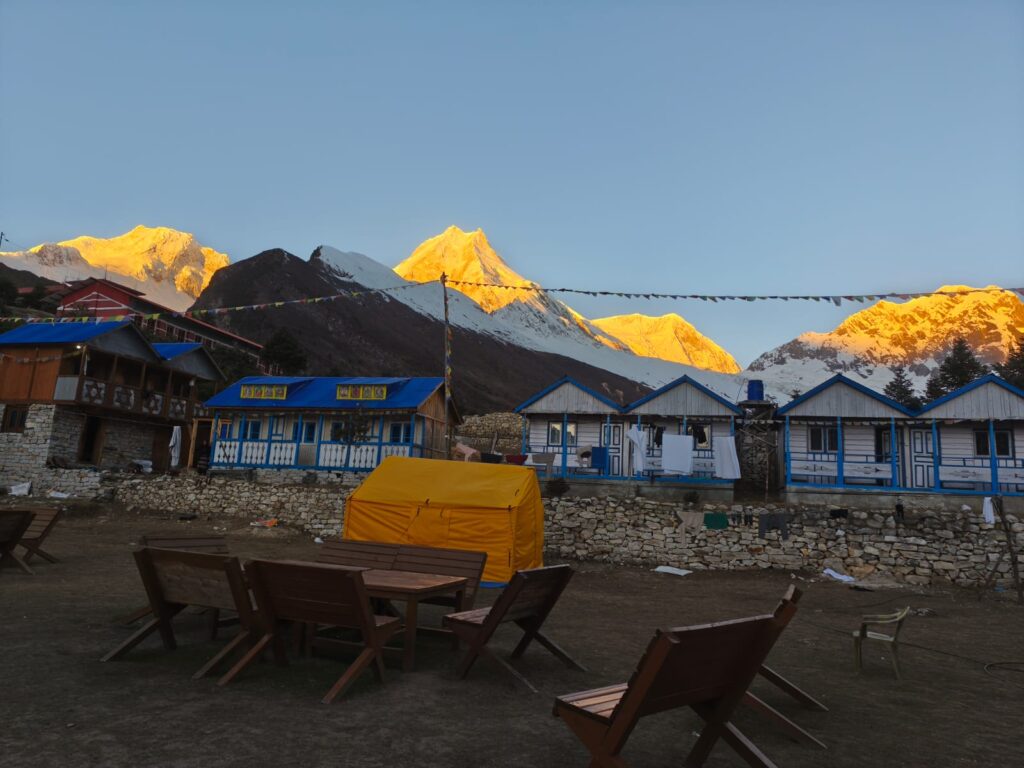
The central attraction is, naturally, Mount Manaslu itself. As the trek progresses beyond Namrung and toward the upper valley, the mountain becomes increasingly prominent. Clear mornings can reveal striking views of Manaslu and neighboring Himalayan peaks.
Samagaun Village
Samagaun is an important stop for acclimatization and exploration. Located at roughly 3,530 meters, it provides an opportunity to experience high-mountain village life before undertaking the base camp excursion. Create Himalaya’s itinerary also uses Samagaun as an acclimatization point and offers the Manaslu Base Camp hike as an optional longer excursion.
Manaslu Glacier and High-Mountain Landscape
The trail toward base camp enters a harsher environment where glaciers, moraine slopes, rocky paths, and snow-covered mountains become increasingly visible. The surroundings feel remote and powerful, particularly when clouds clear around the mountain.
Birendra Lake
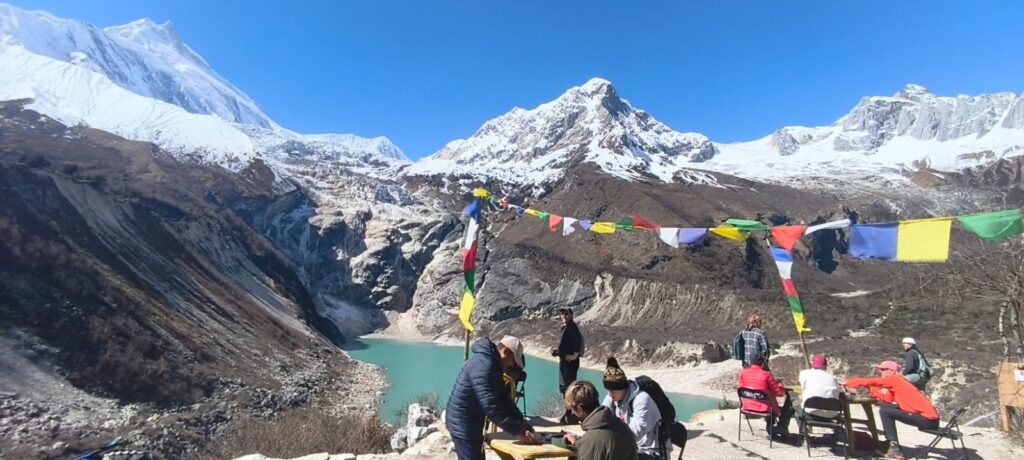
Birendra Lake is another memorable attraction near Samagaun. The glacial lake provides a relatively accessible acclimatization excursion and offers beautiful reflections of the surrounding mountains when weather conditions are favorable.
Himalayan Buddhist Culture
The cultural experience is inseparable from the trek. Villages, monasteries, prayer wheels, mani stones, and colorful flags reveal the region’s deep Buddhist traditions.
Larkya La Pass
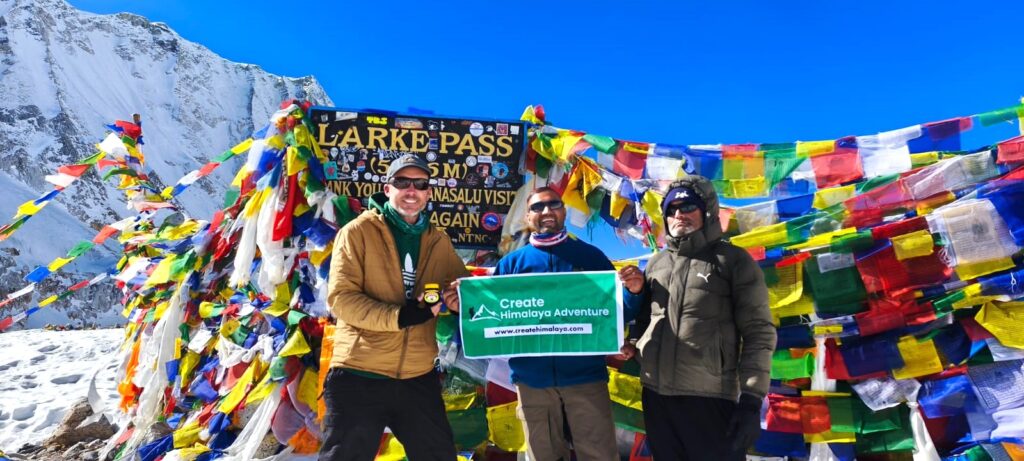
If the Manaslu Base Camp journey is combined with the full Manaslu Circuit, crossing Larkya La Pass becomes another major highlight. The pass rises above 5,000 meters and connects the Manaslu region with the Marsyangdi side of the Himalaya. Create Himalaya’s current circuit itinerary lists Larkya La as the highest and most demanding section of its route.
Manaslu Base Camp Trek Route and Itinerary
The exact number of days depends on whether the base camp is added to a Manaslu Circuit itinerary or arranged as part of a customized program. A typical approach begins with a road journey from Kathmandu toward Machha Khola, followed by trekking through the Budhi Gandaki Valley.
The trail gradually passes through Jagat, Deng, Namrung, Lho, and Samagaun. Each settlement marks a noticeable change in altitude and landscape. The lower route is greener and more humid, while the upper section becomes drier, colder, and more alpine.
Samagaun is particularly important because trekkers normally spend time there to acclimatize before going higher. From the village, the journey toward Manaslu Base Camp becomes significantly more demanding. The path climbs through high-altitude terrain toward the base camp area, with mountain views becoming increasingly dramatic.
After returning to Samagaun, trekkers following the circuit continue toward Samdo, Dharmasala, and eventually Larkya La before descending toward Bhimtang and the lower valleys. This combination creates a complete Himalayan journey rather than a simple out-and-back base camp hike.
Because conditions and walking times can vary, a responsible itinerary should allow flexibility for weather, acclimatization, and individual fitness.
Difficulty, Altitude and Elevation Gain
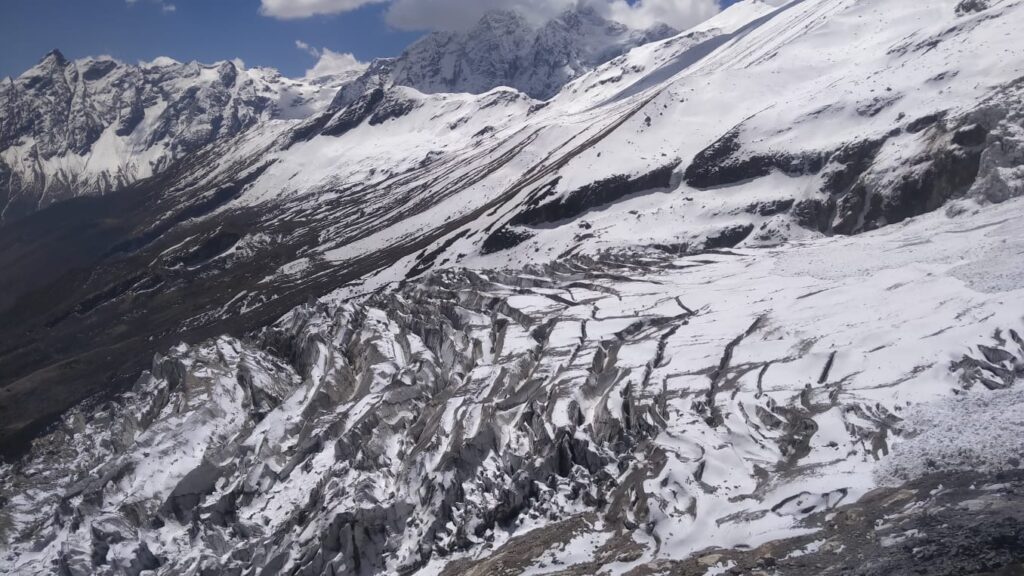
The Manaslu Base Camp Trek is best considered a challenging high-altitude trek. It is not technically a mountaineering expedition, but the altitude, long walking days, remote terrain, and steep sections demand preparation.
Altitude is one of the biggest factors. The journey starts in relatively low valleys and progressively climbs above 3,000 meters before reaching Samagaun and then the base camp area. The base camp excursion reaches approximately 4,800 meters, according to Create Himalaya Adventure’s Manaslu itinerary.
The elevation gain should not be underestimated. Walking slowly, taking appropriate acclimatization days, drinking enough water, eating regularly, and avoiding unnecessary rushing are important.
Previous trekking experience at altitude is useful, although determined and physically prepared hikers can undertake the journey with appropriate guidance and preparation.
Best Time and Weather for Manaslu Base Camp Trek
The most favorable periods are generally spring and autumn.
Spring, particularly March through May, brings relatively stable conditions, blooming rhododendrons at lower elevations, and increasingly clear Himalayan views. Temperatures gradually become warmer as the season progresses.
Autumn, from September through November, is another excellent period. Following the monsoon, the atmosphere often becomes clearer, making it a popular season for mountain photography and long-distance Himalayan views.
Winter is considerably colder, especially around the upper settlements and base camp. Snow can affect high sections of the route. Summer and monsoon months can bring rain, muddy trails, clouds, and landslides in lower areas, although conditions vary from year to year.
At high altitude, weather can change quickly regardless of season. A sunny morning does not guarantee an equally clear afternoon, so trekkers should always carry appropriate layers and rain or snow protection.
Food and Accommodation on the Trek
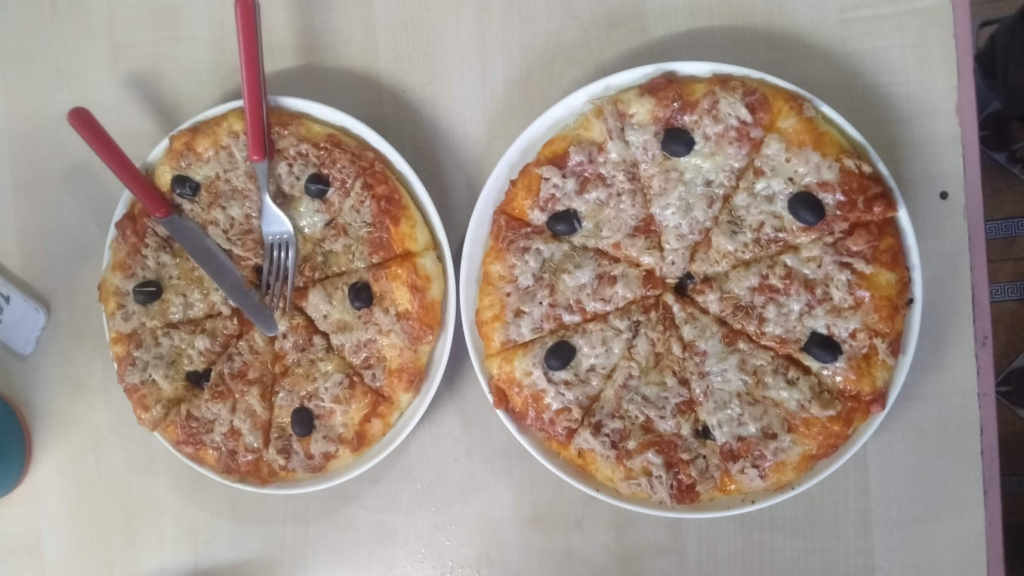
Accommodation on the Manaslu trail is primarily based around teahouses and mountain lodges. Rooms are generally simple, with basic beds and shared facilities. The facilities become more limited as the trail climbs toward the high-altitude settlements.
Meals are usually designed to provide the energy needed for long trekking days. Dal bhat, noodles, rice dishes, soups, potatoes, pasta, Tibetan-style bread, eggs, and other simple meals are commonly available depending on the location.
At higher elevations, food choices may become more limited because supplies must travel long distances. For this reason, eating enough carbohydrates and maintaining regular meals is important.
A warm dining room and a hot meal can feel especially valuable after a cold day in the mountains. The simplicity of the accommodation is also part of the authentic character of trekking in this less-developed Himalayan region. Create Himalaya’s Manaslu itinerary describes the route as using simple teahouse accommodation, with shared facilities common in the region.
Permits and Cost for Manaslu Base Camp Trek
The Manaslu region includes restricted trekking areas, so trekkers need the appropriate permits and must follow local entry requirements. Depending on the exact itinerary, required documentation can include the Manaslu Restricted Area Permit (RAP) and Manaslu Conservation Area Permit (MCAP), with additional permits applying if the route continues toward the Annapurna Conservation Area.
The overall cost of a Manaslu Base Camp Trek depends on several factors, including the number of trekking days, transportation, accommodation, guide and porter services, permits, meals, group size, and whether the trek is combined with the complete Manaslu Circuit.
A professionally organized package may also cover airport transfers, trekking transportation, guide expenses, trekking equipment, meals, accommodation, maps, first-aid support, and government taxes. Create Himalaya Adventure lists these services among its inclusions for its Manaslu Circuit package.
Rather than choosing a trek only by the lowest price, travelers should compare what is actually included. Reliable transportation, experienced staff, appropriate acclimatization, permits, and emergency planning are particularly important in a remote region.
Internet and Mobile Network on the Manaslu Trail
Internet and mobile connectivity are available in parts of the Manaslu region, but they should not be treated as consistently reliable throughout the trek.
Lower villages generally have better access to mobile services and electricity. As the trail climbs toward Samagaun, Samdo, Dharmasala, and the base camp area, connectivity becomes increasingly unpredictable. Some lodges may provide Wi-Fi for an additional charge, but speed and availability can depend on weather, power supply, and location.
The best approach is to enjoy the trek without depending on a permanent internet connection. Download important documents, maps, emergency contacts, and entertainment before leaving Kathmandu. Carrying a power bank is also sensible because charging opportunities can become limited at higher elevations.
This temporary digital disconnect is often one of the unexpected pleasures of trekking in the Manaslu wilderness.
Guide, Porter and Transportation
A licensed trekking guide is strongly recommended for the Manaslu region because of its restricted areas, changing mountain conditions, remote sections, and high-altitude terrain. A knowledgeable local guide also makes the cultural side of the journey more meaningful by explaining villages, monasteries, customs, and mountain landscapes.
A porter can make the trek considerably more comfortable by carrying the majority of your luggage. This allows you to walk with a lighter daypack and conserve energy for long ascents.
The journey from Kathmandu to the trekking trailhead is generally made by road. Create Himalaya Adventure’s current Manaslu itinerary begins with transportation from Kathmandu toward Machha Khola and includes ground transportation as part of its organized service.
Road conditions can vary, particularly in remote sections, so travel times should be treated as approximate rather than guaranteed.
Altitude Sickness and Preparation
Altitude sickness is one of the most important concerns on the Manaslu Base Camp Trek. It can affect anyone, regardless of age or previous trekking experience.
The safest strategy is gradual acclimatization. Avoid climbing too quickly, maintain a comfortable walking rhythm, drink regularly, eat sufficient food, and communicate immediately with your guide if you develop symptoms such as headache, dizziness, unusual fatigue, nausea, or difficulty sleeping.
Do not attempt to push higher simply to maintain an itinerary if your body is struggling with altitude. Descending is often the most important response when symptoms become serious.
Physical preparation should begin several weeks before the trek. Cardiovascular training, uphill walking, stair climbing, hiking, and strength exercises for the legs and core can all help. However, fitness does not eliminate altitude risk, so acclimatization remains essential.
Packing List and Safety Tips
A carefully prepared backpack can make a significant difference during a high-altitude trek. Essential items include:
- Waterproof trekking boots
- Warm down jacket
- Thermal base layers
- Fleece or insulating mid-layer
- Waterproof and windproof outer jacket
- Trekking trousers
- Warm gloves and woolen hat
- Sunglasses with strong UV protection
- Sunscreen and lip balm
- Headlamp with spare batteries
- Reusable water bottles
- Water purification tablets or a suitable filtration system
- Trekking poles
- Sleeping bag suitable for cold mountain conditions
- Personal first-aid supplies
- Power bank
- Basic toiletries
- Backpack or duffel bag
- Personal documents and required permits
Safety is more than carrying the right equipment. Walk at a sensible pace, stay with your group, listen to your guide, check weather conditions before high-altitude excursions, and keep your body hydrated.
For the base camp section, weather-resistant clothing and good footwear are especially important because conditions can become cold, windy, snowy, or slippery.
Please check this blog for the packing details.
Why Choose Create Himalaya Adventure for Manaslu Base Camp Trek?
Create Himalaya Adventure provides locally organized trekking services in Nepal, with experience in the Manaslu region and other Himalayan destinations. Its Manaslu program combines transportation, permits, accommodation, meals, licensed guide services, trekking equipment support, maps, first-aid arrangements, and other logistical services depending on the selected package.
For a remote trek such as Manaslu Base Camp, local knowledge can make a meaningful difference. Experienced guides understand the trail, changing mountain conditions, local communities, accommodation options, and practical challenges of trekking at altitude.
Create Himalaya Adventure can also tailor the itinerary according to walking pace, acclimatization needs, group size, and travel preferences. This makes the journey suitable for travelers who want a carefully managed Himalayan experience while still retaining the sense of adventure that makes Manaslu special.
FAQ’s
1. Can We Extend the Manaslu Base Camp Trek?
Yes, the Manaslu Base Camp Trek can be extended according to your available time and interests. You can combine the base camp excursion with the full Manaslu Circuit and cross Larkya La Pass, or add extra acclimatization and exploration days around Samagaun and Samdo. Some travelers also extend their journey with side trips to Birendra Lake, Pungyen Gompa, or other nearby viewpoints. A customized itinerary is useful if you prefer a slower pace or want more time to experience local villages.
2. Is Manaslu Base Camp Suitable for First-Time Trekkers?
It can be suitable for a first Himalayan adventure if you are physically prepared and have enough time for proper acclimatization. However, it is not an easy introductory hike. The combination of long walking days, remote trails, steep climbs, and high elevation makes preparation important. First-time trekkers should choose a sensible itinerary rather than trying to complete the journey too quickly.
3. How Long Should I Train Before the Trek?
Ideally, begin preparing six to eight weeks before departure. Your training does not need to be complicated. Regular hiking, uphill walking, stair climbing, cycling, jogging, and leg-strength exercises can build useful endurance. Try to include longer weekend hikes before traveling so your body becomes accustomed to spending several hours on its feet.
4. Is It Possible to Trek Manaslu Base Camp as a Private Trip?
Yes. A private Manaslu Base Camp Trek is a good option for travelers who want greater flexibility. Your walking speed, rest days, accommodation preferences, and daily distances can be adjusted more easily than on a fixed group departure. Private trekking is particularly useful when traveling with family, friends, or a small group with similar fitness levels.
5. Can Children Join the Manaslu Base Camp Trek?
Older and experienced children may be able to participate, but this depends heavily on their physical condition, previous hiking experience, and ability to cope with high altitude. The upper sections are demanding, so families should avoid treating this as a normal sightseeing trip. A customized schedule with additional rest days is preferable when traveling with young trekkers.
6. Can I Take a Helicopter During the Manaslu Trek?
Helicopter transportation can be arranged in certain circumstances, depending on weather, location, availability, and operational conditions. It may be considered for emergencies, evacuation, or itinerary adjustments. Helicopter services should not be viewed as a guaranteed shortcut because mountain weather can affect flight operations.
7. What Makes the Manaslu Region Different From Other Trekking Areas?
The Manaslu region has a distinctive combination of remote mountain scenery and traditional Himalayan communities. Compared with some of Nepal’s busier trekking routes, many sections feel quieter and less commercialized. The transition from subtropical valleys to high alpine terrain is also remarkable, giving trekkers several different landscapes within one journey.
8. Can I Take a Shower During the Trek?
Hot showers are available at some teahouses, particularly in lower and larger settlements, although facilities become more basic as you gain altitude. They may cost extra and availability can depend on the lodge’s heating and water system. At higher elevations, many trekkers simply use quick washes and wet wipes to stay comfortable.
9. Are ATMs Available Along the Manaslu Base Camp Route?
You should not depend on ATMs during the trek. Banking facilities are extremely limited once you leave the major towns. It is much safer to carry enough Nepalese cash from Kathmandu or another suitable location before entering the remote trekking area. Keep some emergency money separately from your main wallet.
10. Can I Charge My Phone and Camera Batteries?
Charging is available at some lodges, but electricity can become less reliable at higher elevations. Some teahouses charge an additional fee for electronic charging. Carrying a good power bank is therefore recommended. If you are carrying a camera, spare batteries can be particularly useful because cold temperatures may reduce battery performance.
11. Can I Meet Local People and Experience Village Life?
Definitely. Local interaction is one of the most rewarding aspects of trekking in the Manaslu region. The trail passes through traditional settlements where farming, livestock, trade, and Buddhist traditions remain important parts of everyday life. Staying in local teahouses and spending time respectfully with residents can make the journey much more meaningful.
12. Is Photography Easy on the Manaslu Base Camp Trek?
Yes, the trek offers excellent opportunities for landscape and cultural photography. You can photograph mountain panoramas, traditional villages, prayer flags, monasteries, glaciers, rivers, and changing Himalayan scenery. Early mornings are often particularly rewarding because mountain visibility can be better before clouds develop.
13. What Kind of Toilets Are Available Along the Trail?
Most teahouses provide basic toilet facilities, but standards vary from one village to another. Lower settlements may offer more familiar Western-style toilets, while higher villages commonly have simple squat or traditional facilities. Private bathrooms become less common as you approach the high-altitude sections, so travelers should be comfortable with basic mountain facilities.
14. Can Vegetarians and Vegans Eat Well During the Trek?
Yes. Vegetarian meals are widely available in Nepal’s trekking areas, and common options include dal bhat, vegetable curry, noodles, rice, potatoes, soups, pasta, and Tibetan-style breads. Vegans can also manage the trek with advance communication about ingredients. At higher elevations, however, food choices may become more limited, so informing your guide and teahouse in advance is helpful.
15. What Should I Do With Extra Luggage During the Trek?
You normally do not need to carry everything you bring to Nepal. Unnecessary luggage can usually be left securely at your Kathmandu hotel or with your trekking company while you travel through the mountains. Take only the clothing, equipment, documents, and personal items required for the trek. A lighter load makes long uphill sections considerably more comfortable.
16. Is There a Risk of Snow on the Manaslu Base Camp Route?
Yes, snow is possible, particularly around the higher sections and during colder months. The amount varies according to season and weather conditions. Fresh snowfall can make trails slippery and obscure sections of the route, which is why checking conditions with your guide before heading toward the base camp is important.
17. Can I Combine Manaslu Base Camp With Other Treks in Nepal?
Yes, the journey can be combined with another adventure if you have sufficient time. The most natural combination is the Manaslu Circuit with the Manaslu Base Camp excursion, since the base camp lies along a side route from the upper Manaslu valley. With a longer holiday, you can also design a broader Nepal itinerary before or after the trek.
18. What Is a Typical Walking Day Like Near Manaslu Base Camp?
A high-altitude walking day usually begins early, when the weather and visibility are often more favorable. After breakfast, trekkers follow the trail at a steady pace, taking short breaks when necessary. The route becomes more rugged as you approach the base camp area, so walking slowly is more important than trying to maintain speed. After reaching the day’s destination, the priority is usually rest, hydration, food, and recovery.
19. Do I Need Previous Trekking Experience for the Base Camp Excursion?
Previous trekking experience is helpful but not an absolute requirement. What matters more is your ability to handle consecutive days of walking and your preparation for high altitude. Someone with limited trekking experience but good fitness, patience, and proper acclimatization can potentially complete the journey. Your guide should also be able to adjust the pace according to your condition.
20. What Is the Best Way to Make the Manaslu Base Camp Trek More Comfortable?
The simplest approach is to avoid rushing the itinerary. Allow enough acclimatization time, keep your backpack light, use reliable trekking equipment, eat properly, stay hydrated, and walk at a comfortable pace. Hiring an experienced local guide and porter can also make logistics much easier. Most importantly, leave some flexibility in the schedule so unexpected weather or tiredness does not turn into unnecessary pressure.
Ramchandra Lamichhane
Trekking Expert
No hidden fees • Local experts • Best price guarantee