
Kala Patthar: The Ultimate Viewpoint of Mount Everest
Introduction to Kala Patthar
Standing high above the Khumbu Glacier at an elevation of 5,545 meters (18,192 feet), Kala Patthar is widely regarded as the finest viewpoint of Mount Everest. While thousands of trekkers set out each year with the goal of reaching Everest Base Camp, many discover that the most unforgettable moment of their journey happens a little farther uphill—on the rocky summit of Kala Patthar. From this remarkable vantage point, the world’s highest mountain finally reveals itself in all its grandeur, creating a panorama that simply cannot be experienced from Everest Base Camp alone.
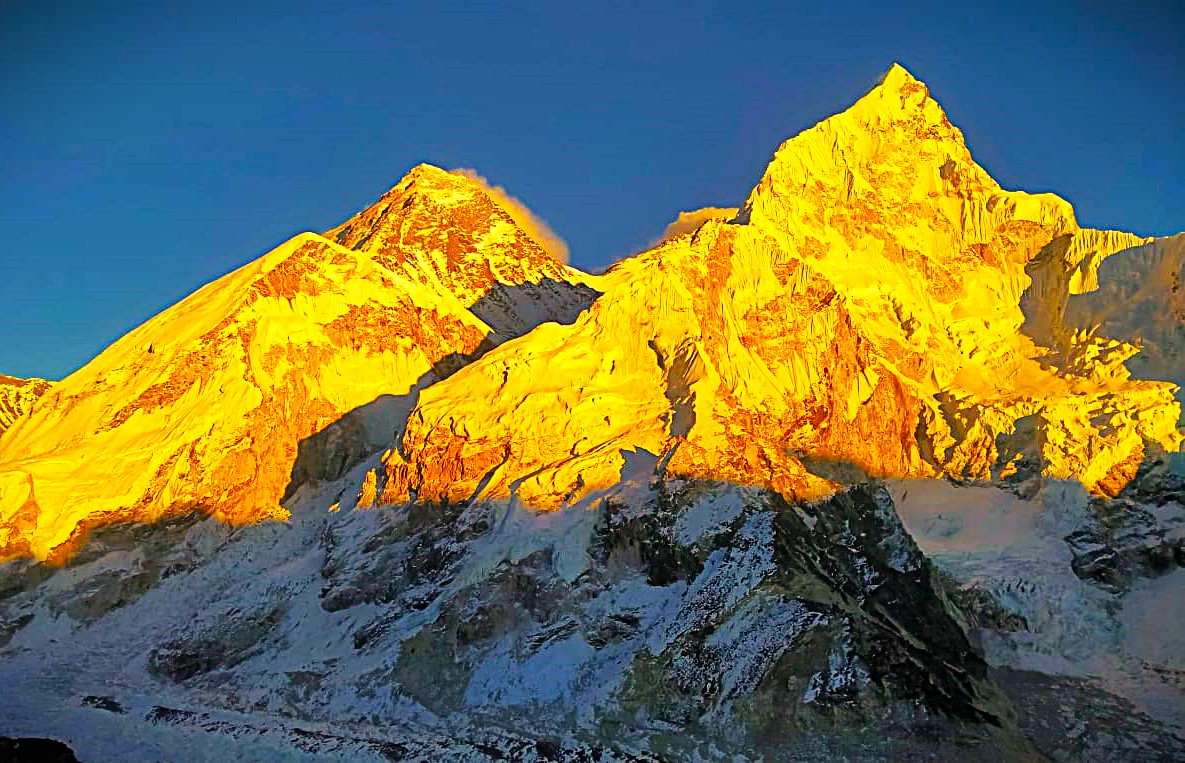
Kala Patthar is more than just a viewpoint; it is the emotional high point of the entire Everest Base Camp Trek. The challenging ascent rewards trekkers with breathtaking 360-degree views of some of the world’s tallest and most iconic peaks, including Mount Everest (8,848.86 m) Lhotse, Nuptse, Pumori, Ama Dablam, Changtse, and the dramatic Khumbu Icefall. As the first rays of sunlight illuminate Everest’s snow-covered summit, the mountain transforms into shades of gold and crimson, creating one of the most spectacular natural scenes anywhere on Earth.
Although Kala Patthar has no permanent settlements, temples, or monuments, it has earned legendary status among mountaineers, photographers, and adventure travelers. Reaching its summit represents determination, endurance, and the successful completion of one of the most rewarding Himalayan adventures. The colorful prayer flags fluttering in the icy mountain wind remind visitors that this is not only a place of extraordinary beauty but also one deeply connected to the spiritual traditions of the Khumbu region.
Whether you are planning your first trek to Nepal or fulfilling a lifelong dream of seeing Mount Everest up close, Kala Patthar deserves a place at the very top of your itinerary. The journey is physically demanding, but the unforgettable sunrise, crystal-clear mountain views, and overwhelming sense of achievement make every step worthwhile.
Where is Kala Patthar Located?
Kala Patthar is located in the Khumbu region of northeastern Nepal, within the protected boundaries of Sagarmatha National Park, a UNESCO World Heritage Site renowned for its towering Himalayan peaks, glaciers, and Sherpa culture. Positioned just above the small settlement of Gorak Shep, Kala Patthar serves as the highest viewpoint reached by most trekkers following the classic Everest Base Camp route.
Geographically, Kala Patthar sits on the southern ridge of Pumori, overlooking the vast Khumbu Glacier and the famous Everest Base Camp. Although Everest Base Camp lies only a few kilometers away, the two destinations offer completely different perspectives. At Base Camp, the massive walls of Nuptse partially block the view of Mount Everest itself. In contrast, Kala Patthar rises high enough to provide an unobstructed panorama of Everest’s majestic summit, making it the preferred destination for photographers and mountain enthusiasts.
The journey to Kala Patthar begins after arriving at Gorak Shep, the final overnight stop before Everest Base Camp. Most trekkers visit Everest Base Camp during the afternoon and then climb Kala Patthar early the following morning to witness sunrise over the Himalayas. Others choose to hike to Kala Patthar at sunset, when the fading light casts dramatic shadows across the surrounding peaks.
Its strategic location also offers exceptional views of the Khumbu Icefall, one of the most dangerous sections of the South Col route used by Everest climbers. During the spring climbing season, trekkers may even spot colorful expedition tents at Everest Base Camp and observe mountaineers preparing for their summit attempts.
Despite its remote location, Kala Patthar has become one of Nepal’s most visited high-altitude viewpoints, attracting thousands of adventurers each year who come to experience the closest and clearest view of the world’s highest mountain.
Meaning of the Name “Kala Patthar”
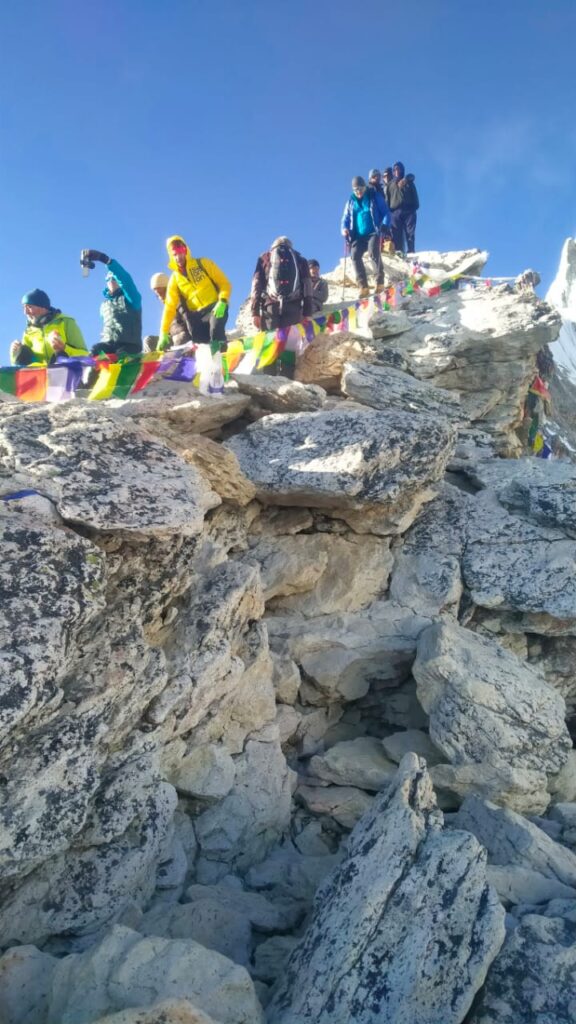
The name Kala Patthar comes from the Nepali language, where “Kala” means “black” and “Patthar” means “rock.” Together, the name translates simply as “Black Rock.” The summit earned this name because of its dark-colored rocky terrain, which stands out against the surrounding glaciers, snowfields, and ice-covered mountains.
Unlike many famous Himalayan peaks, Kala Patthar is not considered a mountain with a distinct summit recognized by climbers. Instead, it is a rugged rocky outcrop that has become internationally famous because of its unmatched views of Mount Everest. Over time, what was once simply a black hill overlooking the Khumbu Glacier has evolved into one of the most iconic viewpoints in the Himalayas.
For the local Sherpa community, the surrounding landscape holds deep spiritual significance. Prayer flags tied to stone cairns at the summit symbolize peace, compassion, and good fortune. As the mountain winds carry these colorful flags across the valley, many trekkers pause to reflect on their incredible journey and the rich cultural traditions that continue to thrive in the Everest region.
Today, the name Kala Patthar is recognized by trekkers from around the world as a symbol of perseverance and achievement. Reaching its summit is often described as the defining moment of the Everest Base Camp Trek—a place where dreams become reality against the backdrop of the world’s tallest mountain.
Kala Patthar Altitude and Geography
At 5,545 meters (18,192 feet) above sea level, Kala Patthar is the highest point reached on the standard Everest Base Camp Trek. Although it is significantly lower than Mount Everest itself, its elevated position provides a viewing angle that many professional photographers and experienced trekkers consider the best in the entire Khumbu region.
The terrain is rugged, consisting of loose rocks, glacial moraines, and steep switchback trails that gradually climb from Gorak Shep. There are no forests or green meadows at this altitude. Instead, the landscape is shaped by ancient glaciers, wind-carved ridges, frozen streams, and endless expanses of rock and ice. The thin mountain air and harsh alpine environment create a dramatic setting unlike anywhere else in Nepal.
From the summit, the surrounding geography unfolds in every direction. To the east rises the immense face of Mount Everest, while the jagged ridges of Nuptse and Lhotse dominate the southern skyline. The elegant pyramid of Ama Dablam stands proudly in the distance, and the towering slopes of Pumori rise immediately to the northwest. Far below, the Khumbu Glacier slowly winds through the valley, carrying centuries-old ice toward Everest Base Camp.
Because of its high altitude, temperatures at Kala Patthar can drop well below freezing, especially before sunrise and after sunset. Strong winds are also common, making warm clothing and proper preparation essential. Despite these challenging conditions, the extraordinary scenery and unmatched Everest views continue to inspire trekkers from every corner of the globe.
Why Kala Patthar Is the Best Place to See Mount Everest
Many first-time trekkers assume that Everest Base Camp offers the best view of the world’s highest mountain. Surprisingly, that is not the case. While reaching Everest Base Camp is a remarkable achievement, the summit of Mount Everest is largely hidden from there by the towering ridge of Nuptse. This often comes as a surprise to visitors who have dreamed of standing face-to-face with Everest.
Kala Patthar changes that completely.
From its elevated position above Gorak Shep, Kala Patthar provides an uninterrupted view of Mount Everest’s summit, allowing trekkers to appreciate its true height and grandeur. The perspective reveals the famous southeast ridge, the snow-covered summit pyramid, and the dramatic Khumbu Icefall stretching below. On clear mornings, the entire Himalayan skyline appears almost endless, creating one of the most breathtaking mountain panoramas anywhere in the world.
For photographers, Kala Patthar is a dream destination. The golden light of sunrise gradually illuminates Everest’s summit before reaching the surrounding valleys, creating a magical contrast between glowing peaks and shadowed glaciers. During sunset, the mountains are painted in warm shades of orange, pink, and crimson before fading into the deep blue of the Himalayan evening.
Unlike Everest Base Camp, where the focus is on expedition tents and climbers preparing for their summit attempts, Kala Patthar offers a peaceful place to pause and absorb the scale of the Himalayas. The silence is broken only by the mountain wind and the fluttering of colorful prayer flags, making the experience feel deeply personal and unforgettable.
Many trekkers who have completed the Everest Base Camp Trek agree that standing on Kala Patthar is the emotional highlight of the entire journey. After days of walking through Sherpa villages, crossing suspension bridges, and climbing steadily into thinner air, reaching this iconic viewpoint feels like the perfect reward.
It is no coincidence that many of the world’s most famous photographs of Mount Everest have been taken from Kala Patthar. If your dream is to witness Everest in its full glory, there is simply no better place.
Mountains Visible from Kala Patthar
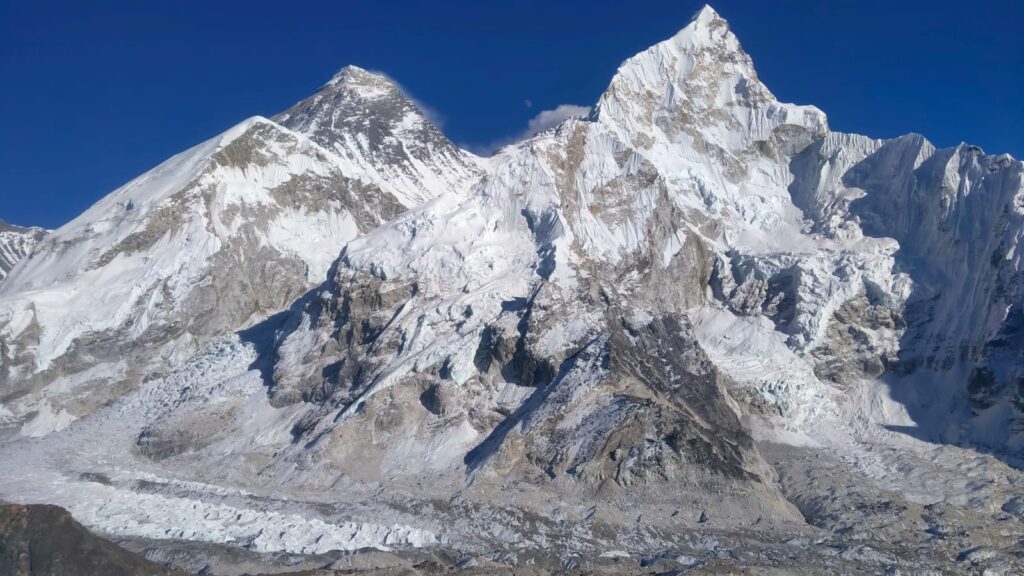
Standing atop Kala Patthar is like standing in the middle of a natural amphitheater surrounded by some of the highest mountains on Earth. On a clear day, nearly every direction reveals another magnificent Himalayan giant, each with its own distinctive shape and climbing history.
Dominating the eastern skyline is Mount Everest (8,848.86 meters), whose iconic summit rises above the neighboring peaks. From Kala Patthar, visitors enjoy one of the closest unobstructed views of Everest available without climbing the mountain itself. The summit often appears crowned with a plume of wind-blown snow, a reminder of the powerful jet streams that constantly sweep across the world’s highest peak.
Immediately beside Everest stands Lhotse (8,516 meters), the fourth-highest mountain in the world. Its steep, icy walls form an impressive backdrop to Everest and are clearly visible throughout the climb to Kala Patthar.
To the south stretches the rugged ridge of Nuptse (7,861 meters). Although Nuptse blocks Everest from Base Camp, its dramatic rock faces and sharp snow-covered ridges add remarkable depth to the panoramic landscape seen from Kala Patthar.
One of the most elegant peaks in the Himalayas is Ama Dablam (6,812 meters). Famous for its perfectly symmetrical pyramid shape, Ama Dablam stands gracefully above the Khumbu Valley and is often considered one of the world’s most beautiful mountains. Its striking appearance makes it a favorite subject for photographers.
Towering just to the northwest is Pumori (7,161 meters), sometimes called the “Daughter of Everest.” Because Kala Patthar sits on Pumori’s southern ridge, the mountain appears incredibly close, showcasing its towering cliffs and icy slopes in remarkable detail.
Visitors may also see Changtse, located just across the border in Tibet, as well as Lingtren, Khumbutse, Lobuche East, Taboch, and several lesser-known Himalayan peaks that complete this spectacular mountain panorama.
Looking down into the valley, trekkers can observe the winding Khumbu Glacier, one of Nepal’s largest glaciers, slowly descending from the Western Cwm. During the spring climbing season, colorful expedition tents at Everest Base Camp become visible from above, offering a fascinating glimpse into the preparations of climbers attempting to summit Mount Everest.
The panoramic views from Kala Patthar are unmatched anywhere else on the Everest Base Camp Trek, making every step of the climb worthwhile.
How to Reach Kala Patthar
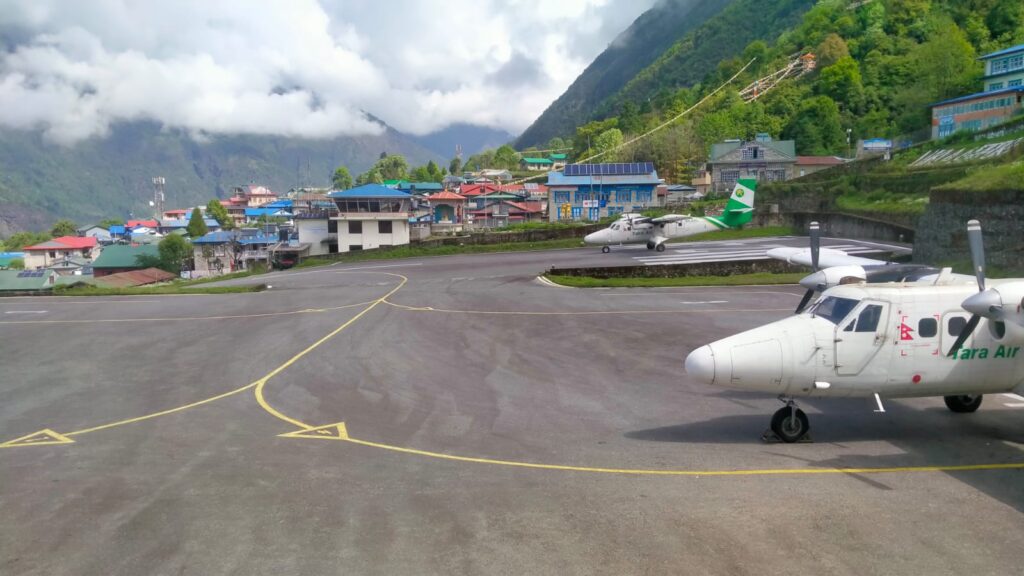
Reaching Kala Patthar is an unforgettable adventure that follows the legendary Everest Base Camp Trek through the heart of the Khumbu region. The journey combines scenic mountain flights, picturesque Sherpa villages, suspension bridges draped with prayer flags, ancient monasteries, and spectacular Himalayan landscapes before arriving at the famous viewpoint.
The adventure begins with a flight from Kathmandu (or Ramechhap during peak trekking seasons) to Lukla, home to one of the world’s most exciting mountain airports. From Lukla, trekkers gradually ascend through charming villages such as Phakding, Namche Bazaar, Tengboche, Dingboche, Lobuche, and finally Gorak Shep, the last settlement before Everest Base Camp.
To reduce the risk of altitude sickness, the itinerary includes important acclimatization days in Namche Bazaar and Dingboche. These rest days allow the body to adjust naturally to the increasing elevation while giving trekkers time to explore local viewpoints, monasteries, and surrounding landscapes.
Most trekkers first visit Everest Base Camp after arriving at Gorak Shep in the afternoon. Following an overnight stay, they begin the ascent to Kala Patthar before dawn, often starting between 4:30 and 5:30 AM. Hiking in the early morning offers the best chance of clear weather and allows visitors to witness the unforgettable sunrise over Mount Everest.
Although the climb from Gorak Shep is relatively short, the high altitude makes every step feel more demanding. The trail consists of rocky switchbacks and gradual inclines that require a slow and steady pace. Frequent short breaks, proper hydration, and controlled breathing help make the ascent more comfortable.
For those unable to complete the trek on foot, helicopter tours can also reach the Kala Patthar area, allowing travelers to enjoy the spectacular Himalayan panorama within a much shorter timeframe. However, hiking remains the most rewarding way to experience the dramatic landscapes and personal sense of accomplishment that define this legendary destination.
Kala Patthar Trek Distance and Hiking Duration
Although Kala Patthar is one of the highest points on the Everest Base Camp Trek, the final hike from Gorak Shep is relatively short in distance. What makes it challenging is not the length of the trail but the combination of steep terrain, thin air, and high altitude.
The one-way distance from Gorak Shep to Kala Patthar is approximately 1.5 kilometers (0.9 miles), making the round-trip hike around 3 kilometers (1.8 miles). Despite this short distance, most trekkers require two to three hours to reach the summit because the climb gains nearly 400 meters (1,300 feet) in elevation.
Descending back to Gorak Shep is much quicker and usually takes 45 minutes to 1.5 hours, depending on trail conditions and individual pace.
The entire Everest Base Camp Trek, including the Kala Patthar ascent, typically covers approximately 130 kilometers (81 miles) round trip from Lukla. Most itineraries complete the journey in 12 to 14 days, allowing sufficient time for acclimatization and safe altitude gain.
While the final climb is physically demanding, it does not require technical climbing skills or mountaineering experience. Anyone with good fitness, proper acclimatization, and determination can successfully reach the summit.
The last few hundred meters may feel like the hardest steps of the entire trek, but as the panoramic view of Mount Everest unfolds before your eyes, every moment of effort is instantly rewarded. For many travelers, standing on Kala Patthar becomes the defining memory of their Himalayan adventure and one of the greatest achievements of their lives.
Kala Patthar vs. Everest Base Camp: Which Offers Better Views?
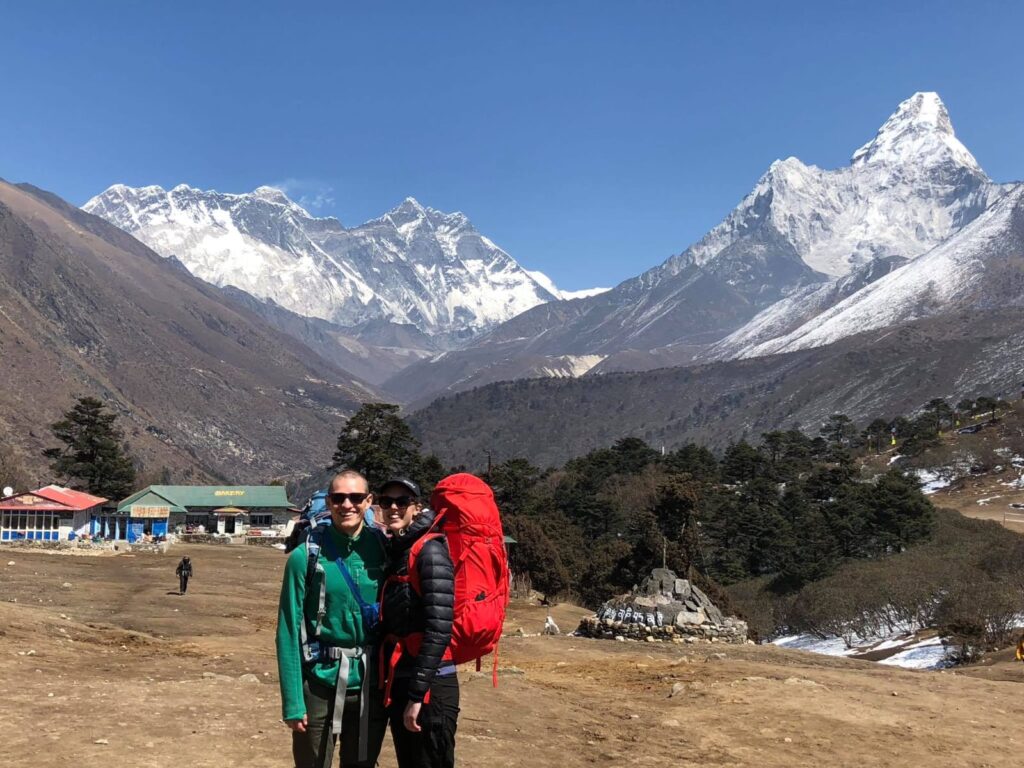
One of the biggest surprises for first-time trekkers is discovering that Everest Base Camp is not actually the best place to see Mount Everest. While reaching Base Camp is a dream achievement and a major milestone on the trek, the world’s highest mountain remains partially hidden behind the towering ridge of Nuptse. As a result, trekkers standing at Everest Base Camp cannot enjoy the iconic panoramic view of Everest that many imagine before starting the journey.
This is exactly why Kala Patthar is considered the true highlight of the Everest Base Camp Trek.
Perched at 5,545 meters (18,192 feet) above sea level, Kala Patthar rises high enough to provide a clear and unobstructed view of Mount Everest’s summit. From its rocky viewpoint, trekkers can admire Everest standing majestically above neighboring peaks, with the dramatic Khumbu Icefall flowing below and a magnificent chain of Himalayan giants stretching across the horizon. The panoramic scenery is simply unmatched anywhere else along the classic Everest Base Camp route.
Another major difference lies in the overall experience. Everest Base Camp serves as the temporary home for mountaineering expeditions during the spring climbing season. Colorful expedition tents, climbing equipment, and teams preparing for Everest expeditions create an exciting atmosphere. However, outside the climbing season, Base Camp is largely a rocky glacial area without permanent structures or panoramic viewpoints.
Kala Patthar, on the other hand, is entirely dedicated to the view. There are no expedition camps or distractions—only breathtaking Himalayan landscapes in every direction. Watching the first rays of sunlight illuminate Everest’s summit or witnessing the mountains glow during sunset creates an unforgettable experience that many trekkers describe as the emotional climax of their journey.
From Kala Patthar, visitors can also enjoy spectacular views of Lhotse, Nuptse, Pumori, Ama Dablam, Lingtren, Khumbutse, and the winding. Khumbu Glacier, making it one of the finest natural observation points in the Himalayas.
That doesn’t mean Everest Base Camp should be skipped. Standing at the foot of the world’s highest mountain carries immense historical and emotional significance. It allows trekkers to witness the starting point of legendary Everest expeditions and appreciate the immense scale of the Khumbu Glacier up close.
Rather than competing with one another, Everest Base Camp and Kala Patthar complement each other perfectly. Base Camp represents the destination every trekker dreams of reaching, while Kala Patthar delivers the unforgettable panoramic views that most people imagine when they picture Mount Everest.
If you had to choose only one for the scenery, Kala Patthar is unquestionably the better viewpoint. But for the complete Everest experience, visiting both Everest Base Camp and Kala Patthar is highly recommended. Together, they create a journey that combines personal achievement, spectacular mountain landscapes, and lifelong memories, making the Everest Base Camp Trek one of the world’s greatest trekking adventures.—
Kala Patthar Weather Throughout the Year
Weather plays a crucial role in determining the quality of your experience at Kala Patthar. At an altitude of **5,545 meters**, conditions can change rapidly, and temperatures remain cold throughout the year. Understanding the seasonal weather helps trekkers choose the ideal time for their adventure.
Spring (March to May)
Spring is widely considered one of the finest seasons to visit Kala Patthar. As winter snow gradually melts at lower elevations, the trails become more accessible, while the skies remain remarkably clear. Daytime temperatures are relatively comfortable for trekking, although mornings and evenings remain well below freezing.
This is also the Everest climbing season, meaning trekkers may see colorful expedition camps at Everest Base Camp and climbers preparing for summit attempts. Rhododendron forests bloom at lower elevations, adding vibrant colors to the journey before the landscape transitions into alpine terrain.
Summer and Monsoon (June to August)
Summer brings warmer temperatures, but it also marks Nepal’s monsoon season. Lower sections of the Everest trail often experience rain, cloudy skies, and occasional flight delays to Lukla.
Despite these challenges, rainfall decreases significantly at higher elevations, and patient trekkers are sometimes rewarded with beautiful mountain views after passing weather systems. However, visibility is generally less predictable than during spring or autumn.
Autumn (September to November)
Autumn is regarded as the most popular trekking season in the Everest region. The monsoon rains leave the atmosphere exceptionally clean, producing crystal-clear skies and outstanding mountain visibility.
Stable weather, mild daytime temperatures, and spectacular panoramic views make autumn ideal for both trekking and photography. The trails are busier during this period, but the incredible scenery more than compensates for the increased number of visitors.
Winter (December to February)
Winter transforms Kala Patthar into a peaceful Himalayan wonderland. Snow frequently covers the surrounding landscape, creating breathtaking alpine scenery.
Although temperatures can fall below -20°C (-4°F) during the night, winter offers remarkably clear skies and fewer trekkers. Those prepared for the cold are rewarded with tranquil trails and some of the clearest views of Mount Everest throughout the year.
Regardless of the season, weather conditions at high altitude can change quickly. Dressing in layers, checking local forecasts, and remaining flexible with your trekking schedule are essential for a safe and enjoyable visit.
Kala Patthar Difficulty Level
Although Kala Patthar does not require technical climbing skills, it is widely considered the most physically demanding section of the Everest Base Camp Trek.
The challenge comes primarily from the altitude rather than the distance. After spending several days gradually ascending through the Khumbu region, trekkers arrive at Gorak Shep already above 5,100 meters. From there, the final climb to Kala Patthar involves a steep uphill ascent over rocky terrain while breathing significantly thinner air.
At this elevation, oxygen levels are roughly half of those at sea level. Even experienced hikers often find themselves stopping frequently to catch their breath. Walking slowly, maintaining a steady rhythm, and avoiding unnecessary exertion become the keys to success.
The trail itself is well established and does not require ropes, crampons, or mountaineering equipment. Anyone with good physical fitness, proper acclimatization, and determination can successfully reach the summit.
Preparing before the trek through regular walking, hiking, cycling, or cardiovascular exercise greatly improves comfort during the climb. More importantly, following a well-planned itinerary with adequate acclimatization days significantly reduces the risk of altitude sickness.
While the final ascent may feel challenging, the moment you stand at the summit surrounded by the world’s highest mountains makes every step worthwhile. The sense of achievement, combined with the breathtaking Himalayan panorama, is one of the greatest rewards any trekker can experience.
Altitude Sickness and Safety Tips
Reaching Kala Patthar (5,545 meters / 18,192 feet) is one of the most rewarding moments of the Everest Base Camp Trek, but it also takes you into an environment where the air contains significantly less oxygen than at sea level. At this altitude, your body needs time to adapt, and even experienced trekkers can feel the effects of thin air. Understanding altitude sickness and following proper safety practices are essential for enjoying the journey and returning safely.
The best defense against altitude sickness is a well-planned itinerary that allows gradual acclimatization. Most Everest Base Camp itineraries include rest days in Namche Bazaar and Dingboche, giving your body time to adjust before climbing higher. Skipping these acclimatization days may increase the risk of Acute Mountain Sickness (AMS), regardless of your fitness level.
Common symptoms include headache, dizziness, loss of appetite, nausea, unusual fatigue, difficulty sleeping, and shortness of breath. These symptoms should never be ignored. If they become more severe or fail to improve after resting, descending to a lower altitude is the safest option. Trekking guides are trained to monitor trekkers’ health and make informed decisions when necessary.
Hydration also plays an important role in acclimatization. Drinking three to four liters of water each day helps your body adapt to the altitude more efficiently. Eating nutritious meals, avoiding excessive alcohol, getting enough rest, and maintaining a slow, steady walking pace can significantly reduce the likelihood of altitude-related problems.
Weather conditions at Kala Patthar can change quickly. Strong winds, freezing temperatures, and sudden snowfall are common, especially during early mornings and winter months. Dressing in multiple layers, carrying gloves, a warm hat, sunglasses, sunscreen, and a headlamp for sunrise hikes ensures both comfort and safety throughout the climb.
Above all, listen to your body. Reaching the summit is rewarding, but your health should always take priority. The mountains will always be there, and a safe trek is far more important than rushing to the top.
What to Pack for the Kala Patthar Hike
Packing wisely can make the difference between a comfortable Himalayan adventure and a challenging one. Since Kala Patthar sits above 5,500 meters, weather conditions are cold, windy, and unpredictable throughout the year. Layering your clothing allows you to adjust easily as temperatures change during the day.
A moisture-wicking thermal base layer helps keep your body dry, while a fleece jacket provides warmth during the climb. A high-quality down jacket becomes essential during early morning hikes when temperatures often fall well below freezing. A waterproof and windproof outer shell protects against cold mountain winds and occasional snowfall.
Footwear is equally important. Waterproof trekking boots with good ankle support offer stability on rocky terrain and help prevent slips. Warm trekking socks, insulated gloves, a woolen hat, and a neck gaiter provide additional protection against freezing conditions.
Other essential gear includes trekking poles to reduce strain on steep ascents and descents, UV-protection sunglasses to shield your eyes from strong mountain sunlight, sunscreen with a high SPF rating, lip balm, a reusable water bottle or hydration bladder, snacks for extra energy, and a small first-aid kit.
Since many trekkers hike to Kala Patthar before sunrise, carrying a reliable headlamp with spare batteries is highly recommended. A fully charged camera or smartphone, along with extra batteries, is also important because cold temperatures drain battery life much faster than usual.
Packing light while carrying only the essentials allows you to enjoy the climb comfortably without unnecessary weight on your back.
Photography Tips at Kala Patthar
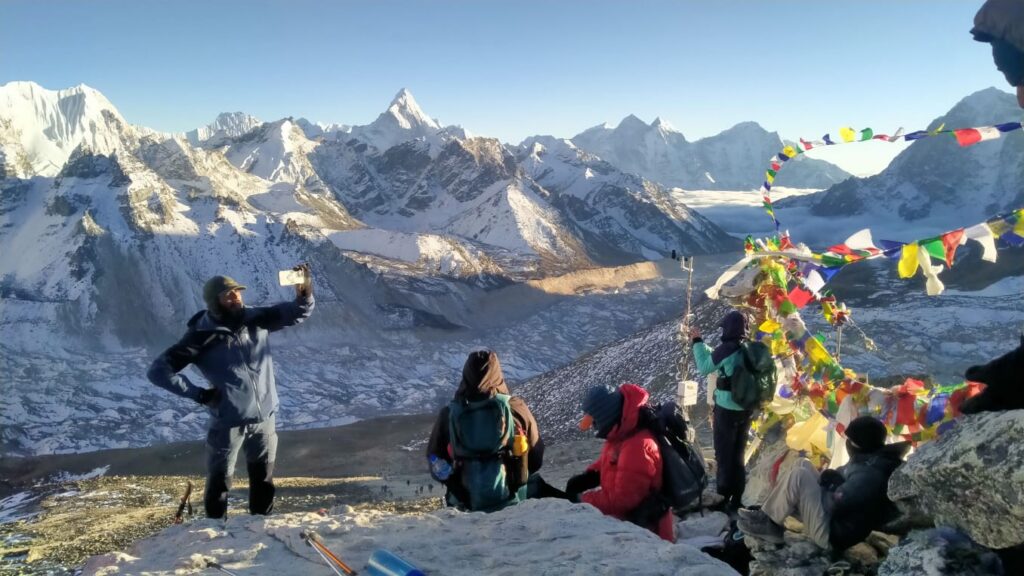
Kala Patthar is one of the most photographed viewpoints in Nepal, and for good reason. It offers the closest and clearest panoramic views of Mount Everest available to trekkers without climbing the mountain. Whether you are using a professional camera or a smartphone, thoughtful preparation can help you capture unforgettable Himalayan memories.
The best photographs are usually taken during sunrise, when the first light of day illuminates Mount Everest’s summit in brilliant shades of gold. The surrounding peaks gradually come to life as the sunlight spreads across the Khumbu Valley, creating dramatic contrasts between glowing mountains and shadowed glaciers.
For landscape photography, use the surrounding rocks, prayer flags, or fellow trekkers as foreground elements to create depth and scale. Including people in your composition also helps convey the immense size of the Himalayan mountains.
Weather changes quickly in the Everest region, so patience often rewards photographers with unique lighting conditions. Soft clouds drifting around Everest can create dramatic scenes that look different every few minutes.
Cold temperatures reduce battery performance, so keep spare batteries inside your jacket where they remain warm. Cleaning your camera lens regularly is also important, as dust and moisture are common at high altitude.
Most importantly, remember to pause between photographs. While capturing stunning images is exciting, some of the most meaningful moments come from simply standing quietly and appreciating one of the world’s greatest mountain landscapes with your own eyes.
Accommodation and Food Near Kala Patthar
Since Kala Patthar itself is an exposed rocky viewpoint, there are no hotels or lodges on the summit. The nearest and final overnight stop for trekkers is Gorak Shep, a small settlement located at approximately 5,164 meters above sea level.
Although remote, Gorak Shep offers comfortable teahouses that provide basic but welcoming accommodation. Rooms are generally simple, featuring twin beds, blankets, pillows, and shared bathroom facilities. Heating is usually available only in the communal dining area, where trekkers gather to warm themselves before or after their hikes.
Meals focus on providing the energy needed for high-altitude trekking. The traditional Nepali meal, Dal Bhat, remains the most popular choice because it is nutritious, filling, and often comes with unlimited refills of rice and lentil soup. Trekkers can also enjoy noodles, fried rice, pasta, potatoes, soups, pancakes, eggs, porridge, tea, coffee, and hot chocolate.
Because all supplies must be transported by porters, yaks, or helicopters, food prices are higher than in lower villages. Fresh vegetables and fruits become less common at higher elevations, while packaged snacks and bottled drinks are generally more expensive.
Despite the simple facilities, the warm hospitality of the local lodge owners creates a welcoming atmosphere that perfectly complements the rugged beauty of the Everest region.
Permits Required for Visiting Kala Patthar
Every trekker visiting Kala Patthar must obtain the necessary permits before entering the Everest region. These permits help support conservation efforts, maintain trekking trails, and contribute to local community development.
The first requirement is the Sagarmatha National Park Entry Permit, which grants access to Nepal’s famous UNESCO World Heritage Site. The park protects the fragile Himalayan ecosystem, glaciers, wildlife, and the unique Sherpa culture that defines the Khumbu region.
The second required document is the Khumbu Pasang Lhamu Rural Municipality Permit. This local permit replaced the former TIMS Card for most trekkers in the Everest region and helps fund infrastructure, tourism management, and community services within the Khumbu area.
Both permits are checked at various entry points along the trekking route, so they should be carried throughout the journey. Trekkers traveling with an experienced local company usually have all permit arrangements completed before the trek begins, allowing them to focus entirely on enjoying the adventure.
Before your trip, always verify the latest permit fees and regulations, as government policies may change over time.
Why Choose Create Himalaya Adventure for the Kala Patthar Trek?
A successful journey to Kala Patthar begins with choosing a trekking company that values safety, professionalism, and authentic local experiences. With more than 19 years of experience in Nepal’s trekking industry, Create Himalaya Adventure has built a reputation for delivering memorable Himalayan adventures while maintaining the highest standards of service.
Our experienced, government-licensed trekking guides know the Everest region intimately and understand the importance of proper acclimatization, safe trekking practices, and personalized care. Every itinerary is carefully planned to maximize safety while allowing trekkers enough time to fully appreciate the breathtaking landscapes and rich Sherpa culture of the Khumbu Valley.
We believe that every traveler is unique, which is why we offer flexible itineraries tailored to different fitness levels, travel styles, and personal interests. Whether you are trekking solo, as a couple, with family, or in a private group, we ensure your journey is comfortable, enjoyable, and unforgettable.
Beyond organizing exceptional trekking experiences, Create Himalaya Adventure is committed to responsible tourism. We support local communities, respect Himalayan traditions, encourage environmentally friendly travel practices, and work closely with local guides, porters, and teahouses to ensure tourism benefits the people who call the mountains home.
From your arrival in Kathmandu until your successful return from Kala Patthar, our dedicated team is available to assist you every step of the way. With professional planning, experienced guides, quality service, and a genuine passion for the Himalayas, we strive to make your Everest adventure one of the greatest experiences of your life.
Frequently Asked Questions (FAQs) About Kala Patthar
1. Can beginners successfully reach Kala Patthar without previous trekking experience?
Yes. With reasonable physical fitness, proper acclimatization, and a gradual itinerary, many first-time trekkers successfully reach Kala Patthar.
2. How early should I leave Gorak Shep for a sunrise hike?
Most trekkers begin between 4:30 AM and 5:30 AM, depending on the season and sunrise time.
3. Is helicopter landing allowed at Kala Patthar?
Yes. Weather permitting, helicopters can land briefly near Kala Patthar, making it a popular destination for Everest scenic flights.
4. Will my mobile phone work at Kala Patthar?
Mobile coverage may be available in some areas through local networks, but the signal is often weak and weather-dependent.
5. Can I charge my camera and phone batteries at Gorak Shep?
Yes. Most teahouses offer charging facilities for an additional fee.
6. Are there toilets along the hike to Kala Patthar?
No. There are no toilet facilities on the trail, so it is best to use the teahouse before starting the climb.
7. Is it common to experience strong winds at the summit?
Yes. Kala Patthar is often windy, especially during early morning and late afternoon.
8. How long do most trekkers stay at the summit?
Most visitors spend 20 to 45 minutes, depending on weather conditions and temperature.
9. Can I see Everest climbers from Kala Patthar?
During the spring expedition season, you may observe climbing teams and colorful expedition camps at Everest Base Camp below.
10. Is drinking water available during the climb?
No. Carry sufficient water from Gorak Shep before beginning the hike.
11. Is the trail clearly marked?
Yes. The route is well established and frequently used during the trekking seasons.
12. Do I need climbing equipment for Kala Patthar?
No. The hike requires no technical climbing gear, only standard trekking equipment.
13. Is travel insurance recommended for this trek?
Yes. Comprehensive insurance covering high-altitude trekking and emergency helicopter evacuation is strongly recommended.
14. Can I visit Kala Patthar during winter?
Yes. Winter offers stunning mountain views and quieter trails, but temperatures are significantly colder.
15. Are drones permitted at Kala Patthar?
Drone use is regulated in Nepal and generally requires prior permission from the relevant authorities.
16. Is there an age limit for hiking to Kala Patthar?
There is no official age limit, but trekkers should be physically fit and capable of handling high-altitude conditions.
17. What is the biggest challenge during the Kala Patthar hike?
For most people, the thin air and steep final ascent are more challenging than the distance itself.
18. Can I hike to Kala Patthar if I skip Everest Base Camp?
Yes. Some trekkers choose to visit Kala Patthar without walking to Everest Base Camp, especially if they are short on time or prioritize panoramic mountain views.
19. Is hiring a guide recommended?
Although experienced trekkers can hike independently where regulations permit, hiring a licensed guide greatly improves safety, navigation, and the overall trekking experience.
20. Why do so many trekkers say Kala Patthar is the most unforgettable part of the Everest Base Camp Trek?
Because it offers the closest panoramic view of Mount Everest, a spectacular Himalayan sunrise, and an overwhelming sense of achievement that stays with travelers long after they leave the mountains.
Ramchandra Lamichhane
Trekking Expert
No hidden fees • Local experts • Best price guarantee