
Sagarmatha National Park: Nepal’s Everest Wilderness
Introduction
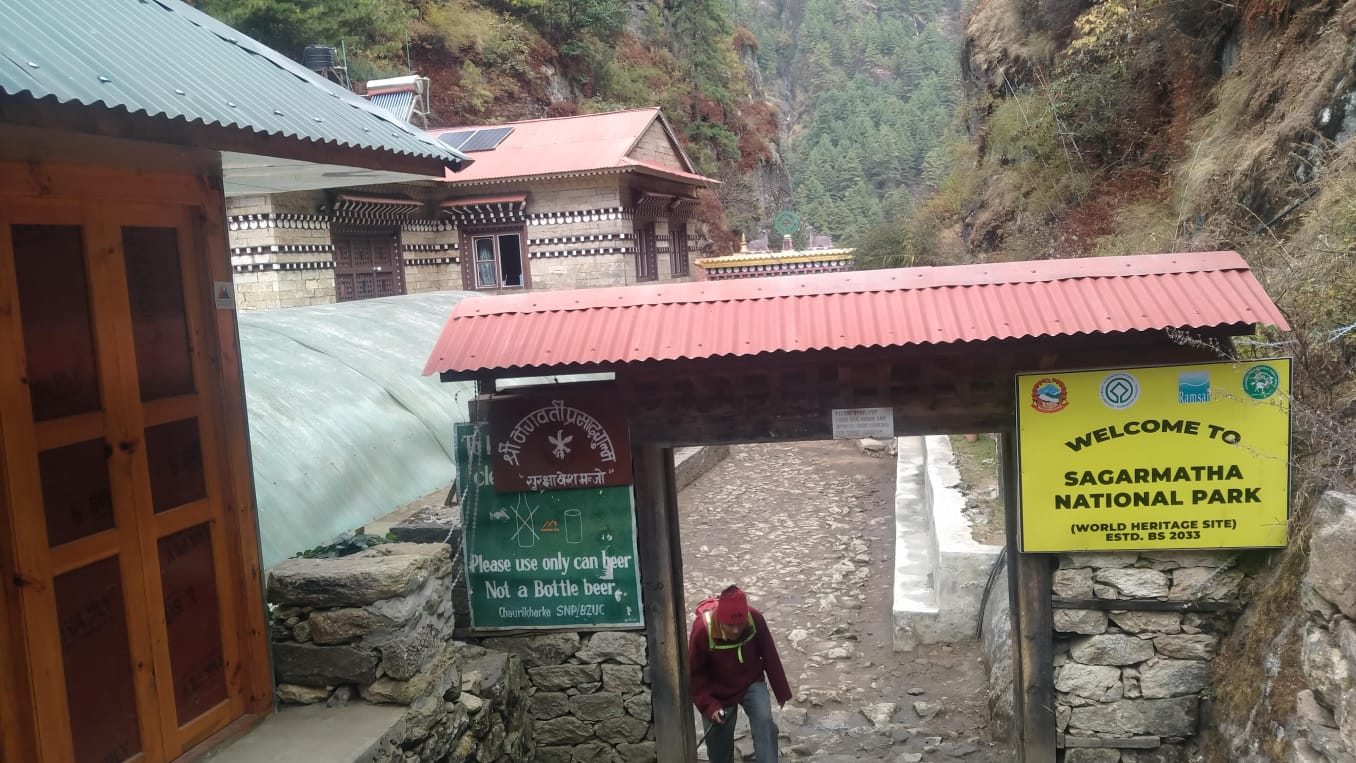
High in the northeastern Himalayas of Nepal lies a landscape where enormous mountains rise above ancient valleys, glaciers move slowly through the rocks, and small Sherpa villages cling to the slopes. This extraordinary region is Sagarmatha National Park, one of Nepal’s most remarkable protected areas and the gateway to Mount Everest.
Established in 1976, the park protects approximately 1,148 square kilometers of spectacular Himalayan terrain in Solukhumbu District. Its elevation ranges from the lower valleys to the summit of Mount Everest, creating an exceptional variety of landscapes and ecosystems.
For many travelers, Sagarmatha National Park is synonymous with the Everest Base Camp Trek. Yet the park offers much more than a route to Everest. It is a place where nature, adventure, wildlife, spirituality, and Sherpa culture exist together.
The trail passes through pine and rhododendron forests, rushing rivers, high alpine valleys, glaciers, Buddhist monasteries, traditional settlements, and some of the world’s highest mountains. Every day brings a different landscape and a new perspective on life in the Himalayas.
Where Is Sagarmatha National Park Located?
Sagarmatha National Park is situated in northeastern Nepal, in the Solukhumbu District of Koshi Province, within the famous Khumbu region.
The park borders the Tibetan side of the Himalayas to the north and includes the southern approach to Mount Everest. Important settlements associated with the park and its trekking routes include Namche Bazaar, Khumjung, Tengboche, Pangboche, Dingboche, Thame, Lobuche, and Gorak Shep.
Most international trekkers enter the region by flying from Kathmandu to Lukla and then walking through the Dudh Koshi Valley. Another approach is the longer traditional route from Jiri or Salleri. There are no conventional roads connecting the major high-altitude destinations inside the park. Walking remains the principal way to explore the region, which is an important part of its appeal.
History and UNESCO World Heritage Status
The story of Sagarmatha National Park is closely linked to Nepal’s growing commitment to Himalayan conservation. Before modern tourism arrived, the Khumbu was already a thriving cultural landscape. Sherpa communities had lived in the high valleys for generations, developing agricultural practices, trade routes, religious traditions, and a deep knowledge of the mountain environment.
The international fame of Everest changed the region significantly. After Tenzing Norgay and Edmund Hillary successfully reached the summit of Everest in 1953, interest in the world’s highest mountain increased rapidly. Trekkers, mountaineers, researchers, and visitors began arriving in greater numbers.
To protect the area’s extraordinary natural and cultural resources, Nepal established Sagarmatha National Park in 1976. Its international importance was recognized soon afterward. In 1979, UNESCO designated Sagarmatha National Park as a World Heritage Site, recognizing its exceptional mountain landscapes, high-altitude ecosystems, and outstanding natural beauty.
Today, the park represents an important balance between conservation and tourism. Protecting the environment while allowing local communities to benefit from responsible tourism remains one of the region’s central challenges.
Geography, Mountains and Himalayan Landscape
Sagarmatha National Park is a dramatic world of vertical landscapes. Deep valleys rise toward enormous Himalayan walls, while glaciers and snowfields dominate the higher elevations. The park’s most famous mountain is Mount Everest, locally known as Sagarmatha in Nepali and Chomolungma in Tibetan. At 8,849 meters, it is the highest point on Earth. But Everest is surrounded by an impressive collection of other Himalayan giants.
Lhotse (8,516 m) rises immediately south of Everest, while Nuptse (7,855 m) forms a spectacular wall above the Khumbu Glacier. Cho Oyu (8,188 m) dominates views toward the Gokyo Valley, and the distinctive pyramid of Ama Dablam (6,812 m) is one of the most recognizable mountains along the trekking route.
Other important peaks include Pumori, Thamserku, Kangtega, Cholatse, Taboche, and Kongde Ri. The combination of these mountains creates a constantly changing panorama. A mountain that appears distant from Namche may seem enormous only a few days later.
Glaciers, Rivers, Valleys and Lakes
Ice and water have shaped much of the landscape of Sagarmatha National Park. The Khumbu Glacier is one of the region’s most famous natural features. It stretches beneath the world’s highest mountains and forms an important part of the Everest Base Camp landscape.
The Ngozumpa Glacier, associated with the Gokyo Valley, is another major glacier of the region. Its enormous ice-covered landscape demonstrates the power of Himalayan glaciation. The park also contains beautiful high-altitude lakes. The Gokyo Lakes are perhaps the most famous. Their blue and turquoise waters sit among rocky mountains and glacial landscapes, creating one of the most memorable sights in the Everest region.
The Dudh Koshi River is another defining feature. Fed by Himalayan glaciers and streams, it flows through the Khumbu valleys and accompanies trekkers through several sections of the route. The major valleys, including the Khumbu, Gokyo, Imja, and Thame valleys, are not merely geographical formations. They are also home to villages, monasteries, grazing lands, trekking trails, and traditional communities.
Sherpa Culture and Himalayan Communities
A journey through Sagarmatha National Park is also a journey through Sherpa culture. The Sherpa people are the dominant cultural community of the Khumbu. Their ancestors migrated south from the Tibetan region centuries ago and established settlements throughout the high valleys.
Sherpa culture is often associated with mountaineering, but its identity goes far deeper. The community has its own language, religious traditions, architecture, food, festivals, farming practices, and social customs. Villages such as Namche Bazaar, Khumjung, Pangboche, and Thame provide opportunities to see this living culture. Traditional houses, stone walls, prayer flags, monasteries, cultivated fields, and yak herds form an important part of the landscape.
Tourism now provides an important source of income for many families. Local residents operate teahouses, lodges, restaurants, shops, guiding services, and other businesses that support trekkers. For visitors, staying in locally operated accommodation and purchasing local products is a meaningful way to contribute to the mountain communities.
Buddhism, Monasteries and Spiritual Heritage
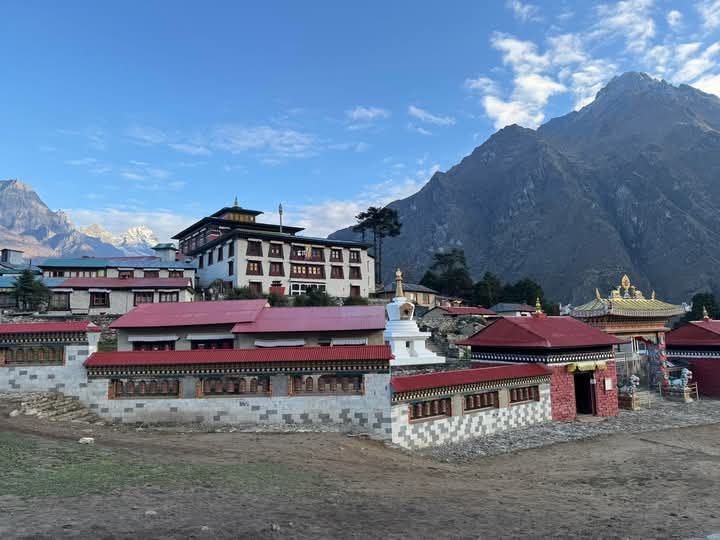
The Khumbu is deeply influenced by Tibetan Buddhism, and spiritual traditions are visible throughout the trekking landscape. Prayer flags flutter from bridges and mountain ridges. Mani walls line sections of the trail. Prayer wheels stand beside paths, while chortens and monasteries appear around traditional villages.
One of the most famous religious sites is Tengboche Monastery, dramatically positioned above the Dudh Koshi Valley with views toward Ama Dablam and other major peaks.
The monastery is particularly well known for the Mani Rimdu festival, a major Buddhist celebration featuring prayers, rituals, music, and masked dances. Other important religious sites can be found in Khumjung, Pangboche, and Thame.
Travelers should remember that these are active places of worship rather than tourist monuments. Respecting local customs, walking around sacred structures clockwise, keeping noise low, and asking permission before photographing religious ceremonies are important ways to travel responsibly.
Flora and Wildlife of Sagarmatha National Park
Despite its harsh environment, Sagarmatha National Park supports a remarkable range of plant and animal life. At lower elevations, forests contain pine, fir, birch, hemlock, juniper, and rhododendron. During spring, rhododendron flowers can bring striking color to the forested trails.
As the altitude increases, trees gradually disappear. They are replaced by alpine shrubs, grasses, mosses, lichens, and small flowering plants adapted to cold and windy conditions. The park also provides habitat for Himalayan wildlife, including Himalayan tahr, musk deer, Himalayan serow, goral, Himalayan black bear, and several bird species.
The region is particularly important for rare species such as the snow leopard and red panda. These animals are extremely elusive, so seeing one during a trek is unusual. Nevertheless, their presence highlights the ecological value of the protected landscape. Birdwatchers may encounter species such as the Himalayan monal, blood pheasant, Himalayan snowcock, ravens, choughs, and birds of prey.
Popular Trekking Routes
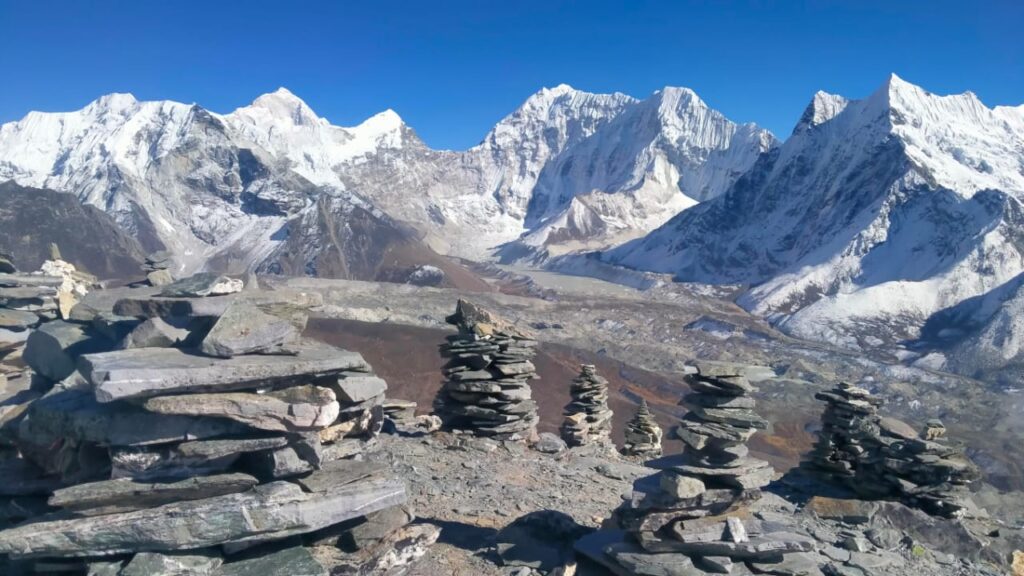
Sagarmatha National Park contains several famous trekking routes, each offering a different experience.
Everest Base Camp Trek
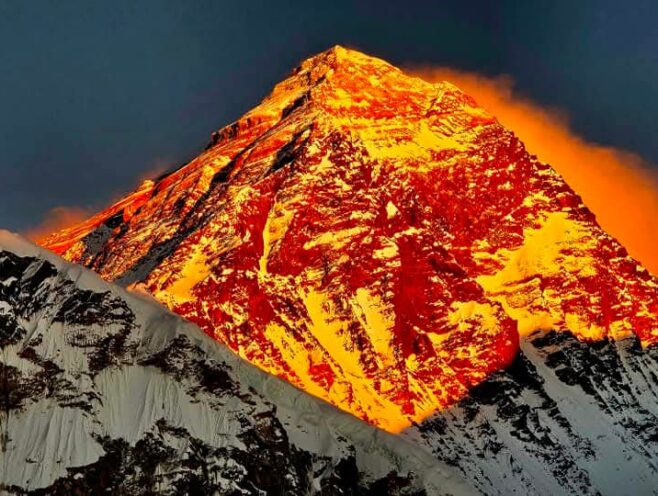
The classic Everest Base Camp Trek is the most popular route. It passes through Namche Bazaar, Tengboche, Dingboche, Lobuche, and Gorak Shep before reaching Everest Base Camp.
The journey combines spectacular scenery with Sherpa culture and Buddhist heritage.
Gokyo Lakes Trek
The Gokyo Lakes Trek takes travelers into the beautiful Gokyo Valley. The turquoise lakes, Ngozumpa Glacier, and panoramic climb to Gokyo Ri are its major attractions.
Everest Three High Passes Trek
For experienced trekkers, the Three High Passes Trek provides a more demanding circuit through the Khumbu. It crosses Renjo La, Cho La, and Kongma La and explores several valleys away from the main route.
Everest View and Short Treks
Travelers with limited time can choose shorter routes around Namche Bazaar, Khumjung, and the Everest View area. These treks provide impressive mountain scenery without requiring a journey all the way to Everest Base Camp.
Best Time to Visit Sagarmatha National Park
The best seasons for trekking are generally spring and autumn.
Spring, particularly from March to May, brings relatively stable conditions, clear mountain views, and blooming rhododendrons in the lower forests.
Autumn, especially from October to November, is famous for clear skies and excellent mountain visibility after the monsoon season.
Winter brings cold temperatures and snow at higher elevations, although experienced trekkers can still explore the region with appropriate preparation.
The monsoon months receive significant precipitation in many parts of Nepal. Weather can affect flights, trails, and visibility, so travelers should consider seasonal conditions carefully.
Climate Change and the Everest Region
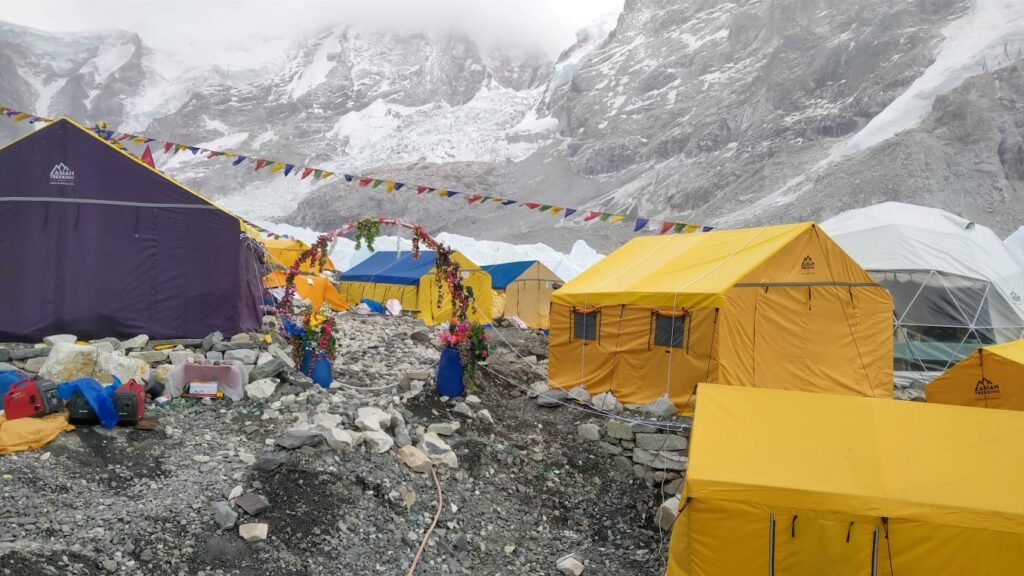
Climate change is becoming increasingly important in the Everest region.
Changes in temperature and precipitation affect glaciers, snow cover, water systems, ecosystems, and local communities. Glaciers can retreat, while changes in meltwater patterns may influence rivers and water availability.
The growth or formation of glacial lakes can also create concerns about glacial lake outburst floods, which can damage trails, bridges, settlements, and infrastructure downstream. Climate change may also influence wildlife habitats and vegetation patterns. Species adapted to cold environments can face increasing pressure as conditions change.
Local communities are particularly vulnerable because they depend on the natural environment for tourism, agriculture, livestock, and water.
For visitors, responsible travel is increasingly important. Minimizing waste, conserving water, avoiding unnecessary plastic, respecting wildlife, and supporting local businesses can help reduce pressure on this fragile environment.
Why Visit Sagarmatha National Park?
There are countless reasons to explore Sagarmatha National Park, but its greatest attraction is the way many experiences come together in one journey.
You can stand beneath Mount Everest, walk beside ancient glaciers, cross high suspension bridges, explore the Gokyo Lakes, visit Buddhist monasteries, meet Sherpa families, observe Himalayan wildlife, and watch sunrise illuminate some of the world’s highest mountains.
The park also offers a rare sense of achievement. Walking for days through changing landscapes teaches travelers patience and resilience. The destination becomes meaningful because of the journey required to reach it.
Most importantly, Sagarmatha National Park allows visitors to experience Everest as part of a much larger world. The mountain is extraordinary, but so are the people, valleys, forests, glaciers, monasteries, and wildlife surrounding it.
Why Choose Create Himalaya Adventure?
Exploring the Everest region requires careful planning. Altitude, weather, accommodation, flights, permits, walking distances, and acclimatization all need to be considered before the trek begins.
Create Himalaya Adventure brings more than 19 years of experience in Nepal’s trekking and adventure tourism industry. Our local knowledge helps us design practical itineraries suited to different travelers and trekking goals.
We provide experienced, government-licensed guides who understand the Khumbu’s trails, culture, mountain environment, and altitude challenges. Our team focuses on responsible pacing and proper acclimatization rather than rushing trekkers toward the destination.
We also offer flexible itineraries, allowing travelers to choose from Everest Base Camp, Gokyo Lakes, Three High Passes, Everest View Trek, and customized combinations.
Our goal is not simply to take travelers to Everest. We want them to understand and appreciate the people, culture, nature, and heritage of the Khumbu along the way.
As a local company, we also believe tourism should benefit local communities. Using local services, supporting local businesses, treating guides and porters fairly, and respecting cultural traditions are important parts of our approach.
With experienced staff, personalized service, reliable logistics, and a commitment to responsible tourism, Create Himalaya Adventure aims to make your journey through Sagarmatha National Park safe, meaningful, comfortable, and memorable.
Final Thoughts
Sagarmatha National Park is one of those rare places where the landscape feels larger than life. Mountains dominate the horizon, glaciers descend through remote valleys, monasteries preserve centuries-old traditions, and Sherpa communities continue their lives beneath some of the world’s highest peaks.
The journey can be physically demanding, but that challenge is part of what makes it special.
Whether your goal is to reach Everest Base Camp, explore the Gokyo Lakes, cross the high passes, experience Sherpa culture, or simply walk beneath the Himalayas, Sagarmatha National Park offers an experience far beyond ordinary tourism.
You may arrive because of Everest, but you leave with memories of the entire Himalayan world.
Frequently Asked Questions
1. How many days should I spend in Sagarmatha National Park?
The ideal duration depends on your trekking route. A short Everest View experience can take around a week, while the classic Everest Base Camp journey generally requires about 12–16 days from Kathmandu and back. Longer routes such as Gokyo and the Three High Passes require additional days.
2. Is Sagarmatha National Park suitable for first-time trekkers?
Yes. First-time trekkers can successfully explore the park if they choose an appropriate itinerary and prepare properly. The standard Everest Base Camp route does not require technical climbing skills, but good fitness and preparation for high altitude are essential.
3. Can children visit Sagarmatha National Park?
Children can visit the Everest region, but the itinerary should be planned according to their age, fitness, previous hiking experience, and ability to adapt to altitude. Families should avoid rushing and allow sufficient acclimatization days.
4. Can senior citizens trek in Sagarmatha National Park?
Age alone does not determine whether someone can trek in the Everest region. Fitness, previous trekking experience, medical advice, and acclimatization are more important. Seniors should choose a suitable itinerary and avoid unnecessarily rapid altitude gains.
5. Are there ATMs inside Sagarmatha National Park?
ATMs and banking facilities are available in places such as Namche Bazaar, but facilities become increasingly limited farther up the trail. It is wise to carry sufficient Nepalese cash because card and ATM services may not always be reliable in remote areas.
6. Can I use credit cards in the Everest region?
Some hotels, restaurants, and shops in larger settlements accept cards, particularly in Namche Bazaar. However, smaller teahouses and businesses at higher elevations may operate mainly with cash. Carrying enough local currency is therefore recommended.
7. Is drinking water available along the trekking trails?
Yes. Water is available from teahouses, lodges, taps, springs, and other local sources. Trekkers should treat or filter natural water before drinking it. Reusable bottles and purification methods are preferable to repeatedly buying disposable plastic bottles.
8. Can I charge my phone and camera batteries during the trek?
Most teahouses provide charging facilities, particularly in the main settlements. At higher elevations, electricity can be limited or charging may require an additional fee. Carrying power banks or solar charging equipment can be useful for longer journeys.
9. Is Wi-Fi available in Sagarmatha National Park?
Wi-Fi is available in many teahouses and lodges, particularly around major settlements. However, the connection can become slower or less dependable as you travel farther into the high mountains. Trekkers should not expect uninterrupted high-speed internet throughout the route.
10. Is there mobile phone coverage in the Everest region?
Mobile coverage is available in several parts of the Khumbu, but signal strength varies considerably with location and elevation. Some valleys and remote sections may have weak or no coverage, so travelers should not rely entirely on mobile connectivity.
11. What kind of accommodation is available inside the park?
The most common accommodation is the teahouse or trekking lodge. Rooms are generally simple, with beds, mattresses, and blankets. Facilities become more basic at higher elevations, while larger settlements such as Namche offer a wider range of accommodation.
12. What food can I expect during a trek?
Teahouses generally serve a mixture of Nepali, Tibetan, and international-style meals. Dal bhat, noodles, soups, potatoes, pasta, momo, bread, eggs, and porridge are common choices. Menus become more limited at higher elevations because supplies must be transported into remote areas.
13. How difficult is it to find a shower during the trek?
Hot showers are available at many teahouses, but availability becomes more limited at higher elevations. Some lodges use gas or solar-heated systems and may charge separately for hot water. Many trekkers choose quick hygiene routines instead of frequent full showers at high altitude.
14. Can I trek independently without a guide?
Regulations and requirements can change, and some routes may have different rules from others. Independent trekking may also be more challenging because of navigation, weather, altitude, emergencies, and logistics. Checking current requirements before departure and using a licensed local guide where required is the safest approach.
15. Can I see Mount Everest from Namche Bazaar?
Yes, there are viewpoints around Namche from which Everest can be seen in favorable weather. However, the mountain does not dominate the view in the same way it does from higher viewpoints such as Kala Patthar. Namche also provides impressive views of Ama Dablam, Thamserku, Kongde Ri, and other peaks.
16. Is photography allowed inside monasteries?
Photography rules vary between monasteries and religious ceremonies. Some areas may allow photographs while others prohibit them. Always ask permission before taking photographs inside a monastery or photographing monks during religious activities.
17. Are there medical facilities in the Everest region?
Basic medical services are available in some major settlements, including Namche Bazaar and other locations along the trekking route. However, facilities become limited at higher elevations. Trekkers should carry personal medication and travel insurance that covers high-altitude trekking and emergency evacuation.
18. What should I do if I become sick during the trek?
Do not ignore worsening symptoms at high altitude. Inform your guide immediately and stop ascending if necessary. Depending on the severity of the condition, the appropriate response may involve rest, descending to a lower elevation, medical assessment, or emergency evacuation.
19. Are there restrictions on collecting plants, rocks, or other natural objects?
Yes. Sagarmatha National Park is a protected area, so visitors should not remove plants, wildlife, fossils, rocks, religious objects, or other natural or cultural materials as souvenirs. Leaving everything where you find it helps preserve the park for future visitors.
20. What is the best way to travel responsibly in Sagarmatha National Park?
The simplest approach is to leave no unnecessary waste, use refillable water bottles, respect local customs, avoid disturbing wildlife, conserve water and energy, stay on established trails, and support local businesses. Responsible behavior helps protect both the environment and the communities that depend on tourism.
21. Is photography difficult at high altitude?
Photography is generally easy, but cold temperatures can reduce battery life quickly. Carry spare batteries or a power bank and keep batteries warm when possible. Sunrise and late afternoon often provide beautiful light, while clouds and changing weather can dramatically alter visibility.
22. Are there places to buy trekking gear in the Everest region?
Yes. Namche Bazaar has numerous shops selling basic trekking clothing, equipment, snacks, medicines, and other supplies. However, prices can be higher than in Kathmandu, and specialized equipment may not always be available. It is better to purchase essential gear before beginning the trek.
23. Can I extend my Everest trek after reaching Base Camp?
Yes. Depending on your itinerary and fitness, you may be able to extend the journey toward areas such as Gokyo, Cho La, or other Khumbu valleys. Extensions should be planned in advance because additional acclimatization days, accommodation, permits, and suitable weather conditions may be necessary.
24. Is it possible to trek in Sagarmatha National Park during winter?
Yes, winter trekking is possible. The trails are generally quieter, and clear days can offer excellent mountain views. However, temperatures can be extremely cold at higher elevations, and snow may make some routes or high passes difficult or temporarily inaccessible.
25. How can I help local communities during my visit?
Choose locally owned teahouses, hire local guides and porters through responsible operators, purchase locally made products, eat local food, and respect community customs. These simple choices help ensure that tourism revenue remains within the Himalayan communities.
Ramchandra Lamichhane
Trekking Expert
No hidden fees • Local experts • Best price guarantee