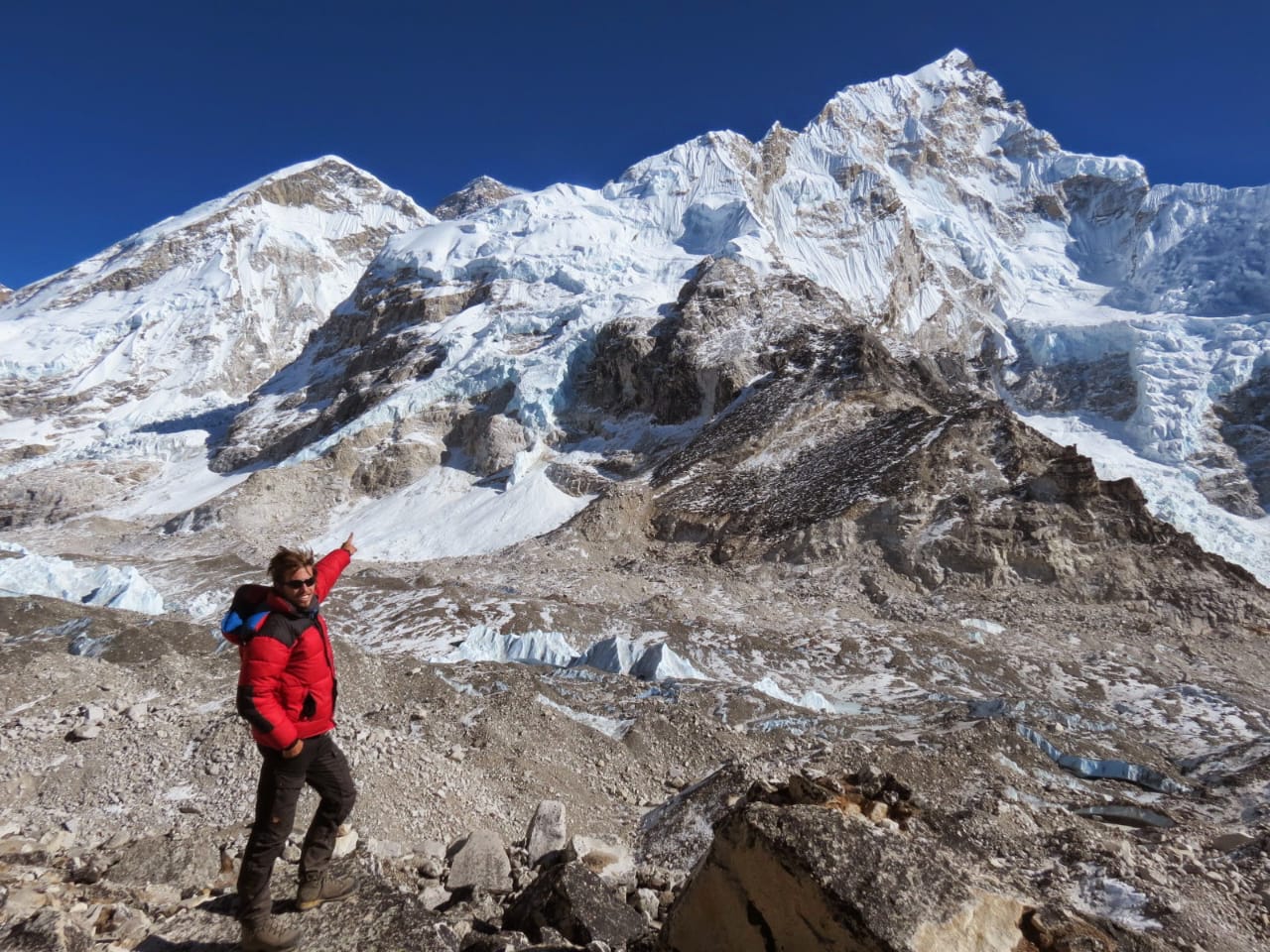
Kongma La Pass Trek
The Kongma La Pass Trek is one of the most rewarding and adventurous trekking experiences in Nepal’s Everest region. Combining the legendary Everest Base Camp trail with the thrilling crossing […]
Highlights
- Scenic Kathmandu to Lukla Flight – Enjoy a thrilling mountain flight with spectacular views of the Himalayan landscape before landing at Lukla Airport.
- Cross Kongma La Pass at 5,535 m – Challenge yourself on one of the highest and most demanding passes in the Everest region, surrounded by glaciers and towering peaks.
- Explore Sagarmatha National Park – Trek through a UNESCO World Heritage Site featuring alpine forests, dramatic valleys, rare Himalayan wildlife, and exceptional mountain scenery.
- Discover Namche Bazaar – Experience the lively Sherpa trading hub and an important acclimatization point on the Everest trail.
- Visit Everest View Hotel – Enjoy panoramic views of Mount Everest, Ama Dablam, Lhotse, Nuptse, and other Himalayan giants from one of the world's highest luxury hotels.
- Explore Tengboche Monastery – Visit the famous Buddhist monastery surrounded by spectacular views of Ama Dablam and the Everest range.
- Acclimatization in Dingboche – Spend valuable time in Dingboche and hike toward Nagarjun Hill for impressive views and better preparation for higher elevations.
- Hike Chhukung Ri – Climb Chhukung Ri for magnificent views of Island Peak, Lhotse, Nuptse, Ama Dablam, and surrounding Himalayan peaks.
- Reach Gorakshep – Continue toward the final settlement before Everest Base Camp and prepare for the iconic Himalayan viewpoints.
- Sunrise from Kala Patthar – Climb Kala Patthar for one of the finest panoramic viewpoints of Mount Everest, Nuptse, Pumori, and the surrounding peaks.
- Experience the Complete Everest Adventure – Combine high-pass trekking, Sherpa culture, Buddhist heritage, glaciers, mountain villages, and iconic Everest viewpoints in one challenging journey.
Overview
The Kongma La Pass Trek is one of the most rewarding and adventurous trekking experiences in Nepal’s Everest region. Combining the legendary Everest Base Camp trail with the thrilling crossing of Kongma La Pass (5,535 m), this journey offers an unforgettable blend of dramatic landscapes, rich Sherpa culture, and high-altitude adventure. The trek begins with a scenic flight from Kathmandu to Lukla before following the classic Everest route through Phakding, Namche Bazaar, Tengboche, Dingboche, and Chhukung. After crossing the rugged Kongma La Pass, the trail descends to Lobuche and continues to Gorakshep, Everest Base Camp, and Kala Patthar before returning via Pheriche, Phortse, Namche Bazaar, and Lukla. Designed with gradual acclimatization, the itinerary allows trekkers to safely adjust to increasing altitude while enjoying breathtaking Himalayan scenery, traditional villages, ancient monasteries, colorful prayer flags, and sacred Buddhist monuments.
The trek passes through the heart of Sagarmatha National Park, a UNESCO World Heritage Site renowned for its pristine alpine ecosystems and spectacular mountain scenery. Along the trail, trekkers walk across roaring rivers on iconic suspension bridges draped with prayer flags, wander through rhododendron, pine, birch, and juniper forests, and traverse glacial valleys surrounded by towering Himalayan peaks. The park is home to fascinating wildlife, including Himalayan tahr, musk deer, Himalayan monal, blood pheasant, snow pigeon, and, with a bit of luck, the elusive snow leopard. The route rewards trekkers with magnificent views of Mount Everest (8,848.86 m), Lhotse (8,516 m), Nuptse (7,861 m), Ama Dablam (6,812 m), Makalu (8,485 m), Pumori (7,161 m), Cholatse (6,440 m), Taboche (6,495 m), Island Peak (6,189 m), and countless other snow-covered summits. The crossing of Kongma La itself is the most demanding section, featuring steep rocky ascents, glacial moraines, exposed ridges, and occasional snow, making it a true highlight for experienced trekkers seeking a challenging Himalayan pass.
Beyond its spectacular landscapes, the Kongma La Pass Trek offers a deep cultural journey through the homeland of the Sherpa people. From the lively mountain town of Namche Bazaar, the commercial gateway to Everest, the trail climbs to the peaceful village of Tengboche, home to the region’s most famous monastery, where monks perform daily Buddhist ceremonies against the backdrop of Ama Dablam. Higher along the trail, Dingboche provides excellent acclimatization with sweeping valley views, while Chhukung serves as the final settlement before the ascent to Kongma La Pass. Throughout the journey, trekkers encounter centuries-old monasteries, chortens, mani walls, spinning prayer wheels, and fluttering prayer flags that reflect the spiritual traditions of Himalayan Buddhism. Warm Sherpa hospitality, traditional stone villages, yak caravans, glacial lakes, and ever-changing mountain panoramas make the Kongma La Pass Trek a remarkable adventure that perfectly combines natural beauty, cultural heritage, and the thrill of crossing one of Nepal’s highest trekking passes.
Kongma La Pass Trek Difficulty
The Kongma La Pass Trek is considered a challenging high-altitude trek in the Everest region, mainly because of its elevation, steep ascents, rugged terrain, and the demanding crossing of Kongma La Pass at 5,535 meters. The trail gradually becomes more difficult after Dingboche as trekkers encounter rocky paths, glacial moraines, loose stones, and sections that require careful footing. The pass itself involves a long and strenuous climb from the Chhukung side, followed by a descent across rough mountain terrain. Thin air at this elevation can make even a moderate distance feel physically demanding, so proper acclimatization is essential. Previous high-altitude trekking experience is helpful, although exceptionally experienced mountaineering skills are not normally required. Trekkers should have good cardiovascular fitness, strong legs, and the ability to walk for several hours on consecutive days. A carefully planned itinerary with acclimatization days in Namche Bazaar and Dingboche, along with an experienced local guide, can make the journey considerably safer and more manageable.
Kongma La Pass Trek Route
The Kongma La Pass Trek route begins with a scenic flight from Kathmandu to Lukla, followed by a gentle walk to Phakding, where the Himalayan adventure officially begins. From Phakding, the trail follows the Dudh Koshi River through pine and rhododendron forests before climbing toward Namche Bazaar, the vibrant Sherpa town and main acclimatization center of the Khumbu region. The journey then continues to Tengboche, home to the famous Tengboche Monastery, before heading to Dingboche, where trekkers spend time acclimatizing to the increasing altitude. From Dingboche, the route moves toward Chhukung, surrounded by spectacular views of Ama Dablam, Lhotse, and Island Peak. The most challenging section comes next as the trail climbs over Kongma La Pass (5,535 m), crossing rugged rocky terrain and glacial landscapes before descending toward Lobuche. The trek then continues to Gorakshep, the final settlement on the route toward Everest Base Camp and Kala Patthar. After exploring the high-altitude landscape, the return journey follows the trail down to Pheriche, then retraces the route toward Namche Bazaar. From Namche, trekkers descend through the forested valleys to Lukla, where they take a flight back to Kathmandu, completing an unforgettable circuit through the heart of the Everest region.
Trip Itinerary
Arrival in Kathmandu
Your Kongma La Pass Trek begins with your arrival in Kathmandu, the cultural and historical gateway to Nepal's Himalayas. After meeting our representative at Tribhuvan International Airport, you will be transferred to your hotel. The rest of the day is intentionally relaxed because the coming journey will take you into increasingly high and remote terrain.
If you arrive early, you can explore the lively streets around Thamel, visit local trekking shops, or simply rest at your hotel. Kathmandu offers a fascinating contrast to the mountain environment you will soon experience, with ancient temples, traditional courtyards, busy markets, restaurants, and modern city life existing side by side.
In the evening, your trekking guide will meet you for a detailed briefing. Your guide will review the route, altitude profile, weather expectations, safety procedures, equipment, and the Kongma La crossing. This is also the ideal time to organize your backpack and make sure you have warm layers, trekking poles, a suitable sleeping bag, and other high-altitude essentials.
Fly Kathmandu/Ramechhap to Lukla and Trek to Phakding
Today you leave Kathmandu and enter the Everest region. The traditional journey begins with a spectacular Kathmandu to Lukla flight, taking you over Nepal's hills and valleys toward the small mountain airstrip at Lukla.
During the main trekking seasons, however, the flight arrangement can be different. In 2026, peak-season Lukla flights are generally routed through Manthali Airport in Ramechhap particularly during the spring and autumn operating windows. Manthali is several hours east of Kathmandu by road, so trekkers may need to leave Kathmandu very early in the morning for the airport. Current 2026 guidance places the road journey at roughly 4–5 hours, while the Ramechhap–Lukla flight itself takes around 15–20 minutes.
The road to Ramechhap passes through Nepal's hilly landscape and can be affected by traffic, weather, construction, and road conditions. It is therefore wise to allow sufficient time rather than treating the transfer like a normal city-to-city journey.
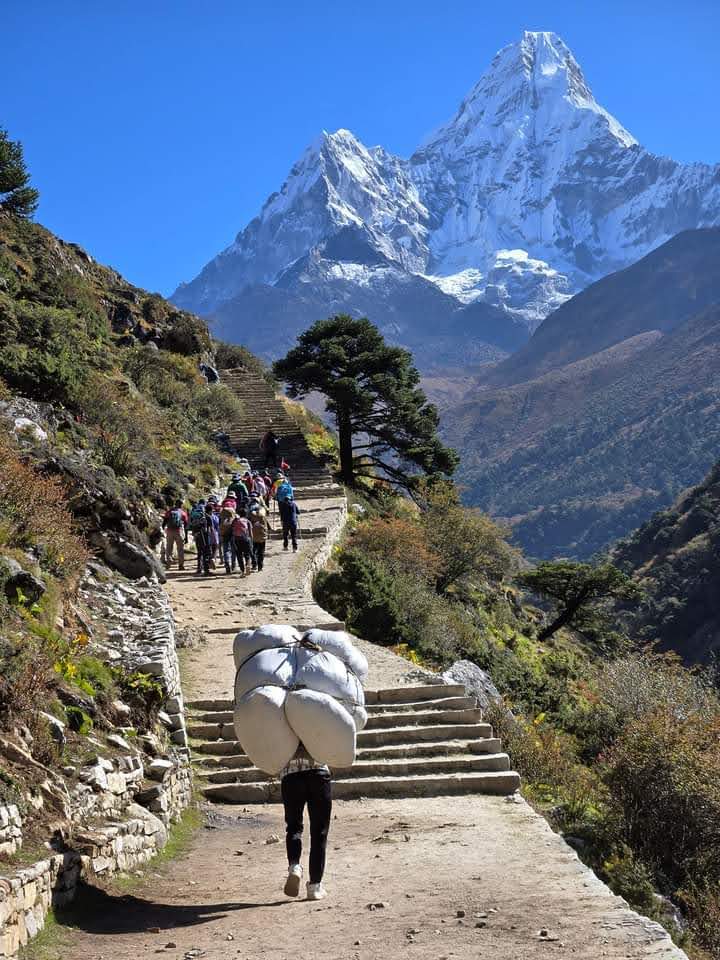
After landing at Lukla, you meet your guide and porters, organize your luggage, and begin walking toward Phakding. The trail descends gently through mountain villages and follows sections of the Dudh Koshi valley. You will see stone houses, prayer wheels, mani stones, small Buddhist shrines, cultivated fields, and suspension bridges decorated with colorful prayer flags.
The first walking day is deliberately short. It gives your body time to adjust to the altitude while introducing you to the scenery and rhythm of the Khumbu.
Trek from Phakding to Namche Bazaar
After breakfast, the trail follows the Dudh Koshi River toward Namche Bazaar. This section introduces some of the most recognizable features of the Everest trekking route, including forested hillsides, traditional villages, suspension bridges, prayer flags, and rushing mountain rivers.
The trail passes through pine, fir, birch, and rhododendron forests. In spring, rhododendrons can add vibrant color to the landscape. Himalayan birds can sometimes be spotted among the trees, while the surrounding forest provides habitat for animals such as Himalayan thar.
Several suspension bridges make the walk exciting, particularly where the river runs deep below. The final approach to Namche involves a sustained uphill climb after crossing the famous Hillary Suspension Bridge. Your guide will encourage a slow and steady pace because the elevation rises significantly today.
Namche Bazaar is the largest settlement in the Khumbu and has traditionally served as a trading center for mountain communities. Today, its economy is closely connected with trekking and mountaineering. Local families operate teahouses, restaurants, bakeries, shops, trekking businesses, and other services.
As you enter Namche, the atmosphere changes from quiet rural villages to a lively mountain town. On clear days, you may also begin to catch your first distant Himalayan views.
Acclimatization Day in Namche Bazaar
Today is an important acclimatization day. Rather than spending the entire day resting, you take a short hike to a higher elevation before returning to Namche for the night.
One popular option is the hike toward the Everest View Hotel, from where clear weather can reveal an extraordinary panorama of Everest, Lhotse, Nuptse, Ama Dablam, Thamserku, and other Himalayan peaks.
The walk also provides an opportunity to experience the natural environment around Namche. The slopes are still covered by alpine forests, and you may encounter Himalayan birds or, with luck, wildlife such as Himalayan thar.
You can spend the afternoon exploring Namche itself. Visit local shops, bakeries, cafes, monasteries, or the small market areas. Talking with local residents and observing daily activities provides insight into Sherpa life and the importance of tourism to the local economy.
The weather is usually cooler than Kathmandu, with crisp mornings and cold evenings. Clouds can build during the afternoon, so morning is often the best time for mountain views.
The purpose of today's hike is not to exhaust yourself. Walking high and sleeping lower gives your body a valuable opportunity to adjust before the trail climbs deeper into the Khumbu.
Trek from Namche Bazaar to Tengboche
The trail leaves Namche along a scenic hillside path with some of the finest early views of the Everest range. Much of the route is relatively gentle at first, allowing you to enjoy views of Mount Everest, Ama Dablam, Lhotse, Nuptse, Thamserku, and Kangtega.
After following the contour, the trail descends toward the Dudh Koshi valley before climbing toward Tengboche. This descent followed by another ascent is a typical feature of trekking in the Khumbu.
The forest becomes especially beautiful around Tengboche. Pine, fir, birch, juniper, and rhododendron grow along the slopes, and spring trekkers may see rhododendron flowers in bloom.
Tengboche is best known for Tengboche Monastery, one of the most important Buddhist monasteries in the Everest region. The monastery reflects the strong Tibetan Buddhist traditions of the Sherpa people. Prayer flags, mani stones, prayer wheels, and religious structures are visible throughout the surrounding settlement.
If conditions permit, you can visit the monastery and observe its peaceful setting beneath Ama Dablam. The combination of Buddhist culture and dramatic mountains makes Tengboche one of the most memorable stops on the trek.
Trek from Tengboche to Dingboche
After breakfast, the trail descends through the forest toward Deboche before continuing toward Pangboche. As you gain elevation, the dense forests gradually become thinner, and the landscape starts to look distinctly alpine.
Pangboche provides an excellent glimpse into traditional Sherpa mountain life. Stone houses, mani walls, prayer flags, cultivated terraces, and livestock areas are common sights. The local economy combines tourism with traditional agriculture and animal husbandry.
The trail then continues toward Dingboche, one of the important settlements above 4,000 meters. The landscape opens dramatically, with Ama Dablam dominating the valley and Lhotse, Nuptse, Island Peak, and other mountains appearing around it.
Dingboche is sometimes associated with its agricultural fields, where local people traditionally grow potatoes, barley, and buckwheat during the short growing season. Yaks and dzos are also important for transportation and local livelihoods. As the elevation rises, the air becomes noticeably thinner. Walking slowly and drinking plenty of water becomes increasingly important.
Acclimatization Day in Dingboche
After breakfast, you can take a gradual hike toward Nagarjun Hill or a nearby viewpoint. The climb is not about reaching a particular summit but about allowing your body to experience a higher altitude before returning to Dingboche to sleep.
The higher viewpoint provides spectacular views of Ama Dablam, Lhotse, Nuptse, Island Peak, Taboche, and surrounding peaks The landscape is now much more exposed than the forests around Namche and Tengboche.
Trees have become scarce, replaced by alpine shrubs, grasses, rocks, and broad mountain slopes. You may see Himalayan birds adapted to the high-altitude environment, while larger wildlife is more difficult to encounter.
The weather can change quickly. Mornings are often clearer, while clouds and cold winds may develop later. Nights are considerably colder, so a warm sleeping bag and proper insulated clothing are important.
This is also the day to discuss the upcoming Kongma La crossing with your guide. Your guide will check your condition, review the trail, and make sure your equipment is suitable for the high pass.
Trek from Dingboche to Chhukung
The trail follows the Imja Valley toward Chhukung. The surrounding landscape becomes increasingly dramatic as the valley opens toward Island Peak, Lhotse, Nuptse, Ama Dablam, and other Himalayan giants.
Chhukung is a small high-altitude settlement and an important base for trekkers and climbers heading toward Chhukung Ri, Island Peak, and Kongma La. The village has a remote atmosphere compared with Namche and Dingboche.
After arriving, you have time to rest and prepare for tomorrow's challenging pass crossing. Your guide will explain the expected trail conditions and weather and check that you have enough water, snacks, warm clothing, gloves, sunglasses, trekking poles, and suitable footwear.
Depending on the season, the route ahead can contain snow or icy sections. The weather around 5,000 meters can change rapidly, so the team will make decisions according to actual mountain conditions.
If your energy and acclimatization are excellent, Chhukung also provides access to Chhukung Ri, although the summit hike is not included as a separate full-day activity in this itinerary because the following day is already a demanding pass-crossing day.
Chhukung to Lobuche via Kongma La Pass
The Most Challenging Day of the Trek. You begin early because the weather at high altitude is generally more favorable in the morning. Leaving Chhukung, the trail immediately becomes more rugged and remote. The comfortable village paths give way to rocky slopes, glacial terrain, loose stones, and increasingly barren alpine landscapes.
There are no forests here. The vegetation becomes sparse as you climb toward the pass, while the surrounding mountains appear larger and more dramatic. Depending on the season, sections of the route may be covered with snow or ice.
The climb toward Kongma La Pass at 5,535 meters requires patience. The thin air makes the ascent physically demanding, and there are sections where trekkers need to carefully negotiate loose rocks and steep terrain.
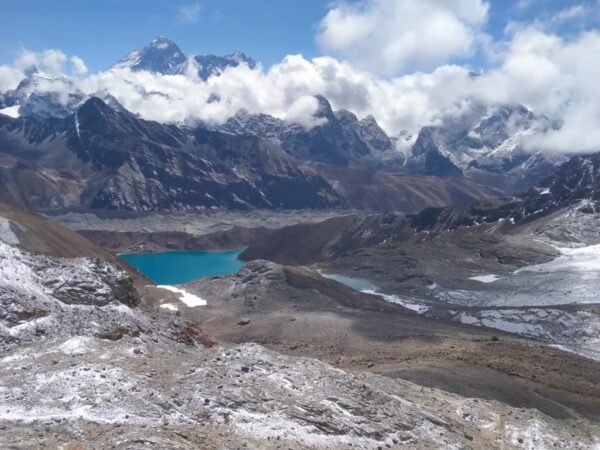
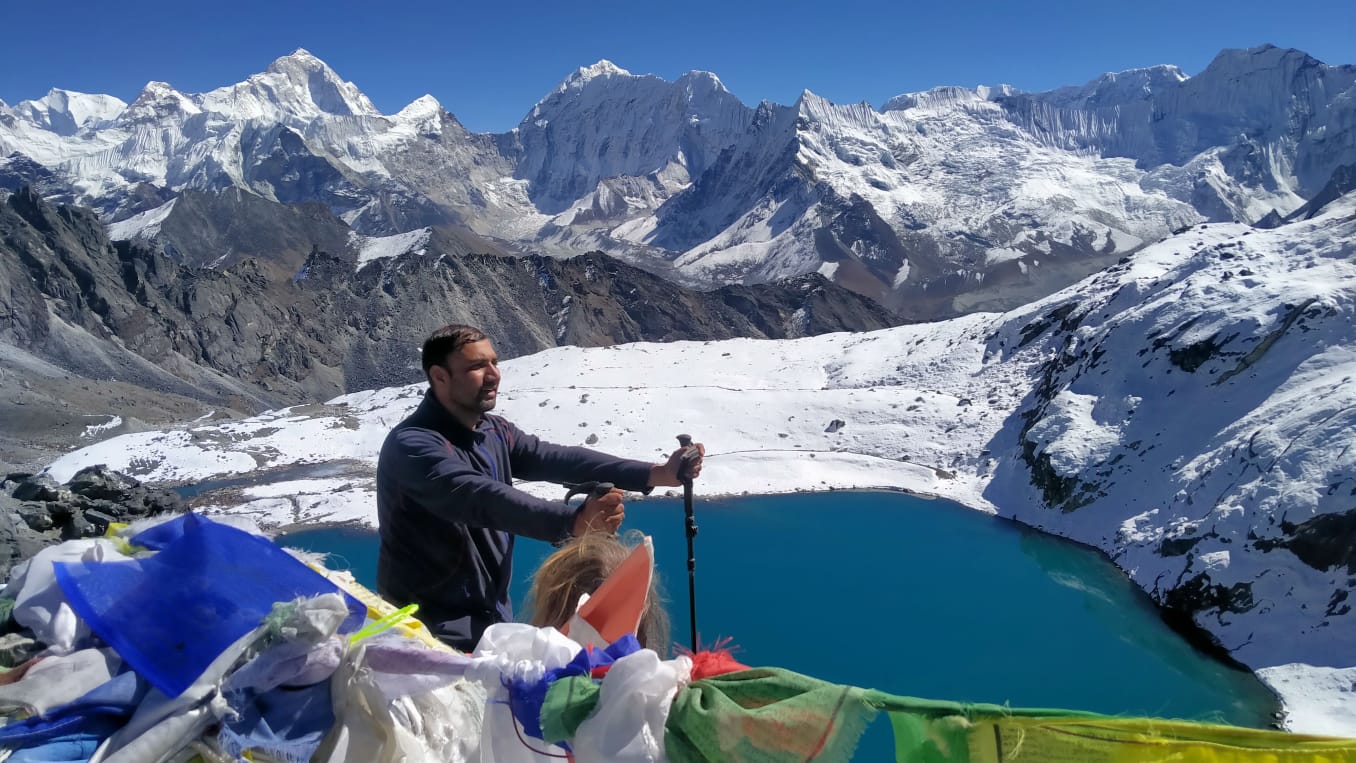
When you reach the top, the effort is rewarded with enormous Himalayan views. Depending on weather and visibility, you can see Lhotse, Nuptse, Makalu, Baruntse, Ama Dablam, Island Peak, and other surrounding peaks.
Prayer flags at the pass add a spiritual touch to this otherwise rugged environment.
After spending some time at the pass, the route descends toward the Khumbu Glacier and continues across rocky moraine terrain toward Lobuche. The descent can be technically awkward when snow or ice is present, so trekking poles and careful foot placement are valuable.
There are very few facilities during this section. You should leave Chhukung with enough water, snacks, and warm clothing for the entire crossing. Reaching Lobuche after crossing Kongma La is one of the greatest achievements of the trek.
Trek from Lobuche to Gorakshep and Hike to Everest Base Camp
From Lobuche, the trail follows a rugged glacial landscape toward Gorakshep. The route crosses rocky moraine and gradually reveals the immense Khumbu Glacier and surrounding peaks.
Gorakshep is the highest overnight settlement on this itinerary and the final major stopping point before Everest Base Camp and Kala Patthar.
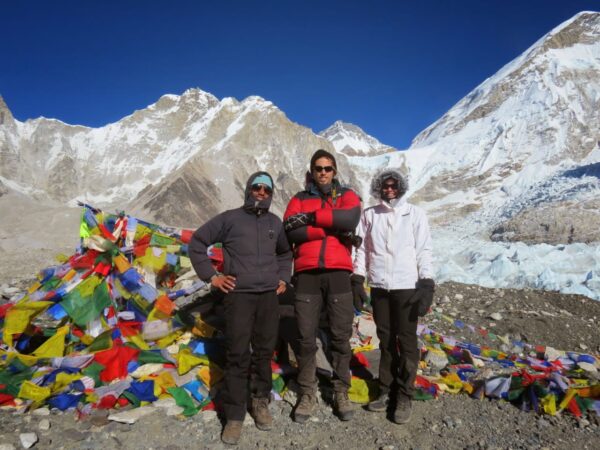
After resting and having lunch, you continue toward Everest Base Camp (5,364 meters). The walking distance is not extreme, but the altitude makes the journey challenging. The trail passes through rocky glacier margins and moraine terrain, with prayer flags and memorial stones reminding trekkers of the history of Himalayan mountaineering.
At Everest Base Camp, you can experience the atmosphere of the world's most famous climbing region. Depending on the season, expedition activity may be visible around the Khumbu Icefall route.
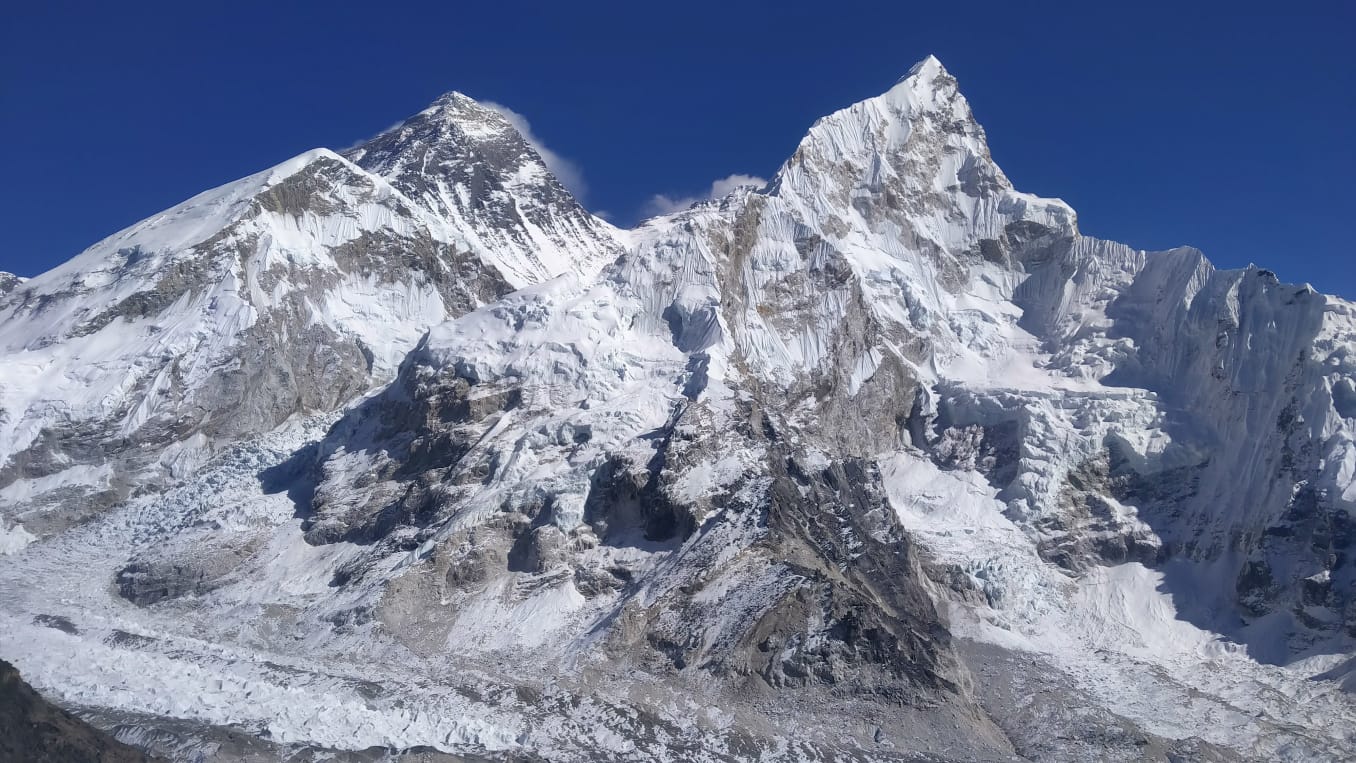
The surrounding mountains include Nuptse, Pumori, Khumbutse, Lingtren, and other enormous Himalayan peaks. Mount Everest itself is not fully visible from Base Camp, which is why tomorrow's Kala Patthar sunrise is so important. After exploring Base Camp, return to Gorakshep for the night.
Sunrise at Kala Patthar and Trek to Pheriche
Before sunrise, you climb from Gorakshep toward Kala Patthar 5,545 meters. The trail is steep and the thin air makes the climb slow, but reaching the viewpoint at sunrise is one of the defining experiences of the Everest region.
As the first light reaches the mountains, Mount Everest, Nuptse, Pumori, Lhotse, and surrounding peaks gradually turn golden. From Kala Patthar, Everest's summit is much more clearly visible than from Everest Base Camp.
After enjoying the panoramic view and taking photographs, descend to Gorakshep for breakfast.
The remainder of the day is spent walking downhill toward Pheriche. The descent is a welcome change after several days. As you lose elevation, the air becomes warmer and the landscape begins to show more vegetation.
Pheriche is a traditional high-altitude settlement where local families have adapted to the harsh mountain climate through agriculture, livestock, tourism, and seasonal activities. The open valley provides a completely different atmosphere from the rocky landscape around Gorakshep.
Trek from Pheriche to Phortse
The trail passes through open valleys, traditional stone-built settlements, yak grazing areas, agricultural terraces, and hillside paths. Compared with the busy Everest Base Camp corridor, this section offers a more peaceful experience of the Khumbu.
As you descend, the vegetation gradually becomes thicker. Pine, juniper, birch, and other alpine vegetation begin appearing again, creating a clear contrast with the barren terrain around Kongma La and Gorakshep.
Phortse is one of the traditional Sherpa villages of the region. The village is known for its stone houses and dramatic mountain setting. Many families have traditionally depended on agriculture and livestock, while trekking and mountaineering now provide an important source of income.
You can observe how homes, terraces, livestock shelters, and community spaces are adapted to life in a steep Himalayan environment. The afternoon can be spent exploring the village or relaxing at the teahouse.
Trek from Phortse to Namche Bazaar
The trek from Phortse to Namche Bazaar is a beautiful downhill journey through the heart of the Khumbu region. After spending several days at high altitude, the gradual loss of elevation brings noticeable changes in the landscape, vegetation, temperature, and atmosphere.
Leaving Phortse, the trail winds along rugged mountain slopes before gradually descending toward the greener valleys below. The stark alpine surroundings slowly give way to juniper, pine, rhododendron, and other Himalayan vegetation. The air also becomes warmer and more comfortable as you approach Namche Bazaar.
One of the most interesting places along this section is Mungla, a small settlement situated on a scenic hillside above the Dudh Koshi Valley. The area is known not only for its mountain scenery but also for its spiritual connection with Milarepa, the famous Tibetan Buddhist yogi and poet.
Trek from Namche Bazaar to Lukla
The trail descends from Namche through the forests toward the Dudh Koshi Valley. You cross several suspension bridges and pass through villages that you may recognize from the beginning of the trek.
The landscape becomes greener as the elevation decreases. Pine, fir, rhododendron, and other vegetation become more common, while the river accompanies sections of the trail.
Although the route is downhill overall, the distance makes this a fairly long walking day. Some sections include short uphill climbs, so it is important not to assume the entire day will be an easy descent.
Along the way, you can reflect on the dramatic change in landscape—from the snow and glaciers of Kongma La to the forested hills around Lukla. After reaching Lukla, you can relax with your guide and porter team and enjoy a final evening in the Everest region.
Fly from Lukla to Kathmandu or Ramechhap
The exact return arrangement depends on the season and airport operations. Outside peak trekking periods, flights may operate directly between Lukla and Kathmandu. During busy spring and autumn periods, many Lukla flights are operated through Ramechhap/Manthali because of congestion at Kathmandu's airport.
If your flight lands at Ramechhap, you continue by road toward Kathmandu. The drive generally takes around 4–5 hours, but the journey can take longer depending on traffic, weather, road maintenance, and local conditions. The road travels through Nepal's hilly landscape rather than a fast motorway, so flexibility is important.
Lukla flights are also highly weather-dependent. Strong winds, cloud, poor visibility, or changing mountain conditions can delay or cancel flights. For this reason, trekkers with fixed international flight schedules should always allow contingency time around the Lukla flight.
After reaching Kathmandu, you can check into your hotel, enjoy a comfortable shower and meal, and relax after completing the Kongma La Pass Trek.
Final Departure From Kathmandu
After breakfast, our office representative will transfer you to Tribhuvan International Airport according to your international departure time. If your flight is later in the day, you may have some free time to purchase souvenirs or explore Kathmandu.
As you leave Nepal, you take home memories of crossing Kongma La at 5,535 meters, standing at Everest Base Camp, watching sunrise from Kala Patthar, walking across suspension bridges, visiting Tengboche Monastery, meeting Sherpa families, and experiencing the dramatic transition from green Himalayan forests to high-altitude glaciers.
The trek is not simply a journey between villages. It is an experience of changing landscapes, mountain culture, Buddhist traditions, local livelihoods, challenging terrain, and some of the world's most impressive peaks.
Not Satisfied with This Itinerary?
Every traveler is different. Customize this trip with the help of our local travel specialists and create an itinerary that perfectly matches your interests, schedule, and budget.
What's included
- Airport Transfers: International airport pick-up and drop-off service in Kathmandu.
- Domestic Airfare: Round-trip Kathmandu–Lukla–Kathmandu airfare. During peak trekking seasons, flights may operate via Ramechhap/Manthali, with Kathmandu–Ramechhap–Kathmandu transportation included.
- Ground Transportation: Kathmandu–Ramechhap–Kathmandu transportation when flights operate from Ramechhap.
- Sagarmatha National Park Permit: Required entry permit for Sagarmatha National Park.
- Khumbu Pasang Lhamu Rural Municipality Permit: Local government entry permit for the Everest region.
- Trekking Guide: Experienced, English-speaking, government-licensed trekking guide throughout the 16-day Kongma La Pass Trek.
- Guide Expenses: Guide salary, meals, accommodation, transportation, and other required expenses during the trek.
- Guide Insurance: Medical and rescue insurance coverage for the trekking guide.
- Accommodation During Trek: Twin-sharing teahouse accommodation throughout the trek, generally with shared bathroom facilities.
- Meals During Trek: Breakfast, lunch, and dinner each day during the trekking period.
- Sleeping Bag: A warm sleeping bag for use during the trek.
- Down Jacket: Down jacket provided on a returnable basis for high-altitude trekking.
- Duffle Bag: Trekking duffle bag provided for your belongings, if required.
- Trekking Map: Everest/Kongma La trekking map provided for the group.
- First Aid Kit: Comprehensive basic first-aid kit carried by the trekking team.
- Create Himalaya Adventure T-Shirt: Company T-shirt provided as a souvenir.
- Government Taxes: Applicable government taxes, VAT, and official service charges.
- Trekking Staff Support: Necessary arrangements and support from the trekking team throughout the Kongma La Pass route.
- Trip Planning & Assistance: Pre-trek briefing and assistance with trekking preparation, permits, and logistics.
What's not included
- International Airfare: International flights to and from Nepal.
- Nepal Entry Visa: Nepal visa fees and related expenses.
- Travel Insurance: Personal travel insurance covering trekking, medical treatment, emergency evacuation, and high-altitude activities.
- Kathmandu Accommodation: Hotel accommodation in Kathmandu before or after the trek.
- Kathmandu Meals: Breakfast, lunch, and dinner in Kathmandu are not included.
- Additional Accommodation: Hotel or teahouse accommodation required because of early arrival, delayed departure, flight cancellation, bad weather, illness, injury, or any itinerary change beyond the planned schedule.
- Porter Service: Porter service is not included. A porter can be arranged at an additional cost of USD 30 per day if required.
- Extra Baggage Charges: Additional baggage or excess-weight charges on domestic flights are not included.
- Extra Meals & Drinks: Bottled water, mineral water, hot/cold drinks, alcoholic beverages, snacks, and personal food are excluded.
- Personal Expenses: Laundry, charging/mobile-phone costs, Wi-Fi/internet, showers, toiletries, and other personal expenses.
- Personal Trekking Equipment: Trekking boots, trekking poles, thermal layers, gloves, hats, waterproof clothing, backpacks, sunglasses, headlamps, and other personal gear.
- Emergency Rescue: Helicopter evacuation or other emergency rescue costs are not included. These should be covered by your travel insurance.
- Medical Expenses: Personal medical treatment, medicines, hospital costs, and treatment resulting from illness or injury are not included.
- Tips and Gratuities: Tips for the guide, porter, and other trekking staff are not included. Gratuities are voluntary but generally appreciated for good service.
- Unforeseen Expenses: Any expenses caused by flight cancellations, severe weather, natural disasters, political disturbances, route closures, or other circumstances beyond the company's control.
- Additional Night on Trek: Extra accommodation and meals resulting from personal itinerary changes or delays not caused by the company.
- Other Services Not Mentioned: Any service or expense not specifically listed under the "What's Included" section.
Best Time to Trek Kongma La Pass
Spring (March to May): Spring is one of the best seasons for the Kongma La Pass Trek. The weather is generally stable, with clearer skies and excellent mountain visibility. The lower valleys become colorful with blooming rhododendrons and other alpine flowers, while the higher sections remain covered in snow. April and May are particularly popular because daytime temperatures are comfortable for walking, although the pass can still be cold and snowy.
Summer/Monsoon (June to August): The summer monsoon brings frequent rain to the lower parts of the Everest region, making trails wet, slippery, and sometimes muddy. However, the higher Khumbu valleys receive less rainfall than many other parts of Nepal. Cloud cover can reduce mountain visibility, and Lukla flights may face weather-related delays or cancellations. Kongma La can also have challenging snow and poor visibility, so this season is generally less suitable for crossing the pass.
Autumn (September to November): Autumn is widely considered the best overall season for the Kongma La Pass Trek. After the monsoon, the air becomes clean, the skies are often blue, and the surrounding peaks are beautifully visible. October and November offer excellent trekking conditions, with dry trails and relatively stable weather. This is also a popular period, so teahouses and flights can be busier than during quieter months.
Winter (December to February): Winter brings cold temperatures, shorter daylight hours, and significant snowfall at high elevations. Kongma La Pass at 5,535 meters can become heavily covered with snow, making the crossing technically more demanding and potentially difficult or temporarily inaccessible. Lower sections of the trek remain possible for experienced trekkers, but winter expeditions require proper cold-weather equipment, flexibility, and an experienced guide.
Food on the Kongma La Pass Trek
Food on the Kongma La Pass Trek is mainly served at local teahouses and lodges along the route. The menu usually includes familiar Nepali meals such as dal bhat, rice, vegetables, noodles, soups, momo, chapati, and pasta, along with simple breakfast choices like porridge, eggs, bread, pancakes, and Tibetan bread. As you climb higher from Namche to Dingboche, Chhukung, Lobuche, and Gorakshep, food choices can become more limited because supplies have to be transported from lower elevations. Dal bhat is a popular choice because it provides a filling combination of carbohydrates and protein for long trekking days. Drinking plenty of water and choosing warm, freshly prepared meals can also help you maintain energy in the cold mountain environment.
Accommodation on the Kongma La Pass Trek
Accommodation is generally provided in family-run teahouses and mountain lodges, offering a simple and authentic experience of life in the Khumbu. Rooms usually have two beds with mattresses, blankets, and basic furniture, while bathrooms may be shared, particularly at higher elevations. In places such as Namche Bazaar and Tengboche, trekkers can find relatively comfortable lodges with dining rooms and additional facilities, whereas accommodation becomes more basic around Dingboche, Chhukung, Lobuche, and Gorakshep. Heating is commonly available in the dining area, making it a welcoming place to rest after a cold day on the trail. During the Kongma La section, facilities are limited, so trekkers should be prepared for simple accommodation and carry a suitable warm sleeping bag.
Kongma La Pass Trek Permits
Trekkers on the Kongma La Pass Trek need the required permits for entering and trekking through the Everest region. The main permits are the Sagarmatha National Park Entry Permit and the Khumbu Pasang Lhamu Rural Municipality Permit. The national park permit supports the conservation and management of the protected Himalayan environment, while the local permit contributes to infrastructure and services within the Khumbu region. Permit requirements and fees can change, so trekkers should confirm the latest rates before departure. Create Himalaya Adventure can arrange the necessary permits as part of the trekking service, allowing travelers to focus on the trail, mountain scenery, and Sherpa culture rather than paperwork.
Transportation and Flights
The Kongma La Pass Trek normally begins with a flight from Kathmandu to Lukla, the main gateway to the Everest region. The short mountain flight takes approximately 30–40 minutes, offering spectacular views of the Himalayan landscape before landing at Tenzing-Hillary Airport. From Lukla, the trek continues on foot through Phakding, Namche Bazaar, and the higher valleys before reaching the Three High Passes section. Flight schedules can be affected by mountain weather, particularly during the monsoon and winter seasons, so flexibility is important. Depending on the season and operating conditions, alternative arrangements such as road travel to the Ramechhap/Manthali area and flights from there may be required.
Guide and Porter
A professional guide and porter can make the Kongma La Pass Trek safer, more comfortable, and more enjoyable. The route includes remote trails, steep climbs, rocky terrain, glacier sections, and confusing sections where navigation can become difficult in poor weather. An experienced guide understands the trail, weather patterns, altitude risks, and appropriate pace for high-altitude trekking. Porters carry the main luggage, allowing trekkers to walk with a lighter daypack and conserve energy for the demanding passes. A knowledgeable local team also helps arrange teahouse accommodation, meals, permits, and daily logistics. For the Three High Passes route, an experienced guide is highly recommended.
Altitude Sickness
Altitude sickness is one of the main concerns during the Kongma La Pass Trek because the route reaches more than 5,500 meters above sea level. As the elevation increases, trekkers may experience headache, nausea, dizziness, tiredness, loss of appetite, or difficulty sleeping. Proper acclimatization is therefore essential before attempting the pass. The itinerary should include adequate rest and acclimatization days, especially around Namche Bazaar and higher settlements. Walking slowly, staying hydrated, avoiding excessive alcohol, and maintaining a steady pace can help reduce the risk. Our experienced guides monitor trekkers throughout the journey and respond promptly if symptoms of altitude sickness appear.
Kongma La Pass Trek Equipment List
Because the Kongma La Pass Trek reaches 5,535 meters, proper equipment is essential for cold temperatures, changing weather, snow, and rugged terrain. A well-prepared packing list should include:
Clothing
- Moisture-wicking base-layer thermal top and bottom
- Fleece jacket or warm mid-layer
- Insulated down jacket
- Waterproof and windproof trekking jacket
- Waterproof trekking pants
- Comfortable trekking trousers
- Warm hiking socks
- Extra pairs of thermal and trekking socks
- Warm hat or beanie
- Sun hat or cap
- Buff or neck gaiter
- Lightweight gloves
- Insulated waterproof gloves
Footwear
- Waterproof, ankle-support trekking boots
- Lightweight camp shoes or sandals
- Gaiters for snow and muddy sections
- Spare shoelaces
Backpack & Bags
- 40–50 liter trekking backpack
- Rain cover for backpack
- Duffel bag for porter-supported luggage
- Small daypack
- Waterproof dry bags or packing cubes
- Reusable water bottle or hydration bladder
- Sleeping & Camping Gear
Four-season warm sleeping bag
- Sleeping-bag liner
- Headlamp with extra batteries
- Trekking poles
- Micro spikes or crampons, depending on seasonal snow conditions
- Sun & Personal Protection
- UV-protection sunglasses
- Sunscreen with high SPF
- Lip balm with SPF
Personal first-aid kit
- Blister treatment
- Personal medications
- Hand sanitizer
- Quick-dry towel
- Toiletries
- Toilet paper and wet wipes
Hydration & Energy
- Water purification tablets or a filtration system
- Insulated water bottle for cold conditions
- Electrolyte or rehydration powder
- Energy bars
- Nuts and dried fruit
- Chocolate or other lightweight snacks
Electronics & Documents
- Mobile phone
- Power bank
- Universal charging adapter
- Camera and spare batteries
- Trekking permits and travel documents
- Passport and copies
- Travel insurance documents
- Emergency contact information
- Optional but Useful
- Lightweight binoculars
- Camera tripod
- Portable solar charger
- Earplugs
- Small repair kit
- Duct tape
- Lightweight towel
- Trekking map or GPS device
Tip: You do not need to carry everything yourself. With Create Himalaya Adventure, essential luggage can be arranged with porter support, while you carry a smaller daypack containing water, warm layers, snacks, sunscreen, personal items, and valuables.
Kongma La Pass Trek continues toward Cho La and Renjo La
The Kongma La Pass Trek continues toward Cho La and Renjo La, transforming the journey into the legendary Everest Three High Passes Trek when all three passes—Kongma La, Cho La, and Renjo La—are crossed. This is an ultimate high-altitude adventure for trekkers looking beyond the classic Everest Base Camp route and seeking a more challenging, remote, and rewarding experience in the heart of the Himalayas.
After crossing Kongma La, the trail winds through rugged mountain terrain toward Cho La Pass, combining steep uphill climbs, rocky traverses, long downhill sections, and dramatic glacial scenery. The Cho La crossing is particularly demanding, as the route reaches a glacier where icy and slippery conditions can occur. From the top, trekkers are rewarded with breathtaking Himalayan panoramas, including Mount Everest, Lhotse, Makalu, Ama Dablam, Cholatse, and numerous surrounding peaks.
The adventure then continues toward Renjo La, passing through remote valleys, high-altitude settlements, alpine meadows, and spectacular mountain viewpoints. Most walking days involve around 6–8 hours of trekking, while the distance between teahouses typically ranges from 5–12 km, depending on the day's route and altitude. Accommodation is available in basic mountain teahouses offering simple rooms, local and international meals, hot drinks, and essential facilities.
The Three High Passes route is rated strenuous to challenging and demands good physical fitness, proper acclimatization, determination, and a steady pace. With an experienced mountain guide, suitable equipment, and carefully planned acclimatization, trekkers can safely take on this remarkable journey. For adventure seekers who want to experience the wild side of the Everest region, crossing Kongma La, Cho La, and Renjo La Trek offers an unforgettable Himalayan achievement.
Why Choose Create Himalaya Adventure for Kongma La Pass Trek?
Create Himalaya Adventure is a local trekking company in Nepal with 19+ years of experience in organizing Himalayan trekking and adventure journeys. For the challenging Kongma La Pass Trek, our experienced local guides understand the terrain, altitude, weather patterns, and changing trail conditions of the Everest region. We focus on carefully planned itineraries with appropriate acclimatization in places such as Namche Bazaar and Dingboche, helping trekkers approach the 5,535-meter Kongma La Pass with better preparation and confidence.
We provide personalized trekking services, experienced licensed guides, porter support, comfortable teahouse accommodation, trekking permits, transportation, and necessary logistical arrangements. Our team assists you from the moment you arrive in Kathmandu until the completion of your trek. Rather than following a rigid itinerary, we can adapt the journey according to your fitness, available time, interests, and trekking experience. Our local knowledge also helps us respond more effectively to weather changes, flight delays, and unexpected trail conditions.
Most importantly, we aim to make the Kongma La Pass Trek a safe, responsible, and memorable Himalayan experience. We work with local guides, porters, teahouses, and communities, helping tourism benefits reach the people who live in the Khumbu region. Whether you are looking for a private trek, small-group adventure, or customized itinerary, Create Himalaya Adventure combines local expertise, personal attention, reasonable pricing, and responsible tourism to make your journey across Kongma La truly rewarding.
FAQs
1. Is Kongma La Pass Harder Than Cho La and Renjo La Pass?
Kongma La Pass is widely considered the most physically demanding of the three Everest High Passes. Unlike Cho La, it has no glacier crossing in normal conditions, but the climb is steeper, longer, and involves more loose rocks and high altitude. Trekkers need good endurance and proper acclimatization to cross it safely.
2. Can Beginners Cross Kongma La Pass Successfully?
Yes, beginners with excellent physical fitness can complete the trek if they follow a well-planned itinerary, acclimatize properly, and trek with an experienced guide. Previous high-altitude hiking experience is beneficial but not mandatory.
3. How Long Does It Take to Cross Kongma La Pass?
The crossing usually takes 7–9 hours, depending on weather, trail conditions, fitness level, and acclimatization. Most trekkers start before sunrise to avoid strong afternoon winds and changing mountain weather.
4. Is a Guide Mandatory for the Kongma La Pass Trek?
Hiring a licensed guide is strongly recommended. The trail over Kongma La is less obvious than the main Everest Base Camp route, and snow or fog can make navigation difficult. A guide also improves safety during emergencies.
5. What Is the Highest Sleeping Altitude Before Crossing Kongma La?
Most trekkers spend the night in Chhukung (4,730 m) before attempting the pass. Sleeping here helps the body adjust to the altitude before the challenging ascent.
6. Which Direction Is Better for Crossing Kongma La Pass?
Most trekkers cross from Chhukung to Lobuche. This direction provides a more gradual ascent, better acclimatization, and easier logistics for continuing toward Everest Base Camp.
7. What Time Should You Start on Summit Day?
A departure between 4:30 AM and 6:00 AM is ideal. Early starts help avoid afternoon clouds, stronger winds, and possible snowfall while providing more stable weather for the crossing.
8. Is There Drinking Water Available on Kongma La Pass?
No reliable water sources exist on the pass itself. Trekkers should leave Chhukung carrying enough drinking water or use insulated bottles to prevent freezing during colder months.
9. Do Mobile Networks Work During the Pass Crossing?
Mobile coverage is extremely limited once you leave Chhukung. Network signals may disappear entirely until you descend toward Lobuche.
10. Can You Camp on Kongma La Pass?
Camping directly on the pass is not recommended due to high winds, freezing temperatures, lack of water, and the risk of sudden weather changes. Most trekkers complete the crossing in a single day.
11. How Cold Does Kongma La Pass Get?
Temperatures often fall below -10°C during trekking seasons and can become much colder during winter mornings or windy conditions. Wind chill makes the pass feel significantly colder than nearby villages.
12. Is Travel Insurance Necessary for This Trek?
Yes. Comprehensive travel insurance covering high-altitude trekking and helicopter evacuation above 5,500 meters is highly recommended before attempting the Kongma La Pass Trek.
13. Can You Hire a Porter Only for the High Pass Section?
Yes. Some trekkers arrange a porter from Chhukung to Lobuche if they prefer carrying their own backpack on the rest of the journey. Availability depends on the trekking season.
14. What Happens If Bad Weather Prevents Crossing Kongma La?
If heavy snowfall or strong winds make the pass unsafe, guides usually recommend waiting for weather to improve or taking the regular Everest Base Camp trail through Dingboche and Lobuche instead.
15. Is There a Risk of Falling Rocks on the Trail?
Some sections near Kongma La contain loose rocks and unstable terrain, particularly after heavy rain or snowmelt. Walking carefully and maintaining distance between trekkers helps reduce risk.
16. Which Camera Gear Works Best at High Altitude?
Cold temperatures drain batteries quickly. Carry at least one spare battery inside your jacket, use weather protection for your camera, and bring enough memory cards since charging opportunities become limited.
17. Are Drones Allowed on the Kongma La Pass Trek?
Drone flights require official permits from the relevant Nepalese authorities and protected-area regulations. Flying a drone without permission may result in fines or confiscation.
18. How Much Extra Cash Should You Carry?
Since there are no ATMs beyond Namche Bazaar, many trekkers carry enough Nepalese cash to cover meals, drinks, charging devices, Wi-Fi, hot showers, and unexpected expenses for the remainder of the trek.
19. What Are the Biggest Mistakes Trekkers Make on Kongma La Pass?
The most common mistakes include ascending too quickly, starting late in the morning, drinking too little water, ignoring altitude symptoms, carrying unnecessary weight, and underestimating rapidly changing mountain weather.
20. Why Choose the Kongma La Pass Trek Instead of the Standard Everest Base Camp Trek?
The Kongma La Pass Trek offers a far more adventurous Himalayan experience than the classic Everest Base Camp route. It combines the iconic landmarks of Everest with remote alpine landscapes, fewer crowds, dramatic glacial terrain, and the unforgettable achievement of crossing one of the highest trekking passes in Nepal, making it an ideal choice for trekkers seeking a greater challenge and a more immersive mountain journey.
No hidden fees • Best price guarantee